Prouder or more proud is a common grammar question. Many English learners and native speakers ask which form is correct. The good news is that both forms are acceptable in modern English.
However, one option often sounds more natural than the other. The right choice depends on the sentence, tone, and style.
English adjectives can form comparisons in different ways. Some use -er, while others use more. The word proud can work with either pattern. That creates confusion for many writers.
In this guide, you will learn the difference between prouder and more proud, when to use each one, and common mistakes to avoid. You will also see real-life examples and expert grammar tips that make the choice easier.
Quick Summary Box
- Both prouder and more proud are correct.
- Prouder is more common in everyday English.
- More proud often appears in formal writing or for emphasis.
- Both forms compare one level of pride to another.
- Native speakers usually prefer prouder in conversation.
- Context and style determine the best choice.
- Avoid using both forms together.
What Does “Proud” Mean?
The word proud describes a feeling of pleasure, satisfaction, or honor.
Simple Definition
A person feels proud when they are happy about an achievement, quality, or success.
Examples
- I am proud of my work.
- She feels proud of her children.
- They were proud of their team’s victory.
When comparing levels of pride, we use prouder or more proud.
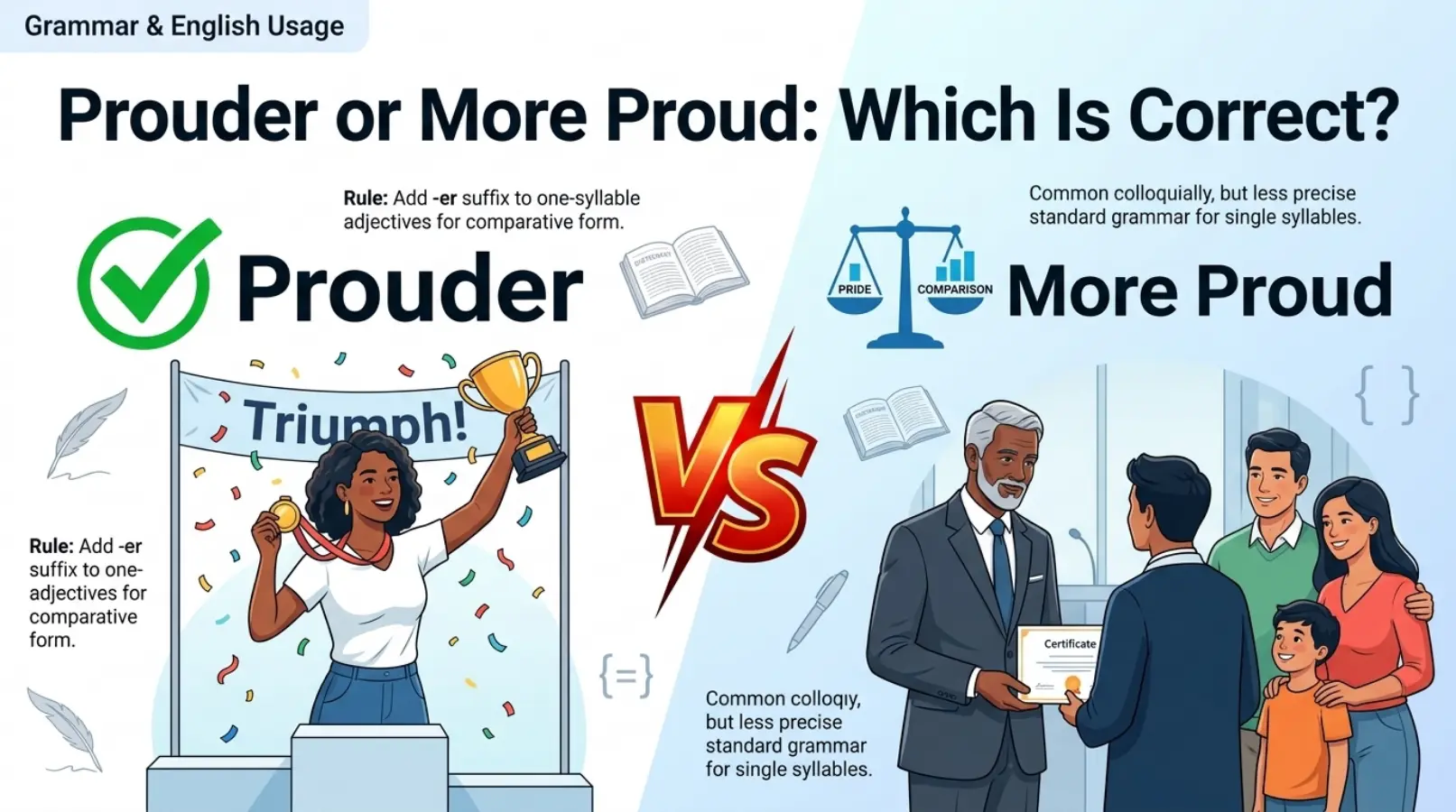
Prouder or More Proud: Which One Is Correct?
Both forms are grammatically correct.
Examples
- I am prouder today than I was yesterday.
- I am more proud today than I was yesterday.
Both sentences have the same meaning.
However, prouder sounds more natural in everyday speech.
Most style guides and grammar experts prefer prouder because proud is a short adjective.
Why Are Both Forms Accepted?
English forms comparisons in two main ways.
Method 1: Add “-er”
- tall → taller
- fast → faster
- proud → prouder
Method 2: Use “more”
- beautiful → more beautiful
- careful → more careful
- important → more important
The adjective proud sits in a gray area. It is short enough to take -er, but English speakers sometimes use more proud for emphasis.
That is why both versions appear in books, speeches, and everyday conversations.
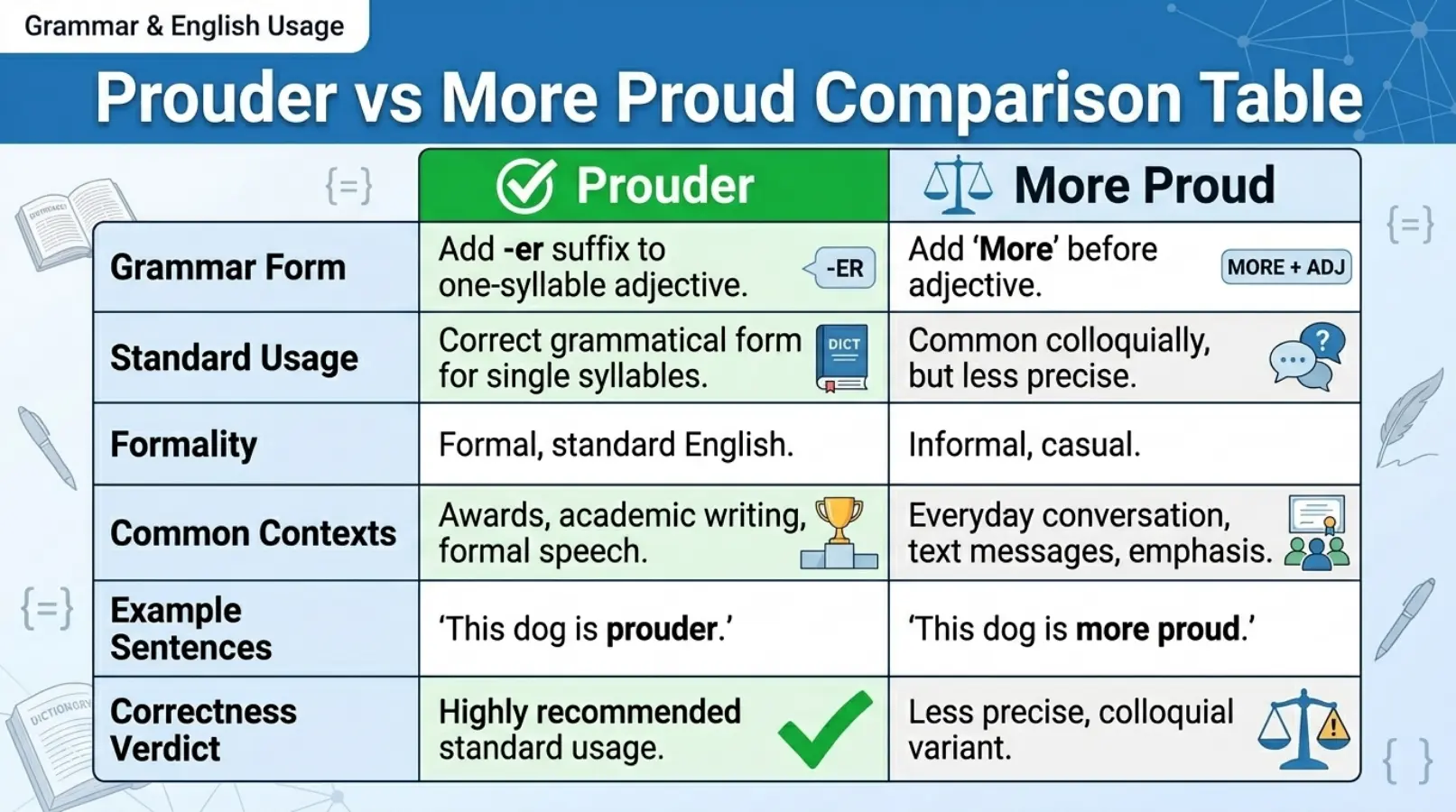
Prouder vs More Proud Comparison Table
| Feature | Prouder | More Proud |
| Grammatically correct | Yes | Yes |
| Common in speech | Very common | Less common |
| Common in formal writing | Sometimes | Often |
| Sounds natural | Yes | Depends on context |
| Adds emphasis | Moderate | Stronger |
| Preferred by many style guides | Yes | Sometimes |
Quick Takeaway
Use prouder in most situations. Use more proud when you want extra emphasis or a formal tone.
When Should You Use “Prouder”?
Use prouder in everyday English.
Examples
- I am prouder of you than ever.
- She became prouder after graduating.
- We are prouder of our community today.
Why It Works
The word sounds smooth and natural. Most native speakers choose this form automatically.
Best Situations
- Conversations
- Blogs
- Emails
- School writing
- Informal content
When Should You Use “More Proud”?
Use more proud when you want to stress the feeling of pride.
Examples
- I could not be more proud of my daughter.
- The coach was more proud of their effort than their victory.
- She felt more proud than surprised.
Why Writers Use It
Sometimes more proud creates stronger emotional impact.
It can also sound more formal or thoughtful.
Real-Life Examples of Prouder and More Proud
Family Achievement
- A father feels prouder after his son wins a scholarship.
Workplace Success
- A manager is more proud of teamwork than individual success.
School Achievement
- Students become prouder when they improve their grades.
Sports Victory
- Fans feel more proud when their team shows determination.
These examples show that both forms work naturally.

Common Mistakes People Make
Mistake 1: Using Both Forms Together
❌ More prouder
✅ Prouder
✅ More proud
Never combine the two comparison forms.
Mistake 2: Thinking One Form Is Wrong
❌ “More proud” is incorrect.
✅ Both forms are correct.
Many people believe only prouder is acceptable. Modern grammar accepts both.
Mistake 3: Choosing the Less Natural Option
Sometimes more proud sounds awkward.
Example:
❌ I am more proud of my new bike.
✅ I am prouder of my new bike.
The second sentence sounds smoother.
How Native English Speakers Use These Forms
Native speakers usually prefer prouder.
Common Speech Examples
- I couldn’t be prouder.
- We are prouder than ever.
- She is prouder of her work now.
However, more proud often appears in emotional statements.
Example
- I could not be more proud of you.
This phrase is very common in speeches and celebrations.
Tips to Remember the Difference
Tip 1: Use Prouder First
If you are unsure, choose prouder.
Tip 2: Use More Proud for Emphasis
When you want stronger emotion, use more proud.
Tip 3: Read the Sentence Aloud
The version that sounds smoother is usually the best choice.
Tip 4: Avoid Double Comparisons
Never write more prouder.
Tip 5: Match the Tone
Formal writing may use more proud more often.
Synonyms
Using related words improves writing variety and SEO value.
Synonyms for Proud
- Honored
- Delighted
- Pleased
- Happy
- Satisfied
- Thrilled
- Grateful
- Accomplished
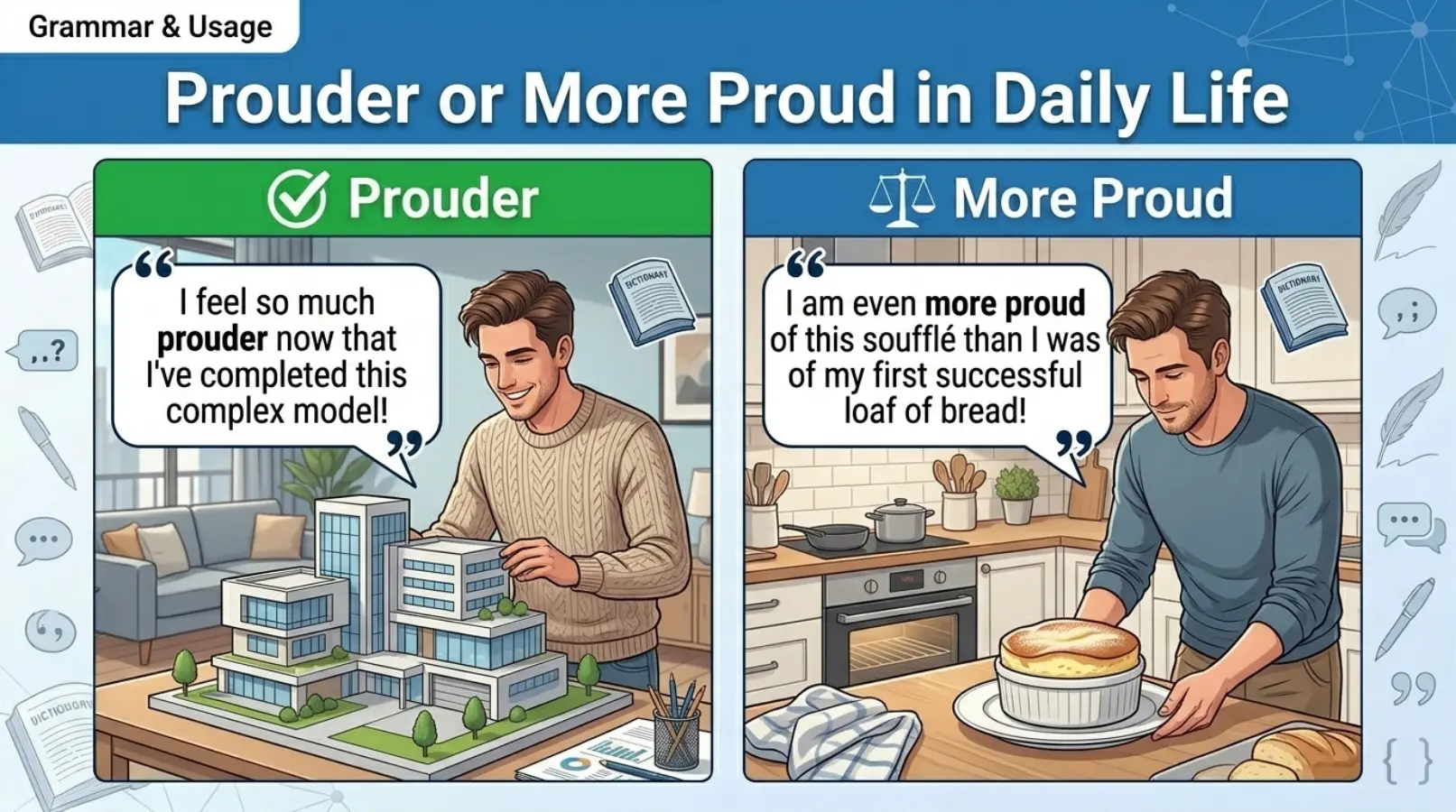
Prouder or More Proud in Daily Life
You may hear these forms in many situations.
Home
- I am prouder of you every day.
School
- Teachers feel more proud when students succeed.
Work
- Employees become prouder of their company.
Sports
- Fans are prouder after a championship win.
Relationships
- She was more proud of his effort than his result.
These examples show how often the comparison appears in everyday communication.
Expert Insights: Why This Grammar Choice Matters
Grammar choices affect clarity and confidence.
When writers understand comparative adjectives, they communicate more naturally.
Most grammar experts recommend prouder for general use because it follows a common English pattern.
However, more proud remains acceptable and can add emphasis when needed.
Understanding both forms helps you:
- Write more confidently
- Avoid grammar mistakes
- Sound more natural
- Improve communication skills
- Strengthen academic and professional writing
Good grammar supports clear communication. That matters in school, work, and daily life.
Frequently Asked Questions (FAQs)
Is “prouder” a real word?
Yes. Prouder is the comparative form of proud.
Is “more proud” grammatically correct?
Yes. Modern English accepts more proud as a correct comparative form.
Which is more common: prouder or more proud?
Prouder is generally more common in everyday speech.
Can I say “more prouder”?
No. More prouder is grammatically incorrect.
Why do people use “more proud”?
People often use it for emphasis or a formal tone.
Is “I couldn’t be prouder” correct?
Yes. It is a very common and natural expression.
Which form should students use?
Students can use either form, but prouder is usually preferred.
Do style guides prefer prouder?
Many style guides favor prouder because it sounds more concise and natural.
Conclusion
The answer to prouder or more proud is simple: both forms are correct. However, prouder is usually the preferred choice because it sounds more natural and concise. Most native speakers use it in everyday conversations and writing.
On the other hand, more proud can add emphasis and sometimes fits formal or emotional contexts better. The key is to choose the form that sounds best in your sentence.
If you are unsure, use prouder. It works well in most situations and aligns with common English usage. By understanding the difference, you can write with greater confidence and avoid common grammar mistakes.