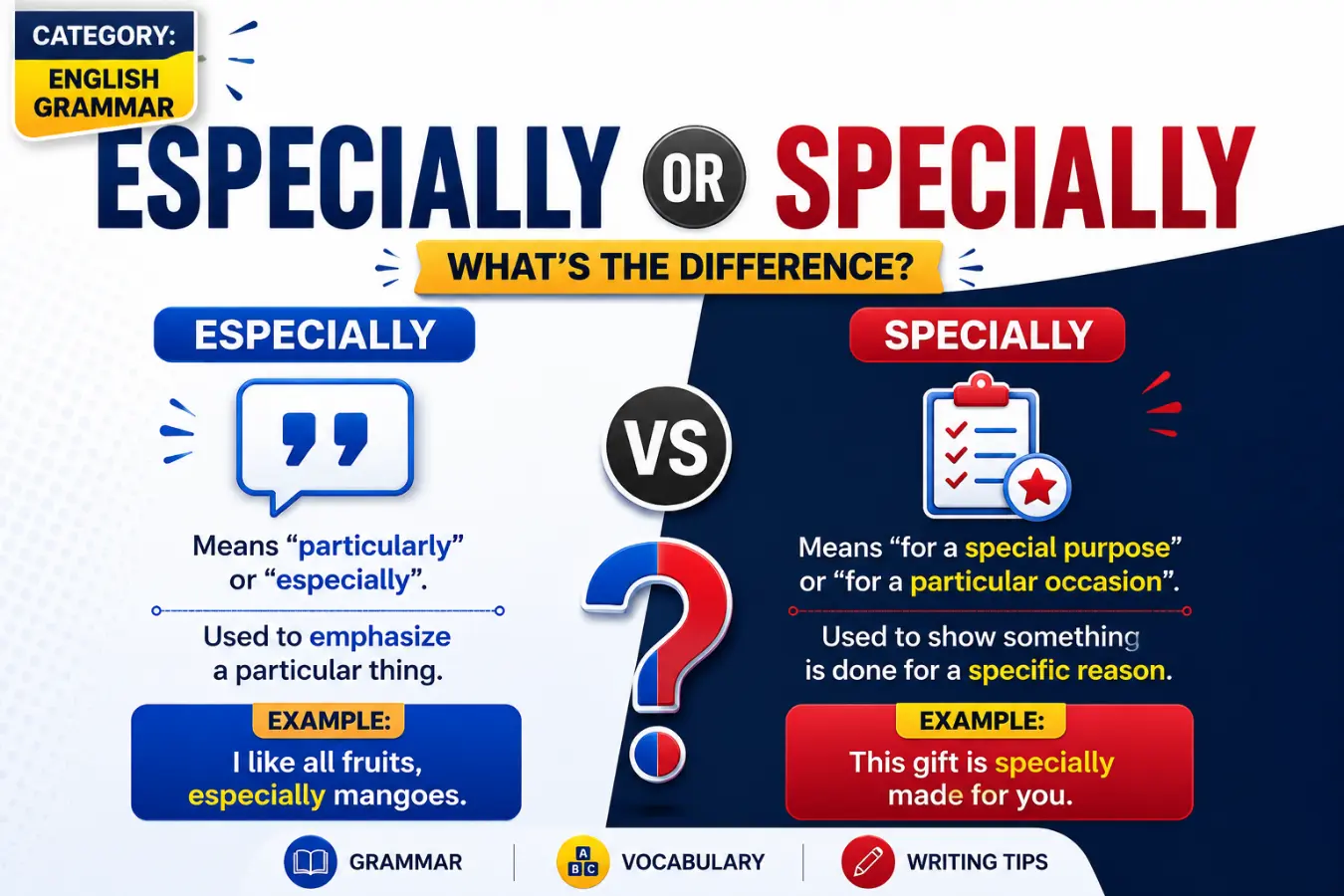
Especially or specially is a common grammar topic that confuses many English learners and writers. These two words look similar, but they do not always mean the same thing. Using the wrong one can change the meaning of your sentence.
Many people use this phrase as if they are interchangeable. However, each word has its own purpose. Knowing the difference helps you write more clearly and professionally.
In this guide, you will learn the meanings of both words, see simple examples, compare their uses, and avoid common mistakes. By the end, you will know exactly when to use especially and when to use specially in everyday writing and conversation.
Quick Summary Box
- Especially means particularly or more than others.
- Specially means for a specific purpose.
- Use especially to emphasize something important.
- Use specially when something is made or done for a particular reason.
- Both words are adverbs.
- They are similar but not always interchangeable.
- Learning the difference improves grammar and clarity.
What Does Especially Mean?
The word especially means particularly, above all, or more than others.
You use it when something deserves extra attention or importance.
Examples
- I love fruits, especially mangoes.
- The weather is beautiful, especially in spring.
- She enjoys reading, especially mystery novels.
- This lesson is useful, especially for beginners.
In each example, especially highlights one thing as more important than the rest.
What Does Specially Mean?
It means for a particular purpose or in a special way.
It often describes something created, designed, or prepared for a specific reason.
Examples
- This cake was made specially for your birthday.
- The school built a room specially for science experiments.
Here, it shows that something was made or done for a particular purpose.
Especially vs Specially: Key Difference
The easiest way to remember the difference is:
- Especially = particularly
- Specially = specifically for a purpose
Quick Formula
| Word | Meaning | Easy Replacement |
| Especially | More than others | Particularly |
| Specially | For a special purpose | Specifically |
| Especially | Emphasizes importance | Particularly |
| Specially | Describes purpose | Specifically |
Comparison Table
| Feature | Especially | Specially |
| Main Meaning | Particularly | For a specific purpose |
| Function | Adds emphasis | Shows purpose |
| Common Replacement | Particularly | Specifically |
| Usage Frequency | More common | Less common |
| Example | I like sports, especially football. | These gloves were specially made. |
| Focus | Importance | Purpose |
When Should You Use Especially?
Use especially when you want to highlight something that stands out.
Common Situations
1. Showing Preference
- I enjoy all desserts, especially ice cream.
- She likes animals, especially cats.
2. Emphasizing Importance
- Exercise is important, especially as you get older.
- Safety matters, especially during storms.
3. Talking About Particular Cases
- The app helps students, especially those learning English.
- The book is useful, especially for new writers.
When Should You Use Specially?
Use it when something exists for a particular reason.
Common Situations
1. Custom-Made Items
- The furniture was designed specially for small apartments.
2. Specific Purposes
- The software was developed specially for teachers.
3. Personalized Actions
- The team created a report specially for management.
Real-Life Examples of Especially and Specially
Understanding real-life situations makes grammar easier.
Example 1
❌ This gift was made especially for you.
✅ This gift was made specially for you.
Reason: The gift was created for a specific purpose.
Example 2
❌ I enjoy all seasons specially summer.
✅ I enjoy all seasons, especially summer.
Reason: Summer is highlighted as a favorite.
Example 3
❌ This software helps students specially beginners.
✅ This software helps students, especially beginners.
Reason: Beginners receive special emphasis.
Example 4
✅ This laptop was specially designed for gamers.
Reason: It was created for a specific purpose.

Common Mistakes People Make
Many writers confuse these words because their meanings overlap slightly.
Mistake 1: Using Especially for Purpose
❌ These chairs were especially designed for children.
✅ These chairs were specially designed for children.
Mistake 2: Using Specially for Emphasis
❌ I like all colors, specially blue.
✅ I like all colors, especially blue.
Mistake 3: Assuming They Are Always Interchangeable
While some sentences allow both words, most situations favor one clearly.
Always check whether you are expressing importance or purpose.
Simple Trick to Remember the Difference
Try this memory trick:
Especially = Extra Importance
Think of especially as giving extra attention to something.
Example:
- I love movies, especially action films.
Specially = Specific Purpose
Think of specially as related to a specific reason.
Example:
- This camera was specially made for underwater photography.
This trick works in most situations.
Especially and Specially in Daily Life
You hear and read these words every day.
School
- This lesson is useful, especially before exams.
- The classroom was specially equipped for science projects.
Work
- The training helps new employees, especially interns.
- The program was specially developed for remote workers.
Home
- I enjoy family dinners, especially on weekends.
- The room was specially decorated for the celebration.

Synonyms
for Especially
- Particularly
- Mainly
- Chiefly
- Above all
- Notably
- Significantly
for Specially
- Specifically
- Exclusively
- Uniquely
- Purposely
- Expressly
- Individually
Can Especially and Specially Ever Mean the Same Thing?
Sometimes the meanings overlap.
Consider this sentence:
- The event was organized especially for children.
- The event was organized specially for children.
Both can sound acceptable.
However:
- Especially emphasizes children.
- Specially emphasizes the purpose of the event.
Modern English often prefers especially in many situations, but specially remains correct when purpose is the main focus.
Why Do People Confuse?
There are several reasons:
- They look very similar.
- Both come from the word “special.”
- Some contexts allow either word.
- Many speakers learn them through conversation rather than grammar rules.
Fortunately, understanding the difference between importance and purpose solves most confusion.
Expert Insights: Why Correct Usage Matters
Correct word choice improves communication.
Readers understand your message faster when you choose the right word. This matters in emails, reports, essays, and website content.
Grammar accuracy also builds trust. Professional writers, students, and businesses benefit from clear language.
When deciding between especially or specially, ask one question:
Are you emphasizing something, or are you describing a purpose?
The answer usually reveals the correct word.
Frequently Asked Questions (FAQs)
What is the difference between especially and specially?
Especially means particularly or above all, while specially means for a specific purpose or in a particular way.
Is it especially or specially for you?
If something is made for a specific person or purpose, specially for you is usually the correct choice.
Can especially and specially be used interchangeably?
Not always. Although the words are related, they have different meanings and are not interchangeable in every sentence.
Which word is more common in everyday English?
Especially is more common because it is frequently used to emphasize something important or exceptional.
When should I use specially in a sentence?
Use it when referring to something created, arranged, or intended for a particular purpose.
Is “specially designed” grammatically correct?
Yes. It is the standard and preferred phrase when something is made for a specific function or audience.
Why do people confuse these two words?
Both words come from the same root and have similar meanings, making them easy to mix up in writing and conversation.
Do British and American English use these words differently?
No significant regional difference exists. Both are accepted in British and American English, with usage depending on the intended meaning.
How can I remember the difference between the two?
Think of especially as meaning particularly, and specially as meaning for a special purpose. This simple rule works in most situations.
Which word should I choose in formal writing?
Choose the word that matches your intended meaning. Use especially for emphasis and specially when describing a specific purpose or function.
Conclusion
Understanding especially or specially becomes easy once you know their main difference. Especially highlights something important or noteworthy, while specially refers to a specific purpose or reason. Although the two words sometimes appear in similar contexts, they are not always interchangeable.
A simple rule can help you remember them. If you can replace the word with particularly, choose especially. If you can replace it with specifically, choose specially. This small distinction makes your writing clearer and more professional.
The next time you face the choice between especially or specially, focus on whether you are expressing importance or purpose. That single step will help you choose the correct word every time.