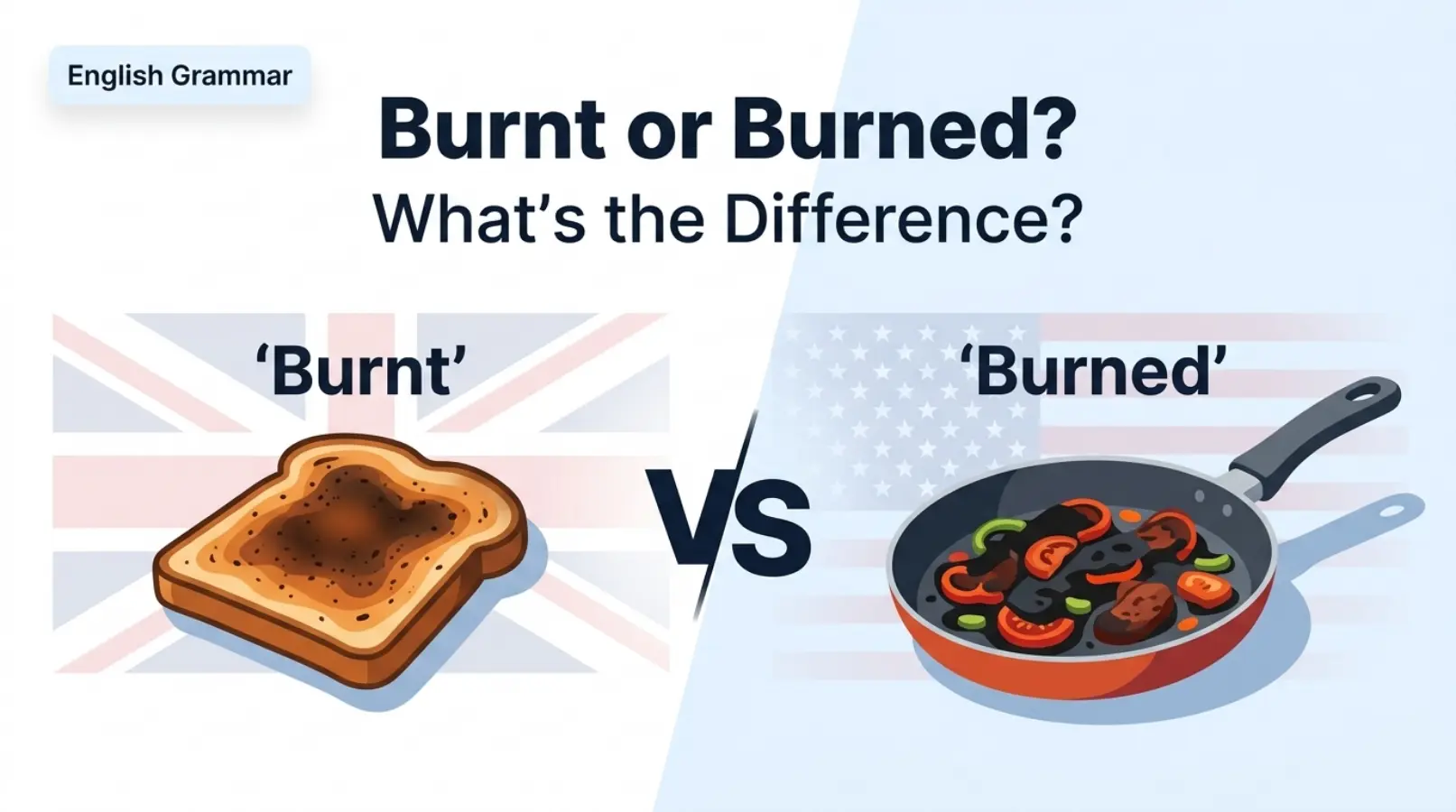
Burnt or burned is a common grammar question. Many English learners and native speakers wonder which word is correct. The good news is that both words are correct. However, they are used in different places and situations.
The choice often depends on if you use American or British English. It also depends on if you use the word as a verb or an adjective.
In this guide, you will learn the difference between burnt and burned in simple English. You will also see examples, common mistakes, and expert writing tips. By the end, you will know exactly when to use each word with confidence.
Quick Summary Box
- Both “burnt” and “burned” are correct.
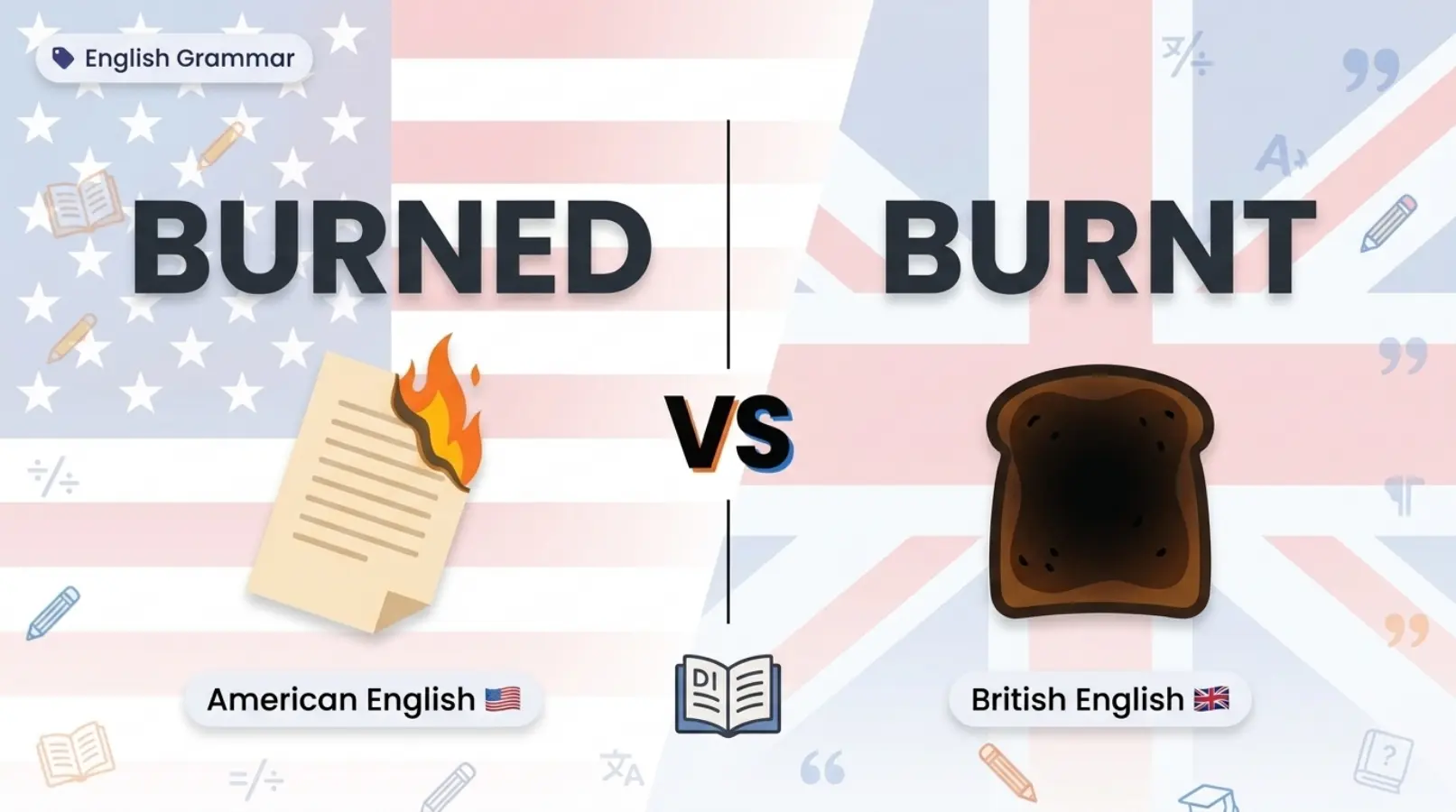
- Burned is more common in American English.
- Burnt is more common in British English.
- Burned usually acts as the past tense and past participle.
- Burnt often describes something damaged by fire or heat.
- Always follow your audience’s English style.
- Keep usage consistent throughout your writing.
What Does “Burnt or Burned” Mean?
Both burnt and burned come from the verb burn.
They describe something that has been damaged by fire or extreme heat.
Examples:
- The toast burned in the oven.
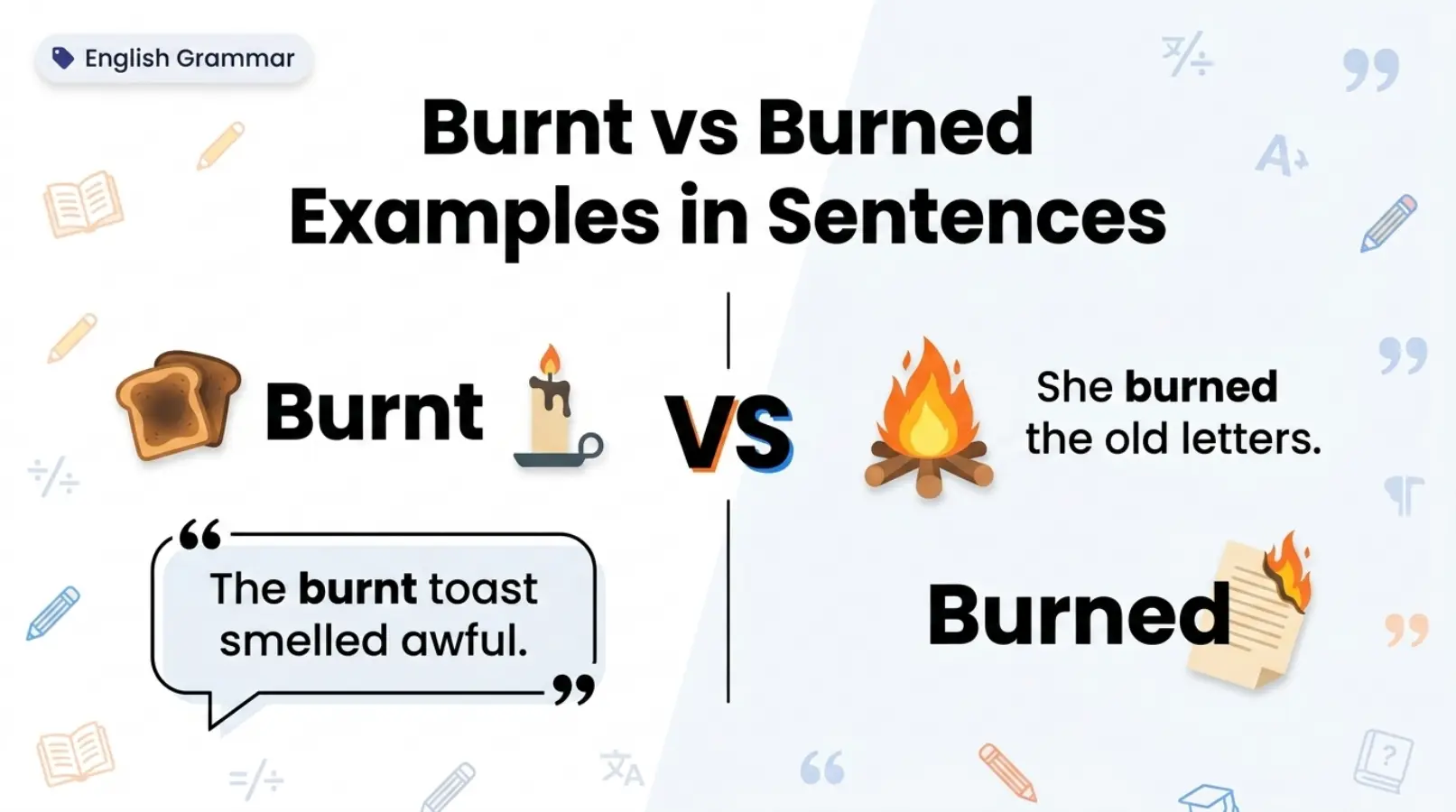
- The toast looks burnt.
- She accidentally burned her hand.
- The kitchen smelled like burnt food.
Both words have the same basic meaning. The difference is mostly about grammar and regional preference.
Burnt vs Burned: What’s the Difference?
| Feature | Burned | Burnt |
| American English | Preferred | Less common |
| British English | Common | More common |
| Past tense verb | Yes | Sometimes |
| Past participle | Yes | Sometimes |
| Adjective | Yes | Very common |
| Formal writing (US) | Preferred | Less preferred |
Quick Rule
- Use burned for American English.
- Use burnt more often in British English.
- Use one style consistently.
Why Do Both Words Exist?
English has many verbs with two past tense forms.
Examples include:
- Learned / Learnt
- Dreamed / Dreamt
- Spoiled / Spoilt
- Burned / Burnt
Over time, American English kept many -ed endings. British English continued using many -t endings.
That is why both words remain correct today.
When to Use “Burned”
Use burned when writing in American English.
It works well as the past tense and past participle.
Examples
- I burned my dinner.
- They burned old papers.
- The fire burned for hours.
- She burned the candles last night.
- The house burned down quickly.
Common American English Sentences
- My coffee burned my tongue.
- He burned his finger while cooking.
- We burned wood in the fireplace.
When to Use “Burnt”
In British English, burnt appears more often.
It commonly describes something damaged by heat.
Examples
- I smelled burnt popcorn.
- The cake tasted burnt.
- We saw a burnt building.
- The field was covered with burnt grass.
- The meat looked burnt.
Although British English also accepts burned, burnt sounds more natural in many situations.
Burnt or Burned in American and British English
Understanding your audience helps you choose the right word.
American English
- burned toast
- burned hand
- burned house
British English
- burnt toast
- burnt food
- burnt wood
Neither version is wrong.
The important rule is consistency.
Real-Life Examples of Burnt and Burned
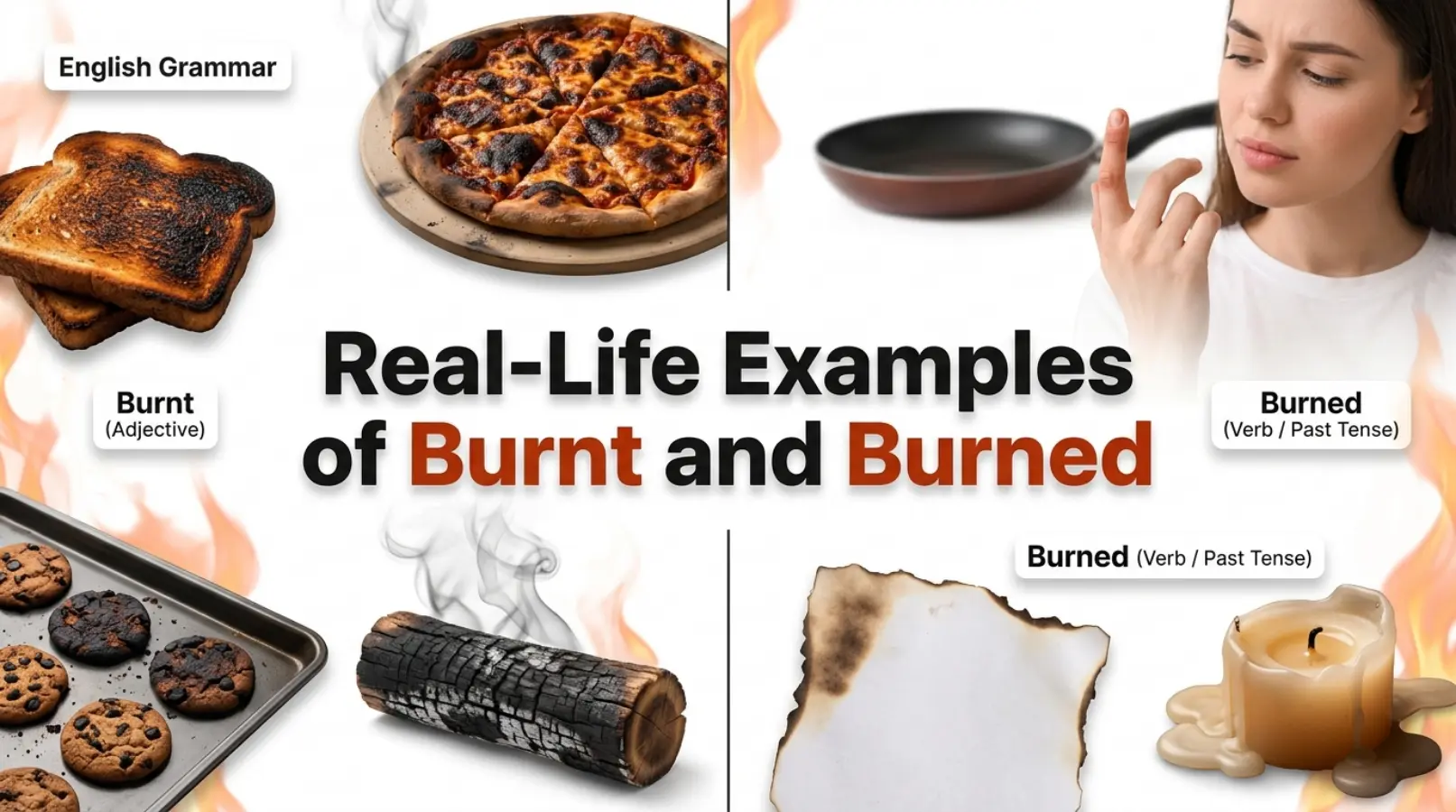
Here are everyday situations.
Cooking
The chicken burned because I forgot the timer.
The chicken tasted burnt.
Camping
We burned wood all night.
The campsite had burnt logs.
School Science
The experiment burned the paper.
The paper had burnt edges.
Home
Dad burned old leaves.
The garden had burnt branches after the fire.
Common Mistakes People Make
Many writers confuse these words.
Mistake 1
❌ Burnt is always wrong.
✅ Both are correct.
Mistake 2
❌ Burned is only American.
✅ British English also uses burned.
Mistake 3
❌ Mix both styles in one article.
✅ Stay consistent.
Mistake 4
❌ Ignore your audience.
✅ Match the English style your readers expect.
Easy Tips to Remember
Here are simple tricks.
Tip 1
Writing for Americans?
Use burned most of the time.
Tip 2
Writing for British readers?
Use burnt more often.
Tip 3
When describing food, burnt sounds very natural.
Example:
- burnt pizza
- burnt cookies
- burnt coffee
Tip 4
Check your style guide before publishing.
Many companies require either American or British spelling.
Burnt or Burned in Daily Conversations
People use both words every day.
Examples:
- I burned my hand.
- Your toast is burnt.
- Someone burned the leaves.
- The cookies smell burnt.
- We burned candles during dinner.
- The meat looks burnt.
Native speakers understand both versions.
Synonyms
- Scorched
- Charred
- Singed
- Blackened
- Toasted
- Heated
- Blistered
- Smoked
Burnt vs Burned Examples in Sentences
| Sentence | Correct Word |
| I ___ the cookies yesterday. | burned |
| The cookies look ___. | burnt |
| The fire ___ for two days. | burned |
| We found ___ wood. | burnt |
| She ___ her finger. | burned |
| The bread smells ___. | burnt |
Expert Insights: Why This Difference Matters
Professional writers always match their audience.
American websites usually choose burned.
British publications often prefer burnt, especially as an adjective.
Consistency improves readability. It also builds trust with readers.
Search engines value clear, well-written content. Correct language use also improves user experience.
If your website targets a global audience, choose one style and follow it throughout every page.
Frequently Asked Questions (FAQs)
Is burnt or burned correct?
Both are correct. The choice depends on your English style and context.
Is burnt British or American?
Burnt is more common in British English.
Is burned American English?
Yes. Burned is the preferred form in American English.
Can burnt be used as a verb?
Yes. However, modern American English usually prefers burned.
Why do people say burnt toast?
Because burnt commonly describes food damaged by heat.
Is burned toast wrong?
No. It is completely correct, especially in American English.
Which version is better for SEO writing?
Neither is better. Use the version that matches your target audience and stay consistent.
Featured Snippet Answer
Burnt and burned are both correct forms of the verb “burn.” American English usually prefers “burned,” while British English often uses “burnt,” especially as an adjective. Choose the form that matches your audience and use it consistently throughout your writing.
Conclusion
Understanding burnt or burned is easier than many people think. Both words are correct, but they follow different English styles. Burned is the preferred choice in American English, especially as the past tense and past participle. Burnt is more common in British English and often describes something damaged by fire or heat. Neither form is more correct than the other. The key is to match your audience and remain consistent throughout your writing. Whether you are writing an email, blog post, school paper, or business document, using the appropriate form makes your content look more professional and easier to read. Once you know the difference, choosing between burnt and burned becomes simple and natural.
Discover More Post:
Gist or Jist: Which Is Correct? Meaning, and Grammar Guide
Ready or Not Discord: Official Server Guide, Community Features