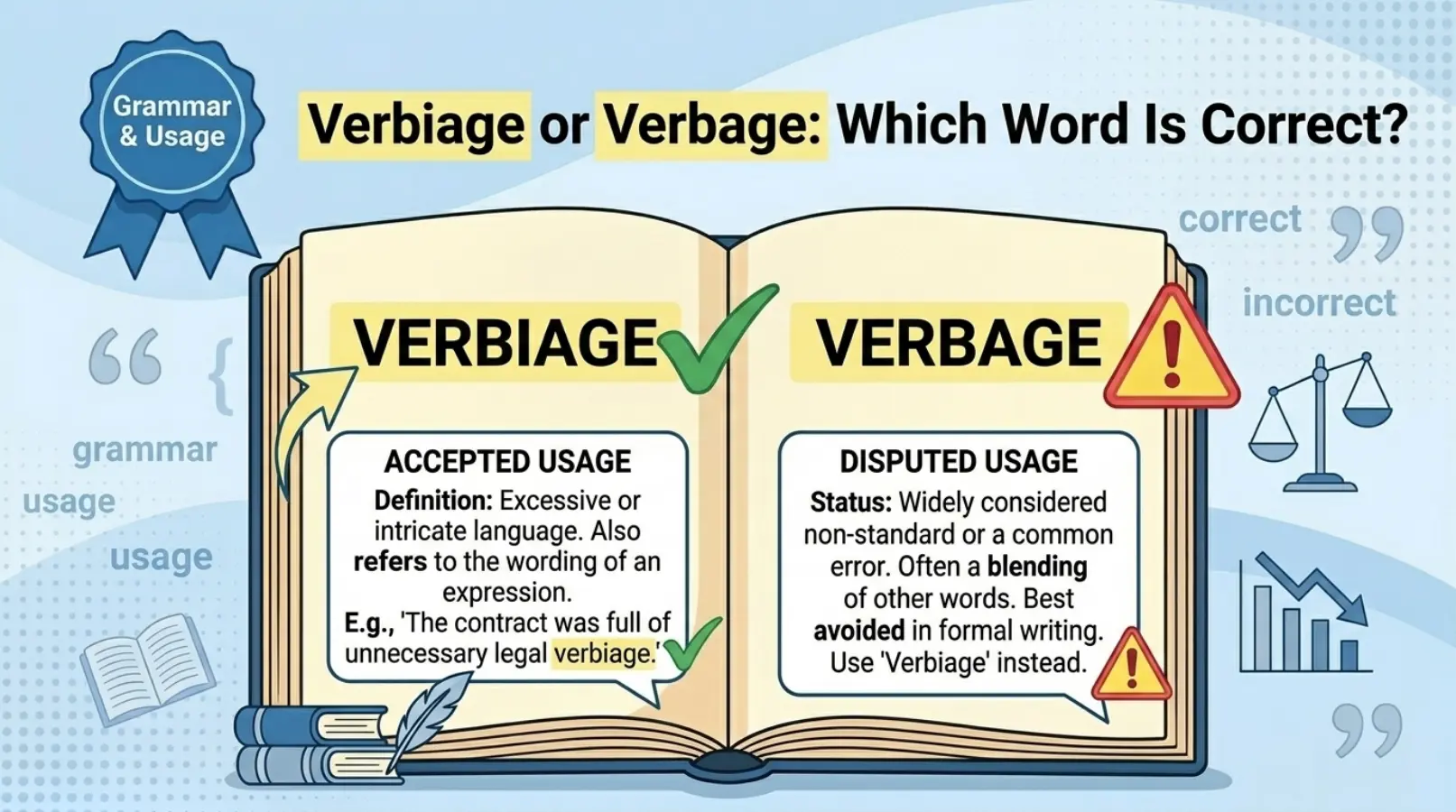
Verbiage or verbage is a common spelling question in English. Many people see both words online and wonder which one is correct.
The short answer is simple. Verbiage is the standard and correct spelling. Verbage is usually considered a misspelling or nonstandard variant.
However, there is more to the story. The word verbiage can have different meanings depending on the context. Some people use it to describe unnecessary words. Others use it to mean the wording of a document or statement.
Understanding the difference helps you write more clearly and professionally. It also prevents spelling mistakes in emails, reports, essays, and business documents.
In this guide, you will learn the meaning of verbiage, whether verbage is acceptable, real-life examples, common mistakes, and expert writing tips.
Quick Summary Box
- Verbiage is the correct and standard spelling.
- Verbage is generally considered incorrect or nonstandard.
- Verbiage can mean:
- Excessive words
- Unnecessary wording
- The wording of a text or statement
- Writers often use verbiage in business, legal, and academic writing.
- Using clear language reduces unnecessary verbiage.
- Remember: Verbiage = Correct, Verbage = Usually Incorrect
What Does Verbiage Mean?
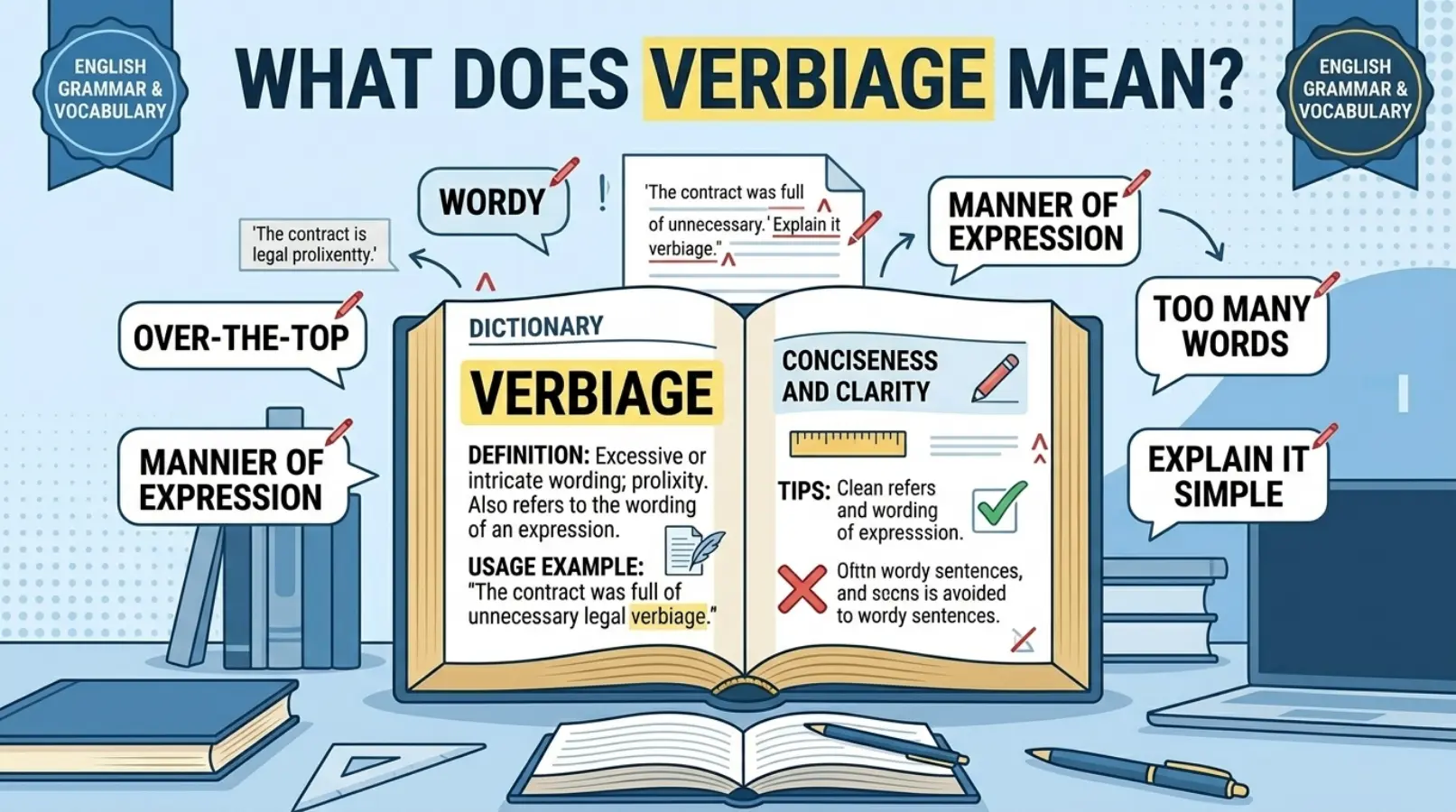
Verbiage is a noun.
It has two common meanings:
- Too many words used to express an idea.
- The specific wording used in a document or statement.
Simple Definition
Verbiage means words, wording, or an excessive amount of words.
Example Sentences
- The report contained too much verbiage.
- Please reduce the verbiage in your presentation.
- The contract’s verbiage confused many readers.
- We updated the verbiage on the website.
In most cases, people use the word when discussing writing quality.
Is Verbage a Real Word?
This question causes a lot of confusion.
The Short Answer
Verbiage is the preferred spelling.
Verbage appears in some dictionaries as a variant spelling. However, many editors and writing professionals still consider it nonstandard.
Why the Confusion Exists
The words look similar.
Many English words end with “-age,” such as:
- Mileage
- Postage
- Storage
- Package
Because of this pattern, people often assume “verbage” is correct.
Still, most style guides recommend using verbiage.
Verbiage or Verbage: Comparison Table
| Feature | Verbiage | Verbage |
| Standard spelling | Yes | No (usually) |
| Accepted by editors | Yes | Often avoided |
| Common in professional writing | Yes | Rarely |
| Found in dictionaries | Yes | Sometimes as a variant |
| Recommended for formal writing | Yes | No |
| Best choice for SEO and content writing | Yes | No |
Winner
✅ Verbiage is the safest and most professional choice.
Why Do People Use Verbage Instead of Verbiage?
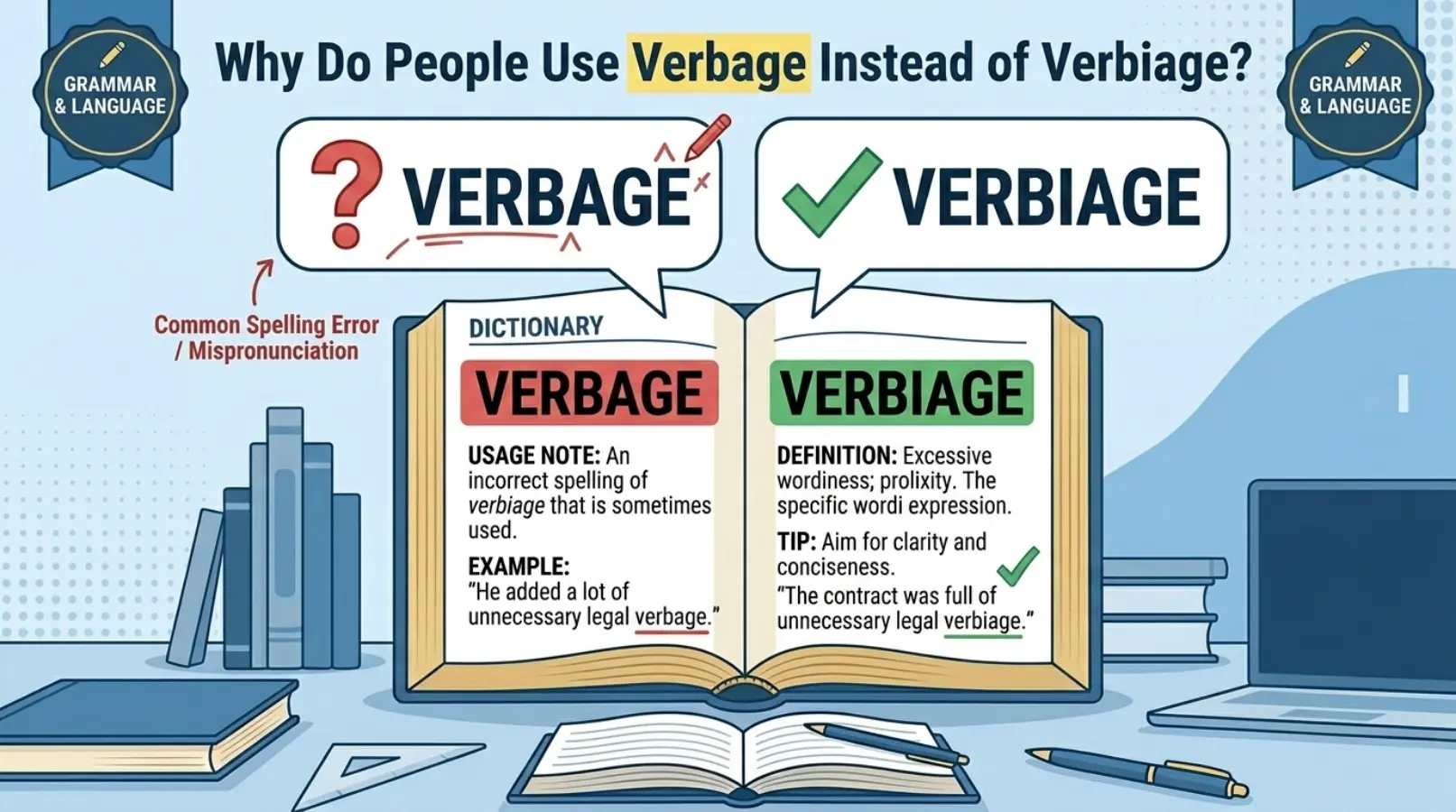
Many people spell the word based on pronunciation.
When spoken quickly, “verbiage” may sound like “verbage.”
Other reasons include:
- Typing mistakes
- Lack of familiarity with the word
- Influence from informal writing
- Regional usage differences
Even so, professional writers should use verbiage.
How to Use Verbiage in a Sentence
Learning through examples makes the word easier to understand.
Examples Showing Excessive Words
- The article contains unnecessary verbiage.
- Cut the verbiage and get to the point.
- Good editing removes excess verbiage.
Examples Showing Wording
- We changed the legal verbiage.
- The website’s verbiage matches the brand voice.
- Review the verbiage before publishing.
Business Examples
- Marketing teams often review website verbiage.
- HR updated the handbook verbiage.
- The company simplified policy verbiage.
Verbiage in Everyday Life
You may hear or see this word in many situations.
At Work
Managers may say:
“Reduce the verbiage in this report.”
They want clearer writing.
In School
Teachers often tell students:
“Avoid unnecessary verbiage.”
They prefer concise writing.
In Marketing
Content writers review:
- Website verbiage
- Ad copy verbiage
- Brand messaging verbiage
In Legal Documents
Lawyers often discuss contract verbiage.
They focus on exact wording.

Common Mistakes When Using Verbiage
Many writers misuse this word.
Mistake 1: Writing Verbage
❌ The contract verbage is confusing.
✅ The contract verbiage is confusing.
Mistake 2: Using Too Much Verbiage
❌ Due to the fact that we were able to successfully complete the project.
✅ We completed the project.
The second sentence is clearer.
Mistake 3: Using Verbiage Negatively Every Time
Some people think verbiage always means excessive words.
That is not true.
It can also simply mean:
- Wording
- Text
- Language
Example:
✅ We updated the website verbiage.
No negative meaning exists here.
Verbiage vs Wording
Many people use these terms interchangeably.
| Term | Meaning |
| Verbiage | Wording or excessive wording |
| Wording | Exact choice of words |
Example
- The wording of the email needs improvement.
- The verbiage of the email needs improvement.
Both work.
However, wording often sounds simpler and more direct.
Tips to Remember the Correct Spelling
Spelling mistakes happen often.
Use these tricks.
Tip 1: Remember the Extra “I”
Verb + iage = Verbiage
The extra “i” helps identify the correct spelling.
Tip 2: Think of Dictionaries
Most dictionaries list verbiage as the standard spelling.
Tip 3: Use Spell Check
Modern writing tools usually suggest:
✅ Verbiage
instead of
❌ Verbage
Tip 4: Read Professional Content
Books, newspapers, and business documents almost always use verbiage.
Why Clear Writing Matters More Than Verbiage
Strong writing focuses on clarity.
Readers want information quickly.
Too much verbiage can:
- Reduce readability
- Confuse readers
- Increase bounce rates
- Lower engagement
Good writing should be:
- Clear
- Direct
- Easy to understand
- Well organized
Example
Too Much Verbiage
Due to the circumstances that currently exist, it has become necessary to postpone the meeting.
Clear Version
We postponed the meeting.
The second version communicates the same idea faster.
Expert Insights: Why Understanding Verbiage Matters
Professional writers pay attention to word choice.
Understanding verbiage helps you:
- Write more clearly
- Improve communication
- Avoid spelling mistakes
- Create professional content
- Build trust with readers
SEO experts also value concise writing.
Search engines favor content that answers questions quickly and clearly.
Reducing unnecessary verbiage can improve:
- User experience
- Readability scores
- Time on page
- Content quality
The best writing balances detail with simplicity.
Real-Life Scenarios
Scenario 1: Business Email
Before:
We would like to take this opportunity to inform you that…
After:
We would like to inform you that…
Less verbiage. Better clarity.
Scenario 2: Website Copy
Before:
Our organization provides a wide variety of solutions that can potentially help.
After:
We provide solutions that help.
Shorter and stronger.
Scenario 3: School Assignment
Before:
The reason for this occurrence is because…
After:
This happened because…
Clear writing wins.
Frequently Asked Questions (FAQs)
Is verbiage or verbage correct?
Verbiage is the correct and widely accepted spelling.
Is verbage a real word?
Some dictionaries list it as a variant spelling, but most writers avoid it.
What does verbiage mean?
It means wording or an excessive amount of words.
Is verbiage always negative?
No. It can simply refer to wording or text.
How do you use verbiage in a sentence?
Example: We updated the website verbiage.
What is another word for verbiage?
Common synonyms include wording, language, phraseology, and terminology.
Why do people spell it verbage?
Many people spell it based on pronunciation.
Should I use verbiage in professional writing?
Yes. It is the preferred spelling in professional, academic, and business writing.
Conclusion
The debate over verbiage or verbage has a simple answer. Verbiage is the standard and recommended spelling. While verbage may appear in some places, most editors and professional writers avoid it.
Verbiage can refer to either excessive wording or the wording of a document. Understanding this distinction helps you communicate more effectively. It also improves the quality of your writing in school, business, and everyday situations.
When in doubt, choose verbiage. It is the accepted form, appears in professional publications, and helps maintain credibility. Most importantly, focus on clear and concise communication. Reducing unnecessary verbiage makes your writing easier to read and understand.