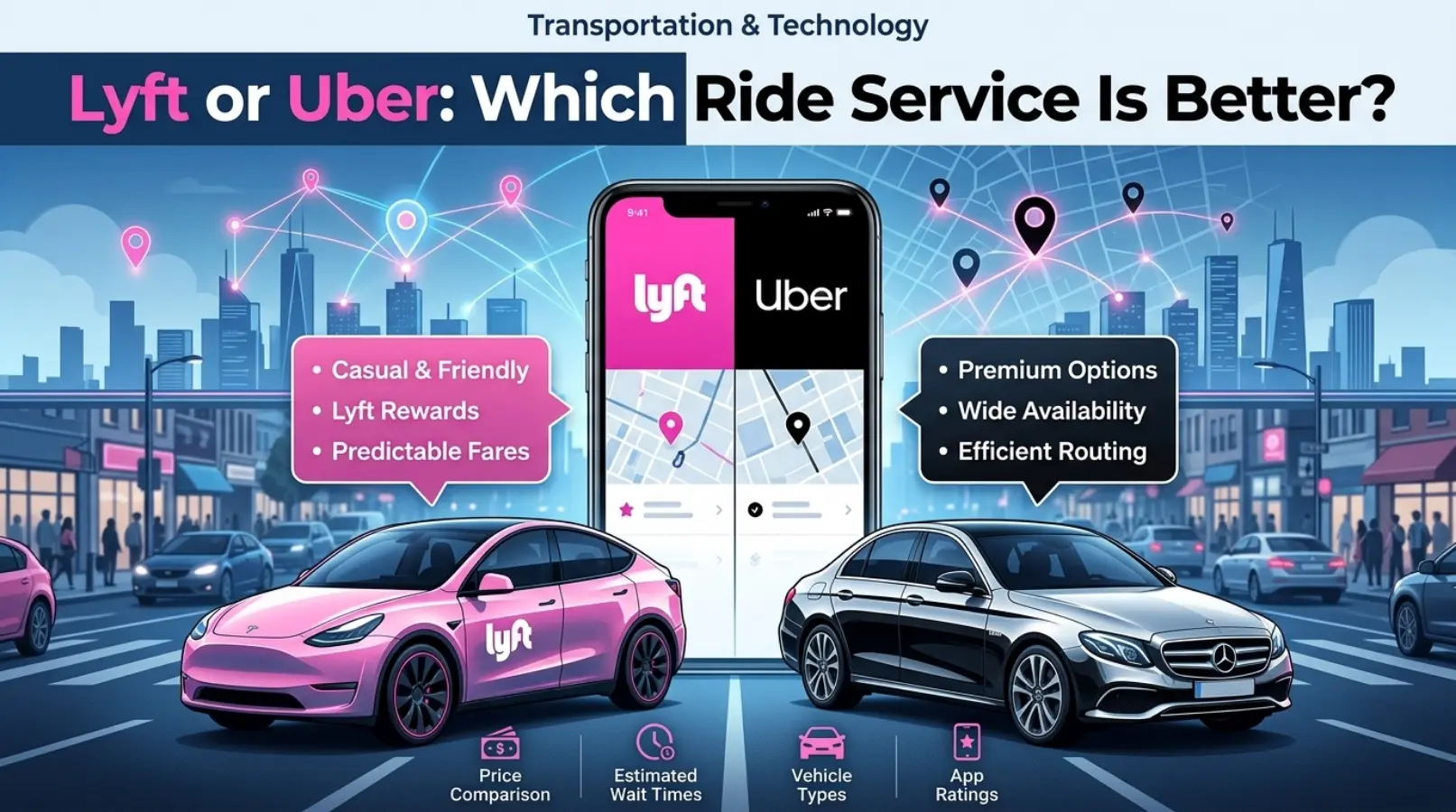
Lyft or Uber is one of the most common comparisons in ride-sharing today. Both apps help you book a car using your phone in minutes.
Lyft or Uber is often chosen based on price, location, and comfort. These apps changed how people travel in cities. You no longer need to wait for taxis on the street.
Both platforms offer fast rides, cashless payment, and driver tracking. Still, they are not the same. Each has different pricing rules, driver benefits, and service areas.
In this guide, you will learn how Lyft and Uber work. You will also see their differences, prices, safety features, and best use cases. This will help you decide which one fits your needs best.
Quick Summary Box
- Lyft and Uber are ride-sharing apps for booking cars online
- Uber has wider global coverage
- Lyft is stronger in North America
- Prices change based on demand and time
- Both offer safety features like tracking and driver ratings
- Uber usually has more ride options
- Lyft often feels more community-focused
- Choice depends on location, price, and comfort
What Is Lyft or Uber? (Meaning & Definition)
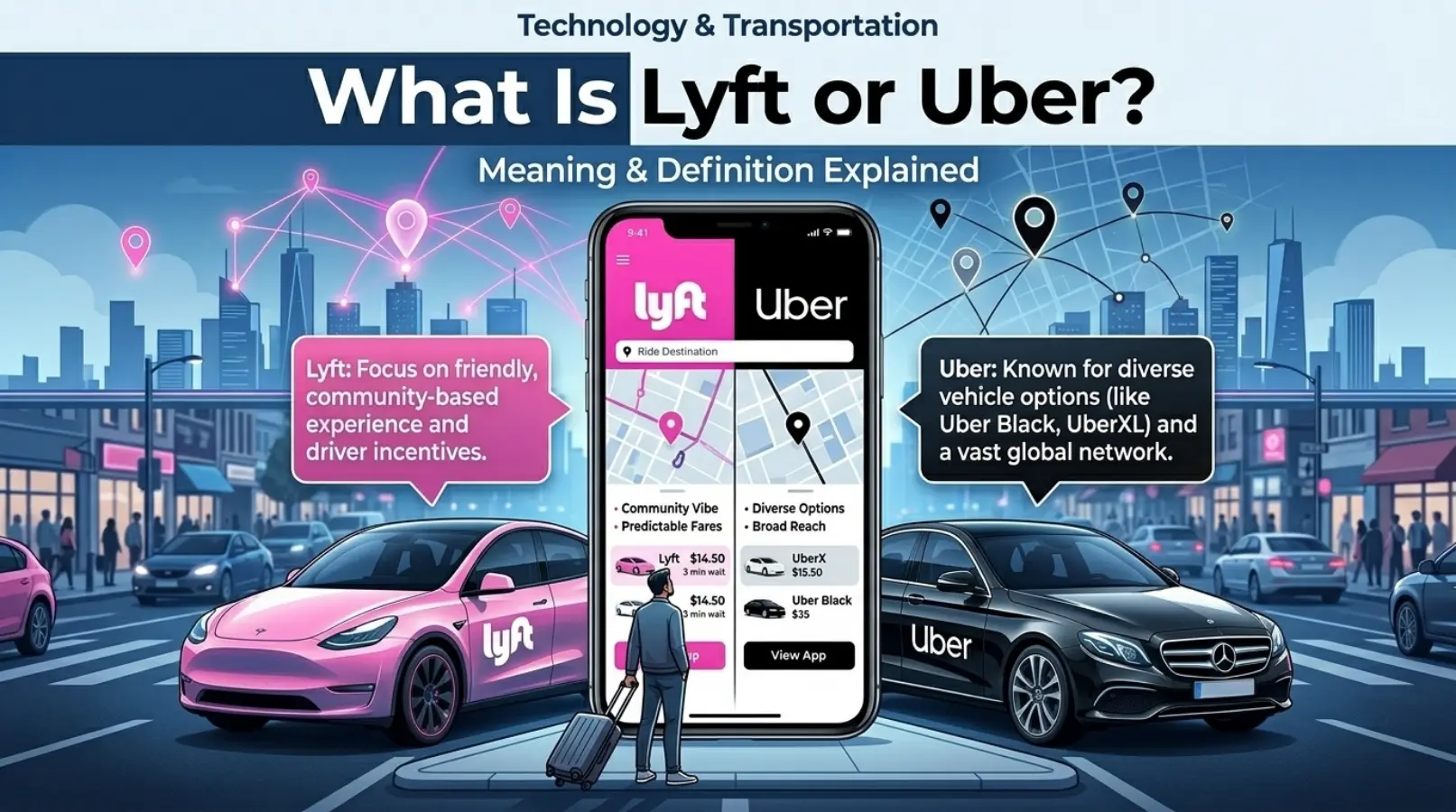
Uber and Lyft are mobile apps that connect passengers with drivers.
In simple words, they are taxi alternatives. You use your phone to request a ride. A nearby driver accepts your request and picks you up.
These apps replaced traditional taxis in many cities. They made travel faster, easier, and more flexible.
Both companies use GPS technology. This helps drivers find you quickly and reach your destination efficiently.
How Lyft and Uber Work
Both apps work in almost the same way:
- Open the app on your phone
- Enter pickup and drop-off location
- Choose ride type (economy, premium, shared)
- Confirm booking
- A nearby driver accepts your ride
- Track driver in real-time
- Pay through the app
No cash is usually needed. Everything is handled digitally.
Drivers use their own cars. They work as independent contractors.
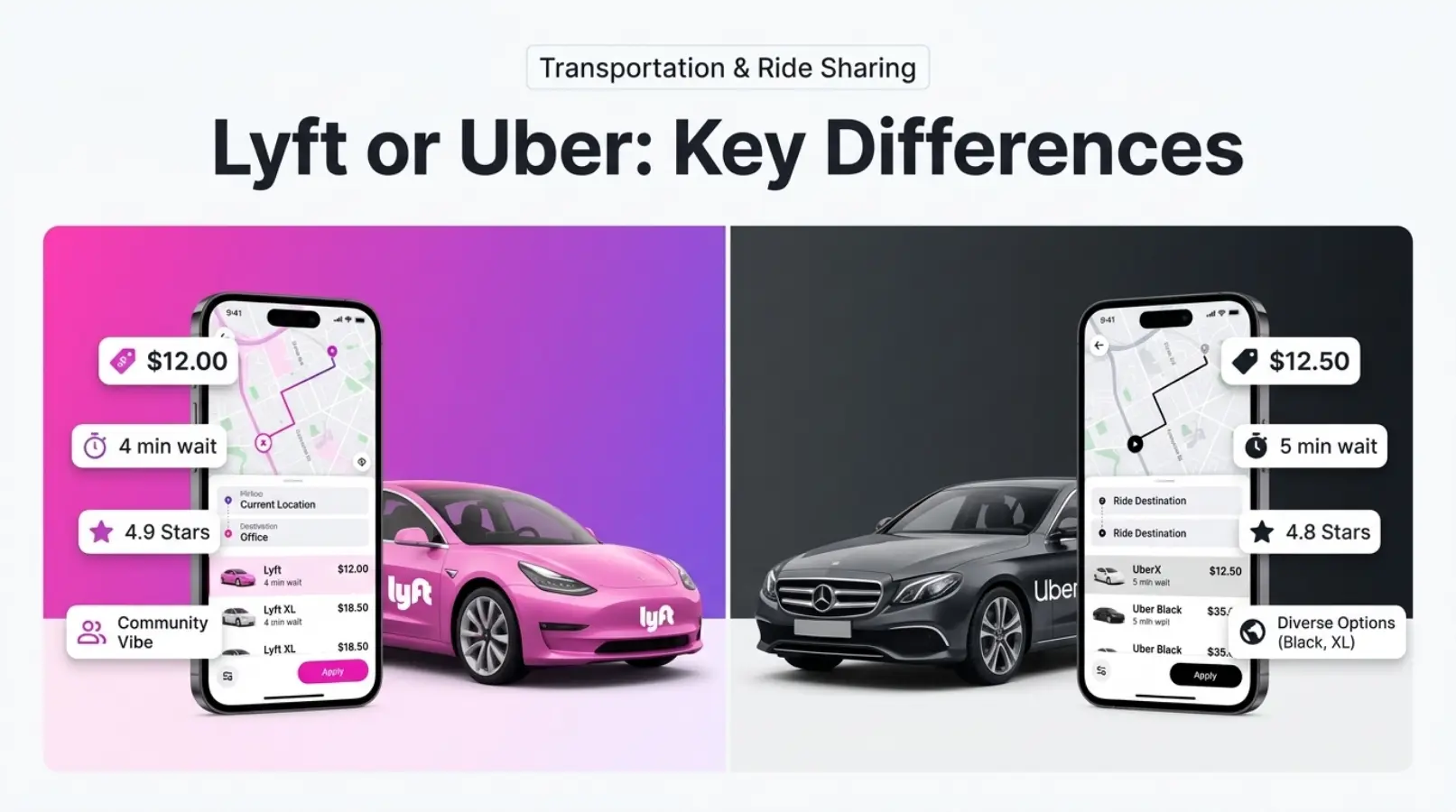
Lyft or Uber: Key Differences
Although they look similar, there are clear differences.
- Uber operates in more countries worldwide
- Lyft mainly focuses on the United States and Canada
- Uber offers more ride types like UberXL, Uber Comfort, Uber Black
- Lyft is often simpler and more community-focused
- Uber usually has faster availability in busy cities
In short, Uber is bigger globally, while Lyft is more regional.
Lyft or Uber Comparison Table
| Feature | Uber | Lyft |
| Global availability | Very high | Limited (mainly North America) |
| Ride options | Many types | Fewer types |
| Pricing model | Dynamic pricing | Dynamic pricing |
| App experience | Feature-rich | Simple and clean |
| Safety features | Advanced tools | Strong but simpler |
| Driver base | Larger | Smaller |
| Best for | Global travel | Local city rides |
Pricing: Which Is Cheaper, Lyft or Uber?
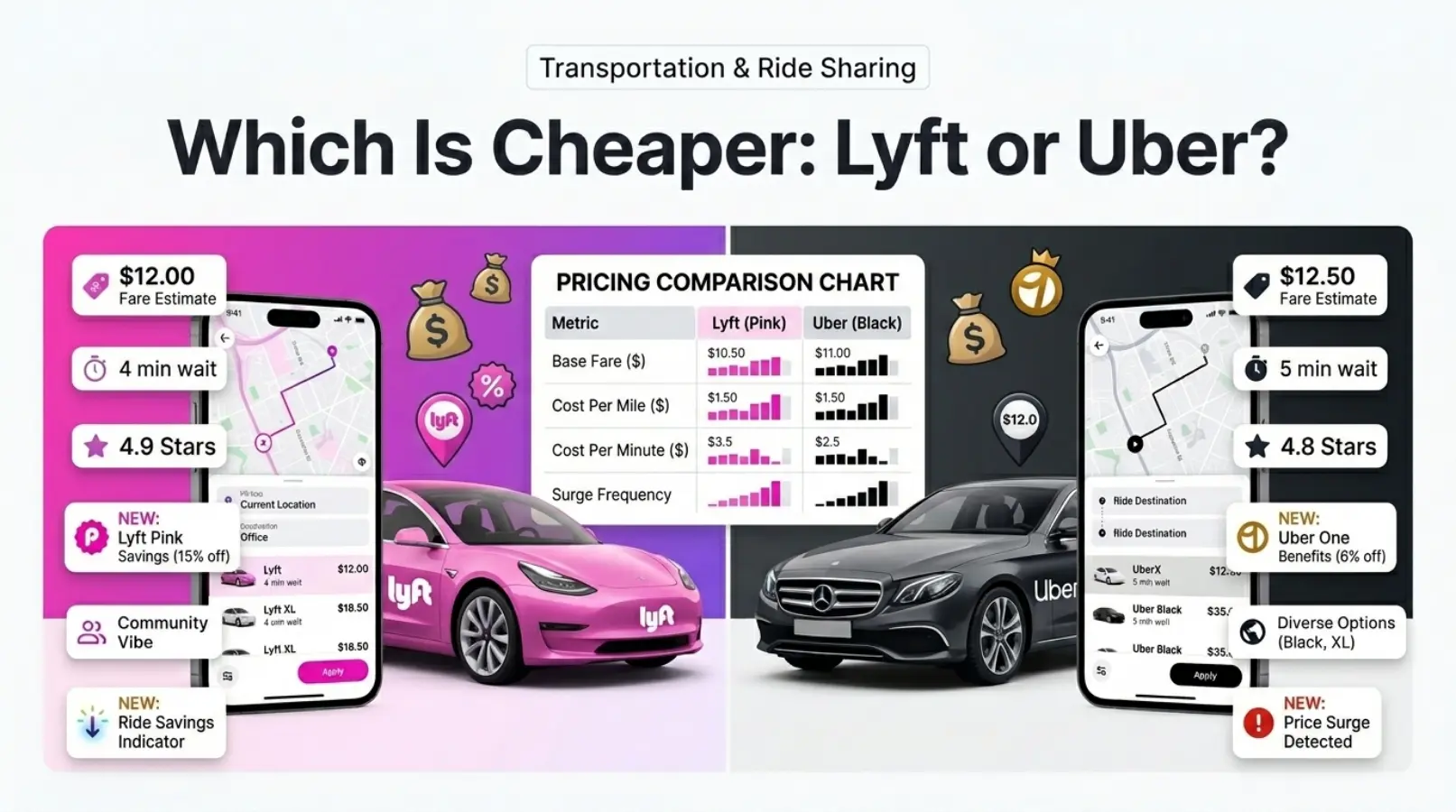
Pricing depends on demand, traffic, and location.
- Uber uses “surge pricing” during busy hours
- Lyft also increases prices during high demand
- Sometimes Uber is cheaper
- Sometimes Lyft is cheaper
There is no fixed winner.
If you want savings, compare both apps before booking. Prices can change every few minutes.
Availability and Coverage
Uber operates in more than 70 countries. It is available in most major cities worldwide.
Lyft mainly works in the United States and Canada.
If you travel internationally, Uber is usually the better option.
If you stay within North America, both apps are useful.
Safety Features
Safety is important for both platforms.
Common safety tools include:
- Live ride tracking
- Driver background checks
- Rating systems
- Emergency buttons in the app
- Trip sharing with friends
Uber has slightly more advanced safety features globally. Lyft also maintains strong safety standards.
Both companies invest heavily in rider protection.
Driver Experience
Drivers play a big role in ride quality.
Uber drivers often get:
- More ride requests
- Higher earning potential in busy cities
- More ride categories
Lyft drivers often report:
- Friendlier app experience
- Stronger tipping culture in some cities
- Less pressure in certain regions
Both platforms allow flexible working hours.
Payment Methods and App Experience
Both apps are cashless in most areas.
Payment methods include:
- Credit and debit cards
- Digital wallets
- In-app payment systems
Uber app has more features like food delivery and rentals. Lyft keeps its app more focused on rides.
If you prefer simplicity, Lyft is easier. If you want more services, Uber wins.
Real-Life Examples
- A tourist in London uses Uber for airport transfer
- A student in New York uses Lyft for daily campus travel
- A business traveler compares both apps for cheaper rides
- A family uses UberXL for group travel
These examples show that choice depends on situation.
Common Mistakes When Choosing Lyft or Uber
- Not checking both apps before booking
- Ignoring surge pricing
- Choosing wrong ride type
- Not checking driver ratings
- Forgetting promo codes
Small mistakes can increase your travel cost.
Tips to Save Money on Lyft or Uber
- Compare prices on both apps
- Avoid peak hours
- Use discount codes
- Choose shared rides when possible
- Book in advance during busy times
These tips help reduce your travel expenses.
FAQs (People Also Ask)
1. Which is cheaper, Lyft or Uber?
It depends on time and location. Prices change frequently.
2. Is Uber more popular than Lyft?
Yes, Uber is more popular globally.
3. Can I use both apps?
Yes, many users compare both before booking.
4. Which app is safer?
Both are safe and include strong safety features.
5. Does Lyft work outside the USA?
Mostly no. It mainly works in North America.
6. Do drivers prefer Uber or Lyft?
It depends on city demand and earnings.
7. Which app has faster pickup?
Uber usually has more drivers in many cities.
Expert Insights
Ride-sharing platforms have changed modern transportation. Apps like Uber and Lyft improve mobility and reduce waiting time.
From an SEO and user behavior view, users choose based on speed, price, and trust.
The best strategy is not loyalty to one app. Instead, smart users compare both apps in real time. This improves cost savings and travel efficiency.
Understanding pricing patterns and peak hours helps users save money long term.
Conclusion
Lyft or Uber is a common choice for modern travel. Both apps offer fast, safe, and easy transportation.
Uber is better for global coverage and more ride options. Lyft is simpler and strong in North America.
There is no single winner. Your choice depends on location, price, and convenience.
The smartest approach is to check both apps before booking. This helps you get the best deal every time.
In the end, both services make travel easier, faster, and more flexible for everyone.