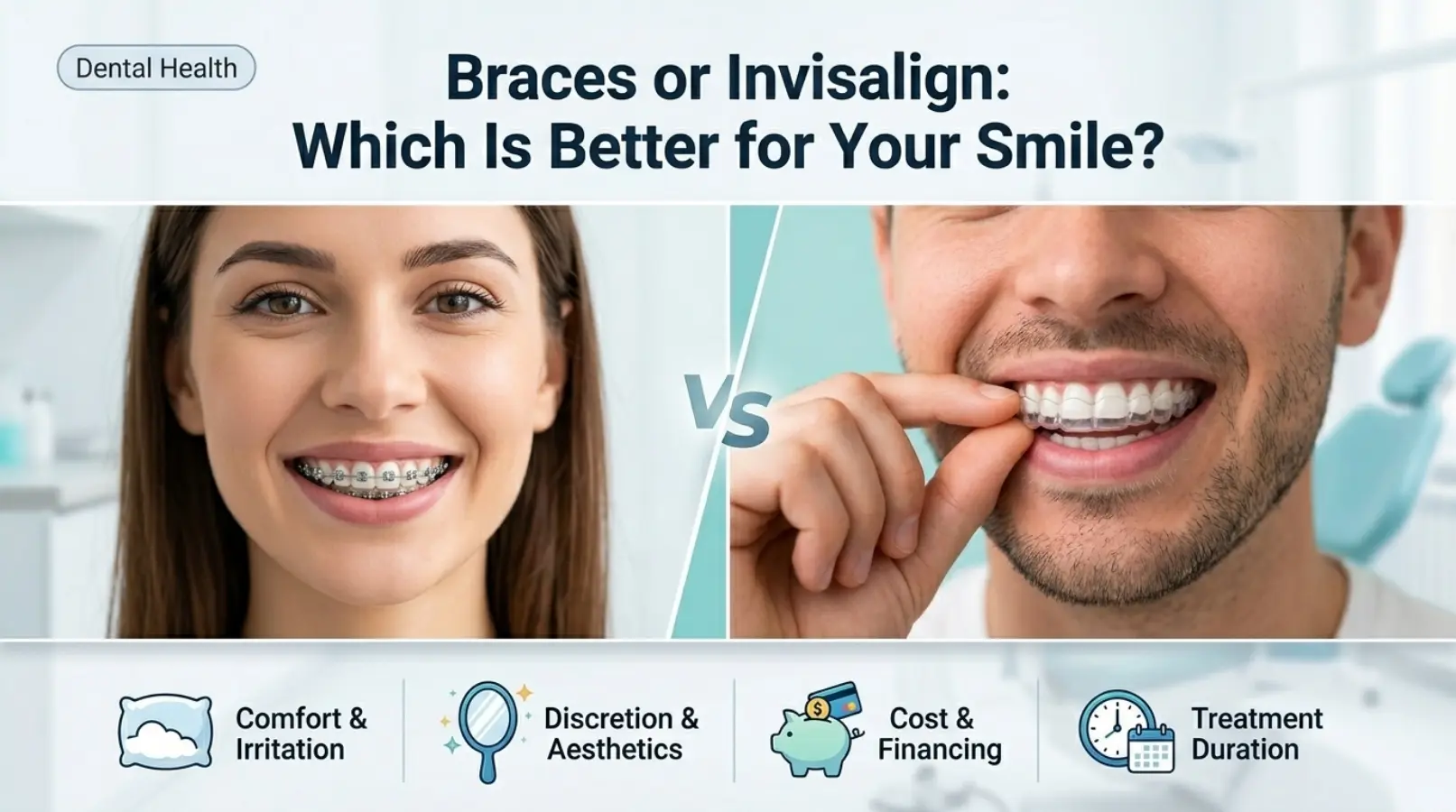
Braces or Invisalign is a common question for people who want straight teeth.
Both options help fix crooked teeth and improve your smile.
Braces use metal or ceramic wires attached to teeth.
Invisalign uses clear plastic aligners that are removable.
Both treatments work well, but they are different in comfort, cost, and appearance.
Choosing the right one depends on your dental needs and lifestyle.
In this guide, you will learn everything in simple words.
We will compare braces or Invisalign step by step.
This will help you make a smart decision for your smile.
Quick Summary: Braces vs Invisalign
- Braces are fixed metal or ceramic wires on teeth
- Invisalign uses clear, removable plastic trays
- Both fix crooked, crowded, or misaligned teeth
- Braces are stronger for complex cases
- Invisalign is more comfortable and less visible
- Treatment time is usually 6–24 months
- Choice depends on budget, lifestyle, and dental condition
What Does “Braces or Invisalign” Mean?
Braces or Invisalign means two different ways to straighten teeth.
Both are orthodontic treatments used by dentists.
Braces stay fixed on your teeth.
They slowly move teeth into correct position.
Invisalign uses clear aligners that you can remove.
Each set moves teeth step by step.
Both aim for the same goal: a healthy, straight smile.
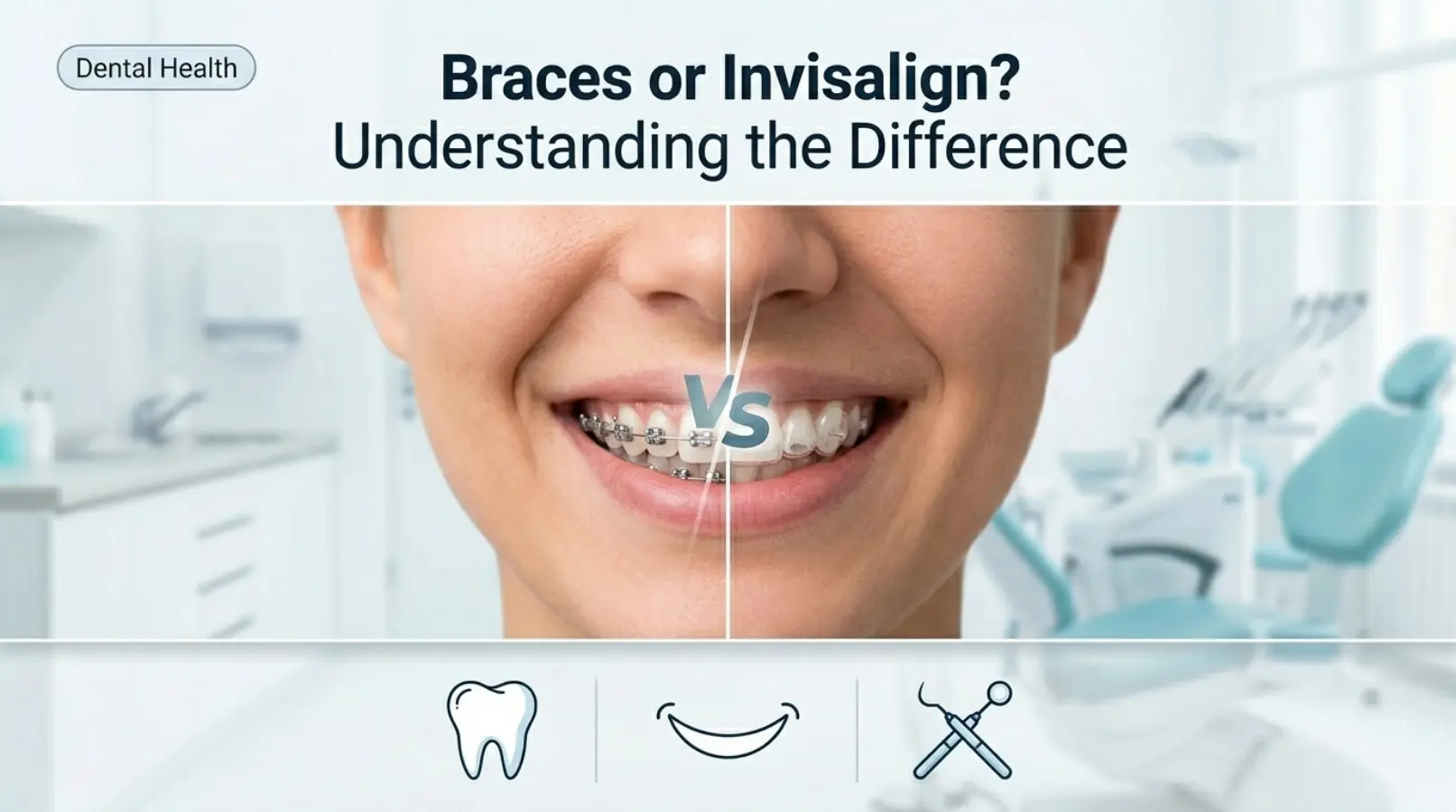
How Braces Work
Braces use metal brackets and wires.
These parts apply pressure on teeth.
Over time, teeth slowly shift into place.
Dentists adjust braces every few weeks.
Braces stay on 24/7 until treatment ends.
They are not removable by the patient.
Braces are strong and work for all types of dental issues.
How Invisalign Works
Invisalign uses clear plastic trays.
These trays are called aligners.
Each aligner is slightly different.
You change them every 1–2 weeks.
They gently move teeth into alignment.
You can remove them while eating or brushing.
One popular system is Invisalign, known for invisible orthodontic treatment.
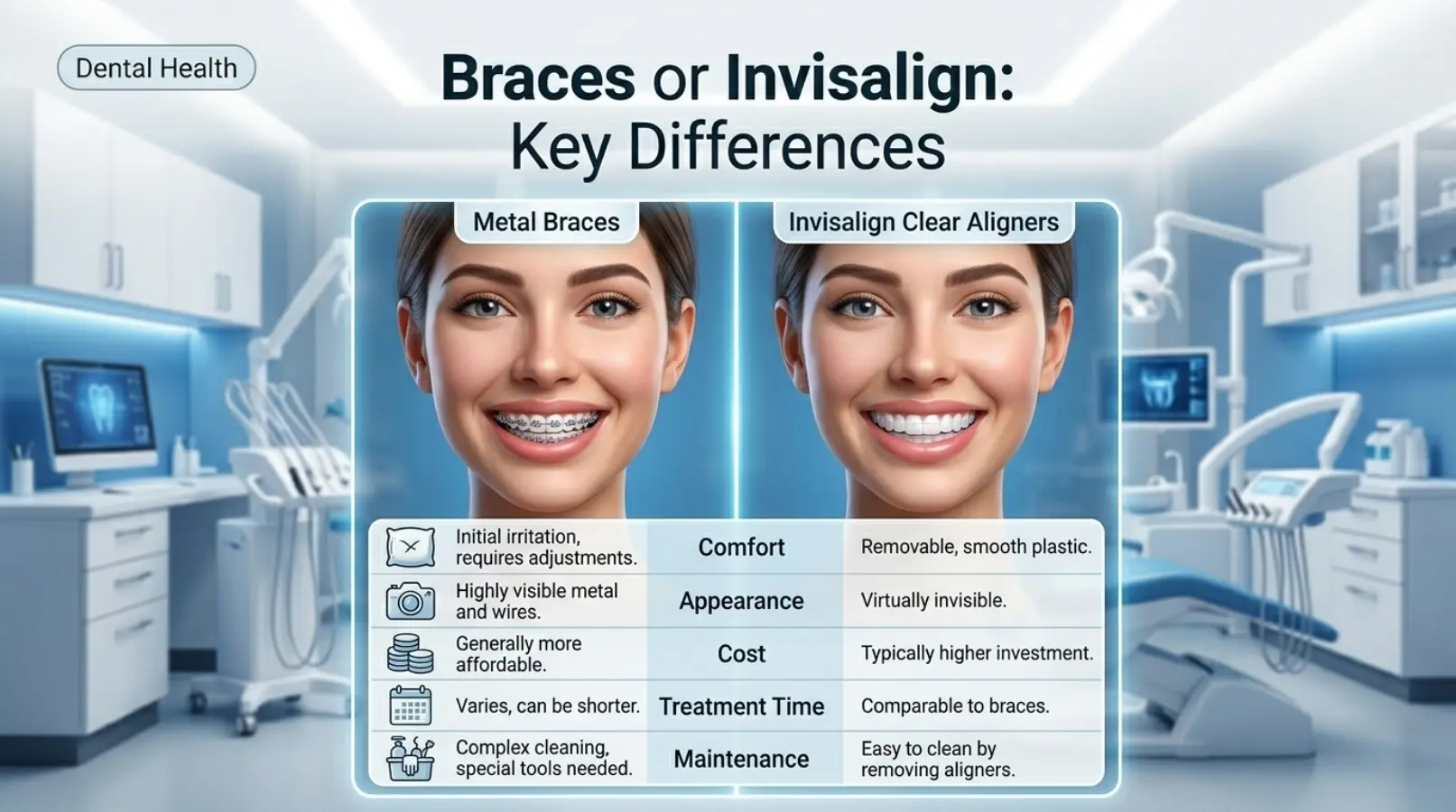
Braces or Invisalign: Key Differences
Here is a simple comparison table:
| Feature | Braces | Invisalign |
| Appearance | Visible metal or ceramic | Clear and invisible |
| Comfort | May cause irritation | More comfortable |
| Removal | Fixed | Removable |
| Cleaning | Harder to clean | Easy to clean |
| Food limits | Many restrictions | No restrictions |
| Cost | Usually lower | Usually higher |
| Best for | Complex cases | Mild to moderate cases |
Real-Life Examples
Braces example:
A teenager with very crowded teeth may need braces.
Braces can handle strong tooth movement.
Invisalign example:
An adult with small gaps may choose Invisalign.
It is discreet and easy to manage.
Braces or Invisalign depends on daily lifestyle too.
Students often prefer braces for effectiveness.
Working professionals often prefer Invisalign for appearance.
Which Is Better: Braces or Invisalign?
There is no single best option.
Both work well for teeth alignment.
Braces are better for:
- Severe crooked teeth
- Major bite problems
- Strong tooth movement
Invisalign is better for:
- Mild to moderate cases
- People who want invisible treatment
- Those who prefer flexibility
Your dentist will guide you based on your teeth condition.
Common Mistakes People Make
Many people make mistakes when choosing braces or Invisalign:
- Choosing only based on looks
- Ignoring dentist advice
- Not wearing Invisalign aligners enough hours
- Eating sticky food with braces
- Not cleaning teeth properly
Avoiding these mistakes improves results and reduces treatment time.
Tips for Better Results
Here are simple tips for success:
- Brush teeth after every meal
- Wear Invisalign 20–22 hours daily
- Avoid hard and sticky foods with braces
- Visit your dentist regularly
- Follow all instructions carefully
Good care improves both braces and Invisalign results.
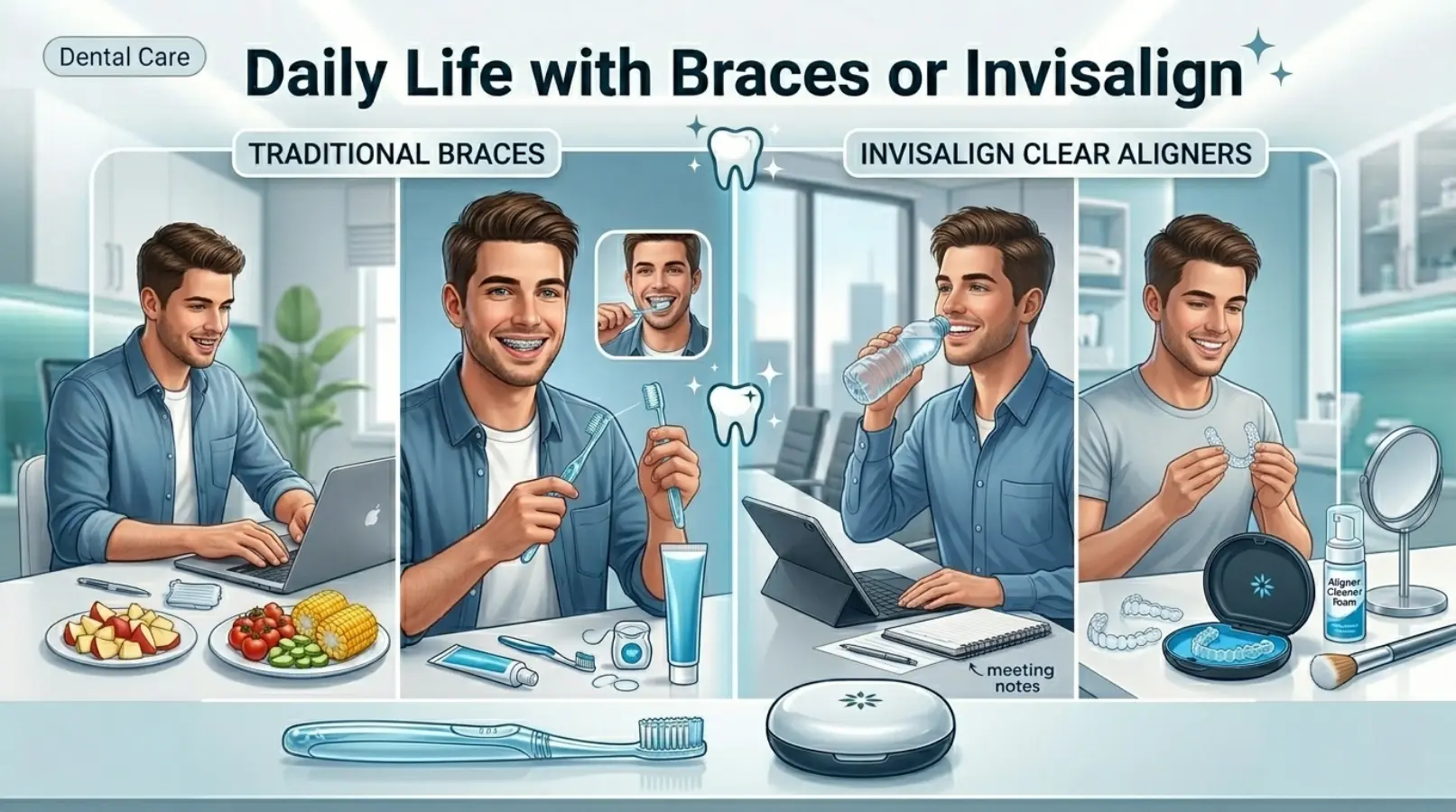
Daily Life with Braces or Invisalign
With braces, you need to:
- Avoid chewing gum
- Clean carefully around wires
- Visit dentist for adjustments
With Invisalign, you can:
- Remove aligners while eating
- Brush normally
- Maintain better oral hygiene
Both options require discipline for best results.
Expert Insights
Orthodontists say both braces and Invisalign are effective.
The key factor is patient consistency.
Braces work 24/7 without effort.
Invisalign needs patient discipline.
Experts recommend braces for complex dental corrections.
They suggest Invisalign for cosmetic and mild cases.
Choosing the right option improves long-term oral health.
A straight smile also boosts confidence and hygiene.
Why This Topic Matters
A straight smile is not only about looks.
It also improves chewing and speech.
Misaligned teeth can cause:
- Tooth decay
- Gum problems
- Jaw pain
Braces or Invisalign both improve dental health.
They also boost self-confidence in daily life.
FAQs About Braces or Invisalign
1. Are braces better than Invisalign?
It depends on your case. Braces work better for complex issues.
2. Is Invisalign painful?
It is usually less painful than braces. Mild pressure is normal.
3. How long does treatment take?
It takes 6 to 24 months on average.
4. Can I eat normally with Invisalign?
Yes, you can remove aligners before eating.
5. Do braces change your face?
They can improve facial balance by fixing jaw alignment.
6. Is Invisalign expensive?
Yes, it is usually more expensive than braces.
7. Can adults use braces or Invisalign?
Yes, both are suitable for teens and adults.
8. Which is faster: braces or Invisalign?
It depends on case severity. Braces may work faster for complex cases.
Conclusion
Braces or Invisalign both help you achieve a straight and healthy smile.
Braces are strong, fixed, and ideal for complex cases.
Invisalign is clear, removable, and more comfortable for daily life.
The best choice depends on your teeth condition and lifestyle.
Always consult a dental expert before deciding.
A straight smile improves confidence, health, and appearance.
Whether you choose braces or Invisalign, consistency is the key to success.