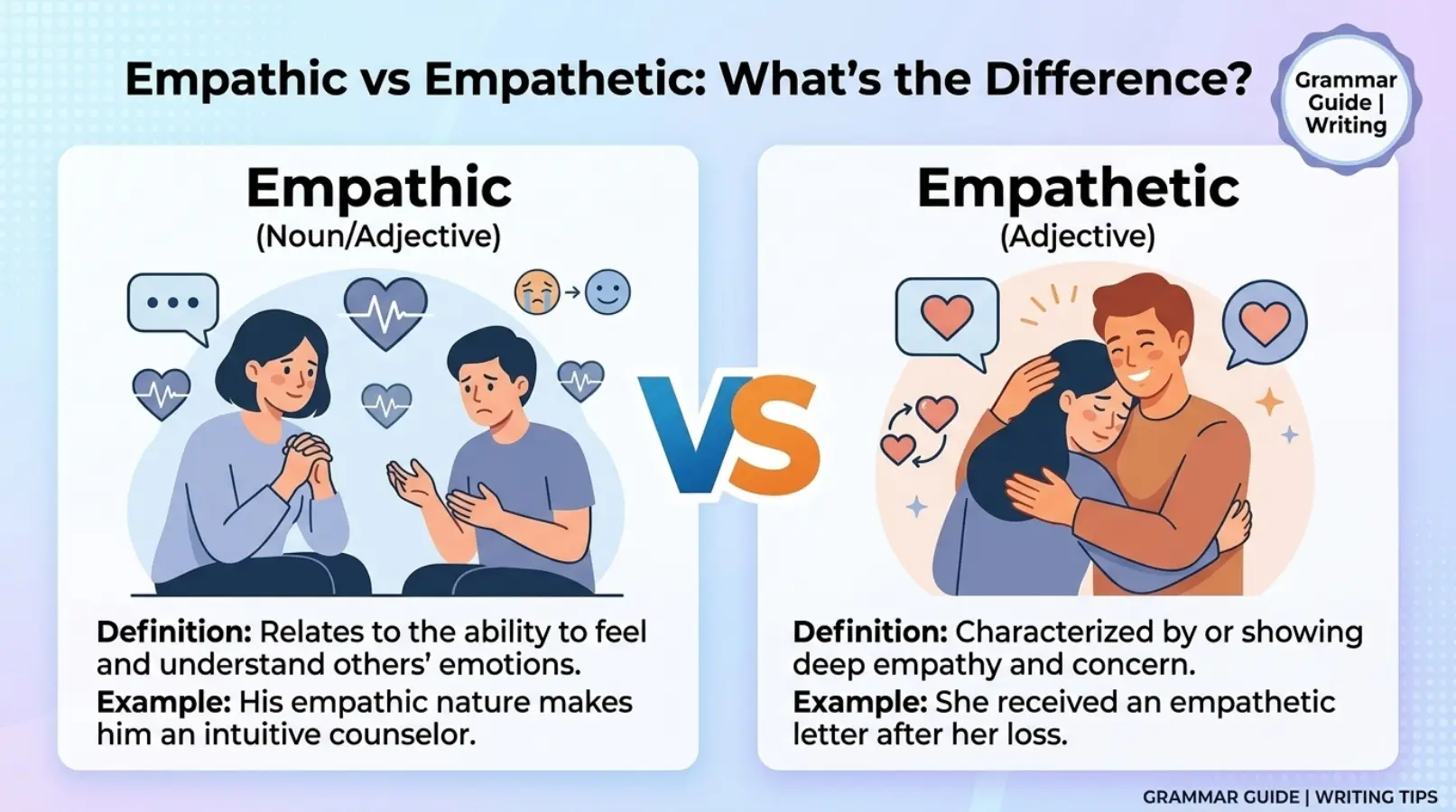
Empathic or empathetic is a common grammar question that confuses many English learners and writers. Both words relate to empathy. Both describe someone who understands another person’s feelings. However, many people wonder if one word is more correct than the other.
The good news is simple. Both words are correct in modern English. Still, they have slight differences in usage and popularity. Understanding these differences can help you write more clearly and confidently.
In this guide, you will learn the meaning of empathic and empathetic, see real-life examples, compare their usage, avoid common mistakes, and discover expert writing tips. By the end, you will know exactly when to use each word.
Quick Summary Box
- Empathic and empathetic both relate to empathy.
- Both words mean understanding another person’s feelings.
- Neither word is incorrect.
- Empathetic is more common in everyday English.
- Empathic often appears in psychology and academic writing.
- The choice depends on context and style preference.
- Most readers understand both terms equally well.
What Does Empathic Mean?
Empathic describes a person’s ability to understand and share another person’s emotions.
Simple Definition
Empathic means showing empathy toward someone else’s feelings or experiences.
Examples
- She gave an empathic response to her friend’s sadness.
- Good counselors are often empathic listeners.
- An empathic teacher understands student challenges.
The word focuses on emotional understanding and connection.
What Does Empathetic Mean?
Empathetic has nearly the same meaning as empathic. It describes someone who can understand and share another person’s feelings.
Simple Definition
Empathetic means being able to understand another person’s emotions and experiences.
Examples
- He was empathetic when his coworker lost a family member.
- Parents should be empathetic toward their children.
- An empathetic manager builds trust among employees.
In daily conversation, people often use empathetic more frequently.
Empathic or Empathetic: Key Difference
Although both words mean almost the same thing, there are small differences in usage.
| Feature | Empathic | Empathetic |
| Meaning | Understanding feelings | Understanding feelings |
| Correct English | Yes | Yes |
| Everyday Use | Less common | More common |
| Academic Writing | More common | Common |
| Professional Settings | Often used | Often used |
| Reader Familiarity | Moderate | High |
| Preferred in Conversation | Rarely | Frequently |
Quick Answer
If you are unsure, empathetic is usually the safer choice because it appears more often in modern English.
Why Do Both Words Exist?
English often creates different forms from the same root word.
The noun empathy came first. Later, English speakers formed adjectives from it.
Word Formation
- Empathy → Empathic
- Empathy → Empathetic
Both forms developed naturally over time.
This happens with many English words. Language evolves through common usage.
Which Word Is More Popular?
Today, empathetic appears more often in:
- Blogs
- News articles
- Social media
- Business communication
- Everyday conversation
Meanwhile, empathic appears more often in:
- Psychology research
- Academic journals
- Clinical discussions
- Professional studies
As language changes, empathetic continues to gain popularity.
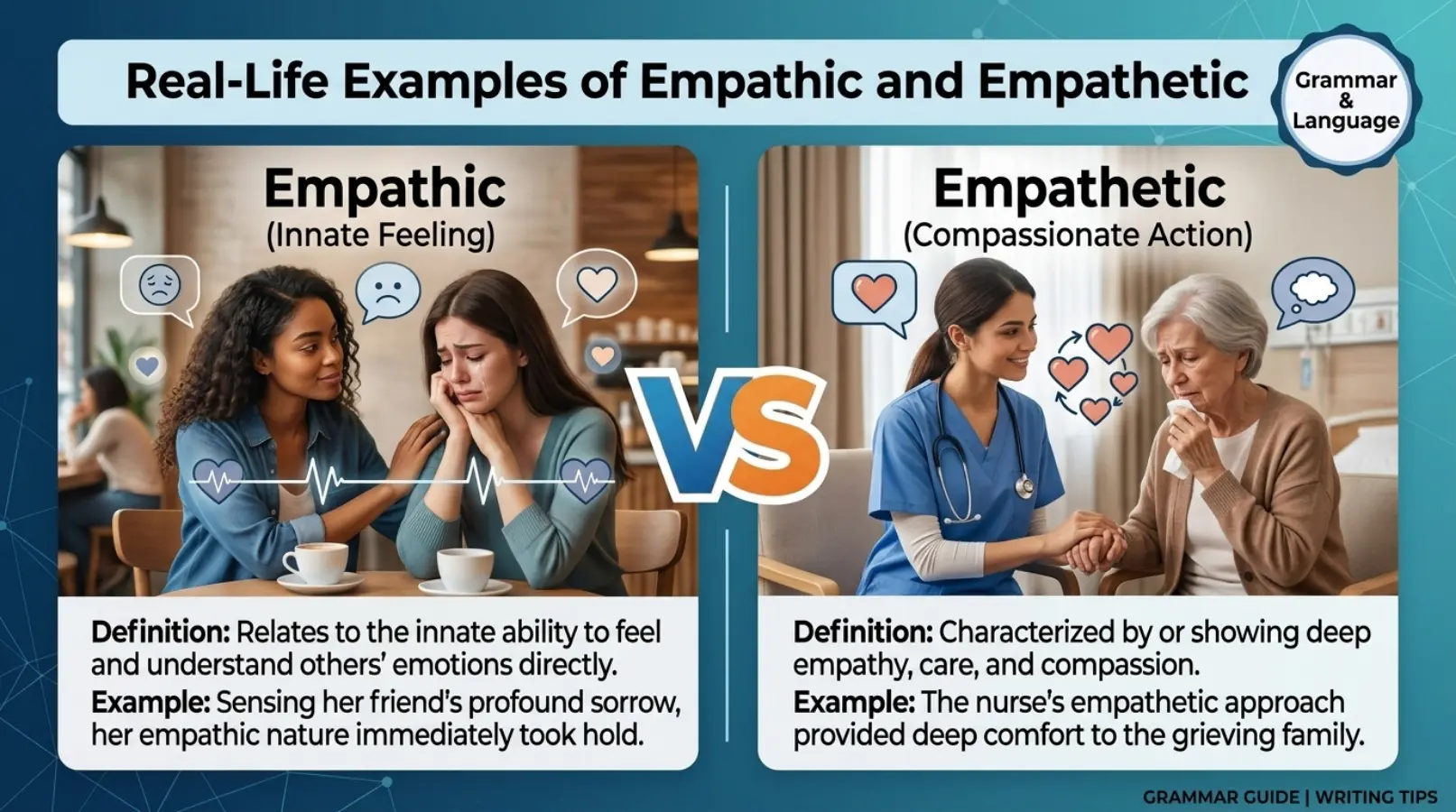
Real-Life Examples of Empathic and Empathetic
Understanding examples makes usage easier.
Example 1: Workplace
Empathetic:
A manager listens carefully when an employee faces personal problems.
Empathic:
A therapist uses empathic listening during counseling sessions.
Example 2: School
Empathetic:
Teachers should be empathetic toward struggling students.
Empathic:
An empathic approach helps students feel understood.
Example 3: Family
Empathetic:
An empathetic sibling offers support during difficult times.
Empathic:
Parents need empathic communication skills.
In most cases, switching the words will not change the meaning significantly.
When Should You Use Empathic?
Use empathic when:
- Writing academic papers
- Discussing psychology
- Referring to therapeutic techniques
- Following a style guide that prefers it
Examples
- Empathic communication improves counseling outcomes.
- The study examined empathic responses in children.
- Empathic listening strengthens relationships.
When Should You Use Empathetic?
Use empathetic when:
- Writing blog posts
- Creating website content
- Speaking casually
- Communicating with general audiences
Examples
- An empathetic leader earns employee trust.
- She remained empathetic during the conversation.
- Empathetic customer service improves satisfaction.
Because readers see it more often, empathetic usually feels more natural.
Common Mistakes People Make
Many writers confuse these words or misuse them.
Mistake 1: Thinking One Is Wrong
Incorrect belief:
Only empathetic is correct.
Reality:
Both words are grammatically correct.
Mistake 2: Mixing Empathy and Sympathy
Empathy and sympathy are different.
Empathy
- Understanding another person’s feelings.
Sympathy
- Feeling concern for another person’s situation.
Mistake 3: Overusing Formal Language
Some writers choose empathic everywhere because it sounds professional.
However, empathetic may sound clearer to general readers.
Mistake 4: Ignoring Audience
Always consider who will read your content.
Academic audiences may expect empathic.
General audiences often prefer empathetic.
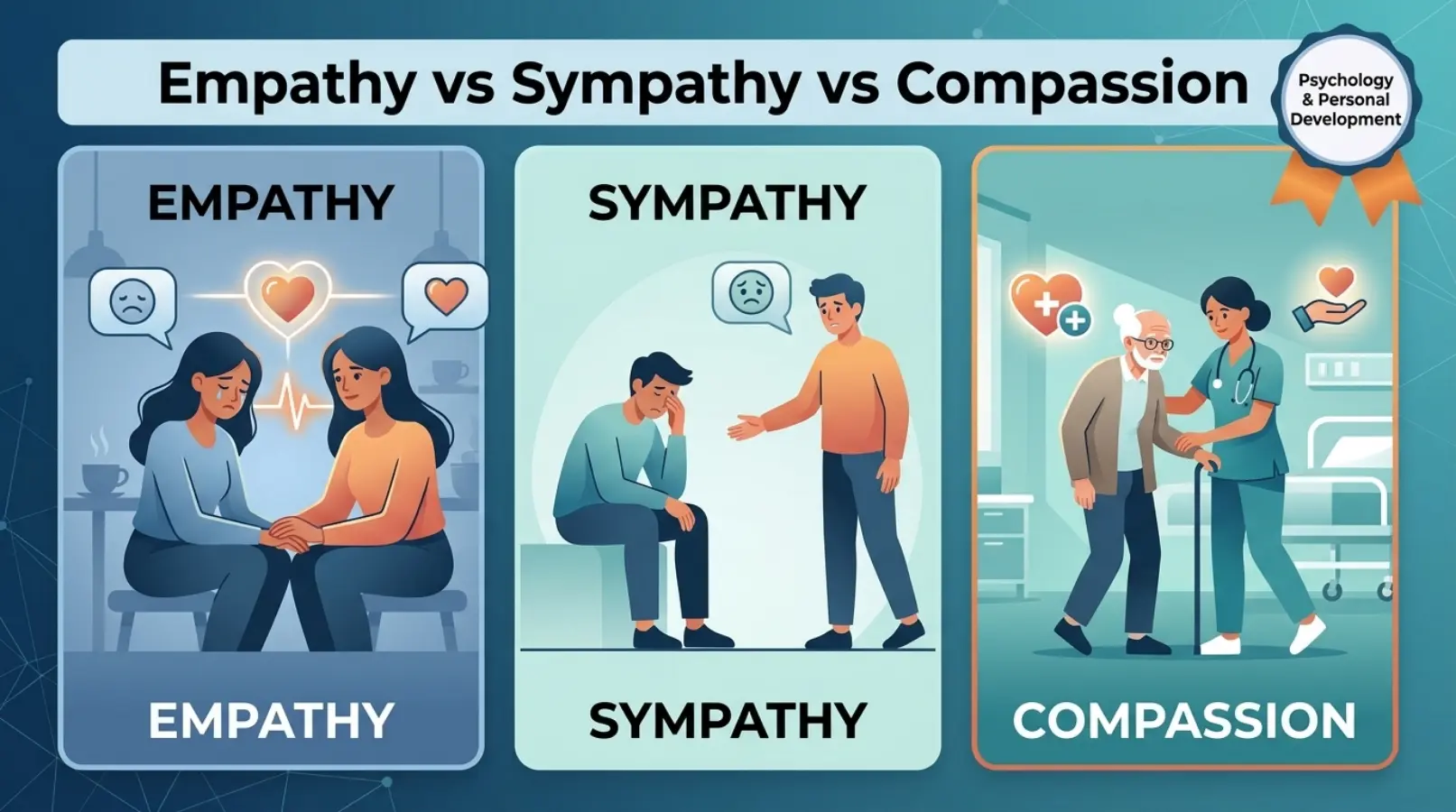
Empathy vs Sympathy vs Compassion
These terms often appear together.
| Term | Meaning |
| Empathy | Understanding another person’s feelings |
| Sympathy | Feeling concern for someone |
| Compassion | Understanding feelings and wanting to help |
Example
A friend loses a job.
Sympathy: “I’m sorry that happened.”
Empathy: “I understand how stressful that feels.”
Compassion: “I understand. How can I help?”
Tips for Remembering the Difference
Here are easy memory tricks.
Tip 1
Think of empathetic as the everyday version.
Tip 2
Think of empathic as the academic version.
Tip 3
If writing for a broad audience, choose empathetic.
Tip 4
If writing about psychology, empathic may fit better.
Tip 5
Stay consistent throughout your document.
Avoid switching between the two without reason.
Synonyms
- Understanding
- Compassionate
- Caring
- Sensitive
- Perceptive
- Supportive
- Kindhearted
- Considerate
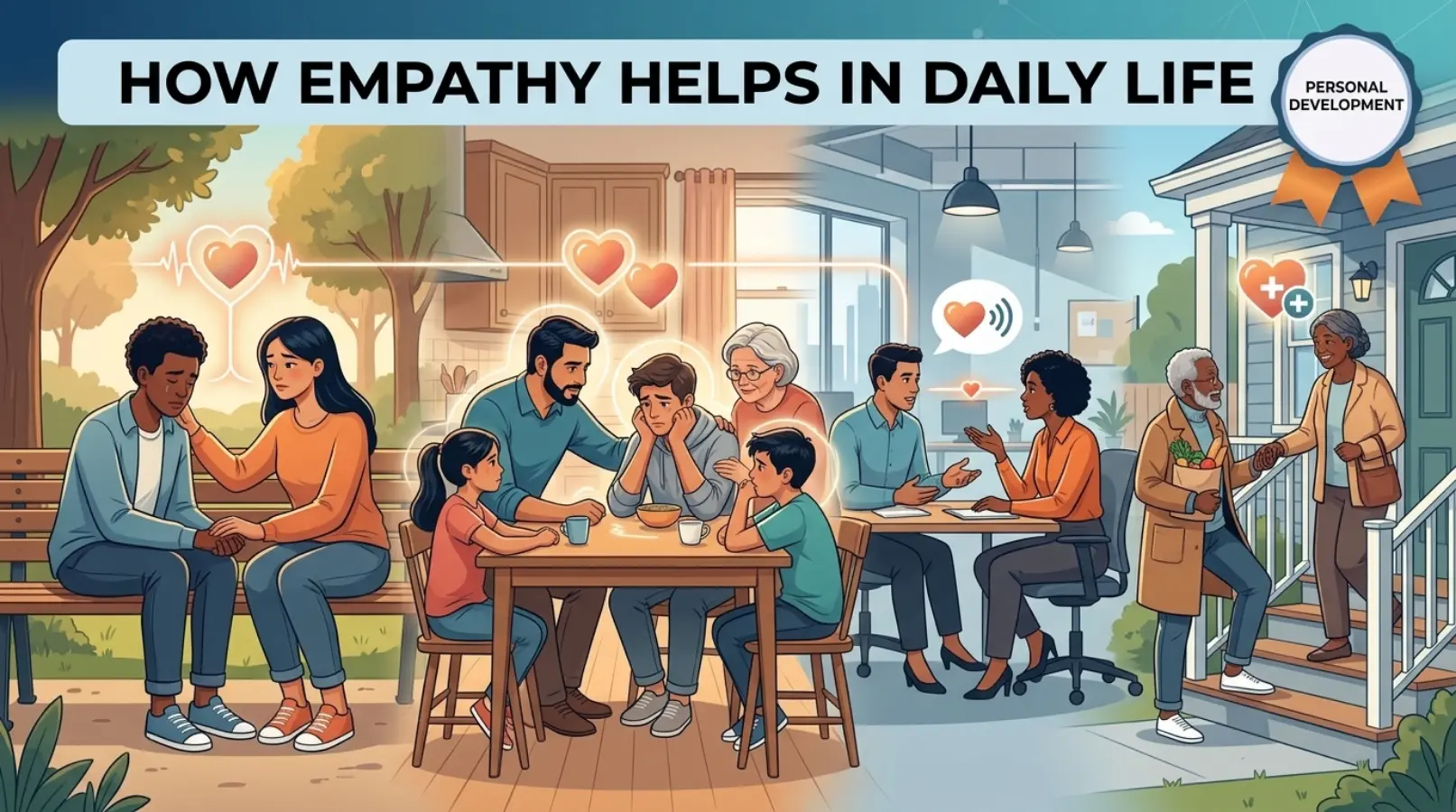
How Empathy Helps in Daily Life
Empathy improves relationships in many ways.
Better Communication
People feel heard and respected.
Stronger Friendships
Understanding builds trust.
Improved Leadership
Employees value empathetic leaders.
Better Parenting
Children feel safer sharing emotions.
Healthier Relationships
Empathy reduces misunderstandings.
Small acts of empathy create stronger connections.
Expert Insights: Why This Topic Matters
Language matters because word choice shapes communication.
Experts in communication and psychology often stress the importance of empathy. Whether you choose empathic or empathetic, the goal remains the same: understanding others.
Expert Tips
- Choose words your audience understands.
- Prioritize clarity over complexity.
- Use empathetic in general content.
- Use empathic in specialized contexts.
- Focus on genuine understanding, not just vocabulary.
Strong communication skills improve personal and professional success.
Frequently Asked Questions (FAQs)
Is empathic or empathetic correct?
Both are correct English words. They have nearly identical meanings.
Which word is more common?
Empathetic is more common in everyday English.
Is empathic more formal?
Yes. Empathic often appears in psychology and academic writing.
Can I use them interchangeably?
In most situations, yes. The meaning remains almost the same.
What is an empathetic person?
An empathetic person understands and shares another person’s feelings.
What is empathic listening?
Empathic listening involves carefully understanding another person’s emotions and perspective.
Does empathy mean agreement?
No. You can understand someone’s feelings without agreeing with them.
Which word should I use in blog writing?
Empathetic is usually the better choice for general readers.
Conclusion
The debate over empathic or empathetic is simpler than many people think. Both words are correct and both describe the ability to understand another person’s feelings. The main difference lies in usage. Empathetic appears more often in everyday communication, while empathic is common in psychology and academic writing.
When writing for a general audience, empathetic is usually the best choice. If you are discussing research, counseling, or psychology, empathic may fit better. Most importantly, choose the word that matches your audience and stay consistent throughout your writing.
At the end of the day, understanding and connecting with others matters more than which version you choose.
Discover More Post:
Meantime or Mean Time: Difference, Examples, and Usage Guide