Comma before or after but is one of the most common grammar questions in English. Many writers feel unsure about where the comma belongs. The good news is that the rule is simple once you understand it.
A comma can change how a sentence reads. It helps readers pause at the right place. It also makes your writing clearer and easier to understand.
In this guide, you will learn when to use a comma before but, when not to use one, and why you almost never place a comma after but. We will use simple examples, easy tips, and common mistakes. By the end, you will know the correct punctuation for everyday writing, school work, emails, and professional documents.
Quick Summary Box
- But is a coordinating conjunction.
- Use a comma before “but” when it joins two independent clauses.
- Do not use a comma before but when joining a simple phrase.
- Avoid putting a comma after “but” unless another grammar rule requires it.
- Read the sentence aloud. If both sides can stand alone, add a comma before but.
What Does “But” Mean?
The word but connects two ideas that contrast with each other.
It tells readers that the second idea is different from the first.
Examples
- I wanted coffee, but the shop was closed.
- She studied hard, but she felt nervous.
- He is young, but very experienced.
In each sentence, but introduces a contrasting idea.
Should You Put a Comma Before or After But?
The simple answer is:
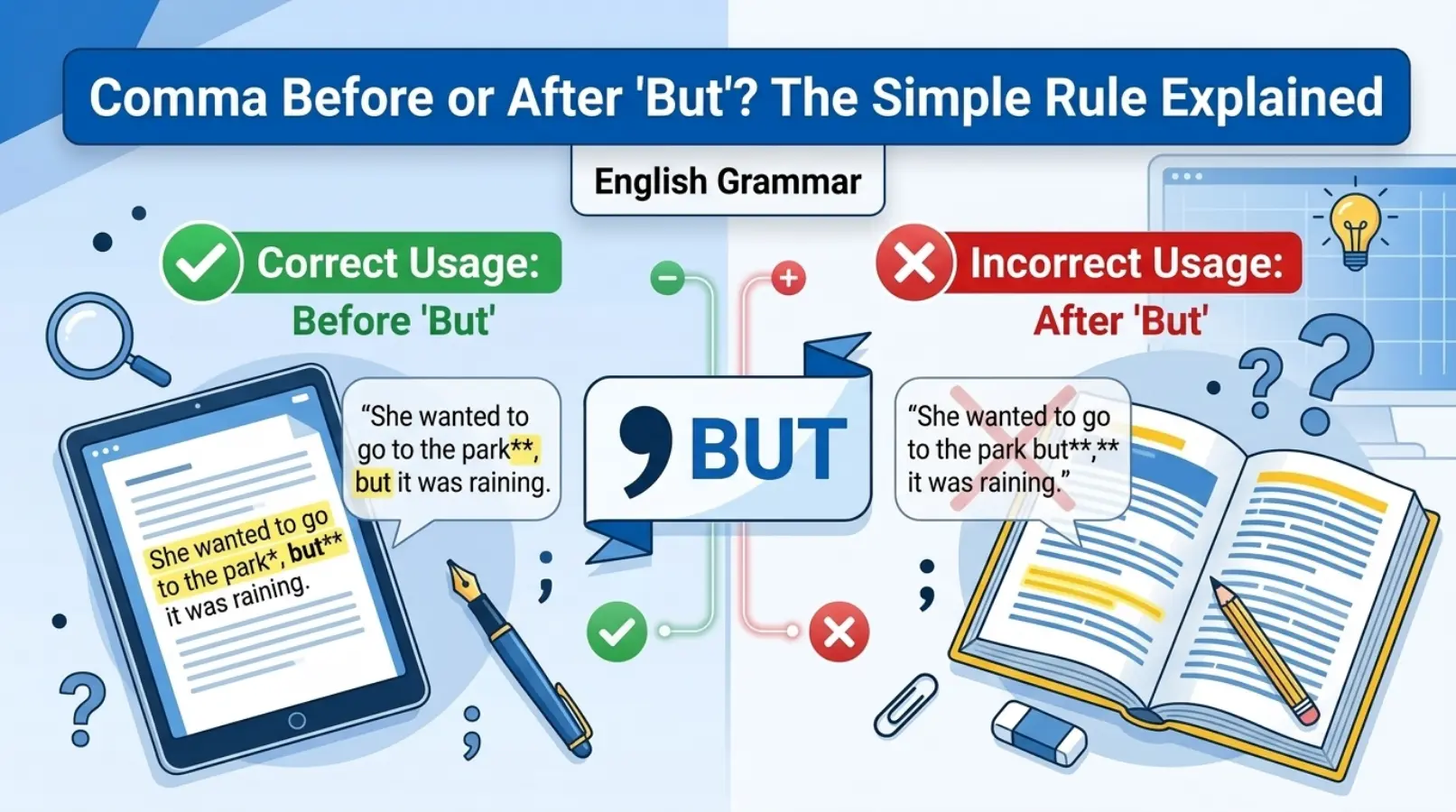
- ✅ Use a comma before but when joining two complete sentences.
Correct
I wanted pizza, but my friends wanted burgers.
Incorrect
I wanted pizza but, my friends wanted burgers.
When to Use a Comma Before “But”
Use it if it joins two independent clauses.
An independent clause has:
- A subject
- A verb
- A complete thought
Examples
- I called Sarah, but she did not answer.
- We left early, but traffic was still heavy.
- The cake looked great, but it tasted dry.
- He apologized, but she remained upset.
- The meeting ended, but everyone stayed to chat.
Both parts could stand alone as complete sentences.
When You Should NOT Use a Comma Before “But”
Skip the comma when but joins words, short phrases, or incomplete ideas.
Examples
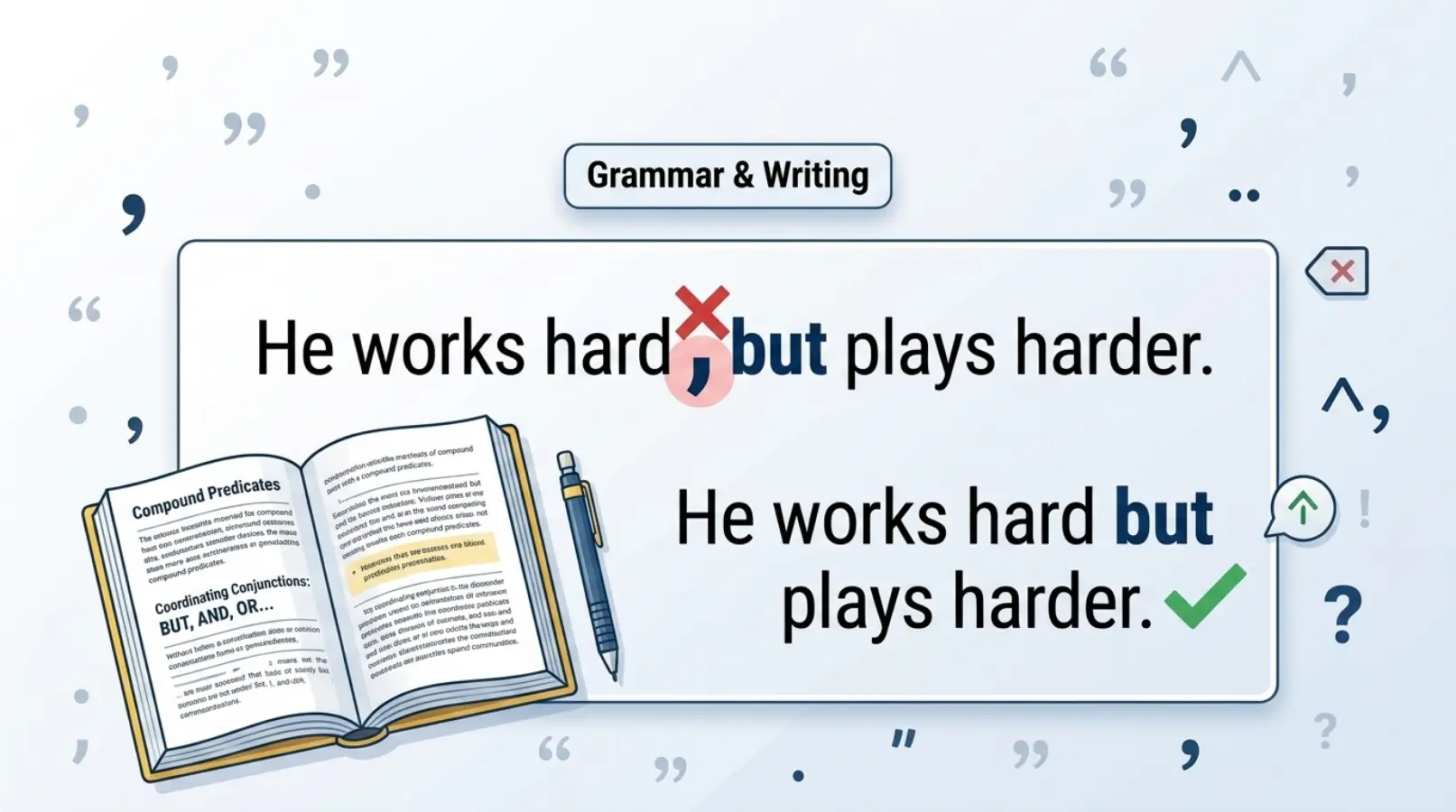
- She likes tea but not coffee.
- He is small but strong.
- They worked hard but happily.
- I wanted red but chose blue.
- The movie was long but interesting.
These sentences do not contain two complete clauses.
Can You Put a Comma After “But”?
Usually, no.
A comma after but often interrupts the sentence without reason.
Incorrect
- But, I forgot my keys.
- I wanted to help but, I was busy.
Correct
- But I forgot my keys.
- I wanted to help, but I was busy.
Exceptions: When a Comma Can Come After “But”
Sometimes another grammar rule requires a comma after but.
This usually happens with parenthetical words, introductory phrases, or interruptions.
Examples
- But, to be honest, I never expected that.
- But, surprisingly, nobody complained.
- But, of course, everyone has a different opinion.
The comma is not there because of but. It separates the extra phrase.
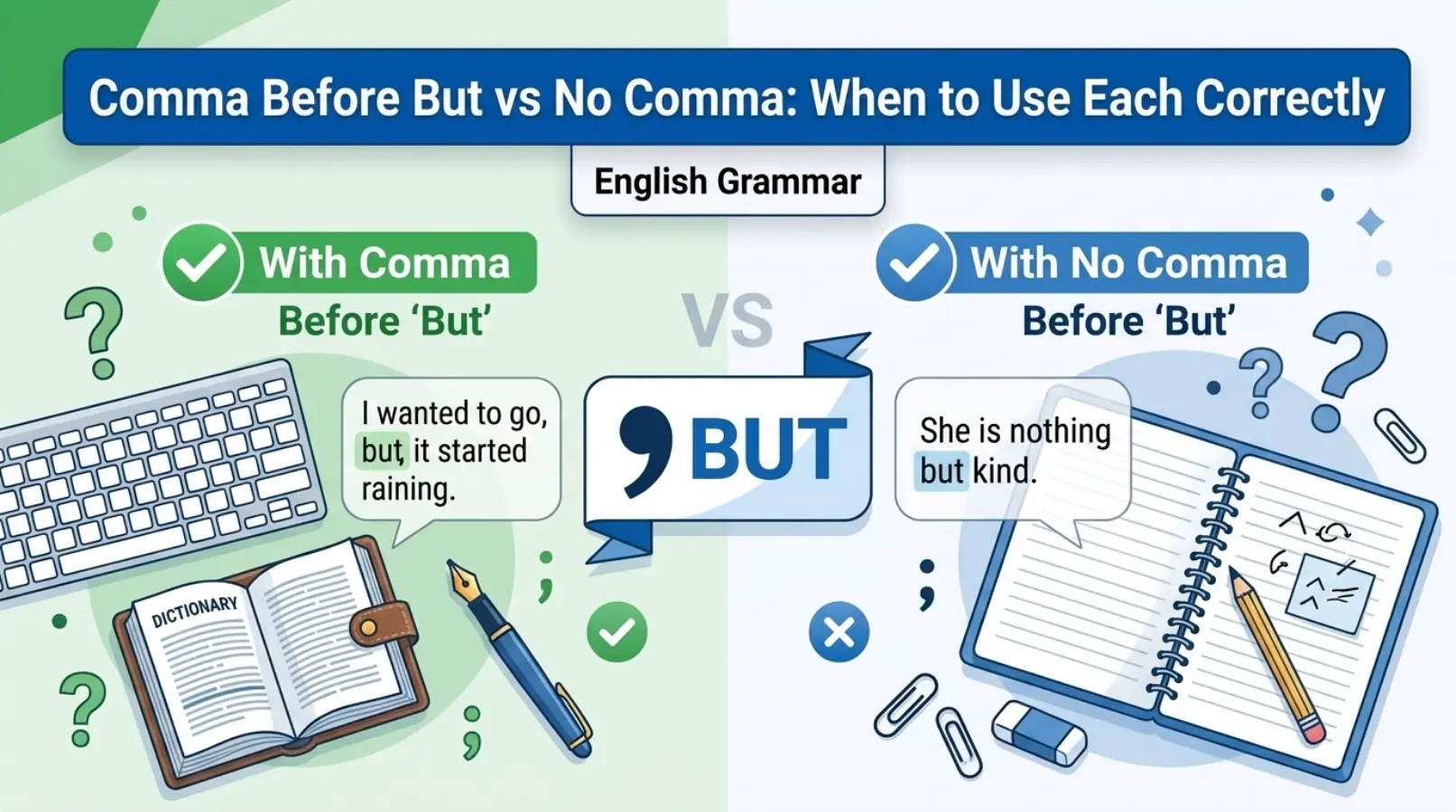
Comma Before But vs No Comma
| Situation | Use Comma? | Example |
| Two complete sentences | Yes | I called him, but he was asleep. |
| Two phrases | No | She is quiet but friendly. |
| Two adjectives | No | Small but powerful. |
| Contrast in one clause | No | I wanted tea but chose coffee. |
| Parenthetical phrase after but | Sometimes | But, honestly, I agree. |
Real-Life Examples of Comma Before or After But
At School
I studied all night, but I still felt nervous.
At Work
The project finished on time, but the client requested changes.
In Emails
I wanted to attend, but I already had plans.
During Conversations
I like horror movies but not scary games.
On Social Media
The vacation looked perfect, but it rained every day.
Common Mistakes Writers Make
1. Adding a Comma After “But”
❌ But, I disagree.
✅ But I disagree.
2. Forgetting the Comma Between Two Clauses
❌ I wanted to help but I was sick.
✅ I wanted to help, but I was sick.
3. Using Too Many Commas
❌ She is smart, but friendly.
✅ She is smart but friendly.
4. Following Every “But” With a Comma
Many people think every but needs a comma.
That is incorrect.
Always check whether both sides are complete sentences.
Easy Trick to Remember
Ask yourself one question:
Can both sides become separate sentences?
If yes:
Use a comma.
Example
- She smiled.
- He looked away.
Combined:
She smiled, but he looked away.
If no:
Do not use one.
Example
She smiled but stayed quiet.
Comma Before “But” in Academic Writing
Academic writing follows the same grammar rules.
Examples
- The results appeared promising, but more research was necessary.
- The study was detailed, but the sample size remained small.
Formal writing values clarity.
Correct comma placement improves readability.
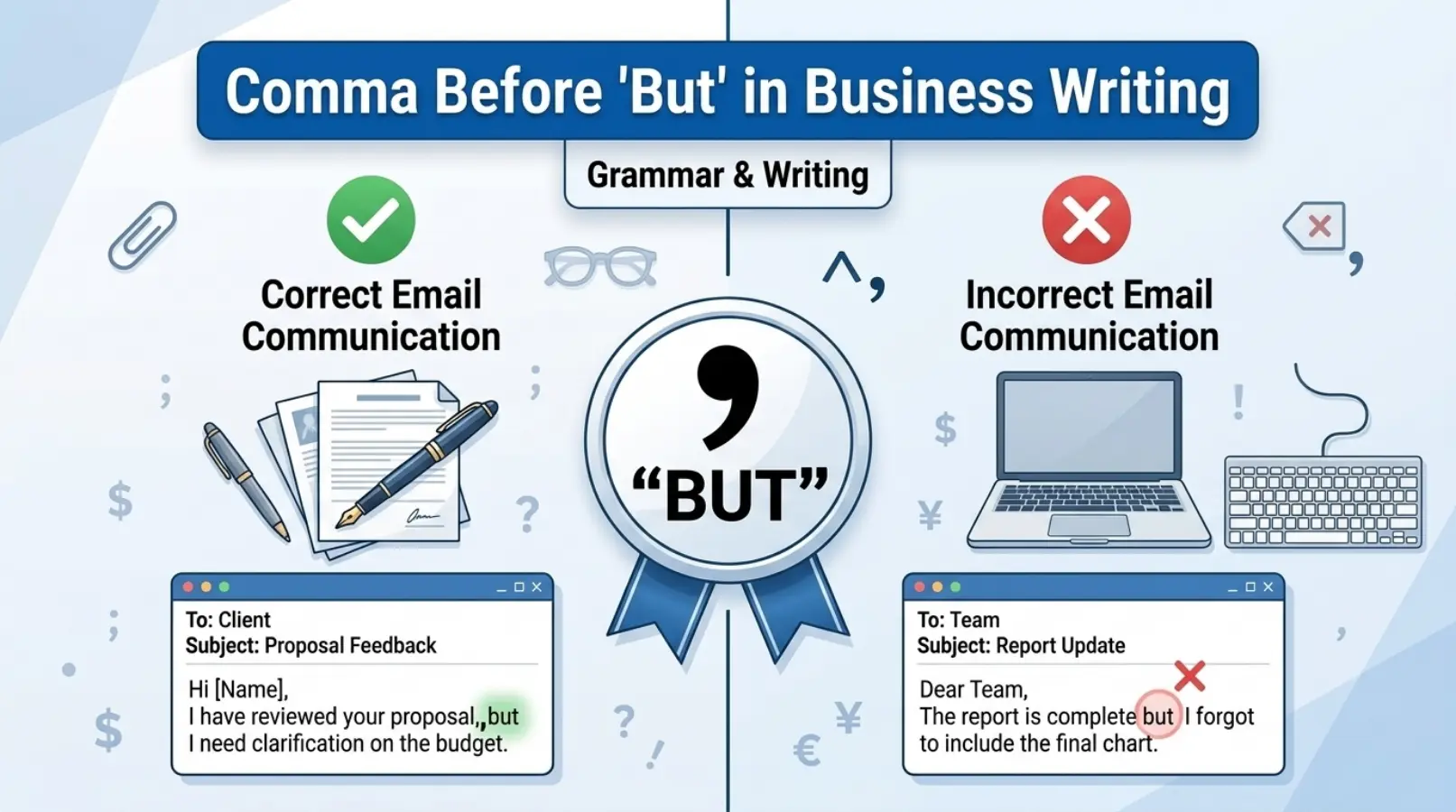
Comma Before “But” in Business Writing
Professional emails should also follow standard punctuation.
Example
Thank you for your proposal, but we have chosen another supplier.
Another Example
The report was complete, but it arrived late.
Proper punctuation makes writing look more professional.
Expert Insights: Why Correct Comma Placement Matters
Good punctuation improves communication.
Readers understand your ideas faster.
Correct commas also make your writing appear more professional.
Editors, teachers, and employers notice grammar mistakes quickly.
Learning this one rule helps you write stronger emails, essays, blog posts, and reports.
Remember that grammar exists to make ideas clear, not complicated.
Frequently Asked Questions (FAQs)
Do you always put a comma before but?
No. Use a comma only when but joins two independent clauses.
Is there ever a comma after but?
Yes, but only when another grammar rule requires it, such as setting off a parenthetical expression.
Why is there usually no comma after but?
Because but already connects ideas. Adding a comma usually creates unnecessary punctuation.
How do I know if I need a comma before but?
Check whether both parts are complete sentences. If they are, use a comma.
Is “but” a conjunction?
Yes. But is a coordinating conjunction.
Can I start a sentence with but?
Yes. Modern grammar accepts starting a sentence with but when it improves flow.
Should I use a comma before but in short sentences?
Only if both sides are complete sentences.
What is the easiest rule to remember?
If both sides can stand alone, place a comma before but.
Conclusion
Understanding comma before or after but becomes easy once you know the basic rule. Use a comma before but when it connects two complete sentences. Skip the comma when it joins simple words or phrases. In most cases, avoid placing a comma after but, unless another punctuation rule calls for it. These small changes make your writing clearer and more professional. If you write emails, essays, blog posts, or business documents, following this rule helps readers understand your message without confusion. Practice with real examples, and soon the correct punctuation will become second nature.
Discover More Post:
True or False Questions: 250+ Fun, Easy, and Tricky Questions
Manufacturing or Warehouse Jobs: Career Guide to Pay, and Skills