Incase or in case is a common grammar question. Many people type incase when they really mean in case. This small mistake appears in emails, school work, blogs, and social media posts.
The good news is that the rule is simple. In most situations, in case is the correct phrase. The word incase is usually a spelling mistake. However, there is one rare exception that many people do not know.
This guide explains the difference in simple words. You will learn the meaning, correct usage, examples, common mistakes, and easy tips. By the end, you will know exactly when to write in case and when incase may be acceptable.
Quick Summary Box
- In case is the correct phrase in everyday English.
- It means because something might happen.
- Incase is usually an incorrect spelling.
- A rare word encase means to cover or surround something.
- Most grammar checkers recommend using in case.
- Remember: two words for preparation, one word is usually wrong.
What Does “In Case” Mean?
In case is a phrase that means as a precaution or because something may happen.
People use it when they prepare for a possible situation.
Simple Definition
In case means to be ready if something happens.
Examples
- Take an umbrella in case it rains.
- Save your work in case the computer crashes.
- Bring extra water in case you get thirsty.
- Carry a charger in case your phone battery dies.
In each example, the action prepares for a possible event.
Is “Incase” a Real Word?
This question confuses many writers.
The answer is:
Usually, no.
Most dictionaries do not accept incase as the correct spelling when you mean “if something happens.”
Many people accidentally combine the two words into one.
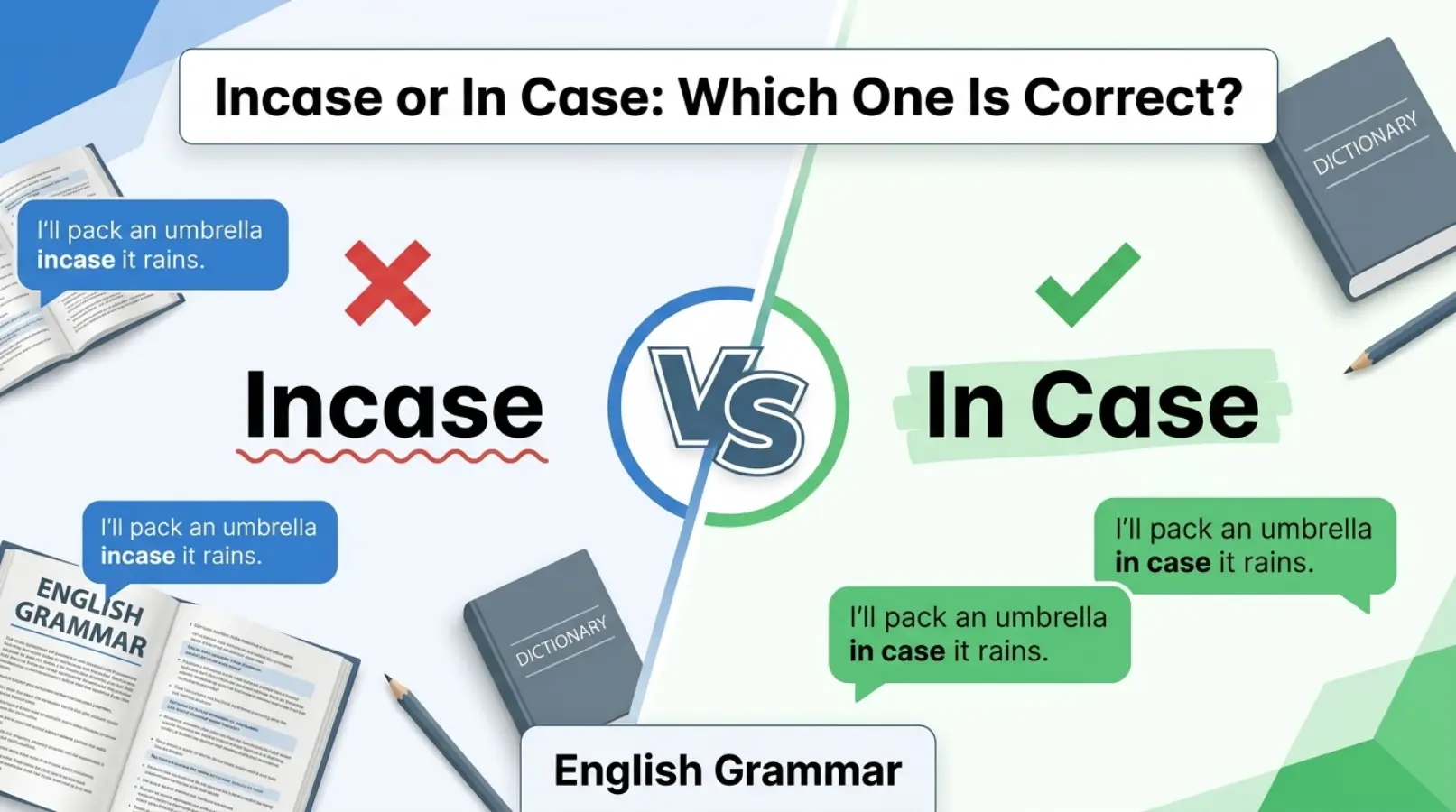
Wrong
Incase it rains, bring a jacket.
Correct
In case it rains, bring a jacket.
Incase or In Case: What’s the Difference?
The difference is easy to remember.
| Feature | In Case | Incase |
| Correct in modern English | Yes | Usually No |
| Means “if something happens” | Yes | No |
| Used in everyday writing | Yes | Rarely |
| Accepted by grammar experts | Yes | No |
| Safe to use | Always | Avoid |
Winner: Use in case in almost every situation.
Why Do People Write “Incase”?
There are several reasons.
1. Fast Typing
People often type quickly and combine words.
2. Autocorrect
Some keyboards mistakenly keep “incase.”
3. Similar Words
English has many closed compound words.
Examples include:
- Into
- Inside
- Within
- Instead
Because of these words, writers assume incase also exists.
4. Lack of Grammar Knowledge
Many learners simply never learned the difference.
How to Use “In Case” Correctly
The phrase usually comes before a possible event.
Pattern
Do something + in case + possible situation
Examples:
- Lock the door in case someone forgets.
- Charge your phone in case you need it later.
- Leave early in case there is traffic.
- Pack medicine in case you feel sick.
Notice that the action happens before the possible event.
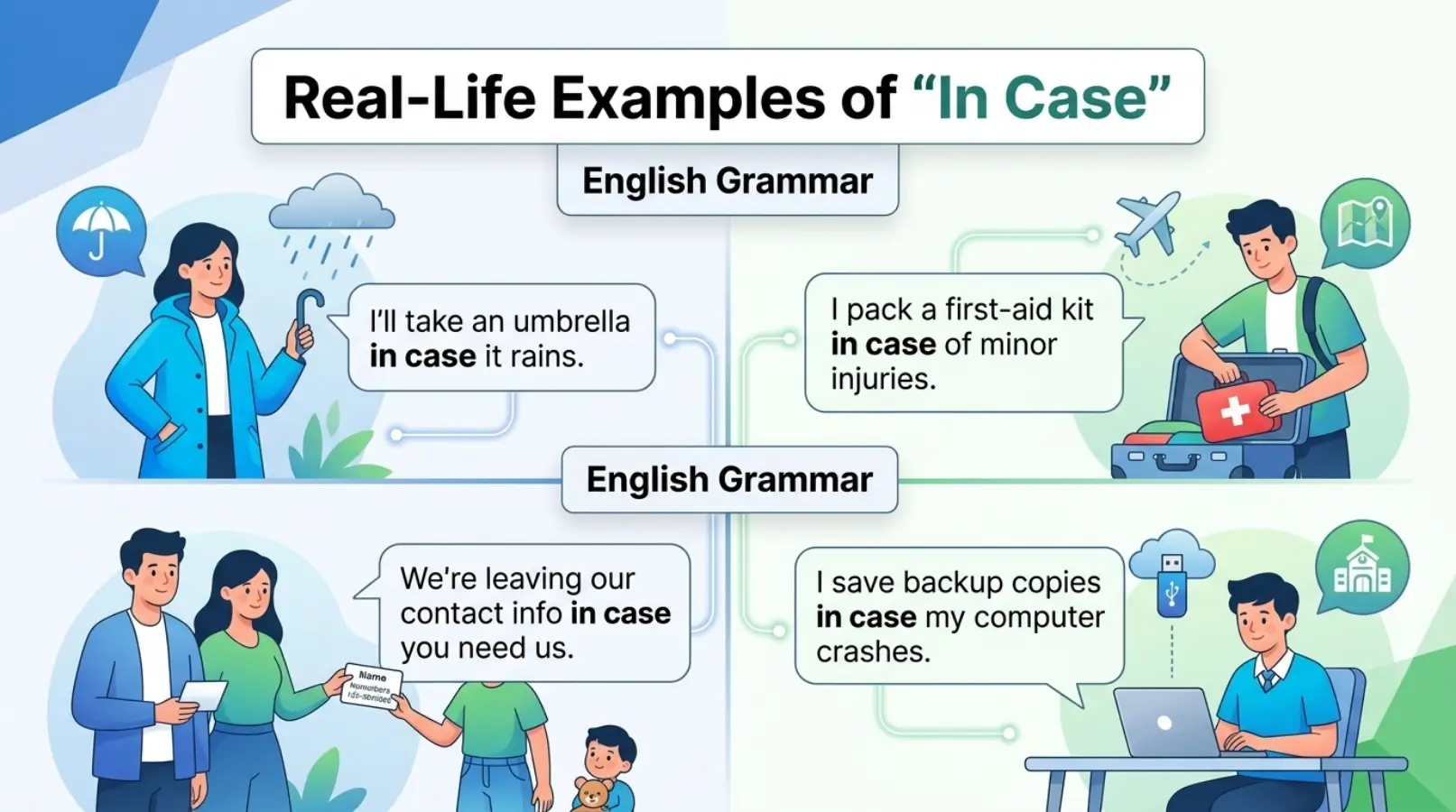
Real-Life Examples of “In Case”
Here are common situations.
At School
- Bring a pencil in case your pen stops working.
- Study tonight in case there is a quiz.
At Work
- Save your files in case the system fails.
- Print the report in case Wi-Fi stops working.
While Traveling
- Carry cash in case your card does not work.
- Pack warm clothes in case the weather changes.
At Home
- Buy candles in case the power goes out.
- Keep extra batteries in case you need them.
Common Mistakes to Avoid
Many writers make these errors.
Mistake 1
❌ Incase I forget.
✅ In case I forget.
Mistake 2
❌ Incase of emergency.
✅ In case of emergency.
Mistake 3
❌ Keep this incase you need it.
✅ Keep this in case you need it.
Mistake 4
❌ I packed food incase we got hungry.
✅ I packed food in case we got hungry.
Easy Trick to Remember
Here is a simple memory trick.
Ask yourself:
Can I replace it with “if something happens”?
If yes, write in case.
Example:
Take a jacket if something happens and it gets cold.
This works perfectly.
So:
Take a jacket in case it gets cold.
Never write incase here.
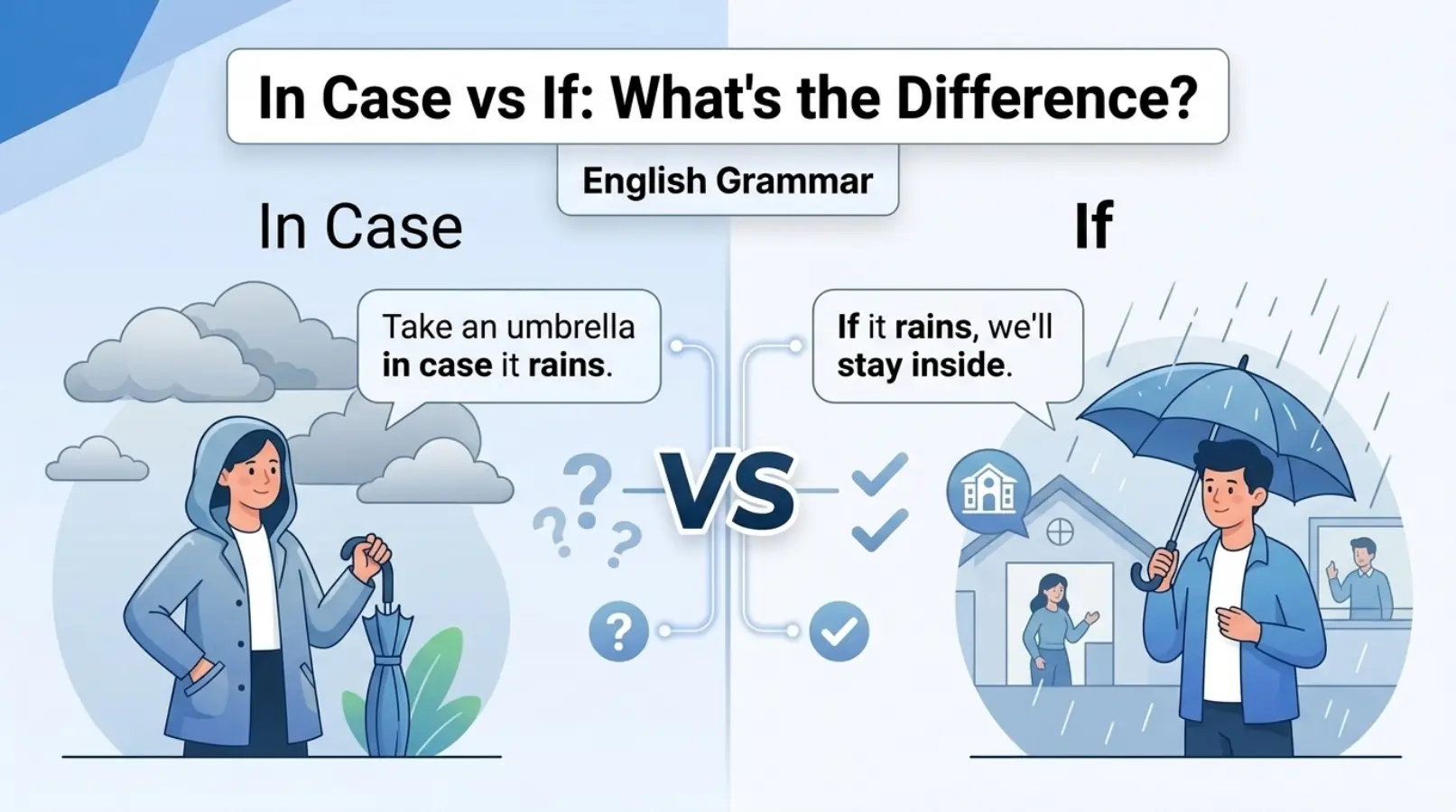
In Case vs If
Many people think these phrases mean the same thing.
They are close, but not identical.
| In Case | If |
| Prepare before something happens | Talks about a condition |
| Shows precaution | Shows possibility |
| Action comes first | Event may come first |
| More about planning | More about conditions |
Example
In case
Take an umbrella in case it rains.
You prepare before the rain.
If
If it rains, we will stay home.
You respond after the event happens.
Synonyms
- as a precaution
- just in case
- for safety
- to be prepared
- for protection
- beforehand
- in preparation
- to avoid problems
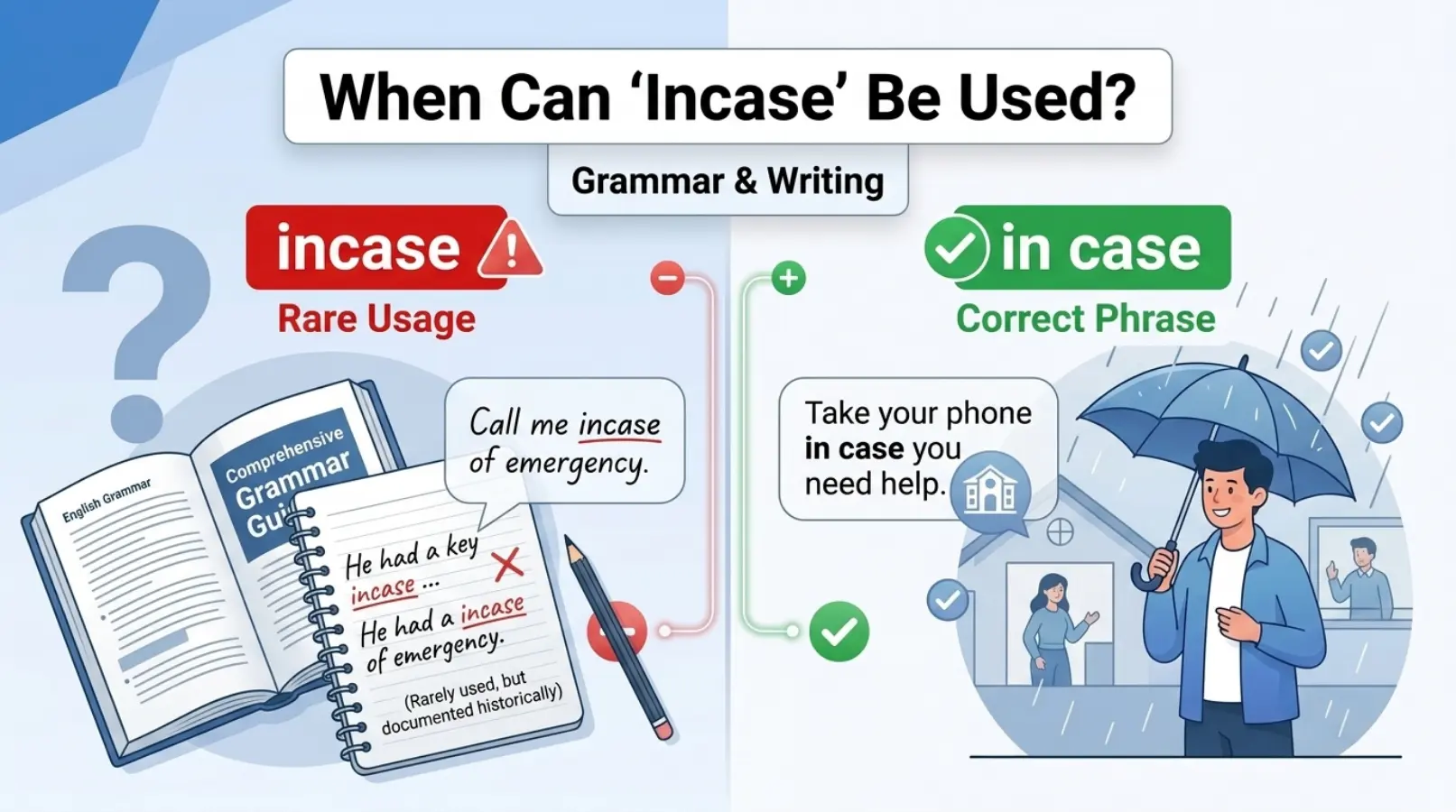
When Can “Incase” Be Used?
This is the rare exception.
Some technical or historical sources mention incase as a variant related to encase.
Encase means:
To cover or surround something.
Example:
- The glass encased the old coin.
Modern English almost always prefers encase instead of incase.
That means you should avoid writing incase.
Expert Tips for Correct Grammar
Professional editors follow these habits.
Always Proofread
Read your writing once before publishing.
Use Grammar Tools
Grammar checkers quickly spot mistakes.
Read Sentences Aloud
Errors become easier to notice.
Learn Common Word Pairs
Examples include:
- Affect vs Effect
- Its vs It’s
- Then vs Than
- Your vs You’re
- Incase or In Case
Small grammar improvements build stronger writing.
Why This Grammar Rule Matters
Correct grammar builds trust.
Readers notice spelling mistakes.
Using in case correctly helps you:
- Write better emails
- Improve school assignments
- Create professional documents
- Publish stronger blog posts
- Increase reader confidence
Good grammar also helps search engines understand your content more clearly.
Is it “incase” or “in case”?
The correct phrase is in case. It means as a precaution or because something might happen. The spelling incase is usually incorrect in modern English. In almost every situation, you should write in case as two separate words.
Frequently Asked Questions (FAQs)
Is “incase” one word or two?
Use in case as two words. It is correct in standard English.
Is “incase” ever correct?
Very rarely. Modern English almost always uses encase instead.
What does “in case” mean?
It means preparing for something that might happen.
Is “in case” formal or informal?
It works in both formal and informal writing.
Can I say “just in case”?
Yes. It is a very common English expression.
Example:
Bring your passport just in case.
Is “incase of emergency” correct?
No.
The correct phrase is:
In case of emergency.
Is “in case” the same as “if”?
Not exactly.
In case shows preparation.
If shows a condition.
How can I remember the correct spelling?
Remember this rule:
If you mean “because something might happen,” always write “in case.”
Expert Insight
Grammar experts agree that in case is the standard form in modern English. Leading style guides, dictionaries, and editing tools recommend writing it as two separate words when expressing precaution. Using the correct form improves readability, strengthens credibility, and helps avoid unnecessary corrections. Whether you are writing an email, an academic paper, or a blog post, choosing in case reflects careful and professional writing.
Conclusion
Understanding incase or in case is easier than it first appears. In modern English, in case is the correct phrase when you want to show preparation for something that might happen. The single-word spelling incase is almost always a mistake and should be avoided. If you remember that in case means as a precaution, you will rarely make this error again. Small grammar improvements like this make your writing clearer and more professional. They also help readers trust your content. The next time you write an email, article, or message, choose in case with confidence and enjoy stronger, more accurate English.
Discover More Post:
Manufacturing or Warehouse Jobs: Career Guide to Pay, and Skills
Trick or Treat Studios: Guide to Masks, Costumes, and Collectibles