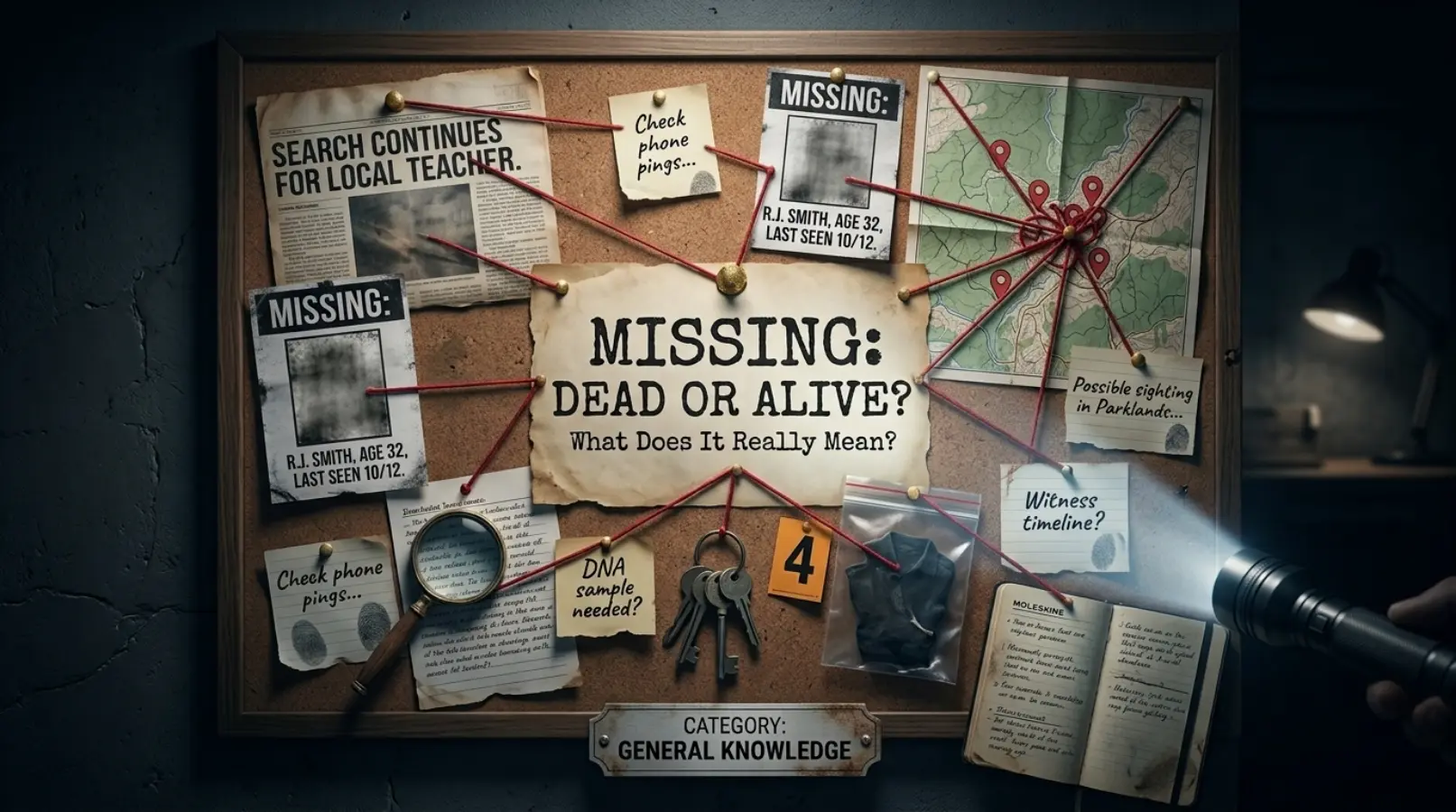
Missing dead or alive is a phrase people often search when someone disappears. They want to know if the person has been found or if their condition is known. The phrase appears in news stories, police reports, online searches, and social media posts.
Many people misunderstand what this phrase really means. It does not confirm that a missing person has died. Instead, it usually shows that authorities or the public are trying to determine whether the missing person is alive or deceased.
This guide explains the meaning in simple words. You will also learn where the phrase is used, common mistakes, real-life examples, and respectful ways to talk about missing person cases.
Quick Summary Box
- Missing dead or alive refers to a person whose condition is unknown.
- It does not mean the person is confirmed dead.
- The phrase often appears in news reports and online searches.
- Police continue searching until reliable evidence is found.
- Always use respectful language when discussing missing people.
- Avoid spreading rumors or unverified information.
What Does “Missing Dead or Alive” Mean?
The phrase missing dead or alive describes a missing person whose current condition is unknown.
In simple words:
- The person is missing.
- Nobody knows if they are alive.
- Nobody has confirmed they are dead.
- Authorities continue investigating.
The phrase highlights uncertainty rather than giving an answer.
Simple Definition
Missing dead or alive means a missing person’s location and condition are still unknown.
Understanding the Phrase in Simple Words
Many people search this phrase after hearing about a missing person.
They may wonder:
- Has the person been found?
- Is the person safe?
- Is there any official update?
The phrase itself answers none of these questions.
Instead, it simply describes the unknown status of the person.
For example:
Sarah disappeared during a hiking trip. She remains missing, with her condition unknown until investigators find reliable evidence.
Why Do People Search “Missing Dead or Alive”?
People search this keyword for different reasons.
Some common reasons include:
- Following breaking news
- Looking for police updates
- Checking if someone has been found
- Reading about famous missing persons
- Learning what the phrase means
Searches often increase after major news events.

Where Is the Phrase Commonly Used?
You may see missing dead or alive in several places.
News Articles
Journalists report ongoing investigations.
Police Announcements
Authorities ask for public help.
Social Media
People share missing person alerts.
Online Forums
Users discuss ongoing cases.
Search Engines
People type the exact phrase to find updates.
Real-Life Example Scenarios
Here are simple examples.
Example 1
A teenager disappears after school.
Police begin searching.
News reports describe the student as missing because no one knows their location.
Example 2
A hiker never returns from a mountain trail.
Search teams continue looking.
Until evidence appears, the person’s condition remains unknown.
Example 3
A boat disappears during a storm.
Rescue teams search for survivors.
Authorities avoid guessing whether passengers are alive or dead.
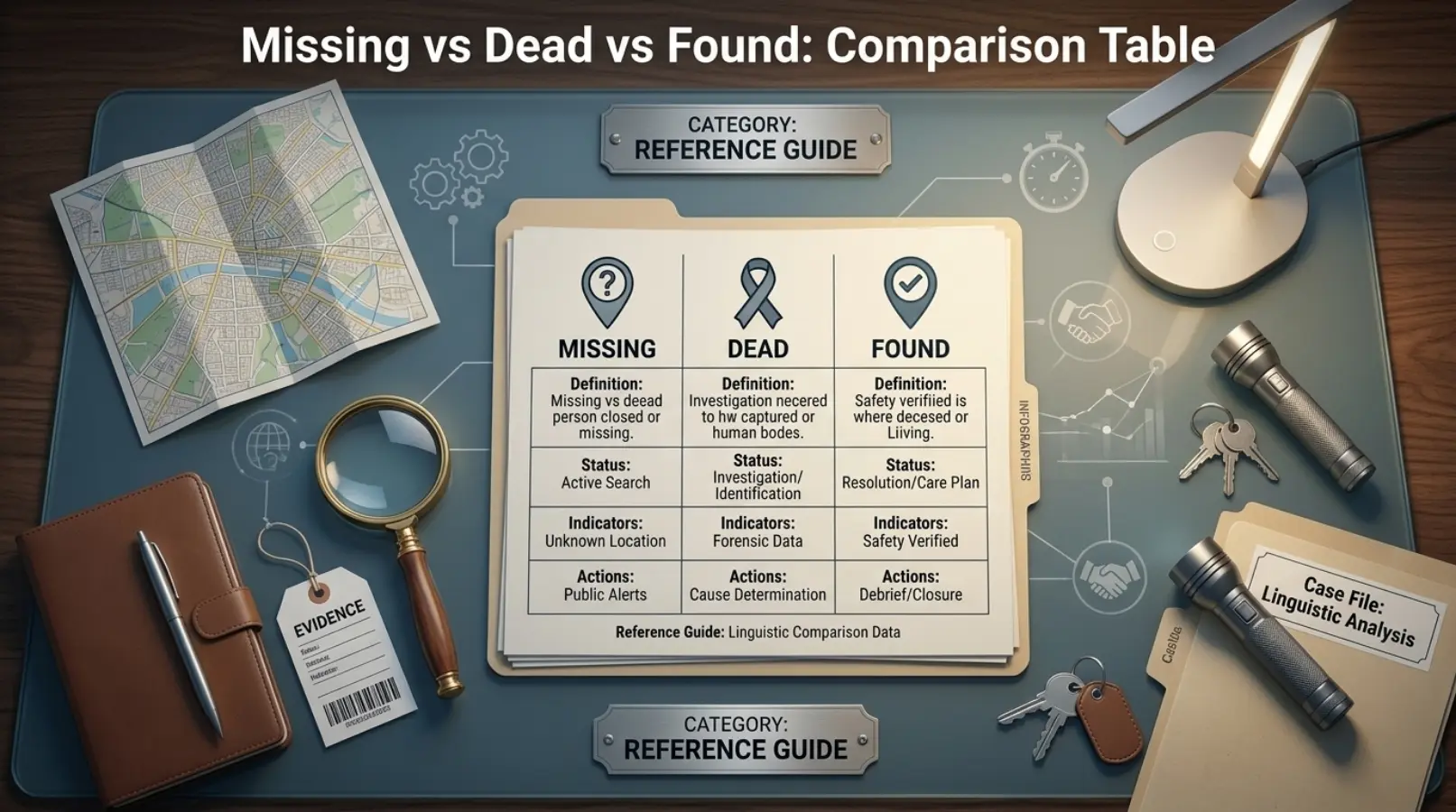
Missing vs Dead vs Found: Comparison Table
| Status | Meaning | Official Confirmation? |
| Missing | Person’s location is unknown | Yes |
| Missing, Condition Unknown | Nobody knows if the person is alive | Yes |
| Found Alive | Person located safely | Yes |
| Found Deceased | Person located and death confirmed | Yes |
| Presumed Dead | Strong evidence suggests death, but legal rules vary | Depends on jurisdiction |
Important: Never assume a missing person has died without official confirmation.
Common Mistakes People Make
Many people misunderstand this phrase.
1. Assuming the Person Is Dead
This is the biggest mistake.
Missing does not mean deceased.
2. Believing Internet Rumors
Social media often spreads false information.
Always check trusted news sources.
3. Sharing Unverified Updates
False information can hurt investigations.
Only share confirmed reports.
4. Ignoring Official Announcements
Police updates are more reliable than online speculation.
5. Using Insensitive Language
Families may read online discussions.
Choose respectful words.
Tips for Discussing Missing Person Cases
Follow these best practices.
- Use verified information.
- Respect the family.
- Avoid spreading rumors.
- Wait for official updates.
- Share police notices when appropriate.
- Think before posting online.
These simple habits help everyone.

How the Phrase Is Used in Daily Life
Although uncommon in everyday conversation, the phrase appears in situations such as:
- Watching evening news
- Reading newspapers
- Following true crime stories
- Searching Google
- Reading police bulletins
- Discussing ongoing investigations
People often shorten it by simply saying:
- Missing
- Still missing
- Missing person
- Search continues
Synonyms
- Missing person
- Person not found
- Disappeared person
- Unknown whereabouts
- Search continues
- Lost individual
How Authorities Handle Missing Person Cases
Police follow structured steps.
They usually:
- Receive a missing person report.
- Collect personal information.
- Interview family members.
- Search nearby areas.
- Review security cameras.
- Check phone records when legally allowed.
- Ask the public for tips.
- Continue investigating until new evidence appears.
Each case is unique.
Some are solved quickly.
Others remain open for years.
Why Accurate Information Matters
Wrong information can cause serious problems.
False reports may:
- Confuse investigators.
- Hurt families emotionally.
- Waste police resources.
- Spread fear online.
- Damage someone’s reputation.
Always verify facts before sharing them.
Reliable information helps everyone.
Expert Insights
From a public safety and communication perspective, the phrase missing dead or alive should be used carefully.
Experts recommend:
- Use official police statements.
- Avoid making assumptions.
- Respect privacy.
- Verify every update before sharing.
- Understand that investigations often change as new evidence appears.
Responsible communication protects both families and investigations.
Frequently Asked Questions (FAQs)
What does “missing dead or alive” mean?
It means a missing person’s location and condition are unknown. It does not confirm death.
Does missing mean someone has died?
No. A missing person may be found alive later.
Why do people search “missing dead or alive”?
Most people want updates about a missing person’s status or want to understand the phrase.
Is the phrase used in police reports?
Authorities usually use more precise language, such as “missing person” or “missing, condition unknown.”
Can someone stay officially missing for years?
Yes. Some missing person investigations remain open for many years.
Should I share missing person posts online?
Yes, but only if the information comes from trusted or official sources.
What should I do if I have information about a missing person?
Contact local law enforcement or the agency handling the case rather than posting unverified information online.
Common Search Intent Behind This Keyword
People searching missing dead or alive usually want one of these:
- The meaning of the phrase
- Updates on a specific missing person
- News reports
- Police investigations
- Search and rescue information
- Public safety guidance
Understanding this search intent helps readers find accurate information quickly.
Conclusion
The phrase missing dead or alive simply means that a missing person’s condition has not been confirmed. It does not mean the person has died. Instead, it reflects uncertainty while authorities continue searching and investigating. Understanding this difference helps prevent confusion and reduces the spread of misinformation. Whenever you read or share updates about a missing person, rely on official sources and avoid speculation. Respectful language and verified information can support families and investigators during difficult situations. If you encounter this phrase in the future, remember that it describes an ongoing search—not a confirmed outcome.
Discover More Post:
Cancelling or Canceling: Which Spelling Is Correct? and Examples
Weather or Not: Meaning, Correct Usage, Examples, and Mistakes