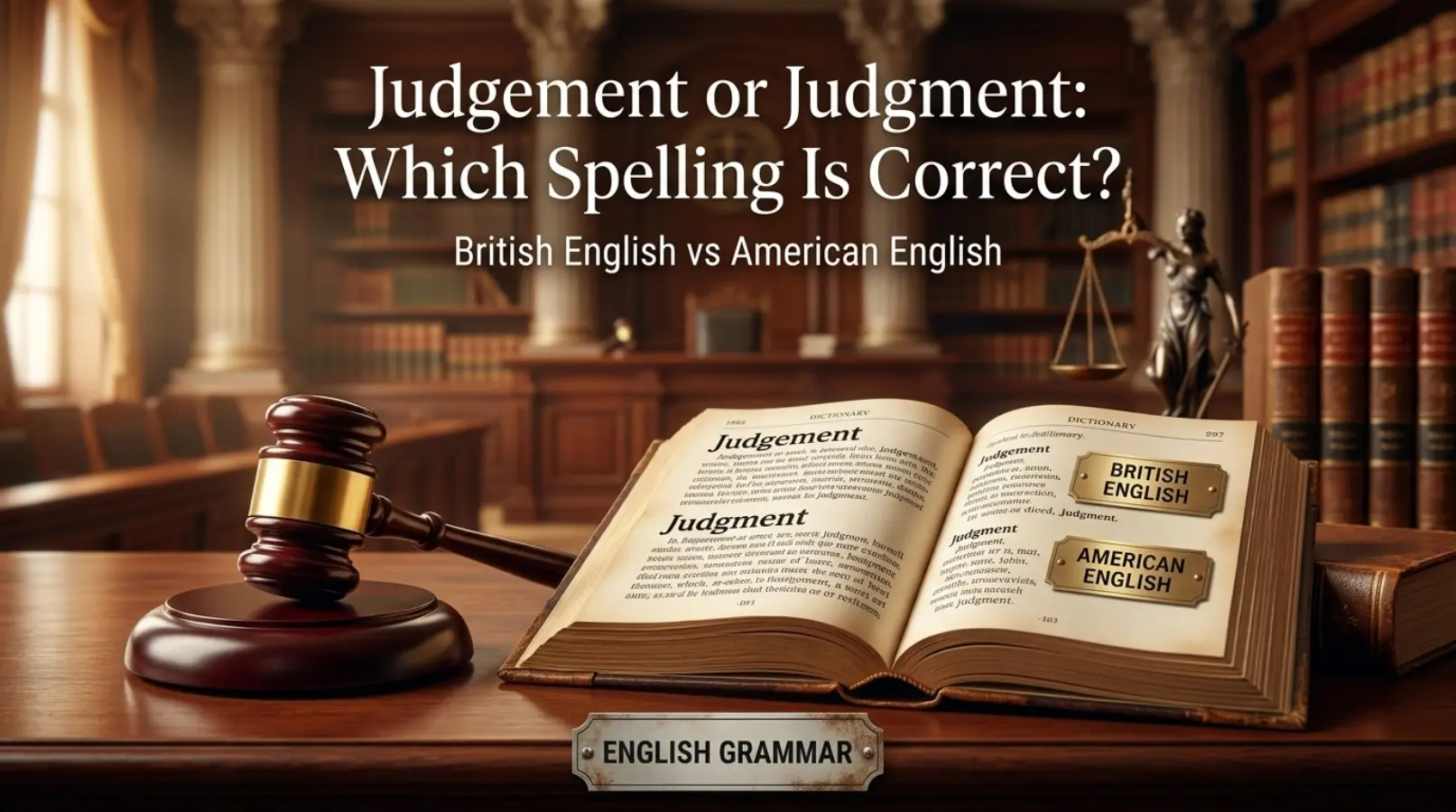
Judgement or judgment is a common spelling question in English. Many people wonder which version is correct. The answer depends on where you live and what style guide you follow.
Both words have the same meaning. However, one spelling is more common in American English. The other appears more often in British English. This small difference confuses students, writers, and professionals.
In this guide, you will learn the difference between judgement and judgment. You will see simple examples, easy grammar tips, and a comparison table. By the end, you will know which spelling fits your writing. Whether you write emails, essays, blogs, or legal papers, this guide will help you choose the right word with confidence.
Quick Summary Box
- Judgment is the preferred spelling in American English.
- Judgement is accepted in British English.
- Both words mean the same thing.
- Modern dictionaries recognize both spellings.
- Use one spelling consistently throughout your writing.
- Follow your audience’s language style.
What Does “Judgment” or “Judgement” Mean?
The word judgment (or judgement) means:
- The ability to make good decisions.
- A decision made by a judge or court.
- An opinion formed after careful thinking.
- A conclusion based on facts or experience.
Simple Definition
Judgment (or judgement) is the process of making a decision or forming an opinion.
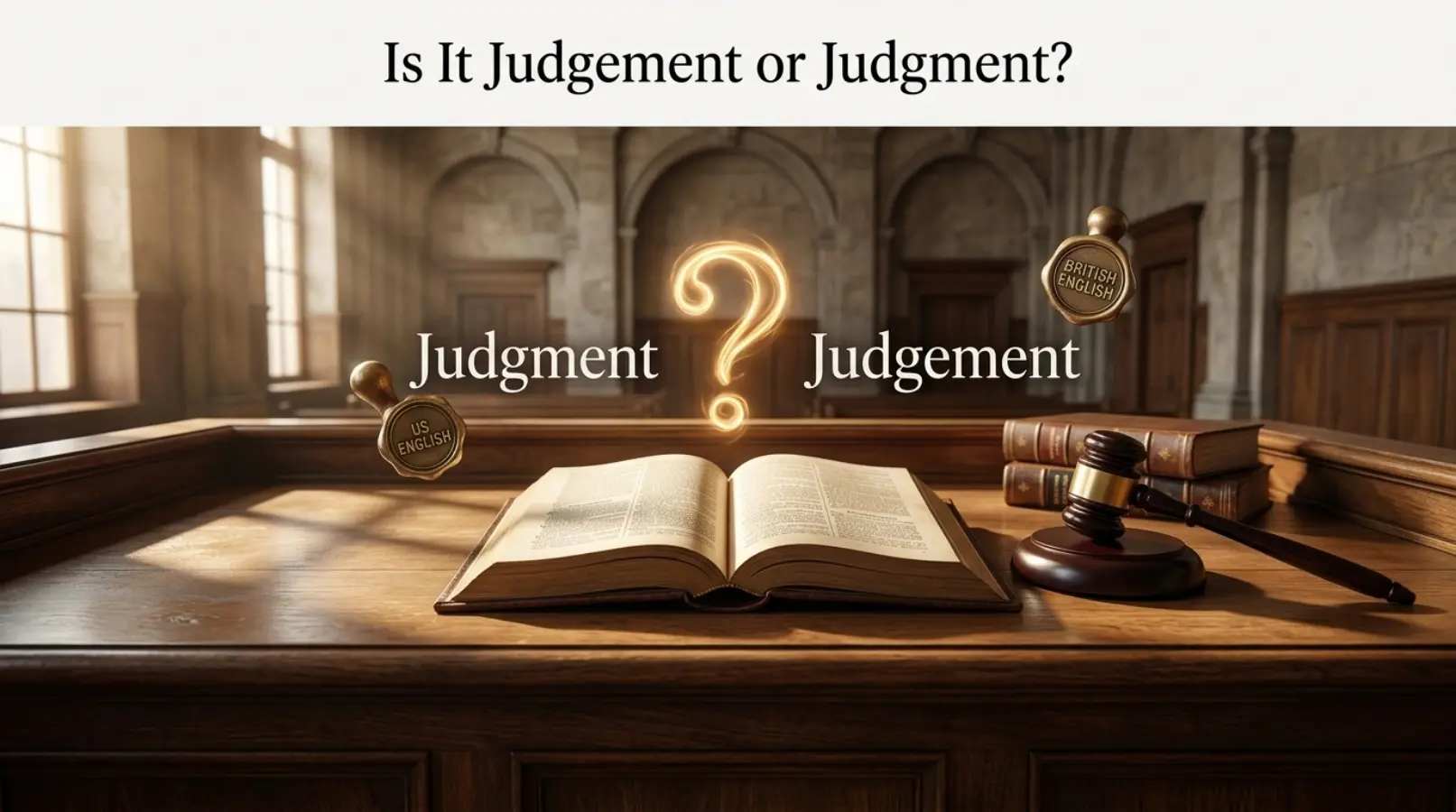
Is It Judgement or Judgment?
The short answer is:
| English Style | Preferred Spelling |
| American English | Judgment ✅ |
| British English | Judgement ✅ (although judgment is also accepted) |
| Canadian English | Usually Judgment |
| Australian English | Often Judgement |
Both spellings are correct. The best choice depends on your audience and writing style.
Why Are There Two Different Spellings?
English has changed over hundreds of years.
Many British words kept extra letters. American English later simplified many spellings.
Examples include:
| American English | British English |
| Color | Colour |
| Honor | Honour |
| Traveling | Travelling |
| Judgment | Judgement |
The same history explains why both spellings exist today.
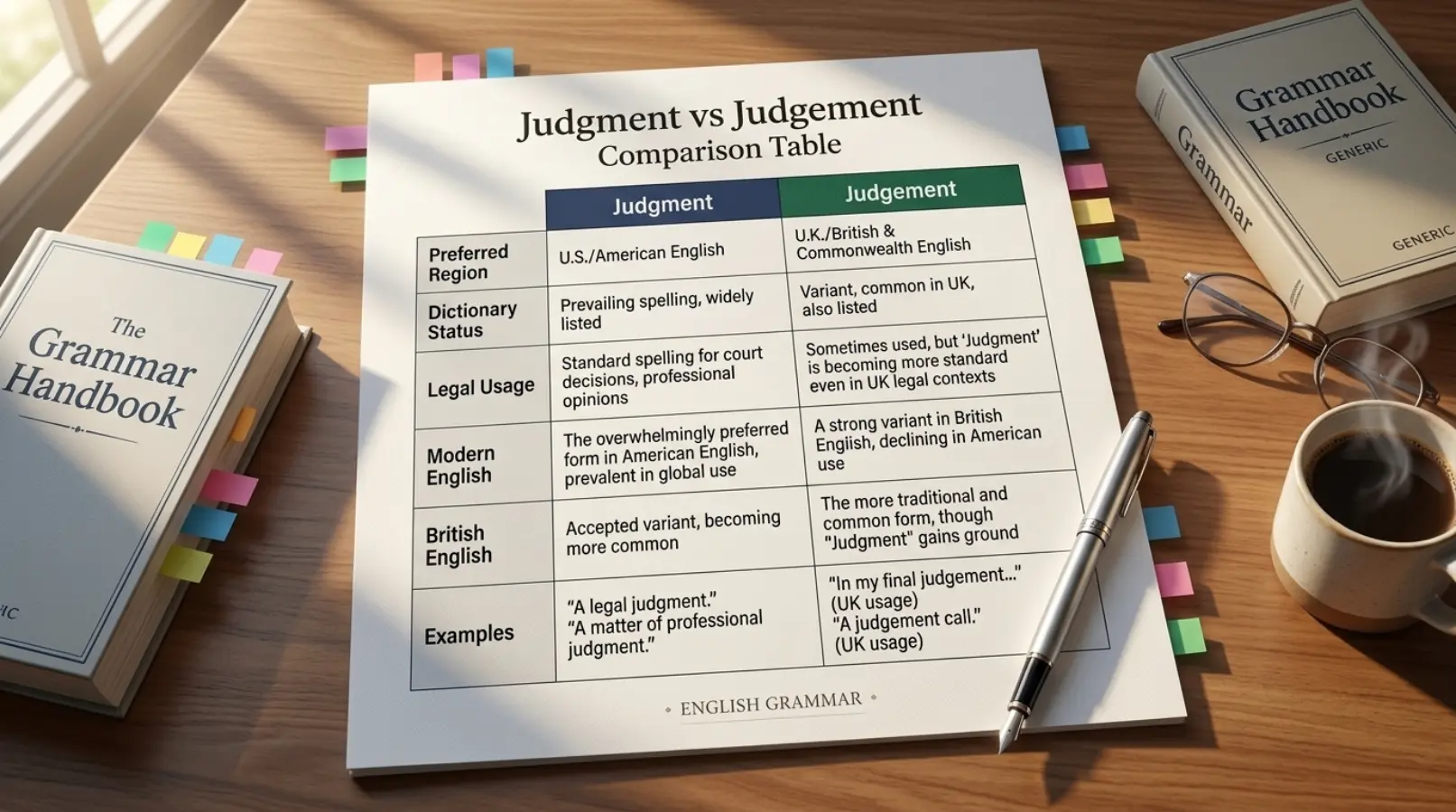
Judgment vs Judgement Comparison Table
| Feature | Judgment | Judgement |
| Meaning | Same | Same |
| American English | Preferred | Rare |
| British English | Accepted | More common |
| Legal writing (US) | Standard | Rare |
| Pronunciation | Same | Same |
| Correct spelling | Yes | Yes |
Key Point
The meaning never changes. Only the spelling changes.
When Should You Use “Judgment”?
Use judgment when writing for:
- American readers
- U.S. businesses
- Academic papers in the U.S.
- Legal documents
- Most international publications
Examples
- She showed excellent judgment during the meeting.
- The court delivered its final judgment yesterday.
- Good judgment comes from experience.
- Trust your judgment.
When Should You Use “Judgement”?
Use judgement when writing for:
- British readers
- Some Australian audiences
- Certain UK publishers
- Traditional British writing
Examples
- His judgement impressed everyone.
- The judge announced her judgement.
- Good judgement helps leaders succeed.
- She relied on her own judgement.
Real-Life Examples
Here are common situations where the word appears.
At Work
“Our manager used good judgment before making the final decision.”
In School
“The teacher praised her judgment during the project.”
In Court
“The judge delivered the final judgment.”
Daily Conversation
“I trust your judgment.”
In British Writing
“Her judgement was fair.”
Judgment in Legal Writing
Legal English deserves special attention.
In American law, judgment is the standard spelling.
Many courts, law schools, and legal dictionaries use judgment.
In the United Kingdom, both spellings appear. However, many legal publications also prefer judgment because of historical legal usage.
So even in Britain, legal writing often favors judgment.
Common Mistakes People Make
1. Mixing Both Spellings
Wrong
- The first paragraph says judgment.
- The second says judgement.
Correct
Choose one spelling and stay consistent.
2. Assuming One Is Wrong
Many people believe judgement is incorrect.
It is not.
It is simply a regional spelling.
3. Ignoring Your Audience
If you write for Americans, use judgment.
If you write mainly for British readers, judgement is acceptable.
4. Forgetting Style Guides
Many schools and companies follow style guides.
Always check which spelling they require.
Easy Trick to Remember the Difference
Remember this simple rule:
America prefers shorter spellings.
So:
- Color
- Honor
- Favor
- Judgment
Britain often keeps the extra letters.
So:
- Colour
- Honour
- Favourite
- Judgement
This trick works in many situations.
Synonyms of Judgment
Depending on the context, you can use:
- Decision
- Opinion
- Assessment
- Evaluation
- Conclusion
- Wisdom
- Discernment
- Verdict
- Ruling
- Choice
- Perception
- Understanding
Judgment or Judgement in Daily Life
You use this word more often than you may think.
Examples include:
- Making financial decisions
- Choosing a career
- Buying a house
- Hiring employees
- Parenting
- Driving safely
- Solving problems
- Giving advice
Good judgment helps people make better choices every day.

Expert Insights
Professional editors recommend choosing one language style before writing.
If your audience is mostly American, use judgment throughout your article.
If your audience is British, judgement is perfectly acceptable unless your publisher specifies otherwise.
Consistency improves readability. It also makes your writing look more professional.
Frequently Asked Questions (FAQs)
Is judgment or judgement correct?
Both are correct. Judgment is standard in American English, while judgement is common in British English.
Which spelling does the Oxford Dictionary use?
The Oxford English Dictionary recognizes both spellings, although usage depends on context and region.
Which spelling is used in the United States?
American English almost always uses judgment.
Which spelling should I use in the UK?
British writers commonly use judgement, although judgment also appears, especially in legal writing.
Is judgment a legal term?
Yes. In law, a judgment is the official decision made by a court.
Does the meaning change?
No. Both spellings have the same meaning.
Final Comparison
| Question | Answer |
| Are both spellings correct? | Yes |
| Same meaning? | Yes |
| American English | Judgment |
| British English | Judgement (also judgment in some contexts) |
| Legal writing | Usually Judgment |
| Pronunciation | Same |
Conclusion
The debate over judgement or judgment is really about regional spelling, not correctness. Both words share the same meaning and pronunciation. The main difference is where they are commonly used. American English strongly prefers judgment, while British English often uses judgement, though judgment also appears in legal and formal contexts.
The best approach is simple. Choose the spelling that matches your audience and use it consistently throughout your writing. This improves clarity, professionalism, and reader trust. Whether you write blog posts, business documents, school assignments, or legal content, following your chosen style will help you communicate more effectively.
Discover More Post:
Missing Dead or Alive: Meaning, Usage, Examples, and Difference
Use to or Used to: What’s the Difference? Grammar Guide