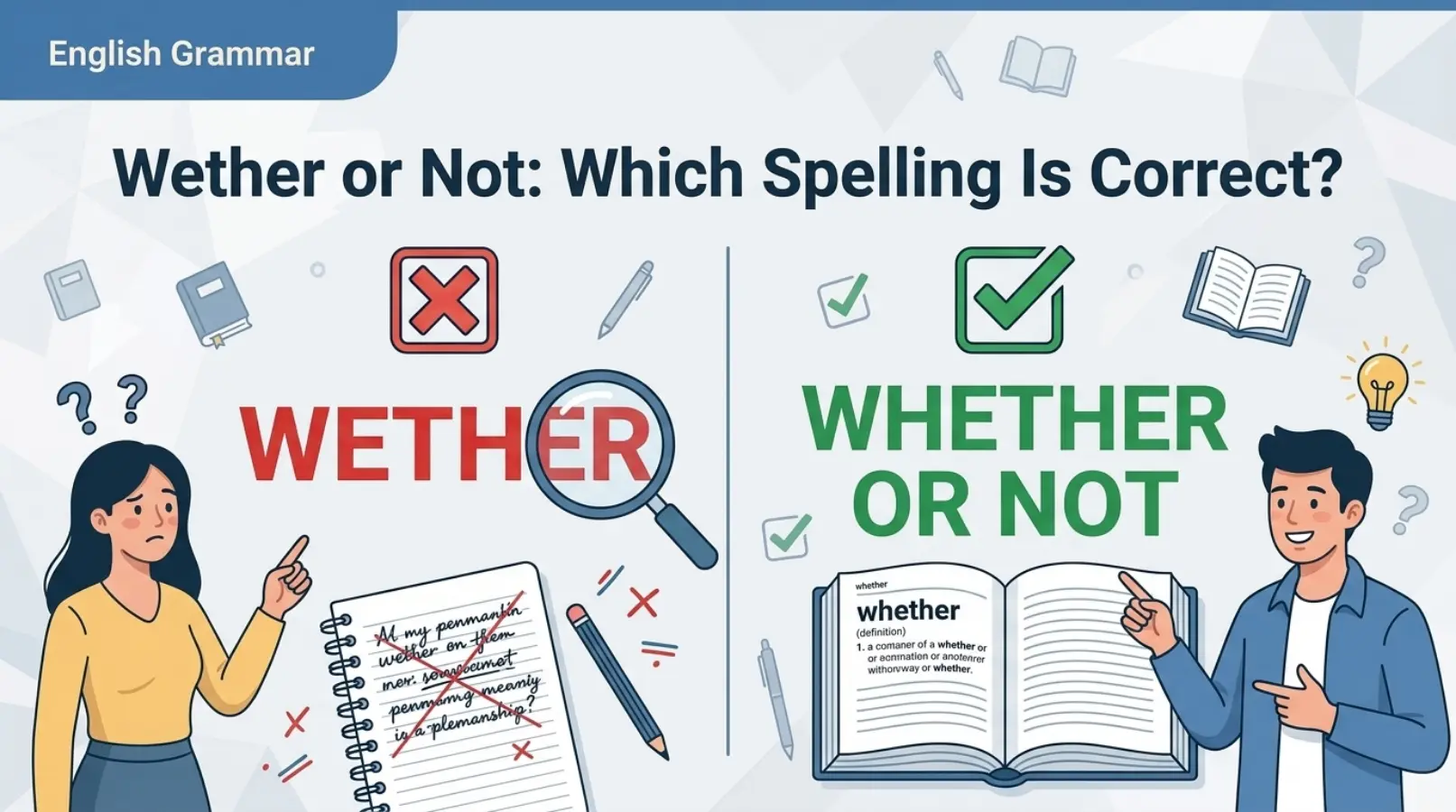
Wether or not is a common search term, but many people do not know that it contains a spelling mistake. The correct phrase is whether or not. One small letter changes the meaning completely. That is why many writers, students, and professionals often confuse these words.
In this guide, you will learn the difference between wether and whether in simple English. You will also see real-life examples, common mistakes, and easy tips to remember the correct spelling. By the end of this article, you will never confuse these words again. This guide is beginner-friendly and follows modern English grammar rules.
Quick Summary Box
- “Whether or not” is the correct phrase.
- “Wether or not” is a spelling mistake.
- Whether means if or regardless of if.
- Wether is a noun that means a castrated male sheep.
- Use whether or not when talking about choices or uncertainty.
- Never replace whether with wether in normal writing.
What Does “Whether or Not” Mean?
The phrase whether or not means if something happens or does not happen. It shows two possible outcomes.
Simple Definition
Whether or not means regardless of the result or if something is true or false.
Examples
- I will go whether or not it rains.
- Tell me whether or not you can attend.
- She will succeed whether or not people support her.
In each sentence, both possibilities are included.
Is “Wether or Not” Correct?
No.
Wether or not is incorrect because wether is not the word you need.
Many people type it because:
- Whether and wether sound similar.
- Spell check does not always catch it.
- People have never seen the word wether before.
Incorrect
Wether or not I agree, the meeting will continue.
Correct
Whether or not I agree, the meeting will continue.
Wether vs Whether: What’s the Difference?
| Word | Meaning | Part of Speech | Example |
| Whether | If; expressing a choice | Conjunction | I don’t know whether he will come. |
| Wether | A castrated male sheep | Noun | The farmer sold the wether. |
Easy Rule
- Whether = Grammar
- Wether = Sheep
If your sentence is not about sheep, you almost certainly need whether.
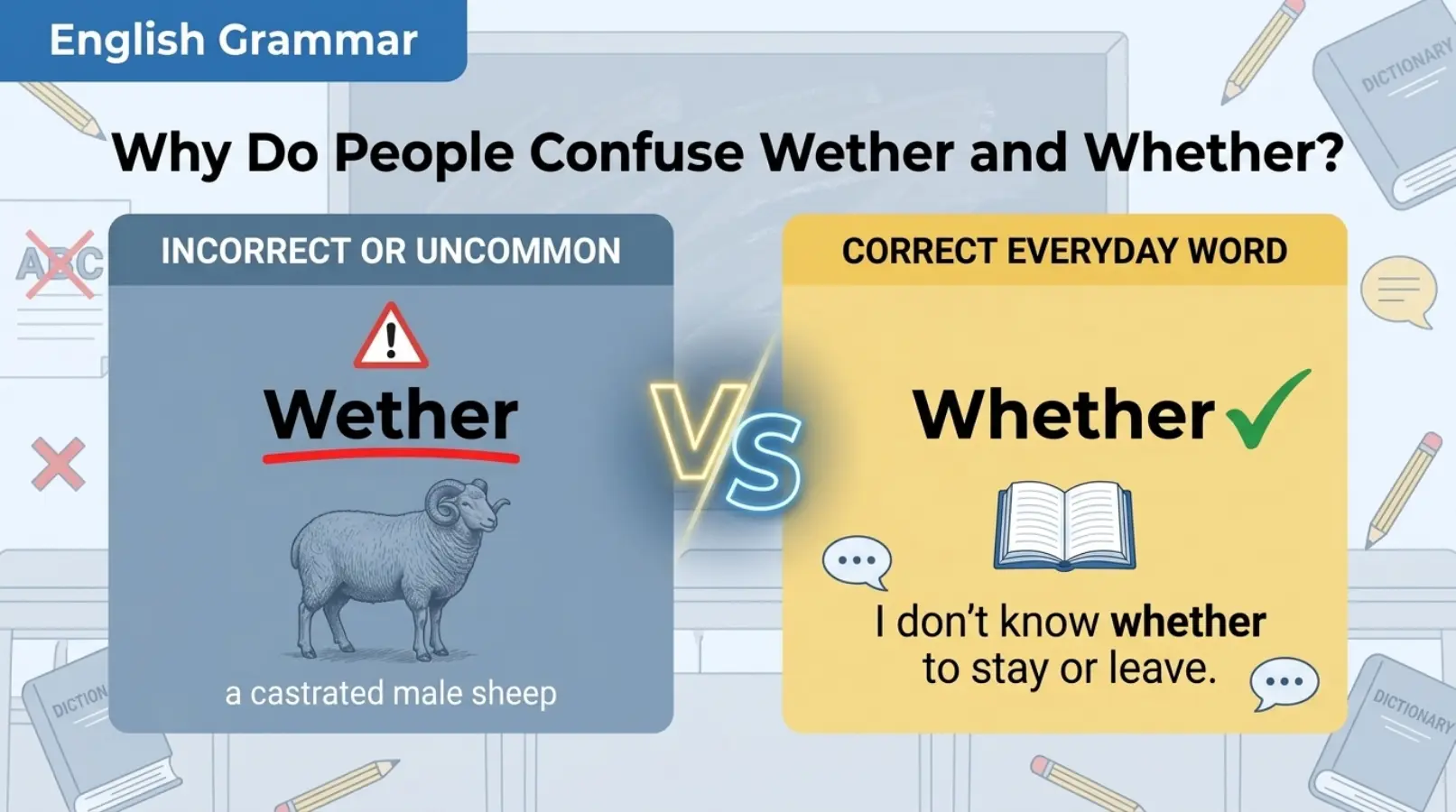
Why Do People Confuse Wether and Whether?
Several reasons cause this mistake.
1. They Sound Similar
The pronunciation is almost the same.
2. Fast Typing
People often miss the extra h while typing.
3. Autocorrect Issues
Some writing tools may not highlight the mistake.
4. Rare Word
Most people never use the word wether, so they assume it is another spelling of whether.
How to Use “Whether or Not” Correctly
Use whether or not whenever you discuss uncertainty, choices, or conditions.
Examples
- We will leave whether or not you are ready.
- She hasn’t decided whether or not to study abroad.
- The event will happen whether or not it snows.
- I don’t know whether or not he called.
This phrase works in both formal and informal writing.
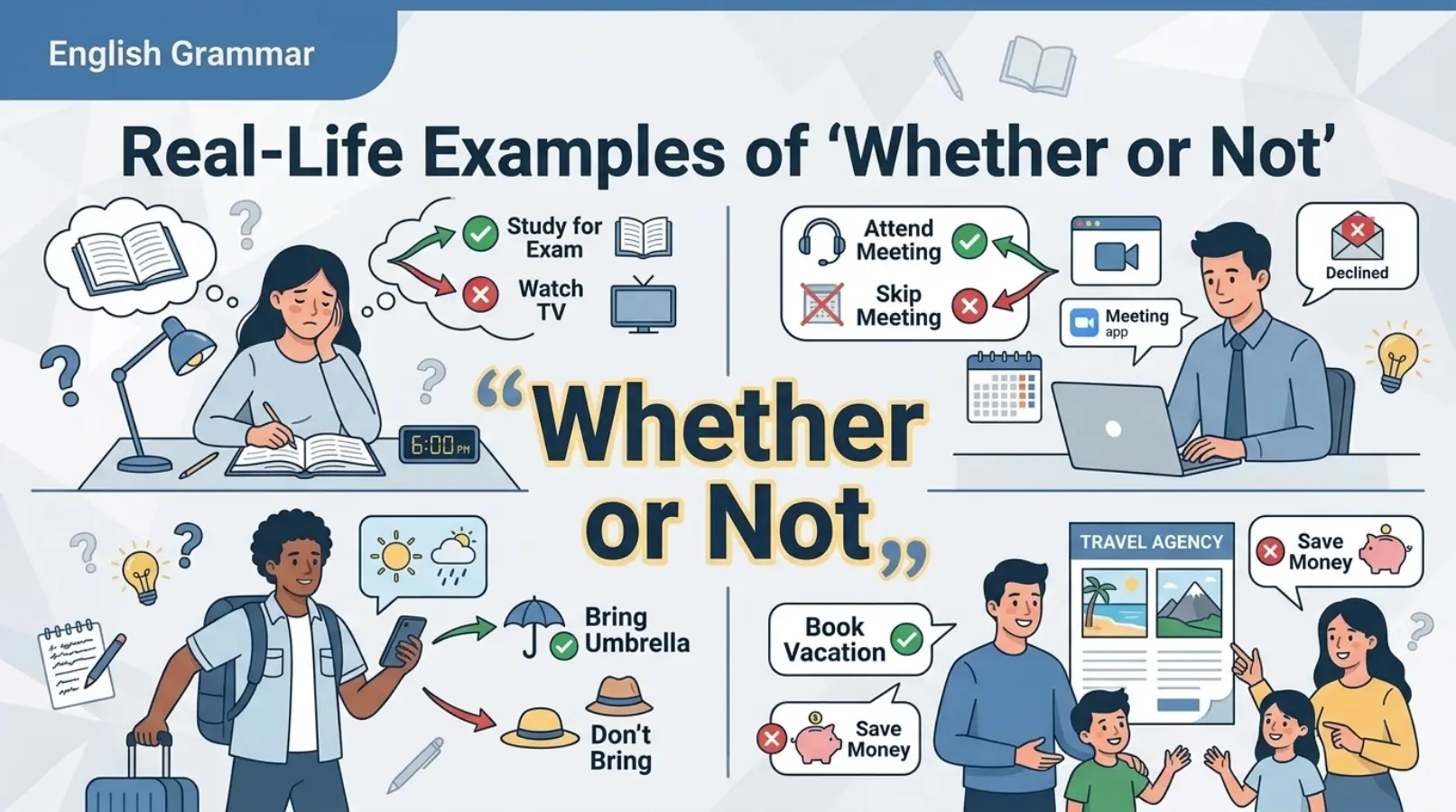
Real-Life Examples of “Whether or Not”
At School
The teacher asked whether or not students finished their homework.
At Work
The manager will approve the request whether or not the budget changes.
At Home
We will order pizza whether or not everyone feels hungry.
While Traveling
The flight will depart whether or not it rains.
Online
Many users search wether or not, but the correct spelling is whether or not.
Common Mistakes to Avoid
Mistake 1: Writing “Wether”
❌ Wether or not
✅ Whether or not
Mistake 2: Using “If” Everywhere
Sometimes if works, but not always.
Example:
✅ I don’t know whether he is coming.
This sounds more natural than:
⚠️ I don’t know if he is coming.
Mistake 3: Forgetting “Or Not”
Sometimes you need the full phrase.
Correct:
- Let me know whether or not you agree.
Sometimes “or not” can be omitted.
Example:
- Let me know whether you agree.
Both are correct depending on the sentence.
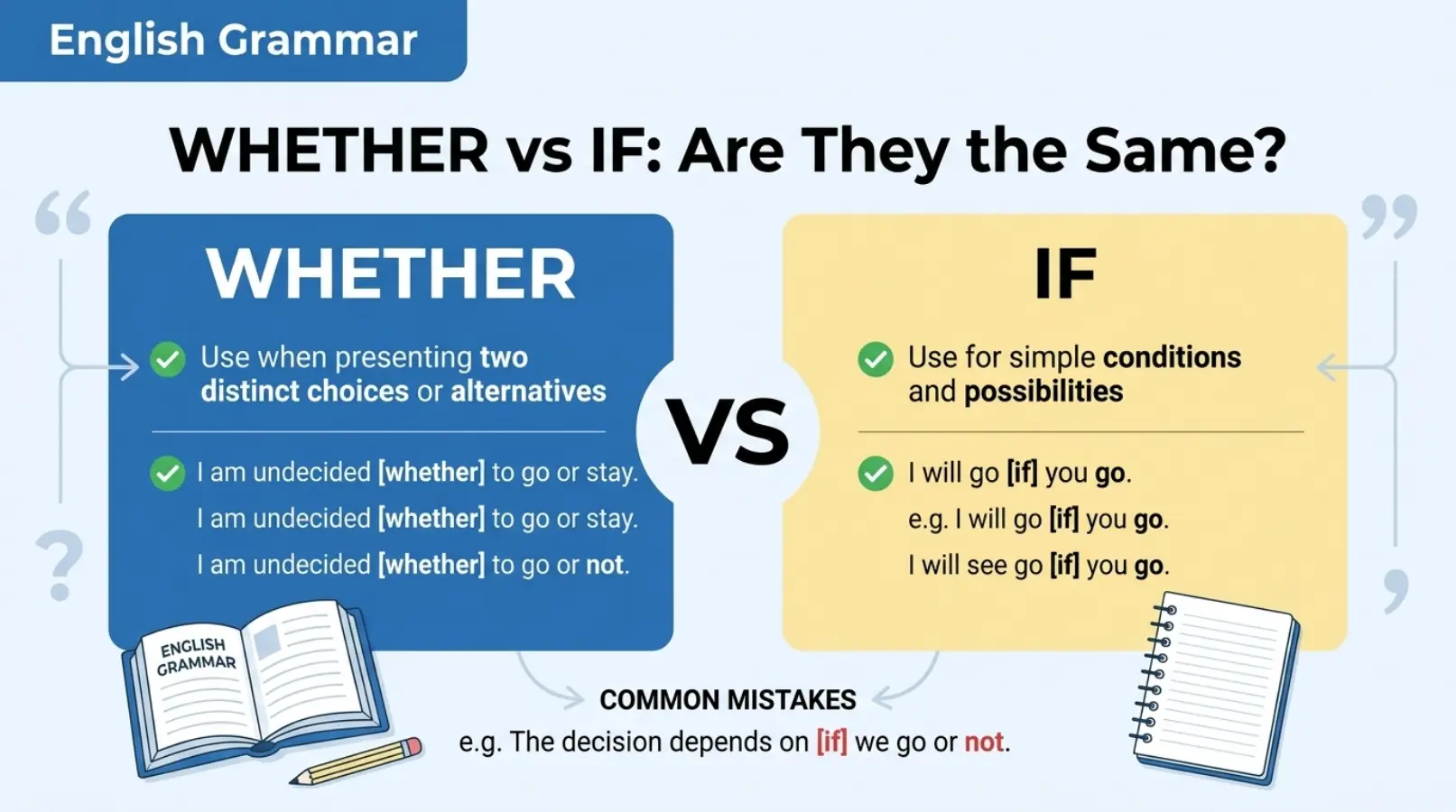
Whether vs If: Are They the Same?
Not always.
| Whether | If |
| Shows alternatives | Shows a condition |
| Better in formal writing | Better for conditions |
| Can be followed by “or not” | Usually not used with “or not” |
| Used after prepositions | Usually avoided after prepositions |
Examples
Correct:
- I wonder whether she is coming.
- I don’t know whether or not he called.
Conditional:
- If it rains, we will stay home.
Easy Tricks to Remember the Correct Spelling
Here are simple memory tricks.
Trick 1
Whether contains “h”, just like choice has an “h” sound.
Trick 2
Remember:
Whether asks. Wether grazes.
Trick 3
If your sentence is not about farming, choose whether.
Synonyms
- If
- Regardless of
- No matter if
- In case
- Either way
Expert Insights: Why Correct Spelling Matters
Correct spelling improves your writing.
It also helps readers trust your content.
Professional emails, school assignments, and business documents should always use whether correctly.
Search engines also prefer clear, accurate content. Although Google understands spelling mistakes, correct grammar creates a better user experience.
Good writing builds credibility and improves communication.
Frequently Asked Questions (FAQs)
1. Is “wether or not” correct?
No. The correct phrase is whether or not.
2. What does “whether or not” mean?
It means if something happens or does not happen.
3. What is a wether?
A wether is a castrated male sheep.
4. Can I use “if” instead of “whether”?
Sometimes. However, whether is more accurate in many situations.
5. Why do people spell whether as wether?
Because both words sound alike, and many people have never seen the farming word wether.
6. Can I omit “or not”?
Yes. If the meaning stays clear, you may simply write whether.
Example:
- Tell me whether you agree.
7. Is “whether or not” formal English?
Yes. It is accepted in both formal and informal writing.
Common Sentences Using “Whether or Not”
- Whether or not you agree, the decision stands.
- We will travel whether or not the weather improves.
- Tell me whether or not you finished the report.
- She will attend whether or not her friends join.
- I haven’t decided whether or not to buy the car.
- Whether or not they win, they played well.
- He continued whether or not others supported him.
- Please confirm whether or not you received my email.
Conclusion
Many people search for wether or not, but the correct phrase is whether or not. The difference is simple once you know the meaning. Whether is used to express choices, uncertainty, or alternatives. Wether is a farming term that refers to a castrated male sheep. Unless you are talking about livestock, you should always use whether. Remember the simple rule: whether belongs in grammar, while wether belongs on a farm. Using the correct spelling will improve your writing, help you avoid common mistakes, and make your communication clearer and more professional.
Discover More Post:
Ready or Not Mission List:Mission Order, and Progression Guide
Is Teal Blue or Green? Complete Color Guide With Easy Examples