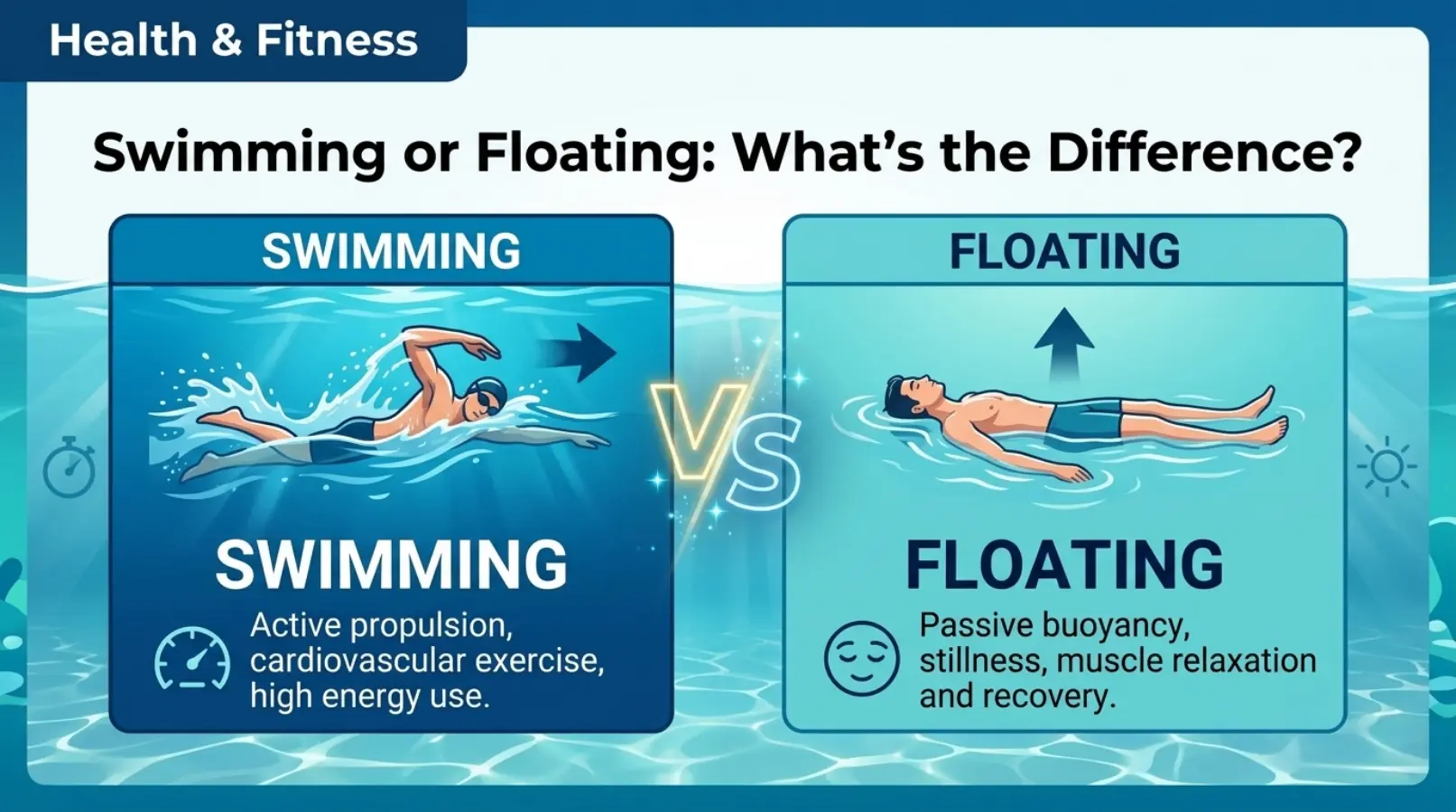
Swimming or floating may seem like the same thing, but they are different skills. Both happen in water, yet each has a unique purpose. Swimming helps you move from one place to another. Floating helps you stay on the water without much effort. Learning both skills can make you safer and more confident.
Many beginners wonder if they should learn swimming or floating first. The answer depends on your goals and comfort level. In most cases, floating comes first because it builds confidence. Then swimming becomes much easier to learn.
This guide explains the difference in simple words. You will also learn when to swim, when to float, common mistakes, and helpful tips. By the end, you will know which skill fits your needs and why both are important.
Quick Summary Box
- Swimming means moving through water using your arms and legs.
- Floating means staying on the water’s surface without sinking.
- Floating is often the first skill beginners should learn.
- Swimming requires movement and coordination.
- Floating helps save energy during emergencies.
- Both skills improve water safety and confidence.
- Learning both gives you the best water experience.
What Does Swimming or Floating Mean?
Swimming and floating are two different water activities.
Swimming is the act of moving through water by using your body. You use strokes, kicks, and breathing techniques to travel.
Floating means your body stays on the water without moving much. Good body position and relaxed breathing make floating easier.
Although they are different, both skills work together.
Swimming vs Floating: Key Differences
| Feature | Swimming | Floating |
| Purpose | Move through water | Stay on the surface |
| Body Movement | Constant | Very little |
| Energy Needed | High | Low |
| Breathing | Controlled while moving | Calm and steady |
| Skill Level | Moderate to advanced | Beginner-friendly |
| Water Safety | Helps reach safety | Helps conserve energy |
| Best For | Exercise, sports, travel | Rest, survival, confidence |
Quick Answer
If you want to travel in water, choose swimming.
If you need to rest or stay safe, floating is the better choice.
How Swimming Works
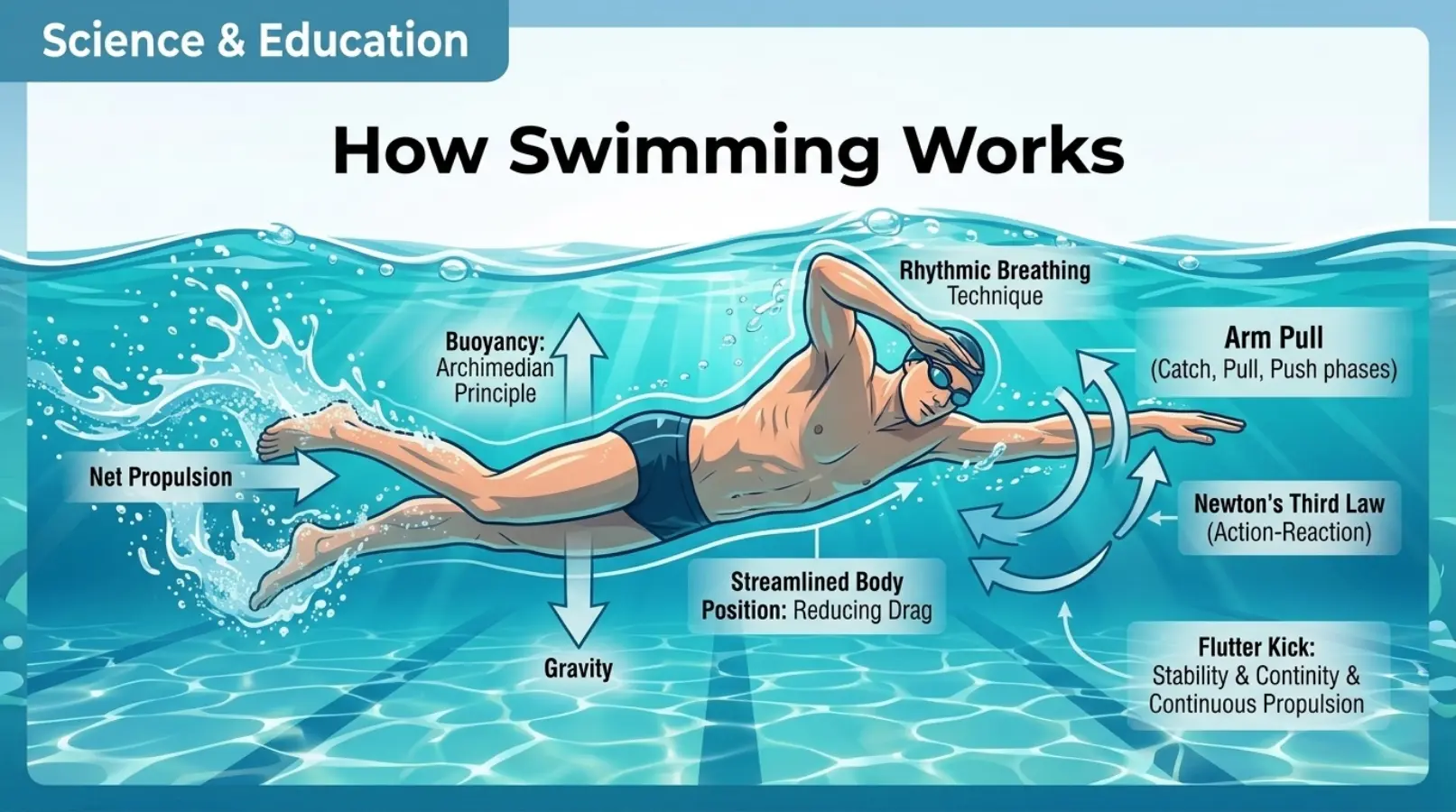
Swimming uses coordinated body movements.
Your arms pull through the water while your legs kick. At the same time, you breathe in a steady rhythm.
Popular swimming strokes include:
- Freestyle
- Breaststroke
- Backstroke
- Butterfly
- Sidestroke
Each stroke has different movements, but all help you move through water.
Swimming also improves endurance and muscle strength.
How Floating Works
Floating depends on buoyancy.
Buoyancy is the upward force that helps objects stay on water.
Your lungs act like natural air bags. When filled with air, they help your body stay afloat.
To float well:
- Relax your muscles.
- Take deep breaths.
- Keep your ears in the water.
- Spread your arms and legs.
- Look upward when back floating.
Many people sink because they panic or hold their body stiff.
Should Beginners Learn Swimming or Floating First?
Most swim instructors recommend learning floating first.
Floating teaches you to trust the water. Once you feel relaxed, swimming becomes much easier.
Learning Order
- Get comfortable in shallow water.
- Learn to breathe calmly.
- Practice back floating.
- Learn front floating.
- Start basic kicking.
- Add arm movements.
- Practice full swimming strokes.
This step-by-step process builds confidence safely.
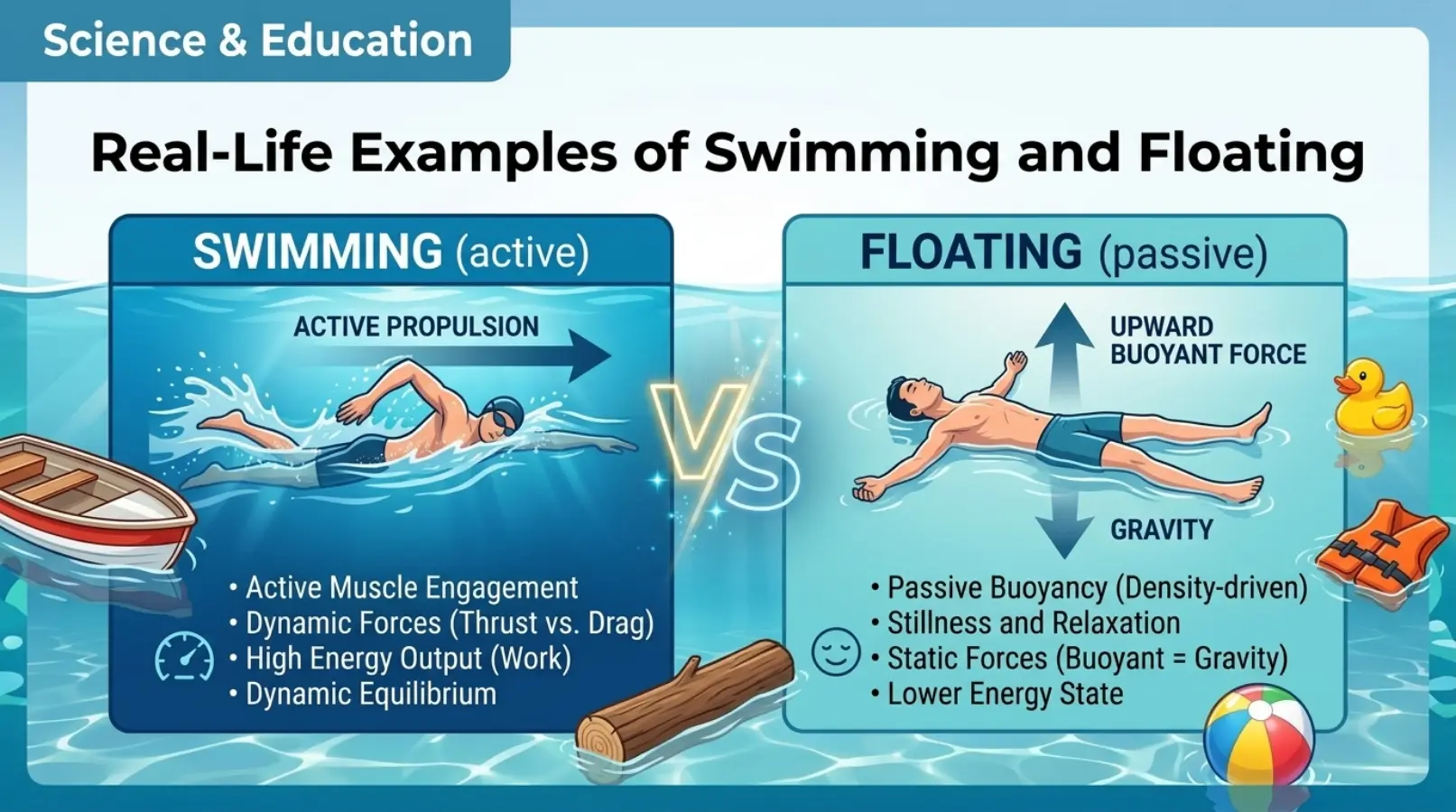
Real-Life Examples of Swimming and Floating
Example 1: At the Beach
You swim toward a floating platform.
After reaching it, you float on your back to rest.
Example 2: Swimming Pool
Children often learn floating before swimming.
They gain confidence before practicing strokes.
Example 3: Water Emergency
Someone falls into deep water.
Instead of struggling, they float calmly while waiting for help.
Example 4: Fitness Training
Athletes swim laps for exercise.
Between laps, they float briefly to recover.
Benefits of Swimming
Swimming offers many physical and mental health benefits.
Physical Benefits
- Builds muscle strength
- Improves heart health
- Burns calories
- Increases flexibility
- Boosts endurance
Mental Benefits
- Reduces stress
- Improves mood
- Builds confidence
- Promotes better sleep
Swimming is also gentle on the joints.
Benefits of Floating
Floating is simple but powerful.
It helps you:
- Save energy
- Stay calm
- Improve breathing
- Build water confidence
- Practice relaxation
- Increase survival chances
Floating is one of the most valuable water safety skills.
Common Mistakes People Make
Many beginners struggle because of small mistakes.
1. Holding Their Breath
Take slow, natural breaths.
2. Looking Down While Floating
Keep your face upward during back floating.
3. Moving Too Much
Relax and let the water support you.
4. Panicking
Fear makes your body tense.
Stay calm and breathe slowly.
5. Skipping Floating Practice
Many learners rush into swimming.
Master floating first.
Tips to Improve Swimming and Floating
Follow these simple tips.
- Practice regularly.
- Start in shallow water.
- Wear proper swim gear.
- Learn with a certified instructor.
- Focus on breathing.
- Relax your body.
- Keep practicing even after improving.
- Never swim alone.
Small improvements lead to better water skills.
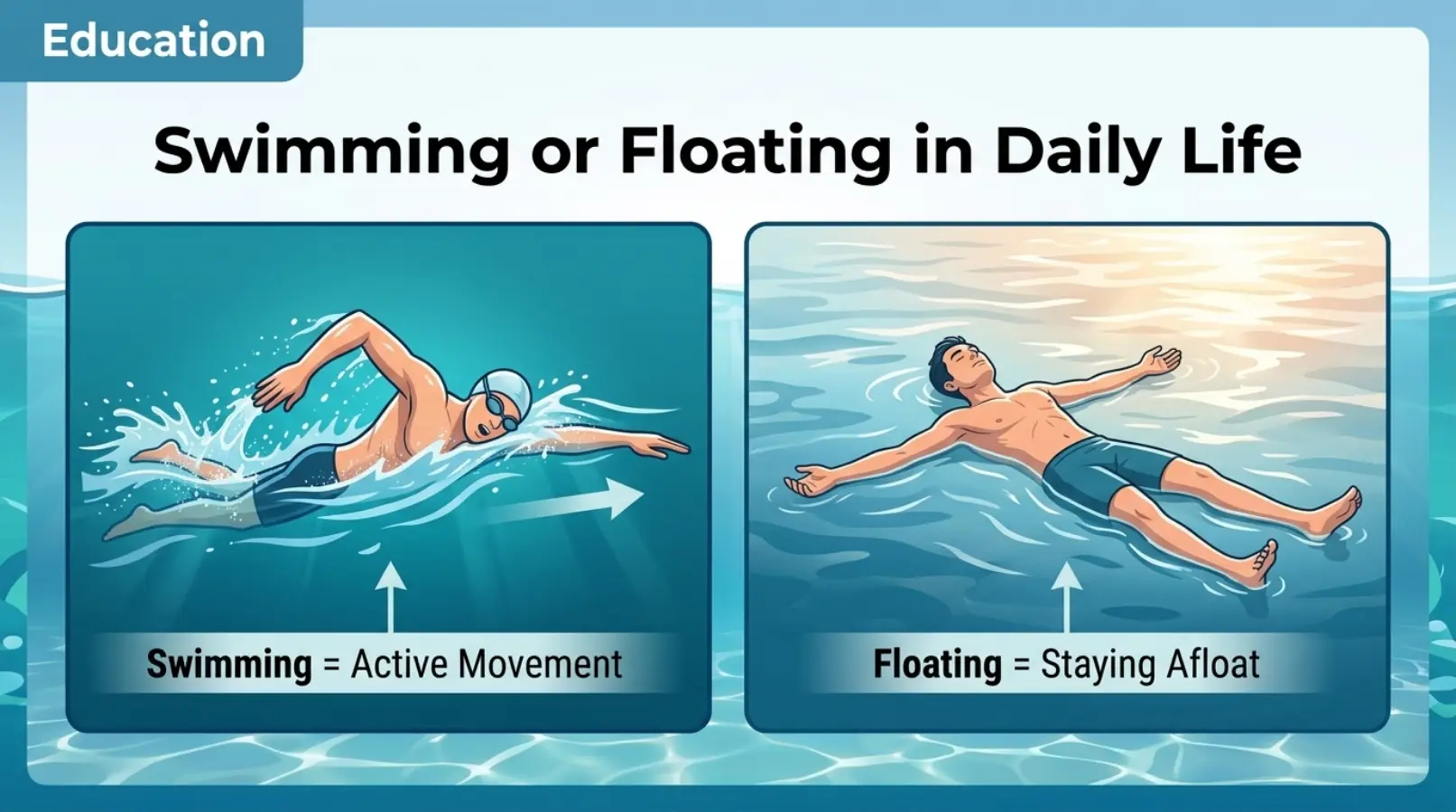
Swimming or Floating in Daily Life
You may use these skills more often than you think.
During Vacations
Swimming lets you enjoy pools, lakes, and beaches.
During Water Sports
Floating helps you recover between activities.
During Emergencies
Floating can keep you safe until rescue arrives.
During Fitness Training
Swimming offers a full-body workout.
During Relaxation
Many people float simply to reduce stress.
Synonyms
- Water movement
- Staying afloat
- Water survival
- Aquatic skills
- Swimming technique
Expert Insights: Why Swimming and Floating Matter
Water safety experts recommend learning both skills.
Floating is often more important during emergencies because it conserves energy.
Swimming helps you reach safety when needed.
Experts also suggest practicing both skills regularly.
Children who learn floating early often become stronger swimmers later.
Learning these skills reduces water-related accidents and builds lifelong confidence.
Frequently Asked Questions (FAQs)
Is swimming better than floating?
Not always. Swimming helps you move, while floating helps you rest and stay safe.
Can everyone learn to float?
Most people can learn with practice and proper breathing techniques.
Why do some people sink?
Body composition, breathing, and tension affect floating ability.
Is floating easier than swimming?
Yes. Floating usually requires less movement and is easier for beginners.
Should kids learn floating first?
Yes. Floating builds confidence before learning swimming strokes.
Does floating save energy?
Yes. Floating uses very little energy compared to swimming.
Can you float without knowing how to swim?
Yes. Many people learn floating before they learn swimming.
Is swimming good exercise?
Yes. Swimming is one of the best full-body workouts.
Conclusion
Understanding swimming or floating helps you become safer and more confident in the water. Swimming allows you to move, exercise, and enjoy water activities. Floating helps you relax, save energy, and stay safe during emergencies. Neither skill is better in every situation. Instead, they work together.
Beginners should learn floating first because it builds confidence and teaches body control. After that, swimming becomes much easier to master. Practice both skills often, stay calm in the water, and always follow safety rules. The more comfortable you become, the more enjoyable every water experience will be.
Discover More Post:
Nevermind or Never Mind: Which Is Correct? Guide With Examples
Ready or Not Mission List:Mission Order, and Progression Guide