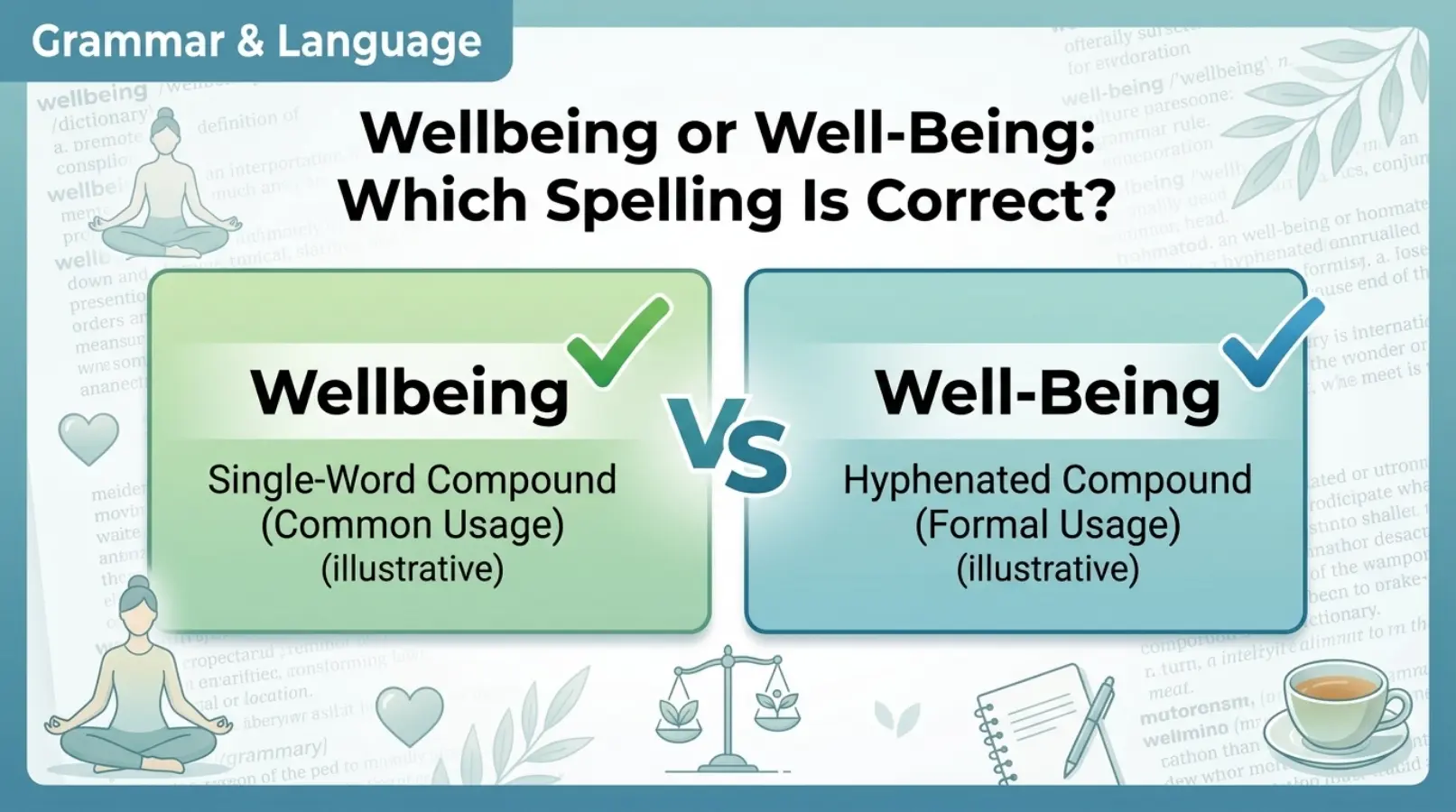
Wellbeing or well-being is a common spelling question. Many people see both forms online. That makes it hard to know which one is correct.
The good news is that both spellings are correct. However, the best choice depends on where you write and which style guide you follow.
This guide explains the difference in simple words. You will learn when to use each spelling. You will also see real-life examples, common mistakes, and expert writing tips.
By the end, you will know the right form for emails, blogs, school work, and professional writing.
Quick Summary Box
- Both “wellbeing” and “well-being” are correct.
- Well-being is the traditional and more widely accepted spelling.
- Wellbeing is becoming more common, especially in health and wellness content.
- Many British organizations use wellbeing as one word.
- Many dictionaries and style guides still prefer well-being.
- Stay consistent throughout your writing.
What Does Wellbeing or Well-Being Mean?
It means a person’s overall health, happiness, comfort, and quality of life.
It includes:
- Physical health
- Mental health
- Emotional balance
- Social relationships
- Financial security
- Life satisfaction
A person with good wellbeing feels healthy, safe, and able to enjoy life.
Simple Definition
It means being healthy, happy, and comfortable in life.
Is It Wellbeing or Well-Being?
The answer is simple.
Both spellings are correct.
The choice depends on the writing style and audience.
| Feature | Wellbeing | Well-Being |
| Correct spelling | Yes | Yes |
| Traditional spelling | No | Yes |
| Modern usage | Yes | Yes |
| Common in UK health organizations | Very common | Common |
| Found in many dictionaries | Increasingly | Very common |
| Safe for academic writing | Sometimes | Usually preferred |
Quick Tip
If you are unsure, well-being is usually the safest choice.
Why Are There Two Spellings?
English changes over time.
Many compound words begin with a hyphen.
Later, they become one word.
Examples include:
- Email (formerly e-mail)
- Online (formerly on-line)
- Website (formerly web site)
The same thing is happening with wellbeing.
Many writers now remove the hyphen because language becomes simpler over time.
When Should You Use Well-Being?
Use well-being when writing:
- Academic papers
- Business reports
- Formal articles
- Newspapers
- Government documents
- Traditional publications
Many style guides still recommend the hyphen.
Examples
- Employee well-being improves productivity.
- Good sleep supports your well-being.
- Exercise helps your mental well-being.
When Should You Use Wellbeing?
Use wellbeing when writing:
- Health blogs
- Wellness websites
- Healthcare content
- Lifestyle articles
- UK organizational content
- Modern digital publications
Many health organizations now prefer this spelling.
Examples
- Workplace wellbeing matters.
- Student wellbeing should come first.
- Financial wellbeing affects daily life.
- Community wellbeing improves with support.
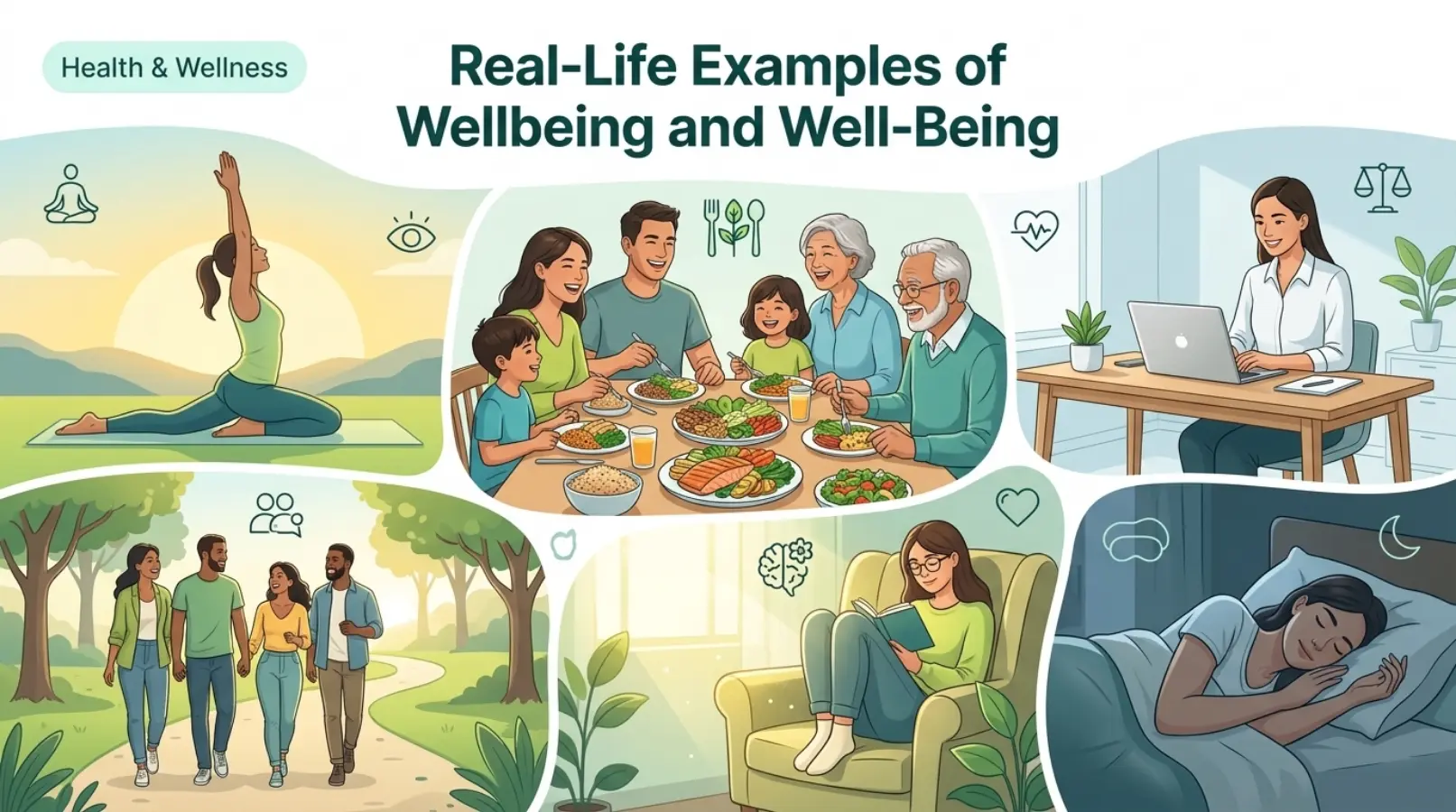
Real-Life Examples of Wellbeing and Well-Being
Here are simple examples.
At School
“Our school supports student wellbeing.”
“Our school promotes student well-being.”
Both sentences are correct.
At Work
“The company invests in employee well-being.”
“The company values employee wellbeing.”
Again, both work.
Healthcare
“Mental wellbeing is important.”
“Mental well-being improves with exercise.”
Both are acceptable.
Personal Life
“Reading improves my wellbeing.”
“Reading improves my well-being.”
No change in meaning.
Wellbeing vs Well-Being Comparison Table
| Feature | Wellbeing | Well-Being |
| Meaning | Health and happiness | Health and happiness |
| Grammar | Noun | Noun |
| Accepted spelling | Yes | Yes |
| Formal writing | Less common | More common |
| Modern health websites | Very common | Common |
| Traditional style guides | Less preferred | Preferred |
| Meaning changes? | No | No |
Common Mistakes to Avoid
Many writers make these mistakes.
1. Mixing Both Spellings
❌ Our wellbeing program improves employee well-being.
✅ Pick one spelling and use it throughout.
2. Thinking One Is Wrong
Some believe only one spelling is correct.
That is false.
Both are accepted.
3. Ignoring Style Guides
Schools and companies often have writing rules.
Follow their preferred spelling.
4. Changing Spellings Mid-Article
Consistency matters.
Choose one version before writing.
Tips for Choosing the Right Spelling
Here are easy tips.
Use Well-Being If:
- You write formal documents.
- You write academic papers.
- You are unsure.
- Your editor prefers traditional spelling.
Use Wellbeing If:
- You write wellness blogs.
- Your organization uses it.
- You target modern readers.
- Your style guide allows it.
How to Use Wellbeing or Well-Being in Daily Life
People use this word every day.
Examples include:
- Mental wellbeing
- Emotional wellbeing
- Physical wellbeing
- Financial wellbeing
- Workplace wellbeing
- Student wellbeing
- Family wellbeing
- Community wellbeing
- Social wellbeing
- Personal wellbeing
These phrases appear in schools, workplaces, healthcare, and government programs.
Synonyms
- Wellness
- Health
- Happiness
- Quality of life
- Prosperity
- Welfare
- Fitness
- Life satisfaction
- Emotional health
- Mental health
Expert Insights: Why the Right Spelling Matters
Professional writers focus on consistency.
Search engines also value clear, high-quality content.
Here are expert tips:
- Follow one spelling throughout your article.
- Match your audience.
- Check your company’s style guide.
- Use plain English.
- Avoid switching between forms.
- Keep your writing natural.
For SEO, consistency helps readers trust your content.
Frequently Asked Questions (FAQs)
Is wellbeing or well-being correct?
Both spellings are correct. The best choice depends on your audience and style guide.
Which spelling is more common?
Well-being remains more common in formal writing. Wellbeing is growing in popularity.
Is wellbeing one word?
Yes. Many organizations now write wellbeing as one word.
Why does well-being have a hyphen?
It began as a hyphenated compound word. Some writers still prefer the traditional spelling.
Which spelling should students use?
Students should follow their school’s style guide. If unsure, use well-being.
Do both words mean the same thing?
Yes. There is no difference in meaning.
Which spelling is better for SEO?
Either works. The important rule is to stay consistent across your page.
Real-Life Scenario
Imagine you manage a company blog.
If your company style guide says employee wellbeing, keep using that spelling everywhere.
Now imagine you write a university research paper.
Your professor may expect employee well-being because many academic style guides prefer it.
The meaning stays the same.
Only the style changes.
Conclusion
The answer to wellbeing or well-being is simple. Both spellings are correct and widely accepted. The difference comes down to writing style rather than meaning. Well-being remains the safer choice for academic and formal writing because many style guides still recommend it. Wellbeing is increasingly popular in health, wellness, and workplace content, especially in modern publications. Whatever version you choose, use it consistently throughout your document. Consistent spelling improves readability, strengthens your writing, and creates a more professional impression. When in doubt, check your organization’s style guide or follow your audience’s expectations. Clear, consistent writing always makes your message stronger.
Discover More post:
Wether or Not: Correct Meaning, Spelling, and When to Use It
Nevermind or Never Mind: Which Is Correct? Guide With Examples