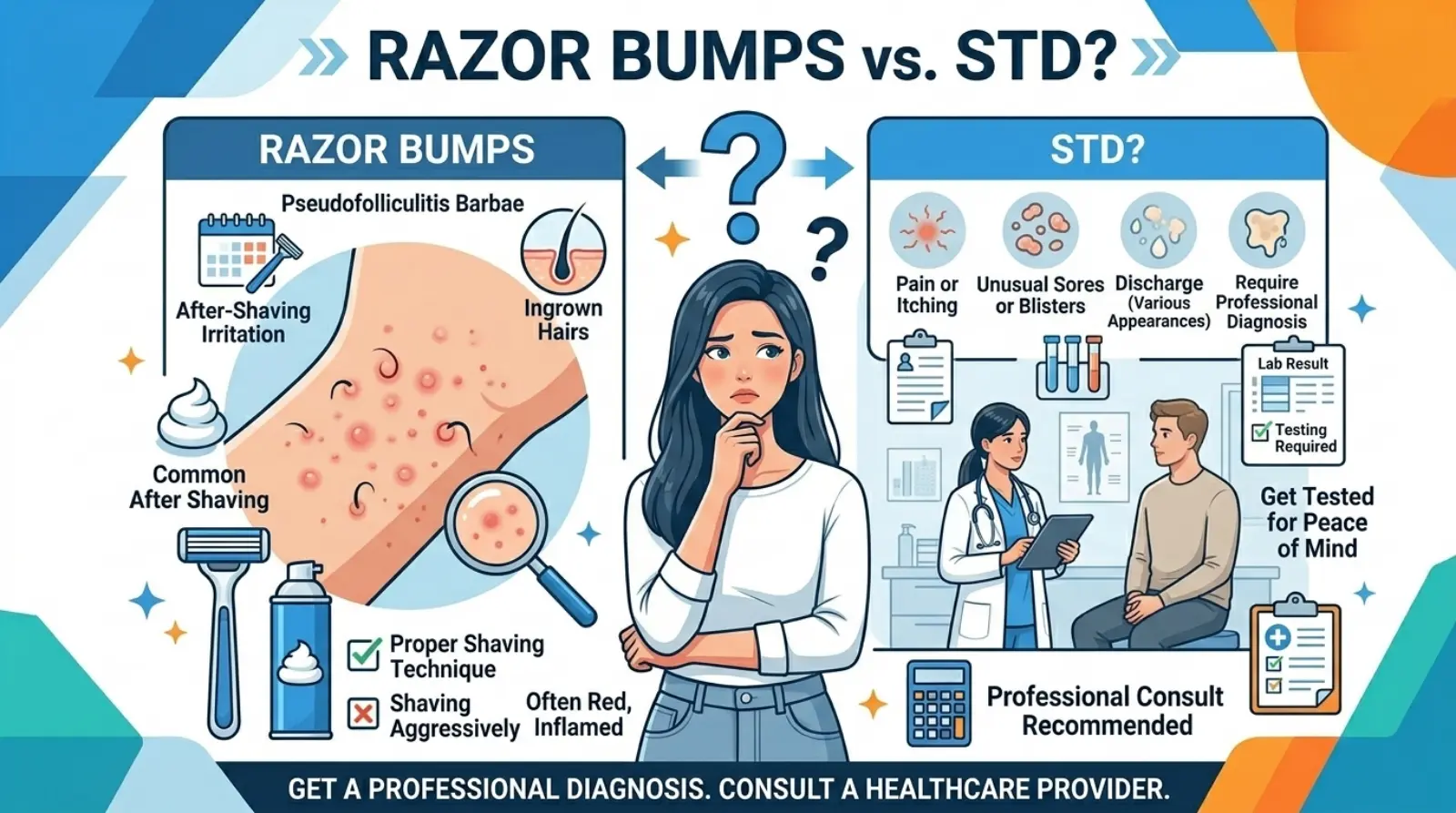
Razor bumps or STD is a common question many people ask after noticing bumps, redness, or irritation in the genital area. At first glance, the symptoms can look similar. However, the causes are often very different.
Razor bumps usually happen after shaving. They occur when hair grows back into the skin. On the other hand, some sexually transmitted diseases (STDs) can cause sores, bumps, or skin changes.
Knowing the difference can help you avoid stress and get the right treatment. In this guide, you’ll learn how to identify razor bumps, understand STD symptoms, and know when to see a healthcare professional.
Whether you recently shaved or noticed unusual skin changes, this article will help you make informed decisions about your health.
Quick Summary Box
- Razor bumps happen when shaved hairs grow back into the skin.
- STDs are infections spread through sexual contact.
- Razor bumps often cause small, itchy, or painful bumps.
- Some STDs can cause sores, blisters, or wart-like growths.
- Razor bumps usually appear shortly after shaving.
- STD symptoms may develop days, weeks, or months after exposure.
- Not all genital bumps are STDs.
- A healthcare provider can give an accurate diagnosis.
- Avoid self-diagnosing based only on appearance.
- Seek medical help if symptoms persist or worsen.
What Are Razor Bumps?
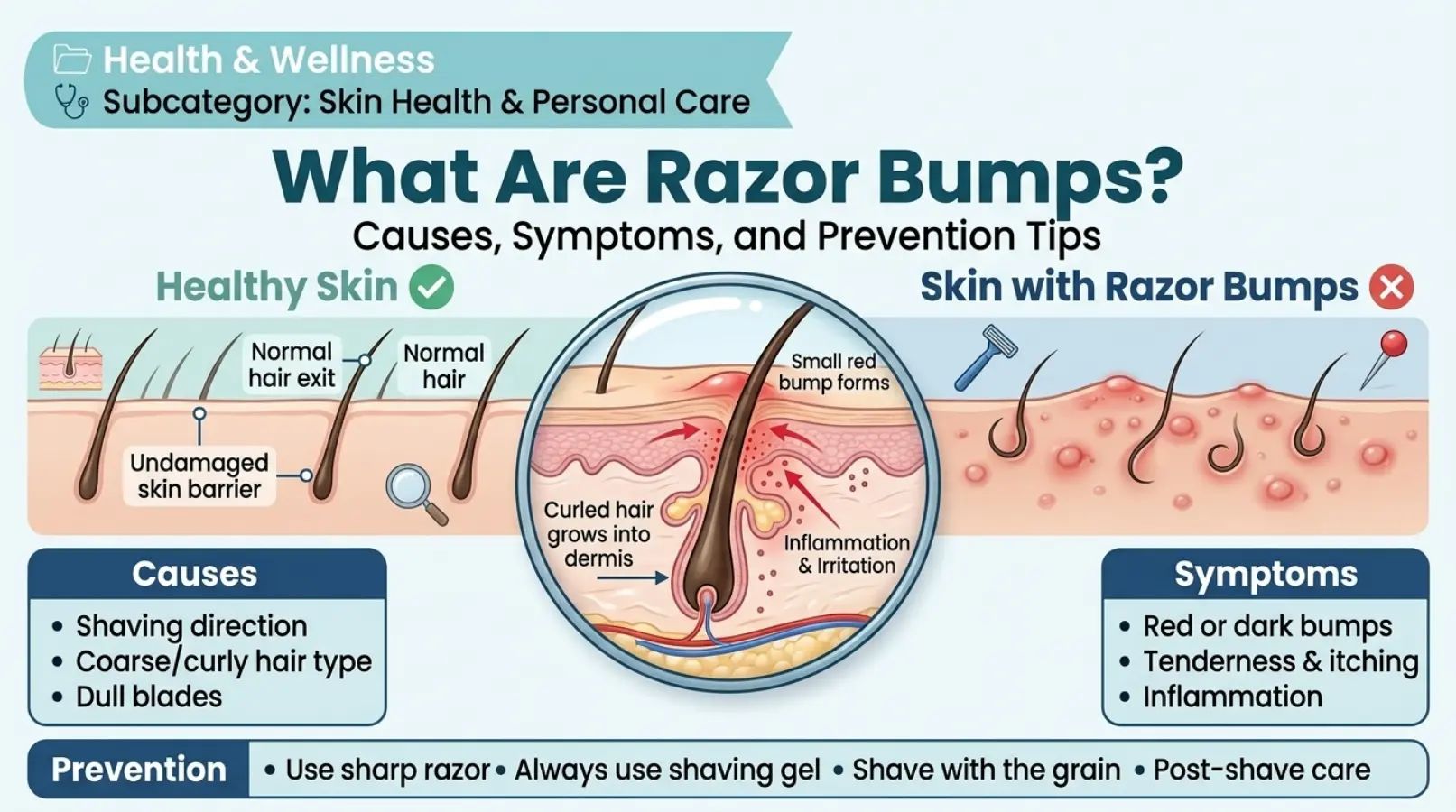
Razor bumps, also called pseudofolliculitis barbae, occur when shaved hair curls back into the skin.
The body treats the trapped hair as a foreign object. As a result, inflammation develops around the hair follicle.
Common Signs of Razor Bumps
- Small red bumps
- Itching
- Mild pain
- Skin irritation
- Ingrown hairs
- Tender skin
- Clusters of bumps after shaving
These bumps often appear within a few days of shaving.
What Is an STD?
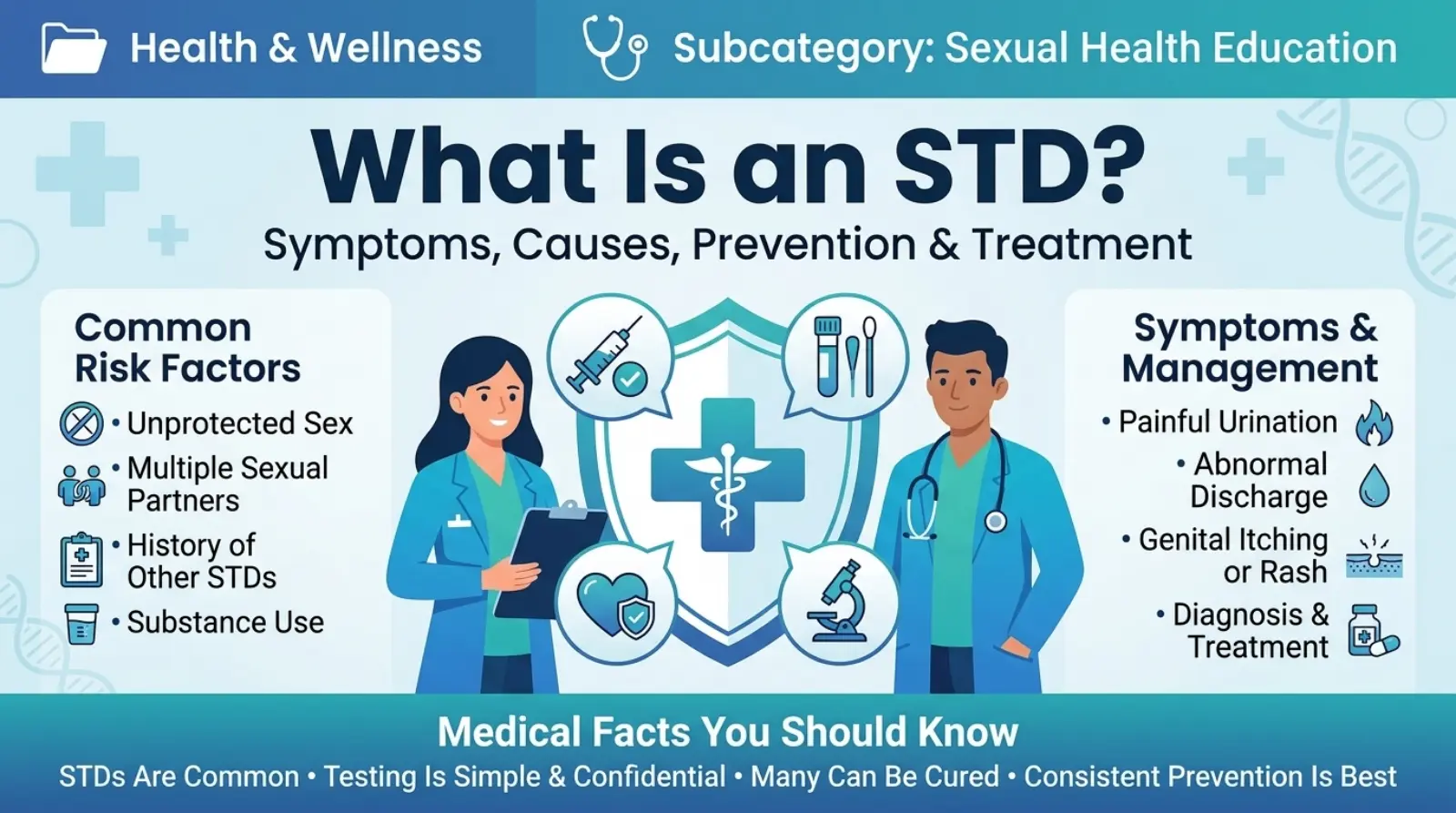
An STD, or sexually transmitted disease, is an infection passed through sexual contact.
Some STDs cause visible skin symptoms. Others may show no symptoms at all.
Common STDs That Cause Bumps
- Genital herpes
- Human papillomavirus (HPV)
- Syphilis
- Molluscum contagiosum
- Chancroid (rare in many regions)
Each infection creates different skin changes.
Razor Bumps vs STD: Key Differences
The biggest difference lies in the cause.
Razor bumps come from shaving. STDs result from infection.
Comparison Table
| Feature | Razor Bumps | STD |
| Cause | Shaving and ingrown hairs | Infection from sexual contact |
| Appearance | Small red bumps | Sores, blisters, warts, or bumps |
| Timing | Appears after shaving | Appears after infection exposure |
| Itching | Common | Sometimes |
| Pain | Mild discomfort | Varies by infection |
| Pus | Sometimes | Possible in some infections |
| Spread | Not contagious | Often contagious |
| Treatment | Shaving adjustments and skin care | Medical treatment |
| Duration | Usually improves within days | Often persists without treatment |
How Razor Bumps Look in Real Life
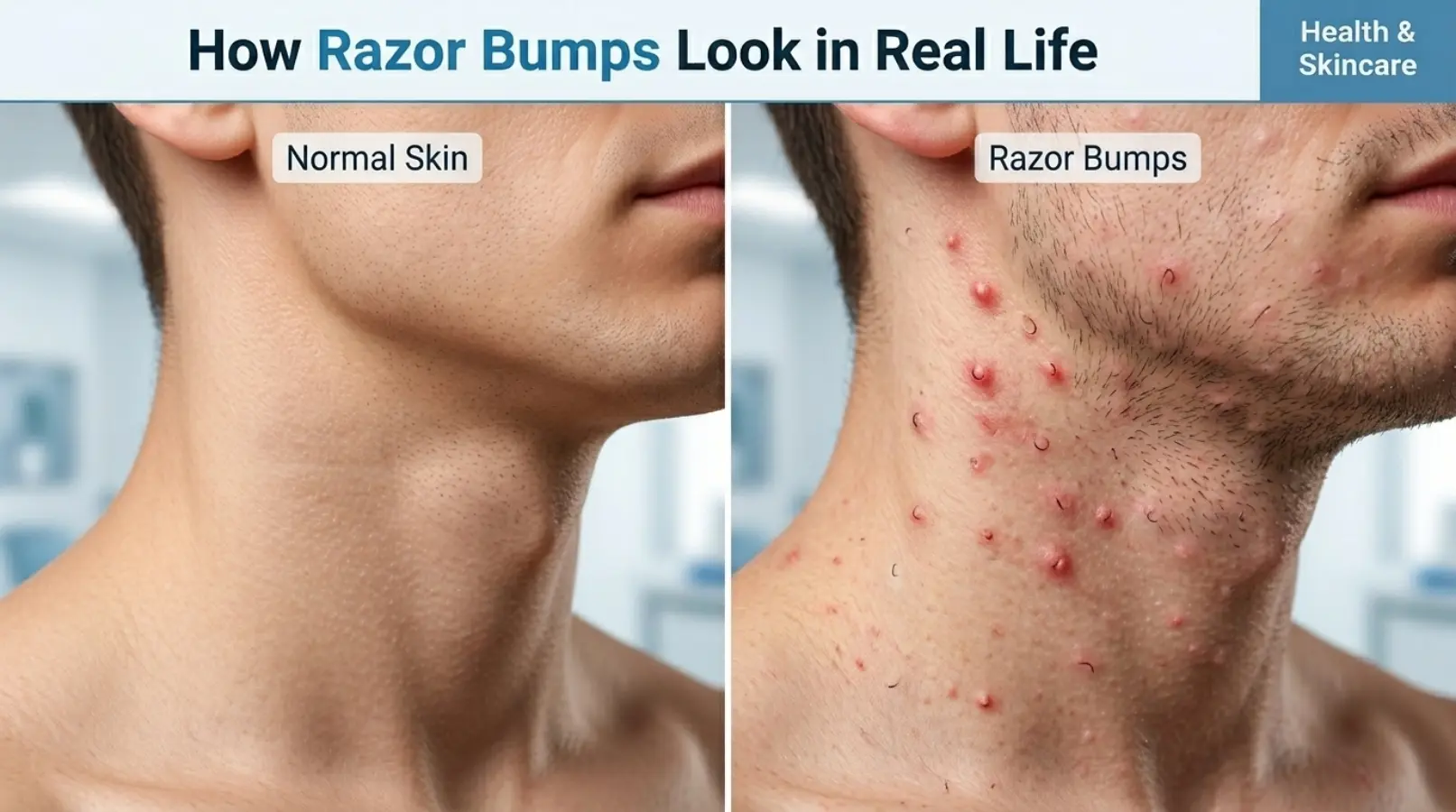
Razor bumps often appear in areas where hair was recently removed.
Common Locations
- Bikini line
- Pubic area
- Face
- Neck
- Underarms
- Legs
Typical Appearance
- Tiny red bumps
- Visible trapped hairs
- Bumps centered around hair follicles
- Mild swelling
Many people notice them one to three days after shaving.
How STD-Related Bumps May Appear
STD symptoms vary depending on the infection.
Genital Herpes
- Painful blisters
- Open sores
- Burning sensation
- Flu-like symptoms in some cases
HPV (Genital Warts)
- Flesh-colored growths
- Rough texture
- Single or clustered bumps
Syphilis
- Painless sore
- Firm round ulcer
- Appears at the infection site
Because symptoms differ, diagnosis based on appearance alone can be difficult.
Real-Life Scenarios: Razor Bumps or STD?
Scenario 1
You shaved yesterday. Today, you notice small red bumps around hair follicles.
Most likely: Razor bumps.
Scenario 2
You have painful blisters and did not shave recently.
Possible cause: Genital herpes.
Scenario 3
You notice soft, cauliflower-like growths.
Possible cause: HPV-related genital warts.
Scenario 4
You see a painless sore after sexual contact.
Possible cause: Syphilis.
These examples show why context matters.
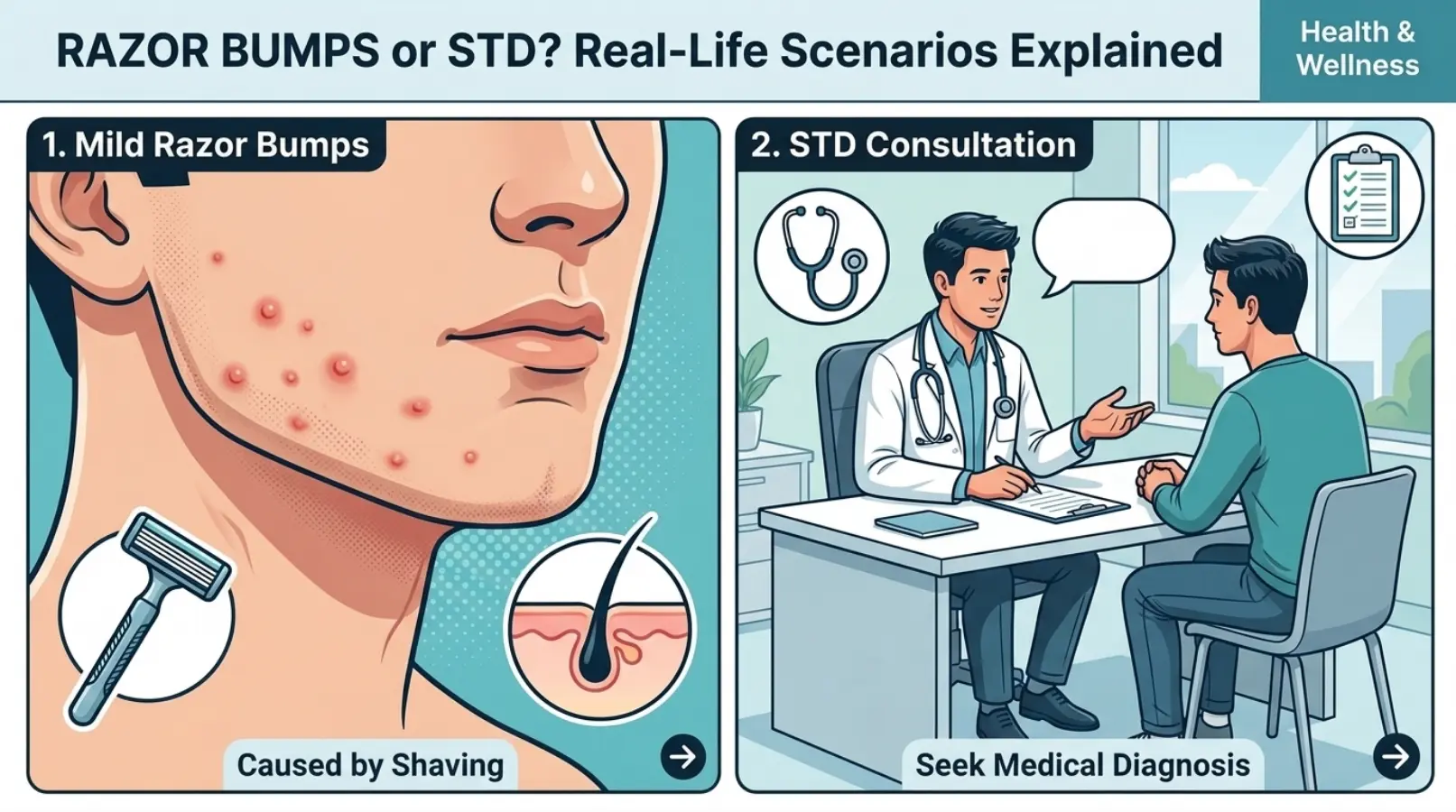
Symptoms That Suggest Razor Bumps
Several signs point toward shaving irritation rather than infection.
Common Indicators
- Recent shaving
- Visible ingrown hairs
- Redness around follicles
- Mild itching
- Improvement within one week
- No sexual exposure concerns
If these symptoms match your experience, razor bumps may be the cause.
Symptoms That May Suggest an STD
Some warning signs deserve medical attention.
Watch for These Symptoms
- Painful blisters
- Open sores
- Wart-like growths
- Unusual discharge
- Fever
- Swollen lymph nodes
- Persistent symptoms
- Pain during urination
These symptoms often require professional evaluation.
Common Mistakes People Make
Many people misidentify skin changes.
Mistake 1: Assuming Every Bump Is an STD
Not all genital bumps indicate infection.
Mistake 2: Ignoring Symptoms
Some infections worsen without treatment.
Mistake 3: Continuing to Shave Irritated Skin
This can increase inflammation.
Mistake 4: Self-Diagnosing Online
Photos and descriptions can be misleading.
Mistake 5: Delaying Medical Care
Early diagnosis improves treatment outcomes.
Tips to Prevent Razor Bumps
Good shaving habits reduce irritation.
Prevention Tips
- Use a sharp razor
- Shave in the direction of hair growth
- Use shaving cream
- Avoid stretching the skin
- Exfoliate gently
- Moisturize afterward
- Avoid shaving too closely
- Replace old blades regularly
These habits help lower the risk of ingrown hairs.
When Should You See a Doctor?
Seek medical advice if:
- Symptoms last more than two weeks
- Bumps become very painful
- You develop blisters
- You notice unusual discharge
- You recently had unprotected sex
- Symptoms continue to spread
- You develop fever or swollen glands
A healthcare provider can determine the exact cause.
Synonyms
Razor
- Ingrown hair
- Shaving bumps
- Folliculitis
- Skin irritation after shaving
- Pseudofolliculitis barbae
STD
- Sexually transmitted infection (STI)
- Genital herpes
- Genital warts
- Syphilis symptoms
- Sexually transmitted disease
Daily Life Impact of Misdiagnosis
Misunderstanding skin symptoms can create unnecessary anxiety.
Some people fear the worst when they notice bumps. Others ignore signs of infection.
Learning the differences helps you make better decisions. It also encourages proper medical care when needed.
Awareness protects both physical and emotional health.
Expert Insights: Why This Topic Matters
Healthcare professionals often see patients worried about genital bumps.
Many cases turn out to be harmless shaving irritation. However, some symptoms require testing and treatment.
Expert Tips
- Do not rely on appearance alone.
- Monitor changes over time.
- Consider recent shaving history.
- Consider recent sexual activity.
- Get tested if you have risk factors.
- Follow proper shaving practices.
Early evaluation leads to better outcomes and peace of mind.
Frequently Asked Questions (FAQs)
1. Can razor bumps look like herpes?
Yes. Both can appear as small bumps. However, herpes usually forms painful blisters and sores.
2. How long do razor bumps last?
Most razor bumps improve within a few days to two weeks.
3. Are razor bumps contagious?
No. Razor bumps are not contagious.
4. Can an ingrown hair be mistaken for an STD?
Yes. Ingrown hairs can resemble certain STD symptoms.
5. Do genital warts hurt?
Genital warts are often painless but may cause irritation.
6. Should I shave if I have razor bumps?
It is usually best to let the skin heal before shaving again.
7. Can I diagnose an STD by looking at bumps?
No. Many conditions look similar. Testing is often needed.
8. When should I get tested for an STD?
Consider testing if you have symptoms, recent exposure, or concerns about sexual health.
Conclusion
Understanding razor bumps or STD symptoms can help reduce confusion and anxiety. Razor bumps usually result from shaving and ingrown hairs. They often improve with proper skin care and time. STDs, however, come from infections and may require medical treatment.
While some symptoms look alike, important differences exist. Recent shaving, visible ingrown hairs, and mild irritation often point to razor bumps. Blisters, sores, warts, and persistent symptoms may indicate an STD.
Never rely solely on appearance for diagnosis. If symptoms continue, worsen, or follow sexual exposure, seek professional medical advice. A proper evaluation provides accurate answers and helps protect your long-term health.