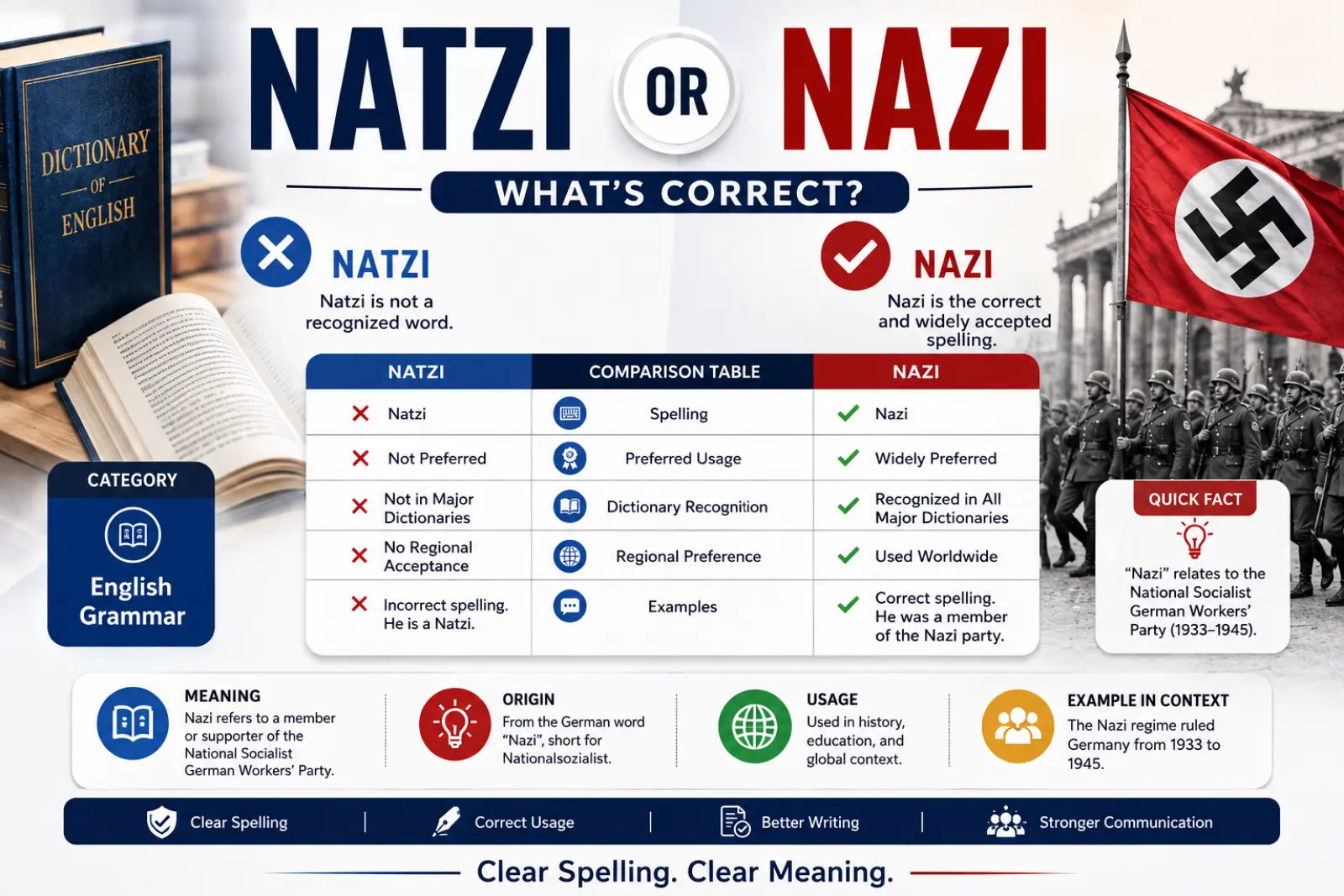
Natzi or Nazi is a common spelling question. Many people type natzi by mistake. The correct spelling is Nazi. One extra letter changes the word into a misspelling.
This confusion happens because some sounds are hard to spell. Search engines also show many typing errors. That makes people wonder which version is right.
In this guide, you will learn the correct spelling, meaning, pronunciation, and usage. You will also see real-life examples and common mistakes. By the end, you will know when and how to use the word correctly in writing.
Important Note: This article explains spelling and grammar only. It does not promote or support extremist beliefs or organizations.
Quick Summary Box
- Correct spelling: Nazi
- Incorrect spelling: Natzi
- Meaning: A member of Germany’s National Socialist Party (historical context)
- “Natzi” is not a standard English word.
- Use Nazi in historical, educational, or factual writing.
- Avoid using the word as a casual insult.
What Does Nazi Mean?
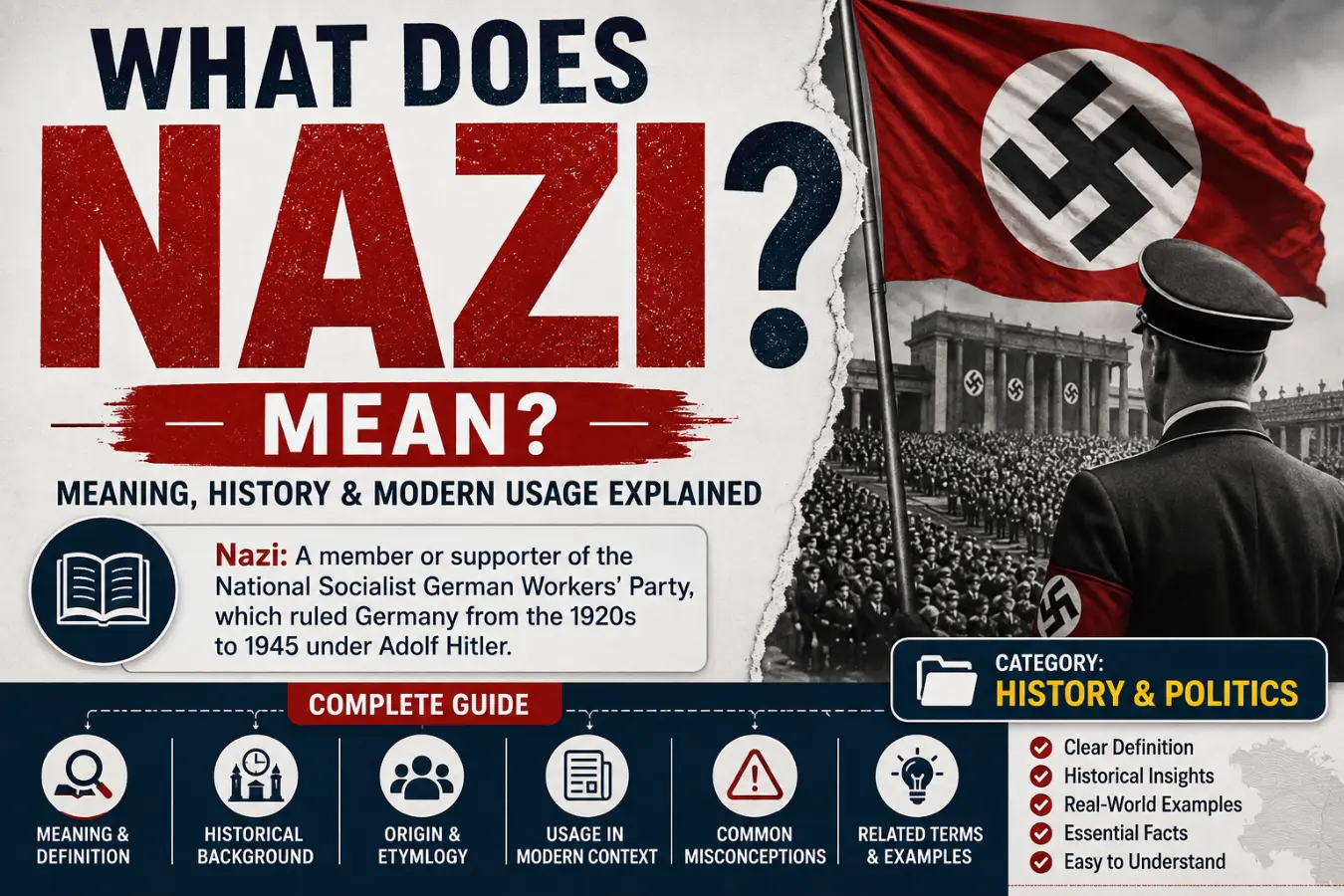
Nazi is the correct English spelling.
The word comes from the German term Nationalsozialist, which refers to members of Germany’s National Socialist German Workers’ Party during the 1930s and 1940s.
Today, the word mainly appears in:
- History books
- News reports
- Educational articles
- Academic research
- Museum exhibits
It should be used carefully because it refers to a real historical movement responsible for severe human suffering.
Is Natzi a Real Word?
No.
Natzi is simply a spelling mistake.
It does not appear in standard English dictionaries as a correct word.
People usually write natzi because:
- They type too fast.
- They guess the spelling.
- They confuse the pronunciation.
- Autocorrect does not catch every mistake.
Always replace natzi with Nazi.
Natzi or Nazi: Which Is Correct?
| Feature | Natzi | Nazi |
| Correct English spelling | No | Yes |
| Dictionary word | No | Yes |
| Used in history books | Never | Yes |
| Accepted in academic writing | No | Yes |
| Recommended for formal writing | No | Yes |
Winner: Nazi is the only correct spelling.
Why Do People Misspell Nazi as Natzi?
Several reasons cause this mistake.
1. Pronunciation Confusion
The “ts” sound makes some writers add an extra t.
2. Fast Typing
Typing quickly often creates spelling errors.
3. Memory Mistakes
Some people remember the sound but not the spelling.
4. Non-Native English Learners
Learners sometimes spell words exactly as they hear them.
Real-Life Examples
Correct
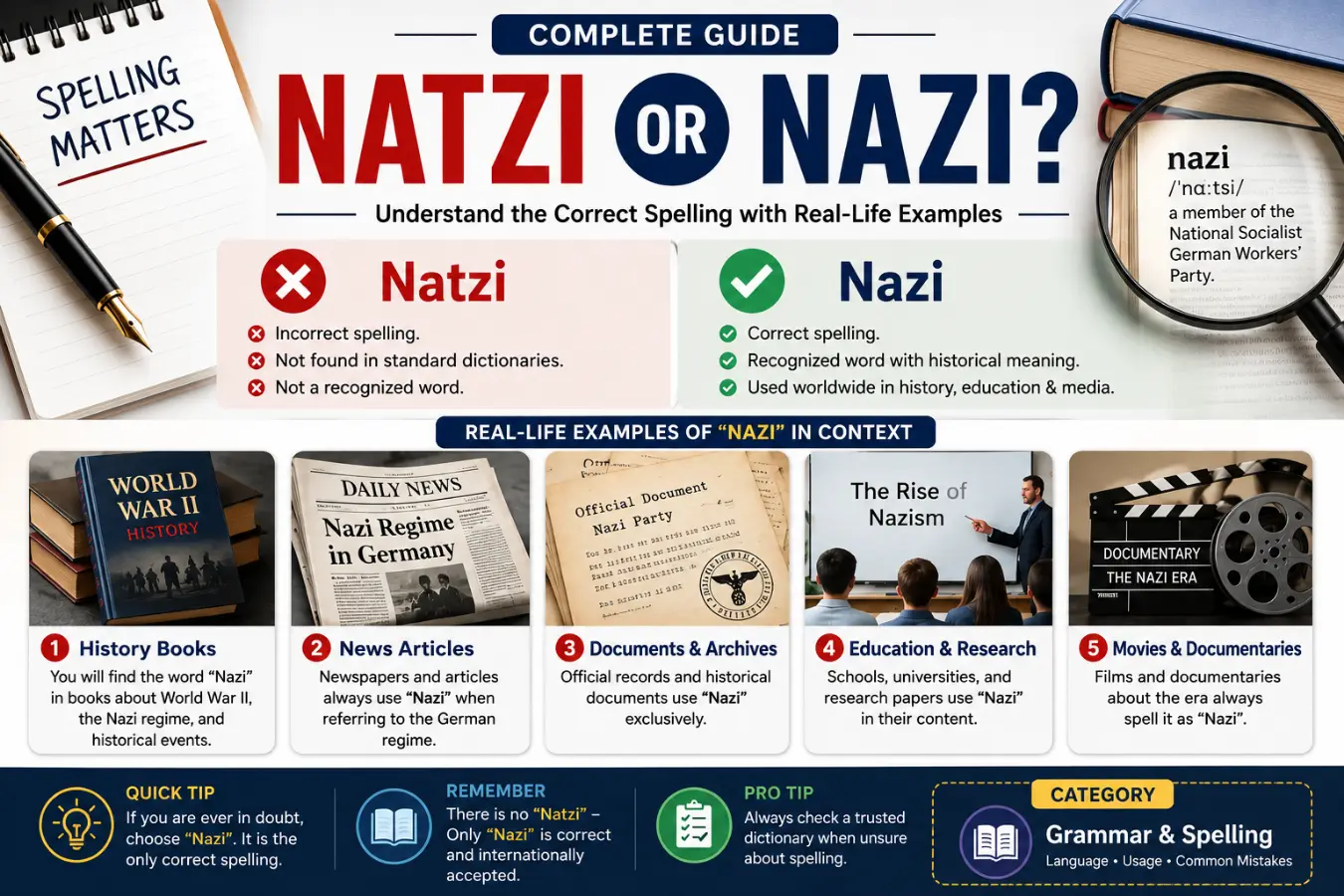
- The museum has an exhibit about Nazi Germany.
- Students studied the rise of the Nazi Party.
- Historians examined Nazi propaganda.
Incorrect
- The museum has an exhibit about Natzi Germany.
- The Natzi Party ruled Germany.
- Natzi soldiers occupied many countries.
How to Remember the Correct Spelling
These simple tricks help.
Think of Four Letters
N-A-Z-I
There is no extra T.
Read History Books
Seeing the correct spelling often improves memory.
Use Spell Check
Modern writing tools usually recognize Nazi.
Practice
Write the word correctly several times.
Common Mistakes to Avoid
Many writers make these errors.
Adding an Extra T
❌ Natzi
✅ Nazi
Using It as a Joke
The word has serious historical meaning.
Avoid using it casually.
Confusing History with Modern Insults
Use the word only when it accurately describes historical facts or well-supported discussions.
Ignoring Context
Always consider whether the term is necessary and appropriate.
Nazi in Daily Writing
You may encounter this word in:
- History assignments
- Educational websites
- Documentary reviews
- World War II discussions
- Museum articles
- Historical biographies
It rarely appears in everyday conversation outside educational or historical contexts.
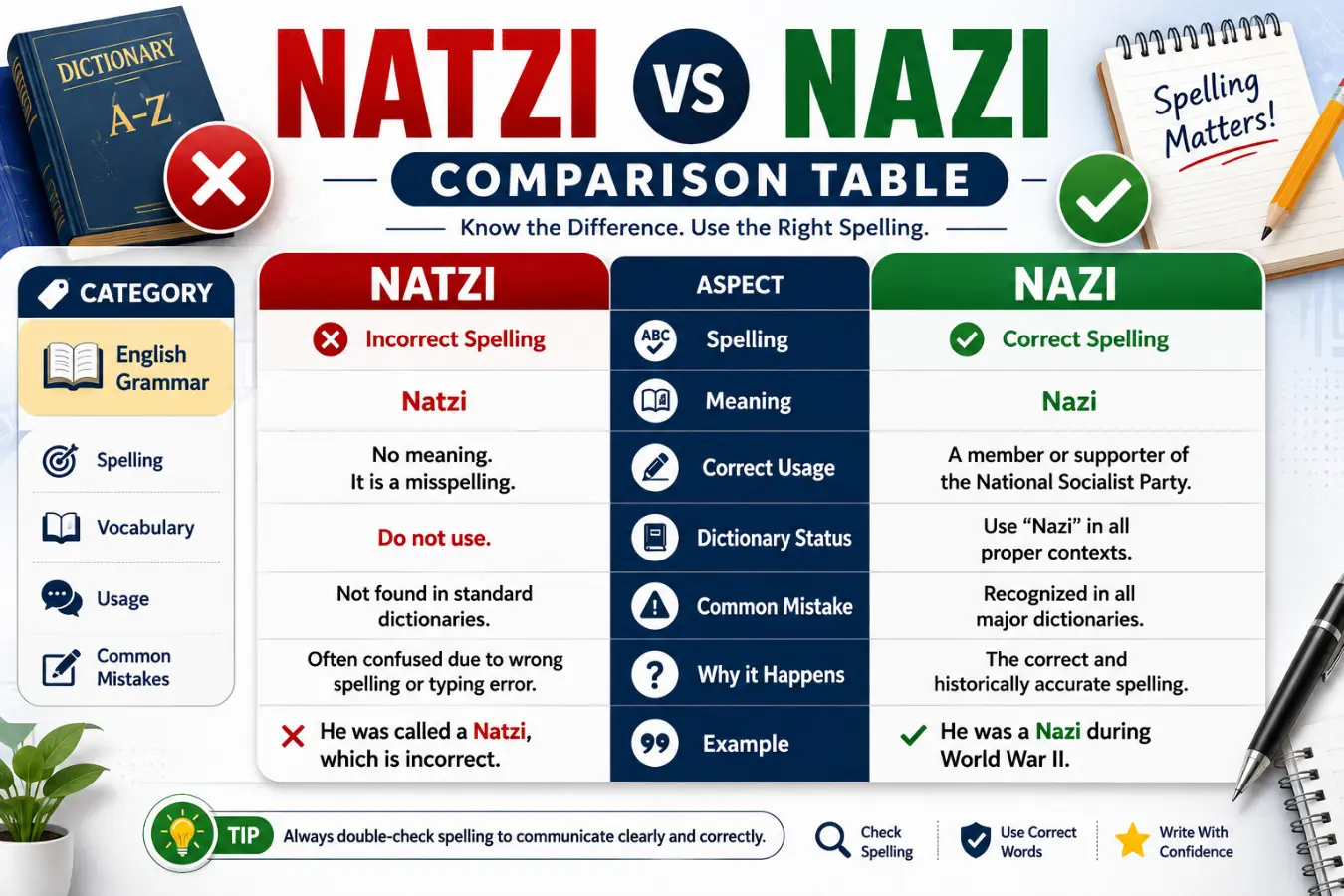
Natzi vs Nazi Comparison Table
| Topic | Natzi | Nazi |
| Correct spelling | ❌ | ✅ |
| English dictionary | ❌ | ✅ |
| Historical use | ❌ | ✅ |
| Academic writing | ❌ | ✅ |
| Search intent | Misspelling | Correct word |
| Recommended usage | Never | Historical and educational contexts |
Why Correct Spelling Matters
Correct spelling improves communication.
It also:
- Builds trust.
- Makes writing professional.
- Helps readers understand your message.
- Reduces confusion.
Using the correct spelling also shows respect when discussing serious historical topics.
Expert Insights
Professional editors recommend checking historical terms carefully.
Small spelling mistakes can change credibility.
When writing about history:
- Verify names.
- Use trusted sources.
- Stay factual.
- Avoid emotional exaggeration.
- Keep historical context accurate.
Good writing combines accuracy with respectful language.
Frequently Asked Questions (FAQs)
Is Natzi correct?
No. Natzi is a misspelling.
What is the correct spelling?
The correct spelling is Nazi.
Why do people spell Nazi as Natzi?
Most people confuse the pronunciation or type too quickly.
Is Natzi found in dictionaries?
No.
Major English dictionaries recognize Nazi, not natzi.
Can I use Natzi in academic writing?
No.
Always use Nazi.
Is Nazi always capitalized?
Yes.
It is a proper noun when referring to the historical political movement or its members.
Is Nazi a German word?
It comes from German and became an accepted English word through historical usage.
Featured Snippet Answer
Natzi or Nazi: Which is correct?
Nazi is the correct spelling. Natzi is a common misspelling and is not recognized as a standard English word. Use Nazi when referring to the historical National Socialist movement in Germany or in educational and historical writing.
Conclusion
Many people search for natzi or nazi because they are unsure about the spelling. The answer is simple. Nazi is the correct spelling, while natzi is only a common misspelling. Using the right spelling improves your writing and helps readers understand your message. It also shows care when discussing an important historical subject. Whether you are writing a school paper, a blog post, or an educational article, always use Nazi in the proper historical context. Remember the simple rule: there is no extra T in the word. Correct spelling creates clear, accurate, and trustworthy writing.
Discover More Post:
Cold or Allergies? How to Tell the Difference and Right Treatment
Introvert or Extrovert Quiz: Discover Your True Personality