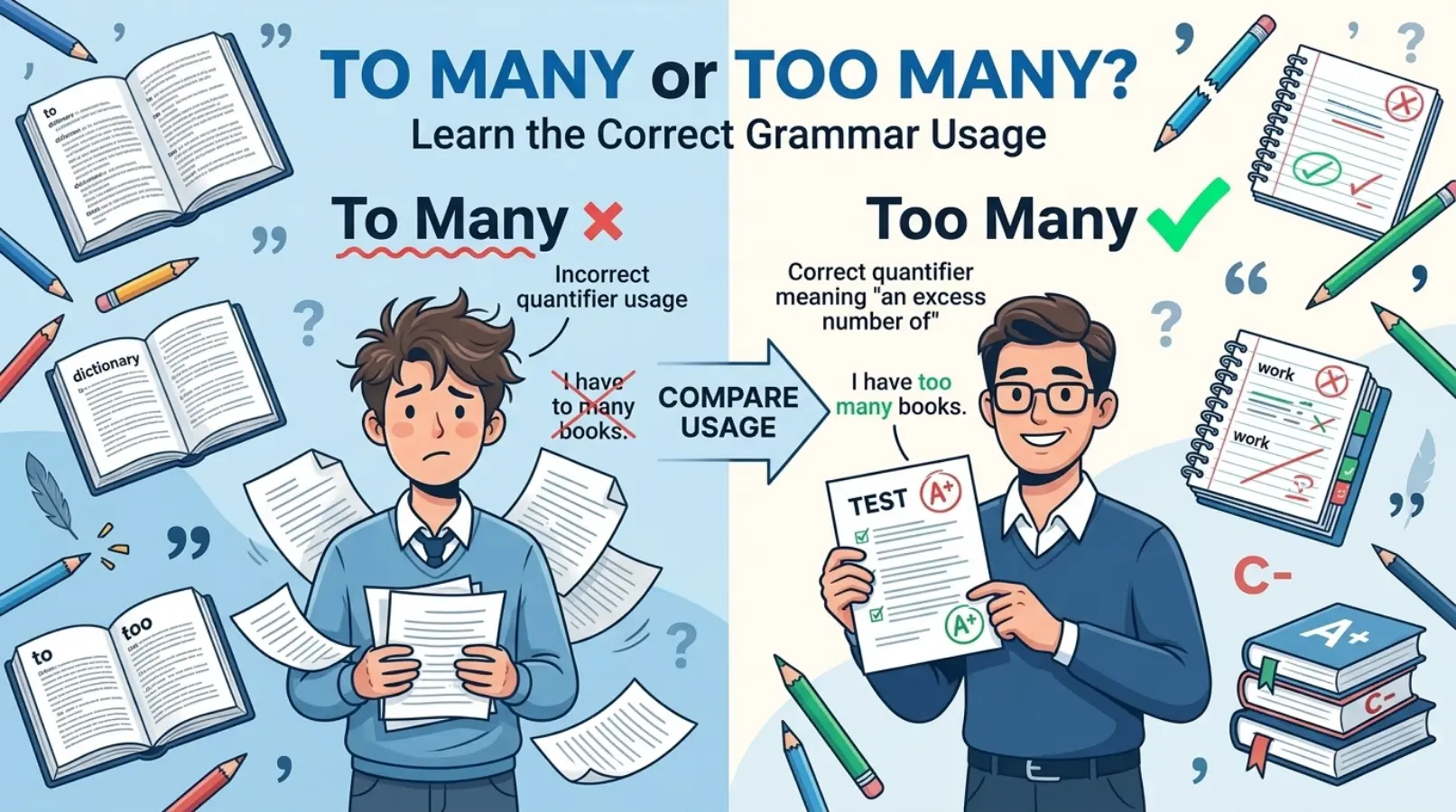
To many or too many is a common grammar question. Many English learners make this mistake every day. The words look similar, but they have different meanings.
Using the wrong phrase can change the meaning of your sentence. It can also make your writing look less professional. The good news is that the rule is simple and easy to remember.
In this guide, you will learn the difference between to many and too many. You will see examples, common mistakes, and helpful tips. By the end, you will know exactly when to use each phrase.
Whether you are writing emails, essays, social media posts, or business documents, this guide will help you avoid a very common grammar error.
Quick Summary Box
- Too many is correct when you mean “more than needed” or “an excessive number.”
- To many is correct only when “to” acts as a preposition.
- Example: There are too many people here.
- Example: The teacher spoke to many students.
- “Too” means “also” or “more than enough.”
- “To” usually shows direction, movement, or connection.
What Does “Too Many” Mean?
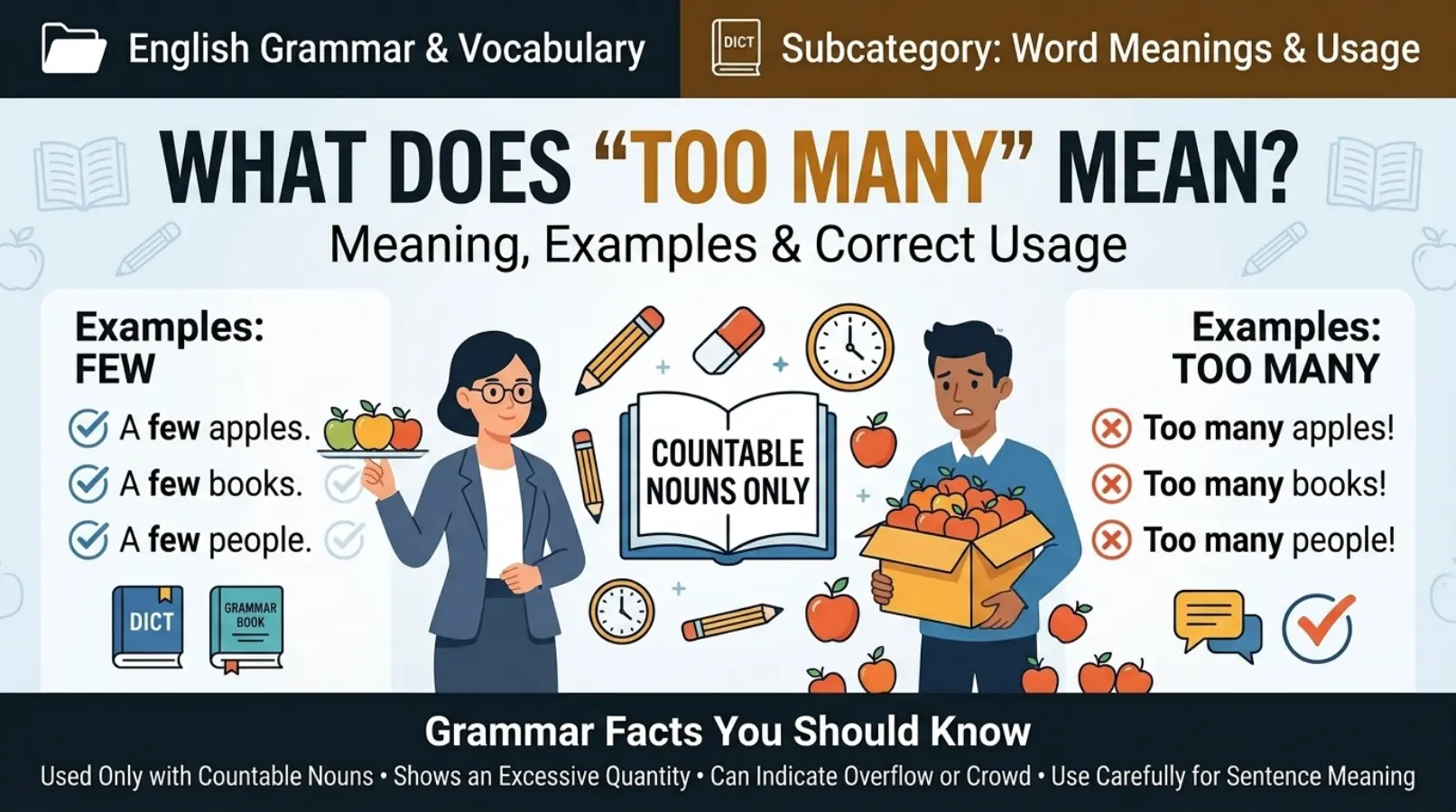
Too many means more than necessary, wanted, or expected.
You use it when something exists in excessive numbers.
Examples
- There are too many cars on the road.
- We bought too many snacks.
- She has too many clothes in her closet.
- The room contains too many chairs.
- There were too many mistakes in the report.
In each example, the number is larger than desired.
What Does “To Many” Mean?
To many is less common. It appears when to functions as a preposition.
It usually means something is directed toward many people.
Examples
- The manager sent the email to many employees.
- The speaker talked to many guests.
- The message was important to many families.
- The company offered discounts to many customers.
- The teacher explained the lesson to many students.
In these sentences, “to” connects an action or relationship with many people.
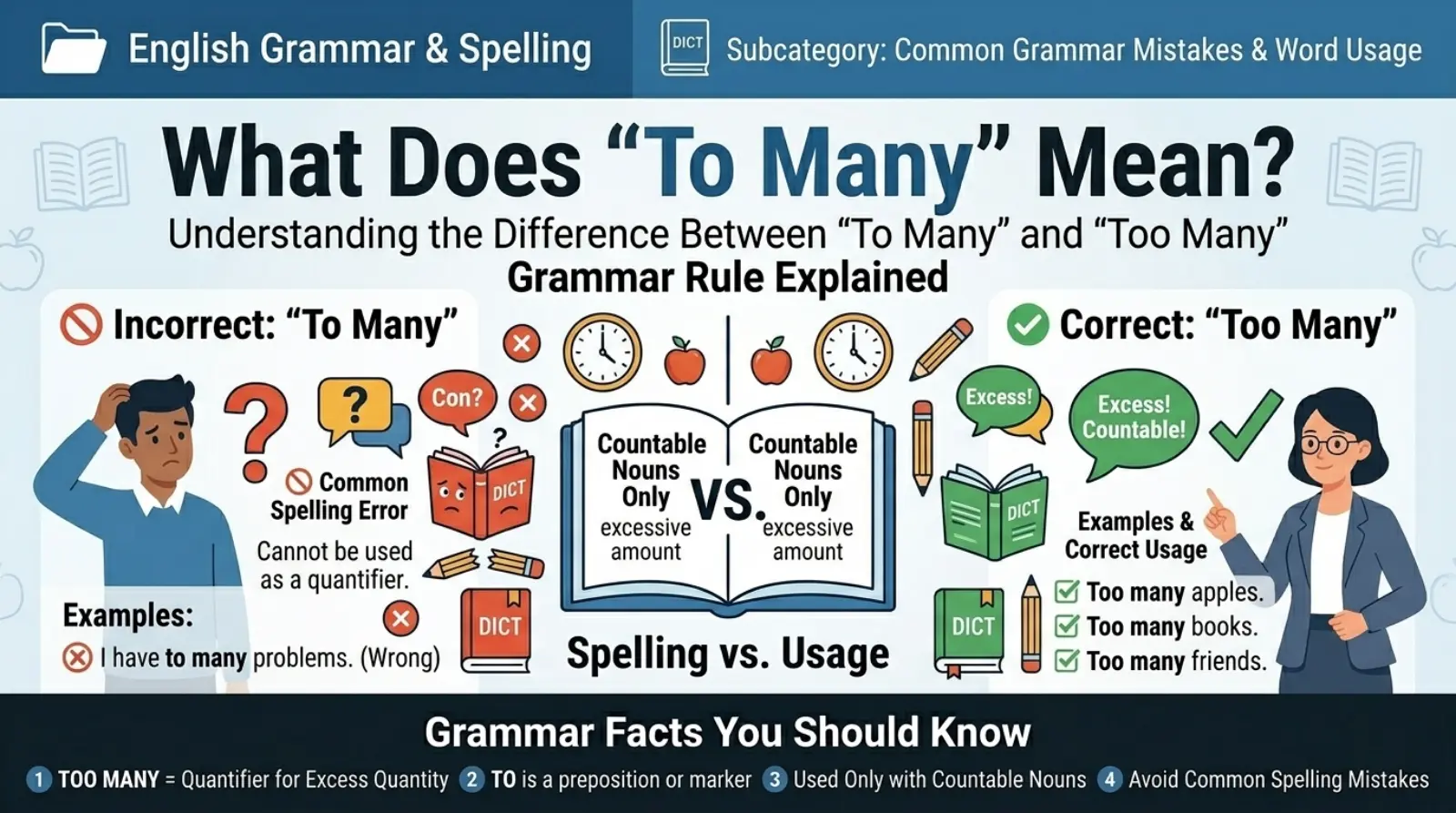
To Many vs Too Many: Key Difference
Many people confuse these phrases because they sound alike.
The main difference is simple:
| Phrase | Meaning | Correct Use |
| Too Many | More than needed | Quantity is excessive |
| To Many | Directed toward many people | “To” works as a preposition |
Quick Rule
- If you mean more than enough, use too many.
- If you mean toward many people, use to many.
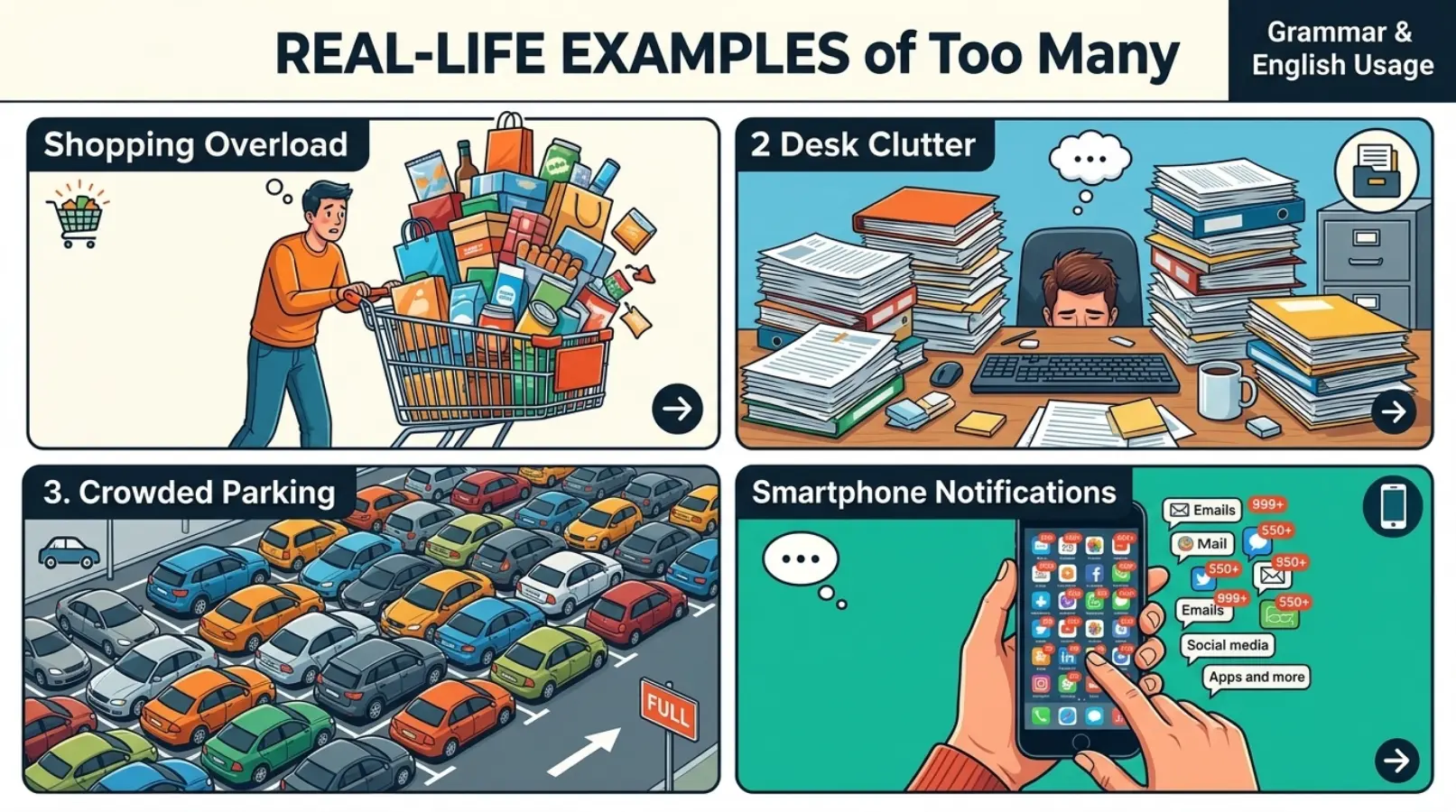
Real-Life Examples of Too Many
Let’s look at common daily situations.
School
- There are too many students in one classroom.
- We received too many assignments this week.
Work
- We attended too many meetings today.
- The project had too many delays.
Home
- My child owns too many toys.
- We bought too many groceries.
Online
- There are too many ads on this website.
- I have too many unread emails.
Real-Life Examples of To Many
Now let’s see situations where to many is correct.
Communication
- The company sent updates to many customers.
- She wrote letters to many friends.
Education
- The teacher spoke to many parents.
- The principal gave awards to many students.
Business
- The presentation appealed to many investors.
- The campaign reached to many audiences worldwide.
Why People Confuse To Many and Too Many
Several reasons cause this mistake.
Similar Pronunciation
Both phrases sound nearly identical in spoken English.
Fast Typing
People often type quickly and miss the extra “o.”
Autocorrect Issues
Some devices fail to catch the mistake.
Grammar Confusion
Many writers forget the meaning of “too.”
Remember:
Too = excessive amount
This simple reminder helps avoid mistakes.
Common Mistakes With To Many and Too Many
Here are mistakes people make often.
Incorrect
There are to many books on the shelf.
Correct
There are too many books on the shelf.
Incorrect
We invited to many guests.
Correct
We invited too many guests.
Incorrect
She owns to many shoes.
Correct
She owns too many shoes.
Correct Use of To Many
The teacher talked to many students.
The email was sent to many employees.
These examples show proper use of “to.”
Easy Trick to Remember the Difference
Use this simple memory trick:
Too = Extra
The word too contains an extra “o.”
That extra letter reminds you of an extra amount.
Examples:
- Too much
- Too many
- Too fast
- Too expensive
All these phrases suggest excess.
To = Direction
Think of to as movement or connection.
Examples:
- Go to school.
- Talk to friends.
- Write to customers.
- Send emails to many employees.
This trick works every time.
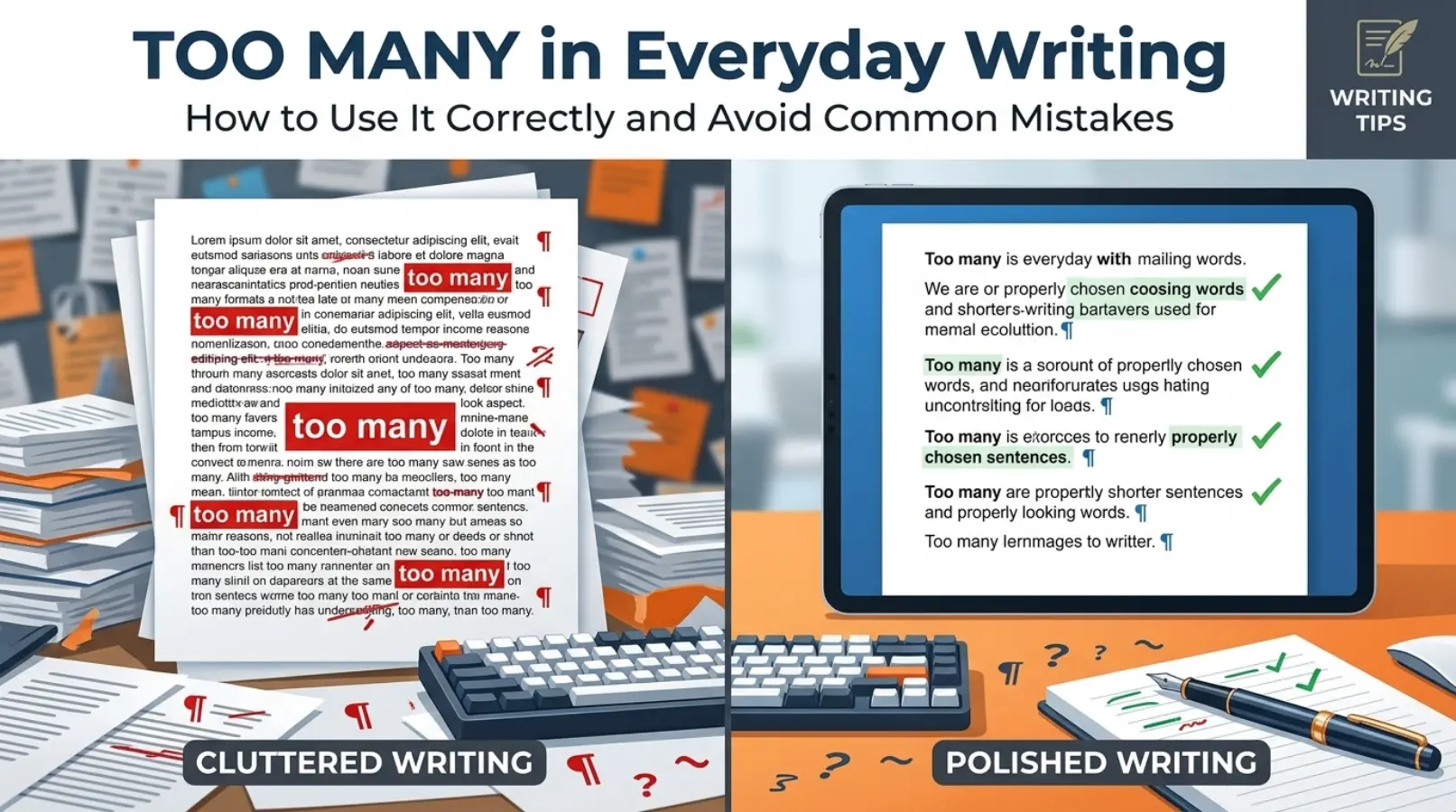
Too Many in Everyday Writing
You will often use too many in daily communication.
Social Media
- There are too many notifications today.
- I follow too many accounts.
Emails
- We received too many requests.
- There are too many attachments.
Academic Writing
- The study contained too many variables.
- Researchers found too many errors.
Business Writing
- The report included too many details.
- The team faced too many challenges.
Synonyms
Synonyms for Too Many
- Excessive number
- More than enough
- Overabundance
- Surplus
- Large quantity
- Overflowing amount
Expert Insights: Why Correct Usage Matters
Correct grammar builds trust.
Readers notice grammar mistakes quickly. Small errors can affect credibility.
Benefits of Using the Right Phrase
- Improves professional writing
- Enhances communication
- Builds reader confidence
- Helps academic success
- Creates a polished image
Grammar experts recommend proofreading every document before publishing.
Even small corrections can improve clarity and readability.
These topics support user intent and improve SEO structure.
Frequently Asked Questions (FAQs)
Is “to many” ever correct?
Yes. It is correct when “to” functions as a preposition.
Example: The teacher spoke to many students.
Which is more common, “to many” or “too many”?
Too many is much more common in everyday writing.
What does “too many” mean?
It means more than needed, wanted, or expected.
How do I remember the difference?
Remember that too has an extra “o,” which represents an extra amount.
Can I use “too many” with countable nouns?
Yes.
Examples:
- Too many books
- Too many people
- Too many cars
Is “to many people” correct?
Yes.
Example:
- This issue matters to many people.
What is the opposite of “too many”?
Common opposites include:
- Too few
- Not enough
- Insufficient number
Why do writers confuse these phrases?
They sound alike when spoken, making them easy to mix up.
Final Comparison Table
| Feature | To Many | Too Many |
| Part of Speech | Preposition + adjective | Adverb + adjective |
| Meaning | Directed toward many people | Excessive number |
| Common Usage | Less common | Very common |
| Example | Talked to many students | Too many students attended |
| Indicates Excess? | No | Yes |
| Grammar Purpose | Shows relationship | Shows excess quantity |
Conclusion
Understanding to many or too many is easier than it seems. The phrase too many means an excessive number of something and appears far more often in everyday English. Meanwhile, to many is correct only when the word “to” functions as a preposition that connects an action or idea to a group of people.
A simple rule can help you remember the difference: too has an extra “o,” and that extra letter represents an extra amount. Whenever you mean “more than enough,” choose too many. When referring to communication, direction, or connection with many people, use to many.
Mastering this small grammar rule can improve your writing, boost confidence, and help you communicate more clearly in every situation.