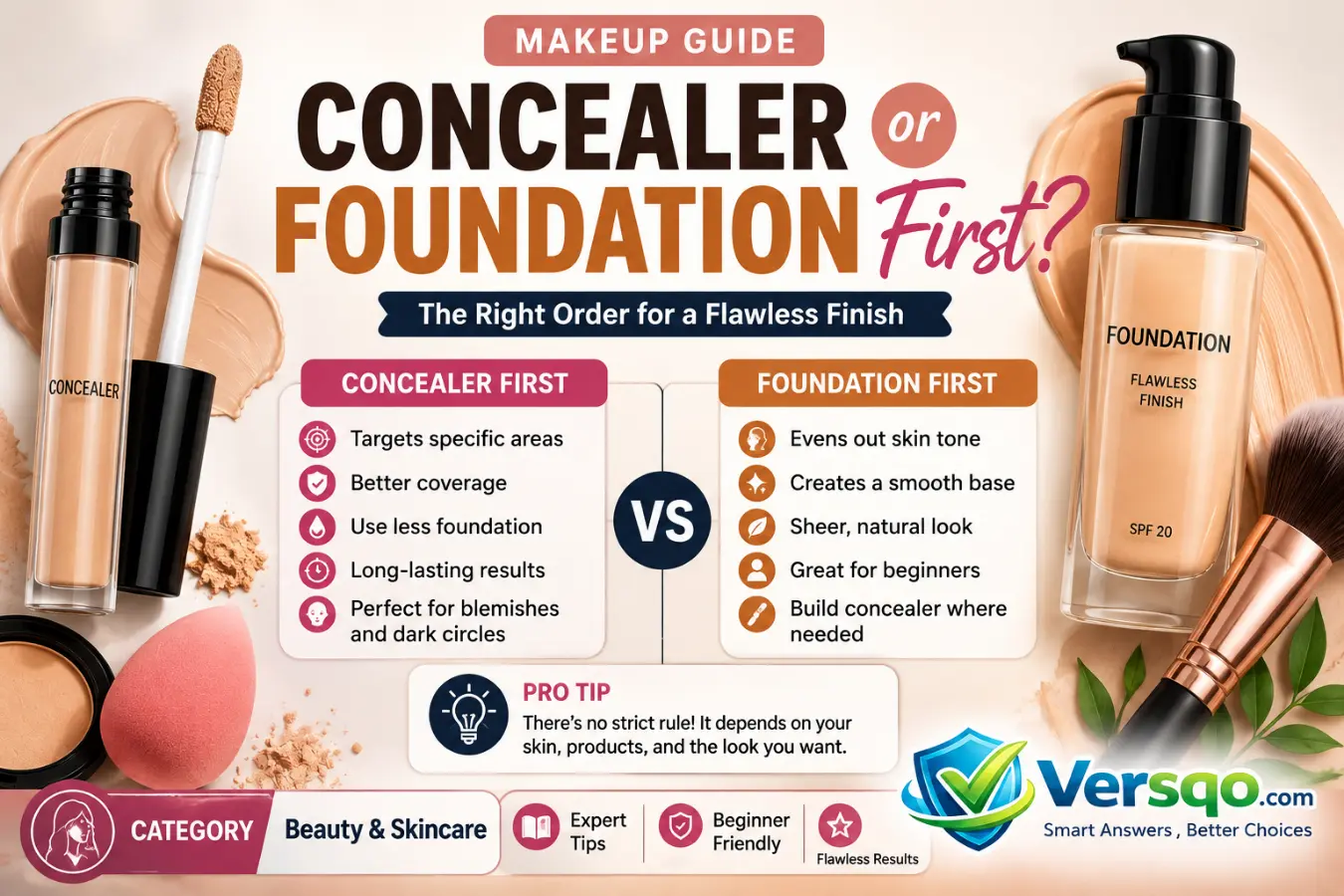
Concealer or foundation first is one of the most common makeup questions. Many beginners and even experienced users get confused. The right order can change how your makeup looks and lasts.
In most cases, foundation goes first, then concealer. Foundation creates an even base. After that, concealer hides any spots that still show. This method also helps you use less product and achieve a natural finish.
However, there are a few exceptions. Some makeup styles and skin concerns work better with concealer first.
This guide explains the correct order in simple words. You will learn when to apply each product, common mistakes to avoid, and expert tips for a smooth, long-lasting makeup look.
Quick Summary Box
- Foundation usually goes first.
- Concealer comes after foundation for better coverage.
- Foundation evens out your skin tone.
- Concealer hides dark circles, acne, and blemishes.
- Applying foundation first often saves concealer.
- Concealer first works in some special situations.
- Blend products well for a natural finish.
What Does “Concealer or Foundation First” Mean?
The phrase concealer or foundation first asks which makeup product you should apply before the other.
Both products have different jobs.
- Foundation creates an even skin tone.
- Concealer covers small areas with extra coverage.
- Together, they create smooth-looking skin.
Knowing the right order helps your makeup look fresh instead of heavy.
Should You Apply Concealer or Foundation First?
The simple answer is:
Apply foundation first in most situations.
Foundation covers redness, uneven skin tone, and light blemishes.
Once foundation is blended, you can see which areas still need extra coverage.
Then apply concealer only where needed.
This method:
- Uses less product
- Looks more natural
- Prevents cakey makeup
- Blends easily
- Lasts longer
Most professional makeup artists recommend this order.
Why Foundation Comes Before Concealer
Foundation acts like a smooth canvas.
It reduces many skin concerns before concealer is needed.
Benefits include:
- Creates an even complexion
- Covers mild redness
- Softens discoloration
- Helps concealer blend better
- Prevents thick layers
If you apply concealer first, foundation may move or wipe it away while blending.
That means you often need to apply concealer again.
When Should You Apply Concealer First?
Although foundation first is the standard method, some situations call for concealer first.
Examples include:
Color Correcting
If you have very dark circles or strong redness, apply a color corrector or concealer first.
Then apply foundation gently over it.
Spot Concealing
If you want very light makeup, apply concealer only on small imperfections.
Skip foundation completely if your skin already looks even.
Creative Makeup
Some beauty trends use concealer first for highlighting before foundation.
This technique needs practice.
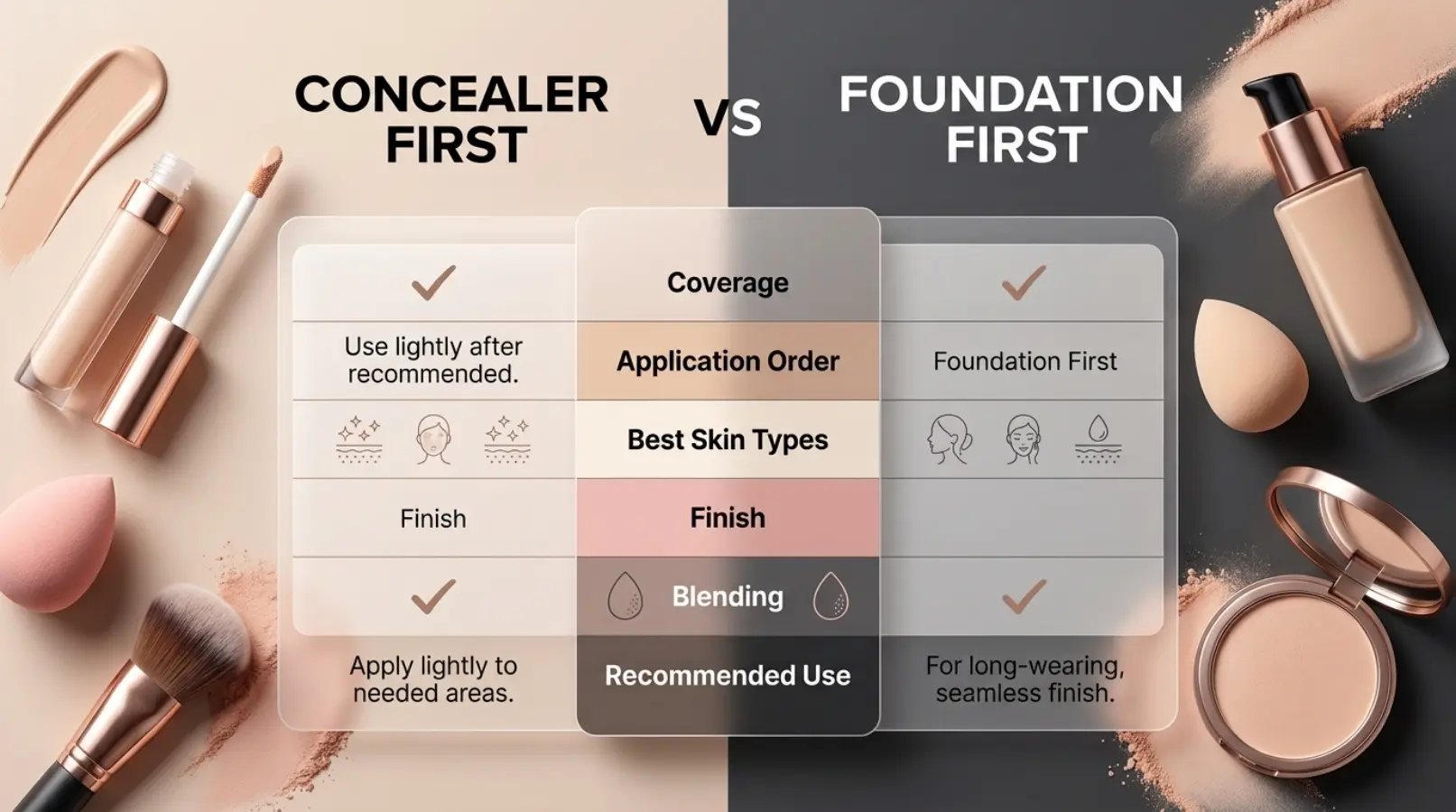
Concealer First vs Foundation First: Comparison Table
| Feature | Foundation First | Concealer First |
| Best for everyday makeup | Yes | Sometimes |
| Natural finish | Excellent | Good |
| Saves product | Yes | No |
| Covers dark circles | Good | Better with color correction |
| Covers acne | Very Good | Good |
| Beginner friendly | Yes | Less |
| Long-lasting | Excellent | Good |
| Professional recommendation | Yes | Only in special cases |
Winner: Foundation first works best for most people.
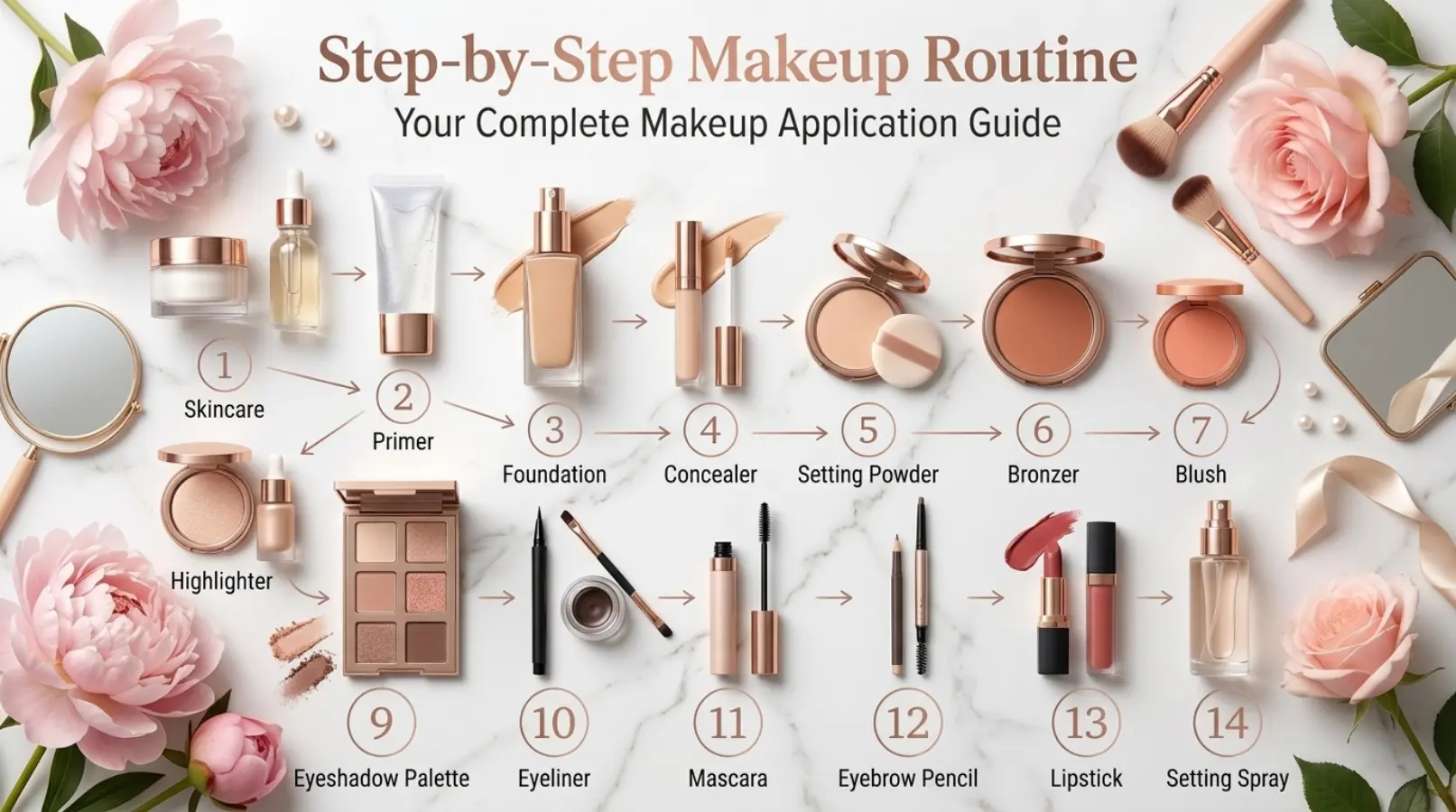
Step-by-Step Makeup Routine
Follow this order for beautiful makeup.
Step 1: Clean Your Face
Wash away dirt and oil.
Step 2: Apply Moisturizer
Hydrated skin helps makeup blend smoothly.
Step 3: Use Primer
Primer helps makeup stay longer.
Step 4: Apply Foundation
Blend evenly with a sponge or brush.
Step 5: Apply Concealer
Cover:
- Under-eye circles
- Pimples
- Redness
- Dark spots
Step 6: Blend
Blend edges until everything looks smooth.
Step 7: Set With Powder
Powder keeps makeup in place.
Step 8: Finish Your Makeup
Apply blush, bronzer, highlighter, and setting spray.
Real-Life Examples
Example 1: Office Makeup
Sarah wants natural makeup.
She applies foundation first.
Most redness disappears.
She uses a little concealer under her eyes.
Her makeup looks light and fresh.
Example 2: Acne Coverage
Emily has acne marks.
Foundation covers many spots.
She adds concealer only on visible blemishes.
The result looks smooth.
Example 3: Dark Under-Eyes
Lisa has deep under-eye circles.
She uses peach corrector first.
Next comes foundation.
Then she adds a little concealer.
Her dark circles almost disappear.
Common Mistakes to Avoid
Many people make simple mistakes.
Applying Too Much Concealer
Heavy layers look cakey.
Skipping Moisturizer
Dry skin causes patchy makeup.
Wrong Shade
Choose concealer close to your skin tone.
For brightening, use one shade lighter.
Not Blending
Visible lines ruin natural makeup.
Applying Thick Foundation
Thin layers always look better.
Ignoring Primer
Primer improves wear time.
Tips and Tricks for Better Results
These makeup tips make a big difference.
- Start with thin layers.
- Blend using a damp sponge.
- Let products settle for one minute.
- Build coverage slowly.
- Match foundation to your neck.
- Use cream products before powder.
- Set concealer with light powder.
- Use setting spray for longer wear.
How to Choose the Right Concealer and Foundation
Not every product works for every skin type.
Dry Skin
Choose:
- Hydrating foundation
- Creamy concealer
Oily Skin
Choose:
- Matte foundation
- Oil-free concealer
Combination Skin
Use lightweight formulas.
Sensitive Skin
Choose fragrance-free makeup.
Always test products before using them regularly.
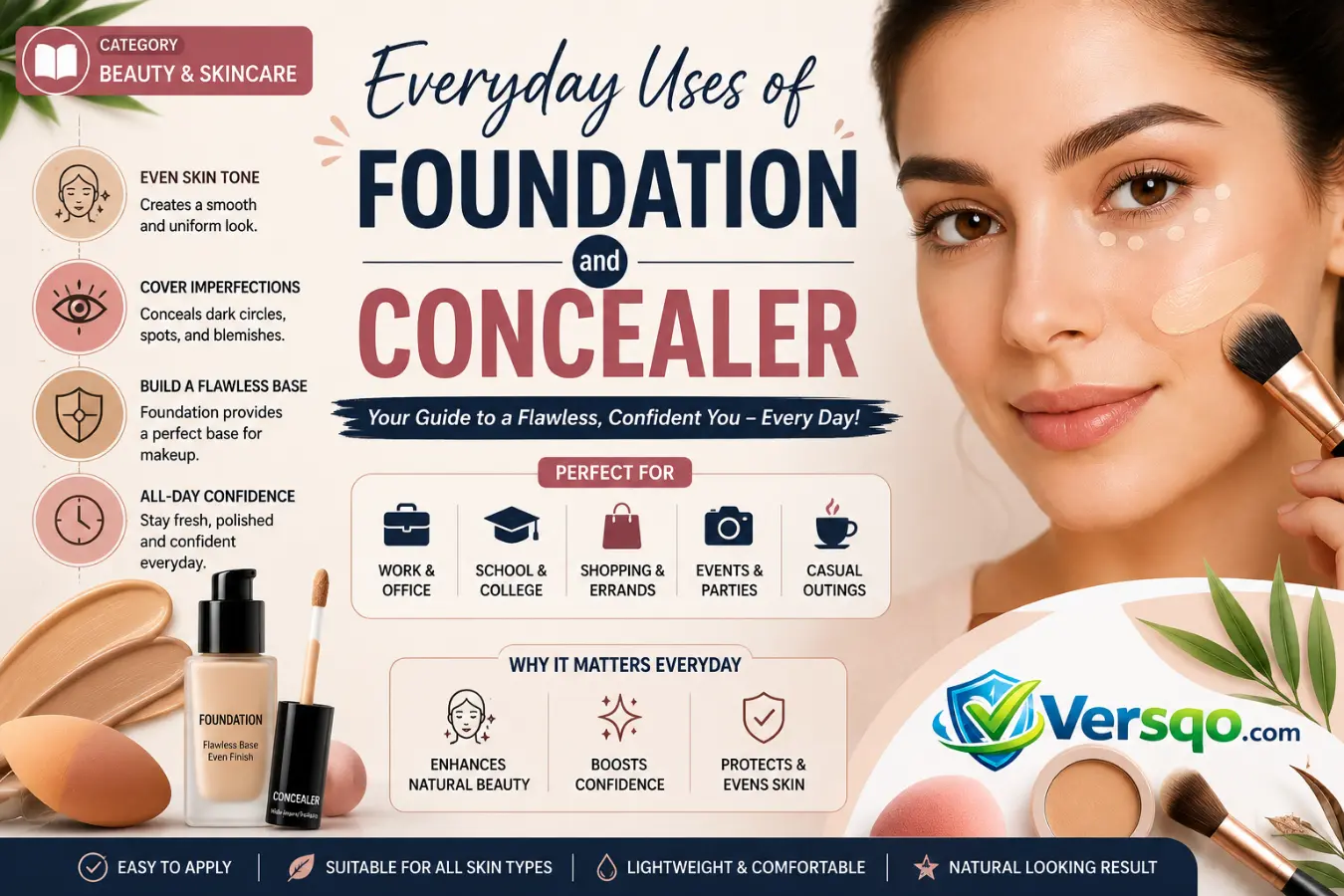
Everyday Uses of Foundation and Concealer
These products fit many makeup routines.
School Makeup
Use light foundation and little concealer.
Work Makeup
Choose medium coverage.
Wedding Makeup
Use full coverage foundation and long-wear concealer.
Party Makeup
Build extra coverage and set well with powder.
No-Makeup Makeup
Use concealer only where needed.
Expert Insight
Professional makeup artists usually recommend applying foundation before concealer because it creates an even base and reduces the amount of concealer needed. This approach helps makeup look lighter, blend better, and last longer.
If you have severe discoloration or dark circles, using a color corrector before foundation can improve coverage without adding thick layers. The goal is always to enhance your natural skin while keeping the finish smooth and balanced.
Frequently Asked Questions (FAQs)
Should concealer go on before or after foundation?
Usually after foundation. This creates a more natural finish.
Why do makeup artists apply foundation first?
Foundation evens skin tone first. Concealer only covers areas that still need help.
Can I skip foundation?
Yes.
If your skin looks even, use only concealer.
Is concealer lighter than foundation?
Usually yes.
Many people choose one shade lighter for brightening under the eyes.
Can I wear foundation without concealer?
Yes.
Light foundation alone works for many people.
Does concealer last longer over foundation?
Yes.
Foundation gives concealer a better base.
Should beginners use foundation first?
Yes.
It is easier to blend and gives better results.
Can I apply concealer before foundation for acne?
You can, but foundation first usually works better. For severe redness, color correct before foundation.
Conclusion
When deciding concealer or foundation first, the best choice is usually foundation first, then concealer. Foundation creates an even base and hides much of your redness and discoloration. After that, concealer can target dark circles, blemishes, and other small areas without making your makeup look heavy. This method uses less product, blends more smoothly, and gives a natural finish that lasts longer. There are exceptions, such as color correcting or spot concealing, but they are not the everyday standard. If you are just starting with makeup or want reliable results, follow the foundation-first approach. With the right products, proper blending, and light layers, you can achieve a polished, flawless look every time.
Discover More Post:
Bingeing or Binging: Which Spelling Is Correct? Grammar Guide
Cat or Dog: Which Pet Is Better for You? Comparison Guide