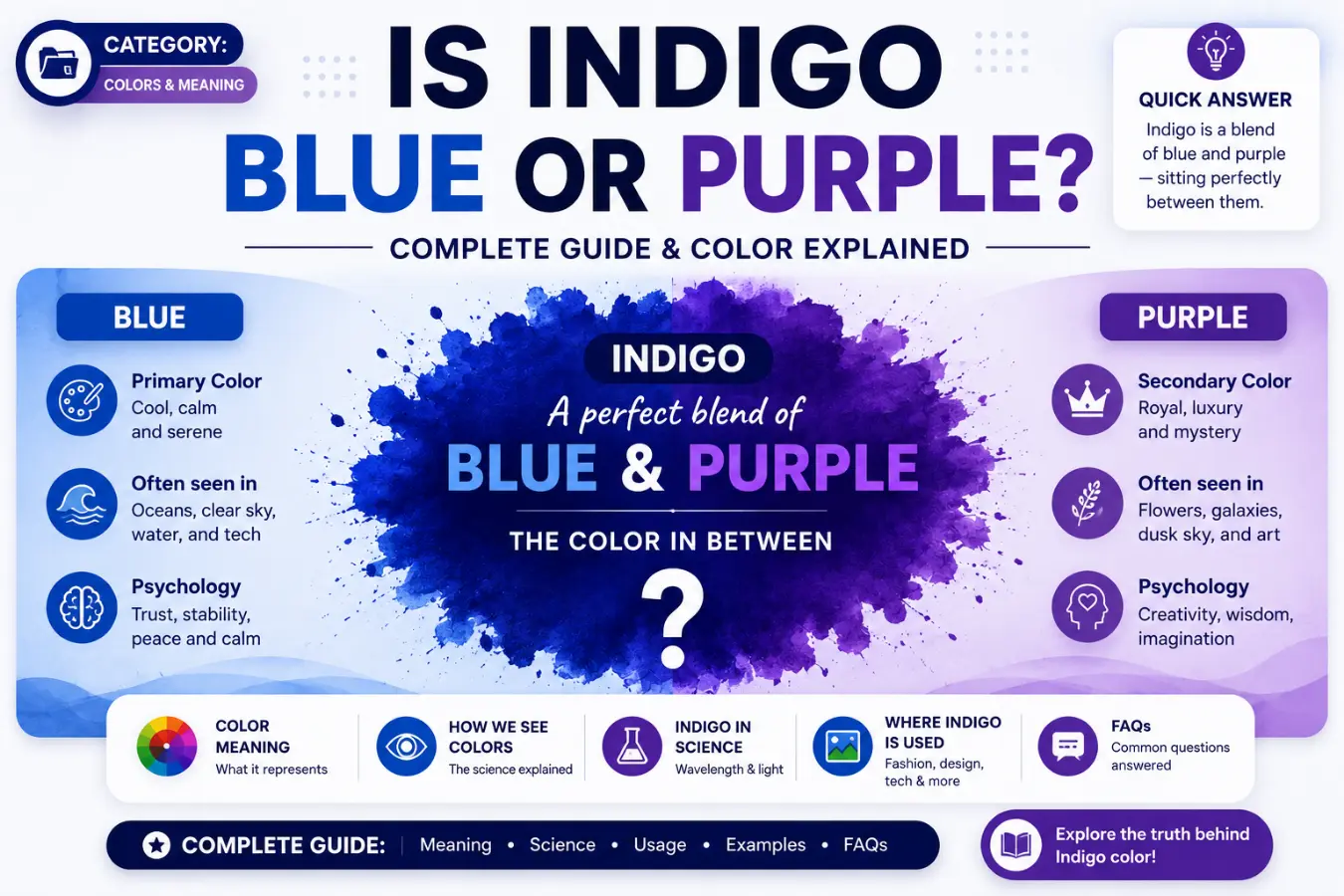
Is indigo blue or purple? This question confuses many people. Some say indigo is blue. Others believe it is purple. The truth is more interesting.
Indigo is a deep color that sits between blue and violet on the visible light spectrum. Because of this, it can look more blue or more purple depending on the shade, lighting, and context.
Artists, designers, and scientists may describe indigo in different ways. That often creates confusion.
In this guide, you will learn what indigo really is. You will also discover how it compares to blue and purple, where it appears in daily life, and why people disagree about its color. By the end, you will know the simple answer and avoid common mistakes.
Quick Summary Box
- Indigo is a color between blue and violet.
- It is usually considered a deep blue with violet tones.
- Some shades look more blue, while others appear more purple.
- Science places indigo between blue and violet in the rainbow.
- Artists and designers often classify indigo differently.
- Lighting and surrounding colors can change how indigo looks.
What Is Indigo?
Indigo is a rich, dark color found between blue and violet.
It combines the calm feeling of blue with the richness of purple. That makes it unique.
Many people describe indigo as:
- Deep blue
- Blue-violet
- Dark violet-blue
- Rich navy with purple hints
The exact appearance depends on the shade.
Is Indigo Blue or Purple? The Simple Answer
The short answer is:
Indigo is both blue and purple, but it is usually considered a deep blue with violet tones.
It is not purely blue.
It is not purely purple either.
Instead, it sits between the two colors.
Think of indigo as a bridge connecting blue and violet.
Featured Snippet Answer
Indigo is a deep blue-violet color that lies between blue and violet on the visible spectrum. Most people describe it as dark blue with purple undertones rather than true purple.
Why Do People Disagree About Indigo?
There are several reasons.
1. Different Color Systems
Scientists use one color system.
Artists often use another.
Designers may choose different digital color values.
Because of this, indigo does not always look identical.
2. Lighting Changes Color
Natural sunlight shows indigo differently than indoor lighting.
LED lights may make it appear bluer.
Warm lights may make it look more purple.
3. Screen Differences
Phone screens and computer monitors display colors differently.
The same indigo image may not match across devices.
4. Personal Vision
Everyone sees color a little differently.
Some people naturally notice blue more.
Others notice purple more.
Indigo vs Blue vs Purple Comparison Table
| Feature | Indigo | Blue | Purple |
| Position | Between blue and violet | Before indigo | After indigo |
| Main Tone | Blue with violet | Pure blue | Red mixed with blue |
| Appearance | Dark and rich | Bright or deep | Warm and vibrant |
| Rainbow Color | Yes | Yes | Violet appears in rainbow |
| Common Description | Blue-violet | Blue | Purple or violet |
| Closest Match | Deep navy with violet | Sky or ocean blue | Lavender to dark purple |
Key Difference
Blue contains no obvious purple tint.
Purple includes noticeable red.
Indigo sits between them.
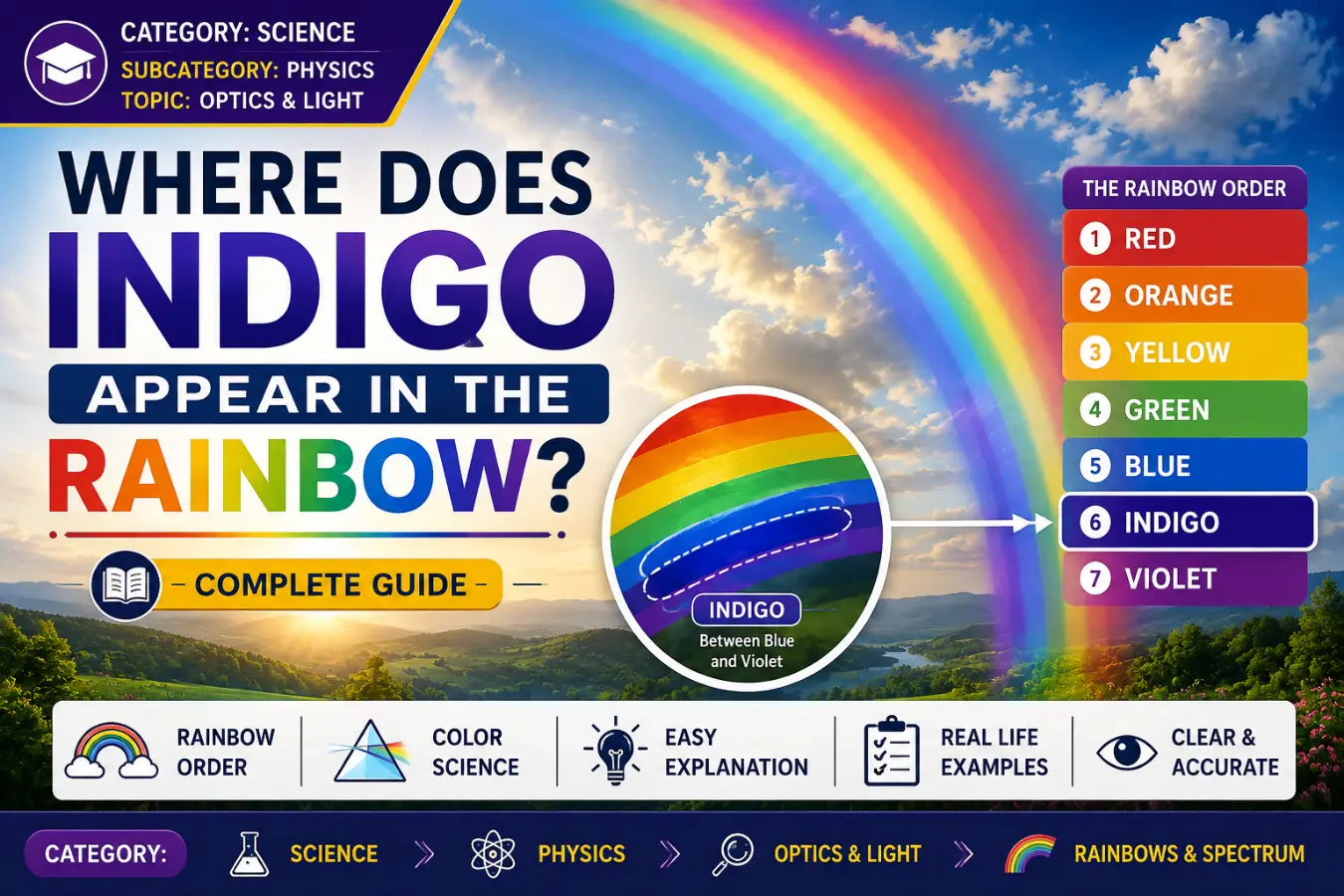
Where Does Indigo Appear in the Rainbow?
Many people remember the rainbow using:
ROYGBIV
- Red
- Orange
- Yellow
- Green
- Blue
- Indigo
- Violet
Indigo appears between blue and violet.
However, some modern scientists and educators group indigo with blue because people struggle to distinguish it.
That is another reason for the confusion.
Is Indigo More Blue or More Purple?
Most experts consider indigo more blue than purple.
Here is a simple breakdown.
Indigo is closer to blue when:
- It looks dark navy.
- Violet tones are subtle.
- It appears in denim fabric.
- It is used in business branding.
Indigo is closer to purple when:
- Violet tones become stronger.
- The shade is lighter.
- It appears in artistic paintings.
- Digital color settings increase violet.
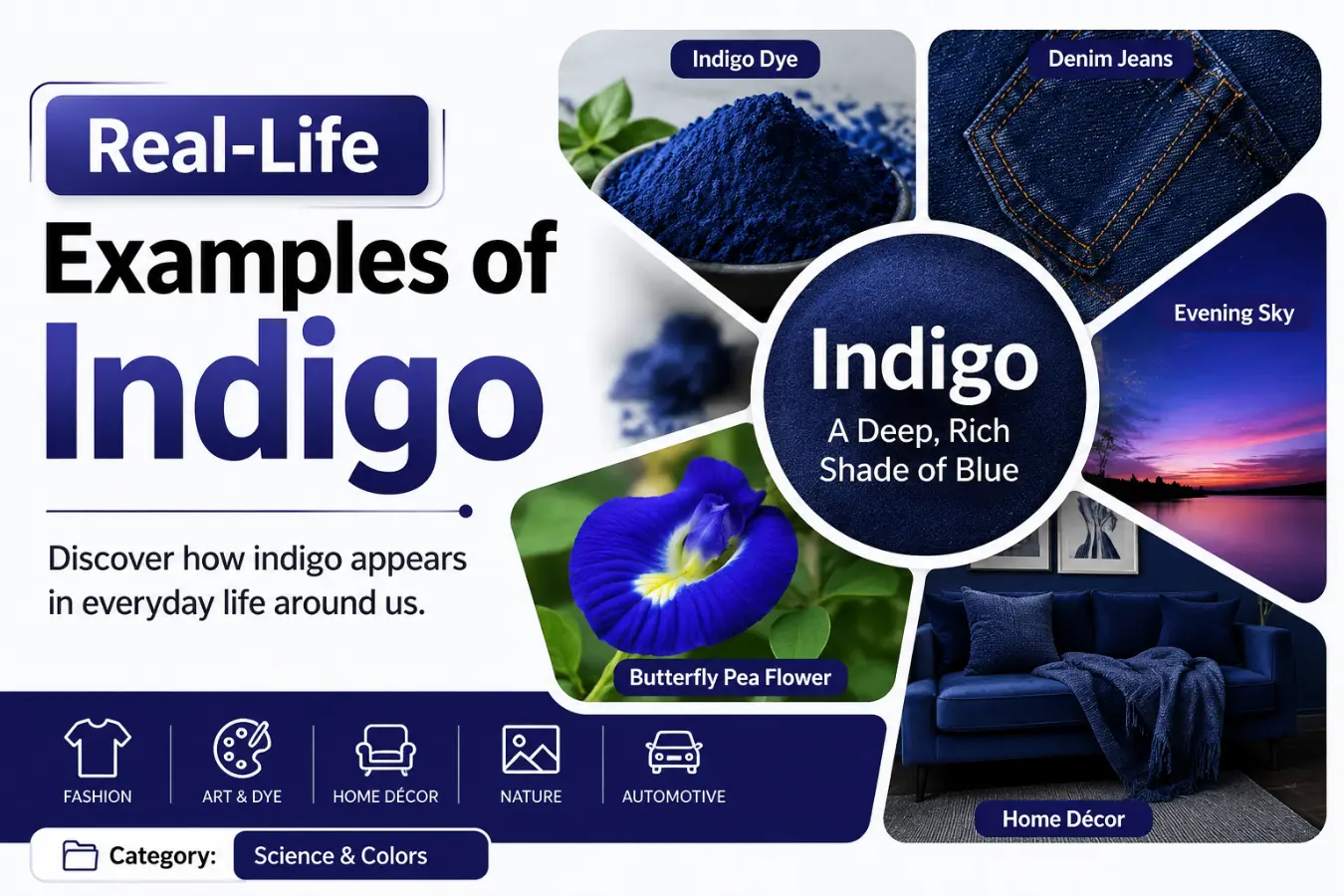
Real-Life Examples of Indigo
Indigo appears in many everyday objects.
Clothing
Dark denim jeans often have an indigo dye.
Flowers
Some iris flowers show beautiful indigo shades.
Night Sky
Just after sunset, the sky sometimes looks indigo.
Art
Painters use indigo to create shadows and dramatic backgrounds.
Interior Design
Many luxury homes use indigo walls for elegance.
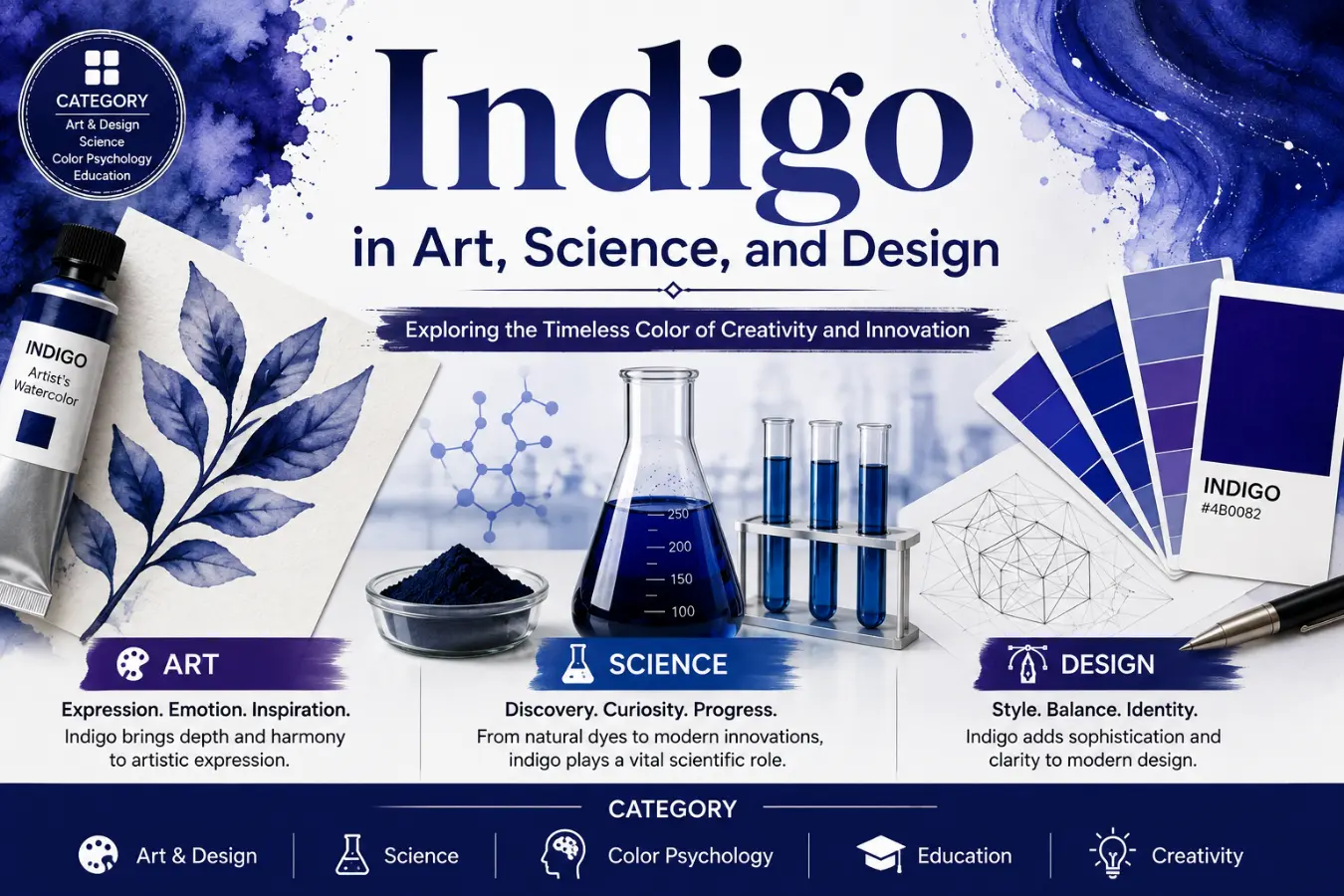
Indigo in Art, Science, and Design
In Science
Scientists describe indigo as a wavelength between blue and violet.
It belongs to the visible spectrum.
In Art
Artists often mix ultramarine blue with violet pigments.
The final shade depends on the artwork.
In Graphic Design
Digital designers use many versions of indigo.
Some lean toward navy.
Others move closer to purple.
Brand identity often determines the exact shade.
Common Mistakes About Indigo
Many people misunderstand this color.
Mistake 1: Thinking Indigo Is Just Blue
Indigo contains violet tones.
It is more complex than plain blue.
Mistake 2: Calling Every Dark Purple Indigo
Not every purple shade is indigo.
Many lack the blue base.
Mistake 3: Assuming Every Rainbow Shows Indigo Clearly
Many printed rainbows skip indigo.
Others combine it with blue.
Mistake 4: Ignoring Lighting
Lighting changes color perception.
Always compare colors under similar light.
How to Tell If a Color Is Indigo
Use these simple tips.
- Look for a dark blue base.
- Check for purple undertones.
- Compare it beside navy blue.
- Compare it beside violet.
- View it in daylight.
- Avoid judging color on one screen only.
If it falls naturally between blue and violet, it is likely indigo.
Indigo in Daily Life
You probably see indigo often.
Examples include:
- Denim jeans
- School uniforms
- Business suits
- Decorative pillows
- Luxury packaging
- Book covers
- Company logos
- Evening skies
- Ceramic artwork
- Traditional fabric dye
Because indigo feels calm and sophisticated, many brands use it.
Synonyms
- Blue-violet
- Deep blue
- Dark blue
- Violet-blue
- Indigo dye color
Expert Insights
Color experts agree that indigo sits between blue and violet.
However, exact definitions change across industries.
Scientists focus on light wavelengths.
Artists focus on pigments.
Designers focus on digital color values.
Because of these differences, two correct answers may exist.
When writing or speaking, describe indigo as a deep blue with violet tones. This wording works well in most situations.
Frequently Asked Questions
Is indigo blue or purple?
Indigo is usually a deep blue with violet tones. It sits between blue and violet.
Is indigo the same as violet?
No. Violet contains more purple. Indigo contains more blue.
Why does indigo look different on different screens?
Screens use different color settings. Brightness also changes color appearance.
Is indigo a real rainbow color?
Yes. Traditional rainbow diagrams place indigo between blue and violet.
Why do some rainbows skip indigo?
Some educators combine indigo with blue because the difference is difficult to see.
What color is closest to indigo?
Deep navy blue with slight purple tones comes closest.
Is indigo darker than blue?
Usually yes. Most indigo shades are darker than standard blue.
Why is indigo used in denim?
Traditional denim uses indigo dye because it creates a rich, long-lasting blue appearance.
Tips for Identifying Indigo
- Compare it with navy blue first.
- Look for subtle purple hints.
- Check the color in natural daylight.
- View it beside violet for easier comparison.
- Use official color charts when accuracy matters.
Conclusion
So, is indigo blue or purple? The best answer is that indigo sits between blue and violet, making it a blend of both. Most experts describe it as a deep blue with purple or violet undertones. That means it is closer to blue than true purple, but it is not exactly the same as either color. Lighting, digital screens, and different color systems can make indigo appear slightly different. This explains why people often disagree. If you are choosing paint, designing graphics, or simply learning about colors, understanding indigo becomes much easier when you remember its place between blue and violet. The next time someone asks, you can confidently explain that indigo is a unique blue-violet color rather than just blue or just purple.
Discover More Post:
Natzi or Nazi: Which Spelling Is Correct? Grammar Guide
Cold or Allergies? How to Tell the Difference and Right Treatment