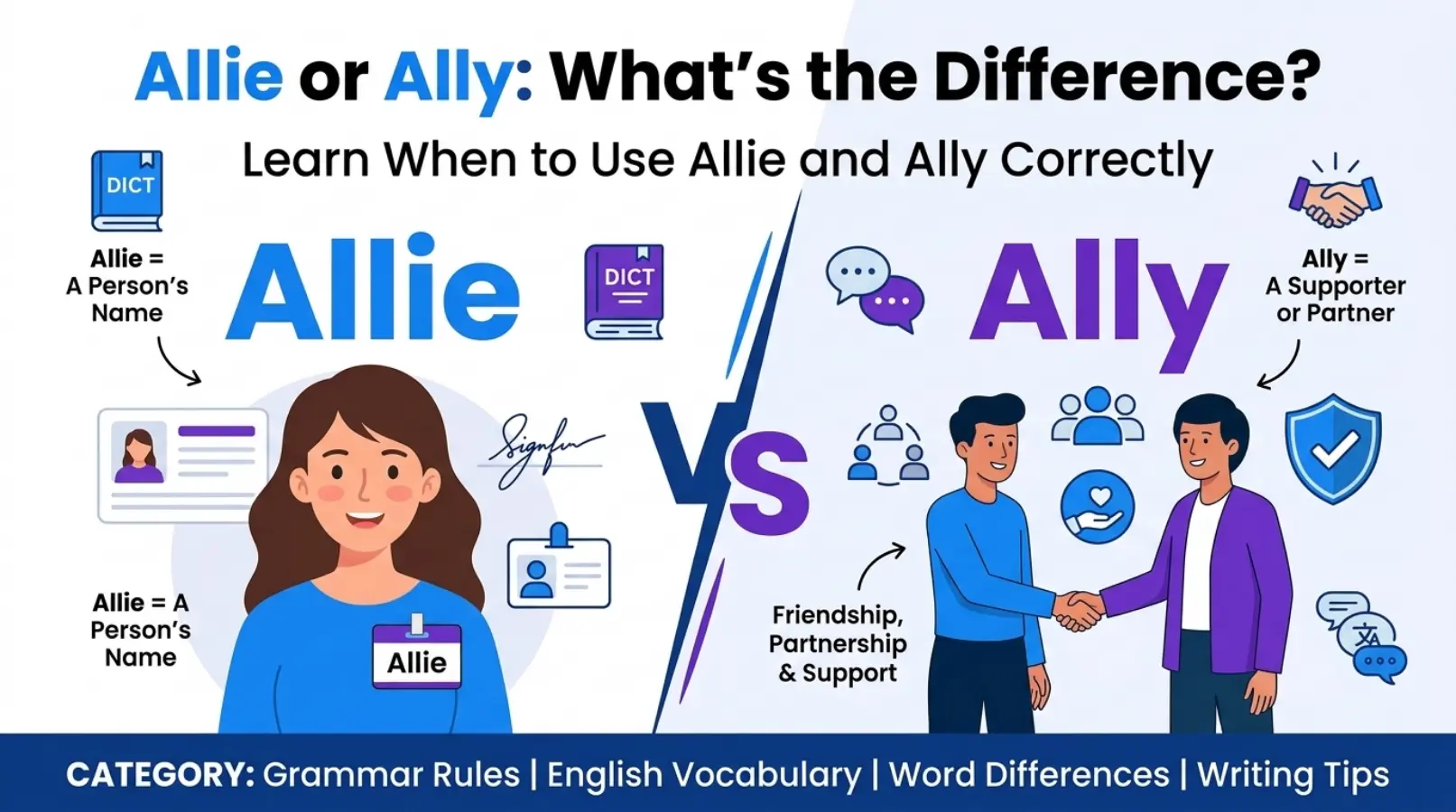
Allie or ally is a common spelling question that confuses many English learners and writers. Both words look similar, but they do not always mean the same thing.
The word ally is the standard English spelling. It usually refers to a friend, supporter, or partner. On the other hand, Allie is often used as a personal name.
Many people search for “allie or ally” because they want to know which spelling fits their sentence. Understanding the difference helps you avoid writing mistakes and communicate clearly.
In this guide, you will learn the meanings, uses, examples, common errors, and expert tips. By the end, you will know exactly when to use Allie and when to use ally.
Quick Summary Box
- Ally is a common English noun and verb.
- Ally means a supporter, partner, or friend.
- Allie is usually a person’s name.
- Use ally in most writing situations.
- Use Allie only when referring to someone’s name.
- The words sound alike but have different uses.
- Understanding the difference improves writing accuracy.
What Does Ally Mean?
An ally is someone who supports, helps, or works with another person or group.
Simple Definition
Ally (noun): A friend, supporter, or partner.
Examples
- Canada is an ally of the United States.
- She became a strong ally during the project.
- Good coworkers can be valuable allies.
Ally as a Verb
Ally (verb) means to join or unite with someone.
Examples:
- The companies allied to expand their business.
- Several groups allied against the proposal.
What Does Allie Mean?
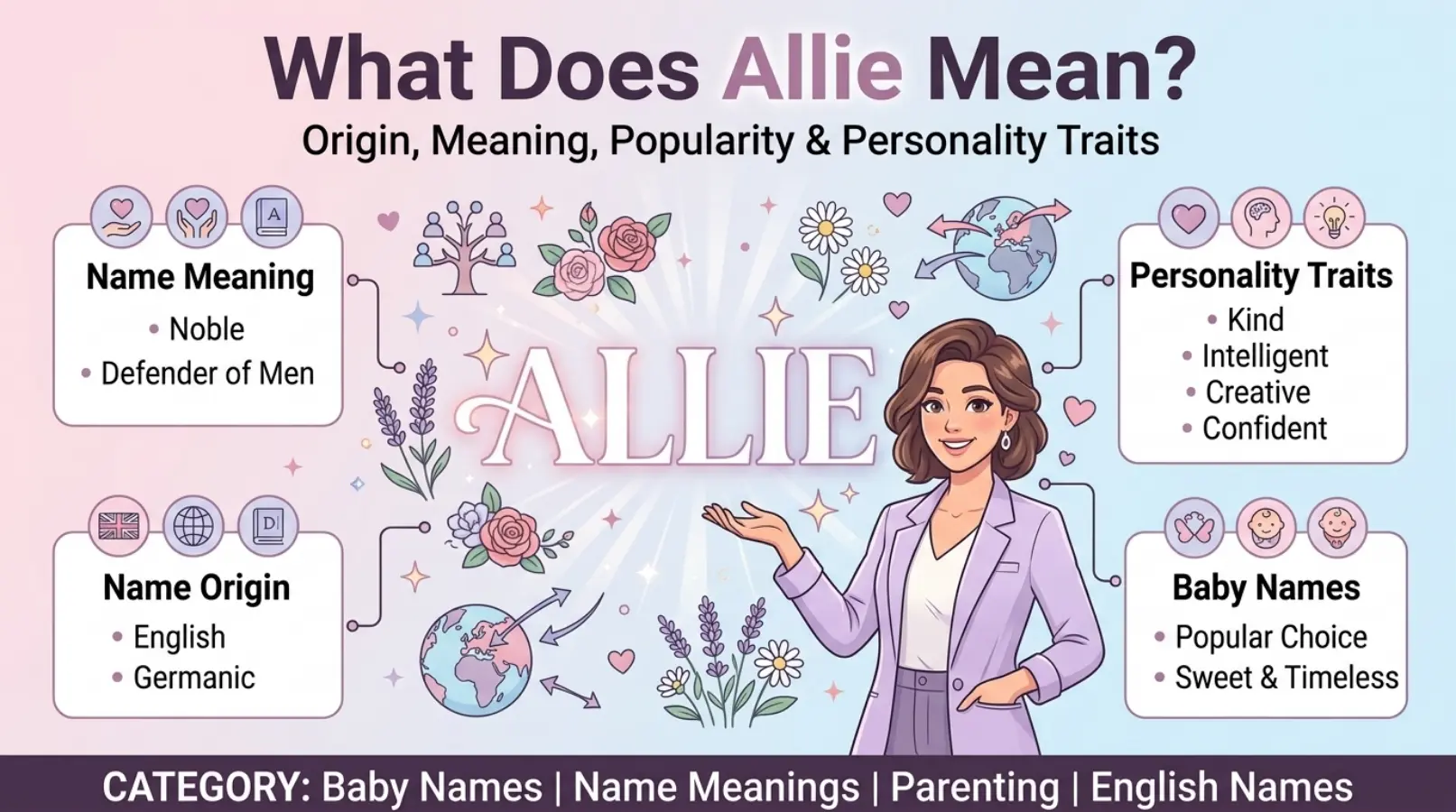
Allie is usually a given name.
It is often a nickname for names such as:
- Allison
- Alexandra
- Alina
- Alice
Examples
- Allie won the school competition.
- I met Allie at the conference.
- Allie enjoys reading mystery books.
In most cases, Allie does not mean supporter or partner.
Allie or Ally: Key Difference
Many people confuse these words because they sound the same.
Comparison Table
| Feature | Allie | Ally |
| Part of Speech | Proper noun (name) | Noun and verb |
| Meaning | Person’s name | Supporter, friend, partner |
| Common Usage | Naming people | General English writing |
| Capitalization | Usually capitalized | Usually lowercase |
| Example | Allie is my friend. | She is my ally. |
Quick Rule
- Talking about a person named Allie? Use Allie.
- Talking about support or partnership? Use ally.
Why Do People Confuse Allie and Ally?
The confusion happens because both words share the same pronunciation.
Reasons for Confusion
- They sound identical.
- Their spelling differs by only one letter.
- Many names use creative spellings.
- English contains many similar-looking words.
For example:
❌ She is my Allie.
✔ She is my ally.
Unless the person’s actual name is Allie, the second sentence is correct.
How to Use Ally in Everyday Writing
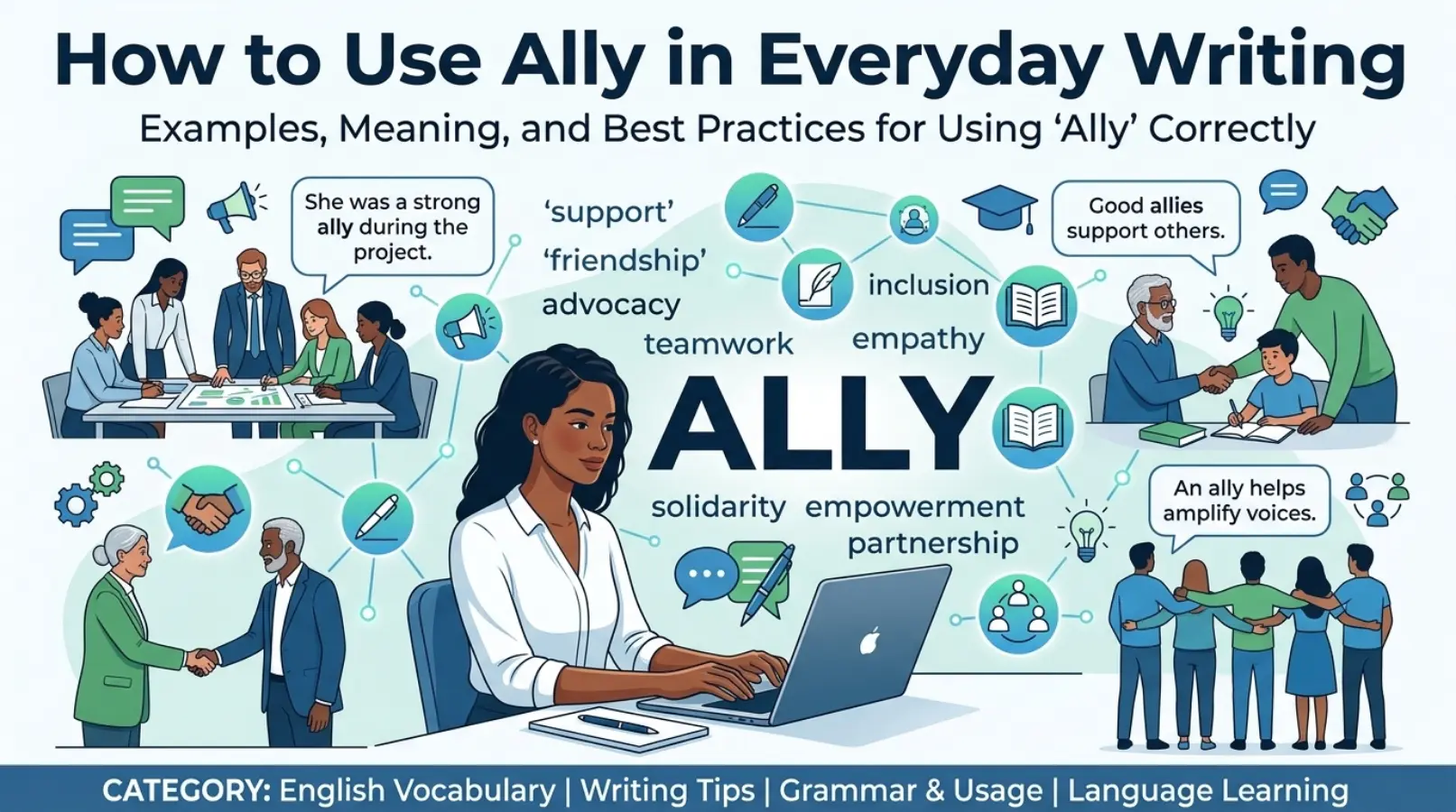
The word ally appears frequently in daily communication.
Workplace
- My manager became my ally during the project.
- We need allies to support this idea.
School
- Students can be allies against bullying.
- A good friend often acts as an ally.
Politics
- The country worked closely with its allies.
- Several allies supported the agreement.
Social Issues
- Being an ally means supporting others.
- Many people strive to become better allies.
How to Use Allie Correctly
Use Allie only as a person’s name.
Examples
- Allie joined the team today.
- Allie loves painting landscapes.
- We invited Allie to dinner.
Important Tip
If you can replace the word with a person’s name, Allie may be correct.
Example:
- Allie helped me yesterday.
This refers to a specific individual.
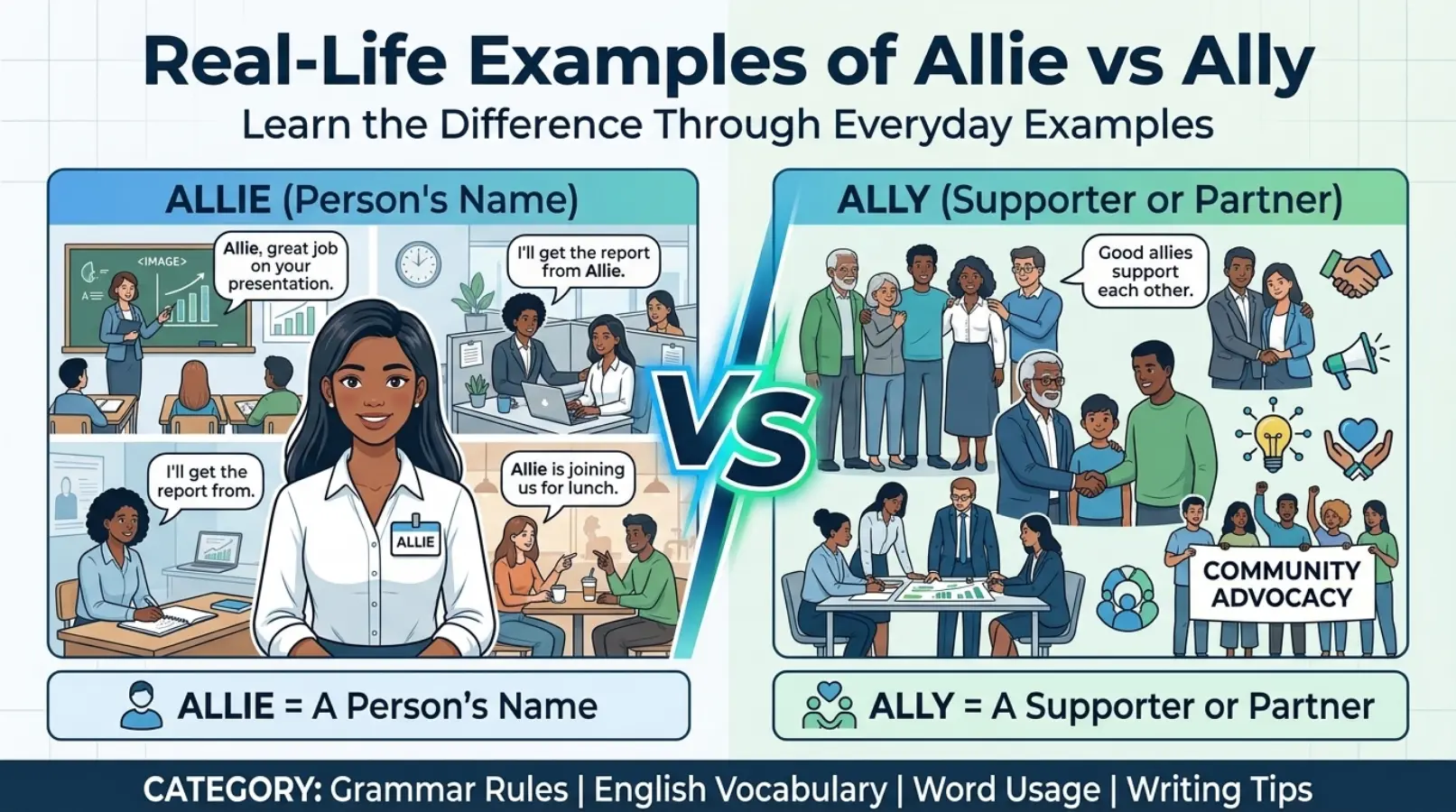
Real-Life Examples of Allie vs Ally
Understanding real situations makes the difference clearer.
Example 1
Sentence:
“My best friend is my greatest ally.”
Meaning:
The friend supports and helps you.
Example 2
Sentence:
“Allie is my best friend.”
Meaning:
The friend’s name is Allie.
Example 3
Sentence:
“The organization became an ally of local businesses.”
Meaning:
The organization offered support.
Example 4
Sentence:
“Allie organized the event.”
Meaning:
A person named Allie organized it.
Common Mistakes People Make
Many writers accidentally swap these words.
Mistake 1
❌ Sarah is my Allie.
✔ Sarah is my ally.
Mistake 2
❌ The nation joined its Allies.
✔ The nation joined its allies.
Mistake 3
❌ Ally won the spelling contest.
✔ Allie won the spelling contest.
(If the person’s name is Allie.)
Mistake 4
❌ She became my allie.
✔ She became my ally.
Easy Tricks to Remember the Difference
Simple memory tricks help avoid mistakes.
Trick 1: Ally = Assistance
Both words start with A.
- Ally
- Assistance
An ally gives assistance.
Trick 2: Allie = Name
Many names end with -ie.
Examples:
- Katie
- Sophie
- Allie
This makes it easier to remember that Allie is typically a name.
Trick 3: Ally Appears in Dictionaries as a Common Word
If you mean supporter, choose ally.
Synonyms of Ally
Using related words improves writing variety.
Common Synonyms
- Friend
- Partner
- Supporter
- Associate
- Collaborator
- Backer
- Companion
- Advocate
Ally in Modern Culture and Society
The word ally has become increasingly important.
Today, people often use it to describe someone who actively supports others.
Examples
- Workplace ally
- Community ally
- Social justice ally
- Educational ally
An ally does more than agree. An ally takes action and offers support.
Expert Insights: Why Understanding Allie or Ally Matters
Correct spelling improves credibility.
Readers notice language mistakes quickly. Using the wrong word can confuse your audience.
Expert Tips
- Always check whether you mean a person or a supporter.
- Remember that ally is the standard English word.
- Proofread names carefully.
- Use context to determine the correct spelling.
- Keep a grammar checker handy for important documents.
Clear writing builds trust and professionalism.
When Should You Use Ally Instead of Allie?
Choose ally when discussing:
- Friendship
- Support
- Partnerships
- Teamwork
- Politics
- Business relationships
- Social advocacy
Example Sentences
- He became a valuable ally.
- The company found a strong ally.
- Our allies supported the mission.
Frequently Asked Questions (FAQs)
Is ally the correct spelling?
Yes. Ally is the correct spelling when referring to a supporter, partner, or friend.
Is Allie a real word?
Yes. Allie is a common personal name and nickname.
Can ally be used as a verb?
Yes. Ally can mean to join forces or cooperate with someone.
Why do Allie and ally sound the same?
They are homophones, which means they share the same pronunciation.
Is ally always lowercase?
Usually yes. However, it may be capitalized at the beginning of a sentence.
Can Allie mean supporter?
Generally no. Allie is typically used as a person’s name.
What is the plural of ally?
The plural form is allies.
Which spelling should I use in professional writing?
Use ally when discussing support, cooperation, or partnership.
Conclusion
The difference between allie or ally is simple once you understand their meanings. Ally is the correct word when talking about a supporter, partner, or friend. It can also work as a verb that means joining forces with someone. Allie, however, is usually a person’s name and should only be used when referring to an individual with that name.
Many writers mix these spellings because they sound the same. Fortunately, a quick check of the context can help you choose the right word. If you mean support or partnership, use ally. If you are talking about someone named Allie, use Allie.
Knowing this difference will improve your grammar, boost writing confidence, and help you communicate more clearly.