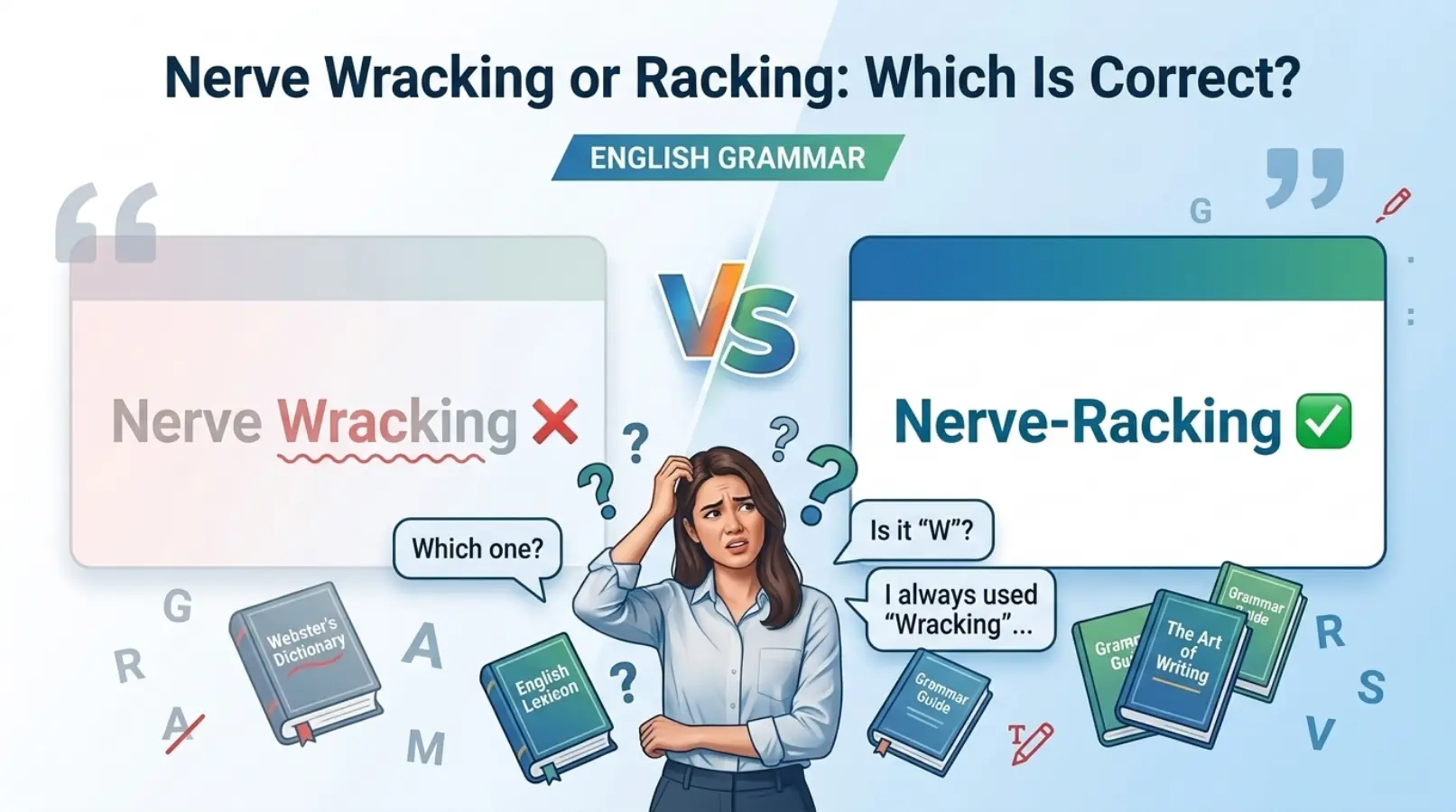
Nerve wracking or racking is a common grammar question. Many people wonder which phrase is correct. You may have seen both versions online. However, only one is accepted in formal English.
This guide explains the difference in simple words. You will learn the meaning, correct usage, and common mistakes. You will also see real-life examples and an easy comparison table. By the end, you will know which phrase to use with confidence.
If you are writing an email, blog, essay, or social media post, using the correct expression makes your writing stronger. Let’s clear up the confusion once and for all.
Quick Summary
- Correct phrase: Nerve-racking
- Incorrect or less accepted: Nerve-wracking
- Meaning: Something that causes stress, anxiety, or extreme worry.
- Origin: Comes from the verb rack, meaning to cause pain or distress.
- Best choice for formal writing: Nerve-racking.
- Remember: Think of your nerves being “racked,” not “wracked.”
What Does “Nerve-Racking” Mean?
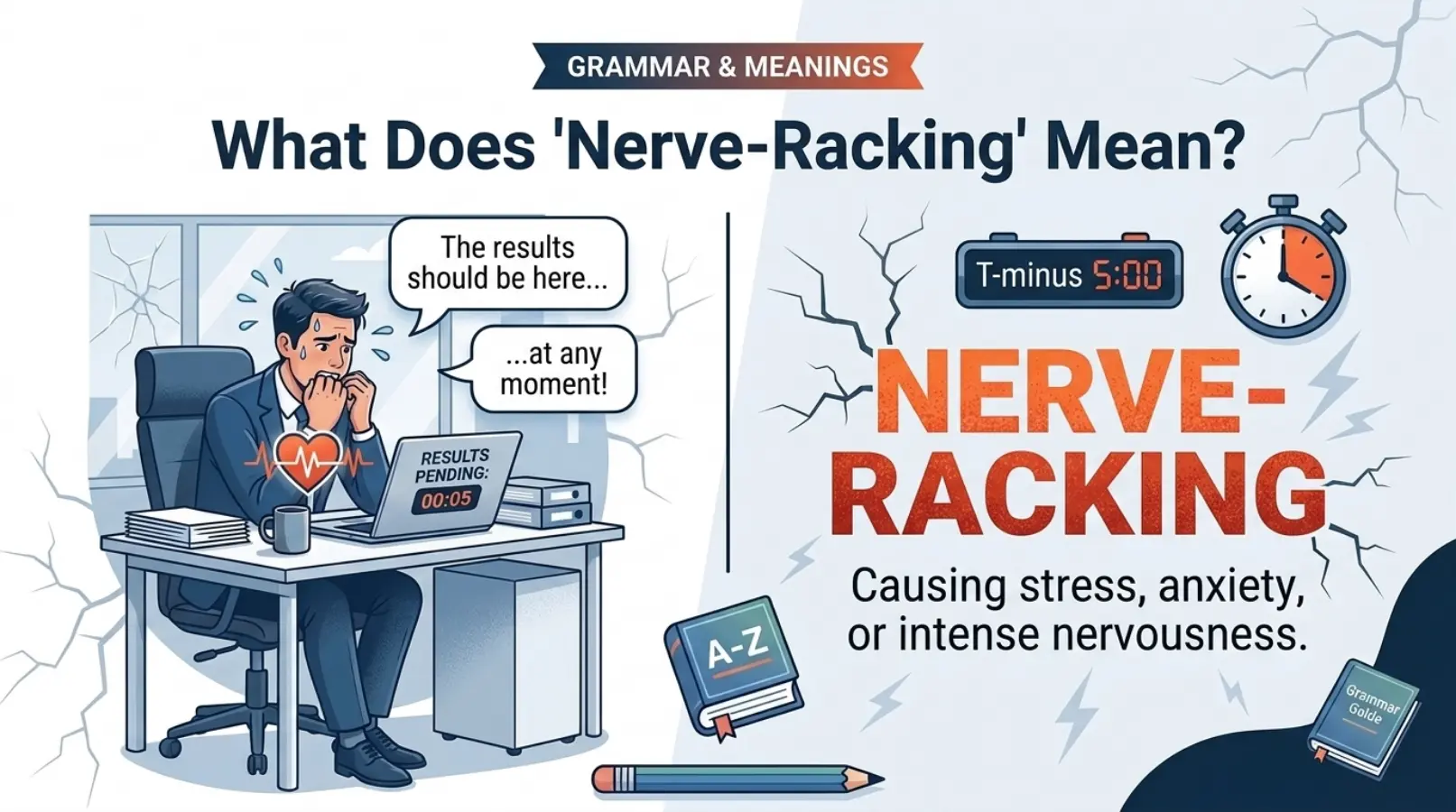
Nerve-racking describes something that causes intense stress or anxiety.
It often refers to situations that make people feel worried, tense, or emotionally exhausted.
Simple Definition
Nerve-racking means extremely stressful, anxious, or mentally exhausting.
Examples
- Waiting for exam results was nerve-racking.
- Driving during a heavy storm felt nerve-racking.
- The final penalty kick was nerve-racking for every fan.
Nerve Wracking or Racking: Which Is Correct?
The correct spelling is:
Nerve-racking
The spelling nerve-wracking appears in some books, websites, and dictionaries. However, most modern style guides recommend nerve-racking.
The reason is simple.
The phrase comes from the verb rack, meaning to torture or cause suffering.
Since something stressful “racks your nerves,” the correct expression is nerve-racking.
Why Do People Write “Nerve-Wracking”?
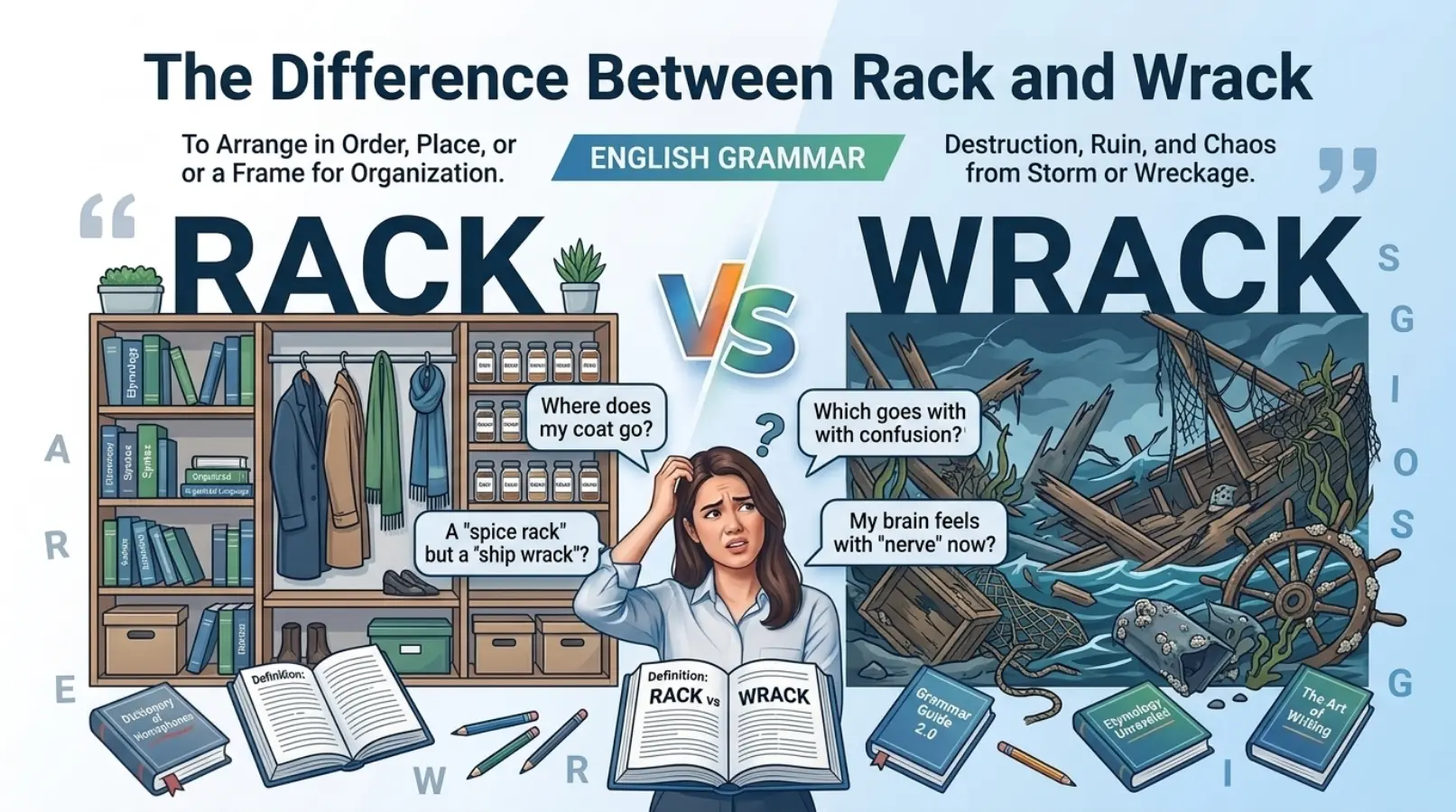
Many people confuse rack and wrack.
The words sound the same.
They also share similar meanings in some contexts.
Over time, people started spelling the phrase as nerve-wracking.
Today, some dictionaries list it as a variant. However, nerve-racking remains the preferred spelling in professional writing.
The Difference Between Rack and Wrack
Although these words overlap, they are not always interchangeable.
| Word | Meaning | Common Usage |
| Rack | To cause pain, strain, or torture | Rack your brain, nerve-racking |
| Wrack | Destruction, ruin, or wreckage | Wrack and ruin |
Easy Trick
If something causes stress, choose rack.
If you mean destruction or ruin, wrack may fit.
Comparison Table: Nerve-Racking vs Nerve-Wracking
| Feature | Nerve-Racking | Nerve-Wracking |
| Correct in modern English | Yes | Less preferred |
| Accepted by style guides | Yes | Sometimes listed as a variant |
| Common in formal writing | Yes | Rare |
| Meaning | Causes anxiety | Same meaning |
| Best choice | Recommended | Use only if following a style guide that allows it |
Real-Life Examples
Here are everyday situations where nerve-racking fits perfectly.
At School
Taking a final exam was nerve-racking.
At Work
Giving a presentation to the CEO felt nerve-racking.
During Sports
Watching the last seconds of the championship game was nerve-racking.
While Traveling
Flying through severe turbulence became nerve-racking.
At the Hospital
Waiting for medical test results can be nerve-racking.
Common Mistakes People Make
Many writers make these errors.
Mistake 1
❌ nerve wracking
✅ nerve-racking
Mistake 2
Using wrack because it sounds older or more dramatic.
Instead, use rack for stress-related expressions.
Mistake 3
Forgetting the hyphen.
Correct:
✅ nerve-racking experience
Incorrect:
❌ nerve racking experience
Mistake 4
Mixing rack your brain with wrack your brain.
Most editors recommend:
✅ rack your brain
How to Remember the Correct Spelling
Try these easy memory tricks.
Think About Stress
Stress racks your nerves.
So write:
Nerve-racking
Remember This Sentence
“Stress racks your nerves.”
If you remember this line, you’ll never forget the correct spelling.
Link It to “Rack Your Brain”
People already know the phrase:
Rack your brain
Both expressions use rack.
When Should You Use “Nerve-Racking”?
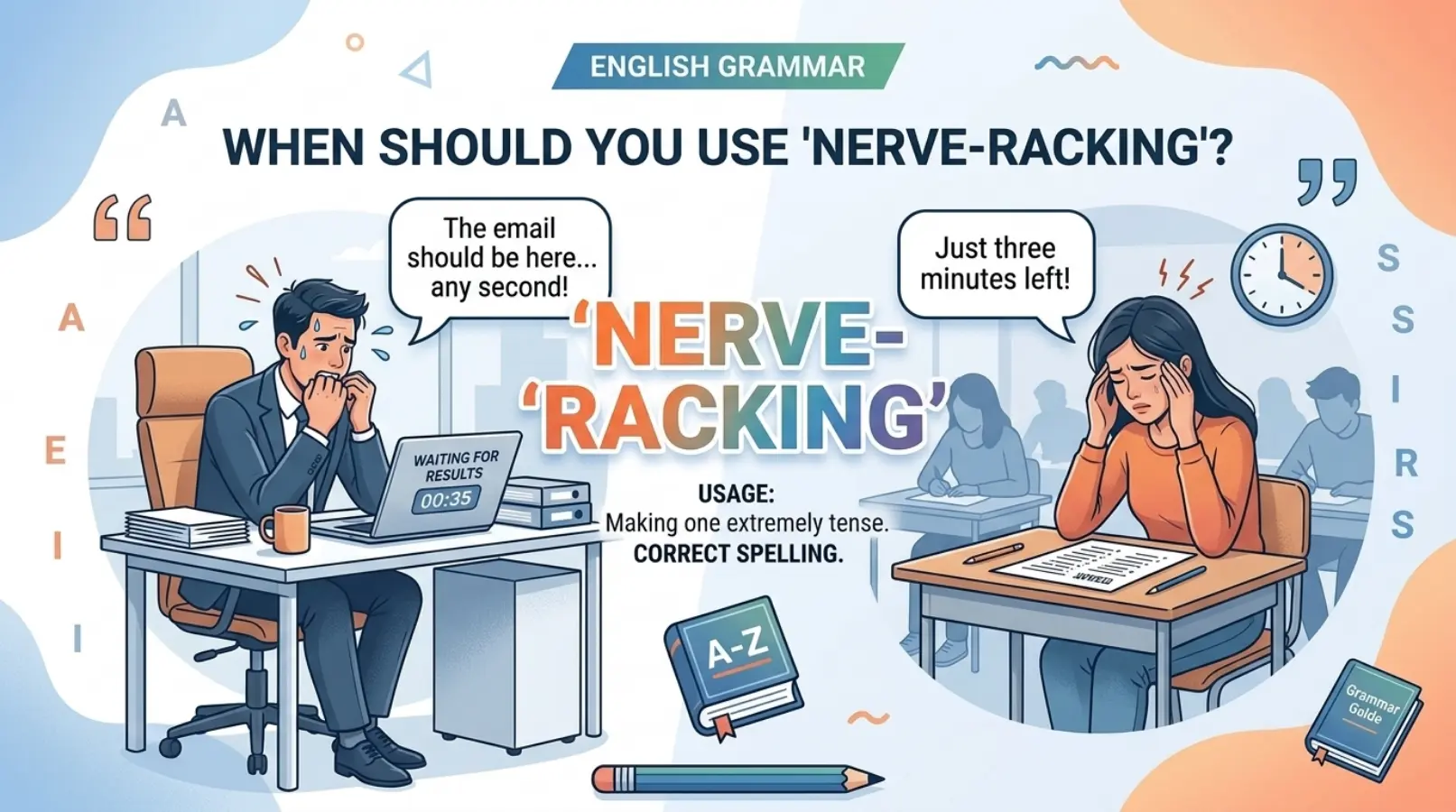
Use it whenever something causes anxiety.
Examples include:
- Job interviews
- Driving tests
- Public speaking
- Waiting for important news
- Taking exams
- Medical procedures
- Sporting events
- First dates
Synonyms of Nerve-Racking
Using different words improves your writing.
Common Synonyms
- Stressful
- Tense
- Anxiety-inducing
- Frightening
- Intense
- Difficult
- Pressure-filled
- Emotionally exhausting
- Harrowing
- Challenging
Usage in Daily Life
Here are examples you can copy.
Conversation
That interview was nerve-racking.
The project deadline has been nerve-racking, but we finished on time.
Essay
The rescue mission was nerve-racking because every second mattered.
Social Media
Waiting for my results is so nerve-racking!
Common Grammar Tips
Follow these tips to write correctly every time.
- Use nerve-racking in formal writing.
- Keep the hyphen.
- Avoid spelling it as nerve wracking.
- Remember that rack relates to strain.
- Proofread before publishing.
Expert Insights
Professional editors and grammar experts generally recommend nerve-racking because it follows the historical meaning of rack, which refers to causing pain or strain.
Many respected dictionaries recognize nerve-wracking as a variant due to widespread use. However, major style guides and careful writers still prefer nerve-racking for consistency and clarity.
If you write for blogs, businesses, schools, or professional publications, choosing nerve-racking helps maintain credibility and follows modern editorial standards.
Frequently Asked Questions (FAQs)
Is nerve-wracking wrong?
Not completely. Some dictionaries accept it as a variant. However, nerve-racking is more widely recommended.
Which spelling should I use?
Use nerve-racking in formal and professional writing.
Why do people spell it nerve-wracking?
Because rack and wrack sound the same. This has caused confusion for many years.
Is nerve-racking hyphenated?
Yes.
Write:
nerve-racking
What does nerve-racking mean?
It means extremely stressful or anxiety-producing.
Is “rack your brain” also correct?
Yes.
Most editors recommend rack your brain instead of wrack your brain.
Can I use nerve-racking in business writing?
Yes.
It is the preferred spelling for professional communication.
Is nerve-racking an adjective?
Yes.
It describes a person, event, or experience that causes stress.
Example:
A nerve-racking interview.
Common Examples at a Glance
| Correct Sentence | Why It Is Correct |
| The exam was nerve-racking. | Preferred spelling |
| Waiting for the doctor was nerve-racking. | Shows anxiety |
| The final match was nerve-racking. | Describes stress |
| Job interviews can be nerve-racking. | Correct adjective |
Conclusion
The answer to nerve wracking or racking is simple. The preferred and widely accepted spelling is nerve-racking. It comes from the verb rack, which means to cause pain, strain, or distress. While nerve-wracking appears as a variant in some dictionaries, it is less common in professional writing and many style guides favor nerve-racking.
Whenever you describe a stressful event, such as an exam, interview, or important decision, choose nerve-racking. Keeping the hyphen and using the preferred spelling will make your writing clearer and more polished. With this easy rule in mind, you’ll avoid a common grammar mistake and write with greater confidence.
Discover More Post:
Body Oil or Lotion First? The Correct Order for Soft, Healthy Skin
Roll Call or Role Call: Which Is Correct? Meaning, and Examples