Toward or towards is a common grammar question that confuses many English learners and native speakers. Both words look almost the same. However, people often wonder if one is more correct than the other.
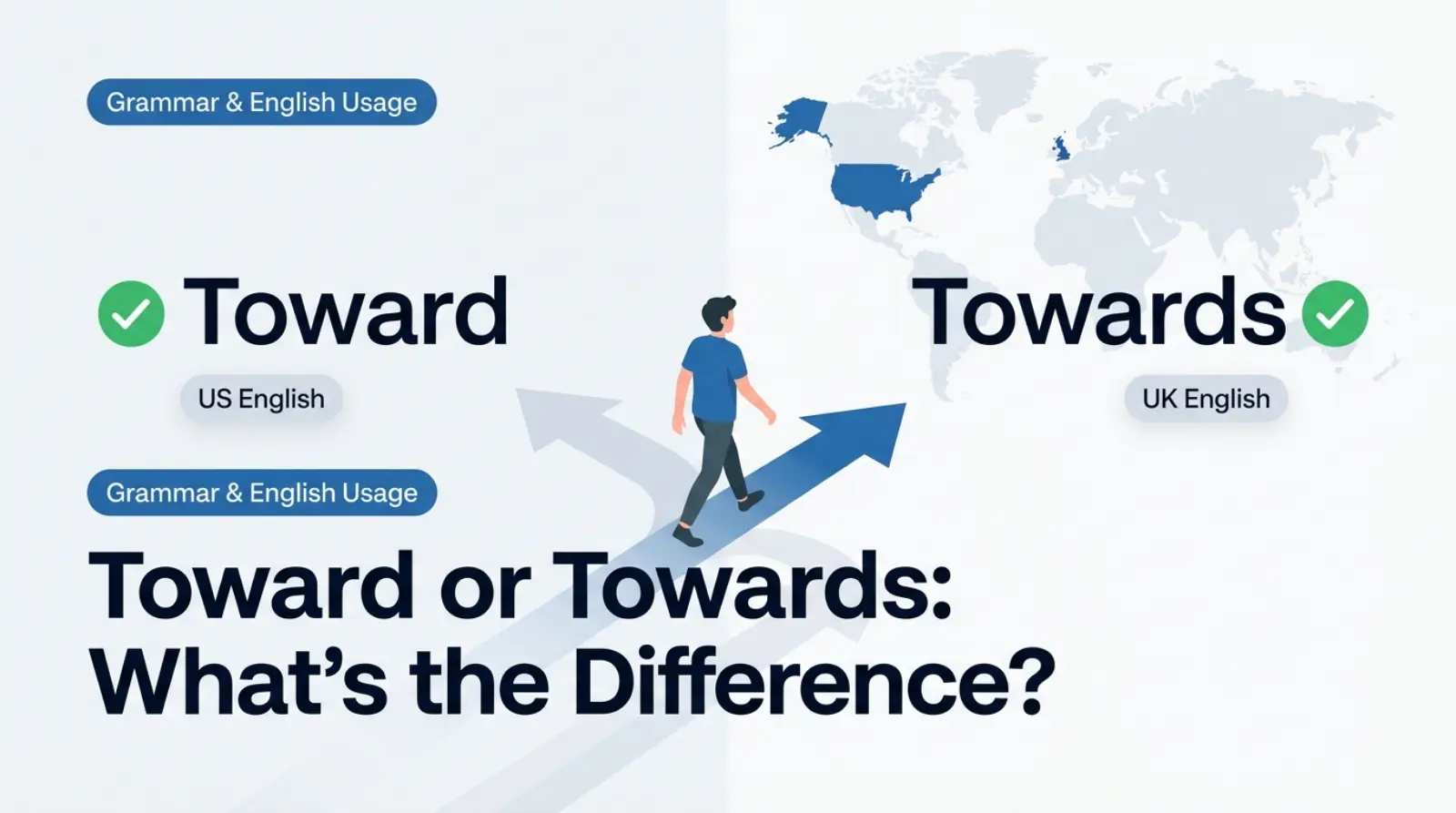
The good news is simple. Both toward and towards are correct English words. The main difference is where they are commonly used. American English usually prefers toward, while British English often uses towards.
In this guide, you’ll learn the meaning of both words, their differences, examples, common mistakes, and when to use each one. By the end, you’ll know which version fits your writing style and audience.
Quick Summary Box
- Toward and towards have the same meaning.
- Both are correct English prepositions.
- Toward is more common in American English.
- Towards is more common in British English.
- There is no difference in grammar or meaning.
- Choose one style and stay consistent throughout your writing.
What Does “Toward or Towards” Mean?
Both toward and towards mean:
- In the direction of something
- Getting closer to someone or something
- With the purpose of achieving something
- Showing a feeling or attitude
Simple Definition
Toward and towards mean “in the direction of” or “closer to.”
Examples
- She walked toward the school.
- He ran towards the finish line.
- We are working toward success.
- They showed kindness towards strangers.
Is There Any Difference Between Toward and Towards?
The answer is no.
Both words have exactly the same meaning.
The only real difference is regional preference.
| Feature | Toward | Towards |
| Meaning | Same | Same |
| Grammar | Correct | Correct |
| American English | Preferred | Less common |
| British English | Less common | Preferred |
| Canadian English | Both used | Both used |
| Australian English | Less common | Preferred |
| Formal Writing | Common in US | Common in UK |
Toward vs Towards: Which Is Correct?
Both are correct.
Choose based on the type of English you’re using.
Use Toward if:
- Writing for an American audience
- Following AP Style
- Following most U.S. style guides
Examples:
- Move toward the exit.
- We are heading toward better results.
- She smiled toward him.
Use Towards if:
- Writing for British readers
- Using UK English
- Following British publications
Examples:
- Walk towards the station.
- She leaned towards the window.
- Our team is working towards a solution.
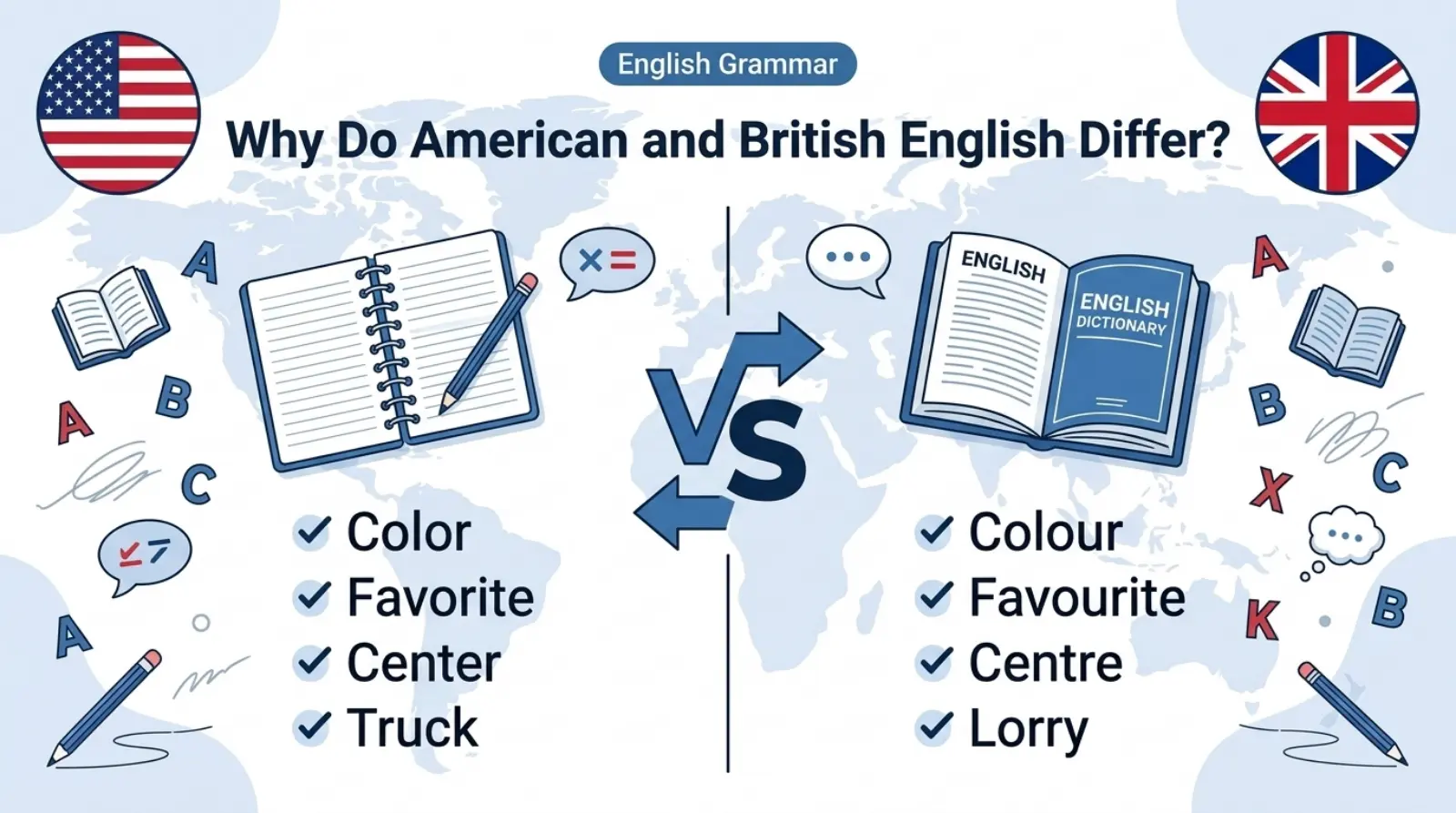
Why Do American and British English Differ?
English has changed over many years.
American English often removes the final -s from certain words.
Examples include:
| American English | British English |
| Toward | Towards |
| Forward | Forwards |
| Backward | Backwards |
| Upward | Upwards |
| Downward | Downwards |
Neither version is wrong.
They simply reflect different writing traditions.
When Should You Use Toward?
Use toward whenever you write in American English.
Physical Direction
- The dog ran toward me.
- Drive toward the bridge.
Goals
- She is working toward promotion.
- We moved toward our target.
Feelings
- He has a positive attitude toward learning.
- They showed respect toward everyone.
When Should You Use Towards?
Use towards when writing in British English.
Direction
- The children walked towards the park.
- She looked towards the mountains.
Progress
- The company is moving towards growth.
- We are working towards cleaner energy.
Emotions
- They were friendly towards visitors.
- His attitude towards work improved.
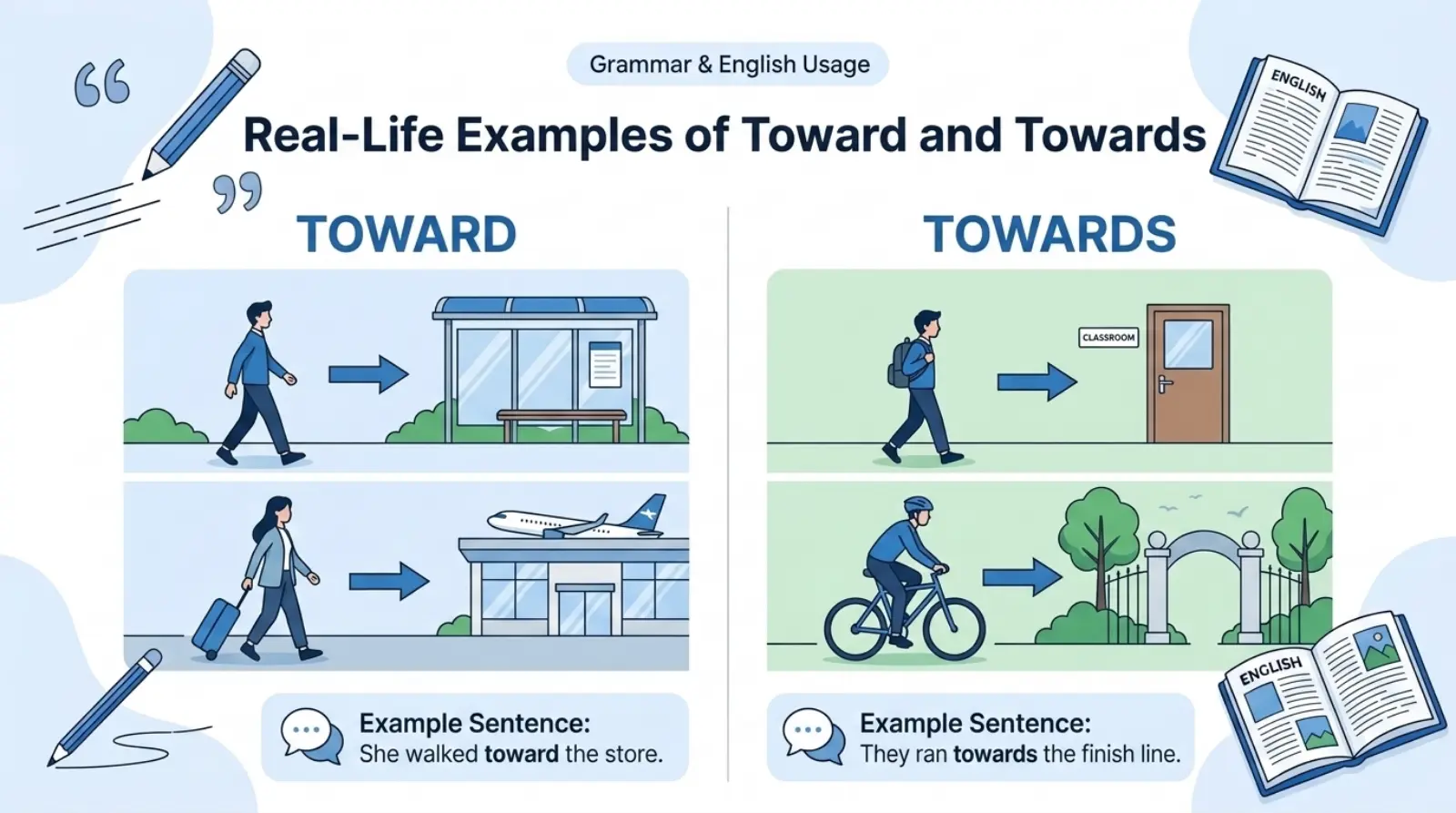
Real-Life Examples of Toward and Towards
Here are everyday examples.
Using Toward
- Turn toward the traffic lights.
- She reached toward the shelf.
- We are saving money toward a new house.
- The bird flew toward the tree.
- He nodded toward his friend.
Using Towards
- Walk towards the museum.
- She moved towards the stage.
- They worked towards peace.
- The ship sailed towards the island.
- He smiled towards the audience.
Toward or Towards in Formal Writing
Both words are acceptable.
However, consistency matters more than your choice.
If writing in American English:
Use toward throughout the article.
If writing in British English:
Use towards consistently.
Avoid switching between the two unless quoting another source.
Common Mistakes People Make
Mixing American and British English
❌ We moved toward the station and later walked towards home.
✔ We moved toward the station and later walked toward home.
OR
✔ We moved towards the station and later walked towards home.
Thinking One Is Incorrect
Many people believe towards is wrong.
It isn’t.
Both spellings are correct.
Ignoring Audience
If your readers are mostly Americans, choose toward.
If they are British, choose towards.
Easy Trick to Remember the Difference
Remember this simple rule:
Toward = American English
Towards = British English
That’s all.
The meaning never changes.
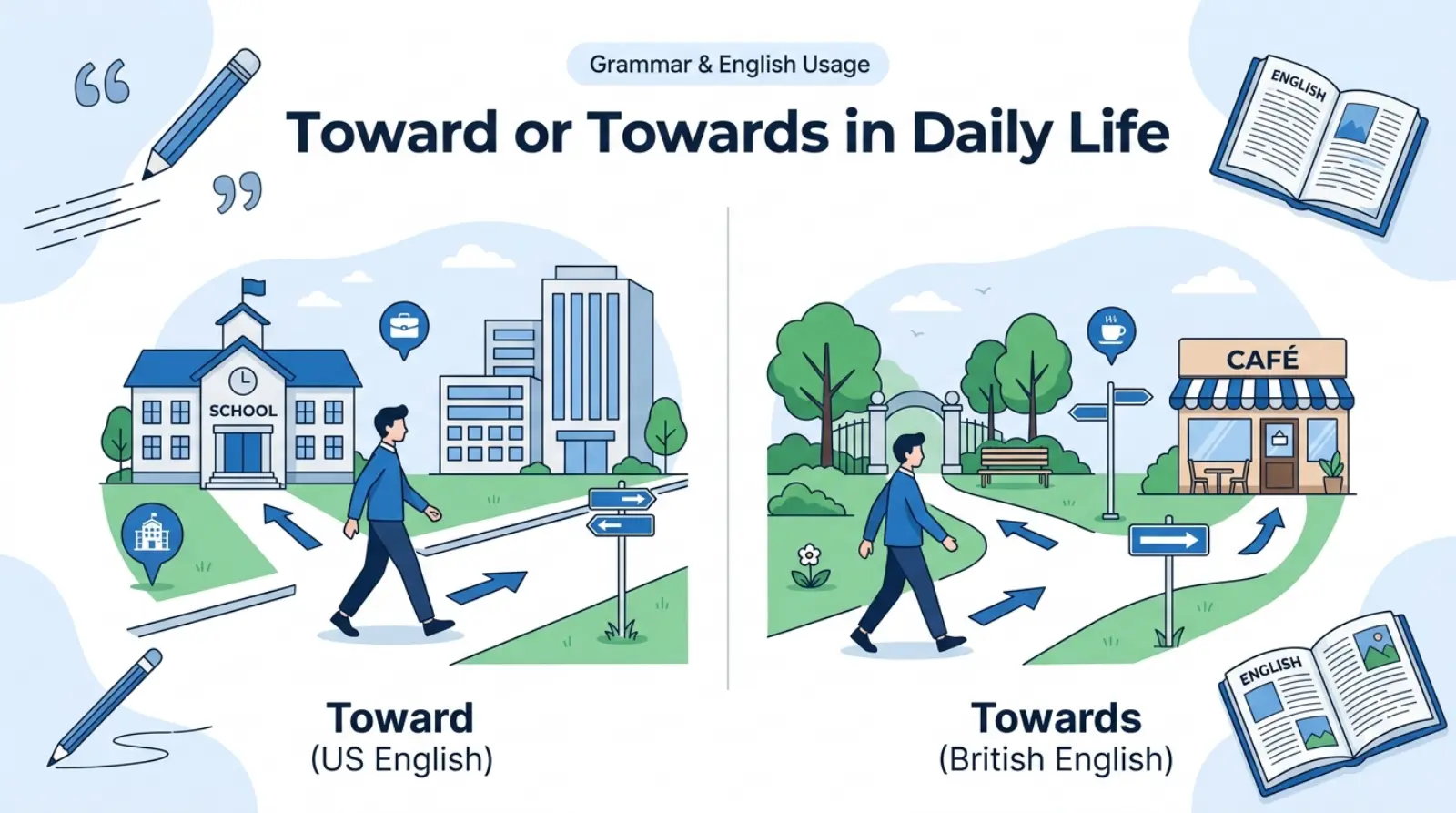
Toward or Towards in Daily Life
You’ll see these words almost everywhere.
Examples include:
- GPS directions
- News articles
- School textbooks
- Business emails
- Social media
- Books
- Newspapers
American websites usually write toward.
British websites usually write towards.
Synonyms
- In the direction of
- Facing
- Near
- Closer to
- Heading for
- Approaching
- Advancing toward
- Moving toward
Expert Insights: Why Correct Usage Matters
Professional writers always think about their audience.
Using the preferred spelling builds trust with readers.
For SEO, consistency also improves readability and user experience.
Editors often follow style guides such as:
- AP Style → Toward
- Chicago Manual of Style → Toward (American writing)
- Oxford Style → Towards (British writing)
Neither spelling improves rankings by itself. Clear, consistent writing matters more.
Frequently Asked Questions (FAQs)
Is toward correct?
Yes. Toward is completely correct and is preferred in American English.
Is towards correct?
Yes. Towards is also correct and is commonly used in British English.
Which is more common in the United States?
Toward is more common.
Which is more common in the United Kingdom?
Towards is more common.
Do toward and towards have different meanings?
No. Both words mean exactly the same thing.
Can I use both in the same article?
It is better to choose one style and stay consistent.
Which spelling should students use?
Use the spelling required by your school, teacher, or writing style guide.
Does Google care whether I use toward or towards?
No. Google understands both spellings. Focus on writing naturally and consistently.
Conclusion
The debate over toward or towards is much simpler than many people think. Both spellings are correct and share the same meaning. The only real difference is regional preference. American English usually favors toward, while British English commonly uses towards. Neither choice changes the grammar or the message.
When writing, think about your audience first. If you’re writing for American readers, use toward. If your audience is British, choose towards. Most importantly, remain consistent throughout your content. Clear, consistent writing improves readability, creates a professional impression, and helps readers understand your message with ease.
Discover More Post:
Its or It’s: What’s the Difference? Grammar Guide with Examples
Sales or Retail Jobs: Guide to Skills, Salary, and Opportunities