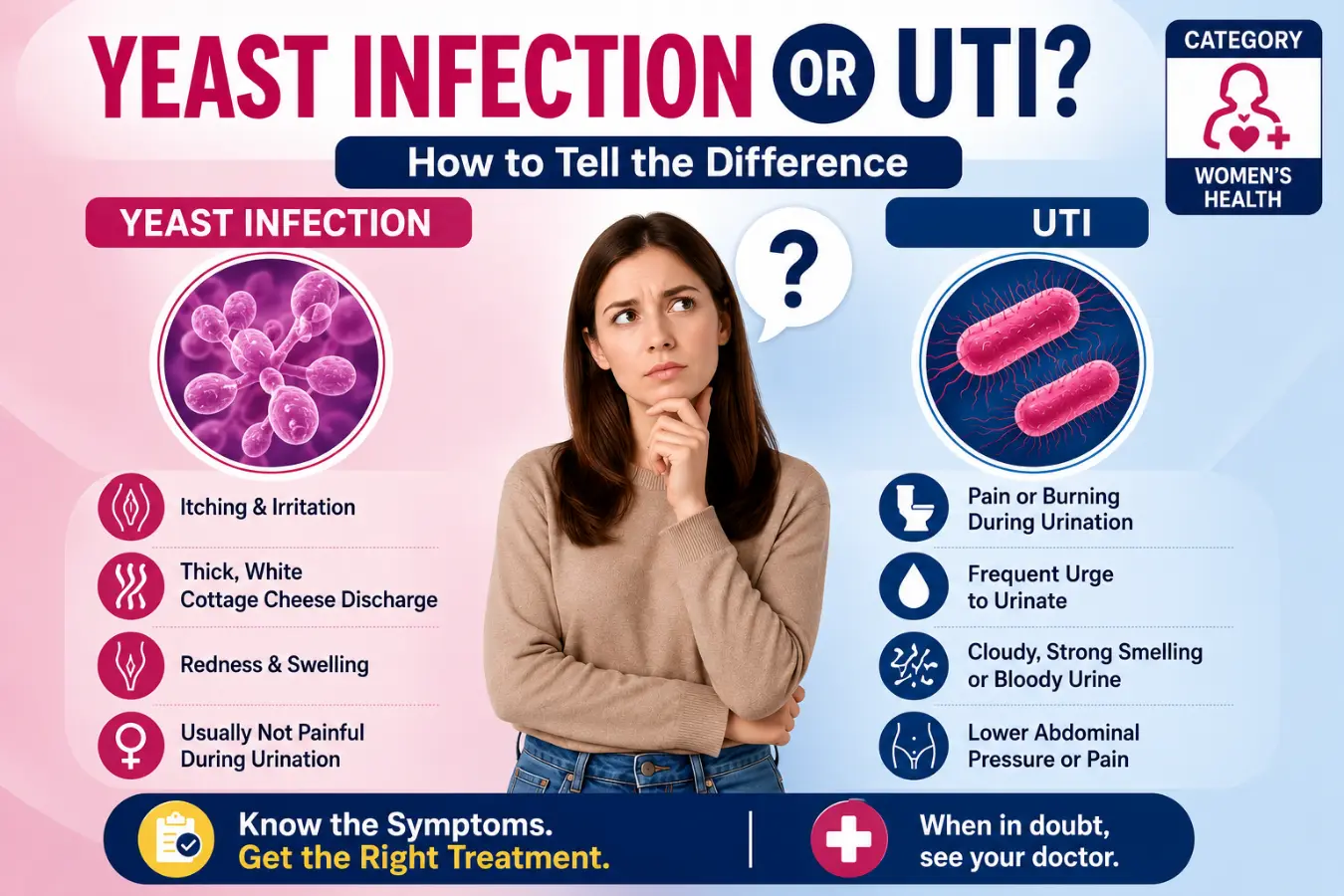
Yeast infection or UTI is a common question many people ask when they notice burning, itching, or discomfort during urination. These two conditions can feel similar at first. However, they have different causes, symptoms, and treatments.
A yeast infection happens when yeast grows too much in the body. A UTI, or urinary tract infection, occurs when bacteria enter the urinary system. Because some symptoms overlap, many people confuse one condition with the other.
Knowing the difference helps you get the right treatment faster. It can also prevent complications and reduce discomfort.
In this guide, you will learn how yeast infections and UTIs differ, what symptoms to watch for, and when to seek medical help.
Quick Summary Box
- A yeast infection comes from an overgrowth of yeast.
- A UTI happens when bacteria infect the urinary tract.
- Both conditions may cause burning during urination.
- Yeast infections often cause itching and thick discharge.
- UTIs usually cause frequent urination and pelvic pressure.
- Treatment for each condition is different.
- Proper diagnosis helps prevent worsening symptoms.
- A healthcare provider can confirm the cause.
What Is a Yeast Infection?
A yeast infection is a fungal infection. It often develops when the natural balance of yeast and bacteria changes.
The most common cause is Candida, a type of fungus that normally lives in the body.
Common causes include:
- Antibiotic use
- Hormonal changes
- Pregnancy
- Diabetes
- Weak immune system
- Tight or damp clothing
Most vaginal yeast infections are not serious. However, they can cause significant discomfort.
What Is a UTI?
A urinary tract infection affects parts of the urinary system.
These areas include:
- Urethra
- Bladder
- Ureters
- Kidneys
Most UTIs occur when bacteria enter the urethra and travel into the bladder.
Common risk factors include:
- Poor hydration
- Holding urine too long
- Sexual activity
- Menopause
- Urinary tract abnormalities
Early treatment helps prevent the infection from spreading.
Yeast Infection or UTI: Key Differences
Many symptoms overlap. Therefore, understanding the differences is important.
| Feature | Yeast Infection | UTI |
| Cause | Fungal overgrowth | Bacterial infection |
| Burning during urination | Yes | Yes |
| Frequent urination | Rare | Common |
| Vaginal itching | Very common | Uncommon |
| Thick discharge | Common | Rare |
| Pelvic pressure | Less common | Common |
| Strong urine odor | Rare | Common |
| Fever | Rare | Possible in severe cases |
| Treatment | Antifungal medicine | Antibiotics |
This table helps identify the most likely condition.
Symptoms of a Yeast Infection
Yeast infections often affect the vagina and surrounding tissues.
Common symptoms include:
- Intense itching
- Burning sensation
- Redness
- Swelling
- Thick white discharge
- Pain during intercourse
- Mild discomfort while urinating
Many people describe the discharge as similar to cottage cheese.
Symptoms of a UTI
UTI symptoms often involve urination problems.
Common signs include:
- Frequent urge to urinate
- Burning while urinating
- Cloudy urine
- Strong-smelling urine
- Pelvic pain
- Pressure in the lower abdomen
- Passing small amounts of urine
More serious UTIs may cause:
- Fever
- Chills
- Back pain
- Nausea
These symptoms may indicate a kidney infection.
Real-Life Examples
Example 1: Likely Yeast Infection
Sarah recently finished antibiotics. She notices intense itching and thick white discharge. She also feels mild burning during urination.
These symptoms strongly suggest a yeast infection.
Example 2: Likely UTI
Emma feels a strong urge to urinate every hour. She experiences burning and pelvic pressure. Her urine smells unusual.
These signs point toward a UTI.
Example 3: Possible Mixed Symptoms
Lisa has burning urination and vaginal irritation. She cannot tell which condition she has.
In this case, a healthcare provider should evaluate her symptoms.
Why People Confuse Yeast Infections and UTIs
The biggest reason is burning during urination.
Both conditions can cause:
- Discomfort
- Irritation
- Pain while urinating
However, the source differs.
A yeast infection irritates external tissues. A UTI affects the urinary tract itself.
Because symptoms overlap, self-diagnosis may lead to incorrect treatment.

Can You Have a Yeast Infection and a UTI at the Same Time?
Yes. Some people experience both conditions together.
This can happen because:
- Antibiotics treat UTIs but may trigger yeast infections.
- Changes in bacteria can affect vaginal health.
- Certain medical conditions increase risk.
If symptoms seem unusual or persist, medical testing may help identify both problems.
How Doctors Diagnose Yeast Infection or UTI
Healthcare providers use different methods.
For a Yeast Infection
They may:
- Review symptoms
- Perform a pelvic exam
- Test vaginal discharge
For a UTI
They often:
- Request a urine sample
- Check for bacteria
- Look for white blood cells
- Order a urine culture
Proper testing improves treatment accuracy.

Treatment Options for Yeast Infections
Most yeast infections respond well to antifungal treatments.
Common options include:
- Antifungal creams
- Vaginal suppositories
- Oral antifungal medications
Helpful self-care tips:
- Wear breathable cotton underwear
- Avoid scented products
- Keep the area dry
- Change out of wet clothing quickly

Always follow medical advice if symptoms continue.
Treatment Options for UTIs
Doctors usually prescribe antibiotics for bacterial UTIs.
Additional steps include:
- Drinking plenty of water
- Urinating regularly
- Completing the full antibiotic course
- Avoiding bladder irritants
Prompt treatment helps prevent kidney infections.
Common Mistakes People Make
Many people misunderstand these conditions.
Common mistakes include:
Assuming Every Burning Sensation Is a UTI
Burning can occur with both conditions.
Using Antibiotics Without Confirmation
Antibiotics do not treat yeast infections.
Ignoring Vaginal Discharge
Discharge often points toward a yeast infection.
Delaying Medical Care
Symptoms may worsen without treatment.
Stopping Medication Early
Incomplete treatment can cause recurrence.
Tips to Prevent Yeast Infections and UTIs
Simple habits can reduce your risk.
Preventing Yeast Infections
- Avoid unnecessary antibiotics
- Wear loose clothing
- Change wet clothes promptly
- Maintain healthy blood sugar levels
Preventing UTIs
- Drink enough water
- Urinate after sexual activity
- Wipe front to back
- Avoid holding urine too long
Prevention often works better than treatment.
Synonyms
- Yeast infection vs UTI
- UTI or yeast infection symptoms
- Burning urination causes
- Vaginal infection vs urinary tract infection
- Difference between UTI and yeast infection
- Signs of yeast infection
- UTI symptoms in women
- Candida infection symptoms
- Bladder infection signs
- Urinary discomfort causes
Daily Life Impact of Yeast Infection or UTI
Both conditions can affect everyday activities.
Possible challenges include:
- Sleep disruption
- Discomfort at work
- Difficulty concentrating
- Reduced physical activity
- Stress and anxiety
Early treatment helps restore comfort and confidence.

Expert Insights: Why This Topic Matters
Many people treat the wrong condition because symptoms overlap.
Healthcare professionals recommend getting an accurate diagnosis when symptoms seem unclear.
Important expert tips:
- Do not assume the cause based on one symptom.
- Seek medical care if symptoms persist.
- Follow treatment instructions carefully.
- Watch for recurring infections.
- Stay hydrated and maintain good hygiene.
Correct treatment reduces complications and improves recovery.
Frequently Asked Questions
Is burning during urination always a UTI?
No. A yeast infection can also cause burning during urination.
Can a yeast infection feel like a UTI?
Yes. Some symptoms overlap, especially burning and discomfort.
What discharge is common with a yeast infection?
Many people notice thick, white, cottage cheese-like discharge.
Do UTIs cause itching?
Usually not. Itching is more common with yeast infections.
Can antibiotics cause a yeast infection?
Yes. Antibiotics can disrupt healthy bacteria and encourage yeast growth.
How quickly does a UTI improve with treatment?
Many people feel better within a few days after starting antibiotics.
Can I treat a yeast infection without a prescription?
Some over-the-counter antifungal treatments are available. However, proper diagnosis remains important.
When should I see a doctor?
See a healthcare provider if symptoms are severe, recurring, or unclear.
Conclusion
Understanding the difference between a yeast infection or UTI can help you choose the right treatment and recover faster. While both conditions may cause burning during urination, their causes and symptoms differ. Yeast infections usually involve itching, redness, and thick discharge. UTIs commonly cause frequent urination, pelvic pressure, and urinary discomfort.
Because symptoms often overlap, many people confuse these conditions. Therefore, proper diagnosis is important. Seeking medical advice can prevent complications and ensure effective treatment.
If you experience persistent symptoms, do not guess the cause. Instead, speak with a healthcare professional. A correct diagnosis leads to better treatment, faster relief, and improved overall health.
Discover More Post:
Itchy Nipples Period or Pregnancy? Causes, Differences, and Mean