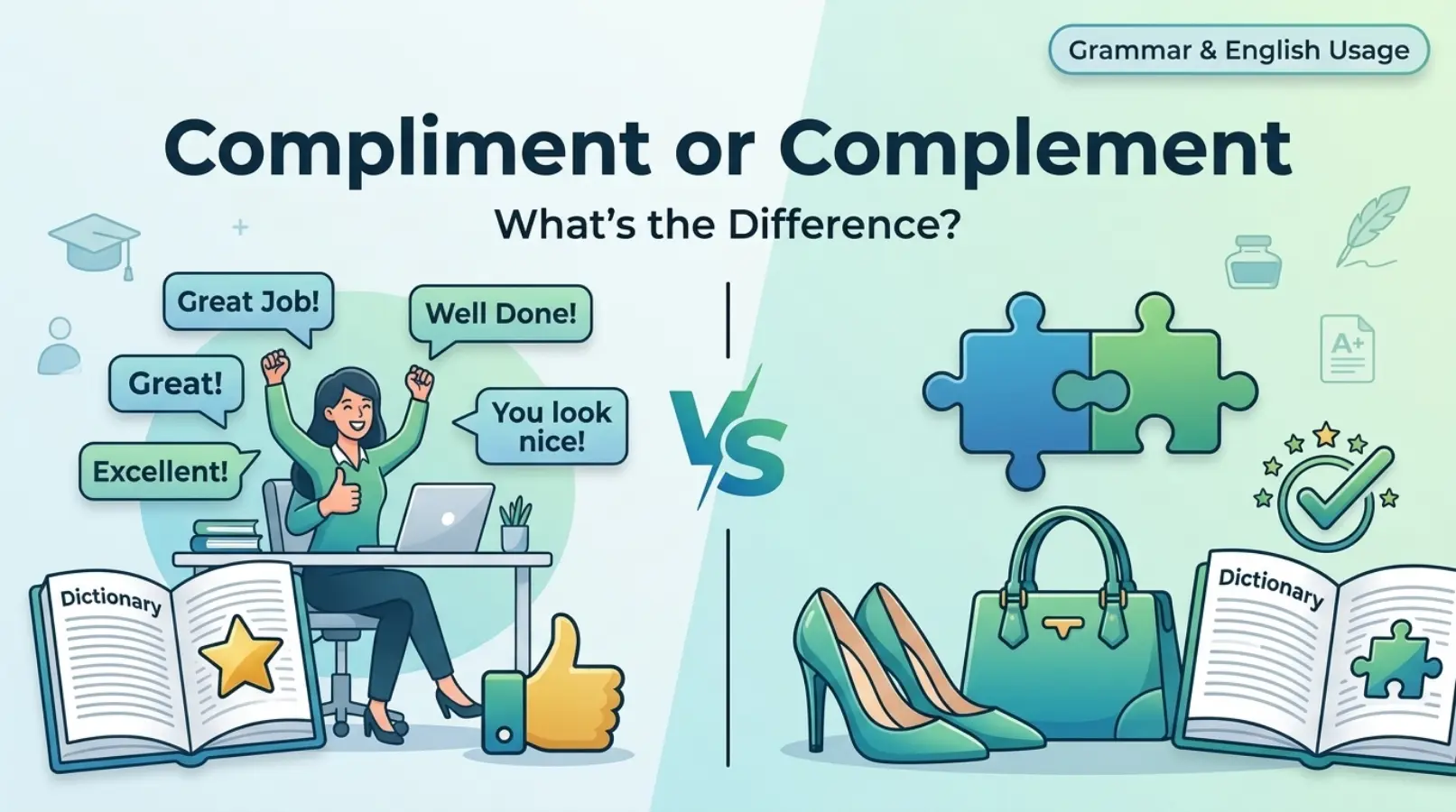
Compliment or complement is one of the most confusing word pairs in English. These words look similar and sound almost the same. However, they have very different meanings. Many people use the wrong one in emails, school work, and daily conversations.
Learning the difference is easier than you think. A simple trick can help you remember the correct word every time. This guide explains both words in plain English. It also includes examples, a comparison table, memory tips, and common mistakes.
By the end of this article, you will know exactly when to use compliment and when to use complement with confidence.
Quick Summary Box
- Compliment = Praise or kind words.
- Complement = Something that completes or matches something else.
- Compliment relates to giving appreciation.
- Complement relates to improving or completing.
- Both words sound alike but have different meanings.
- Easy trick: I in compliment = “I admire you.”
- E in complement = “Everything fits together.”
What Does “Compliment” Mean?
A compliment is a nice thing you say about someone.
It shows praise, admiration, or appreciation.
Examples
- You gave me a nice compliment.
- She received many compliments about her dress.
- His teacher complimented his hard work.
- Thank you for the compliment.
Simple Definition
Compliment means praise or kind words.
What Does “Complement” Mean?
A complement is something that completes, improves, or goes well with something else.
It makes another thing better.
Examples
- This sauce complements the pasta.
- Blue shoes complement a white dress.
- Her skills complement the team.
- Fresh flowers complement the room.
Simple Definition
Complement means to complete or improve something.
Compliment or Complement: Key Difference
| Feature | Compliment | Complement |
| Meaning | Praise | Complete or improve |
| Part of Speech | Noun & Verb | Noun & Verb |
| Used For | Kind words | Matching things |
| Memory Tip | Praise people | Complete things |
| Example | She gave me a compliment. | The colors complement each other. |
Easy Trick to Remember the Difference
Many people remember these words using one simple trick.
Compliment
Think about the letter I.
I like your shirt.
That means praise.
Complement
Think about the letter E.
Everything fits together.
That means complete.
Another Memory Tip
- Compliment = Praise
- Complement = Complete
Notice that complete and complement both begin with comple-.
Real-Life Examples
Here are everyday examples.
At School
❌ The teacher complemented my speech.
✅ The teacher complimented my speech.
In Fashion
❌ Your shoes compliment your outfit.
✅ Your shoes complement your outfit.
At Work
- Your experience complements mine.
- My manager complimented my presentation.
At Home
- This table complements our living room.
- Mom complimented my cooking.
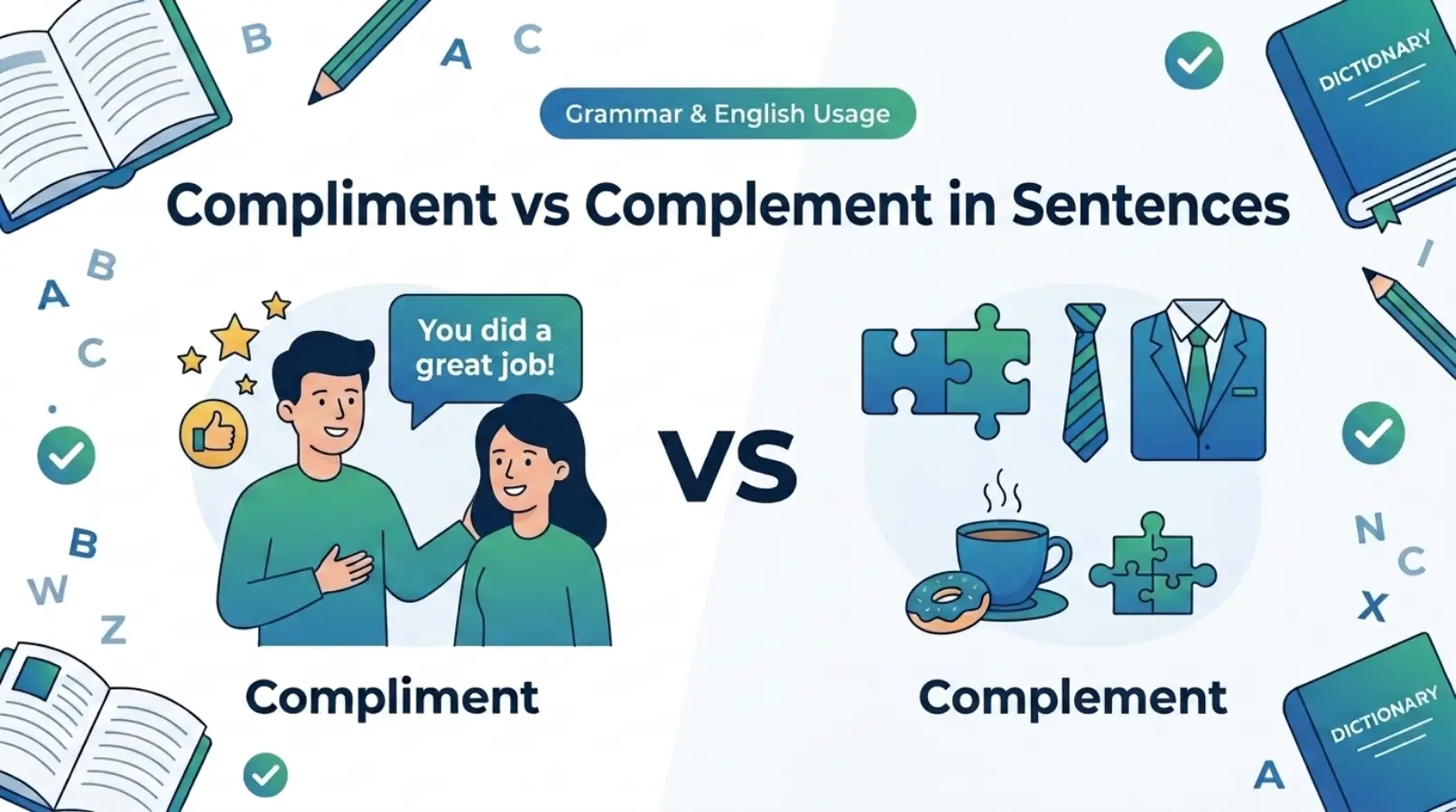
Compliment vs Complement in Sentences
Compliment Examples
- She gave me a wonderful compliment.
- I complimented his painting.
- Thank you for your compliment.
- Everyone complimented her singing.
- He loves receiving compliments.
Complement Examples
- The cheese complements the wine.
- Your talents complement the team.
- The curtains complement the furniture.
- Green complements brown nicely.
- Exercise complements a healthy diet.
Common Mistakes People Make
Many writers confuse these words because they sound identical.
Mistake 1
❌ Your smile complements me.
✅ Your smile compliments me.
Mistake 2
❌ This tie compliments your suit.
✅ This tie complements your suit.
Mistake 3
❌ She gave me a beautiful complement.
✅ She gave me a beautiful compliment.
Mistake 4
❌ Their skills compliment each other.
✅ Their skills complement each other.
When Should You Use “Compliment”?
Use compliment whenever someone gives praise.
Common Situations
- Saying nice things
- Appreciating good work
- Praising appearance
- Thanking someone
- Encouraging others
Examples
- Nice haircut!
- Great job!
- I love your presentation.
- You’re very talented.
All of these are compliments.
When Should You Use “Complement”?
Use complement when things fit together or improve each other.
Common Situations
- Clothing colors
- Interior design
- Food pairings
- Business teams
- Music
- Relationships
Examples
- Lemon complements fish.
- Black complements gold.
- His patience complements her creativity.
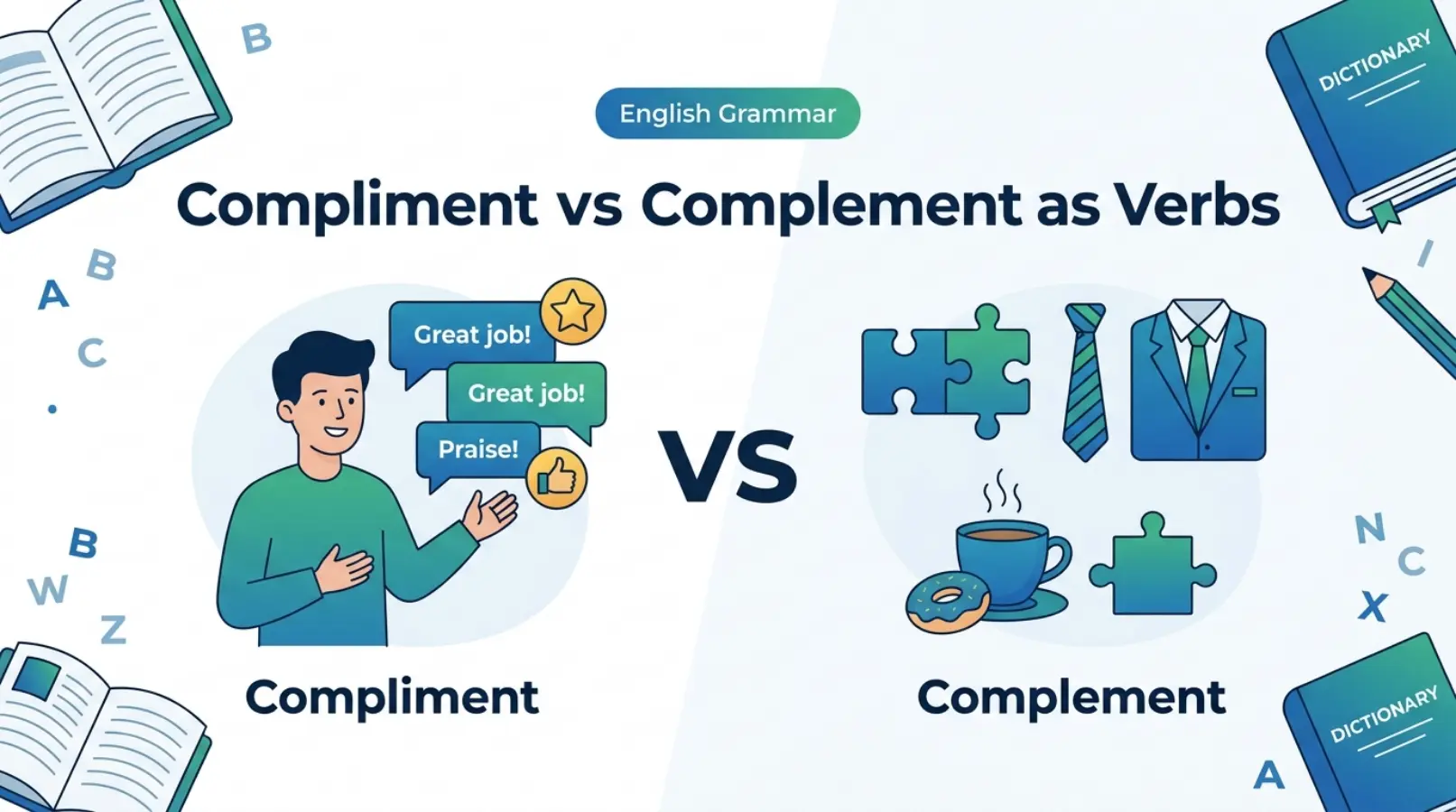
Compliment and Complement as Verbs
Both words can be verbs.
Compliment (Verb)
To praise someone.
Examples
- I complimented my friend.
- She complimented my writing.
Complement (Verb)
To complete or improve something.
Examples
- This chair complements the table.
- Fresh herbs complement soup.
Synonyms of Compliment
Here are similar words.
- Praise
- Admire
- Appreciate
- Congratulate
- Applaud
- Commend
- Flatter
- Encourage
Synonyms of Complement
These words have related meanings.
- Complete
- Enhance
- Improve
- Match
- Balance
- Support
- Strengthen
- Harmonize
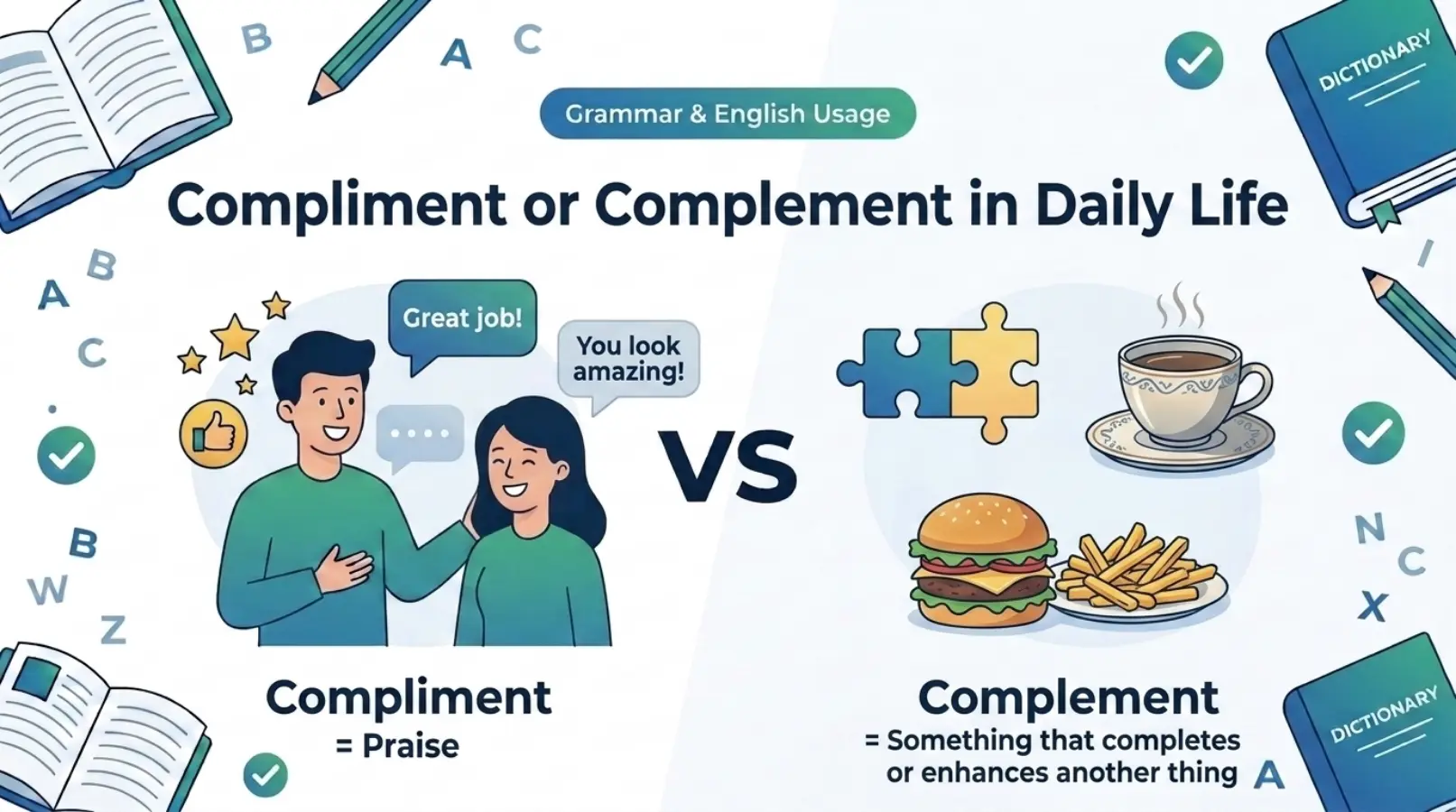
Compliment or Complement in Daily Life
You use these words more often than you may realize.
Work
- Compliment coworkers for good work.
- Complement each other’s skills.
Fashion
- Accessories complement clothing.
- Friends compliment your style.
Food
- Herbs complement soup.
- Guests compliment your cooking.
Relationships
- Partners complement each other’s strengths.
- Couples compliment each other with kind words.
Grammar Tips
Compliment
Noun
- That was a kind compliment.
Verb
- She complimented me.
Complement
Noun
- Rice is a complement to the meal.
Verb
- Rice complements the meal.
Real-Life Scenario
Imagine attending a wedding.
Your friend says,
“Your suit looks amazing.”
That is a compliment.
Later, someone says,
“Your tie complements your suit.”
That is complement.
One praises you.
The other describes matching items.
Expert Insights: Why the Difference Matters
Using the correct word improves your writing.
It also makes your communication clearer.
Teachers, employers, and readers notice correct word choice.
Professional writing depends on accuracy.
Remember this simple rule:
- Praise someone → Compliment
- Complete something → Complement
Mastering small grammar differences builds confidence and credibility.
Frequently Asked Questions (FAQs)
Is it compliment or complement someone?
Use compliment when you praise someone.
Is it complement or compliment your outfit?
Use complement because the outfit matches well.
What is the easiest way to remember the difference?
Think:
- Compliment = Praise
- Complement = Complete
Can compliment and complement both be verbs?
Yes.
- Compliment = to praise
- Complement = to complete or improve
Why do people confuse compliment and complement?
They sound exactly alike.
They are homophones.
Is “complimentary” related to compliment?
Yes.
Complimentary means free or expressing praise.
Example:
- Complimentary breakfast
- Complimentary remarks
What does complementary mean?
It means something that completes or works well with another thing.
Example:
- Complementary colors
What is the difference between compliment and complement?
A compliment is praise or kind words given to someone. A complement is something that completes, improves, or matches another thing. Use compliment for appreciation and complement for things that work well together.
Conclusion
Understanding compliment or complement becomes simple once you know their meanings. A compliment is praise or appreciation. A complement is something that completes or enhances another thing. Although these words sound the same, they serve different purposes in writing and conversation. Using the correct word makes your communication clearer and more professional. A helpful way to remember the difference is to think of compliment as giving kind words and complement as making something complete. Practice with everyday examples, and soon choosing the right word will become natural. Whether you’re writing an email, a school assignment, or a social media post, you’ll use these commonly confused words with confidence.
Discover More Post:
Tomato a Fruit or Vegetable? The Surprising Scientific Answer
Dollar Sign Before or After? The Correct Way to Use the $ Symbol