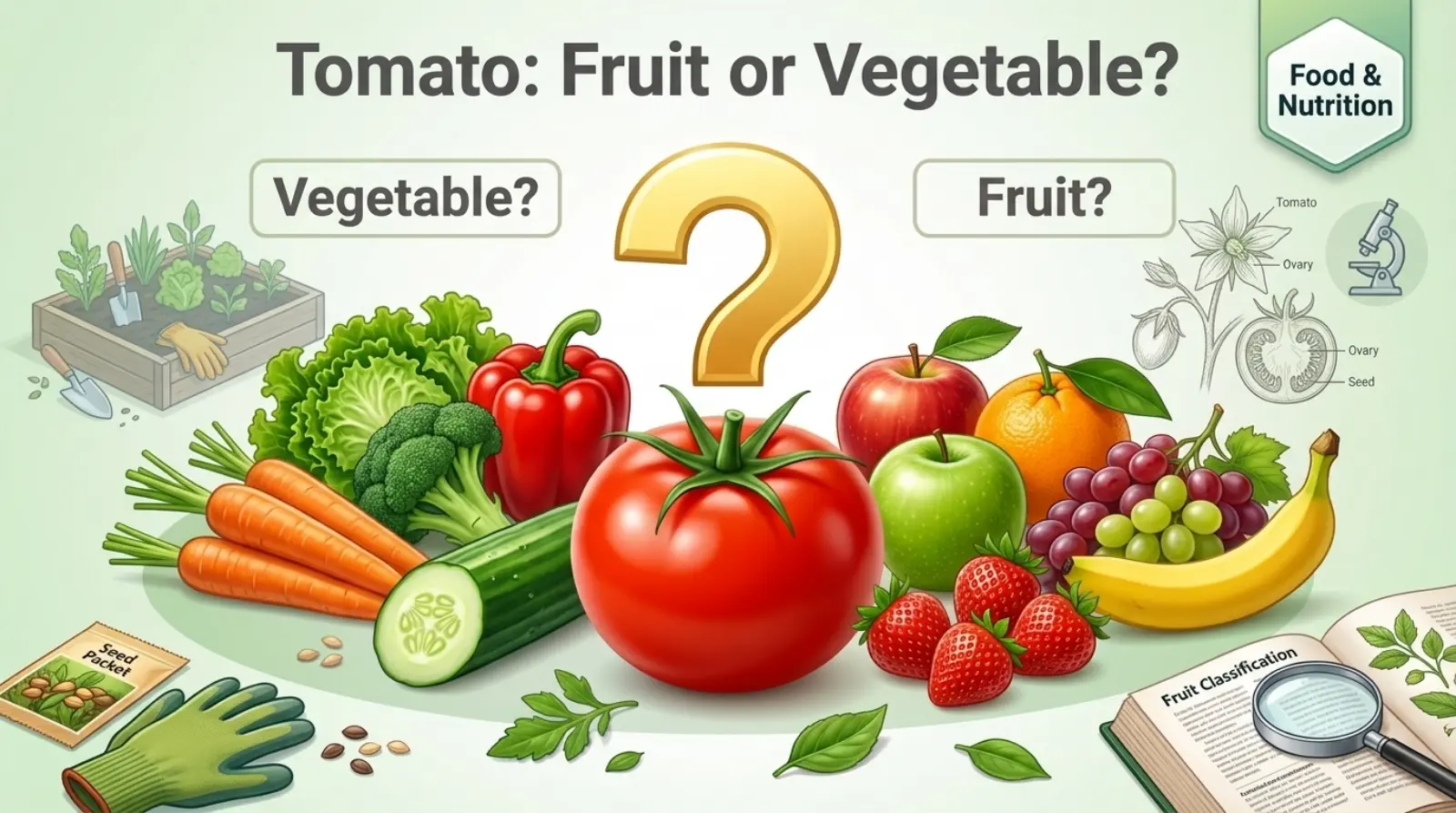
Tomato a fruit or vegetable is one of the most common food questions. Many people think tomatoes are vegetables because they appear in salads and savory dishes. However, science tells a different story.
The answer depends on how you define a fruit or a vegetable. Botanists use one definition. Chefs use another. Even the law has weighed in on this question.
In this guide, you will learn the scientific answer, the culinary answer, and why both are correct in different situations. You will also see simple examples, comparison tables, common mistakes, and expert insights. By the end, you will know exactly why tomatoes can be called both a fruit and a vegetable.
Quick Summary
Featured Snippet Answer
- A tomato is botanically a fruit.
- It grows from the flower of the tomato plant.
- It contains seeds inside.
- In cooking, a tomato is treated as a vegetable.
- Both answers are correct depending on the context.
- Science says fruit.
- Cooking says vegetable.
What Is a Tomato?
A tomato is the edible part of the tomato plant. It develops after a flower is pollinated.
Inside every tomato are seeds surrounded by juicy flesh. Tomatoes come in many shapes, colors, and sizes.
People eat tomatoes fresh or cooked. They also use them to make sauces, soups, ketchup, and salsa.
Is Tomato a Fruit or Vegetable?
The short answer is simple.
A tomato is scientifically a fruit but is commonly used as a vegetable in cooking.
This creates confusion because science and cooking use different definitions.
- Science: Fruit
- Cooking: Vegetable
So, if someone asks whether a tomato is a fruit or vegetable, the most accurate answer is both, depending on the context.
Why Is a Tomato a Fruit?
Botany is the study of plants.
In botany, a fruit develops from the flower of a plant after fertilization.
A tomato meets all the requirements.
It:
- Grows from the flower.
- Contains seeds.
- Protects those seeds.
- Helps spread seeds for reproduction.
Because of these traits, scientists classify tomatoes as fruits.
Simple Definition
Fruit: The seed-bearing part of a flowering plant.
Since tomatoes contain seeds and grow from flowers, they are fruits.
Why Do People Call Tomatoes Vegetables?
Cooking uses a different system.
Chefs classify foods based on taste and how people eat them.
Tomatoes are:
- Less sweet
- Often cooked
- Used in savory meals
- Served with vegetables
Because of these reasons, cooks call tomatoes vegetables.
Examples include:
- Pizza sauce
- Pasta sauce
- Salads
- Sandwiches
- Burgers
- Soups
In the kitchen, tomatoes behave like vegetables.
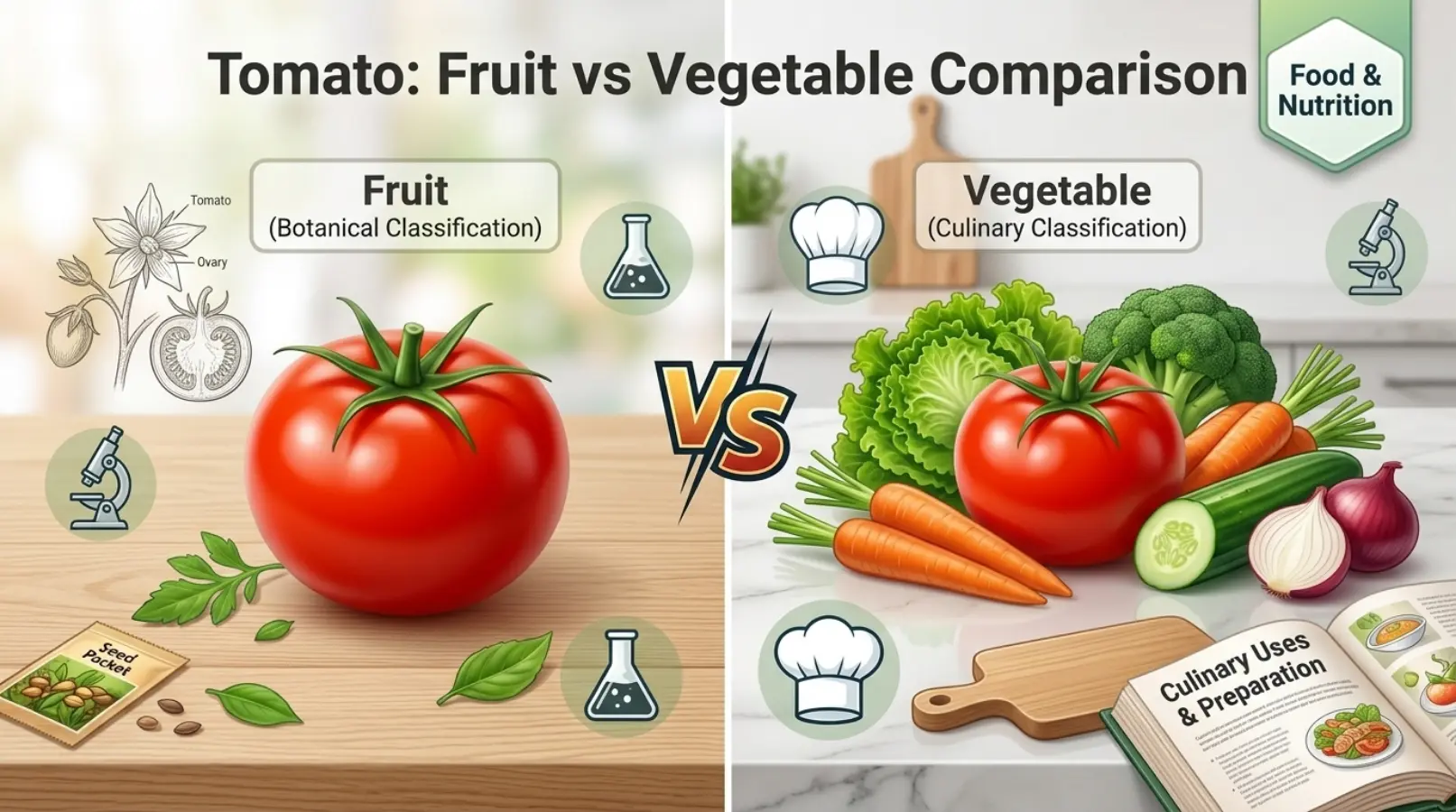
Tomato: Fruit vs Vegetable Comparison
| Feature | Fruit | Vegetable | Tomato |
| Grows from flower | Yes | No | Yes |
| Contains seeds | Yes | Usually No | Yes |
| Sweet taste required | Yes | No | No |
| Used in desserts | Often | Rarely | Sometimes |
| Used in savory dishes | Sometimes | Yes | Yes |
| Botanical classification | Fruit | No | Fruit |
| Culinary classification | Sometimes | Vegetable | Vegetable |
Conclusion: Tomatoes are botanically fruits and culinary vegetables.
The Science Behind Tomato Classification
Plants reproduce through flowers.
After pollination:
- The flower blooms.
- The ovary grows.
- Seeds develop.
- The fruit forms.
Tomatoes follow this exact process.
That is why scientists classify them as fruits.
Other fruits with the same characteristics include:
- Cucumbers
- Peppers
- Pumpkins
- Eggplants
- Squash
- Okra
Although people cook them as vegetables, science classifies them as fruits.
The Famous Court Case About Tomatoes
Many people are surprised to learn that this question reached the highest court.
In 1893, the U.S. Supreme Court decided the famous case Nix v. Hedden.
The court ruled that tomatoes should be treated as vegetables for taxation.
Why?
Because people commonly served them with dinner rather than dessert.
The ruling did not change the botanical classification.
So today:
- Science still says fruit.
- Law (for trade purposes at that time) treated them as vegetables.
Real-Life Examples
Here are some everyday examples.
Example 1
You make a salad.
The tomato acts like a vegetable.
Example 2
You study plant biology.
The tomato is a fruit.
Example 3
You grow tomatoes in your garden.
The flowers become fruits after pollination.
Example 4
You buy groceries.
The tomato is usually placed with vegetables.
Common Mistakes People Make
Mistake 1: Thinking all fruits are sweet
Not true.
Many fruits are not sweet.
Examples include:
- Tomato
- Avocado
- Olive
- Cucumber
Mistake 2: Thinking vegetables never contain seeds
Some vegetables contain seeds because they are actually fruits.
Mistake 3: Believing science and cooking use the same definitions
They do not.
Science and cooking classify foods differently.
Mistake 4: Saying one answer is completely wrong
Both answers can be correct.
It depends on the context.
Tips to Remember the Difference
Remember these easy tricks.
Science Rule
If it grows from a flower and has seeds, it is a fruit.
Cooking Rule
If it is mainly used in savory meals, people often call it a vegetable.
Easy Memory Trick
Fruit = Plant science
Vegetable = Kitchen use
How Tomatoes Are Used in Daily Life
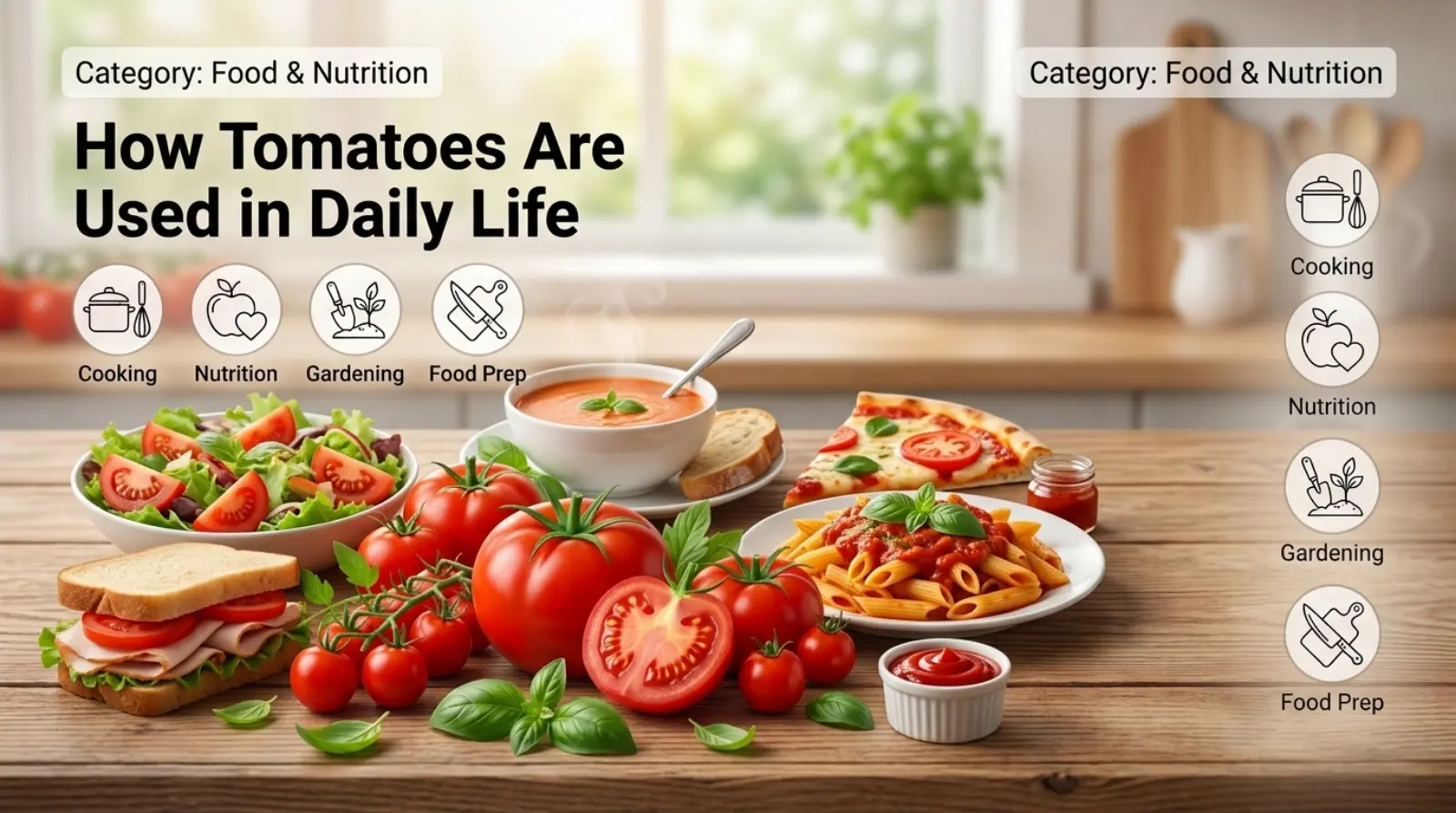
Tomatoes appear in many foods.
Examples include:
- Salads
- Sandwiches
- Burgers
- Pasta
- Pizza
- Soups
- Salsa
- Curry
- Juice
- Ketchup
Even though they are fruits, people cook them like vegetables almost every day.
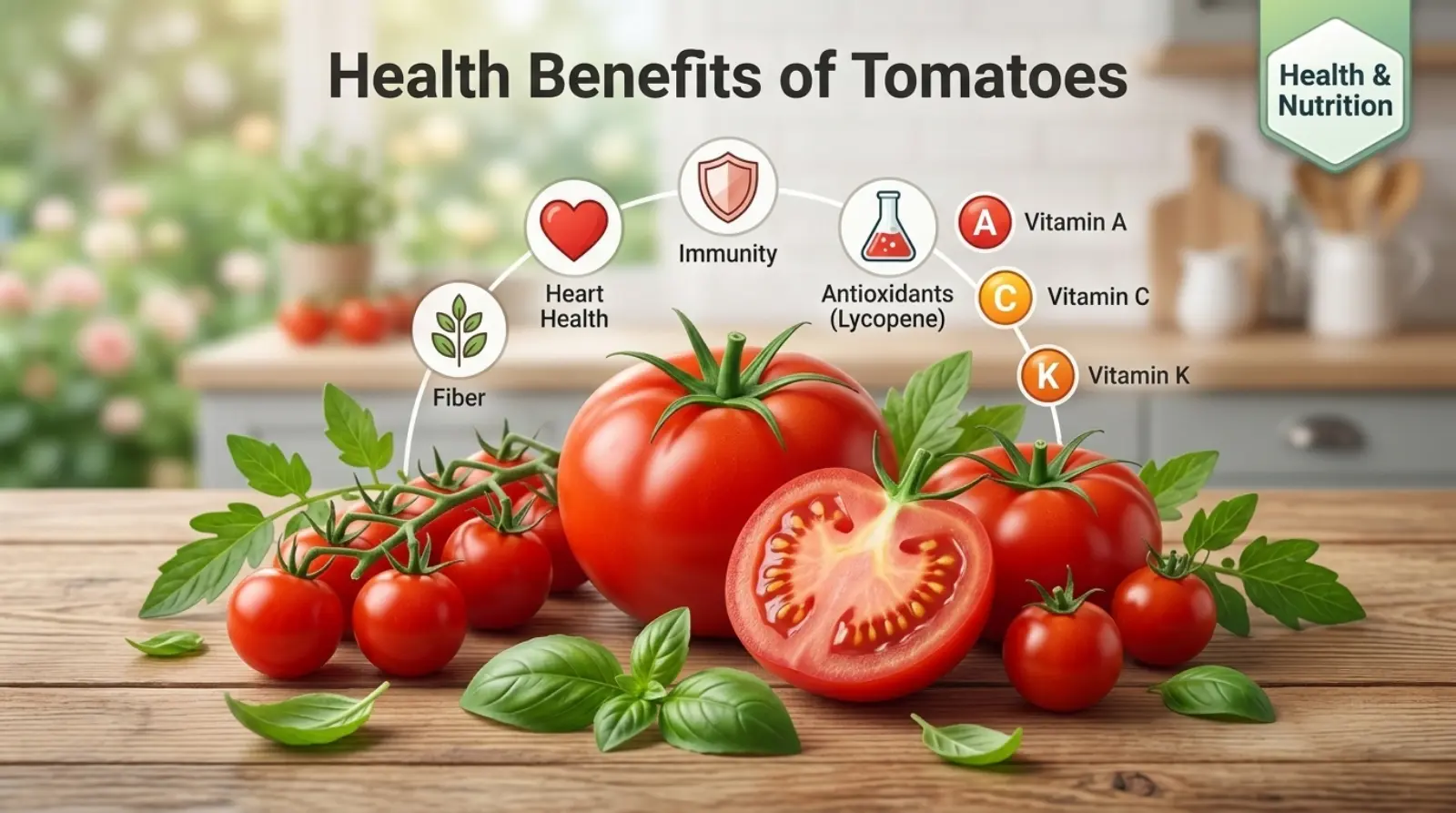
Health Benefits of Tomatoes
Tomatoes are rich in nutrients.
They provide:
- Vitamin C
- Vitamin K
- Potassium
- Folate
- Fiber
- Lycopene
- Antioxidants
These nutrients support:
- Heart health
- Healthy skin
- Better immunity
- Eye health
Adding tomatoes to your diet is a healthy choice.
Synonyms
- Garden tomato
- Fresh tomato
- Tomato plant
- Edible fruit
Expert Insights
Food scientists and botanists agree on one important fact.
A tomato develops from the flower of the plant and contains seeds. That makes it a fruit in botanical science.
However, nutrition experts and chefs often group tomatoes with vegetables because people cook and eat them in savory dishes.
Understanding both viewpoints helps avoid confusion.
Knowing the difference is useful for students, gardeners, cooks, and anyone interested in healthy eating.
Frequently Asked Questions (FAQs)
Is a tomato really a fruit?
Yes. Botanically, a tomato is a fruit because it grows from a flower and contains seeds.
Why is tomato called a vegetable?
People use tomatoes in savory cooking, so chefs classify them as vegetables.
Can a tomato be both a fruit and a vegetable?
Yes. It is a fruit in science and a vegetable in cooking.
Who decided tomatoes are vegetables?
The U.S. Supreme Court ruled that tomatoes should be treated as vegetables for taxation in 1893.
Are cucumbers fruits too?
Yes. Cucumbers grow from flowers and contain seeds, making them botanical fruits.
Is ketchup made from fruit?
Yes. Since tomatoes are botanical fruits, ketchup is made from fruit.
Are tomatoes healthy?
Yes. Tomatoes provide vitamins, minerals, fiber, and antioxidants that support overall health.
Why do grocery stores keep tomatoes with vegetables?
Stores organize foods by how customers use them. Most people cook tomatoes like vegetables.
Final Verdict
| Question | Answer |
| Botanical classification | Fruit |
| Culinary classification | Vegetable |
| Contains seeds | Yes |
| Grows from flower | Yes |
| Used in savory dishes | Yes |
| Correct answer | Both, depending on the context |
Conclusion
The debate over tomato a fruit or vegetable has a simple answer once you understand the context. Botanically, a tomato is a fruit because it develops from the flower of the plant and contains seeds. In the kitchen, however, it is treated as a vegetable because of its savory flavor and common use in meals like salads, soups, sauces, and sandwiches. Both classifications are correct within their own fields. Knowing the difference helps students, gardeners, cooks, and curious readers understand why this question has sparked discussion for generations. The next time someone asks whether a tomato is a fruit or a vegetable, you can confidently explain that it is scientifically a fruit and culinary-wise a vegetable.
Discover More Post:
CH2Cl2 Polar or Nonpolar? Guide to Dichloromethane Polarity
Principle or Principal: What’s the Difference? Guide With Examples