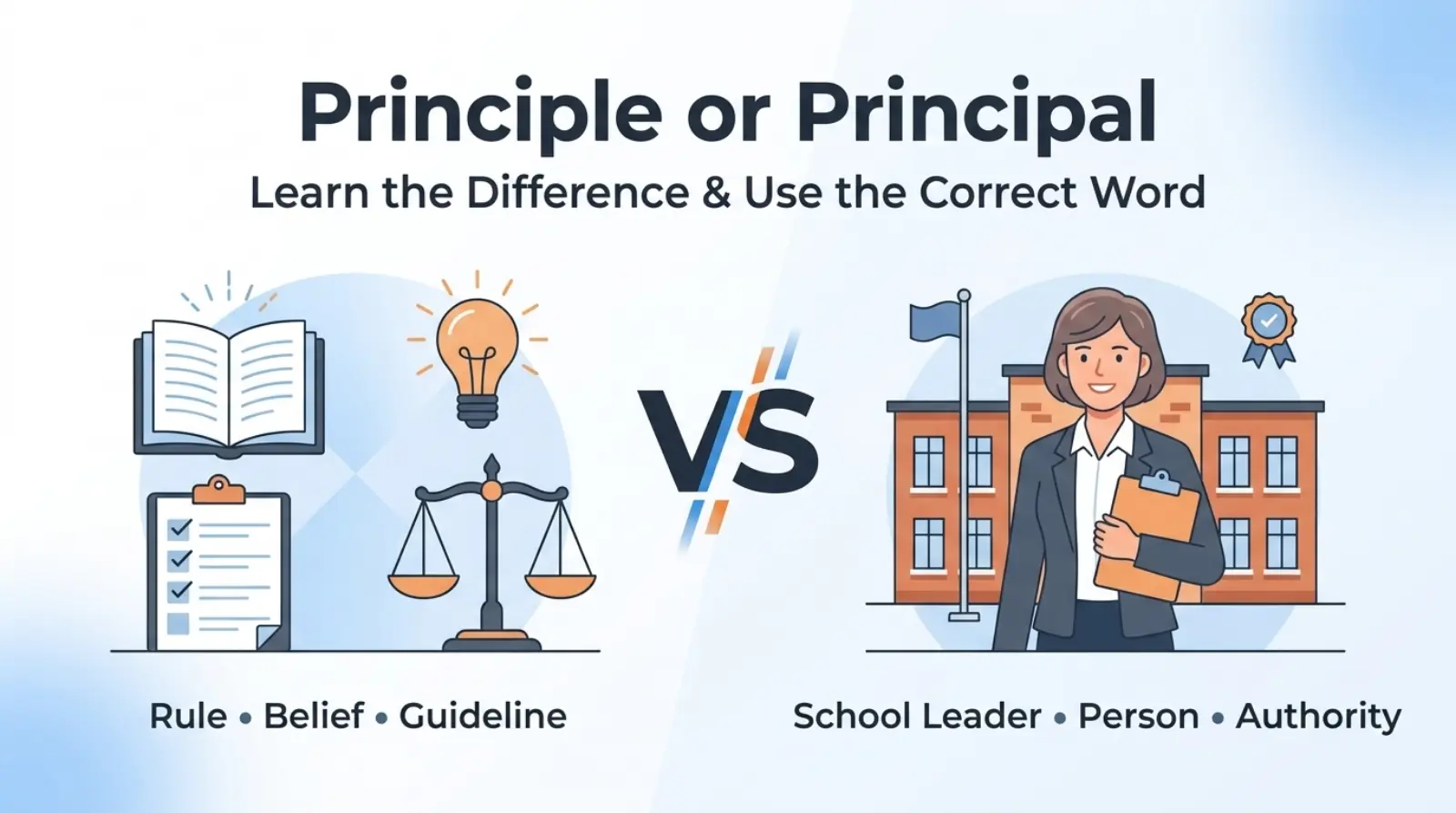
Principle or principal is one of the most confusing word pairs in English. Many people use these words in the wrong way. However, learning the difference is easier than you think.
Both words sound the same, but they have different meanings. One refers to a rule or belief. The other usually refers to a person or something most important.
This guide explains everything in simple English. You will learn the meaning of each word, see real-life examples, compare them side by side, and discover easy memory tricks. By the end, you will know exactly when to use principle and when to use principal without guessing.
Quick Summary
- Principle = a rule, belief, or basic truth.
- Principal = a person in charge or the most important.
- They sound alike but have different meanings.
- Principle is always a noun.
- Principal can be a noun or an adjective.
- Remember: The principal is your pal.
What Does “Principle” Mean?
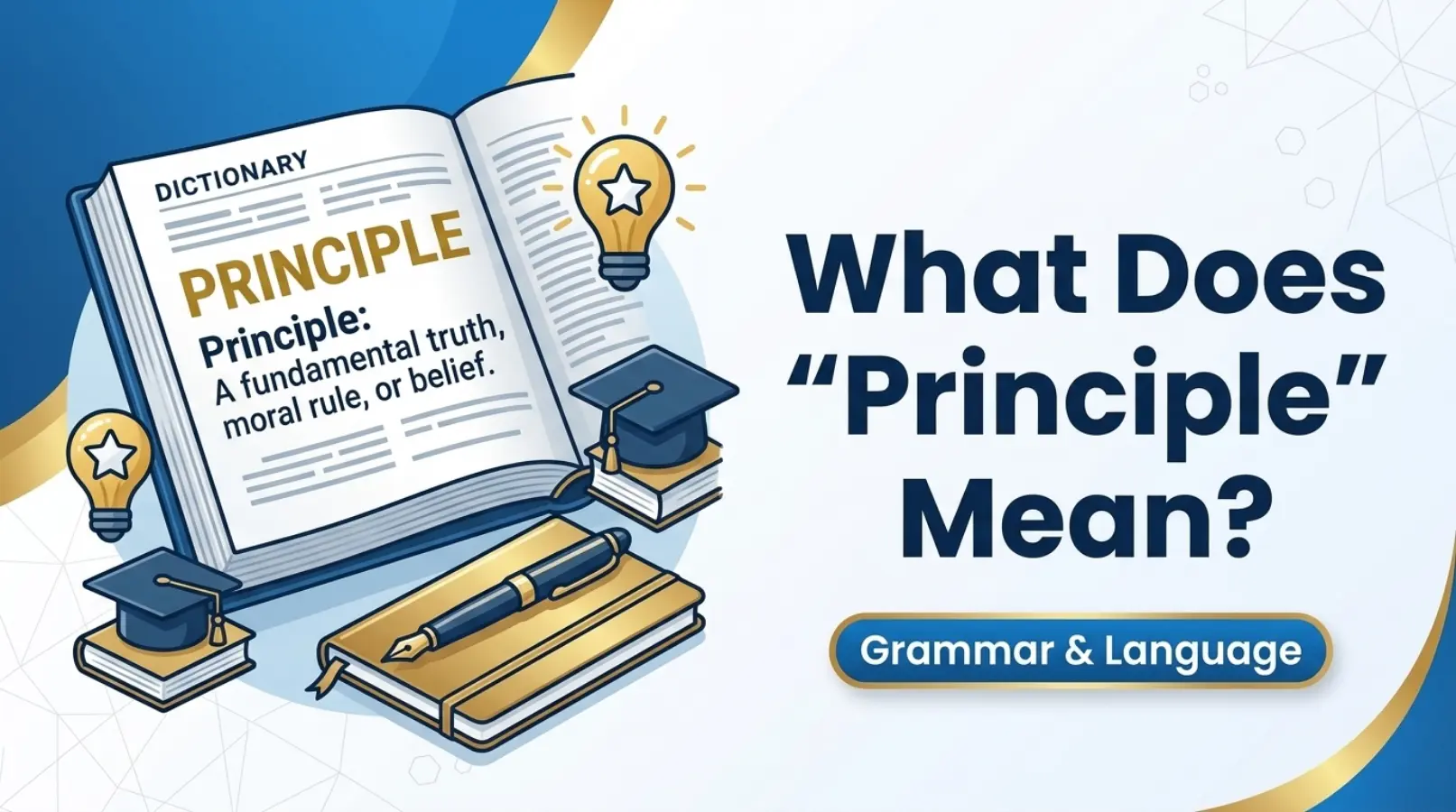
A principle is a rule, belief, value, or basic idea.
People follow principles because they help guide decisions and behavior.
Examples
- Honesty is an important principle.
- She lives by strong moral principles.
- Fairness is a key principle of justice.
- The scientific principle explains how gravity works.
Simple Definition
Principle = a rule or belief you follow.
What Does “Principal” Mean?
A principal usually refers to the person in charge of a school.
It can also describe something that is the most important.
Examples
- The principal welcomed new students.
- She spoke with the school principal.
- Our principal concern is safety.
- The principal reason was bad weather.
Simple Definition
Principal = the person in charge or the most important thing.
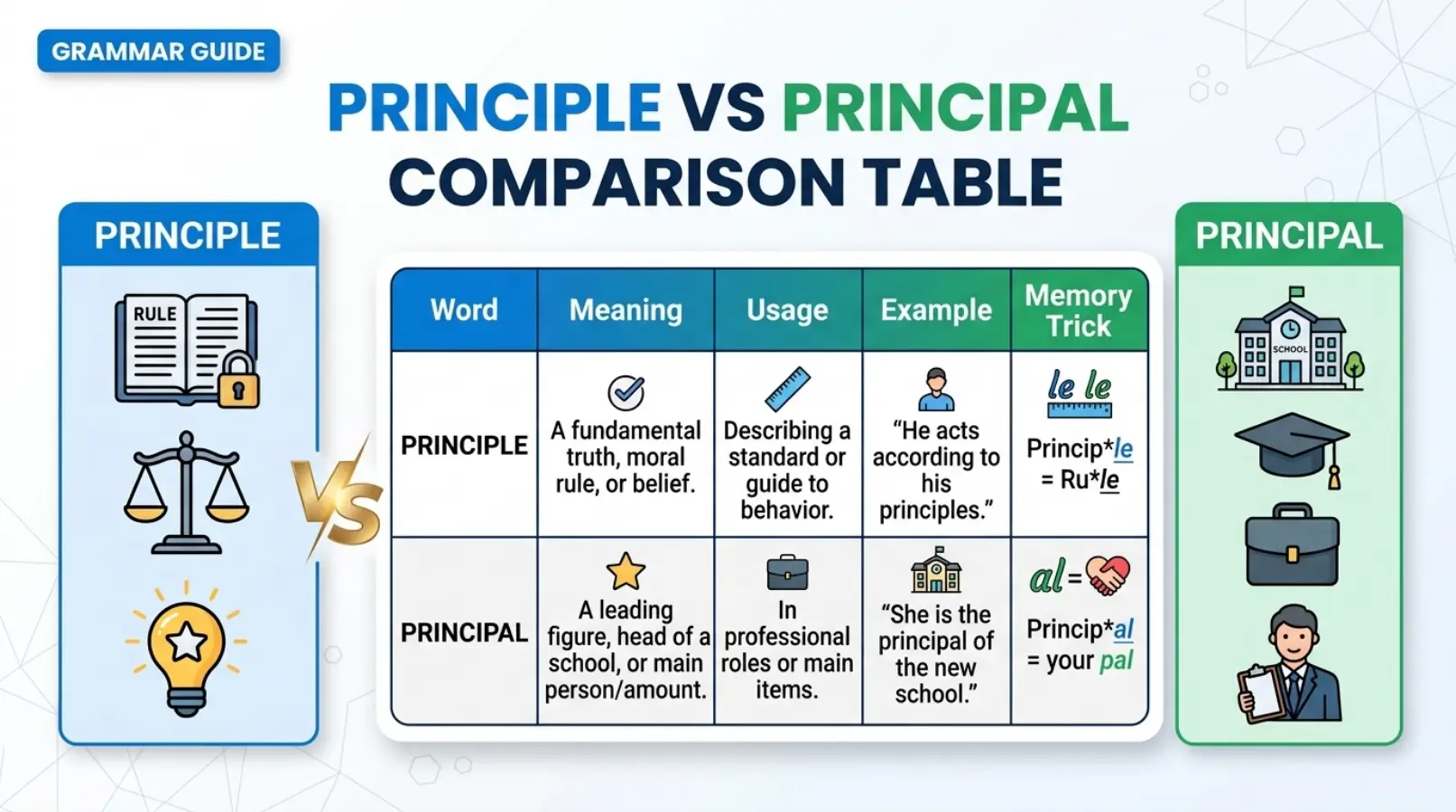
Principle vs Principal Comparison Table
| Feature | Principle | Principal |
| Meaning | Rule, belief, or truth | Person in charge or most important |
| Part of Speech | Noun | Noun and adjective |
| Used For | Values, laws, ideas | Schools, importance, money |
| Example | Honesty is a good principle. | The principal gave a speech. |
| Easy Memory | Rules and beliefs | Principal is your pal |
Principle vs Principal in Simple Words
Here is the easiest way to remember them.
Use “principle” when talking about:
- Rules
- Beliefs
- Ethics
- Values
- Scientific laws
Use “principal” when talking about:
- School leaders
- The most important thing
- Main reasons
- Money borrowed in loans
Real-Life Examples
At School
✅ The principal announced a holiday.
❌ The principle announced a holiday.
Talking About Values
✅ Respect is an important principle.
❌ Respect is an important principal.
In Business
The company’s main principle is customer satisfaction.
The principal office is in New York.
In Finance
You repay the principal before paying interest.
In Science
The principle of gravity explains why objects fall.
Common Mistakes People Make
Many writers confuse these words because they sound the same.
Mistake 1
❌ The school principle spoke today.
✅ The school principal spoke today.
Mistake 2
❌ Honesty is my strongest principal.
✅ Honesty is my strongest principle.
Mistake 3
❌ The principle amount of the loan.
✅ The principal amount of the loan.
Easy Tricks to Remember the Difference
Learning one memory trick can save you from mistakes.
Trick 1: Principal Is Your Pal
Both principal and pal begin with “pal.”
Think:
The principal is your pal.
Trick 2: Principle Has “Rule”
Imagine every principle as a rule you follow.
Examples:
- Moral principle
- Religious principle
- Scientific principle
Trick 3: Principal Means Main
The adjective principal means main or most important.
Example:
- Principal reason
- Principal office
- Principal objective
When to Use Principle
Use principle when discussing:
- Ethics
- Morality
- Science
- Personal values
- Laws
- Ideas
Examples
- Freedom is an important principle.
- The principle of supply and demand affects prices.
- Kindness is one of her principles.
When to Use Principal
Use principal when referring to:
- School leader
- Main reason
- Primary importance
- Loan amount before interest
Examples
- Our principal is very friendly.
- Safety remains our principal concern.
- The bank calculated the principal.
Principle Synonyms
- Rule
- Belief
- Standard
- Value
- Doctrine
- Guideline
- Law
- Ethics
- Philosophy
Principal Synonyms
School Leader
- Headteacher
- School head
- Administrator
- Headmaster
- Headmistress
Most Important
- Main
- Primary
- Chief
- Leading
- Major
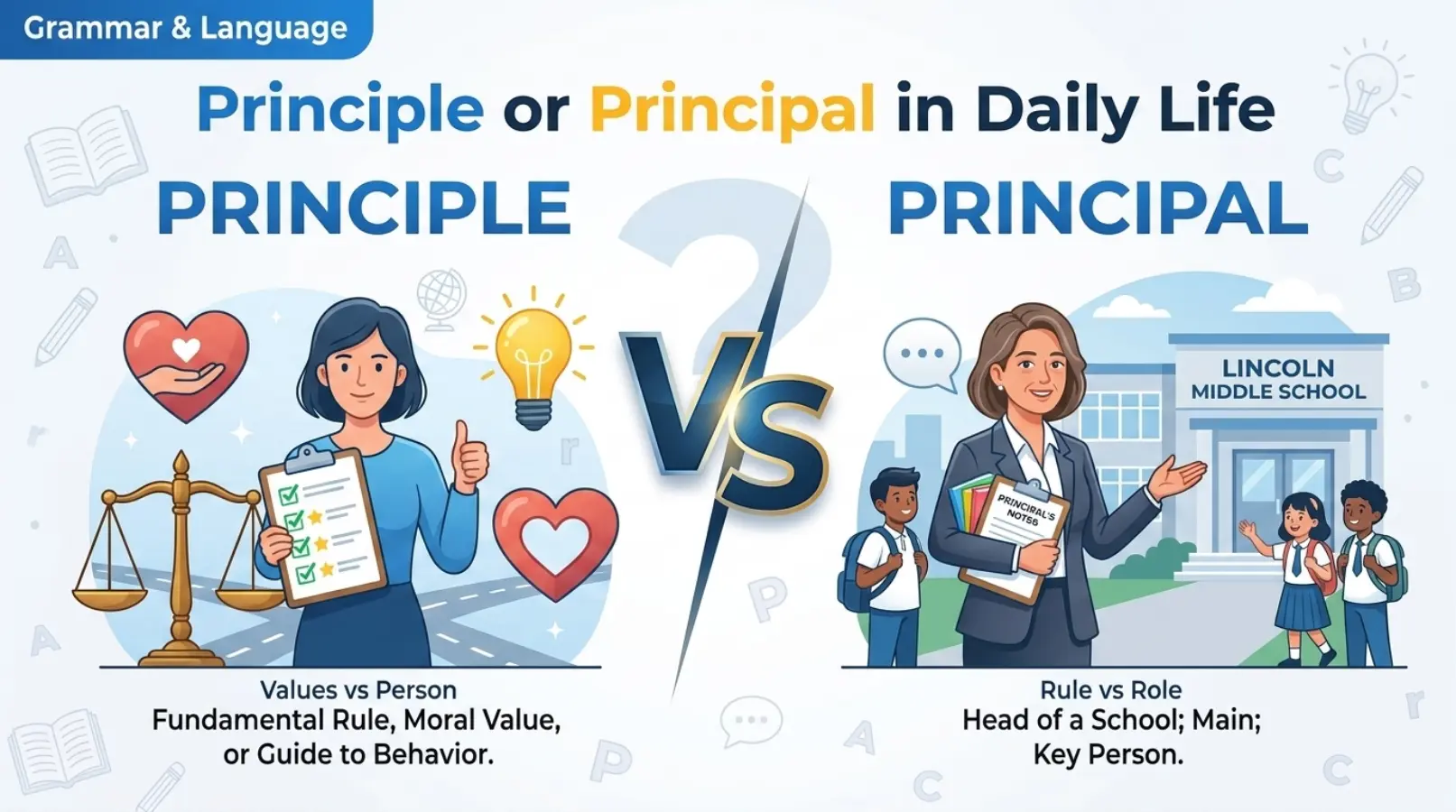
Principle or Principal in Daily Life
You use these words more often than you may realize.
At School
Talk to the principal.
At Work
Company values are business principles.
At the Bank
Pay back the loan principal.
In Conversations
People often say they live by certain principles.
During Studies
Students learn scientific principles in class.
Expert Insights: Why Knowing the Difference Matters
Using the correct word makes your writing more professional.
Teachers notice the difference.
Employers notice it too.
Correct grammar builds trust with readers.
Search engines also favor clear, well-written content because it improves user experience.
Strong writing reduces confusion and improves communication.
Learning commonly confused words helps students, bloggers, business professionals, and content creators produce higher-quality work.
Common Grammar Tips
- Read your sentence twice.
- Ask yourself whether you mean a rule or a person.
- Replace principal with main. If it still makes sense, you chose correctly.
- Think about school. The school leader is always the principal.
- Think about beliefs. Values are always principles.
Frequently Asked Questions (FAQs)
Is it principle or principal at school?
Use principal because it refers to the person who manages the school.
Is honesty a principle or principal?
Honesty is a principle because it is a moral belief.
What is the easiest way to remember principal?
Remember this phrase:
The principal is your pal.
Can principal mean most important?
Yes. It can describe something that is primary or most important.
Example:
The principal reason for the delay was heavy rain.
Can principle describe a person?
No.
A principle is never a person.
Which word is used in loans?
Principal refers to the original amount borrowed before interest.
Are principle and principal pronounced the same?
Yes.
They are homophones, meaning they sound alike but have different meanings.
Why do people confuse principle and principal?
They have the same pronunciation but different spellings and meanings.
Conclusion
Understanding principle or principal becomes simple once you know what each word means. A principle is a rule, belief, or fundamental truth that guides actions and decisions. A principal is the person in charge, such as a school leader, or something that is most important. Although these words sound the same, they serve different purposes in writing and speech. Remember the easy trick: “The principal is your pal.” With regular practice and real-life examples, you can avoid common mistakes and write with confidence. Whether you are a student, professional, or content creator, using the correct word improves clarity and strengthens your communication.
Discover More Post:
Mushrooms or Bats Stardew:Which Cave Choice Is Better in 2026?
Naive or Nieve: Which Spelling Is Correct? Guide with Examples