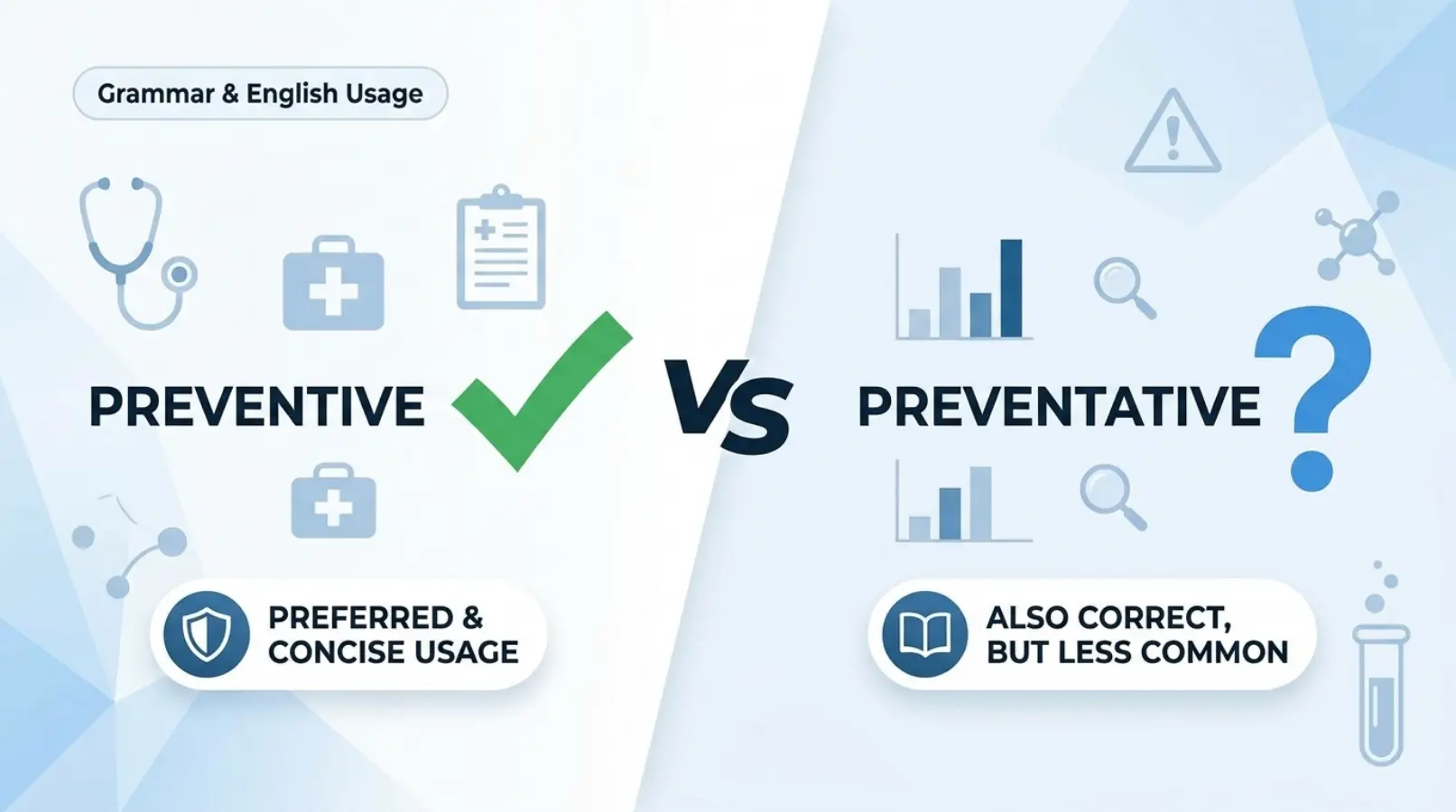
Preventive or preventative is a common grammar question. Many writers wonder which word they should use. The good news is that both words are correct. However, one appears more often in modern English.
Small word choices can improve your writing. They also help your content sound more natural. Knowing the difference can make your emails, school papers, blog posts, and business writing stronger.
In this guide, you will learn the meaning of both words. You will also see their differences, common examples, and expert writing tips. By the end, you will know when to use each word with confidence.
Quick Summary Box
- Preventive and preventative have the same meaning.
- Both describe something that stops a problem before it happens.
- Preventive is more common in American English.
- Preventative is also correct but less common.
- Medical, academic, and professional writing often prefers preventive.
- Choose one style and stay consistent throughout your writing.
What Does Preventive or Preventative Mean?
Both preventive and preventative describe actions that stop problems before they happen.
They come from the verb prevent, which means to stop something from occurring.
Simple Definition
Preventive: Intended to stop illness, damage, or problems before they start.
Preventative: Another correct form with the same meaning.
There is no difference in their basic definition.
Preventive vs Preventative: What’s the Difference?
The biggest difference is usage, not meaning.
| Feature | Preventive | Preventative |
| Meaning | Stops problems before they happen | Same meaning |
| Correct? | Yes | Yes |
| More Common | Yes | Less common |
| American English | Preferred | Accepted |
| Medical Writing | Frequently used | Less common |
| Formal Writing | Common | Less common |
Quick Answer
If you are unsure which one to choose, use preventive. It sounds more natural to most readers.
Why Are There Two Words?
English has many words with more than one accepted form.
Over time, speakers added -ative to create preventative. Both versions entered dictionaries.
Language changes naturally. That is why both spellings remain correct today.
Which Word Do Dictionaries Prefer?
Major dictionaries recognize both words.
However, many style guides and professional editors recommend preventive because it is shorter and more widely used.
This is especially true in:
- Healthcare
- Science
- Government publications
- Academic writing
- Business communication
Real-Life Examples of Preventive
Here are common examples using preventive.
- Preventive healthcare helps people stay healthy.
- The doctor recommended preventive screenings.
- Regular exercise is a preventive habit.
- Preventive maintenance keeps machines running.
- Wearing sunscreen is a preventive measure.
These examples sound natural in everyday English.
Real-Life Examples of Preventative
These examples are also correct.
- Preventative medicine reduces health risks.
- The company follows preventative safety rules.
- Preventative maintenance saves money.
- Parents teach preventative habits.
- Schools encourage preventative education.
Although correct, many editors would simply replace preventative with preventive.

Preventive in Healthcare
Healthcare is one of the most common places where this word appears.
Examples include:
- Preventive care
- Preventive medicine
- Preventive vaccines
- Preventive screening
- Preventive services
Doctors focus on stopping diseases before they become serious.
Examples include:
- Annual checkups
- Blood pressure tests
- Vaccinations
- Healthy eating
- Regular exercise
These actions help prevent illness instead of treating it later.
Preventive Maintenance Explained
Businesses also use the word often.
Preventive maintenance means fixing or checking equipment before it breaks.
Examples include:
- Changing engine oil
- Cleaning air filters
- Updating computer software
- Inspecting factory machines
- Replacing worn parts
This approach reduces repair costs and increases safety.
Everyday Situations
You probably use preventive actions every day.
Examples include:
- Locking your doors
- Washing your hands
- Backing up your files
- Wearing a seatbelt
- Saving money for emergencies
- Drinking clean water
- Charging your phone before travel
Each action helps avoid future problems.
Common Mistakes People Make
Many people become confused because both words are correct.
Avoid these mistakes.
Using Different Forms in One Article
Choose one version and keep it throughout your writing.
Thinking Preventative Is Wrong
It is not wrong.
It is simply less common.
Assuming Longer Means Better
Longer words do not always improve writing.
Simple language often works best.
Ignoring Your Audience
Medical professionals usually expect preventive.
General readers understand both words.
Tips to Remember the Difference
These simple tricks help you remember.
Choose Preventive for Most Writing
It is shorter and more common.
Stay Consistent
Do not switch between the two forms.
Follow Your Style Guide
Many organizations recommend preventive.
Read Professional Content
Notice which word trusted websites use most often.
Synonyms
- Protective
- Precautionary
- Defensive
- Proactive
- Safeguarding
- Security-related
- Risk-reducing
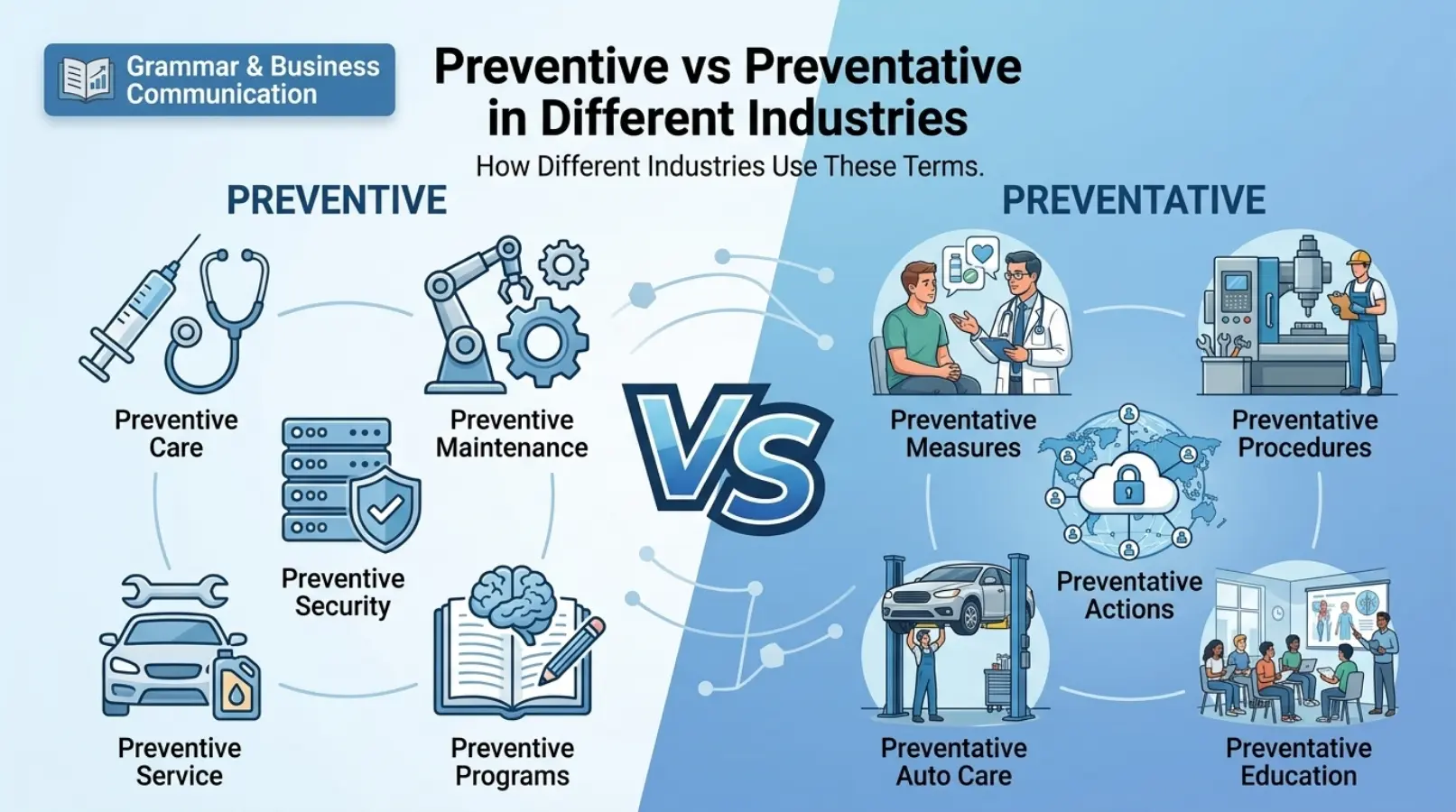
Preventive vs Preventative in Different Industries
Healthcare
Preferred term: Preventive
Example:
Preventive care lowers health risks.
Business
Preferred term: Preventive
Example:
Preventive maintenance saves repair costs.
Education
Both forms appear.
Teachers often prefer preventive for consistency.
Everyday Writing
Either word works.
Most writers still choose preventive.
Why Preventive Is More Popular
Several reasons explain its popularity.
- It is shorter.
- It appears more often in professional writing.
- Medical organizations use it frequently.
- Style guides recommend it.
- Readers recognize it quickly.
Because of these reasons, many editors prefer preventive.
Expert Insights
Professional writers focus on clarity.
Most editors recommend preventive because it creates cleaner writing.
Medical publications also favor preventive when discussing healthcare.
Consistency matters more than the choice itself.
If your organization already uses one version, follow that style throughout your content.
Simple language also improves readability and user trust.
Frequently Asked Questions (FAQs)
Is preventive or preventative correct?
Yes. Both words are correct.
Which is more common?
Preventive is more common, especially in American English.
Which word should I use?
Choose preventive unless your organization prefers preventative.
Is preventative old-fashioned?
No.
It is still correct but appears less often today.
Do they have different meanings?
No.
They have exactly the same meaning.
Which spelling do doctors use?
Most healthcare professionals use preventive.
Is preventive used outside healthcare?
Yes.
It also appears in business, education, engineering, and daily life.
Can I use preventative in formal writing?
Yes.
It is grammatically correct.
However, many editors still recommend preventive.
Conclusion
The debate over preventive or preventative is simpler than many people think. Both words are grammatically correct and carry the same meaning. They describe actions that stop problems before they happen. The main difference lies in preference and frequency of use. Today, preventive appears more often in healthcare, education, business, and professional writing. It is also the preferred choice in many style guides because it is shorter and more widely recognized. Preventative remains a valid alternative, especially if it matches your organization’s style. When writing, focus on consistency, clarity, and your audience. Choosing the right word helps your message sound natural and professional.
Discover More Post:
Mushrooms or Bats Stardew:Which Cave Choice Is Better in 2026?
W or L: Meaning, Uses, Examples, and When to Use Each