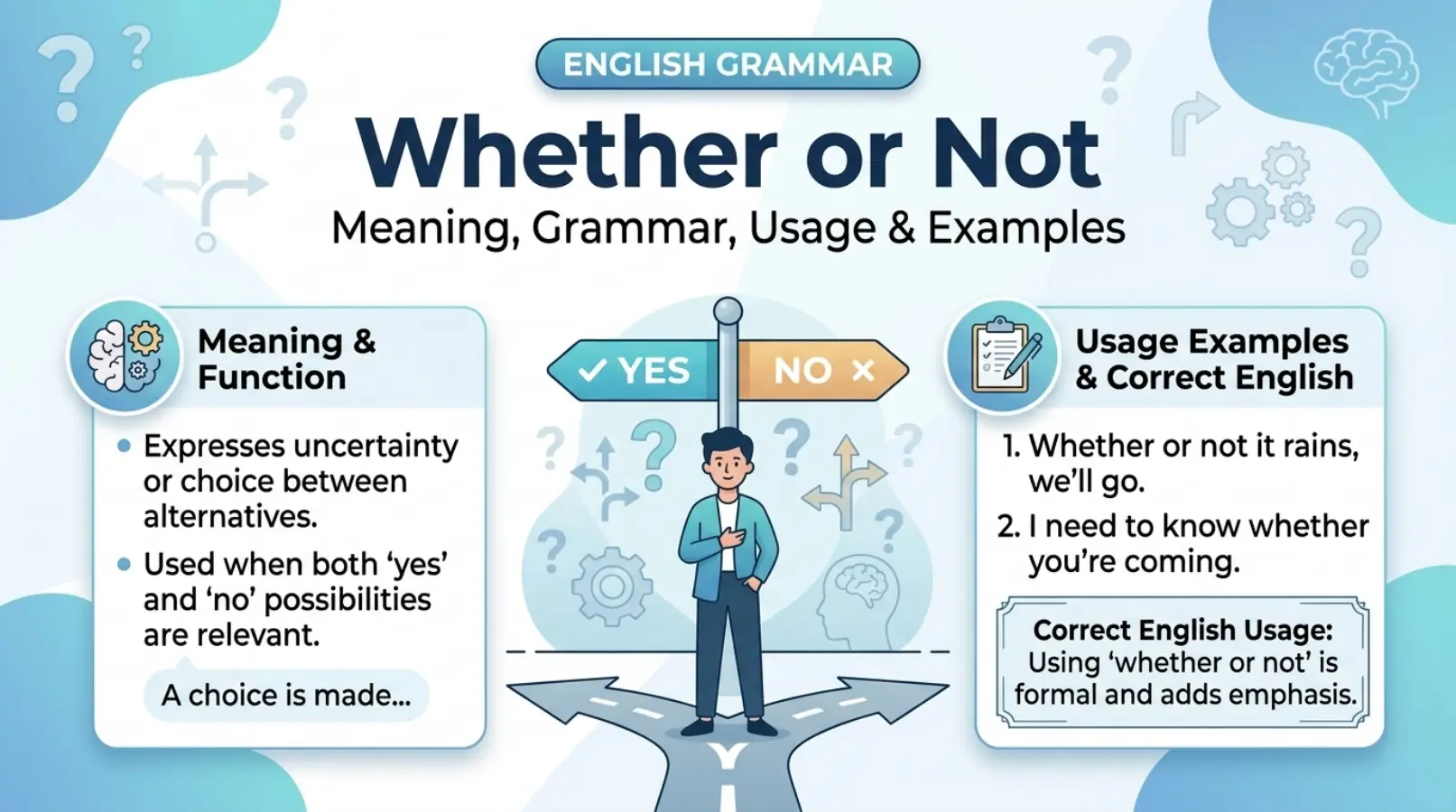
Whether or not is a common English phrase that many people use every day. However, many writers are unsure when to use it. Some think the words “or not” are always needed. Others remove them in every sentence. Both ideas are not always correct.
Understanding this phrase helps you write clearly and speak naturally. It also improves your grammar and makes your writing more professional. This guide explains the meaning in simple words. You will learn when to use it, when to leave out “or not,” and how to avoid common mistakes. By the end, you will feel confident using this phrase in emails, essays, conversations, and business writing.
Quick Summary
- It introduces a choice or uncertainty.
- It usually means regardless of the answer.
- Sometimes whether alone is enough.
- Adding or not can add emphasis.
- Never confuse whether with weather.
- Use it in formal and informal English.
- Knowing the difference improves grammar and clarity.
What Does “Whether or Not” Mean?
It means regardless of which option is true.
It introduces two possible outcomes.
Simple definition
Whether or not = No matter if something happens or does not happen.
Examples
- She will support you whether or not you succeed.
- We need to decide whether or not to buy the house.
In each example, the result stays the same.
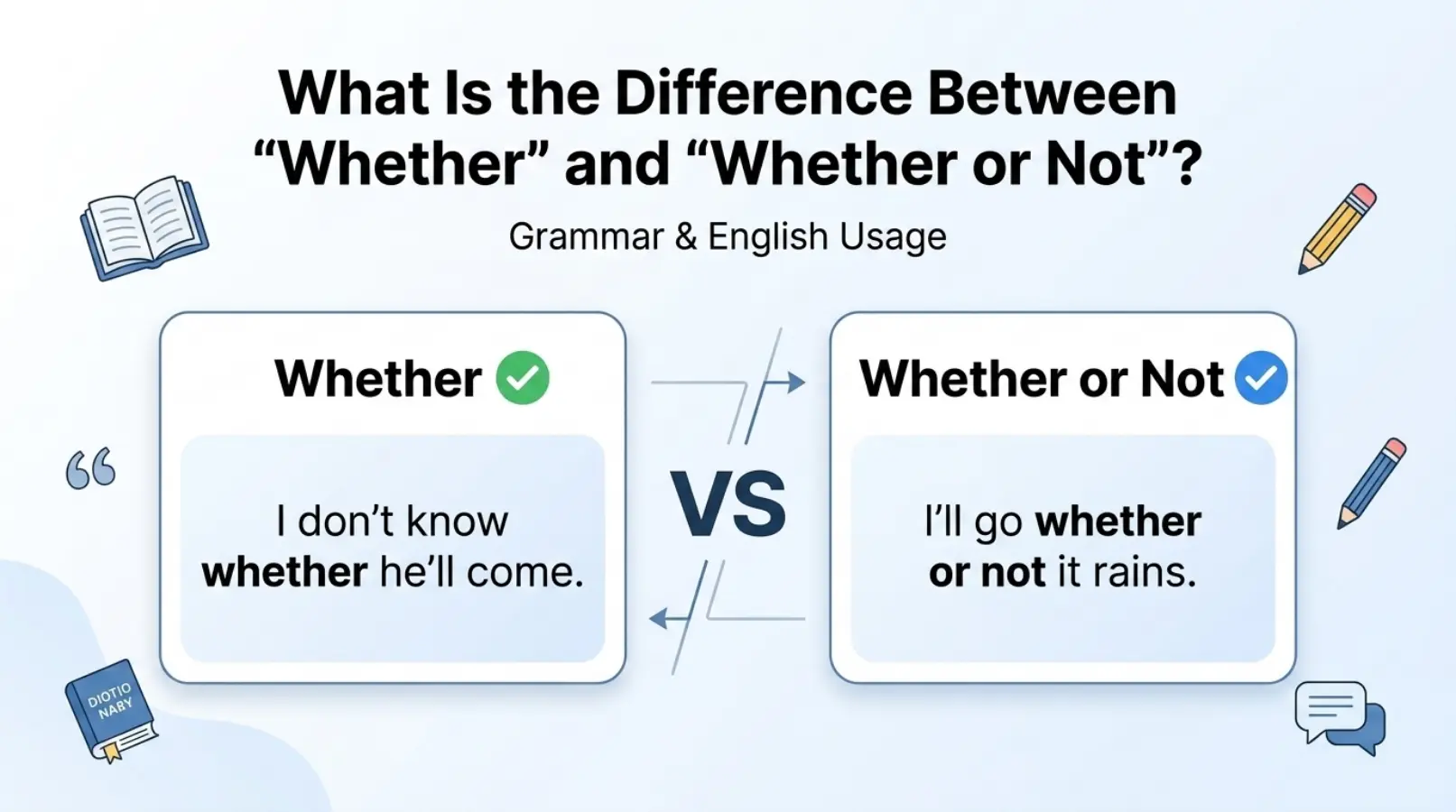
What Is the Difference Between “Whether” and “Whether or Not”?
Many people ask if these phrases mean the same thing.
Usually, yes.
However, or not sometimes adds extra emphasis.
| Whether | Whether or Not |
| Shows uncertainty | Shows uncertainty with stronger emphasis |
| Often shorter | Slightly more direct |
| Common in formal writing | Common in both speech and writing |
| Sometimes enough by itself | Better when stressing both possibilities |
Examples
✔ I don’t know whether he is coming.
✔ I don’t know whether or not he is coming.
Both are correct.
When Should You Use it?
Use this phrase when the outcome stays the same no matter what happens.
Examples
- We will leave whether or not everyone arrives.
- You should exercise whether or not you feel mot
Notice that the decision does not change.
When Can You Use Only “Whether”?
Sometimes or not is unnecessary.
Examples
Instead of:
❌ I wonder whether or not she likes coffee.
You can write:
✔ I wonder whether she likes coffee.
More examples
- Tell me whether you agree.
- I don’t know whether they finished.
- Ask whether the store is open.
- We will decide whether to travel.
These sound natural and clear.
Whether or Not vs If
Many learners confuse these two words.
Although they often look similar, they are not always interchangeable.
| Whether or Not | If |
| Shows alternatives | Usually introduces a condition |
| Better in formal writing | Common in everyday speech |
| Works before “or not” | Rarely works with “or not” |
| Preferred after prepositions | Often incorrect after prepositions |
Correct
- I don’t know whether he called.
- Tell me whether you agree.
Also correct
- I don’t know if he called.
Incorrect
- It depends on if you agree.
Correct
- It depends on whether you agree.
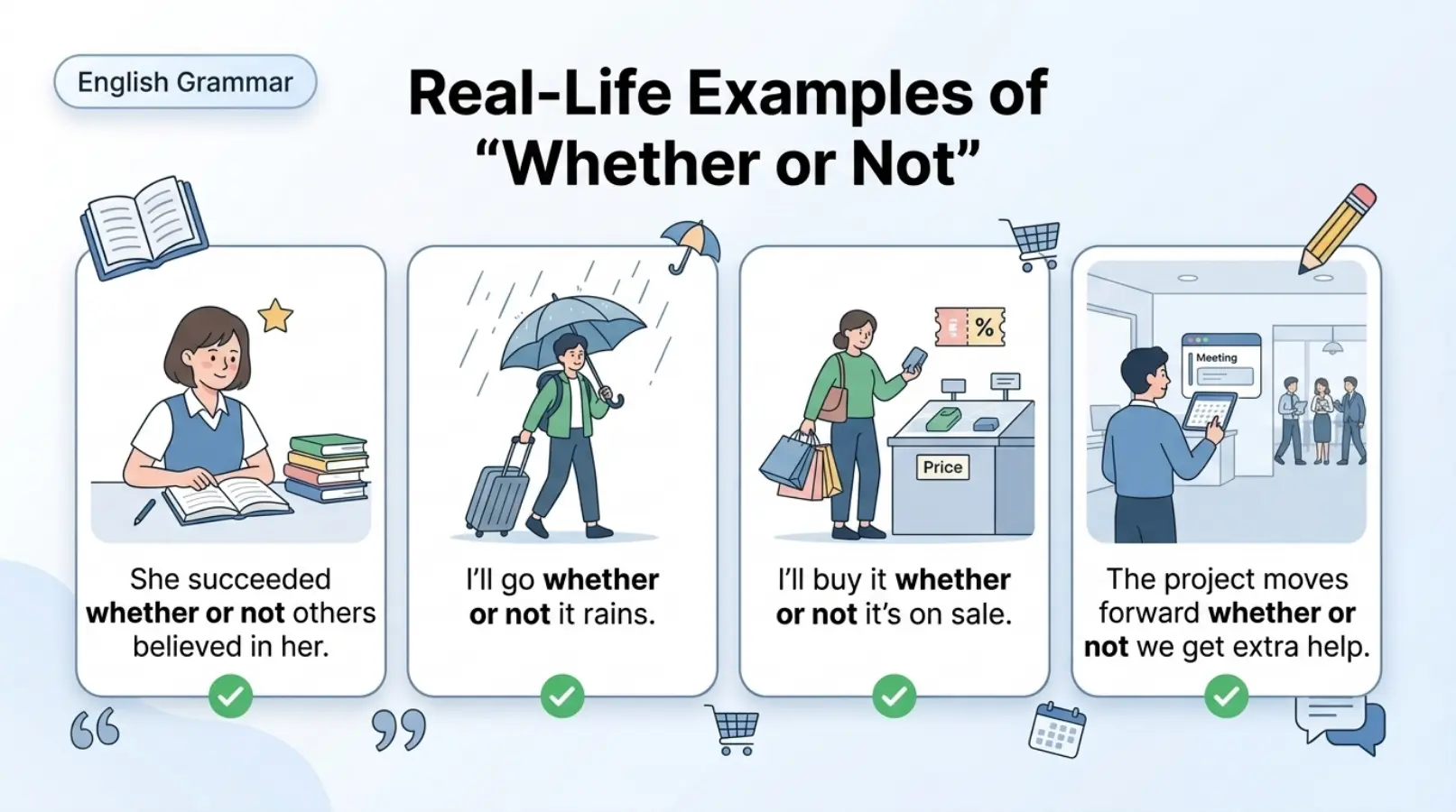
Real-Life Examples of “Whether or Not”
Here are examples from everyday life.
At school
- Study whether or not you have homework.
At work
- Attend the meeting whether or not your boss joins.
At home
- Clean your room whether or not guests visit.
In conversations
- I love you whether or not we agree.
Common Mistakes People Make
Many English learners make these errors.
1. Confusing “Whether” with “Weather”
❌ Weather you like it or not.
✔ Whether you like it or not.
Remember:
- Weather = climate
- Whether = choice
2. Using “If” Instead of “Whether”
❌ It depends on if he comes.
✔ It depends on whether he comes.
3. Adding “Or Not” Everywhere
Sometimes it sounds repetitive.
Less natural:
- I wonder whether or not he left.
Better:
- I wonder whether he left.
4. Leaving Out “Or Not” When Emphasis Matters
Compare these:
- We are going whether it rains.
- We are going whether or not it rains.
The second sentence emphasizes both possibilities.
Tips to Remember the Correct Usage
These simple tricks help you remember.
- Use whether for choices.
- Use weather for rain and sunshine.
- Add or not only when it improves clarity.
- Use whether after prepositions.
- Replace if with whether in formal writing when discussing alternatives.
- Read your sentence aloud.
- Keep your writing simple.
Synonyms
- Regardless of whether
- No matter if
- Even if
- Either way
- In any case
- Regardless
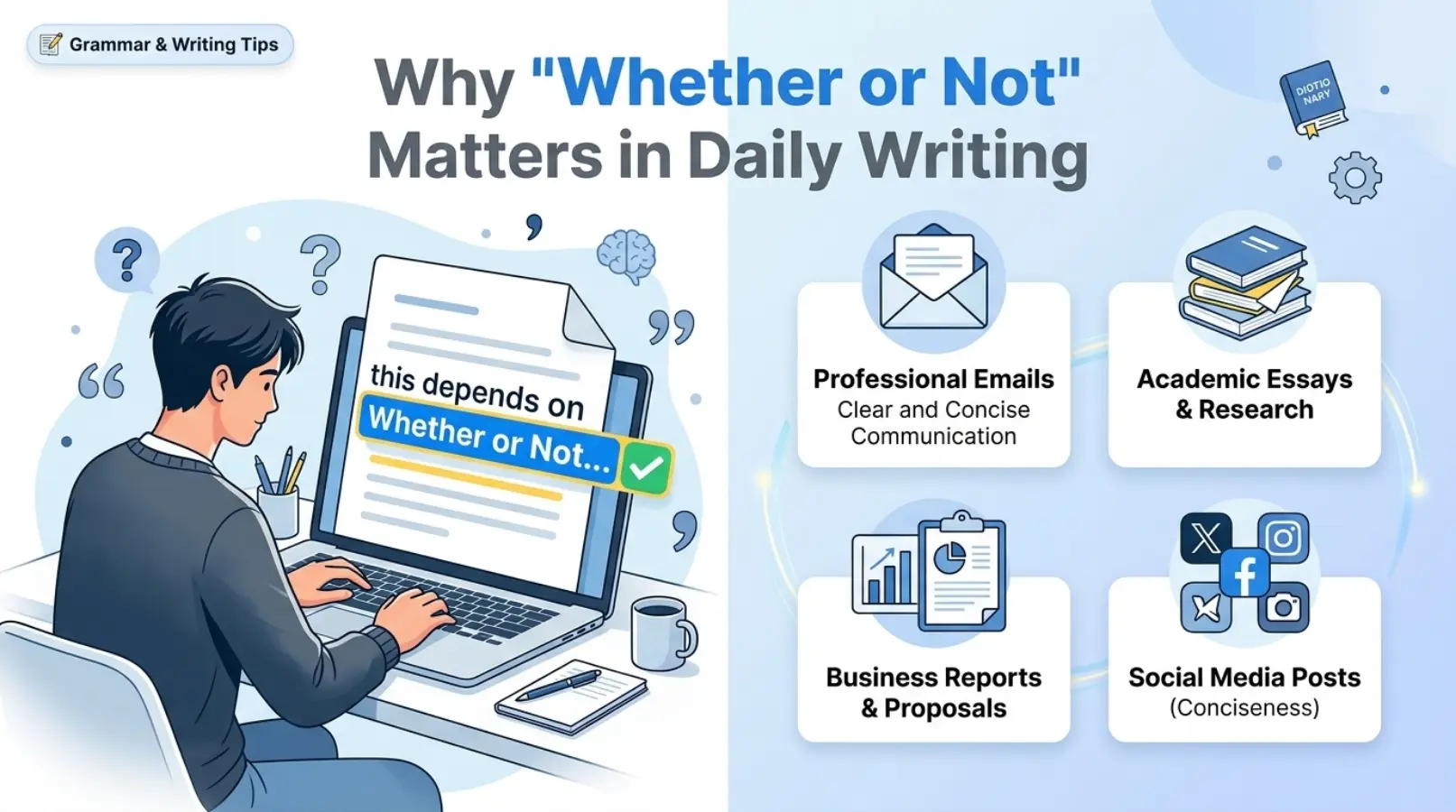
Why “Whether or Not” Matters in Daily Writing
Good grammar builds trust.
Using this phrase correctly makes your writing more professional.
It also helps readers understand your meaning quickly.
Students use it in essays.
Professionals use it in emails.
Writers use it in articles.
Speakers use it in conversations.
Learning one small grammar rule improves many kinds of communication.
Expert Insights: Why Correct Usage Matters
Language experts recommend using whether only when it makes the sentence clear.
Adding or not works best when both outcomes matter.
Good writing avoids unnecessary words.
Clear grammar also improves SEO content because readers understand ideas faster.
Simple language increases readability.
Search engines also favor content that answers questions directly.
Always focus on clarity before adding extra words.
Is “Or Not” Always Necessary?
No. You do not always need “or not.” Use whether alone when the meaning is already clear. Add or not when you want to emphasize that both outcomes lead to the same result.
Frequently Asked Questions (FAQs)
Is “whether or not” grammatically correct?
Yes. It is completely correct in both formal and informal English.
Can I use only “whether”?
Yes. Many sentences sound better with just whether.
Is “whether or not” the same as “if”?
Not always. Whether is preferred when discussing alternatives or after prepositions.
Should I always include “or not”?
No. Include it only when it adds emphasis or improves clarity.
What is the easiest way to remember the difference?
Remember this:
- Weather = climate
- Whether = choice
Which is better in formal writing?
Whether is usually better than if when presenting alternatives.
Can a sentence start with “whether or not”?
Yes.
Example:
Whether or not you agree, we must finish today.
Is “whether or not” common in everyday English?
Yes. Native speakers use it often in conversations, emails, and writing.
Conclusion
Understanding this phrase makes your English clearer and more natural. The phrase introduces alternatives and often means that the result stays the same regardless of what happens. In many sentences, whether alone is enough. Adding or not simply gives extra emphasis when both possibilities matter. Avoid confusing whether with weather, and choose whether instead of if in formal situations that involve alternatives. With regular practice, using this expression becomes easy. The next time you write an email, essay, or social media post, think about this phrase the extra words improve your sentence. If they do not, keep your writing simple and clear.
Discover More Post:
Cancelled or Canceled: Which Spelling Is Correct? Grammar Guide
Tomato a Fruit or Vegetable? The Surprising Scientific Answer