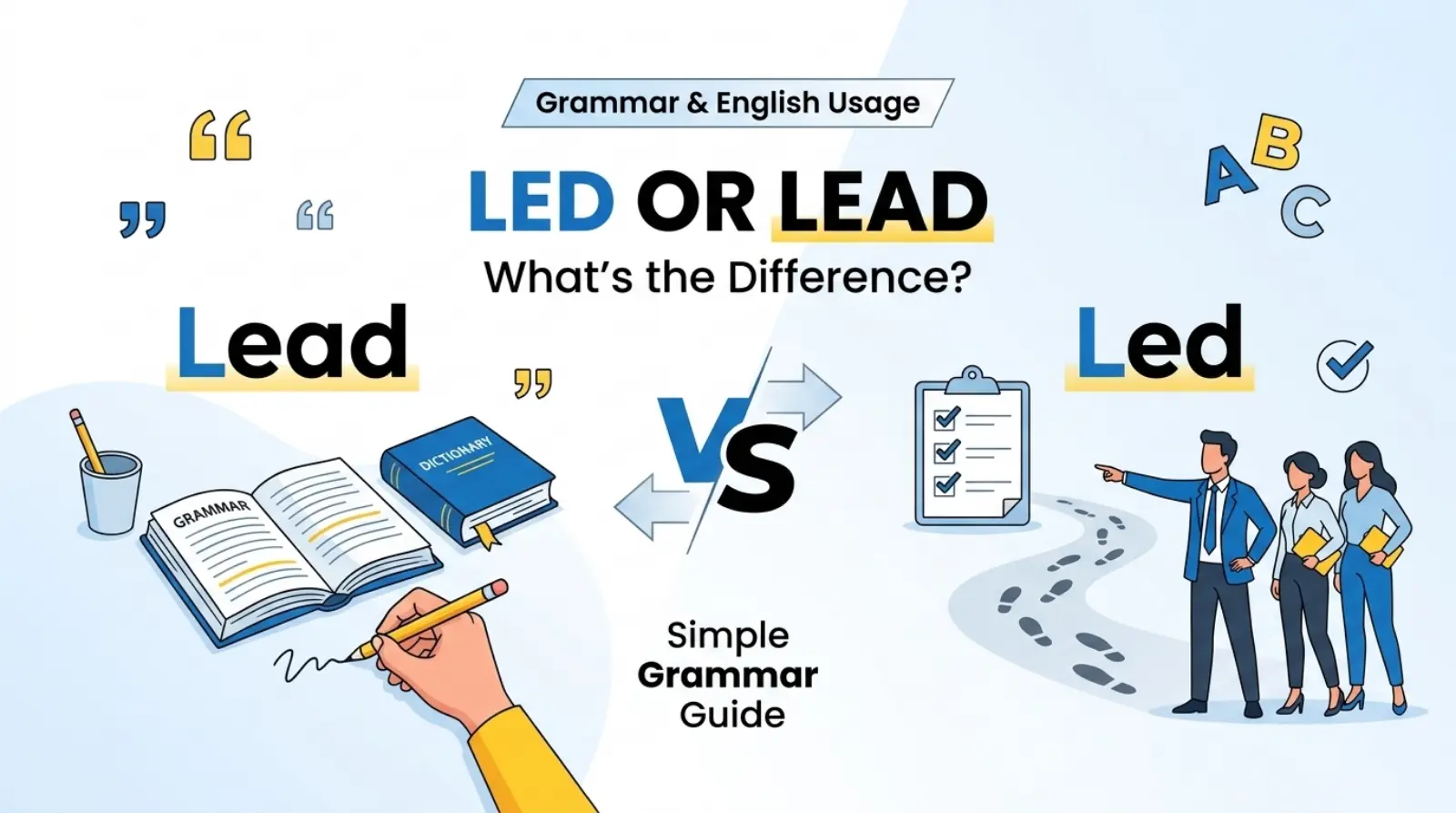
Led or lead is one of the most confusing word pairs in English. Many people use these words incorrectly because they look similar. However, they have different meanings and uses. Learning the difference is easier than you may think. Once you know the grammar rule, you can avoid common writing mistakes. This guide explains everything in simple English. You will learn when to use led and when to use lead. You will also see real-life examples, comparison tables, common mistakes, and expert tips. By the end, you will feel confident using both words correctly in writing and speaking.
Quick Summary Box
- Lead is usually the present tense of the verb “to lead.”
- Led is the past tense and past participle of “lead.”
- Although lead (the metal) is pronounced differently, it is spelled the same.
- Remember: Yesterday = led, Today = lead.
- Knowing the difference improves grammar and writing accuracy.
What Do “Led” and “Lead” Mean?
Many people wonder whether they should write led or lead.
The answer depends on time.
- Lead = Present tense
- Led = Past tense
Examples
I lead the team every Monday.
Yesterday, I led the meeting.
The spelling changes because English verbs often have different past forms.
Understanding Lead in Simple Words
Lead means to guide, direct, or show the way.
It describes something happening now or in the future.
Examples
- She leads our project.
- They lead the class every morning.
- I will lead tomorrow’s meeting.
- Good teachers lead by example.
- Parents lead their children through life.
Understanding Led in Simple Words
Led means someone guided or directed others in the past.
It tells us an action already happened.
Examples
- She led the team to victory.
- The coach led practice yesterday.
- Our guide led us through the forest.
- He led the discussion.
- They led the company for many years.
Comparison Table
| Feature | Lead | Led |
| Part of Speech | Verb | Verb |
| Tense | Present | Past |
| Meaning | Guide or direct | Guided or directed |
| Time | Now or future | Already happened |
| Example | I lead the group. | I led the group yesterday. |
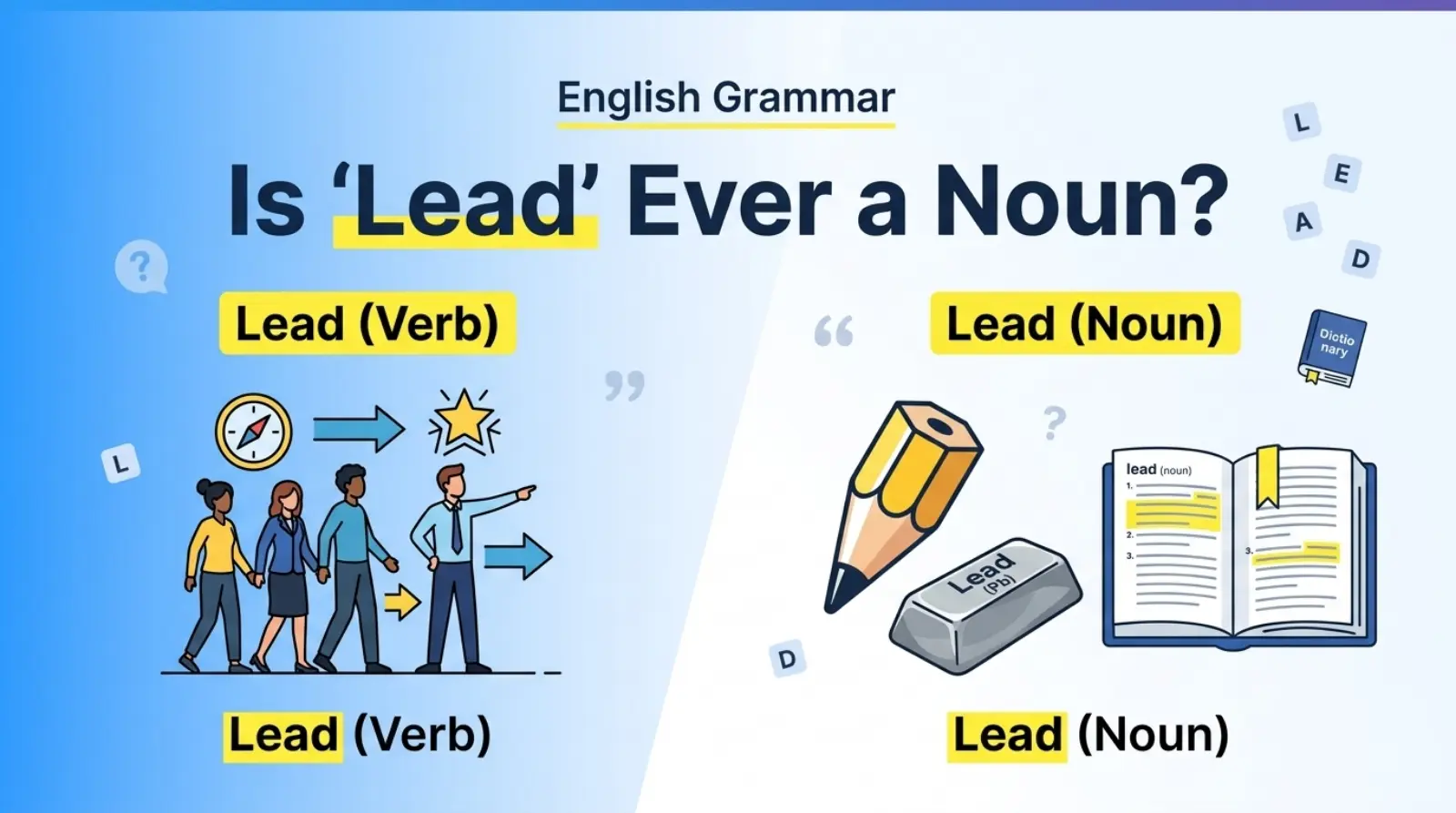
Is “Lead” Ever a Noun?
Yes.
This creates even more confusion.
Lead can also be a noun.
It refers to:
- A heavy metal
- A clue
- A main actor
- A business opportunity
Examples
Metal
- Pipes once contained lead.
Clue
- Police found a new lead.
Main Actor
- She plays the lead role.
Sales
- Our company gained twenty new leads.
Why Do People Confuse?
Several reasons cause confusion.
1. Same Spelling
The present tense lead and the noun lead share the same spelling.
2. Different Pronunciation
- Verb: Lead sounds like leed.
- Metal: Lead sounds like led.
3. English Grammar Rules
Many verbs change spelling in the past tense.
Examples include:
- Read → Read
- Lead → Led
- Feed → Fed
- Meet → Met
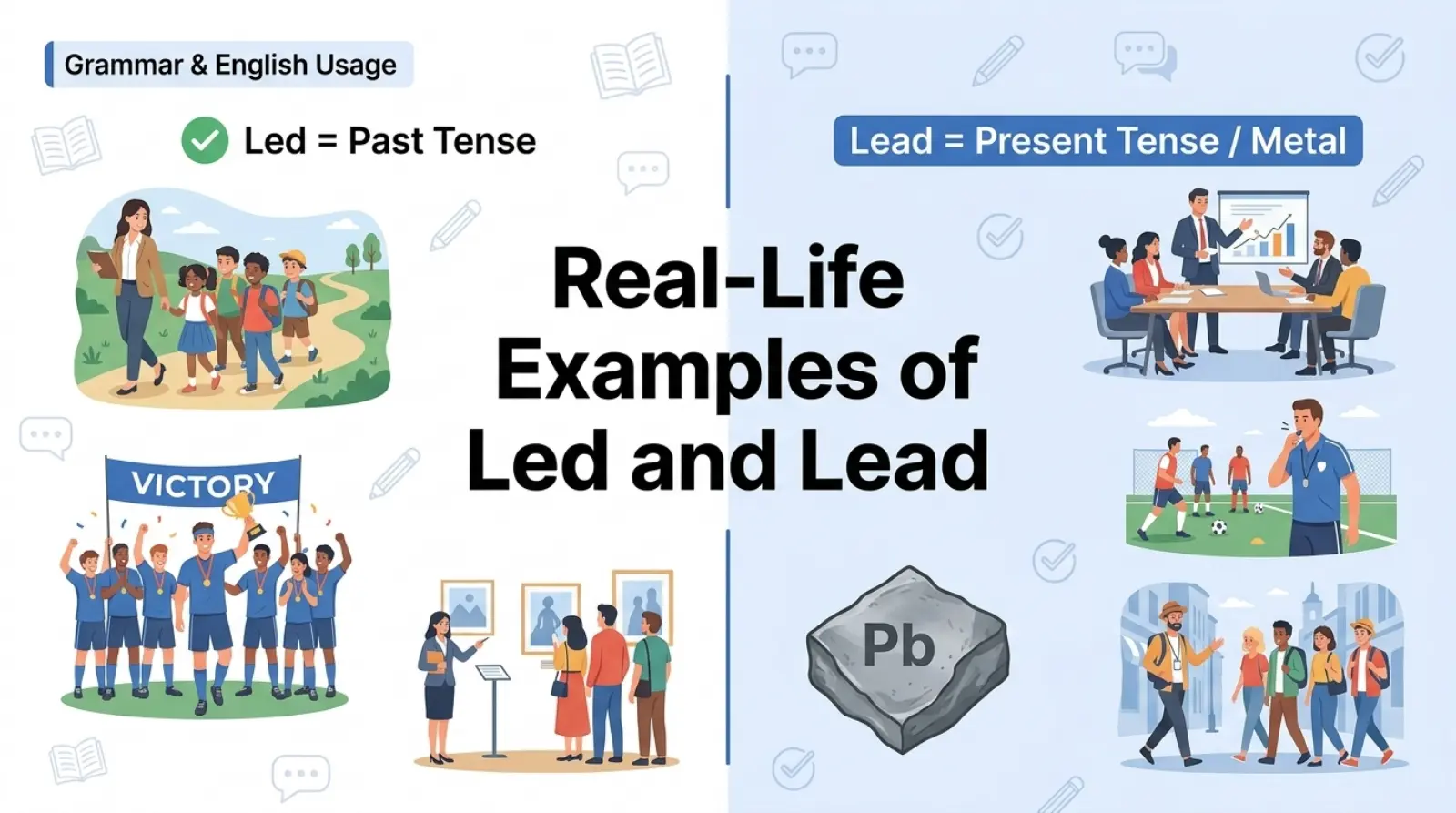
Real-Life Examples
At School
Present:
“I lead the science club.”
Past:
“I led the science club last year.”
At Work
Present:
“Our manager leads the department.”
Past:
“Our manager led the meeting yesterday.”
In Sports
Present:
“The captain leads the team.”
Past:
“The captain led the team to the championship.”
Daily Conversation
Present:
“I usually lead family discussions.”
Past:
“I led the discussion last night.”
Common Mistakes People Make
Incorrect
I lead the meeting yesterday.
Correct
I led the meeting yesterday.
Incorrect
She led the project every week.
Correct
She leads the project every week.
Incorrect
He has lead the company.
Correct
He has led the company.
Incorrect
They will led us tomorrow.
Correct
They will lead us tomorrow.
Easy Trick to Remember the Difference
A simple memory trick helps.
Think About Time
Today = Lead
Yesterday = Led
Examples
Today:
“I lead the class.”
Yesterday:
“I led the class.”
If the action already happened, choose led.
Synonyms
for Lead
- Guide
- Direct
- Manage
- Head
- Conduct
- Control
- Supervise
- Command
for Led
- Guided
- Directed
- Managed
- Headed
- Conducted
- Supervised
- Controlled
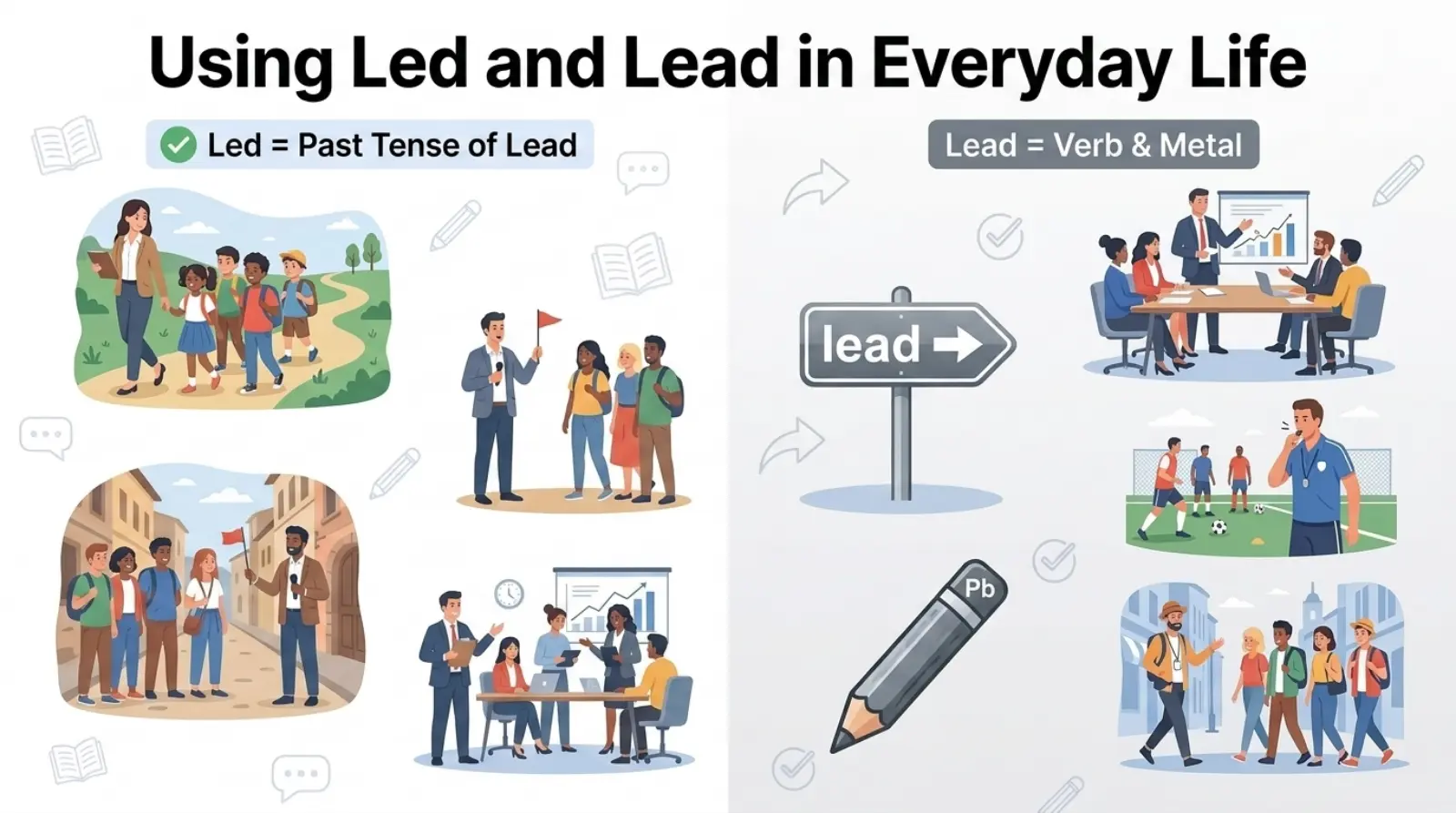
Using in Everyday Life
You probably use these words every day.
At Home
Parents lead children.
Parents led children during yesterday’s trip.
At School
Teachers lead lessons.
Teachers led yesterday’s class.
At Work
Managers lead projects.
Managers led last week’s meeting.
In Business
Companies lead markets.
Successful leaders led major changes.
Expert Insights: Why Correct Grammar Matters
Using the correct tense makes your writing more professional.
Readers trust content that follows proper grammar.
Search engines also reward clear, helpful writing.
Good grammar improves:
- User experience
- Readability
- SEO quality
- Credibility
- Communication
Professional writers always check verb tense before publishing.
Frequently Asked Questions (FAQs)
Why Is “Led” the Correct Past Tense?
Use led.
Example:
“I led the meeting yesterday.”
Is lead present tense?
Yes.
Lead is the present tense of the verb.
Example:
“They lead the team.”
Why isn’t the past tense of lead spelled lead?
English verbs often change spelling in the past tense.
Lead becomes led.
Is lead ever correct for the past tense?
No.
When used as a verb, the past tense is always led.
How do you pronounce lead?
As a verb, lead sounds like leed.
As a metal, lead sounds like led.
What is the easiest way to remember?
Remember:
- Today = Lead
- Yesterday = Led
Can lead be a noun?
Yes.
It can mean:
- A metal
- A clue
- A main role
- A business prospect
Is “has lead” correct?
No.
Correct:
“He has led the company.”
What is the difference between led and lead?
Lead is the present tense of the verb meaning “to guide or direct.” Led is the past tense and past participle of lead. Use lead for actions happening now or in the future, and use led for actions that already happened.
Conclusion
Understanding led or lead becomes simple once you focus on verb tense. Lead refers to present or future actions, while led describes actions completed in the past. Although the spelling of lead can also refer to a metal, the context usually makes the meaning clear. Using the correct word improves your grammar, strengthens your writing, and builds trust with readers. Whenever you feel unsure, remember this easy rule: Today equals lead. Yesterday equals led. With regular practice and real-life examples, choosing the right word will become second nature.
Discover More Post:
Sales or Retail Jobs: Guide to Skills, Salary, and Opportunities
Less Than or Equal To: Meaning, Symbol, Examples, and Usage