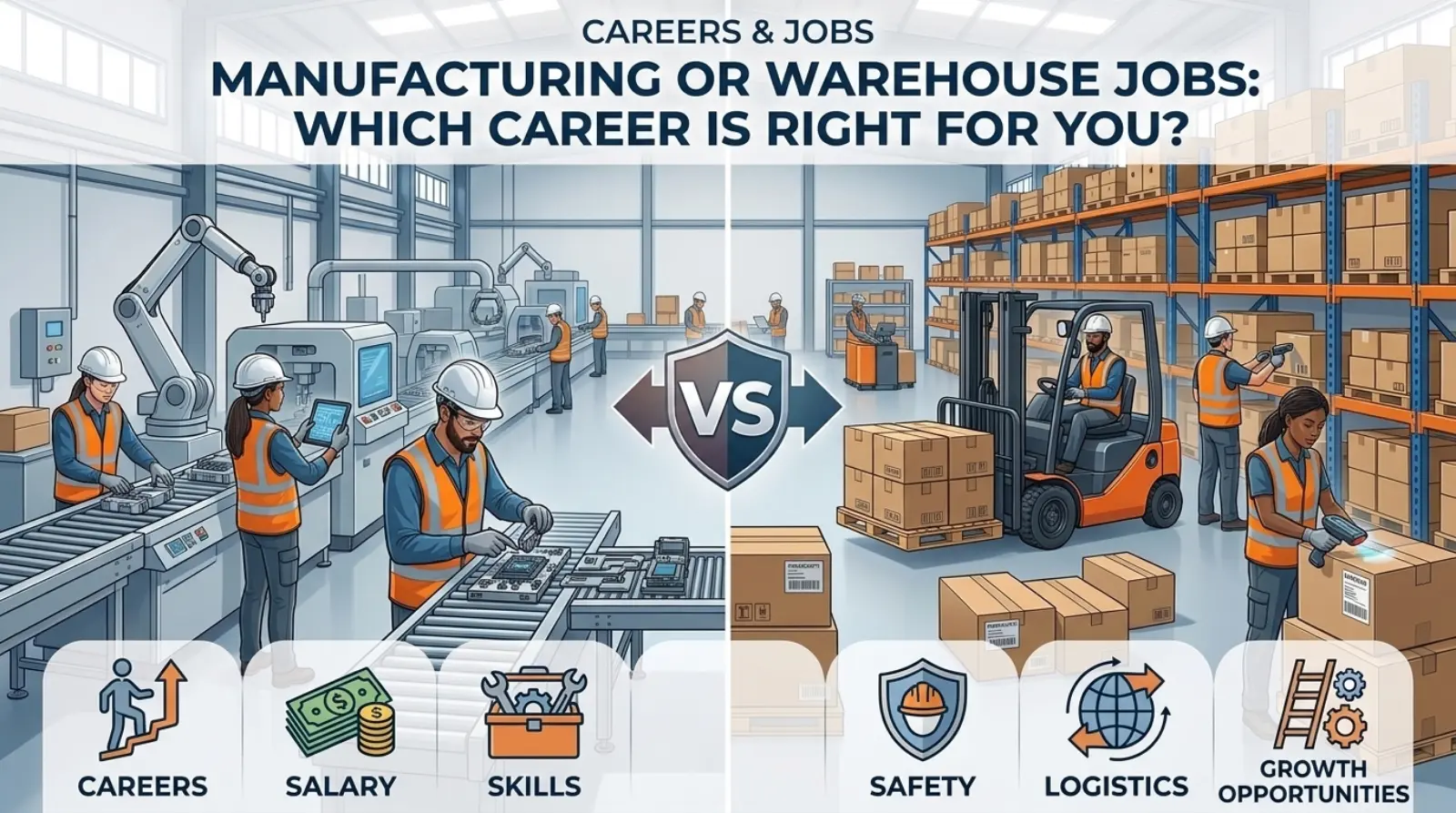
Manufacturing or warehouse jobs offer stable careers with good pay and many growth opportunities. These jobs help produce, store, and ship products people use every day. Many companies need skilled workers in factories and warehouses. Some roles require little experience, while others need technical training.
Choosing between manufacturing and warehouse work depends on your skills and career goals. Both fields offer full-time, part-time, and seasonal jobs. Many employers also provide training and benefits.
This guide explains manufacturing and warehouse jobs in simple words. You will learn the differences, job duties, salary expectations, required skills, and career paths. By the end, you can decide which option fits your future best.
Quick Summary Box
- Manufacturing jobs involve making or assembling products.
- Warehouse jobs focus on storing, picking, packing, and shipping goods.
- Both industries offer entry-level and advanced positions.
- Many jobs require no college degree.
- Safety, teamwork, and reliability are essential skills.
- Automation is changing both industries.
- Many employers offer training and career growth.
- These careers provide stable income and long-term opportunities.
What Are Manufacturing or Warehouse Jobs?
Manufacturing or warehouse jobs are two major parts of the supply chain.
Manufacturing jobs involve creating products from raw materials or components.
Warehouse jobs involve receiving, storing, organizing, and shipping finished products.
Although they work together, their daily tasks differ.
For example:
- A factory worker builds a washing machine.
- A warehouse associate stores it.
- Another warehouse worker packs it.
- A delivery team ships it to customers.
Manufacturing Jobs Explained in Simple Words
Manufacturing workers help make products.
These products include:
- Cars
- Electronics
- Furniture
- Clothing
- Food
- Medical equipment
- Plastic products
- Building materials
Common manufacturing duties include:
- Operating machinery
- Assembling products
- Checking quality
- Reading production instructions
- Maintaining equipment
- Packaging finished goods
Factories often run day, evening, or night shifts.
Warehouse Jobs Explained in Simple Words
Warehouse workers manage products before they reach stores or customers.
Daily tasks often include:
- Receiving shipments
- Organizing inventory
- Picking customer orders
- Packing boxes
- Loading trucks
- Using barcode scanners
- Driving forklifts
- Keeping storage areas clean
Modern warehouses rely on technology to improve speed and accuracy.
Manufacturing vs Warehouse Jobs
| Feature | Manufacturing Jobs | Warehouse Jobs |
| Main Purpose | Produce products | Store and ship products |
| Work Area | Factory | Distribution center |
| Daily Tasks | Assemble, operate machines | Pick, pack, load, receive |
| Equipment | Production machinery | Forklifts, scanners |
| Physical Activity | Medium to high | High |
| Skill Focus | Machine operation | Inventory handling |
| Career Growth | Production supervisor, technician | Warehouse supervisor, logistics manager |
| Automation | Industrial robots | Automated storage systems |
Which Is Better?
Neither is better for everyone.
Choose manufacturing if you enjoy:
- Building products
- Working with machines
- Technical tasks
Choose warehouse work if you enjoy:
- Fast-paced environments
- Organization
- Inventory management
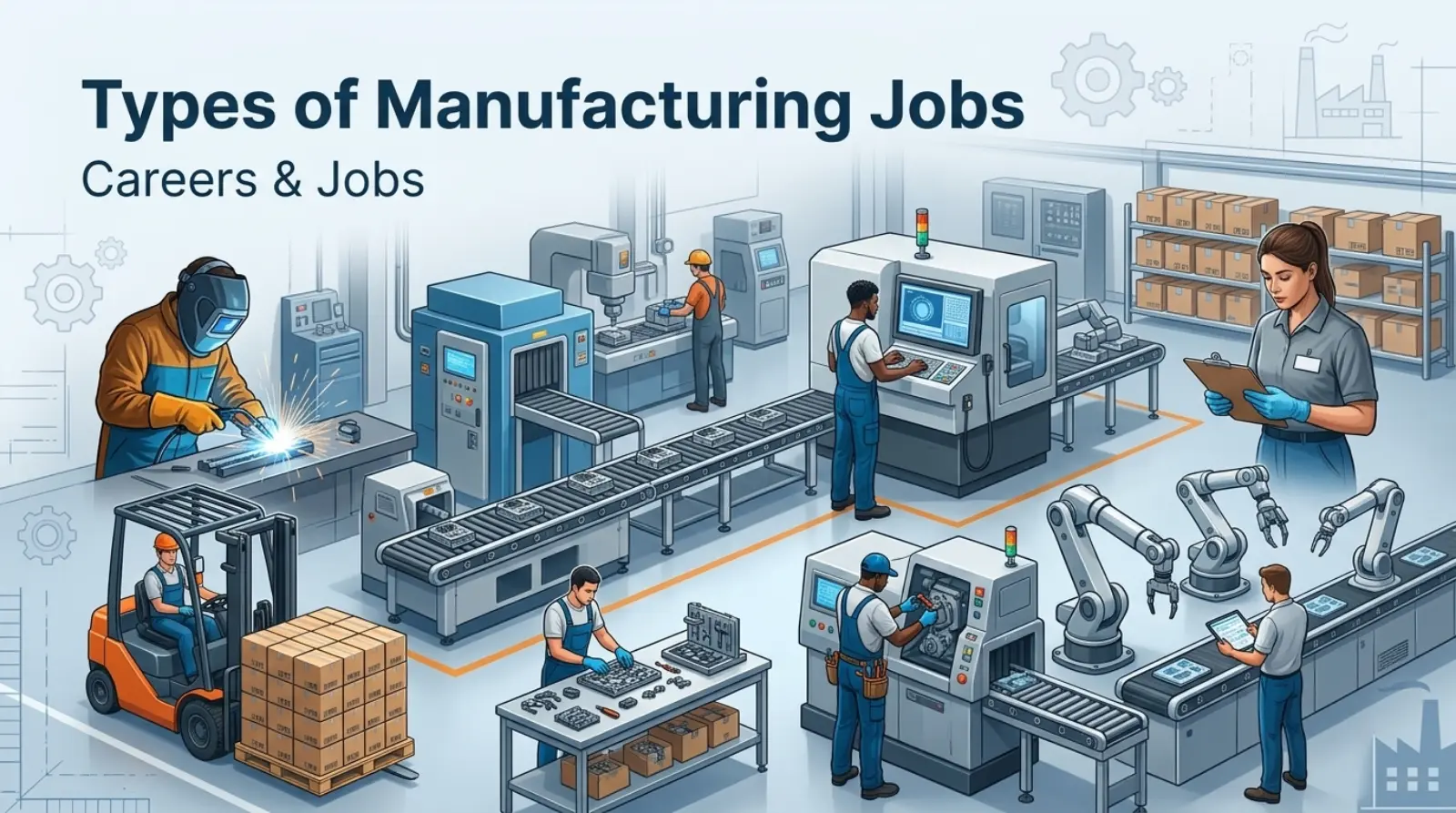
Types of Manufacturing Jobs
Manufacturing offers many career options.
Popular roles include:
Assembly Line Worker
Builds products using tools and equipment.
Machine Operator
Runs manufacturing machines safely.
CNC Operator
Controls computer-operated machines.
Welder
Joins metal parts together.
Production Technician
Keeps production running smoothly.
Quality Control Inspector
Checks products for defects.
Maintenance Technician
Repairs factory equipment.
Manufacturing Engineer
Improves production efficiency.
Types of Warehouse Jobs
Warehouse careers continue to grow because of online shopping.
Common positions include:
Warehouse Associate
Handles general warehouse tasks.
Picker
Collects customer orders.
Packer
Packages products for shipping.
Forklift Operator
Moves heavy goods safely.
Shipping Clerk
Prepares outgoing shipments.
Receiving Clerk
Checks incoming deliveries.
Inventory Specialist
Tracks stock levels.
Warehouse Supervisor
Manages warehouse teams.
Skills Needed for Manufacturing or Warehouse Jobs
Most employers value practical skills.
Important skills include:
- Teamwork
- Communication
- Time management
- Attention to detail
- Physical stamina
- Problem-solving
- Safety awareness
- Basic computer skills
- Reliability
- Adaptability
Technical skills become more valuable as technology advances.
Real-Life Examples
Example 1
Sarah starts as a warehouse associate.
After one year, she becomes an inventory coordinator.
Three years later, she earns a promotion to warehouse supervisor.
Example 2
James begins as an assembly worker.
He learns machine operation.
Later, he becomes a production technician with higher pay.
Example 3
Ahmed earns a forklift certification.
His new skill helps him secure a better-paying warehouse position.
These examples show that growth is possible with experience and training.
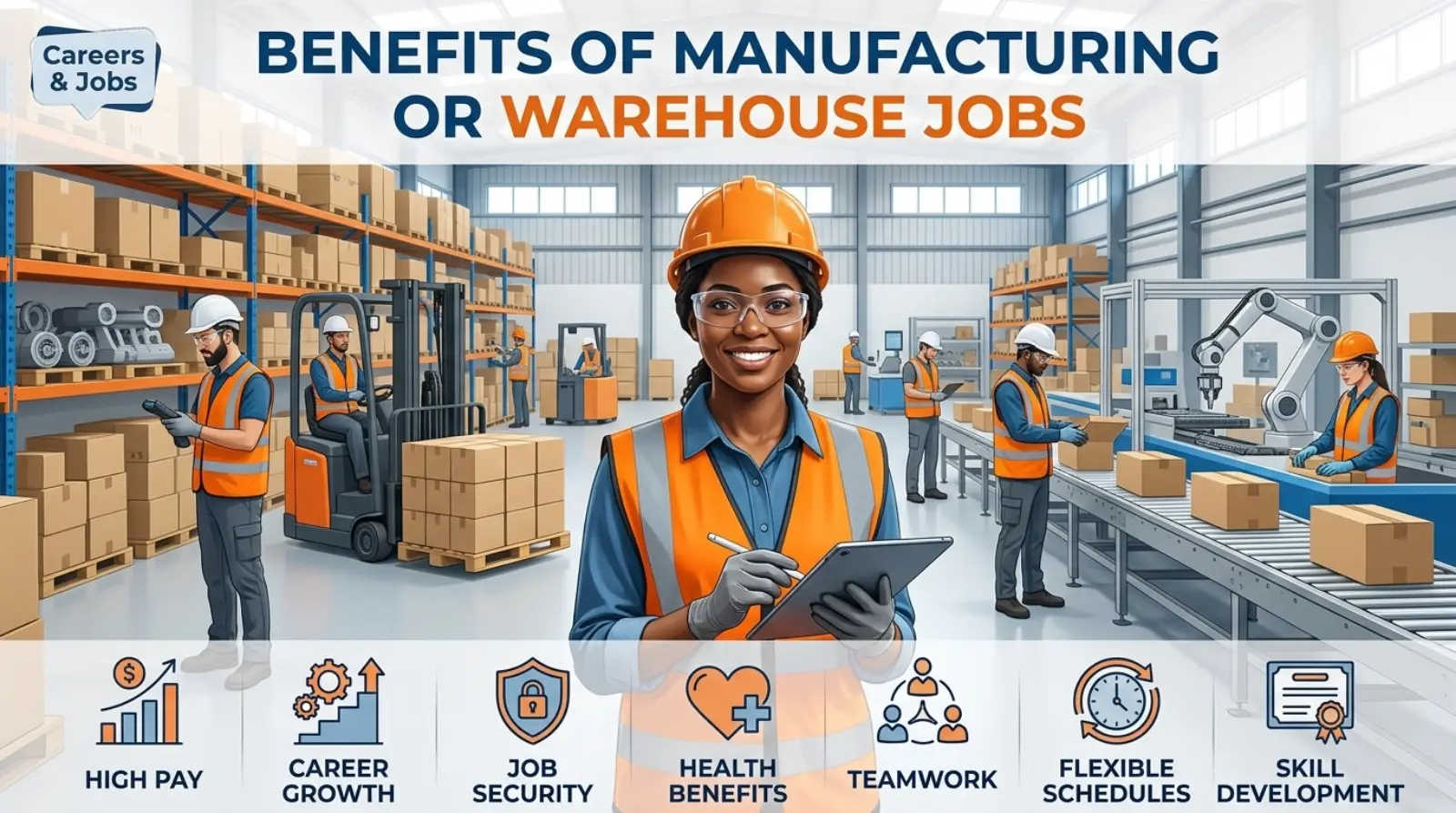
Benefits of Manufacturing or Warehouse Jobs
Many people choose these careers because of their advantages.
Benefits often include:
- Competitive hourly wages
- Overtime opportunities
- Health insurance
- Paid vacation
- Retirement plans
- Job stability
- Career advancement
- Paid training
- Employee discounts
- Flexible shifts
Many companies also pay extra for night shifts.
Common Mistakes When Choosing Between Manufacturing and Warehouse Jobs
Avoid these mistakes.
Thinking they are the same
Each career has different responsibilities.
Ignoring physical demands
Many jobs require standing, lifting, and walking.
Overlooking safety
Always follow workplace safety rules.
Not learning new skills
Training increases promotion opportunities.
Choosing only based on salary
Consider work environment, schedule, and career growth too.
Tips to Succeed in Manufacturing or Warehouse Jobs
You can improve your career with simple habits.
- Arrive on time.
- Follow safety procedures.
- Learn new equipment.
- Ask questions.
- Improve computer skills.
- Earn certifications.
- Work well with teammates.
- Stay organized.
- Focus on quality.
- Maintain a positive attitude.
Small improvements often lead to promotions.
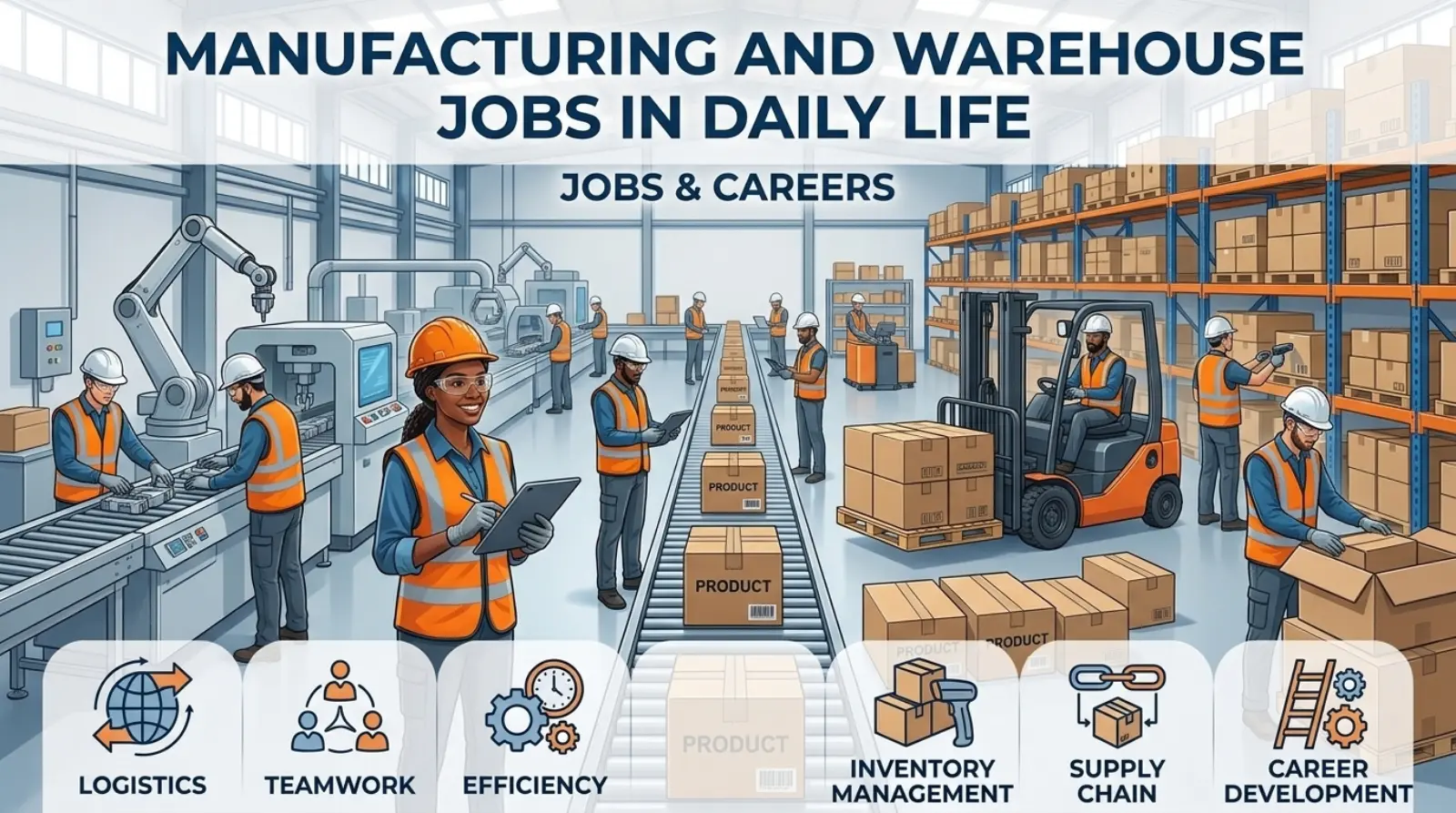
Manufacturing and Warehouse Jobs in Daily Life
Most products you use every day pass through manufacturing and warehouse workers.
Examples include:
- Food
- Smartphones
- Furniture
- Clothing
- Medicine
- Home appliances
- Toys
- Sports equipment
Without these workers, stores would quickly run out of products.
Synonyms
- Factory jobs
- Production jobs
- Industrial jobs
- Distribution center jobs
- Logistics jobs
- Fulfillment center jobs
Expert Insights
Industry experts recommend developing both technical and soft skills.
Workers who learn automation systems often earn higher salaries.
Forklift certification can improve warehouse job opportunities.
Manufacturing employees benefit from learning machine maintenance.
Good attendance and strong safety records also improve promotion chances.
Technology continues to create new positions rather than replacing every job.
Workers who keep learning remain competitive.
Frequently Asked Questions (FAQs)
1. What is the difference between manufacturing and warehouse jobs?
Manufacturing creates products. Warehouse jobs store and ship those products.
2. Do manufacturing or warehouse jobs require a college degree?
No. Many entry-level jobs require only a high school diploma or equivalent.
3. Which pays more?
Pay depends on experience, location, certifications, and employer. Specialized manufacturing and certified warehouse roles often pay more than entry-level positions.
4. Are warehouse jobs physically demanding?
Yes. Many roles involve lifting, walking, standing, and moving products.
5. Can I grow my career?
Yes. Many workers become supervisors, managers, technicians, or specialists.
6. What skills are most important?
Reliability, teamwork, safety awareness, communication, and attention to detail.
7. Are these jobs in demand?
Yes. Manufacturing and warehousing continue to support industries such as retail, healthcare, automotive, food production, and e-commerce.
Conclusion
Manufacturing or warehouse jobs offer excellent opportunities for people seeking stable employment and long-term career growth. Manufacturing focuses on producing goods, while warehouse work ensures products are stored, organized, and delivered efficiently. Both fields provide entry-level positions, competitive wages, valuable training, and advancement opportunities. Success comes from building practical skills, following safety rules, and maintaining a strong work ethic. As technology and automation continue to evolve, workers who learn new tools and systems will have even better career prospects. Whether you enjoy working with machines or managing inventory, manufacturing and warehouse careers can provide a rewarding future with plenty of room to grow.
Discover More Post:
Be There or Be Square: Meaning, Origin, Examples, and Usage
Cannot or Can Not: Which Is Correct? Guide With Examples