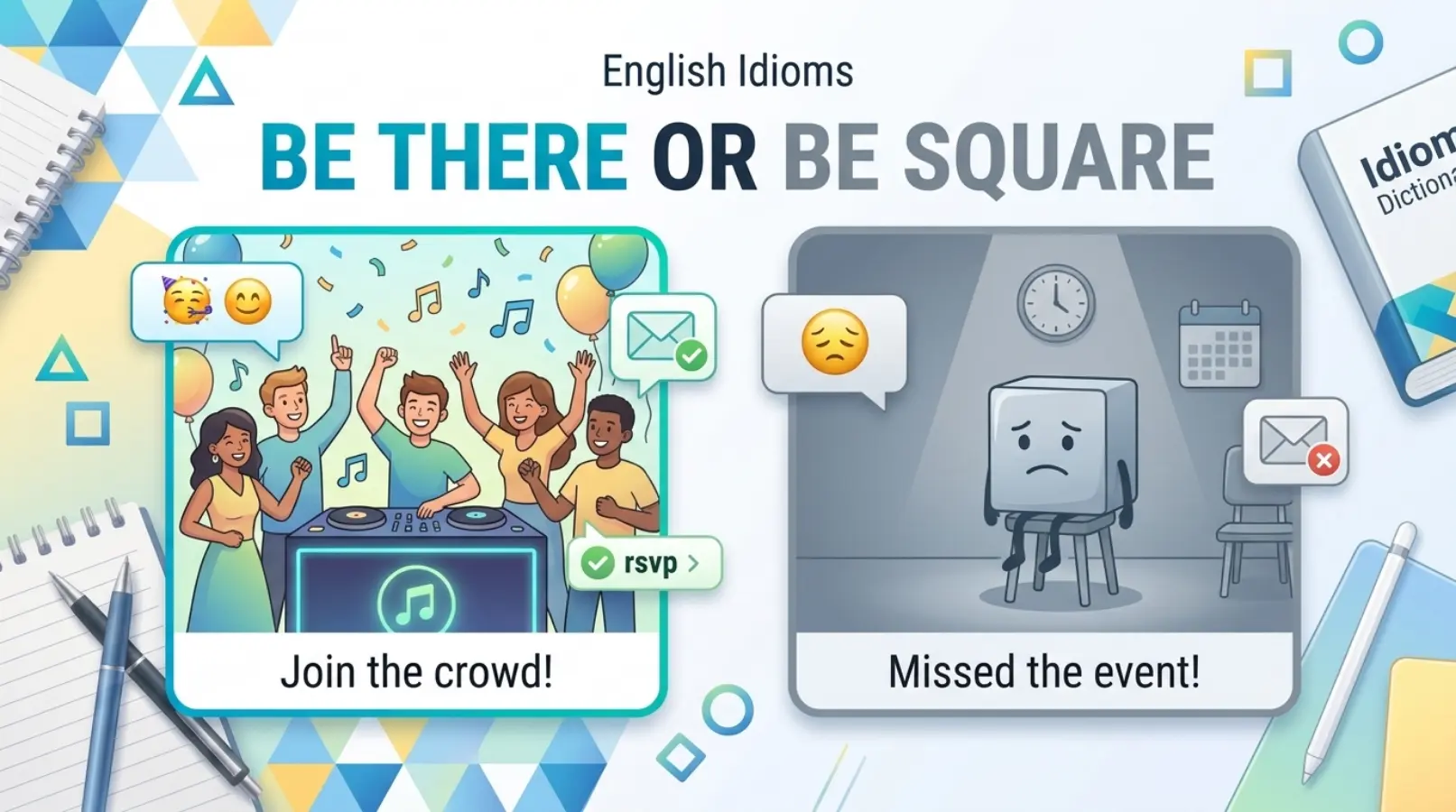
Be there or be square is a popular English phrase that people use in casual conversations. It sounds funny, but it has a simple meaning. When someone says it, they invite you to join an event. They also suggest that missing the event means you are not fun or exciting.
This expression has been popular for many years. Today, people still use it in conversations, movies, social media, and text messages. Understanding this phrase can help you speak English more naturally. It can also help you understand native speakers better.
In this guide, you will learn the meaning, origin, examples, common mistakes, and the best ways to use it in everyday life.
Quick Summary Box
- Phrase: Be there or be square
- Meaning: Come to the event or you’ll miss the fun.
- Tone: Friendly, playful, and informal.
- Used In: Invitations, conversations, social media, and texting.
- Origin: Popularized in American slang during the 1950s–1960s.
- Best For: Friends, classmates, coworkers, and casual situations.
- Avoid In: Formal emails, business meetings, or professional writing.
What Does “Be There or Be Square” Mean?
The phrase be there or be square is an informal way to invite someone somewhere.
It means:
“Join us, or you’ll miss out on the fun.”
The word square does not describe a shape here. Instead, it refers to someone who is considered boring, old-fashioned, or unwilling to enjoy social activities.
Simple Definition
If you tell someone be there or be square, you are saying:
- Come with us.
- Don’t miss the event.
- Everyone will have fun.
- You should join too.
What Is the Origin of “Be There or Be Square”?
The phrase became popular in the United States during the 1950s and 1960s.
At that time, young people often called someone a square if they were:
- Not fashionable
- Too serious
- Unwilling to try new things
- Not interested in social events
People began saying be there or be square as a playful challenge. The phrase encouraged friends to attend parties, concerts, dances, and gatherings.
Today, people usually use it as a joke rather than a serious insult.
Why Is Someone Called “Square”?
The word square has a slang meaning.
It describes a person who:
- Plays it safe
- Avoids excitement
- Follows every rule
- Doesn’t enjoy social activities
Example
Friend 1:
“We’re going to the beach tomorrow.”
Friend 2:
“Sounds fun!”
Friend 1:
“Be there or be square!”
This simply means:
“Don’t miss it.”
How to Use “Be There or Be Square”
This phrase works best in casual conversations.
You can use it when inviting someone to:
- Birthday parties
- Weddings
- School events
- Family gatherings
- Sports games
- Movie nights
- Concerts
- Barbecues
- Picnics
- Game nights
Example Sentences
- Be there or be square! The party starts at 7 PM.
- We’re watching the final tonight. Be there or be square.
- Everyone is meeting after class. Be there or be square.
- Don’t miss the concert. Be there or be square.
- Pizza night begins at six. Be there or be square.
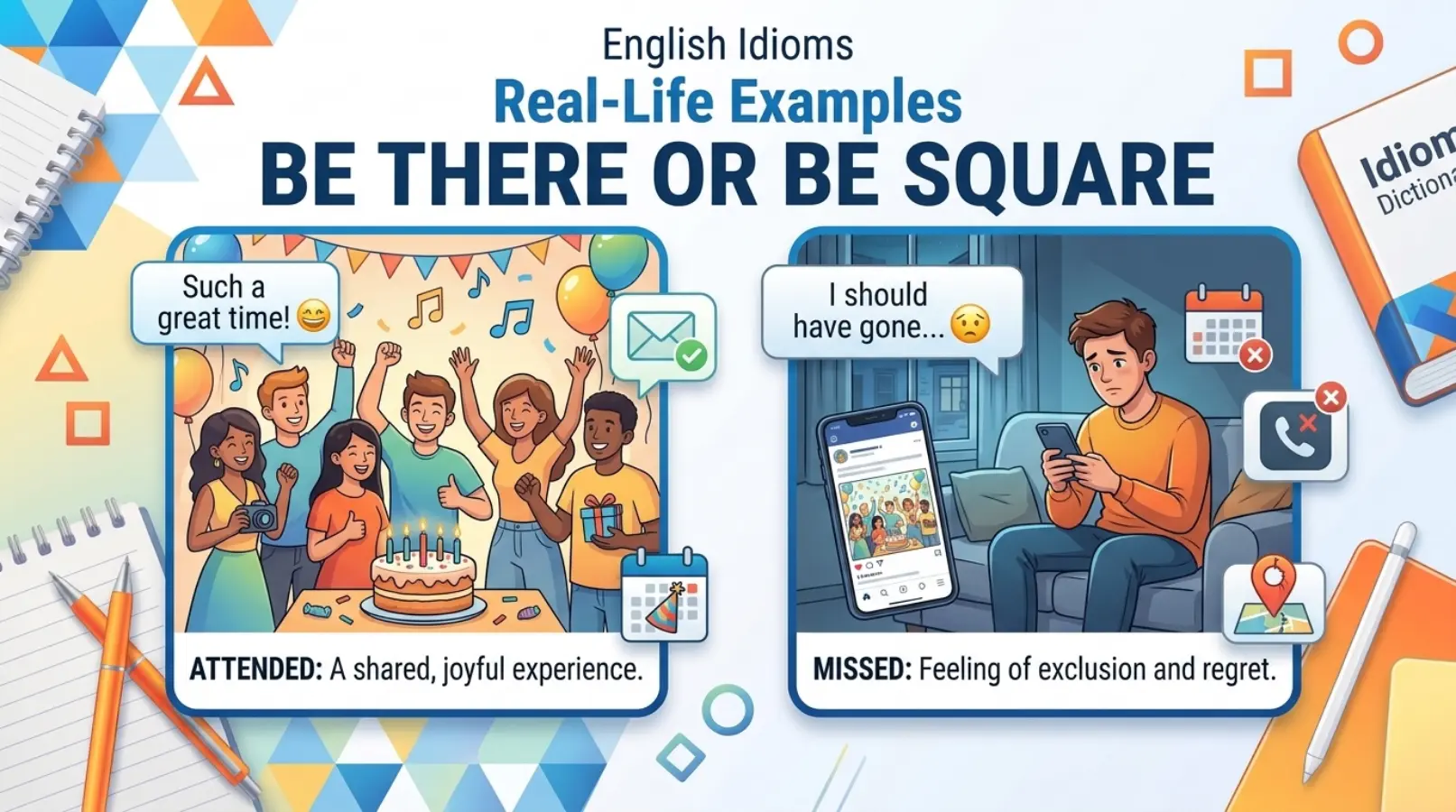
Real-Life Examples of “Be There or Be Square”
Here are common situations where people use the phrase.
Example 1: Birthday Party
Sarah:
My birthday starts at 6 PM.
Tom:
I’ll be there.
Sarah:
Great! Be there or be square!
Example 2: Movie Night
Alex:
We’re watching a new action movie tonight.
Emma:
Count me in.
Alex:
Awesome. Be there or be square.
Example 3: School Event
Teacher:
The school carnival starts at five.
Student:
I’ll tell everyone.
Teacher:
Be there or be square!
Example 4: Sports Match
We’re watching the championship game tonight.
Be there or be square!
When Should You Use This Phrase?
This expression works well in informal situations.
| Situation | Good Choice? |
| Friends | Yes |
| Family | Yes |
| School | Yes |
| Social media | Yes |
| Text messages | Yes |
| Business meeting | No |
| Job interview | No |
| Formal email | No |
| Academic paper | No |
Common Mistakes People Make
1. Using it in formal writing
❌ Please attend the conference. Be there or be square.
✅ We look forward to your attendance.
2. Thinking “square” means the shape
Many learners believe the phrase talks about geometry.
It does not.
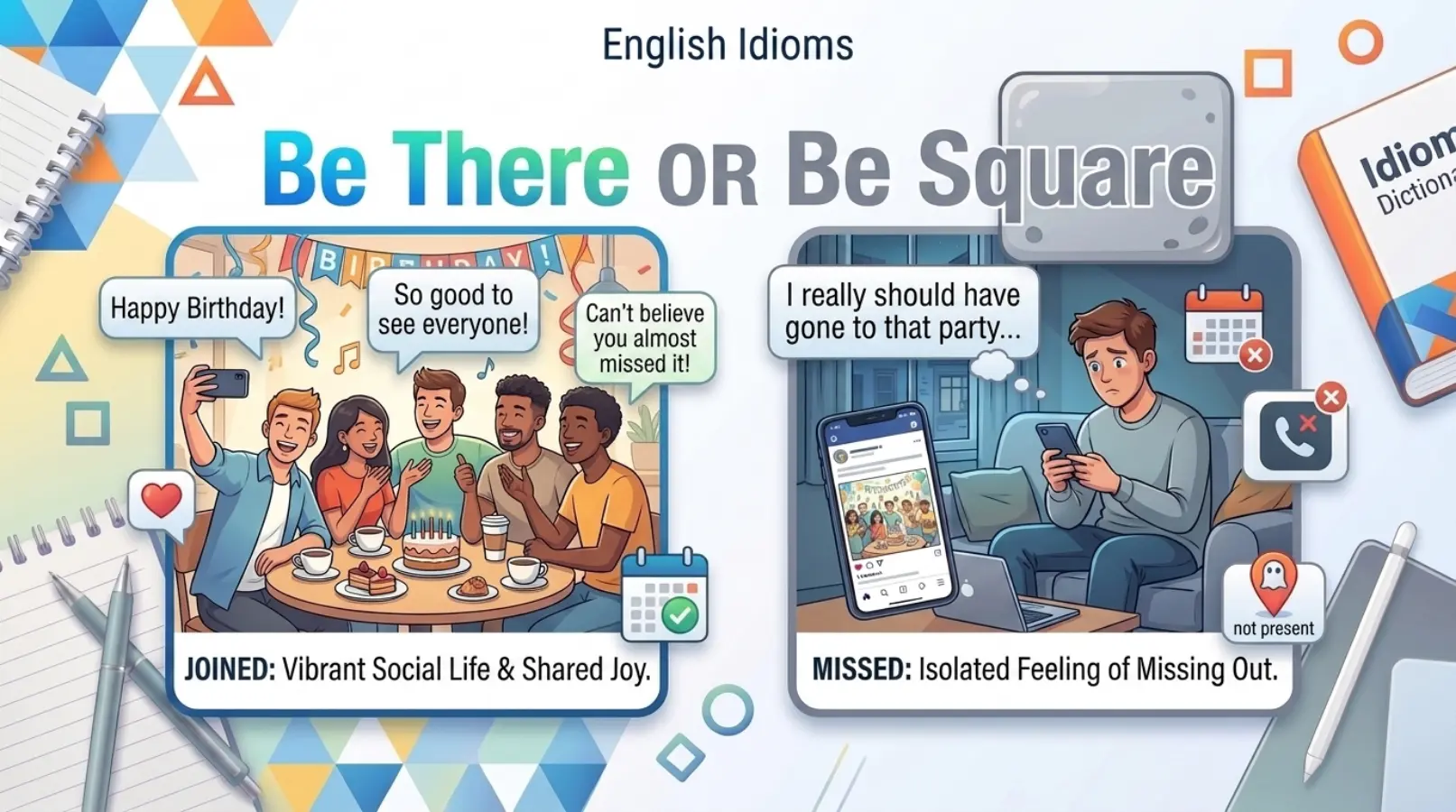
Here, square means someone who is boring or not socially active.
3. Using it with strangers
Avoid using this phrase with people you do not know well.
It may sound too casual.
4. Using it as an insult
Today, the phrase is usually playful.
Do not use it to offend someone.
Tips for Remembering the Phrase
Remember these easy tricks.
- Think of a fun party.
- Imagine everyone enjoying themselves.
- Picture one friend staying home.
- That friend becomes the “square.”
Another easy memory tip:
Fun people show up. Squares stay home.
“Be There or Be Square” in Daily Life
You may hear this phrase in many places.
Social Media
Friday night party!
Be there or be square!
Text Messages
Movie starts at 8.
Be there or be square!
Friends
We’re meeting at the café.
Be there or be square.
School
The football game starts soon.
Be there or be square!
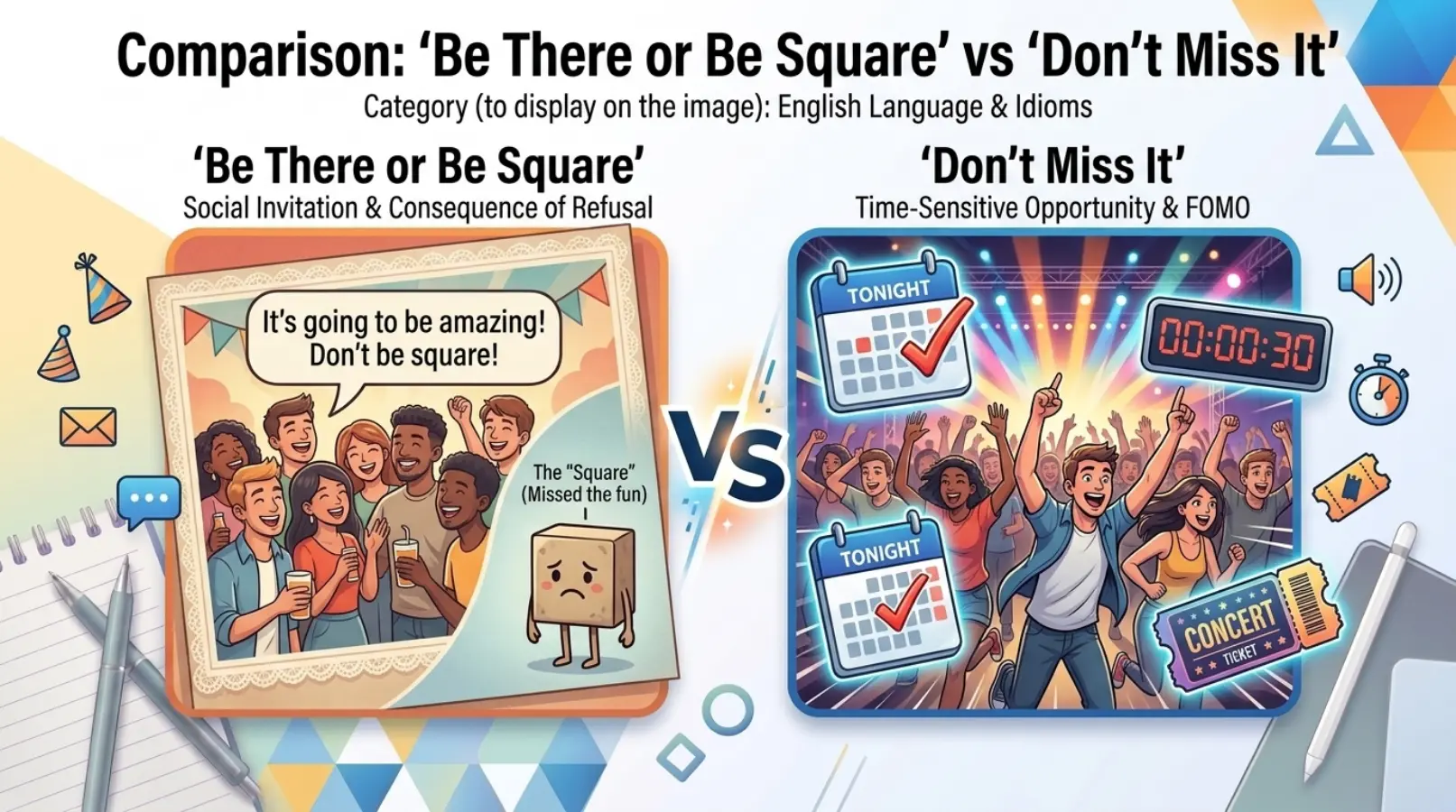
Comparison: “Be There or Be Square” vs “Don’t Miss It”
| Feature | Be There or Be Square | Don’t Miss It |
| Informal | Yes | Yes |
| Funny | Yes | Usually No |
| Friendly | Yes | Yes |
| Playful | Yes | Less playful |
| Formal | No | Sometimes |
Expert Insights: Why This Idiom Still Matters
Learning idioms makes your English sound more natural.
Native speakers use idioms every day. They help conversations feel relaxed and friendly.
Be there or be square is easy to remember because it rhymes. Rhyming phrases stay in people’s minds longer. That is one reason this idiom has remained popular for decades.
For English learners, understanding this phrase improves listening skills. It also helps you recognize informal speech in movies, TV shows, podcasts, and social media.
Frequently Asked Questions (FAQs)
What does “be there or be square” mean?
It means come to the event or you’ll miss the fun.
Is “be there or be square” rude?
No. It is usually playful and friendly.
Why does “square” mean boring?
In American slang, square became a nickname for someone who avoided modern trends or fun social activities.
Can I use this phrase at work?
Only in casual conversations with coworkers.
Avoid it in formal meetings and emails.
Is it an idiom?
Yes.
Its meaning cannot be understood by the individual words alone.
Is this phrase still popular?
Yes.
People still use it in conversations, social media posts, movies, and invitations.
Can children use this expression?
Yes.
It is friendly and easy for children to understand in casual settings.
Conclusion
The phrase be there or be square is a fun and friendly way to invite someone to an event. It encourages people to join the fun while playfully suggesting that staying away is less exciting. Although the expression has been around for decades, it remains common in casual conversations, social media, and everyday English. Remember that it is best for informal situations with friends, classmates, or family members. Avoid using it in professional or formal communication. By learning idioms like be there or be square, you can understand native speakers more easily and make your own English sound more natural, confident, and engaging.
Discover More Post:
Alot or A Lot: Which Is Correct? Grammar Rules, and Examples,
For Better or Worse: Meaning, Origin, Examples, and How to Use It