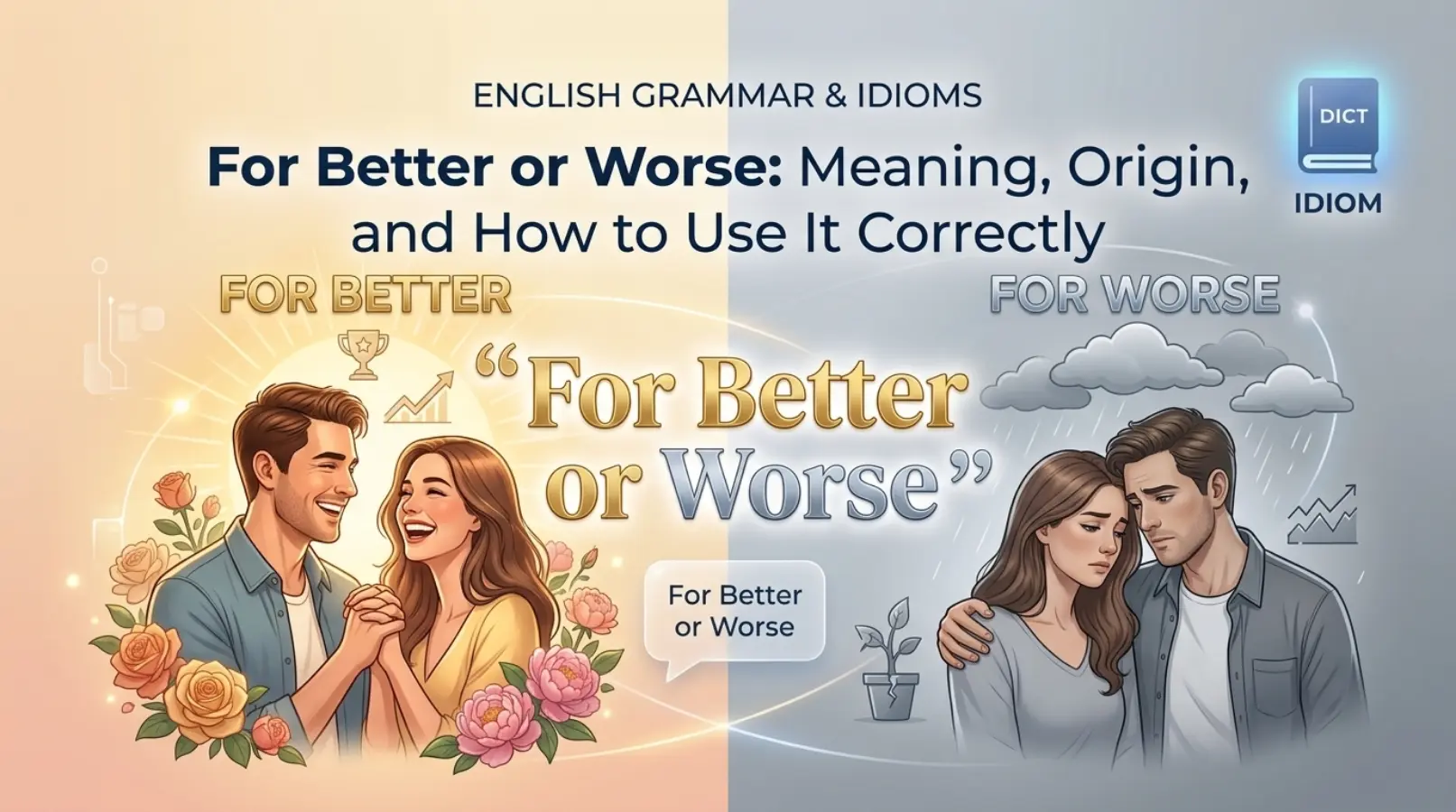
For Better or Worse is a common English phrase that describes accepting both the good and the difficult parts of a situation. It is best known from traditional wedding vows, where couples promise to stay together through happy times and challenging moments. Today, the phrase is also used in everyday conversations, books, movies, and articles to express commitment, loyalty, or the unavoidable results of a decision.
Understanding the meaning of for better or worse helps you use it correctly in both formal and informal English. In this guide, you’ll learn its definition, origin, real-life examples, common mistakes, and how to use this timeless expression with confidence. If you’re improving your English or simply curious about the phrase, this article will explain everything in simple, easy-to-understand language.
Quick Summary Box
- Meaning: Accepting both the good and bad results of something.
- Type: English idiom.
- Common Use: Daily conversations, writing, speeches, and wedding vows.
- Tone: Neutral and thoughtful.
- Similar Expressions: Come what may, no matter what, through thick and thin.
- Opposite Idea: Only expecting good outcomes.
- Best Tip: Use it when discussing situations with uncertain or mixed results.
What Does Mean?
It means accepting whatever happens, if the outcome is positive or negative.
It tells others that you will face both good and bad situations without giving up.
Simple Definition
It means accepting all possible results,if they are good or bad.
Example Sentences
- She accepted the new job for better or worse.
- They decided to start the business for better or worse.
The Origin of “For Better or Worse”
The phrase became famous because of traditional Christian wedding vows.
In many marriage ceremonies, couples promise to stay together:
“For better, for worse, for richer, for poorer, in sickness and in health.”
This promise means they will remain committed during happy and difficult times.
Over time, people started using this phrase in everyday conversations outside marriage.
What Does “For Better or Worse” Mean in Simple Words?
Think of making a big decision.
You cannot know what will happen next.
Some results may be good.
Others may be difficult.
Using this phrase shows you accept both possibilities.
Easy Example
Imagine starting college.
You may also face hard exams.
You still choose to attend for better or worse.
When Should You Use?
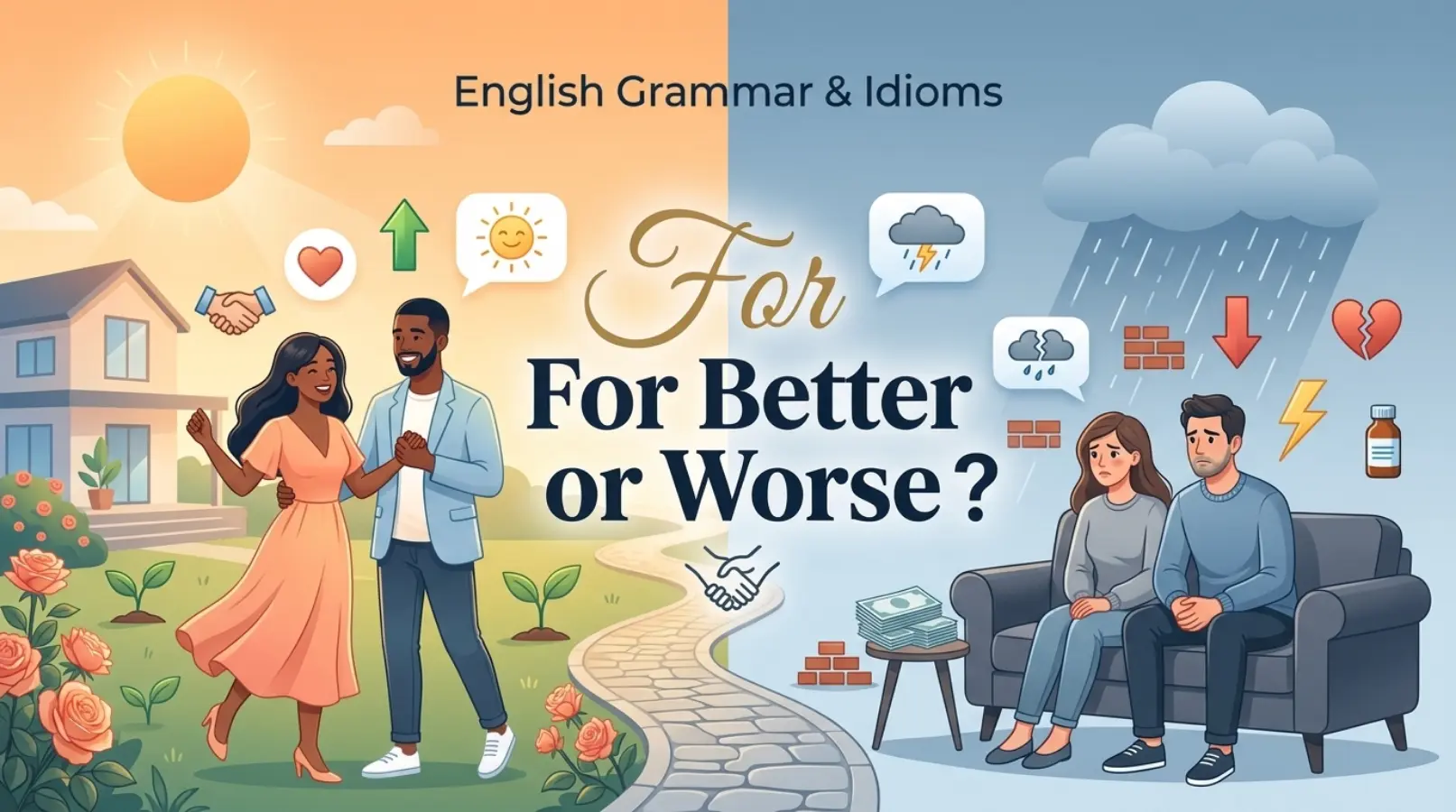
Use this idiom whenever someone accepts uncertainty.
Common situations include:
- Starting a new job
- Moving to another country
- Getting married
- Beginning a business
- Choosing a school
- Making an important life decision
Examples
- He followed his dream for better or worse.
- They accepted the challenge for better or worse.
Real-Life Examples of “For Better or Worse”
Here are everyday situations where this phrase fits naturally.
| Situation | Example |
| Marriage | We promised to stay together for better or worse. |
| Career | She changed careers for better or worse. |
| Business | They invested all their savings for better or worse. |
| Education | He studied abroad for better or worse. |
| Friendship | Friends stay together for better or worse. |
| Family | Parents support their children for better or worse. |

“For Better or Worse” vs Similar Expressions
Although several English phrases have similar meanings, they are not exactly the same.
| Expression | Meaning | Difference |
| For better or worse | Accept both good and bad results | Most common |
| Through thick and thin | Stay loyal during hard times | Focuses on loyalty |
| Come what may | Accept whatever happens | More formal |
| No matter what | Regardless of circumstances | Strong determination |
| Against all odds | Despite difficulties | Focuses on success |
Common Mistakes When Using
Many English learners make small errors.
Here are the most common ones.
1. Using It for Small Events
❌ I ate pizza for better or worse.
The idiom usually fits important decisions.
2. Changing the Phrase
❌ Better and worse
❌ For good or bad
Use the exact wording.
3. Using It Without Context
The phrase works best after mentioning a meaningful choice.
Tips for Using Correctly
Follow these simple tips.
- Use it with major life decisions.
- Keep the exact wording.
- Place it at the end of a sentence when possible.
- Use it in both speaking and writing.
- Remember it shows acceptance.
How Native English Speakers Use It
Native speakers often use this phrase naturally.
Examples include:
- Technology has changed our lives, for better or worse.
- Social media affects everyone, for better or worse.
Notice that the phrase often appears after a statement.
Synonyms
- Come what may
- Through thick and thin
- Regardless of the outcome
- No matter what
- Whatever happens
- Rain or shine
- In any case
Why Matters in Daily Life
This phrase teaches an important life lesson.
Every decision has risks.
No one can predict the future perfectly.
Using this idiom reminds us to stay committed even when things become difficult.
It also shows maturity and responsibility.
That is why the phrase appears in books, speeches, movies, and everyday conversations.

Expert Insights: Why Understanding This Idiom Matters
Language experts recommend learning common idioms because they make English sound more natural.
It is one of the most useful idioms because:
- It appears in everyday conversations.
- It improves spoken English.
- It helps with reading books and articles.
- It is common in movies and TV shows.
- It appears in English exams and writing tasks.
Learning this phrase also improves your confidence when communicating with native speakers.
Frequently Asked Questions (FAQs)
What does phrase mean?
It means accepting both good and bad outcomes of a decision or situation.
Is it an idiom?
Yes. It is a widely used English idiom.
Where did the phrase come from?
It became popular through traditional wedding vows.
Can I use it in daily conversation?
Yes. Native speakers use it regularly.
Is it only used for marriage?
No. It can describe jobs, education, business, travel, friendships, and many life choices.
Is this phrase formal or informal?
It works in both formal and informal English.
Can I replace it with “come what may”?
Sometimes. However, it focuses more on accepting both positive and negative outcomes.
Why is this phrase so popular?
Because everyone experiences both success and challenges in life, making the expression useful in many situations.
Conclusion
It is one of the most meaningful English idioms. It reminds us that every important decision brings both rewards and challenges. If you are talking about marriage, work, education, or personal goals, the phrase shows acceptance of every possible outcome. It is easy to understand, simple to use, and common in everyday English. Learning this expression will make your conversations sound more natural and confident. Remember to use it for significant situations rather than small events. With regular practice, it will become a natural part of your English vocabulary.
Discover More Post:
Cardio Before or After Weights: Best Order for Fat Loss,and Fitness
Admin or Office Jobs:Guide to Skills, Salary, and Career Growth