
Cardio before or after weights is one of the most common fitness questions. The answer depends on your goal. Some people want to burn fat. Others want to build muscle or improve endurance. The right workout order can help you get better results.
Many gym beginners feel confused about what to do first. You may hear different advice from trainers, friends, or social media. That can make the choice even harder.
The good news is that there is no one-size-fits-all answer. Your fitness goal should guide your workout plan. In this article, you will learn the best order for cardio and weight training. You will also see real-life examples, expert tips, and common mistakes to avoid.
Quick Summary Box
- Cardio before or after weights depends on your main fitness goal.
- Do weights first if you want to build muscle or gain strength.
- Do cardio first if improving endurance is your top priority.
- For fat loss, many experts recommend lifting weights before cardio.
- Short warm-up cardio is helpful before every workout.
- Stay consistent because regular exercise matters more than workout order.
What Does Cardio Before or After Weights Mean?
The phrase cardio before or after weights refers to the order of your workout.
- Cardio before weights means you perform aerobic exercise first.
- Weights before cardio means you lift weights before doing aerobic exercise.
Cardio includes:
- Running
- Walking
- Cycling
- Swimming
- Rowing
- Jump rope
Weight training includes:
- Dumbbells
- Barbells
- Machines
- Bodyweight resistance exercises
Both forms of exercise offer important health benefits.
Why Workout Order Matters
The order of your workout affects your energy levels.
If you perform hard cardio first, you may feel tired during weight training. This can reduce your lifting performance.
If you lift weights first, your muscles have more energy for heavy exercises. After lifting, cardio helps improve heart health and burn extra calories.
Workout order also affects:
- Muscle growth
- Strength gains
- Athletic performance
- Recovery
- Workout quality
Cardio Before vs After Weights (Comparison Table)
| Feature | Cardio Before Weights | Weights Before Cardio |
| Best for endurance | Yes | Moderate |
| Best for muscle gain | No | Yes |
| Best for strength | No | Yes |
| Fat loss | Good | Often better |
| Energy for lifting | Lower | Higher |
| Athletic performance | Depends | Usually stronger |
| Recovery | Similar | Similar |
Quick Winner
- Muscle building: Weights first
- Strength: Weights first
- Endurance races: Cardio first
- General fitness: Either order works
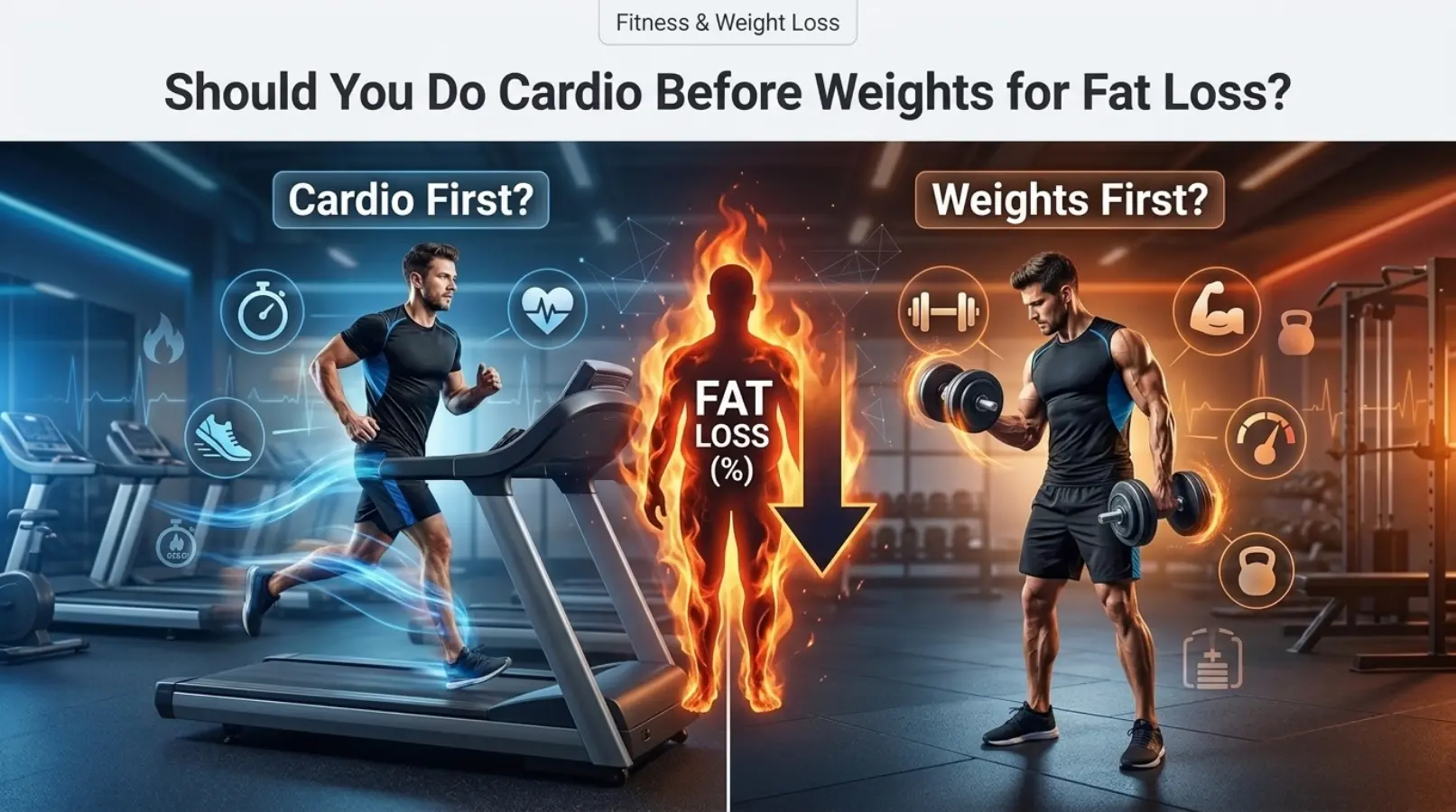
Should You Do Cardio Before Weights for Fat Loss?
Many people believe cardio should always come first.
Research suggests the opposite may help.
Weight training first uses stored muscle energy. After that, cardio may rely more on fat for fuel.
Benefits include:
- Better calorie burn
- Improved muscle preservation
- Stronger workouts
- Higher metabolism after exercise
Example
Sarah wants to lose 20 pounds.
Instead of running first, she spends 40 minutes lifting weights. Then she walks on the treadmill for 20 minutes.
She keeps her muscle while reducing body fat.
Is It Better to Lift Weights Before Cardio for Muscle Gain?
Yes.
Muscle growth requires:
- Heavy lifting
- Good technique
- High energy
Doing intense cardio first can reduce strength.
That means:
- Fewer reps
- Lighter weights
- Less muscle stimulation
If building muscle is your goal, prioritize resistance training.
Ideal Routine
- Warm up for 5–10 minutes.
- Lift weights.
- Finish with moderate cardio.
- Stretch.
When Cardio Before Weights Is the Better Choice
Sometimes cardio should come first.
Choose cardio first if your goal is:
- Marathon training
- Cycling performance
- Swimming endurance
- Heart health improvement
- Race preparation
Your body performs best when you train your main priority first.
Example
John trains for a half marathon.
Running comes first because race performance matters more than muscle growth.

Real-Life Examples
Example 1: Fat Loss
Maria wants to lose weight.
Routine:
- Strength training
- 20-minute brisk walk
- Healthy diet
Result:
She burns calories while keeping lean muscle.
Example 2: Bodybuilding
Alex wants bigger muscles.
Routine:
- Heavy compound lifts
- Light cycling afterward
Result:
He gains strength and muscle size.
Example 3: Marathon Runner
Emma trains for long-distance races.
Routine:
- Long run
- Light resistance exercises later
Result:
Her endurance improves.
Example 4: Busy Professional
David only has one hour.
Routine:
- 35 minutes weights
- 20 minutes cardio
Result:
Balanced fitness with efficient time use.
Common Mistakes to Avoid
Many people make simple workout mistakes.
1. Doing Long Cardio Before Heavy Squats
Your legs become tired.
2. Skipping Strength Training
You may lose muscle during weight loss.
3. Ignoring Recovery
Muscles need time to repair.
4. Doing Too Much Every Day
Overtraining slows progress.
5. Forgetting Nutrition
Exercise alone cannot replace a healthy diet.
Tips for Getting Better Results
Follow these simple tips.
Warm Up Properly
Spend 5–10 minutes warming up.
Match the Workout to Your Goal
Train your priority first.
Eat Enough Protein
Protein supports muscle recovery.
Stay Hydrated
Drink water before, during, and after exercise.
Sleep Well
Recovery happens during sleep.
Increase Slowly
Avoid adding too much intensity at once.
Cardio and Weights in Everyday Life
Most people are not athletes.
They simply want to:
- Lose weight
- Feel healthier
- Build strength
- Improve energy
A balanced routine works well.
Example weekly plan:
| Day | Workout |
| Monday | Weights + Cardio |
| Tuesday | Walking |
| Wednesday | Upper Body + Cardio |
| Thursday | Rest |
| Friday | Lower Body + Cardio |
| Saturday | Cycling |
| Sunday | Recovery Walk |
Consistency matters more than perfection.

Synonyms
People also search for:
- cardio before lifting
- cardio after lifting weights
- weights before cardio
- should I run before lifting
- best workout order
- strength training and cardio
- cardio and resistance training
- exercise sequence
- cardio vs weight training
- fat loss workout plan
- build muscle and lose fat
- workout timing
Using these related terms naturally helps search engines understand the topic.
Expert Insights
Fitness experts generally agree on one point.
Train your main goal first.
If muscle growth matters most, lift weights first.
If endurance matters most, do cardio first.
Most healthy adults benefit from both forms of exercise every week.
Remember:
- Consistency beats perfection.
- Good nutrition supports every workout.
- Recovery is part of training.
- Progress takes time.
Choosing the right workout order can improve your results, but your long-term habits matter even more.
Frequently Asked Questions (FAQs)
Should beginners do cardio before or after weights?
Most beginners should lift weights first. Then finish with moderate cardio.
Is cardio after weights better for fat loss?
For many people, yes. It helps preserve muscle while supporting calorie burn.
Can I do cardio and weights on the same day?
Yes. Many people combine both successfully.
How much cardio should I do after lifting?
About 15–30 minutes is enough for most fitness goals.
Does cardio kill muscle gains?
Not usually. Excessive cardio without enough food and recovery may slow muscle growth.
Should I separate cardio and weights?
If you have enough time, separate sessions can improve performance.
Can I build muscle and lose fat together?
Yes. Beginners and people returning to exercise often achieve both with proper training and nutrition.
What is the best workout order for overall fitness?
Start with a short warm-up, lift weights, then finish with moderate cardio.
Conclusion
Choosing cardio before or after weights depends on what you want to achieve. If your goal is muscle growth or strength, lifting weights first is usually the best option. If endurance or race performance matters most, cardio should come first. For fat loss, many people benefit from resistance training followed by cardio because it helps preserve muscle while increasing calorie burn.
No matter which order you choose, consistency is the real key to success. Follow a balanced workout plan, eat nutritious foods, stay hydrated, and get enough sleep. Small improvements over time lead to lasting results. Focus on your personal fitness goals, track your progress, and adjust your routine as needed. The best workout order is the one you can maintain for the long term.
Discover More Post:
Is Ready or Not Crossplay? Guide for PC, PS5, and Xbox (2026)
Forty or Fourty: Which Spelling Is Correct? Grammar Guide