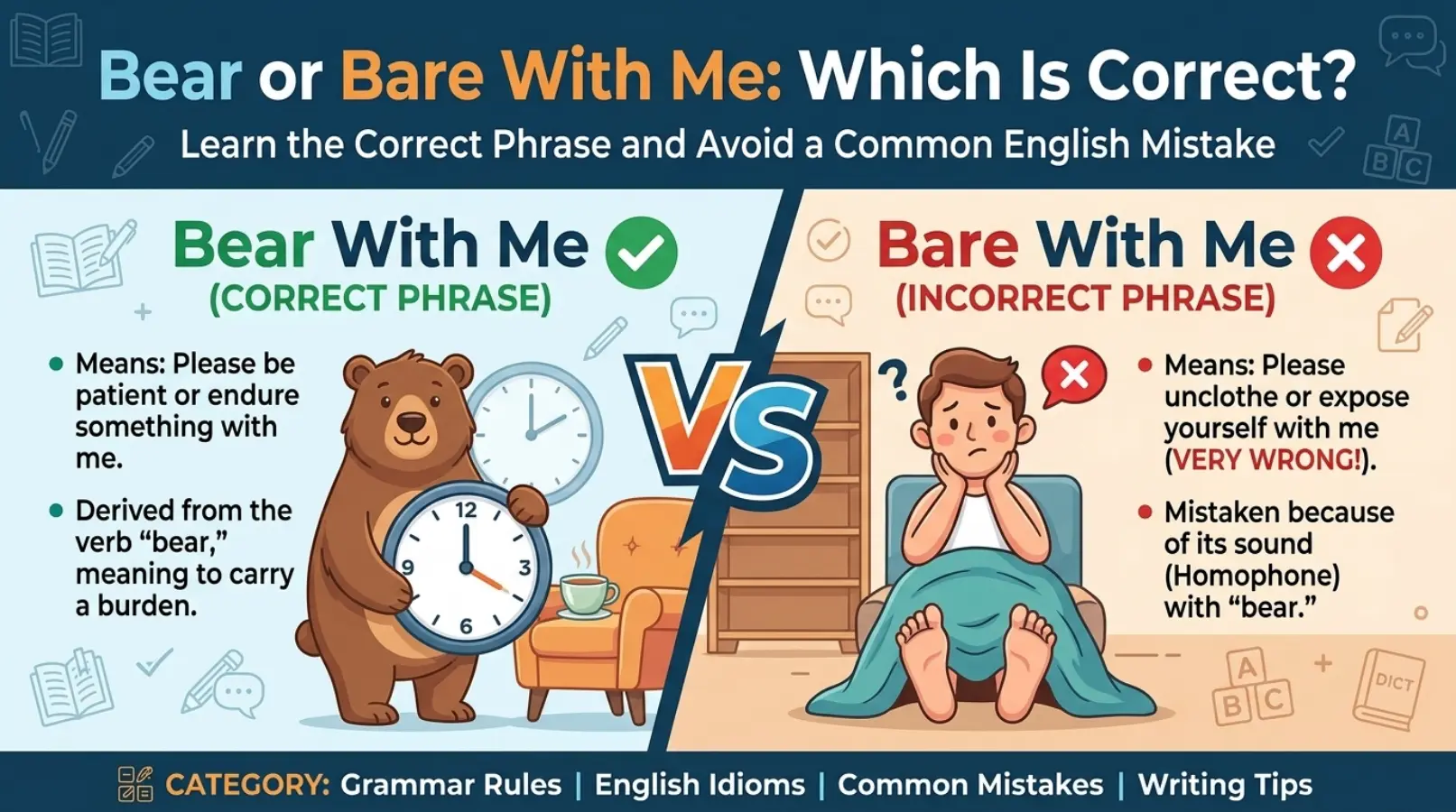
Bear or bare with me is a common question because many people confuse these two similar-sounding words. The correct phrase is “bear with me.” However, many writers mistakenly use “bare with me.”
This small spelling difference can change the meaning of a sentence. That’s why it is important to understand when and how to use the correct phrase.
In this guide, you will learn the meaning of “bear with me,” why “bare with me” is usually wrong, common mistakes people make, and easy tips to remember the correct version. You will also see real-life examples and a simple comparison table.
By the end, you will never confuse these phrases again.
Quick Summary Box
- ✅ The correct phrase is “bear with me.”
- ✅ “Bear” means to tolerate, endure, or be patient.
- ❌ “Bare with me” is usually incorrect.
- ✅ Use “bear with me” when asking someone to wait patiently.
- ✅ Common in emails, conversations, and customer service.
- ✅ Easy memory trick: Bear = be patient.
What Does “Bear With Me” Mean?
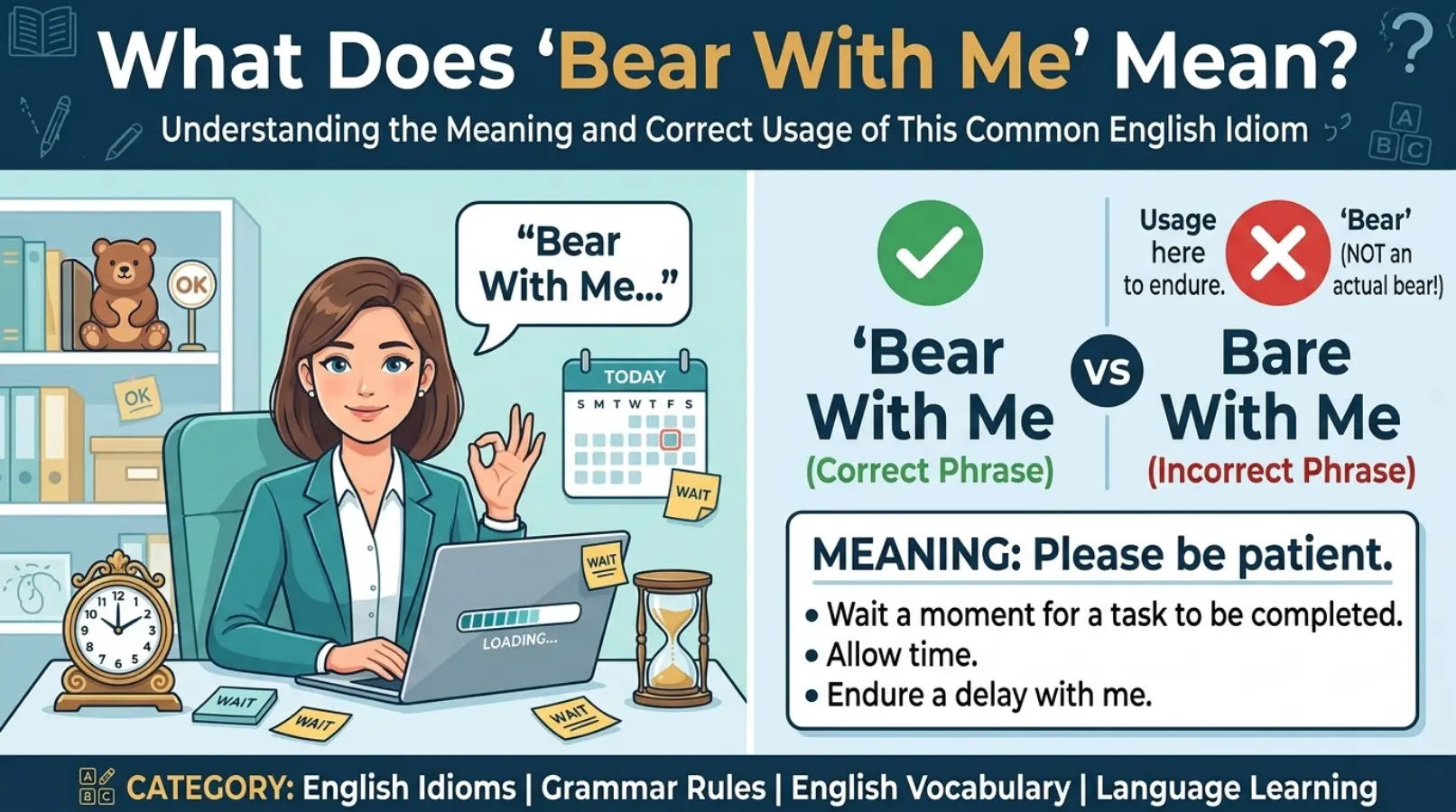
“Bear with me” means:
Please be patient with me while I finish something or solve a problem.
People use this phrase when they need extra time.
Examples
- Bear with me while I find the document.
- Please bear with me during this update.
- Bear with me for a moment.
- Bear with me while I check the details.
The phrase politely asks someone to wait.
What Does “Bare With Me” Mean?
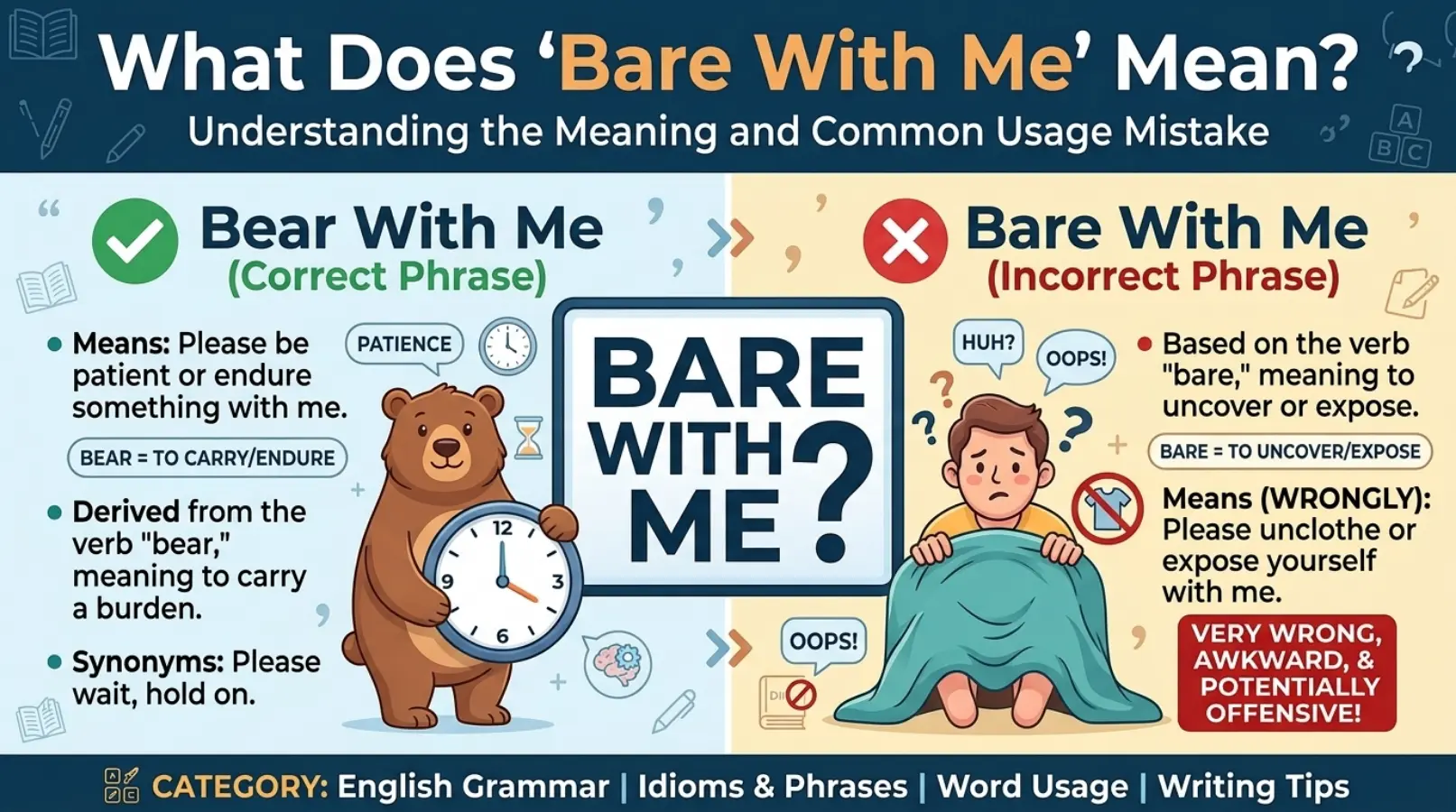
The phrase “bare with me” has a completely different meaning.
The word bare means:
- Uncovered
- Naked
- Exposed
Examples of Bare
- He walked on the bare floor.
- The tree had bare branches.
- She had bare feet.
If you say “bare with me,” it literally suggests removing clothing together. That is usually not what people mean.
Therefore, in most situations, “bare with me” is incorrect.
Bear or Bare With Me: Comparison Table
| Feature | Bear With Me | Bare With Me |
| Correct phrase? | Yes | Usually No |
| Meaning | Be patient with me | Expose yourself with me |
| Common usage | Emails, meetings, conversations | Rarely used |
| Professional writing | Correct | Incorrect |
| Dictionary-approved expression | Yes | No |
| Example | Bear with me while I explain | Bare with me at the beach |
Why Do People Confuse Bear and Bare?
People confuse these words because they are homophones.
Homophones sound the same but have different meanings and spellings.
Bear
Can mean:
- A large animal
- To tolerate
- To endure
Bare
Can mean:
- Naked
- Empty
- Uncovered
Since both words sound identical, many people choose the wrong spelling.
The Origin of “Bear With Me”
The phrase comes from an older meaning of the word bear.
Historically, bear meant:
- To carry
- To endure
- To tolerate
When someone says “bear with me,” they are asking others to tolerate a short delay.
This meaning has existed in English for hundreds of years.
How to Use “Bear With Me” in Everyday Life
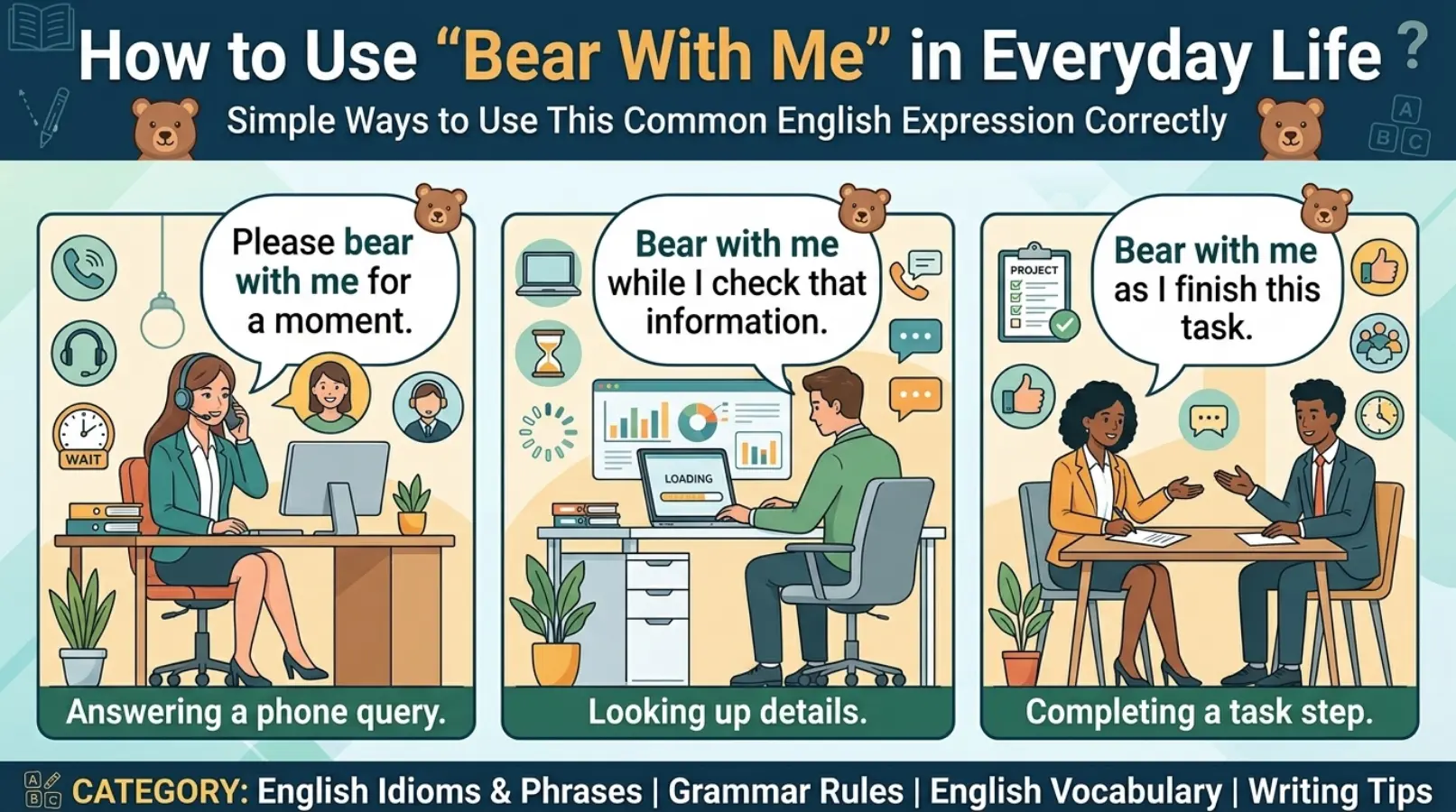
You can use this phrase in many situations.
At Work
- Bear with me while I prepare the report.
- Please bear with me during the presentation.
In Customer Service
- Bear with me while I check your account.
- Thank you for bearing with us.
In School
- Bear with me while I solve the problem.
- Bear with me as I explain the lesson.
Online Meetings
- Bear with me; my internet is slow.
- Bear with me while I share my screen.
Real-Life Examples of Bear With Me
Here are practical examples.
Example 1: Technical Issue
“Bear with me while I restart the computer.”
Example 2: Finding Information
“Please bear with me while I look up your order.”
Example 3: Learning Something New
“Bear with me as I learn this software.”
Example 4: Public Speaking
“Bear with me for a moment while I organize my notes.”
Common Mistakes People Make
Many writers accidentally use the wrong phrase.
Mistake #1: Writing “Bare With Me”
❌ Bare with me while I check.
✅ Bear with me while I check.
Mistake #2: Assuming Both Are Correct
Some people think both versions work.
They do not.
Only “bear with me” fits most situations.
Mistake #3: Autocorrect Errors
Some devices replace words automatically.
Always double-check before publishing important content.
Easy Tricks to Remember the Correct Phrase
Memory tricks make learning easier.
Trick 1: Think of Patience
Bear = tolerate.
If you want patience, choose bear.
Trick 2: Use This Sentence
“Please be patient with me.”
Now replace “be patient” with “bear.”
Result:
“Please bear with me.”
Trick 3: Remember What Bare Means
Bare means uncovered.
If clothes are not involved, you probably need bear.
Bear With Me in Professional Writing
Professional communication requires correct grammar.
Using the wrong phrase may look careless.
Correct Business Examples
- Bear with me while I review the contract.
- Please bear with us during maintenance.
- Bear with me while I gather the information.
Why It Matters
Correct language:
- Builds trust
- Improves professionalism
- Shows attention to detail
Similar Expressions and Synonyms
You can use several alternatives.
Synonyms for Bear With Me
- Please wait
- Be patient
- Hold on
- Give me a moment
- One moment please
- Please stay with me
- Allow me a minute
Example
Instead of:
“Bear with me while I check.”
You can say:
“Please wait while I check.”
Expert Insights: Why This Difference Matters
Grammar experts often highlight homophone errors because they affect credibility.
A small mistake can create confusion.
When readers see the correct phrase, they understand your message immediately.
Writers, students, professionals, and business owners benefit from using accurate language.
Search engines also reward content that demonstrates expertise and accuracy.
Learning common grammar differences like bear or bare with me improves communication skills and writing confidence.
Common Situations Where “Bear With Me” Is Used
During Delays
“Bear with me while the page loads.”
While Solving Problems
“Bear with me as I troubleshoot the issue.”
During Explanations
“Bear with me while I explain the process.”
During Training
“Bear with me as I learn the new system.”
These situations all involve patience.
Frequently Asked Questions (FAQs)
Is it bear with me or bare with me?
The correct phrase is bear with me.
What does bear with me mean?
It means please be patient with me.
Is bare with me ever correct?
Yes, but only if you literally mean “uncover yourself with me.” This usage is rare.
Why is bear with me correct?
Because the word bear means to tolerate or endure.
Is bear with me formal?
Yes. It works in both formal and informal communication.
Can I use bear with me in emails?
Yes. It is common in professional emails.
What is another way to say bear with me?
You can say:
- Please wait
- Hold on
- Give me a moment
- Be patient
Is bear with me grammatically correct?
Yes. It is a standard English expression.
Conclusion
Understanding bear or bare with me is simple once you know the difference. The correct phrase is “bear with me,” which means please be patient with me. The word bear relates to enduring or tolerating something, while bare means uncovered or exposed.
Because these words sound the same, many people accidentally choose the wrong spelling. However, remembering that “bear” means patience can help you avoid this common mistake.
Whether you are writing emails, school assignments, blog posts, or professional documents, using bear with me correctly improves clarity and credibility. The next time you need someone to wait, you will know exactly which phrase to use.