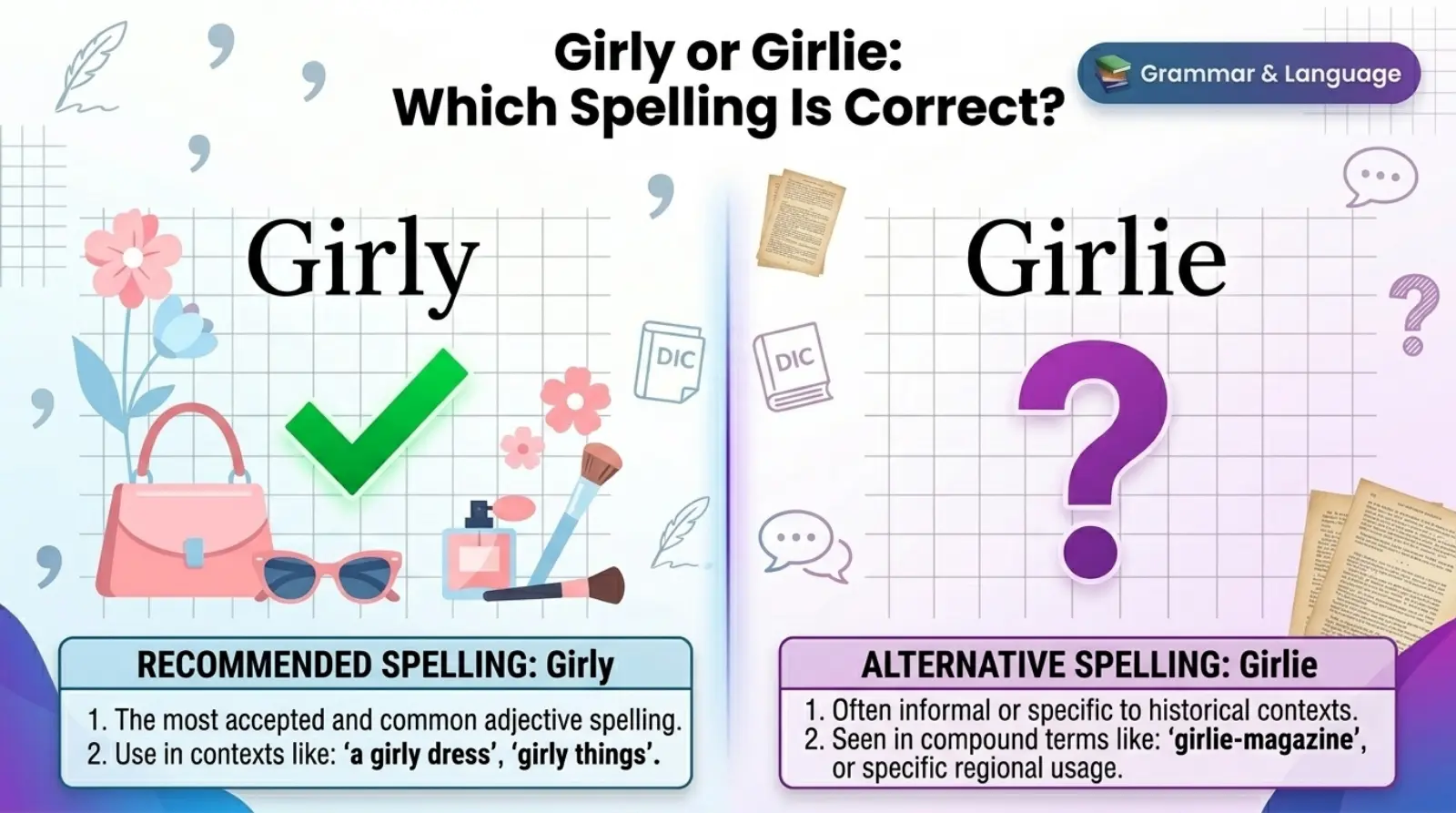
Girly or girlie is a common spelling question that confuses many English learners and writers. Both words look similar, and both describe things associated with girls or a feminine style. However, there are small differences in usage, tone, and popularity.
Many people see these words in social media posts, fashion blogs, text messages, and everyday conversations. As a result, they often wonder which spelling is correct.
The good news is that both girly and girlie are accepted English words. Still, one spelling appears more often in modern writing.
In this guide, you will learn the meaning of each word, the differences between them, common mistakes, examples, and expert tips. By the end, you will know exactly when to use girly and when girlie may work better.
Quick Summary Box
- Girly and girlie are both correct spellings.
- Both words relate to girls or feminine qualities.
- Girly is the more common modern spelling.
- Girlie often sounds more playful or affectionate.
- Most formal and online writing prefers girly.
- Context matters more than strict grammar rules.
- Both words can be adjectives or informal nouns.
What Does Girly Mean?
Girly describes something that has qualities traditionally linked to girls or femininity.
Simple Definition
Girly means feminine, girl-like, or associated with things many people consider feminine.
Examples
- She loves girly clothes.
- The room has a girly design.
- Pink flowers create a girly look.
- Her style is very girly.
The word often appears in fashion, beauty, lifestyle, and social media content.
What Does Girlie Mean?
Girlie has a similar meaning but often carries a softer or more affectionate tone.
Simple Definition
Girlie means girl-like or feminine and can also be used as a friendly nickname.
Examples
- Hey, girlie! How are you?
- She enjoys girlie magazines.
- The party had a fun girlie theme.
People frequently use girlie in casual conversations rather than formal writing.
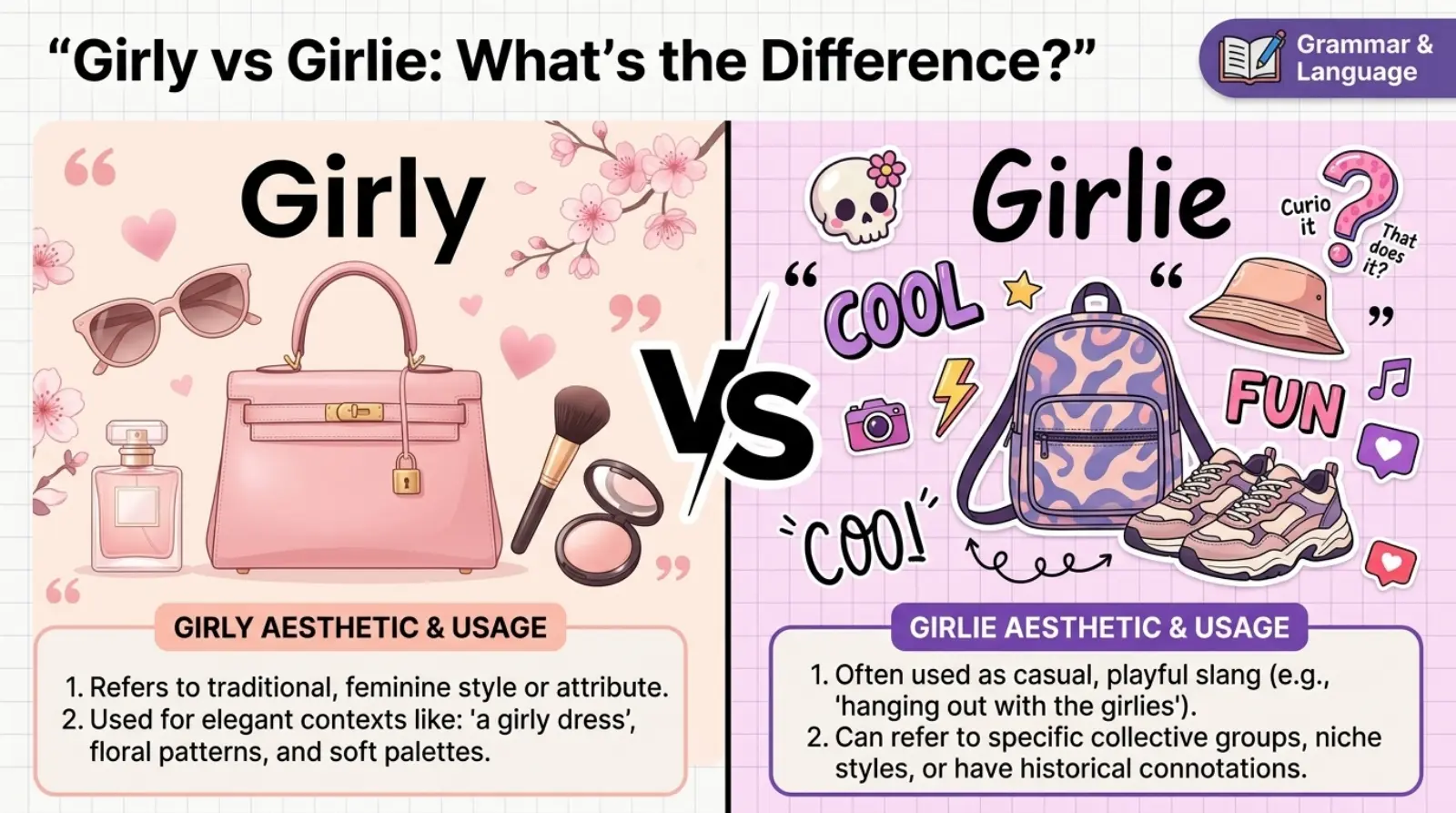
Girly vs Girlie: What’s the Difference?
Although the meanings overlap, there are subtle differences.
| Feature | Girly | Girlie |
| Modern popularity | Very common | Less common |
| Formal writing | More accepted | Rare |
| Casual conversations | Common | Common |
| Friendly nickname | Rare | Very common |
| Tone | Neutral | Playful and affectionate |
| Social media use | High | Moderate |
Quick Rule
If you are unsure, choose girly. It is the safer and more widely accepted spelling.
Why Are There Two Spellings?
English often has words with multiple accepted spellings.
The difference developed through informal language and cultural usage.
How It Happened
- Girly became the standard adjective.
- Girlie developed as a cute or affectionate variation.
- Popular culture helped keep both versions alive.
Today, both spellings remain understandable to English speakers.
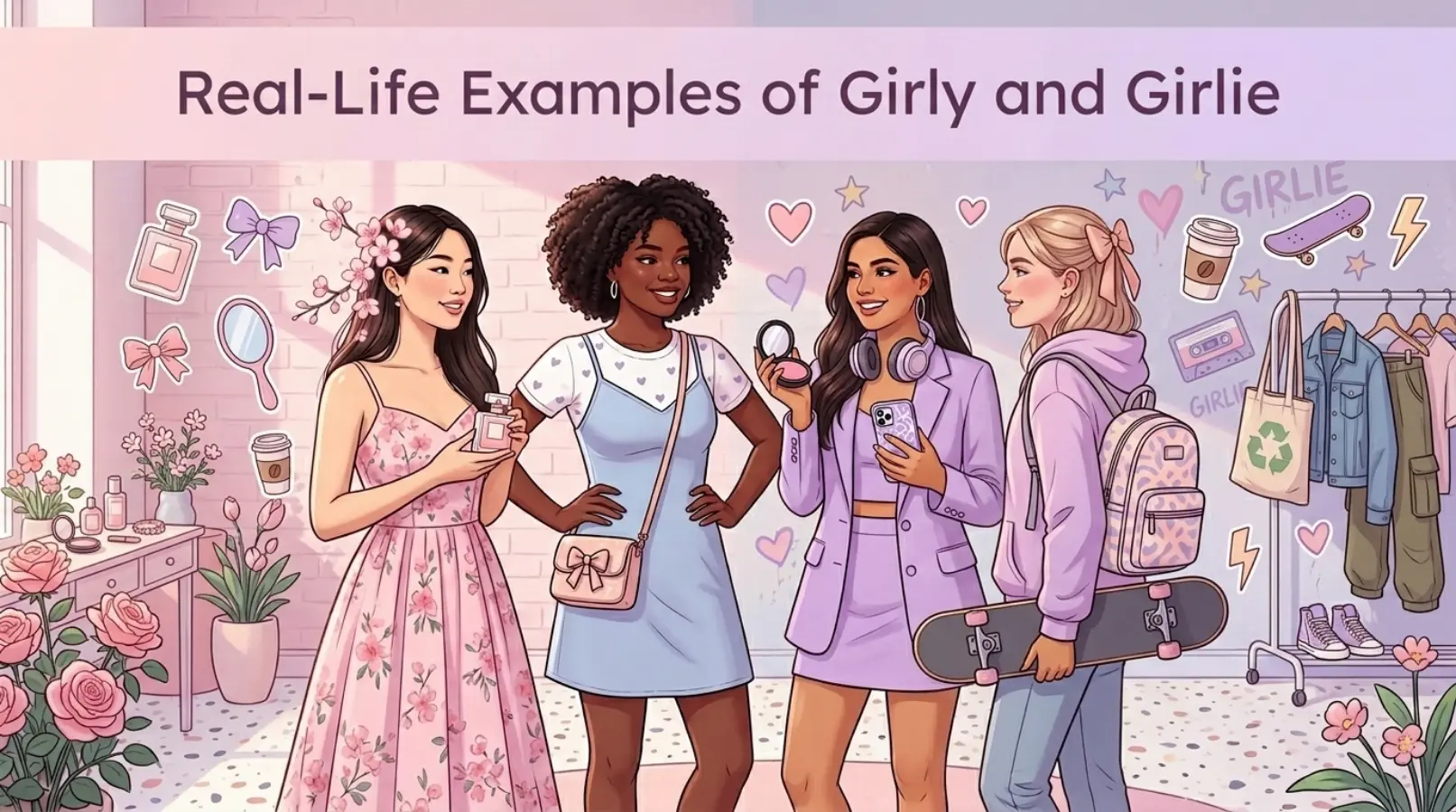
Real-Life Examples of Girly and Girlie
Seeing words in context makes learning easier.
Examples Using Girly
- She bought a girly handbag.
- The website has a girly aesthetic.
- Her bedroom feels bright and girly.
- Many beauty brands use girly colors.
Examples Using Girlie
- Thanks for calling, girlie.
- The movie had a girlie charm.
- She sent a message saying, “Good morning, girlie.”
- The group planned a girlie night out.
Notice that girlie often appears in personal conversations.
When Should You Use Girly?
Use girly when describing appearance, style, products, or personality traits.
Best Situations
- Blog articles
- Fashion content
- Product descriptions
- School assignments
- Social media captions
- Lifestyle writing
Examples
Girly dress
Girly bedroom
These combinations sound natural to most readers.
When Should You Use Girlie?
Use girlie when you want a warm, playful, or friendly tone.
Best Situations
- Text messages
- Friendly conversations
- Social media comments
- Nicknames
- Informal speech
Examples
Hi, girlie!
You look great, girlie!
Let’s have a girlie day out.
This spelling feels more personal and conversational.
Common Mistakes People Make
Many writers misuse these words because they assume one spelling is always wrong.
Mistake 1: Thinking Girlie Is Incorrect
Wrong belief:
Girlie is not a real word.
Correct:
Girlie is a valid informal English word.
Mistake 2: Using Girlie in Formal Writing
Less preferred:
The company launched a girlie product line.
Better:
The company launched a girly product line.
Mistake 3: Assuming Both Words Always Mean the Same Thing
While similar, the tone often differs.
- Girly = standard adjective
- Girlie = playful or affectionate
Common Phrases With Girly
Here are popular combinations people use online.
Fashion
- Girly dress
- Girly outfit
- Girly fashion
- Girly style
Home Decor
- Girly bedroom
- Girly room ideas
- Girly wallpaper
Beauty
- Girly makeup
- Girly nails
- Girly hairstyles
These phrases receive significant search interest online.
How Girly Is Used in Modern Culture
The word girly appears frequently in modern media.
Popular Areas
- Fashion blogs
- Beauty influencers
- Lifestyle websites
- Pinterest boards
- Instagram captions
- TikTok trends
People often use it to describe feminine colors, clothing, and aesthetics.
Examples include:
- Pink-themed rooms
- Floral dresses
- Beauty products
- Cute accessories
However, being girly does not mean following a strict stereotype. People define femininity in many different ways today.
Tips for Choosing the Right Word
These simple tips help you choose confidently.
Use Girly If:
- Writing an article
- Creating website content
- Describing products
- Writing professionally
- Targeting a broad audience
Use Girlie If:
- Talking to friends
- Sending texts
- Writing playful captions
- Using nicknames
- Creating a casual tone
Easy Memory Trick
Think of girly as the standard version.
Think of girlie as the friendlier version.
Expert Insights: Why Correct Word Choice Matters
Choosing the right word improves communication.
Readers quickly understand your message when you use familiar language.
Expert Tips
- Match the word to your audience.
- Use girly for professional content.
- Use girlie for personal conversations.
- Stay consistent throughout your writing.
- Consider tone before selecting a spelling.
Small word choices can affect readability, SEO performance, and audience engagement.
Girly or Girlie in Everyday Life
You will likely encounter both words regularly.
Social Media
Most influencers prefer girly.
Example:
- Girly outfit ideas
- Girly room makeover
Text Messages
Many people prefer girlie.
Example:
- Hey girlie, what’s up?
Online Stores
Most brands use girly because it looks more professional and familiar.
Frequently Asked Questions
Is girly a real word?
Yes. Girly is a recognized English word that describes feminine qualities or styles.
Is girlie a real word?
Yes. Girlie is also a valid English word, usually used informally.
Which spelling is more common?
Girly is much more common in modern writing and online content.
Can I use girly and girlie interchangeably?
Often yes, but the tone may change slightly.
Is girlie informal?
Yes. Girlie usually sounds more casual and affectionate.
Is girly offensive?
Not usually. However, context and tone can affect how people interpret it.
Which spelling should I use in professional writing?
Use girly because it is more widely accepted and recognized.
Why do people say “Hey girlie”?
It is often used as a friendly greeting among friends.
Conclusion
The debate over girly or girlie is simpler than it seems. Both spellings are correct and accepted in English. The main difference lies in tone and usage. Girly serves as the standard and more common spelling, especially in articles, product descriptions, and professional content. Girlie, on the other hand, creates a warmer and more playful feeling, making it popular in casual conversations and friendly messages.
When in doubt, choose girly because it works in most situations. However, if you want a personal and affectionate tone, girlie can be a great choice. Understanding this small distinction helps you write more naturally and communicate more effectively.