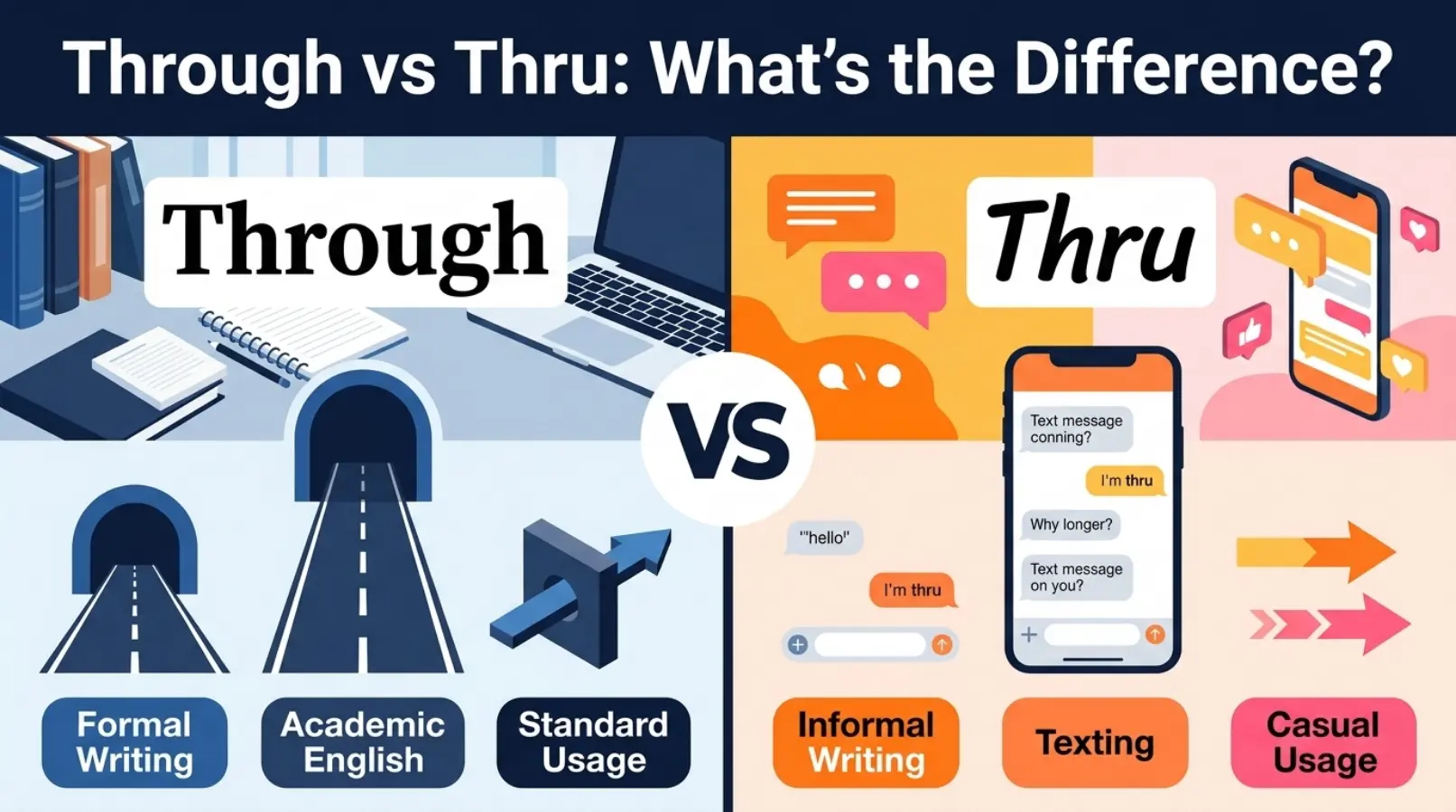
Through or thru is a common English spelling question people search every day. Many writers get confused about which one is correct.
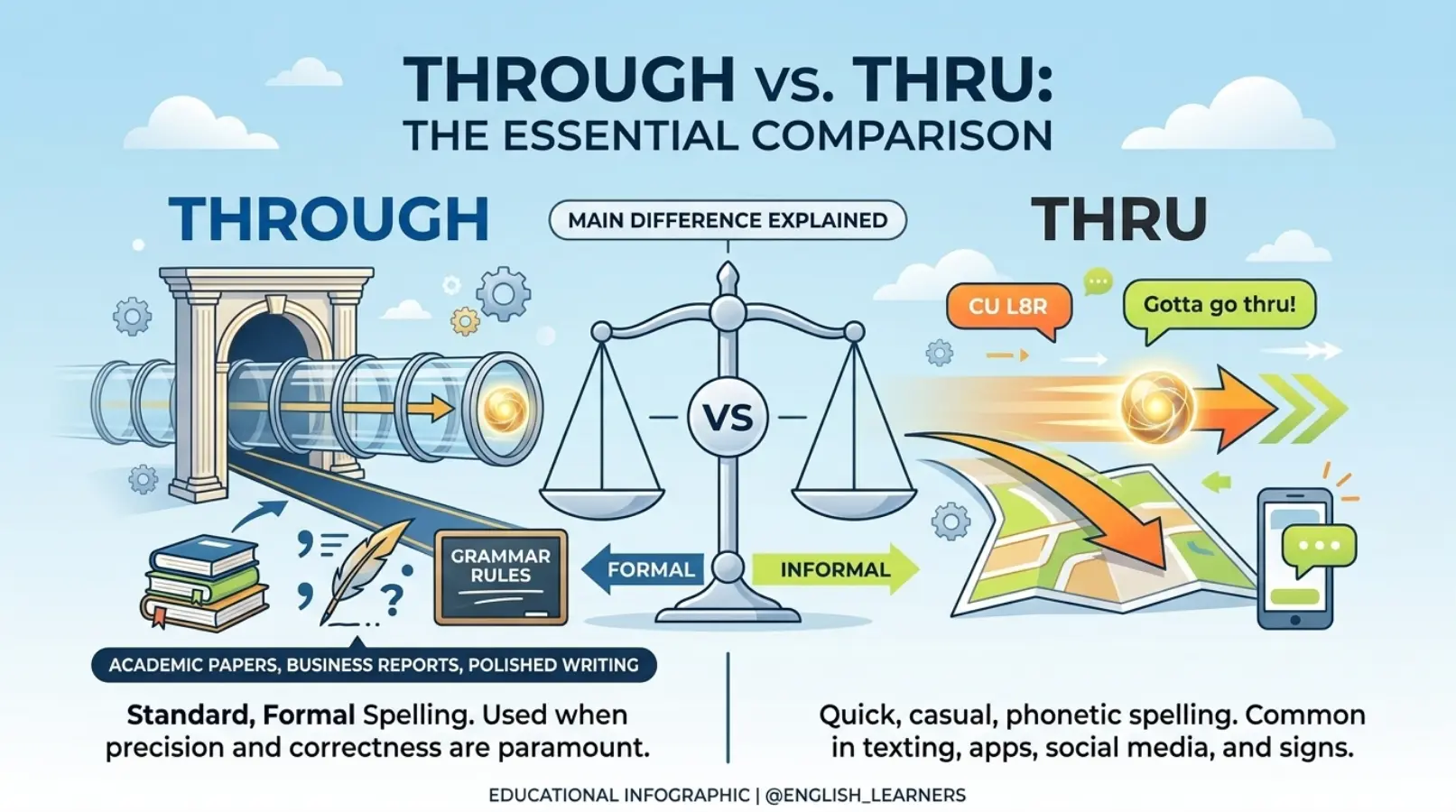
Both words have the same meaning, but they are used in different situations. “Through” is the standard English spelling used in formal writing. “Thru” is an informal version used in signs, texts, and casual writing.
Understanding the difference helps you write clearly and correctly. It also improves your grammar in school, blogs, and professional work.
In this guide, you will learn the meaning, differences, real examples, and correct usage of “through or thru.” You will also see a comparison table, common mistakes, and expert writing tips.
By the end, you will know exactly when to use each word without confusion.
Quick Summary Box
- “Through” and “thru” have the same meaning
- “Through” is correct in formal writing
- “Thru” is informal and mostly used in signs
- Both mean: entering one side and exiting the other
- Example: “Go through the tunnel” or “Drive-thru”
- “Through” is preferred in exams, essays, and business writing
What Does “Through” Mean?
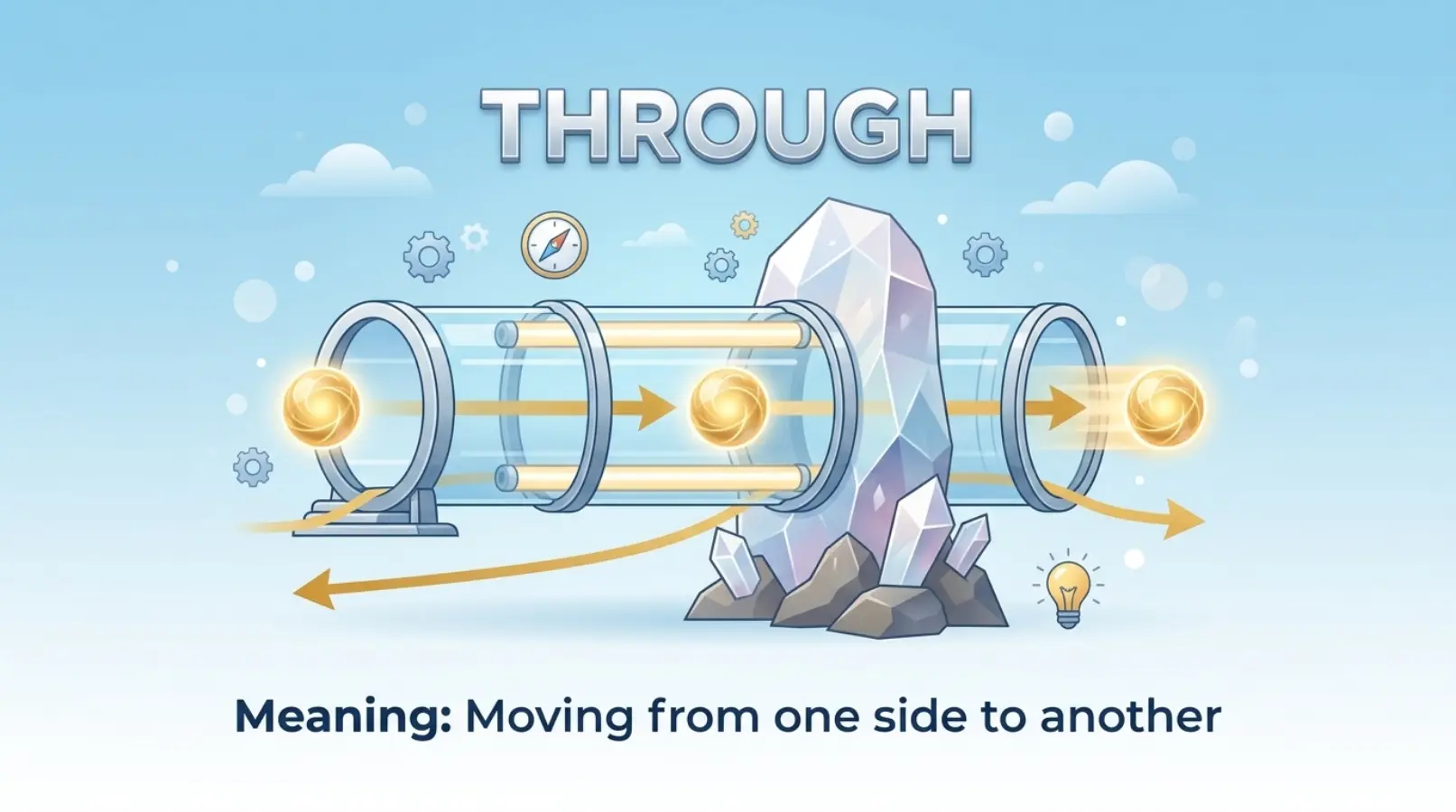
“Through” means moving from one side to another side.
It can also mean:
- Finished something
- By means of something
- From start to end
Simple meaning:
Going inside something and coming out the other side.
Example sentences:
- I walked through the park.
- She read through the book.
- We worked through the night.
What Does “Thru” Mean?
“Thru” is an informal spelling of “through.”
It is not used in formal writing. It is mostly seen in:
- Road signs
- Drive-thru restaurants
- Text messages
- Advertising
Example sentences:
- Drive-thru service is open.
- Go thru this lane (informal use).
Even though it is popular, it is not grammatically standard.
Through vs Thru (Main Difference)
The main difference is formality.
| Feature | Through | Thru |
| Spelling | Standard English | Informal spelling |
| Usage | Formal writing | Casual or signs |
| Acceptable in exams | Yes | No |
| Used in books | Yes | Rarely |
| Example | Walk through the door | Drive-thru coffee |
When to Use “Through”
Use “through” in formal situations.
Use it in:
- School essays
- Emails
- Reports
- Books
- Professional writing
Examples:
- The message went through the system.
- She studied through the night.
- We passed through the city.
“Through” is always safe in formal English.
When to Use “Thru”
Use “thru” only in informal or commercial contexts.
Common uses:
- Drive-thru restaurants
- ATM drive-thru lanes
- Quick signs
- Text messages
Examples:
- McDonald’s Drive-Thru is busy.
- Bank drive-thru closes at 5 PM.
Avoid using it in school or professional writing.
Real-Life Examples of Through vs Thru
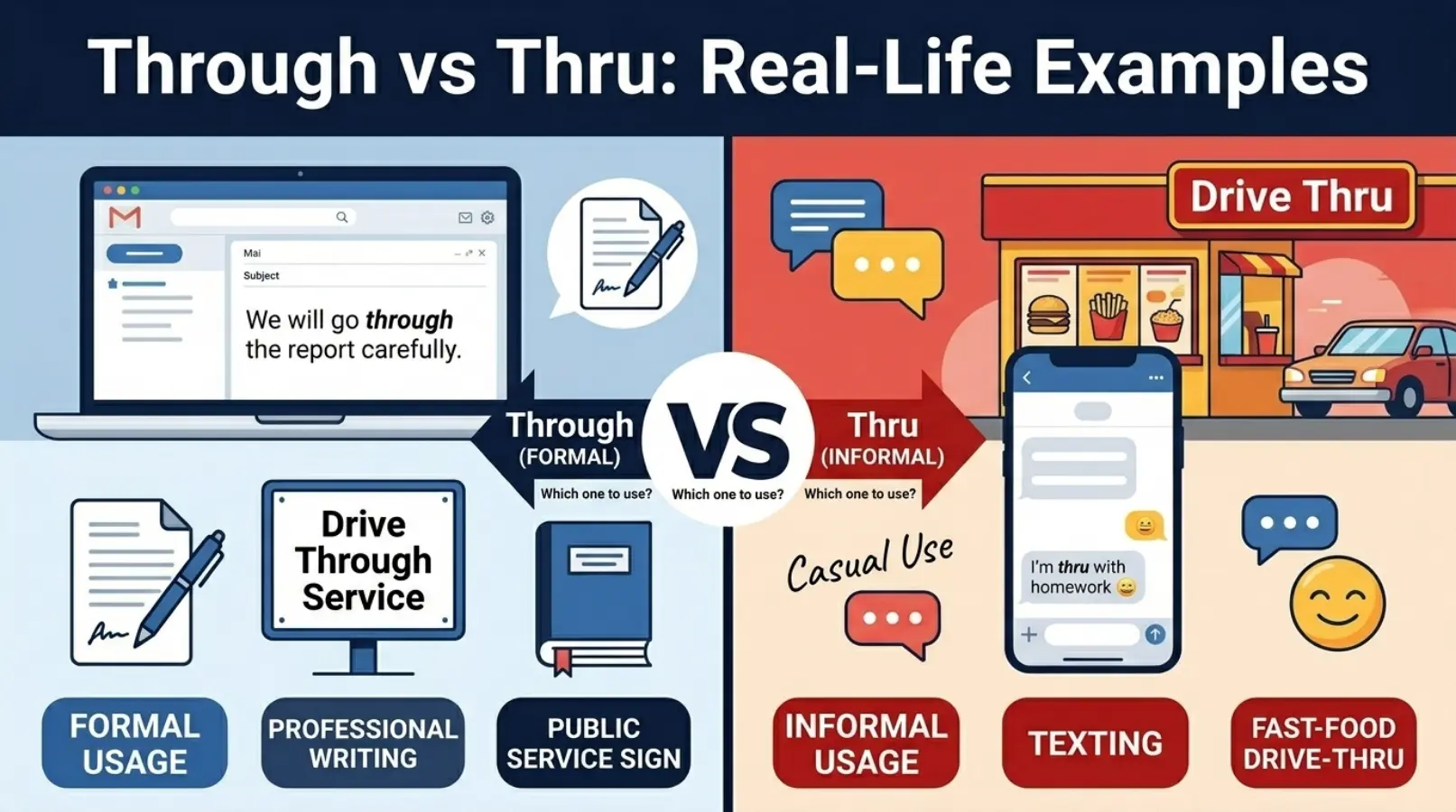
Formal:
- I went through the instructions carefully.
- The train passes through the tunnel.
Informal:
- Let’s grab food from the drive-thru.
- Go thru that line quickly.
Both express similar meaning, but tone changes.
Common Mistakes People Make
1. Using “thru” in exams
Wrong: I read thru the book.
Correct: I read through the book.
2. Mixing formal and informal writing
Wrong: The report went thru review.
Correct: The report went through review.
3. Thinking they have different meanings
Both mean the same, but style differs.
4. Overusing “thru” in writing
It makes writing look unprofessional.
Easy Tips to Remember
- Use “through” in all formal writing
- Use “thru” only for signs or shortcuts
- Think: “Thru is shortcut spelling”
- If unsure, always choose “through”
Quick trick:
If it is for school or work → use THROUGH
Usage in Daily Life
You see “through” and “thru” everywhere.
At school:
- Read through chapters
- Go through exercises
On roads:
- No Through Traffic
- Drive-thru signs
In digital life:
- Scroll through messages
- Go through emails
Comparison in Sentences
| Situation | Through | Thru |
| School | I went through notes | Not used |
| Restaurant | Not used | Drive-thru order |
| Office | We went through report | Not used |
| Road sign | No through traffic | Drive-thru lane |
Why “Through” Is More Important
“Through” is part of standard English grammar.
It helps:
- Improve writing quality
- Make communication clear
- Pass exams and tests
- Look professional
Using correct spelling builds trust in your writing.
Expert Insights (EEAT Section)
Language experts and educators agree on one rule:
Always use “through” in formal writing.
“Thru” is accepted only in branding and signage. It is not part of standard grammar rules.
Why this matters:
- Employers prefer correct spelling
- Academic writing needs formal English
- SEO content ranks better with proper grammar
Clear language improves reader trust and engagement.
FAQs About Through or Thru
1. Is “thru” correct English?
Yes, but only informal. “Through” is correct in formal writing.
2. Can I use “thru” in exams?
No, always use “through.”
3. Why do signs use “thru”?
Because it is shorter and easier to read quickly.
4. Do “through” and “thru” mean the same?
Yes, both have the same meaning.
5. Which one should I learn first?
Always learn “through” first.
6. Is “thru” slang?
Yes, it is informal shorthand.
7. Can I use “thru” in emails?
No, use “through” in emails.
Conclusion
The difference between through or thru is simple but important. Both words mean the same thing. However, their usage is not the same.
“Through” is the correct and formal spelling used in writing, exams, and professional communication. “Thru” is an informal version used in signs, advertisements, and casual messages.
If you want to improve your English writing, always prefer “through.” It makes your writing clearer, more professional, and more trustworthy.
Remember this simple rule:
Formal writing = through
Informal signs = thru
By understanding this difference, you can avoid mistakes and write with confidence in any situation.