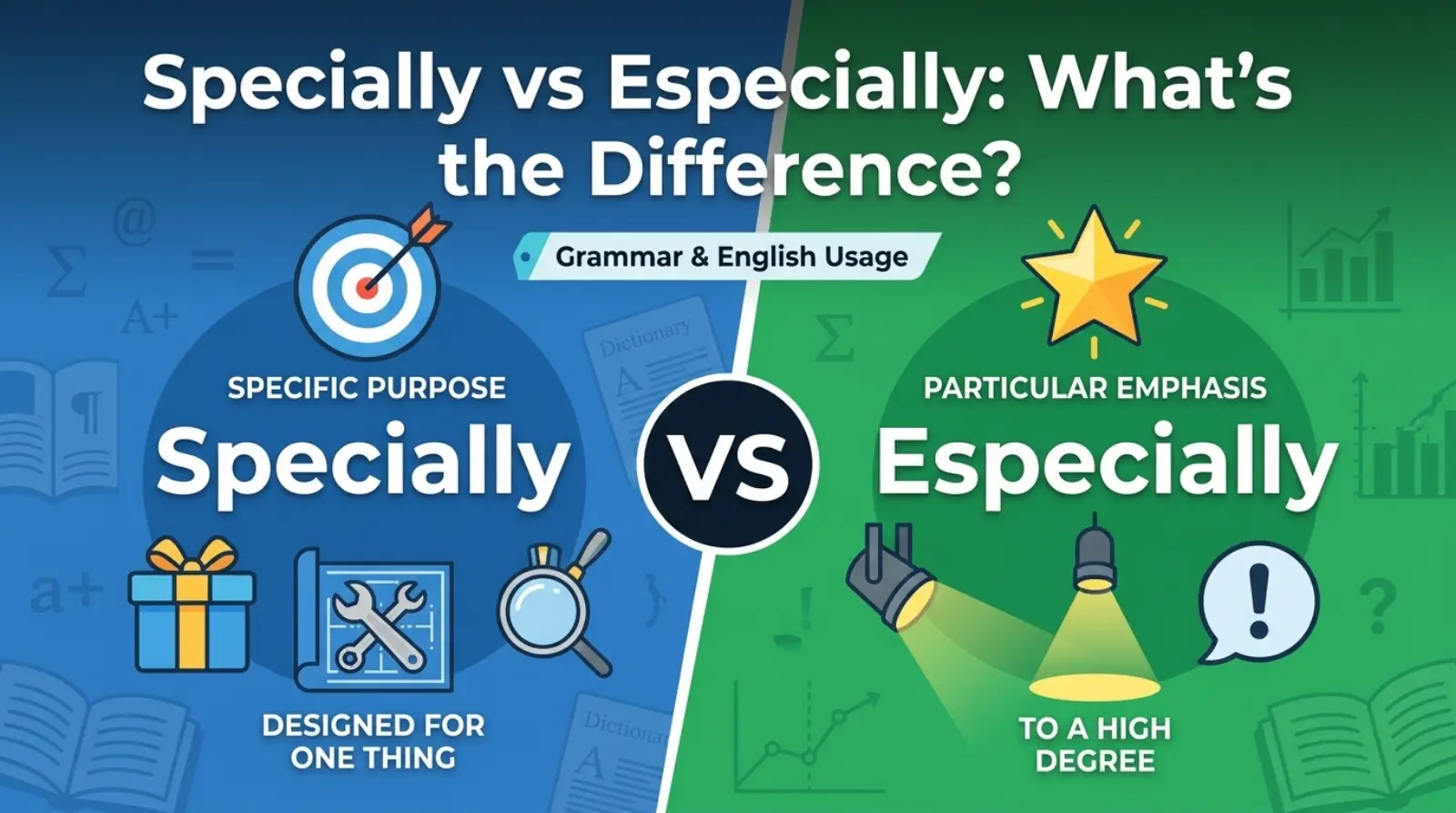
Specially or especially is a common grammar question that confuses many English learners and writers. These two words look similar, but they do not always mean the same thing.
Many people use them interchangeably. However, using the wrong word can change the meaning of a sentence. That is why it is important to understand the difference.
In simple terms, especially means “particularly” or “more than others.” On the other hand, specially means “for a specific purpose.”
Learning the correct usage can improve your writing and speaking skills. It also helps you avoid common grammar mistakes.
In this guide, you will learn the meanings, differences, examples, tips, and expert insights about this term. By the end, you will know exactly when to use each word.
Quick Summary Box
- Especially means particularly or more than others.
- Specially means for a particular purpose.
- Use especially when highlighting something important.
- Both are adverbs but have different meanings.
- They cannot always replace each other.
- Understanding the difference improves grammar accuracy.
What Does Especially Mean?
The word especially means more than usual, particularly, or above all others.
You use it when you want to emphasize something.
Examples
- I love fruits, especially mangoes.
- She enjoys outdoor activities, especially hiking.
- The weather is beautiful, especially in spring.
- Children need healthy food, especially during growth years.
In these examples, the word points to something that stands out from the rest.
What Does Specially Mean?
The word specially means for a specific purpose, in a special manner, or particularly designed for something.
Examples
- This cake was made specially for your birthday.
- The room was decorated specially for the event.
- These shoes were designed specially for runners.
- The company created the software specially for schools.
Here, the word shows that something was made or done for a particular reason.
Specially vs Especially: Key Difference
The main difference is simple:
- Especially = particularly
- Specially = for a specific purpose
Think of it this way:
If you can replace the word with “particularly,” use especially.
If you can replace the word with “for a specific purpose,” use specially.
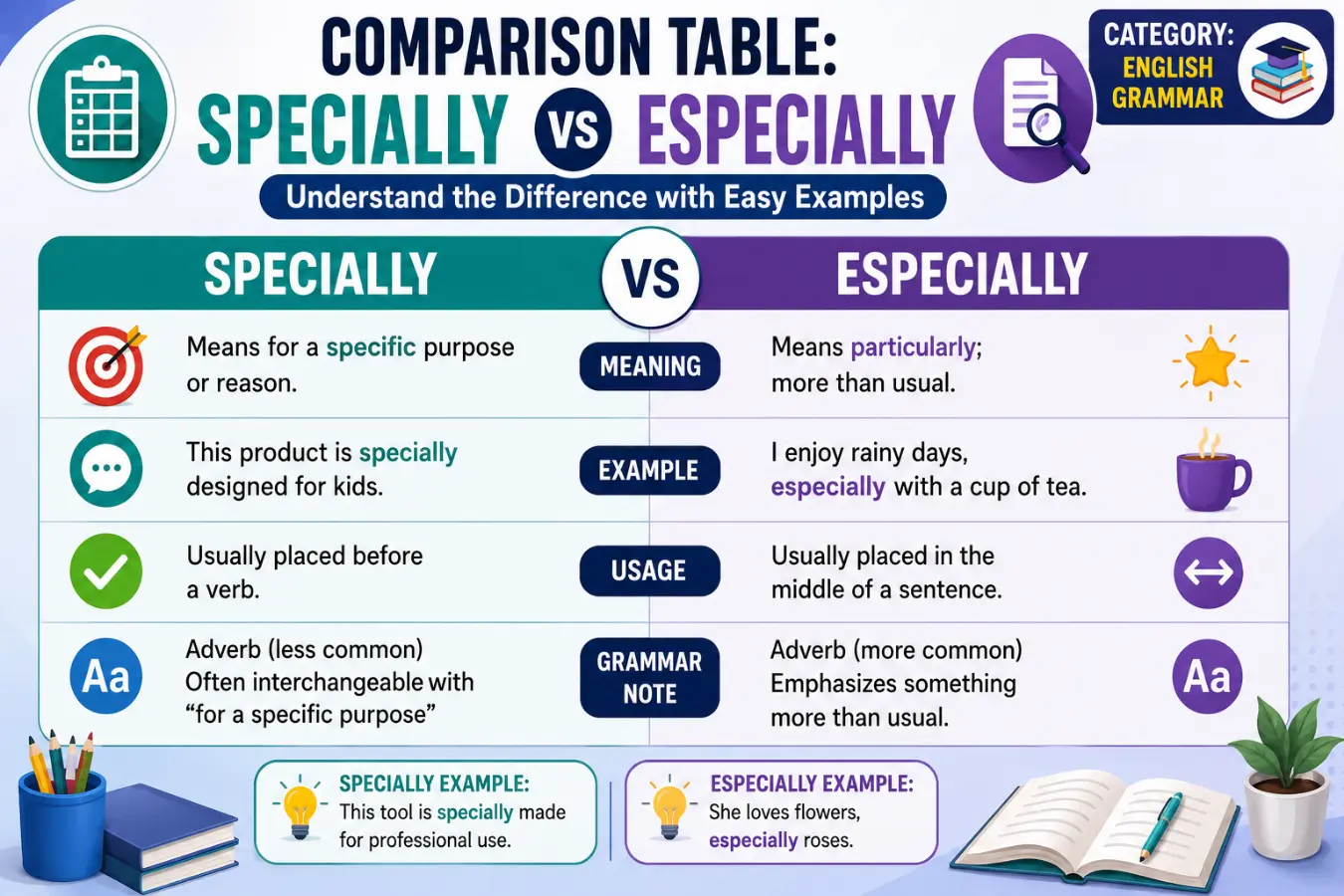
Comparison Table: Specially or Especially
| Feature | Especially | Specially |
| Meaning | Particularly, above all | For a specific purpose |
| Usage | Emphasis | Specific intention |
| Common Context | Preferences, importance | Design, preparation |
| Similar Words | Particularly, notably | Specifically, intentionally |
| Example | I like winter, especially December. | This gift was made specially for you. |
When Should You Use Especially?
Use especially when something deserves extra attention.
Common Situations
1. Showing Preference
- I enjoy sports, especially football.
2. Giving Emphasis
- The movie was good, especially the ending.
3. Highlighting Importance
- Water is important, especially in hot weather.
4. Talking About One Item in a Group
- She likes flowers, especially roses.
When Should You Use Specially?
Use specially when something is created or done for a certain purpose.
Common Situations
1. Custom-Made Items
- The suit was made specially for him.
2. Unique Preparation
- The meal was prepared specially for guests.
3. Purpose-Built Products
- This app was developed specially for students.
4. Special Arrangements
- The hall was decorated specially for the wedding.
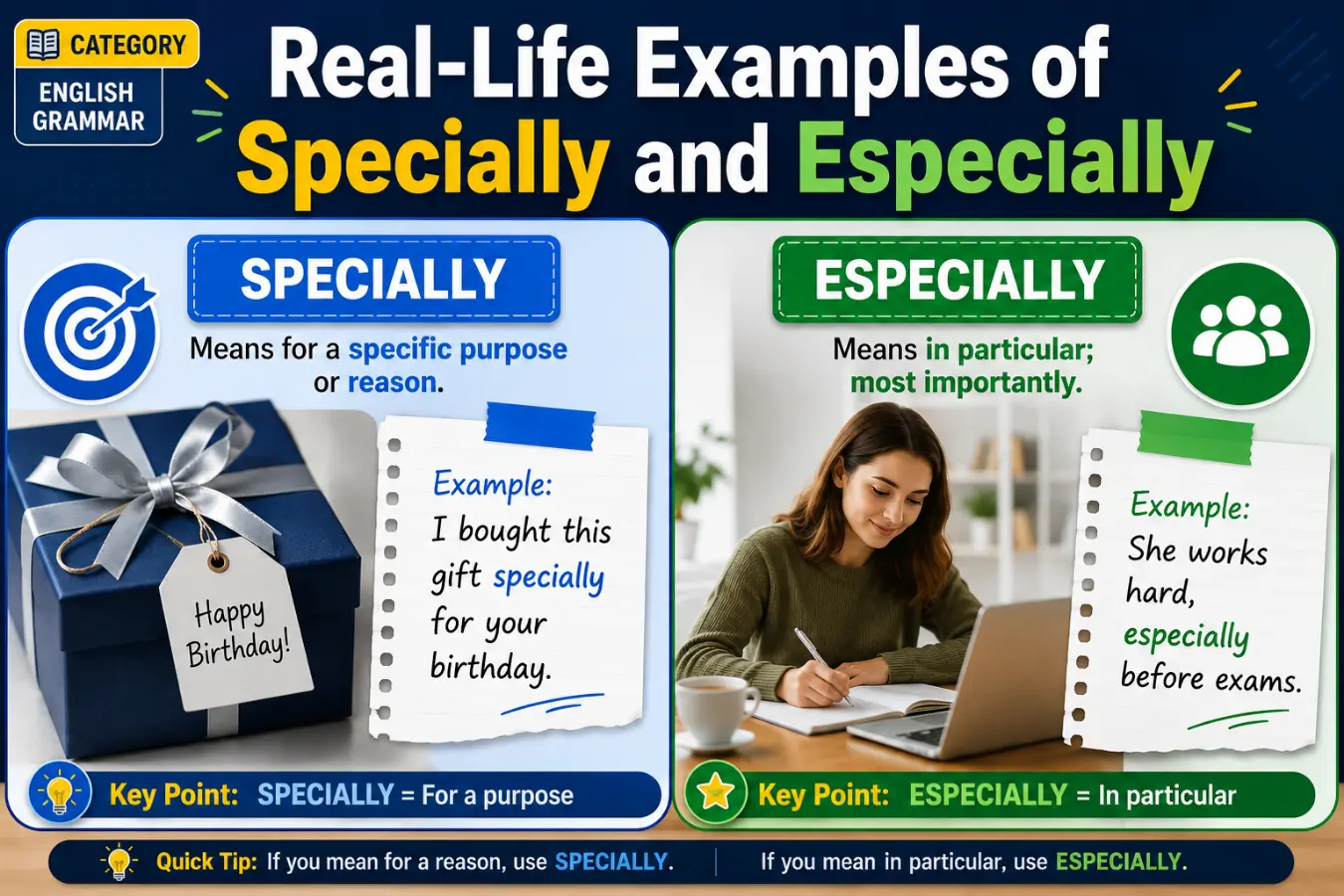
Real-Life Examples of Specially and Especially
Understanding real-world usage makes learning easier.
Especially Examples
- I love all desserts, especially chocolate cake.
- The park looks beautiful, especially at sunset.
- Everyone enjoyed the concert, especially the final performance.
Specially Examples
- This chair was built specially for comfort.
- The package was wrapped specially for shipping.
- The teacher prepared notes specially for beginners.
Common Mistakes People Make
Many writers confuse these words because they sound similar.
Mistake 1
❌ This cake was made especially for your birthday.
✅ This cake was made specially for your birthday.
Why?
The cake was created for a specific purpose.
Mistake 2
❌ I love animals specially dogs.
✅ I love animals especially dogs.
Why?
Dogs are being highlighted among animals.
Mistake 3
❌ The software was especially designed for hospitals.
✅ The software was specially designed for hospitals.
Why?
It was created for a specific purpose.
Easy Trick to Remember the Difference
A simple memory trick can help.
Especially = Extra Importance
The word begins with “es”.
Think:
Especially = Extra Special Attention
Example:
- I enjoy all seasons, especially winter.
Specially = Specific Purpose
Think:
Specially = Specific Job
Example:
- This machine was built specially for factories
Specially and Especially in Everyday English
You may hear both words in daily conversations.
Home
- I love homemade food, especially biryani.
- Mom cooked dinner specially for guests.
Work
- The report is useful, especially for managers.
- The training was designed specially for new employees.
School
- Students enjoy science, especially experiments.
- These lessons were prepared specially for beginners.
Synonyms of Especially and Specially
Using related words improves writing variety.
Synonyms of Especially
- Particularly
- Notably
- Mainly
- Chiefly
- Above all
- In particular
Synonyms of Specially
- Specifically
- Uniquely
- Intentionally
- Purposefully
- Exclusively
- Expressly
Examples in Sentences
Especially
- I enjoy reading, especially mystery novels.
- Summer is fun, especially for children.
- The city looks amazing, especially at night.
- Healthy habits matter, especially exercise.
- She likes music, especially jazz.
Specially
- The gift was wrapped specially for her.
- This laptop was built specially for gaming.
- The room was arranged specially for meetings.
- The company hired staff specially for the project.
- These tools were created specially for engineers.
Why Understanding the Difference Matters
Correct grammar improves communication.
When you use the right word:
- Your writing becomes clearer.
- Readers understand your message faster.
- Professional documents look more polished.
- Academic work becomes more accurate.
- SEO content appears more trustworthy.
Small grammar choices can make a big difference.
Expert Insights: Why Writers Should Know This Rule
Professional writers focus on precision.
Although especially and specially seem similar, they communicate different ideas.
Search engines value clear and accurate content. Readers also trust content that uses proper grammar.
When creating blogs, business documents, or academic papers, choosing the correct word improves credibility.
Grammar accuracy may seem small, but it strengthens the overall quality of your writing.
Frequently Asked Questions (FAQs)
Is specially the same as especially?
No. Especially means particularly, while specially means for a specific purpose.
Can specially and especially be used interchangeably?
Sometimes, but not always. Their meanings are different.
Which word is more common?
Especially is generally more common in everyday English.
Is “made especially for you” wrong?
Not always. It can be acceptable in informal usage. However, made specially for you is often more precise.
What does especially mean?
It means particularly, above all, or more than others.
What does specially mean?
It means for a particular purpose or reason.
How can I remember the difference?
Think:
- Especially = extra importance
- Specially = specific purpose
Is specially formal English?
Yes. It is commonly used in both formal and professional writing.
Conclusion
Understanding specially or especially is easier than many people think. The key difference lies in their purpose. Especially highlights something important or noteworthy, while specially refers to something made or done for a specific purpose.
When you want to emphasize a person, thing, or idea, choose especially. When you describe something created for a particular reason, use specially.
Remember the simple rule: especially = particularly, and specially = for a specific purpose. This quick test can help you choose the correct word every time.
With regular practice, you will avoid common mistakes and write with greater confidence. Mastering small grammar details like this can greatly improve your English communication skills.