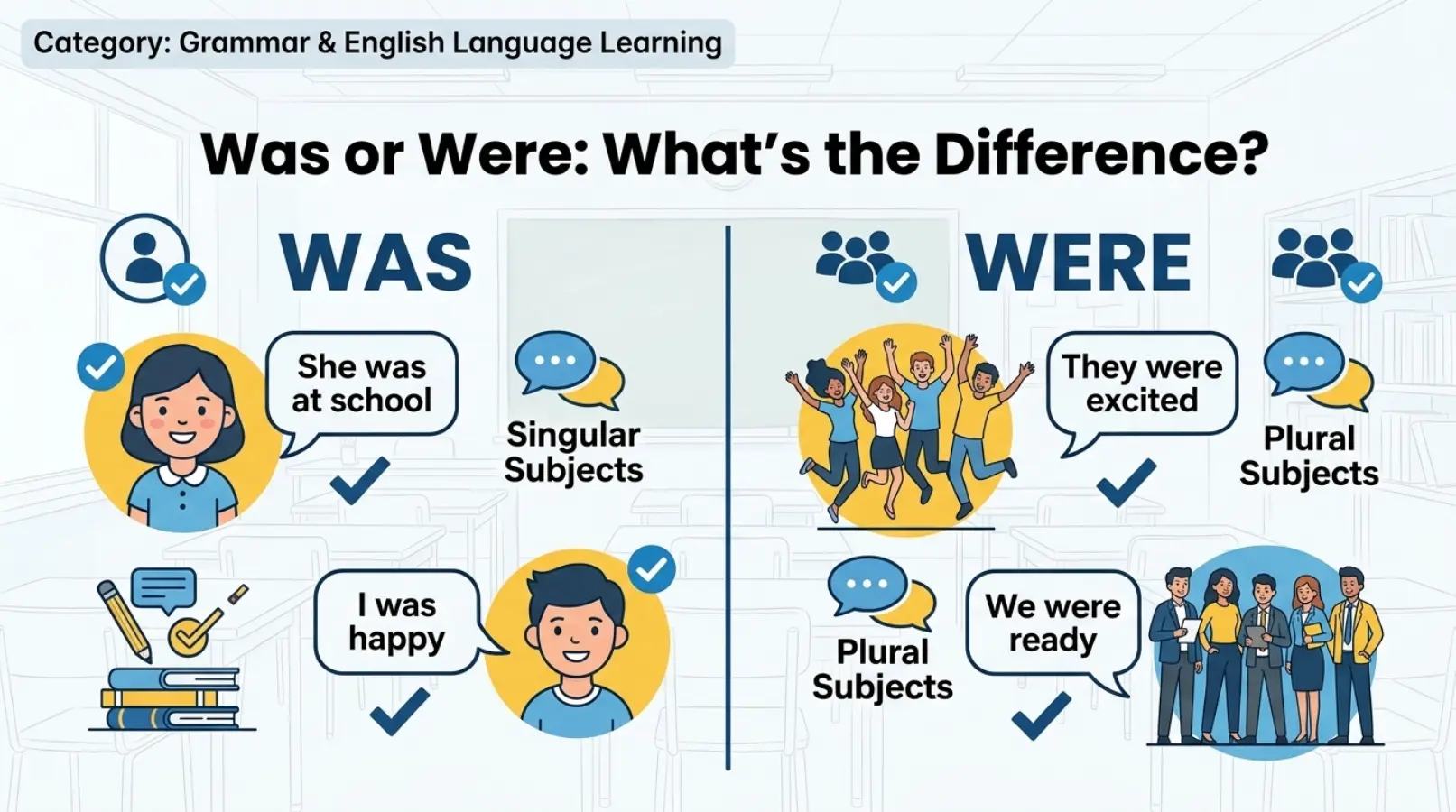
Was or were is one of the most common grammar topics in English. Many learners use these words every day. However, they often feel confused about which one is correct.
The good news is that the rules are simple. Once you understand them, choosing between was and were becomes easy.
Both words are past forms of the verb “to be.” Yet they work with different subjects. Using the wrong one can make a sentence sound incorrect.
In this guide, you will learn the meaning of was or were, simple rules, real-life examples, common mistakes, and expert tips. By the end, you will know exactly when to use each word with confidence.
Quick Summary Box
- Was and were are past tense forms of the verb “to be.”
- Use was with singular subjects.
- Use were with plural subjects.
- Use was with I, he, she, and it.
- Use were with you, we, and they.
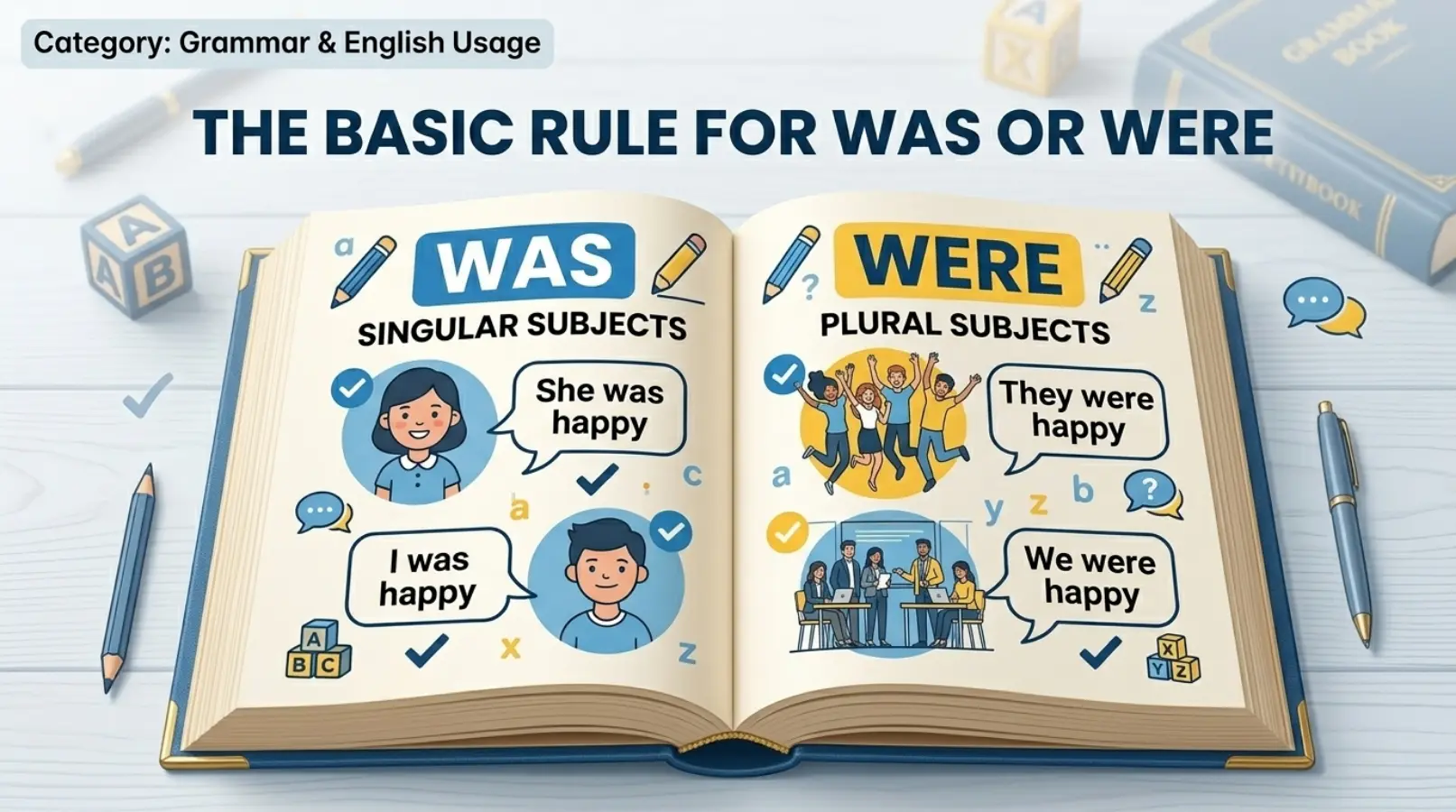
- Example: She was happy.
- Example: They were happy.
- Both words describe actions or situations in the past.
- Correct usage improves grammar and writing quality.
What Do Was and Were Mean?
Was and were are past tense forms of the verb to be.
They help describe:
- Past actions
- Past conditions
- Past situations
- Past feelings
Examples
- I was tired yesterday.
- She was at school.
- They were at the park.
- We were excited about the trip.
Both words talk about something that happened in the past.
The Basic Rule for Was or Were
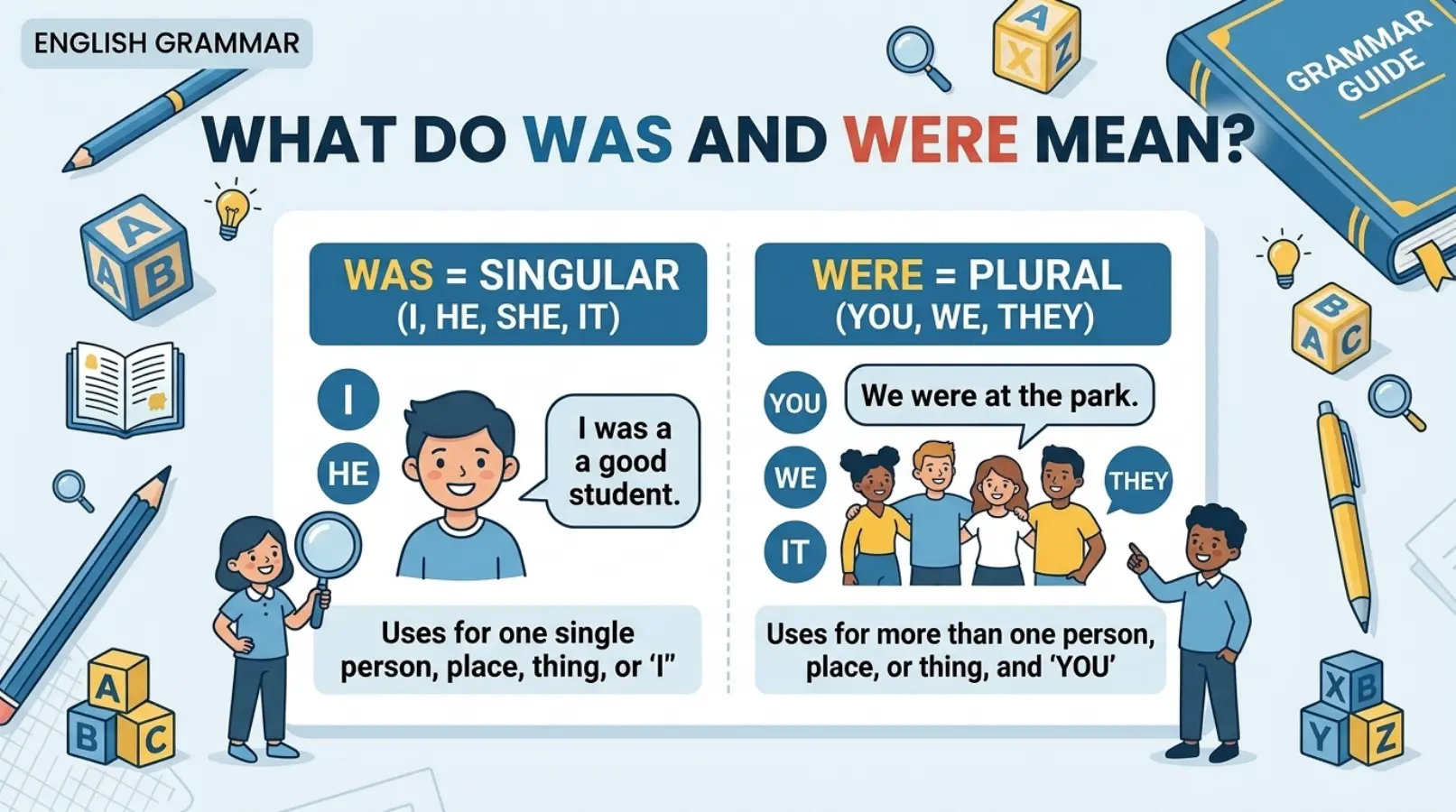
The easiest rule is based on whether the subject is singular or plural.
Use Was With:
- I
- He
- She
- It
- Singular nouns
Use Were With:
- You
- We
- They
- Plural nouns
Examples
| Subject | Correct Form |
| I | Was |
| He | Was |
| She | Was |
| It | Was |
| You | Were |
| We | Were |
| They | Were |
Was vs Were Comparison Table
| Feature | Was | Were |
| Tense | Past | Past |
| Number | Singular | Plural |
| Used With | I, He, She, It | You, We, They |
| Example | He was late. | They were late. |
| Common Use | One person or thing | More than one person or thing |
This table makes the difference between was or were easy to remember.
When to Use Was
Use was when talking about one person, place, thing, or idea in the past.
Examples
- I was hungry.
- He was busy.
- She was kind.
- It was cold outside.
- The dog was sleeping.
Real-Life Sentences
- My phone was on the table.
- The movie was interesting.
- Sarah was at the office.
Remember that was usually works with singular subjects.
When to Use Were
Use were when talking about more than one person, place, thing, or idea.
Examples
- We were ready.
- They were happy.
- The students were quiet.
- The books were expensive.
Real-Life Sentences
- My friends were at the mall.
- The children were playing outside.
- The cars were parked nearby.
Use were whenever the subject is plural.
Special Rule: Why Do We Say “You Were”?
Many learners ask this question.
Even when you refers to one person, English uses were.
Correct Examples
- You were late.
- You were right.
- You were my best friend.
Incorrect Examples
- You was late.
- You was right.
Always remember:
You = Were
Was or Were in Questions
Questions follow the same grammar rules.
Examples With Was
- Was he at home?
- Was she happy?
- Was it raining?
Examples With Were
- Were they ready?
- Were you busy?
- Were the students present?
Structure
- Was + subject + complement?
- Were + subject + complement?
Was or Were in Negative Sentences
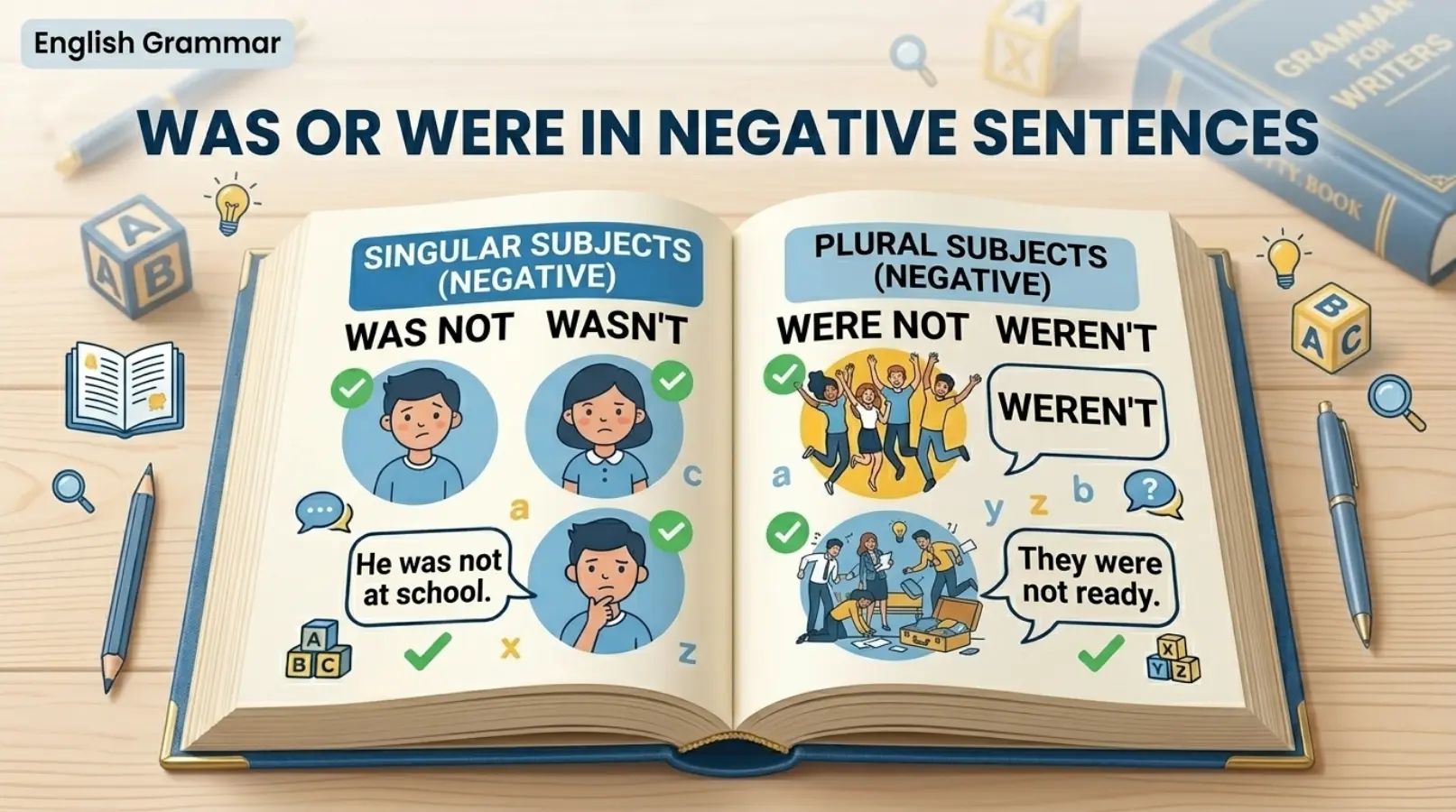
Negative sentences add not after the verb.
Was Not
- I was not tired.
- He was not ready.
- It was not broken.
Were Not
- We were not late.
- They were not hungry.
- You were not wrong.
Short Forms
| Full Form | Contraction |
| Was not | Wasn’t |
| Were not | Weren’t |
Examples
- She wasn’t home.
- They weren’t happy.
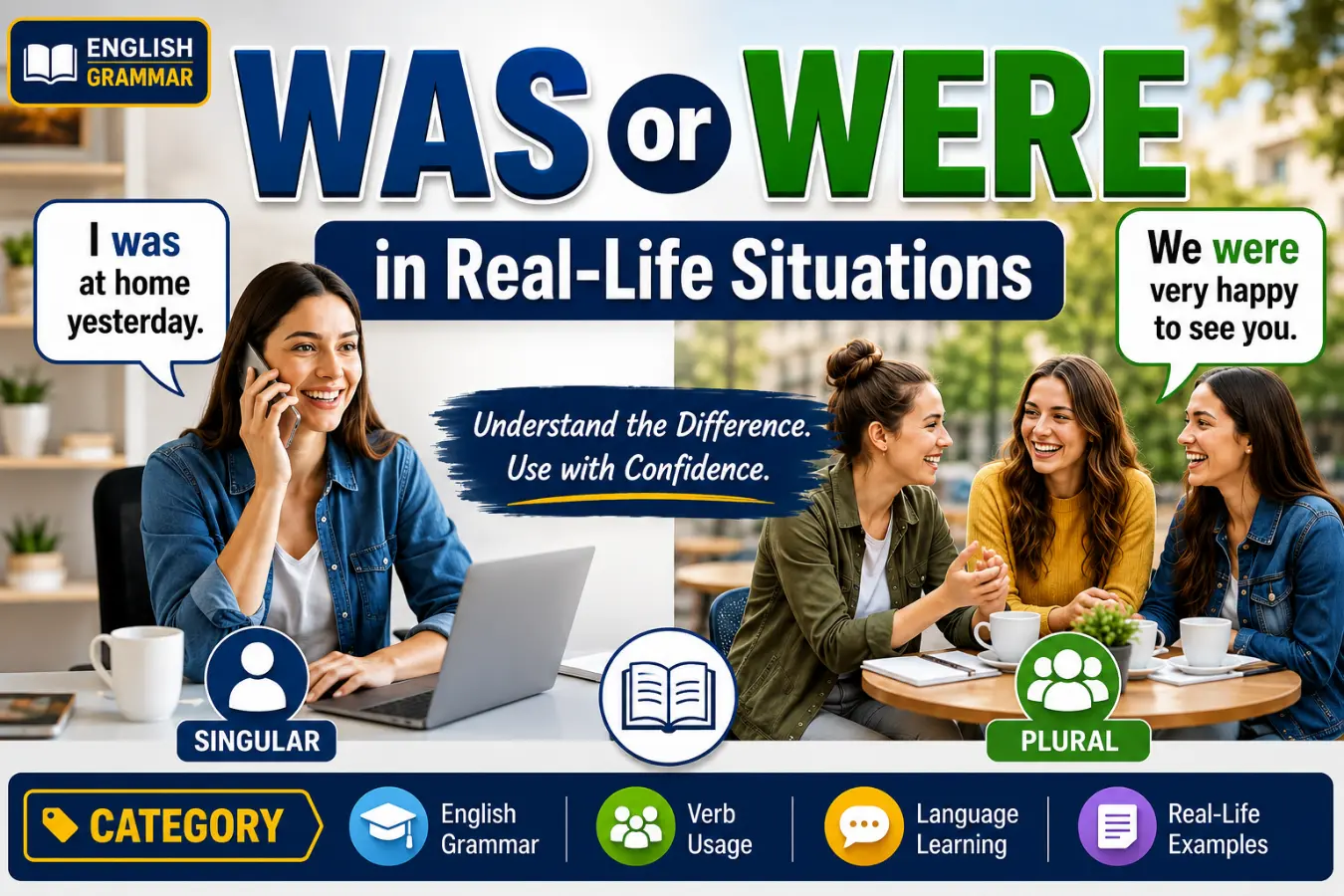
Was or Were in Real-Life Situations
People use these words daily.
School
- The teacher was helpful.
- The students were attentive.
Work
- The meeting was productive.
- The employees were prepared.
Home
- The food was delicious.
- The kids were excited.
During Travel
- The flight was delayed.
- The passengers were patient.
These examples show how often was or were appear in everyday communication.
Common Mistakes With Was or Were
Many writers make simple errors.
Mistake 1: Using Was With Plural Subjects
❌ The boys was playing.
✅ The boys were playing.
Mistake 2: Using Were With Singular Subjects
❌ She were happy.
✅ She was happy.
Mistake 3: Using Was With You
❌ You was correct.
✅ You were correct.
Mistake 4: Ignoring Subject Number
❌ The books was expensive.
✅ The books were expensive.
Checking the subject first prevents most mistakes.
Easy Tricks to Remember Was or Were
These simple tips can help.
Trick 1
Think:
One = Was
- The cat was sleeping.
Trick 2
Think:
Many = Were
- The cats were sleeping.
Trick 3
Memorize This Pattern
- I was
- You were
- He was
- She was
- It was
- We were
- They were
Practice this pattern often.
Expert Insights: Why Correct Usage Matters
Grammar affects communication.
When you use was or were correctly, your writing becomes clearer. Readers understand your message faster. Good grammar also creates a professional impression.
Teachers, employers, and clients notice writing quality. Small grammar mistakes can reduce credibility.
Strong grammar skills improve:
- Academic writing
- Business communication
- Job applications
- Content creation
- Everyday conversations
Learning the difference between was and were is a small step that creates a big impact.
Frequently Asked Questions (FAQs)
1. What is the difference between was and were?
Was is used with singular subjects. Were is used with plural subjects and with you.
2. Do I say I was or I were?
The correct form is I was.
3. Why do we say you were?
English grammar always uses were with you, whether singular or plural.
4. Is it they was or they were?
The correct phrase is they were.
5. Can I use were with a singular noun?
Usually no. However, special conditional sentences may use were.
Example: If I were rich, I would travel.
6. Is she was correct?
Yes. Example: She was happy yesterday.
7. Is we was grammatically correct?
No. The correct form is we were.
8. How can I remember the rule easily?
Remember:
- Singular = Was
- Plural = Were
- You = Were
Practice Sentences
Choose the correct word.
- She ___ at home yesterday.
- They ___ late for class.
- We ___ excited about the game.
- It ___ raining all day.
- You ___ very helpful.
Answers
- Was
- Were
- Were
- Was
- Were
Practicing helps you remember the rules faster.
Conclusion
Understanding was or were is essential for clear and correct English. Both words are past tense forms of the verb to be, but they follow different subject rules. Use was with singular subjects such as I, he, she, and it. Use were with you, we, and they, as well as plural nouns.
The easiest way to remember the rule is simple: one equals was, many equals were. Also remember that you always takes were. With regular practice, these grammar choices become natural.
Whether you are writing emails, school assignments, blog posts, or everyday messages, mastering was or were will improve your confidence and communication skills.