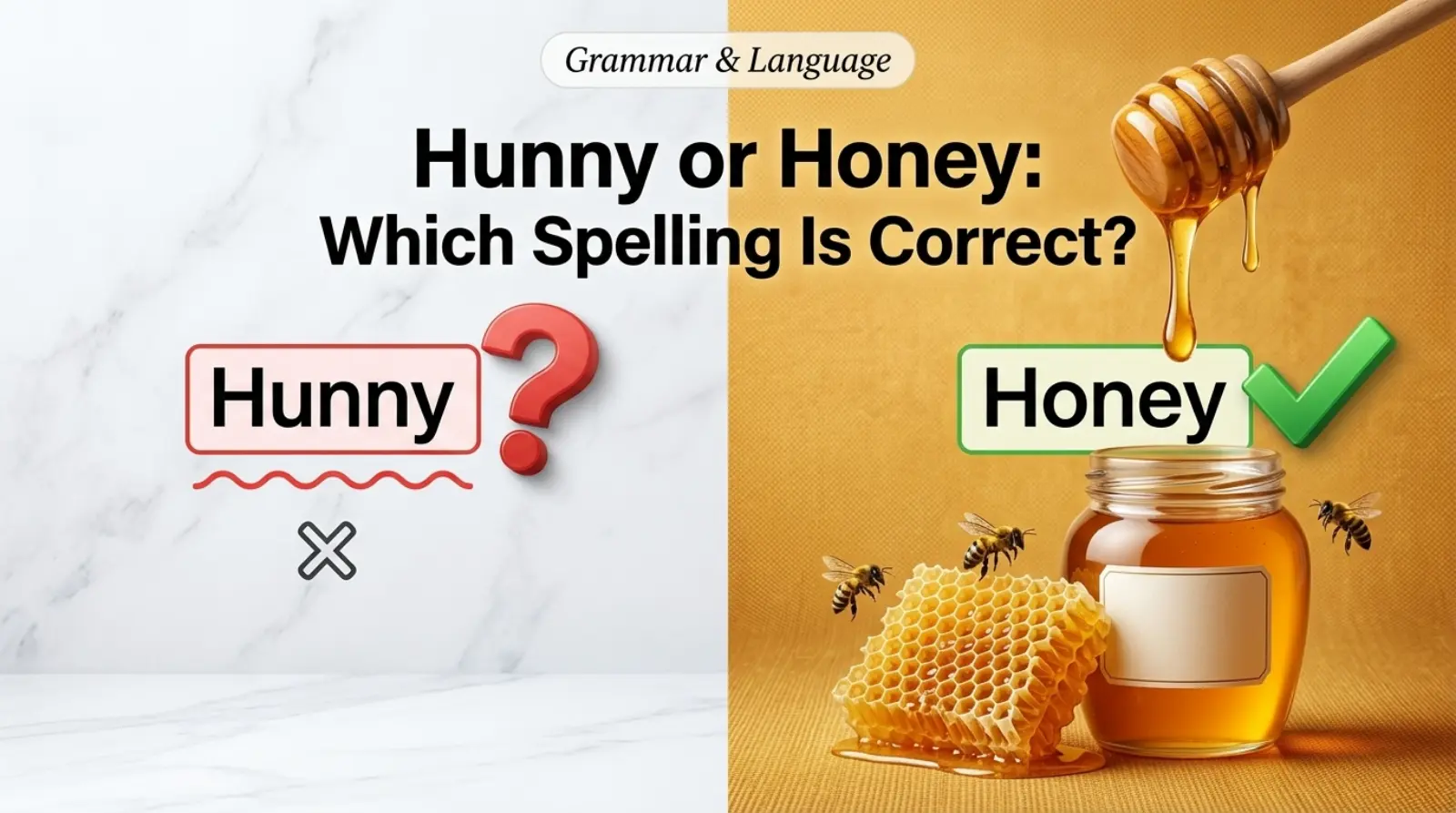
Hunny or honey is a common question for English learners and writers. Many people see both words online and wonder which one is correct.
The simple answer is that honey is the standard English word. It refers to the sweet food made by bees. It is also a common term of affection.
On the other hand, hunny is usually an informal or playful spelling. People often use it in text messages, social media posts, or fictional stories.
Understanding the difference helps you write more clearly. It also prevents spelling mistakes in school, work, and professional communication.
In this guide, you will learn the meaning of both words, when to use them, common mistakes to avoid, and real-life examples. By the end, you will know exactly whether to write hunny or honey.
Quick Summary Box
- Honey is the correct standard English spelling.
- Honey refers to a sweet substance made by bees.
- Honey is also used as a nickname for someone you love.
- Hunny is an informal or playful spelling.
- Hunny is popular in texts, chats, and some fictional works.
- Use honey in professional and academic writing.
- Use hunny only when a casual tone fits the situation.
- In most cases, honey is the safer choice.
What Does Honey Mean?
Honey has two common meanings.
1. A Sweet Food
Honey is a natural sweet liquid made by bees from flower nectar.
Examples:
- I put honey in my tea.
- Honey tastes sweeter than sugar.
- Many people use honey in desserts.
2. A Term of Affection
People also use honey as a loving nickname.
Examples:
- Good morning, honey.
- Thank you, honey.
- Honey, can you help me?
This use is very common in English-speaking countries.
What Does Hunny Mean?
Hunny is a non-standard spelling of honey.
People use it to create a cute, playful, or affectionate tone.
Examples:
- Hi hunny, how was your day?
- I miss you, hunny.
- Good night, hunny.
While many people use it online, most dictionaries do not recognize it as the standard spelling.
Hunny or Honey: Key Differences
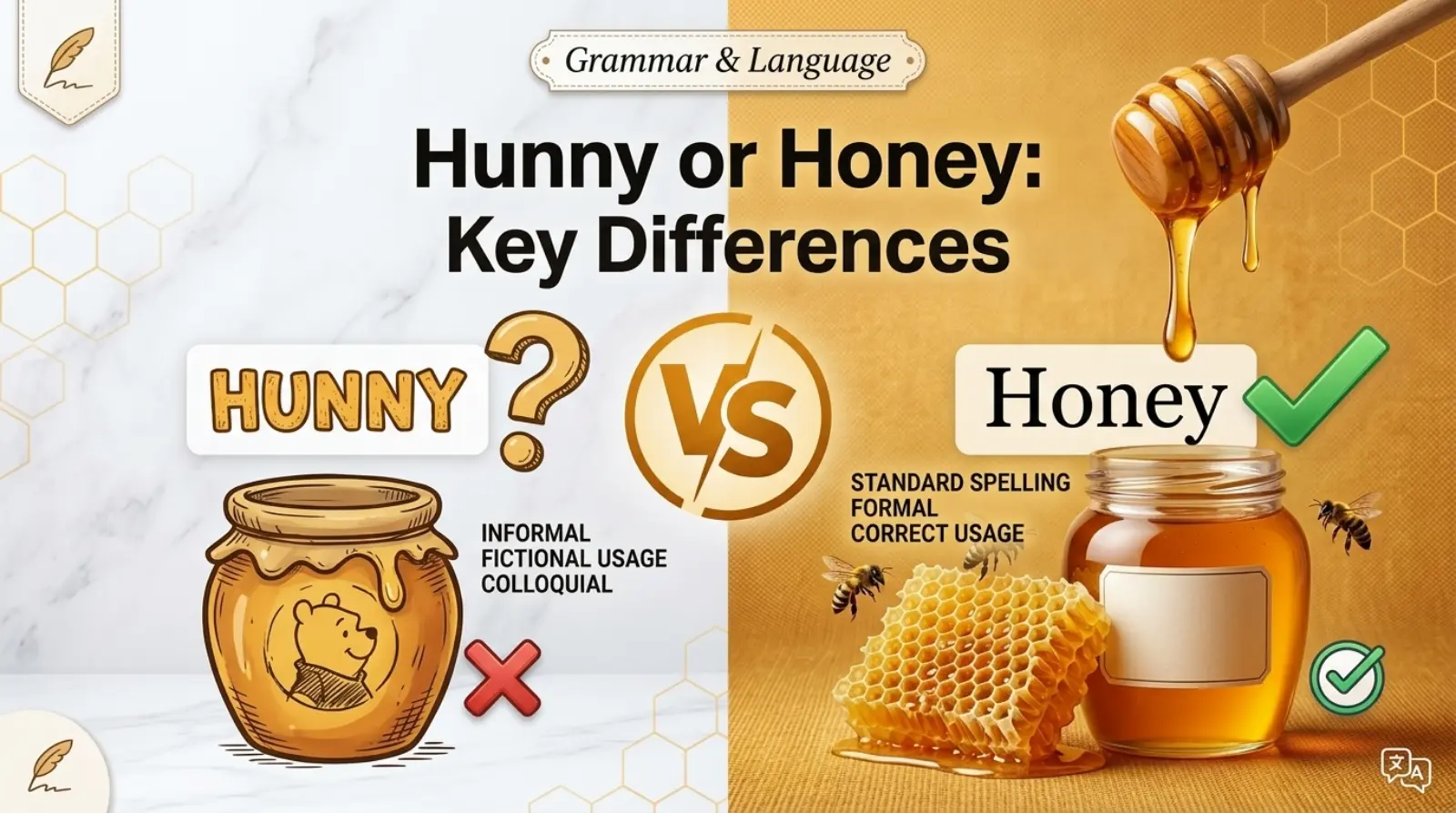
The main difference lies in formality and correctness.
| Feature | Honey | Hunny |
| Standard English | Yes | No |
| Dictionary Word | Yes | Rarely |
| Professional Writing | Yes | No |
| Academic Writing | Yes | No |
| Text Messages | Yes | Yes |
| Casual Chats | Yes | Yes |
| Playful Tone | Sometimes | Often |
| Preferred Choice | Yes | No |
Quick Answer
If you are unsure, choose honey.
Why Do People Use Hunny?
Many people use hunny because it feels more personal.
Some reasons include:
- It looks cute.
- It sounds affectionate.
- It adds emotion to messages.
- It creates a playful tone.
- It stands out in social media posts.
However, personal preference does not make it the standard spelling.
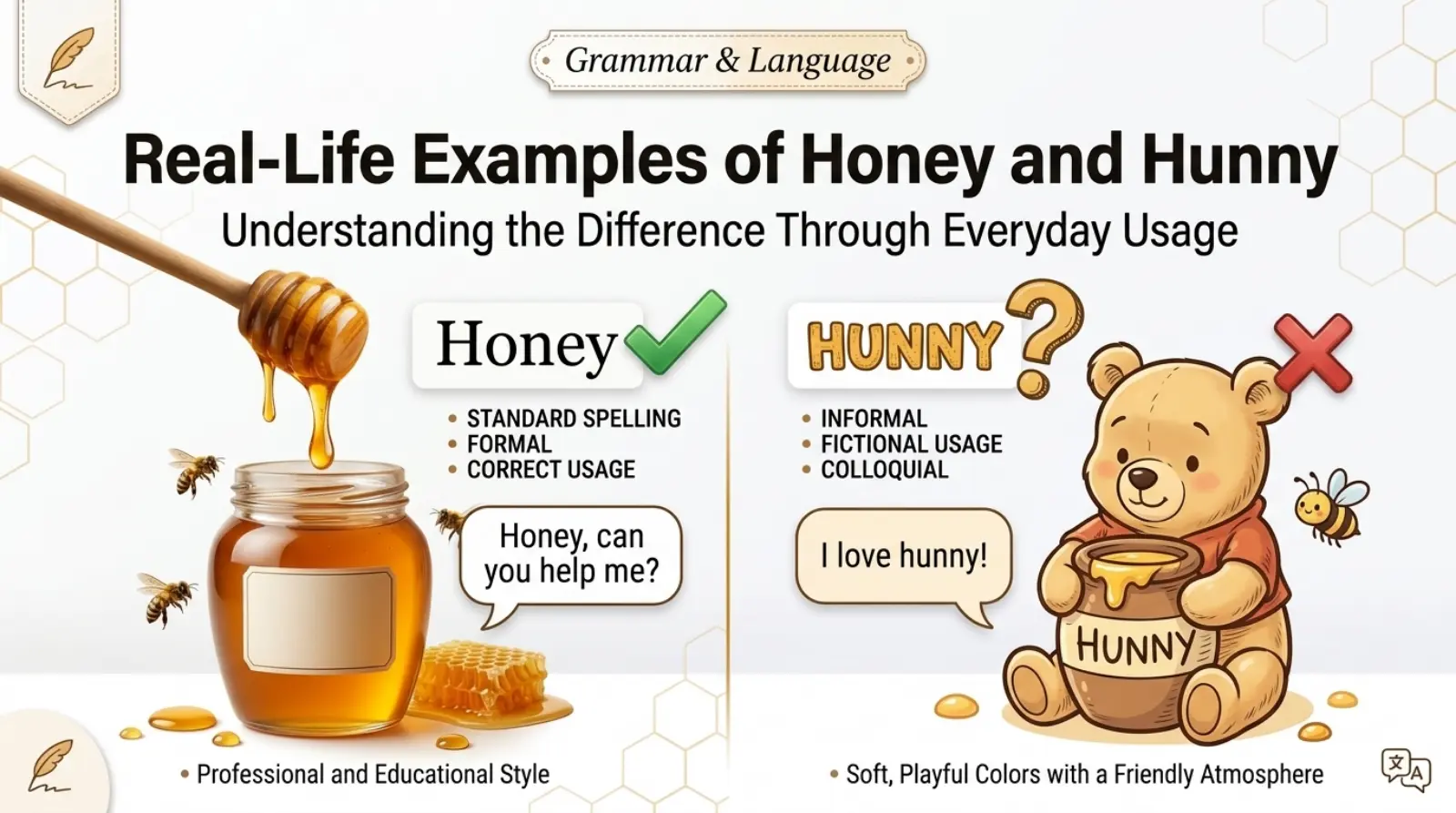
Real-Life Examples of Honey and Hunny
Correct Use of Honey
- Honey is good for sore throats.
- She bought organic honey.
- Thanks for dinner, honey.
- Honey bees help pollinate flowers.
- I added honey to my coffee.
Casual Use of Hunny
- Good morning, hunny.
- Miss you, hunny.
- You look great, hunny.
- Sweet dreams, hunny.
Notice that hunny appears mostly in personal conversations.
Is Hunny Ever Correct?
Yes, but only in certain situations.
You can use hunny when:
- Sending a text message.
- Writing a social media caption.
- Creating a playful character voice.
- Writing informal dialogue.
Avoid it when:
- Writing essays.
- Creating business emails.
- Publishing professional content.
- Completing school assignments.
In these situations, honey is the correct choice.
Common Mistakes People Make
Many writers confuse the two spellings.
Mistake 1: Using Hunny in Professional Emails
Incorrect:
Dear Hunny, thank you for your application.
Correct:
Dear Honey, thank you for your application.
Better:
Dear Sarah, thank you for your application.
Mistake 2: Assuming Hunny Is the Official Spelling
Many people think both spellings are equal.
Actually, dictionaries list honey as the standard word.
Mistake 3: Using Hunny in Academic Work
Teachers and editors may mark hunny as incorrect.
Always use honey in formal writing.
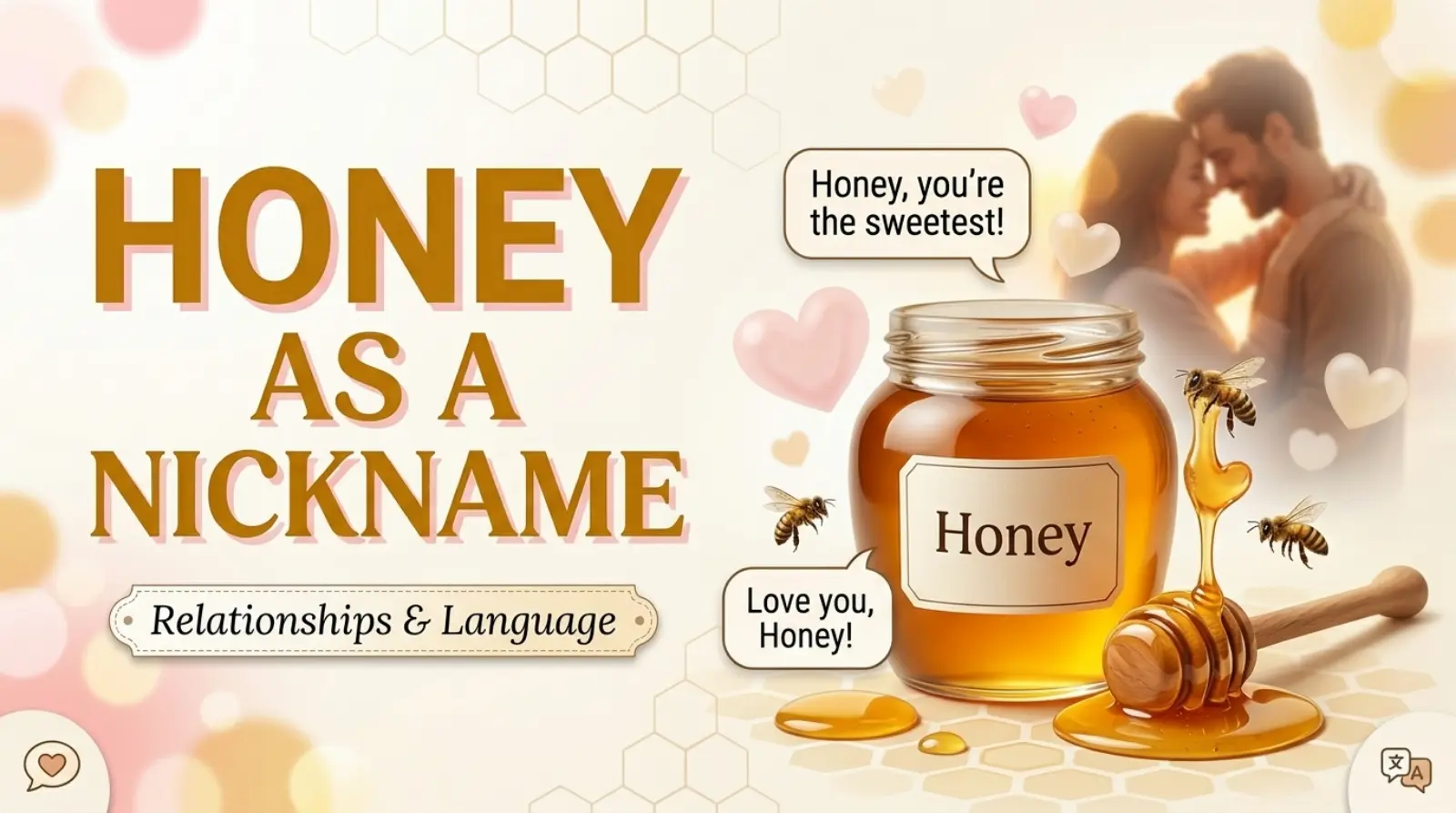
Honey as a Nickname
Honey is one of the most popular terms of endearment in English.
People often use it for:
- Husbands
- Wives
- Boyfriends
- Girlfriends
- Children
- Close family members
Examples:
- Honey, dinner is ready.
- I love you, honey.
- Thanks, honey.
The word expresses warmth and affection.
Hunny in Popular Culture
The spelling hunny became famous through the character Winnie-the-Pooh.
In many illustrations, Pooh’s honey jars were labeled “HUNNY.”
This spelling was intentionally playful. It reflected the character’s childlike charm.
Because of this, many people became familiar with the alternative spelling.
However, this does not replace the standard spelling honey.
Tips for Remembering the Correct Spelling
Use these simple tricks.
Think About Bees
Bees make honey, not hunny.
Remember School Rules
Teachers expect honey in assignments.
Choose Honey When Unsure
Honey works in almost every situation.
Use Hunny Only for Style
Treat hunny as a creative choice rather than a correct spelling.
Synonyms
- Sweetheart
- Darling
- Dear
- Babe
- Baby
- Love
- Sweetie
- Angel
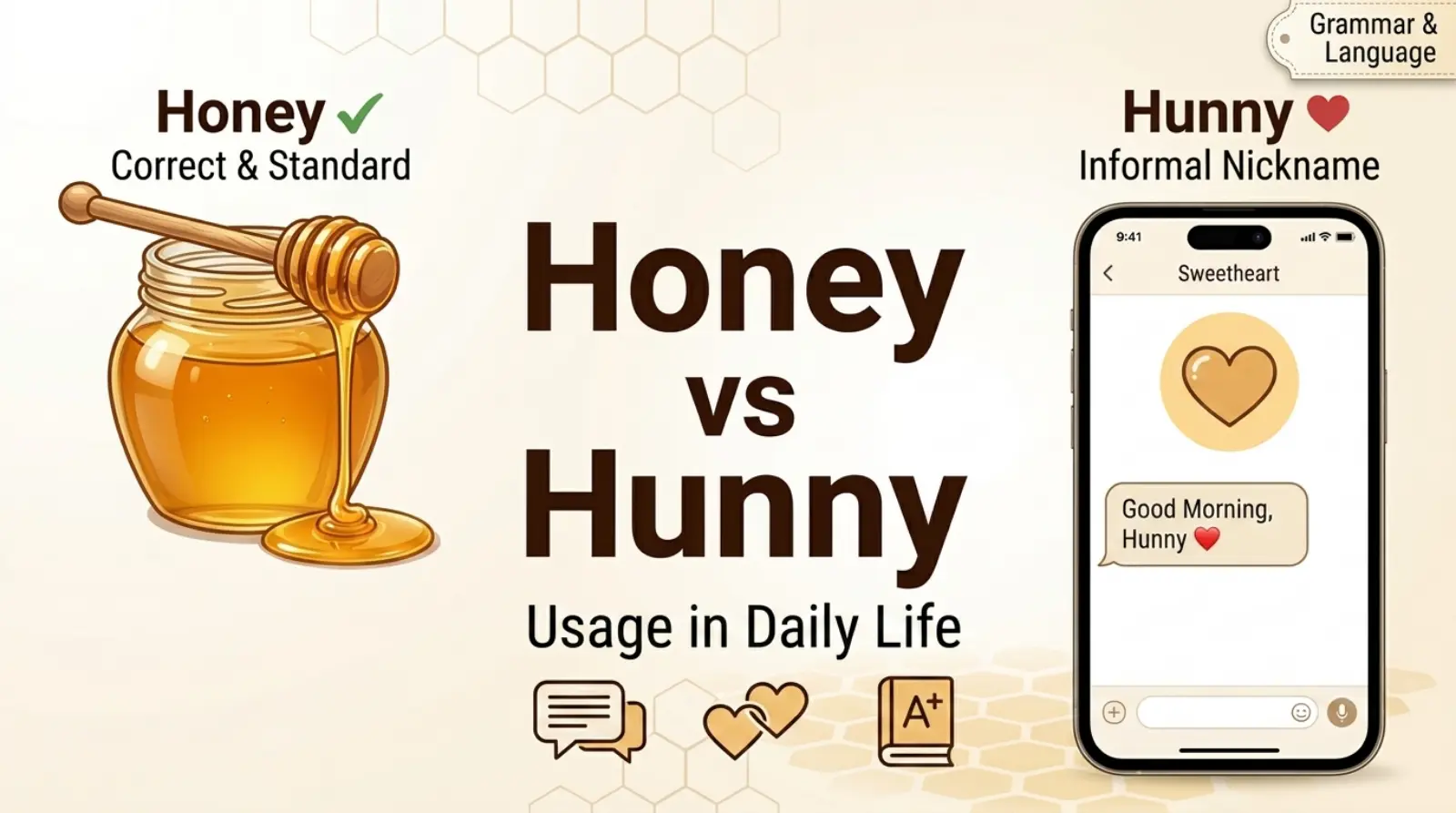
Usage in Daily Life
You will see honey more often than hunny.
At Home
- Honey, can you pass the salt?
At the Store
- I need a jar of honey.
In Text Messages
- Good morning, hunny.
- Love you, hunny.
At Work
Always use the standard spelling:
- honey
Professional communication requires proper spelling.
Why Correct Spelling Matters
Correct spelling improves communication.
Benefits include:
- Better credibility
- Stronger writing
- Professional appearance
- Improved understanding
- Fewer misunderstandings
Search engines also prefer well-written content.
When writing for a broad audience, standard spelling helps everyone understand your message.
Expert Insights: Why the Difference Matters
Language experts recommend using standard spellings whenever possible.
The word honey appears in dictionaries, textbooks, and professional publications. Because of this, readers recognize it immediately.
Using hunny can make writing feel friendly. However, it may also appear unprofessional in serious contexts.
A good rule is simple:
- Use honey for formal writing.
- Use hunny only for casual or creative situations.
This approach improves clarity and credibility.
Frequently Asked Questions
Is honey or hunny correct?
Honey is the correct standard English spelling.
Is hunny a real word?
Hunny is an informal variation used mainly in casual writing.
Can I use hunny in an email?
You can use it in personal emails. Avoid it in professional emails.
Why do people spell honey as hunny?
They often want a cute, playful, or affectionate tone.
Which spelling should students use?
Students should use honey in school assignments.
Is hunny in the dictionary?
Most major dictionaries prefer honey as the standard spelling.
Does hunny mean something different?
Usually no. It generally carries the same affectionate meaning as honey.
Which spelling is best for professional writing?
Always use honey.
Conclusion
When comparing hunny or honey, the answer is simple. Honey is the correct and standard English spelling. It refers to the sweet substance made by bees and also serves as a popular term of affection. Hunny is an informal variation that people use in texts, social media posts, and playful conversations.
For professional, academic, and formal writing, always choose honey. It is widely recognized and accepted. While hunny can add personality and warmth, it works best in casual settings.
The easiest rule to remember is this: if you are unsure, write honey. Doing so will keep your writing clear, correct, and professional every time.