This or that is a common English phrase people use every day. It helps you compare two choices. It also lets you talk about one option without being too specific. Many English learners and native speakers use this phrase in conversations, writing, games, and quizzes.
Understanding the phrase can improve your English. It also helps you make better choices in daily life. You may hear it in classrooms, workplaces, social media.
This guide explains everything in simple words. You will learn the meaning, grammar, examples, common mistakes, and practical tips. By the end, you will know exactly when and how to use the phrase correctly.
Quick Summary Box
- It compares two choices.
- This refers to something close.
- That refers to something farther away.
- The phrase often means choosing between two options.
- It is common in conversations, games, quizzes, and writing.
- It helps make comparisons simple and clear.
What Does “This or That” Mean?
It is an English phrase used when someone chooses between two things.
It can refer to:
- Two physical objects
- Two ideas
- Two people
- Two actions
- Two opinions
Simple Definition
It means choosing between one option and another.
Example
- Which shirt do you want, this or that?
Understanding “This” and “That”
Before understanding the full phrase, learn each word.
| Word | Meaning | Example |
| This | Something close | This book is mine. |
| That | Something farther away | That house is beautiful. |
When combined, they create a phrase used for making choices.
Example:
Should we watch this or that movie?
When Should You Use it?
People use this phrase in many situations.
1. Choosing Between Two Things
Example:
- Do you prefer this or that phone?
2. Asking Questions
Example:
- Which one do you like, this or that?
3. Playing Games
Many social media games use the phrase.
Example:
- Pizza or Burger?
- Beach or Mountains?
- Coffee or Tea?
4. Giving Options
Example:
- You may choose this or that before leaving.
This vs That: What’s the Difference?
Although they appear together, they have different meanings.
| Feature | This | That |
| Distance | Near | Far |
| Singular | Yes | Yes |
| Demonstrative Pronoun | Yes | Yes |
| Demonstrative Determiner | Yes | Yes |
| Used for Present Ideas | Often | Sometimes |
| Used for Past Ideas | Rarely | Often |
Examples
This
- This cake tastes great.
- This phone is expensive.
That
- That building is tall.
- That dog looks friendly.
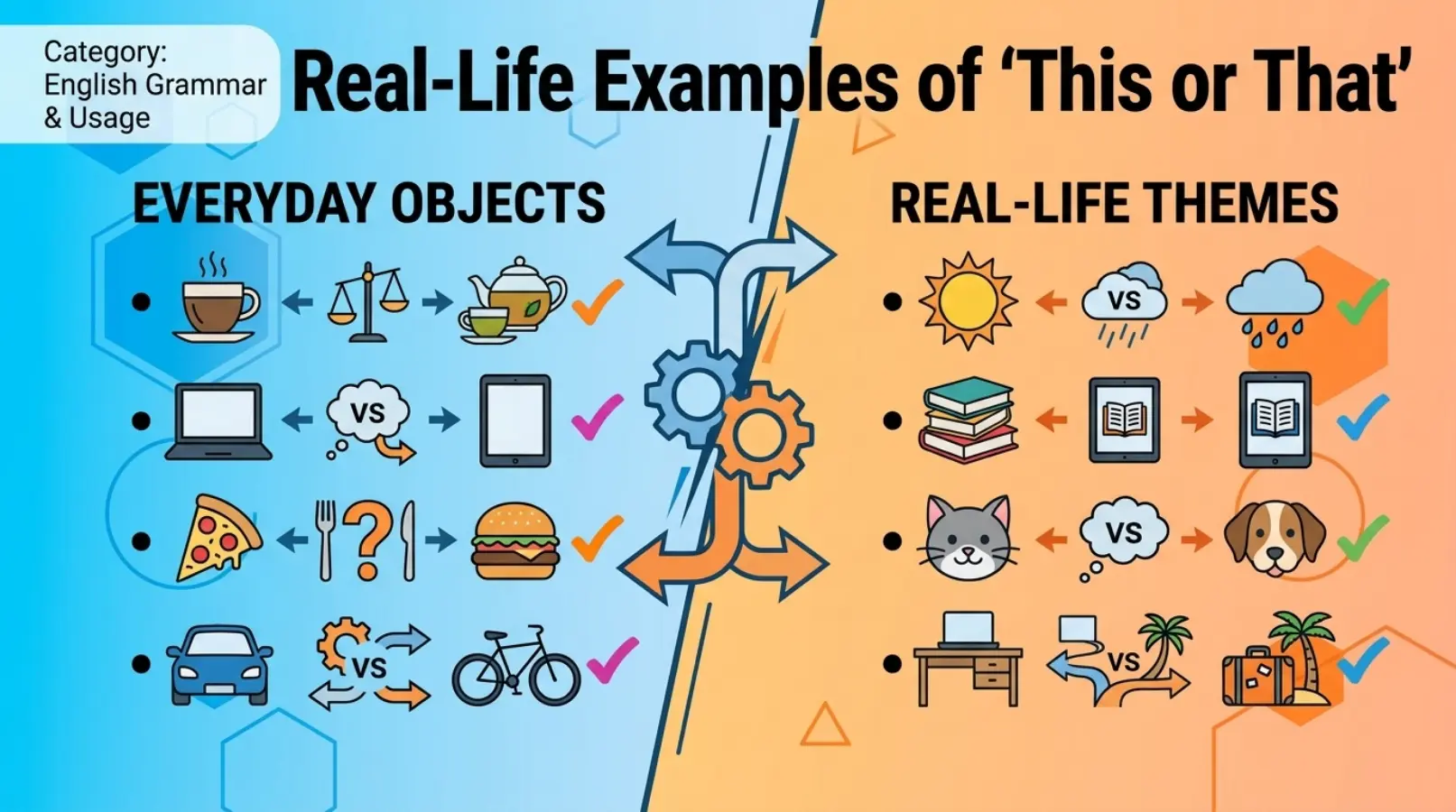
Real-Life Examples of “This or That”
Here are common situations.
Shopping
Would you buy this or that laptop?
Restaurant
Would you like this or that dessert?
Classroom
Should we solve this or that problem first?
Travel
Would you visit this or that country?
Workplace
Should we choose this or that design?
Grammar Rules
Follow these simple grammar rules.
Rule 1
Use this for something close.
Example:
This pen works well.
Rule 2
Use that for something farther away.
Example:
That chair looks comfortable.
Rule 3
Use the phrase when offering two choices.
Example:
Pick this or that before we leave.
Rule 4
Keep both options singular.
Correct:
- This or that book
Incorrect:
- These or that books
Common Mistakes to Avoid
Many learners make these errors.
Mistake 1
Using “this” for distant objects.
❌ This mountain is beautiful. (while pointing far away)
✅ That mountain is beautiful.
Mistake 2
Mixing singular and plural.
❌ This or those
Mistake 3
Using the phrase when many options exist.
Instead use:
- Which one?
- Which option?
- Which of these?
Mistake 4
Confusing “this” with “it.”
Wrong:
This is raining.
Correct:
It is raining.
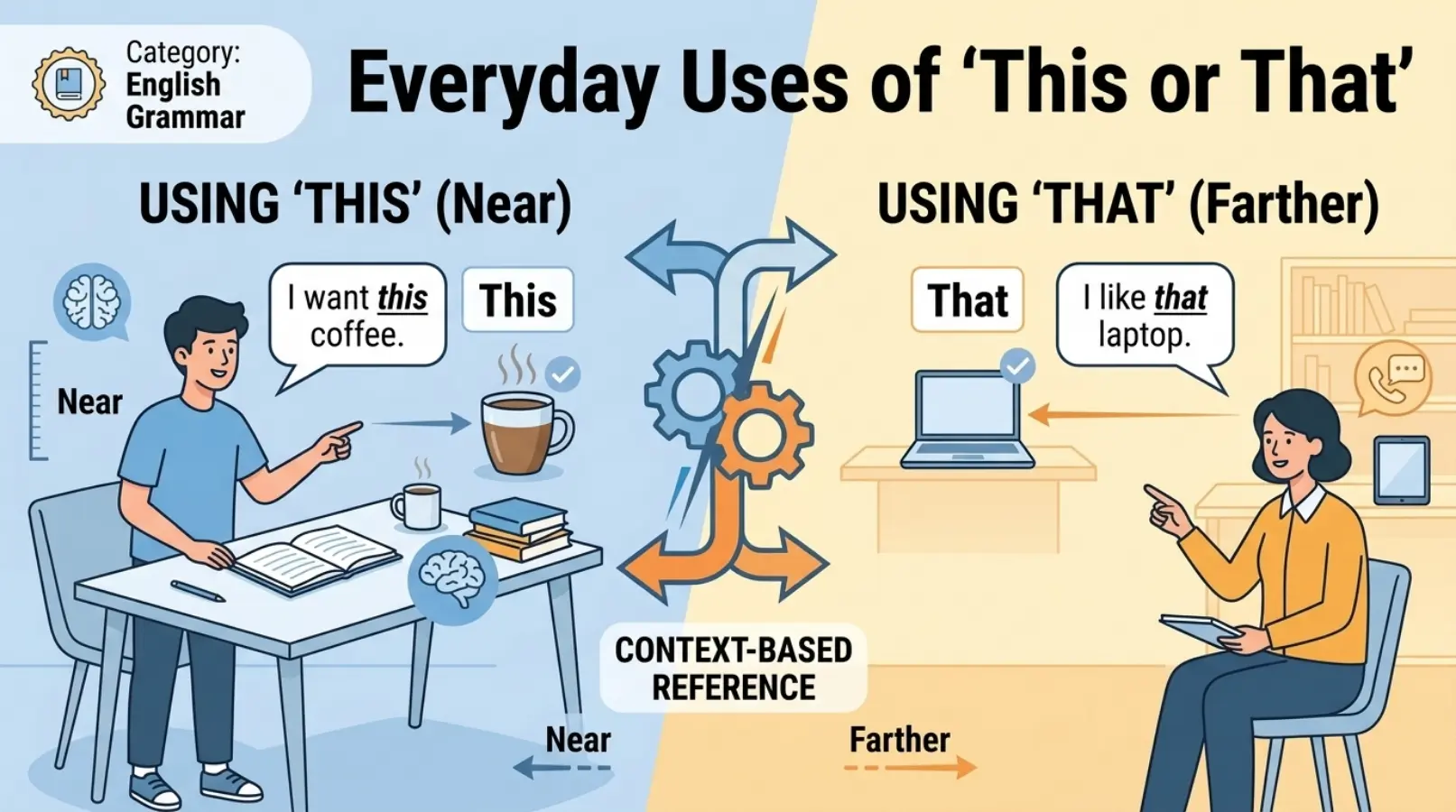
Everyday Uses of “This or That”
You probably use this phrase without noticing.
At Home
Should we clean this or that room?
At School
Do we study this or that chapter?
While Shopping
Which shoes should I buy?
This or that?
Synonyms
- Either
- One or the other
- Which one
- Choice
- Option
- Selection
- Alternative
Tips to Use Correctly
Follow these easy tips.
- Think about distance first.
- Use this for nearby things.
- Use that for distant things.
- Use the phrase only for two choices.
- Keep your sentence simple.
- Practice with daily conversations.
- Read English books regularly.
- Watch native speakers using the phrase.
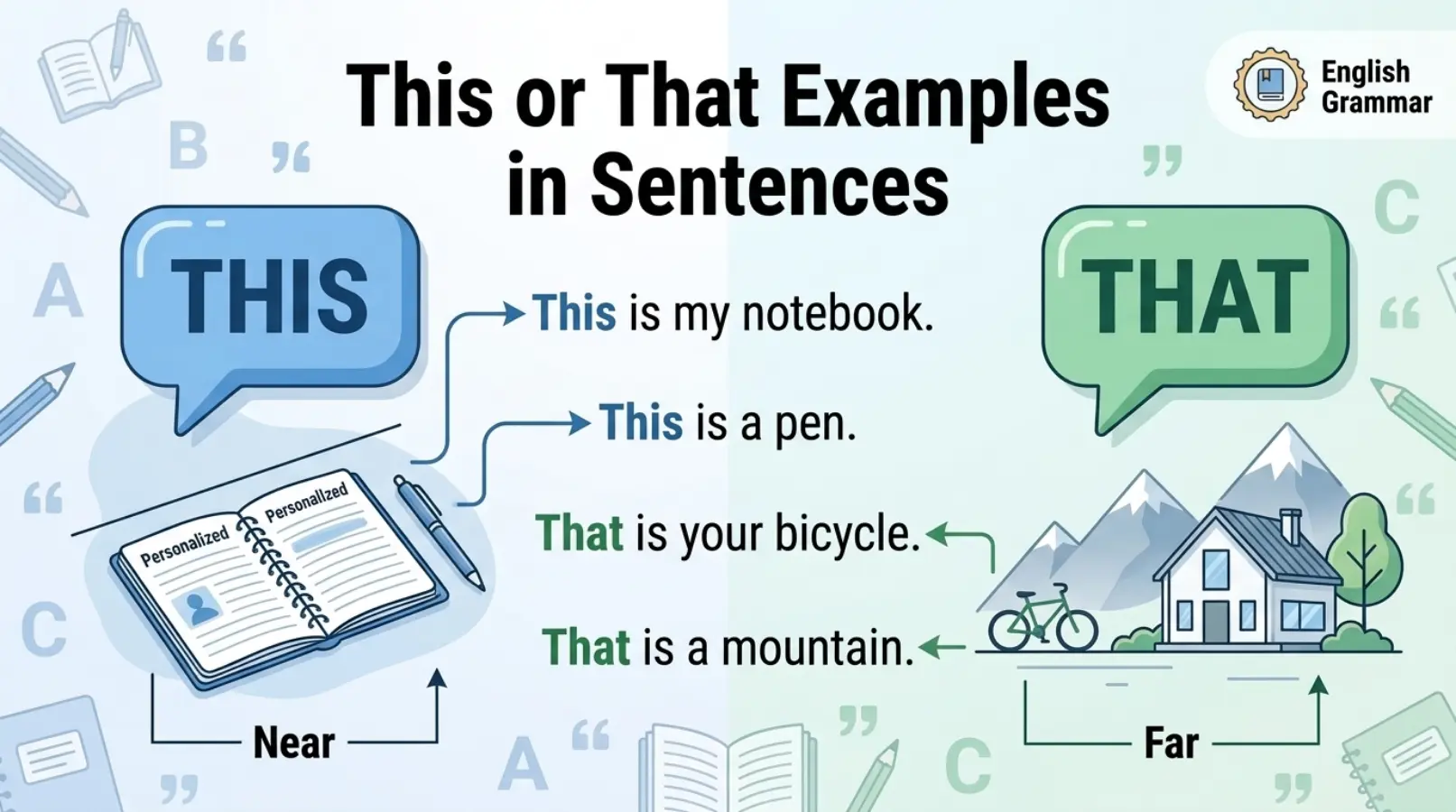
Examples in Sentences
Here are more examples.
- Would you rather visit Paris or London? This or that?
- We need to select this or that proposal today.
- The teacher asked us to choose this or that answer.
- Parents often ask children to choose this or that snack.
Expert Insights: Why Understanding “This or That” Matters
Learning simple phrases builds strong communication skills.
Professional English teachers recommend mastering demonstrative words early. They appear in almost every conversation. Knowing when to use this and that makes your speech more natural and easier to understand.
If you write blog posts, emails, or business documents, correct usage improves clarity. Search engines also favor content that uses natural language and answers user intent clearly. Practicing common phrases helps both spoken and written English.
Frequently Asked Questions (FAQs)
What does the phrase mean?
It means choosing between two different options.
Is the phrase grammatically correct?
Yes. It is a correct English phrase.
When should I use “this”?
Use this for something close to you.
When should I use “that”?
Use that for something farther away.
Can phrase be used in games?
Yes. Many quizzes and party games use it.
Is the phrase formal or informal?
It works in both formal and informal English, depending on the sentence.
What is the difference between “this” and “that”?
This refers to something near, while that refers to something farther away.
Can I use phrase in writing?
Yes. It is common in blogs, emails, articles, conversations, and educational content.
Conclusion
It is a simple but powerful English phrase. It helps people compare two choices and communicate clearly. Understanding the difference between this and that also improves grammar and everyday conversations. Whether you are shopping, studying, working, or playing a quiz game, this phrase appears often. Remember that this points to something near, while that points to something farther away. Practice using the phrase in daily conversations, and it will soon feel natural. The more you use it, the more confident your English becomes.
Discover More Post:
Trunk or Treat Ideas: 75+ Budget-Friendly Themes for Halloween
Greater Than or Equal To: Meaning, Symbol, Examples, and Usage