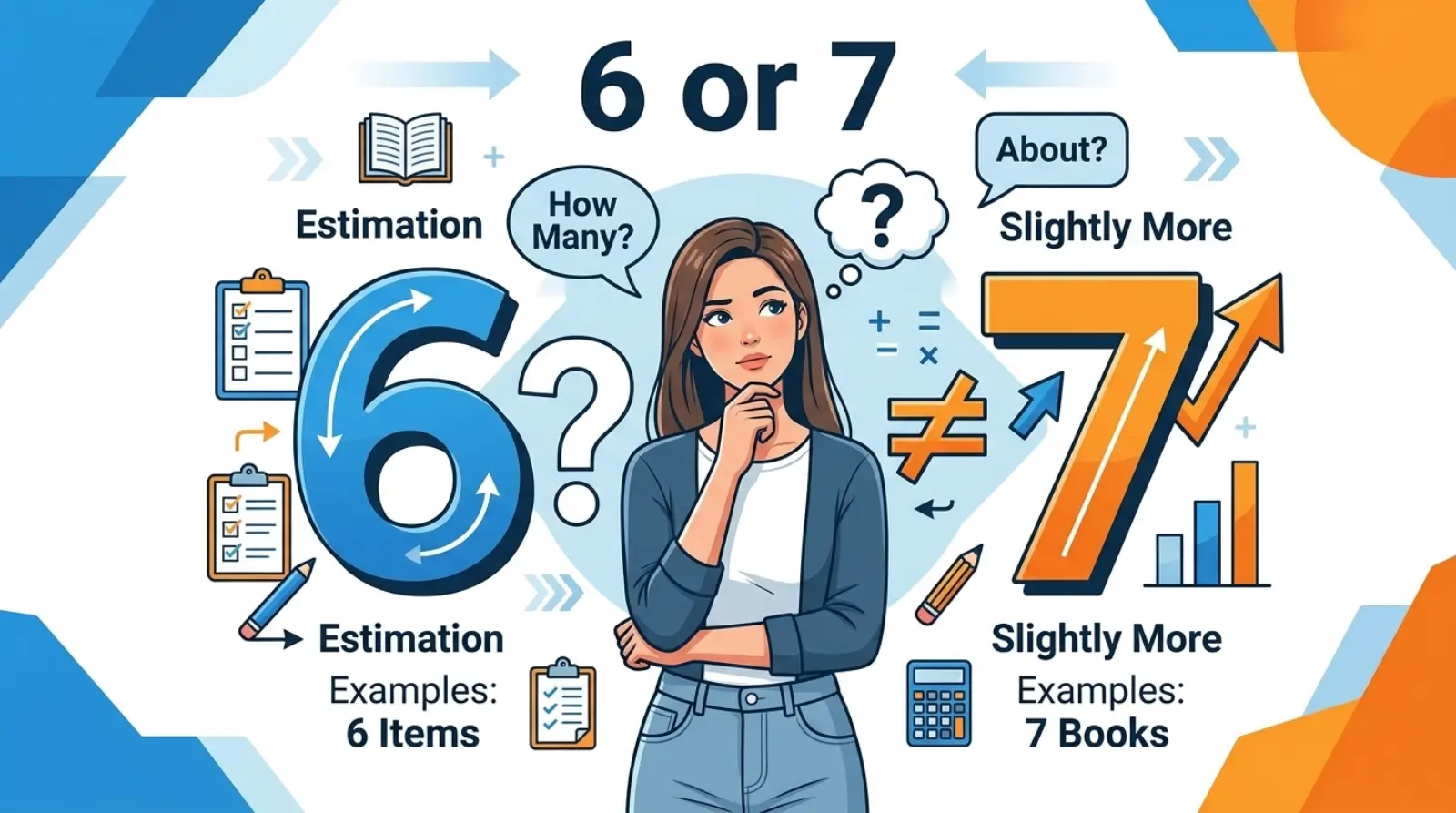
6 or 7 is a common comparison people make in daily life. You may see it in ratings, grades, measurements, choices, games, and decision-making. While the difference between 6 and 7 seems small, it can change how people judge quality, performance, or value.
Many people ask whether 6 or 7 is the better choice. The answer depends on the situation. In some cases, 6 is enough. In others, 7 offers a better result or higher standard.
This guide explains the meaning of 6 and 7, their differences, real-life examples, common mistakes, and practical tips. By the end, you will understand when to choose 6, when to choose 7, and why the distinction matters.
Quick Summary Box
- Both are consecutive numbers.
- 7 is one unit greater than 6.
- 6 often represents adequacy or balance.
- 7 is commonly linked to completion, success, or higher achievement.
- The better choice depends on context.
- In measurements, the difference may or may not be significant.
- Understanding context helps you make the right decision.
What Does 6 or 7 Mean?
This phrase usually refers to choosing between two close options.
People use it when:
- Estimating quantities
- Giving ratings
- Comparing performance
- Measuring results
- Making decisions
For example:
- “I will arrive in 6 or 7 minutes.”
- “The movie was a 6 or 7 out of 10.”
The exact meaning changes based on the situation.
Understanding 6 and 7 in Simple Terms
The number 6 comes before 7.
Basic facts:
| Number | Value |
| 6 | Six units |
| 7 | Seven units |
| Difference | 1 unit |
Although only one unit separates them, that difference can matter.
For example:
- A score of 6/10 may feel average.
- A score of 7/10 may feel above average.
Context creates the real difference.
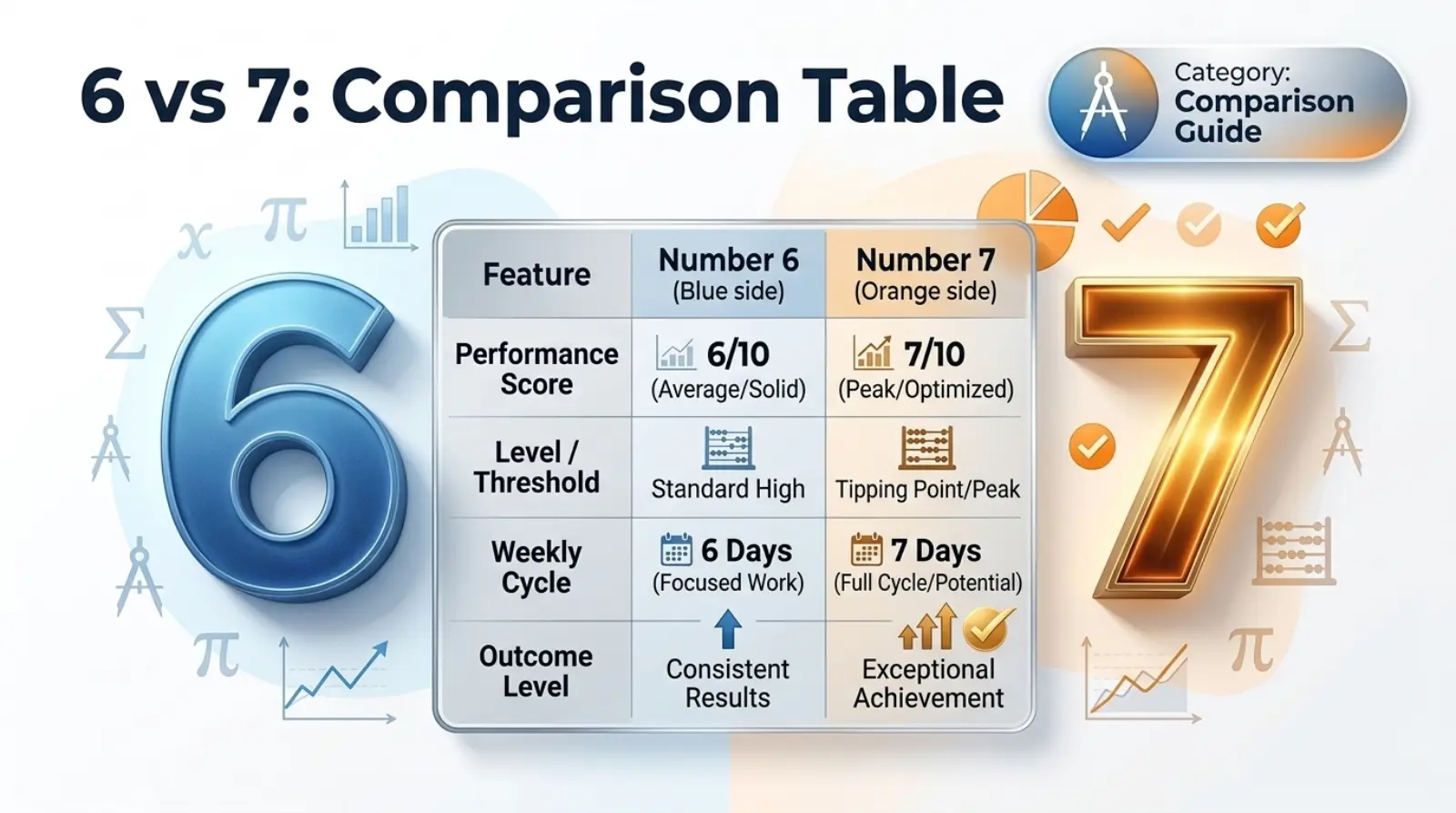
Comparison Table
| Feature | 6 | 7 |
| Numerical Value | Lower | Higher |
| Position | Before 7 | After 6 |
| Rating Meaning | Average to good | Good to very good |
| Symbolism | Balance, harmony | Success, completion |
| Performance Level | Adequate | Better |
| Popular Perception | Acceptable | Preferred |
Why People Compare 6 or 7
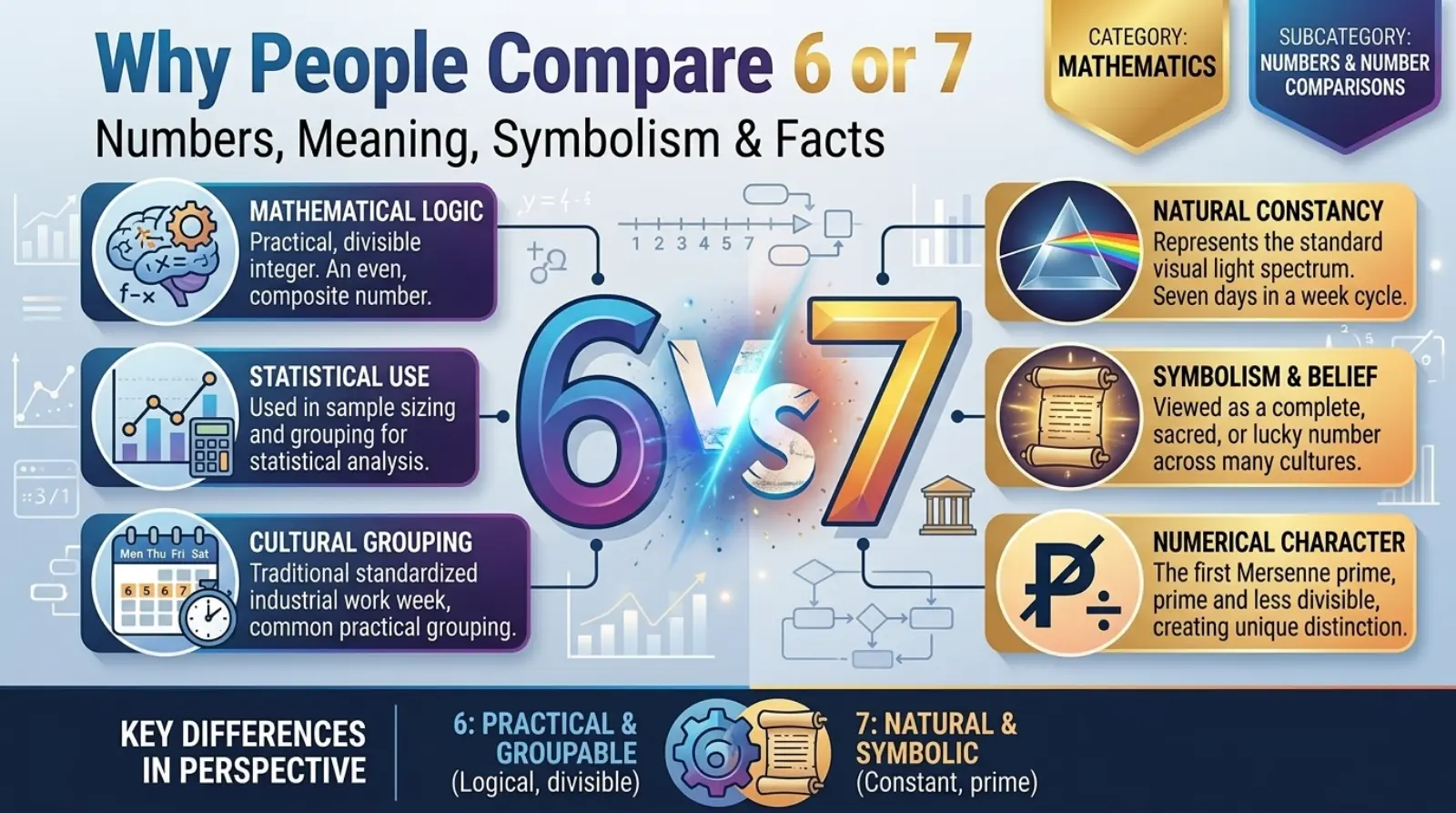
People compare these numbers because they are very close.
Common situations include:
Ratings
- 6/10 = decent
- 7/10 = good
Time Estimates
- 6 minutes
- 7 minutes
Team Sizes
- 6 members
- 7 members
Product Reviews
A product rated 7 often attracts more buyers than one rated 6.
Even a small difference can influence decisions.
Real-Life Examples
Example 1: Restaurant Rating
A restaurant scores:
- 6/10 = acceptable
- 7/10 = recommended
Many customers choose the higher-rated option.
Example 2: Test Scores
Student A scores 60%.
Student B scores 70%.
The difference may affect grades and opportunities.
Example 3: Work Performance
An employee receives:
- 6/10 performance rating
- 7/10 performance rating
The higher score often leads to better evaluations.
Example 4: Product Selection
Two products look similar.
One scores 6 stars.
The other scores 7 stars.
Most buyers prefer the higher-rated item.
Symbolic Meaning
Numbers often carry symbolic meanings.
Meaning of 6
Many cultures connect 6 with:
- Balance
- Family
- Responsibility
- Stability
Meaning of 7
Many cultures connect 7 with:
- Luck
- Completion
- Success
- Perfection
Examples include:
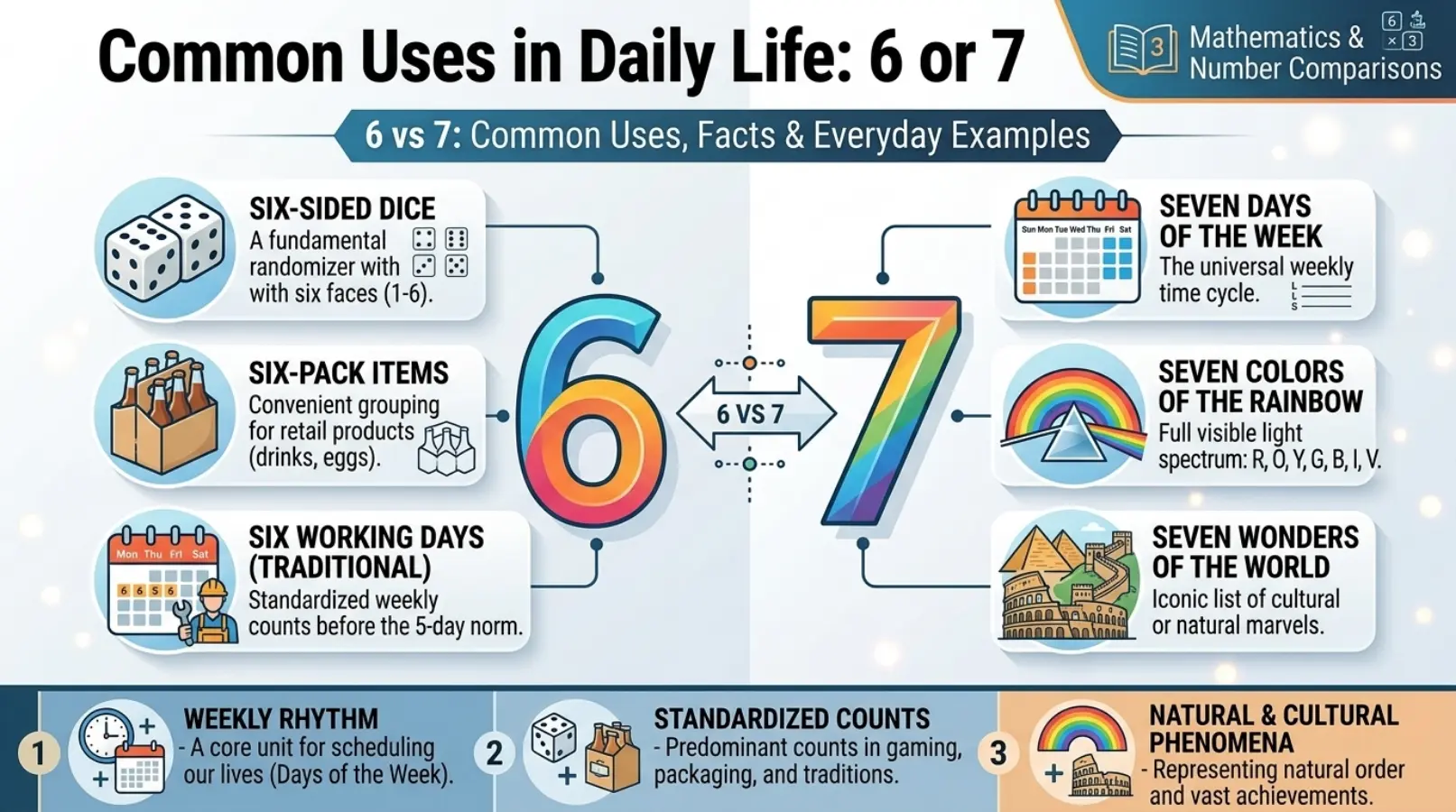
- Seven days of the week
- Seven colors of the rainbow
- Seven wonders of the world
This symbolism often makes 7 appear more significant.
Common Uses in Daily Life
People use these numbers frequently.
Scheduling
- Delivery estimates
Sports
- Scores
- Rankings
- Statistics
Education
- Grades
- Exam results
Business
- Customer ratings
- Employee reviews
Shopping
- Product comparisons
- User feedback scores
These examples show how common this comparison is.
Common Mistakes When Comparing
Assuming They Are Identical
A one-point difference may seem small.
However, it can affect rankings and outcomes.
Ignoring Context
A score of 6 in one system may be excellent.
A 6 in another may be average.
Focusing Only on Numbers
Quality matters too.
A product rated 6 with detailed reviews may be better than a 7 with few reviews.
Overvaluing Small Differences
Sometimes the difference has little practical impact.
Always look at the bigger picture.
Tips for Choosing Between 6 or 7
Consider Your Goal
Ask yourself:
- Do you need average performance?
- Do you want stronger results?
Check the Context
Understand what the numbers represent.
Look Beyond the Score
Read reviews and supporting details.
Compare Multiple Factors
Don’t focus on one number alone.
Use Reliable Data
Make decisions based on trustworthy information.
These simple tips help you make smarter choices.
These related terms help expand your understanding.
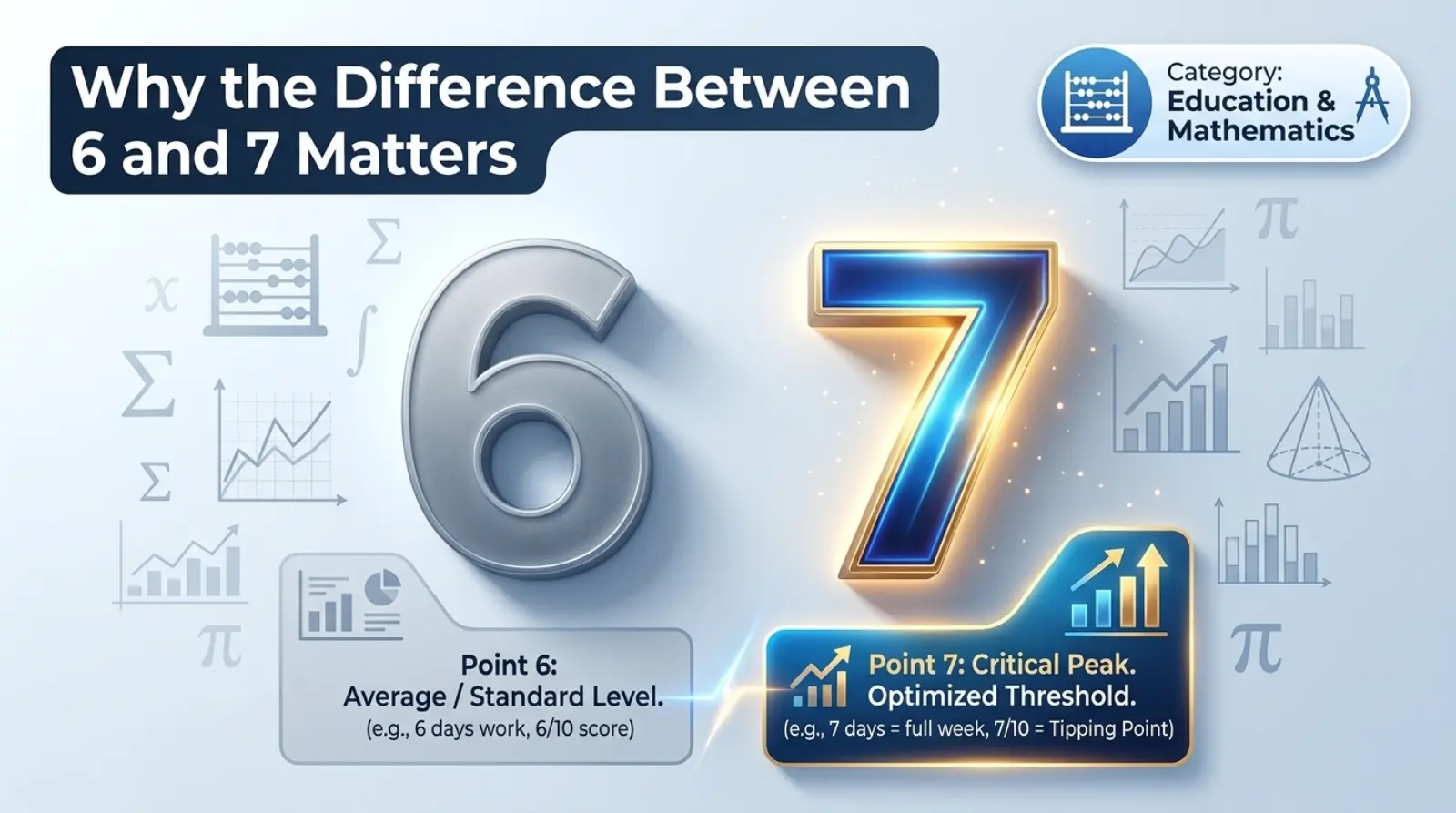
Why the Difference Between 6 and 7 Matters
A single point can change perception.
For example:
| Score | Common Interpretation |
| 5/10 | Average |
| 6/10 | Decent |
| 7/10 | Good |
| 8/10 | Very Good |
| 9/10 | Excellent |
Many people view 7 as a positive threshold.
This makes it important in reviews and evaluations.
Expert Insights: Why Number Comparisons Matter
Experts use numerical comparisons to make decisions easier.
A one-point difference can:
- Influence customer choices
- Affect rankings
- Improve credibility
- Change user perception
However, experts also recommend looking beyond the number.
Context, quality, and supporting information often matter more than a single point difference.
Understanding this principle helps people make better decisions in business, education, and everyday life.
Frequently Asked Questions (FAQs)
Is 7 bigger than 6?
Yes. Seven is one unit greater than six.
What is the difference between 6 and 7?
The numerical difference is one.
Is 7 considered a good rating?
In most rating systems, 7 is viewed as good.
Is 6 an average score?
It often represents average to slightly above average performance.
Why do people prefer 7 over 6?
People usually associate 7 with better quality and stronger results.
Does one point really matter?
Sometimes yes. Rankings and perceptions can change significantly.
Which number is luckier?
Many cultures consider 7 a lucky number.
Should I always choose 7?
Not necessarily. The best choice depends on the situation and requirements.
Conclusion
The comparison between 6 or 7 may appear simple, but context makes a big difference. Numerically, 7 is only one unit higher than 6. However, in ratings, reviews, education, business, and daily decisions, that small gap can influence perception and outcomes.
A score of 6 often suggests acceptable performance, while 7 usually indicates something better than average. Still, numbers alone do not tell the whole story. Always consider quality, context, and supporting information before making a decision.