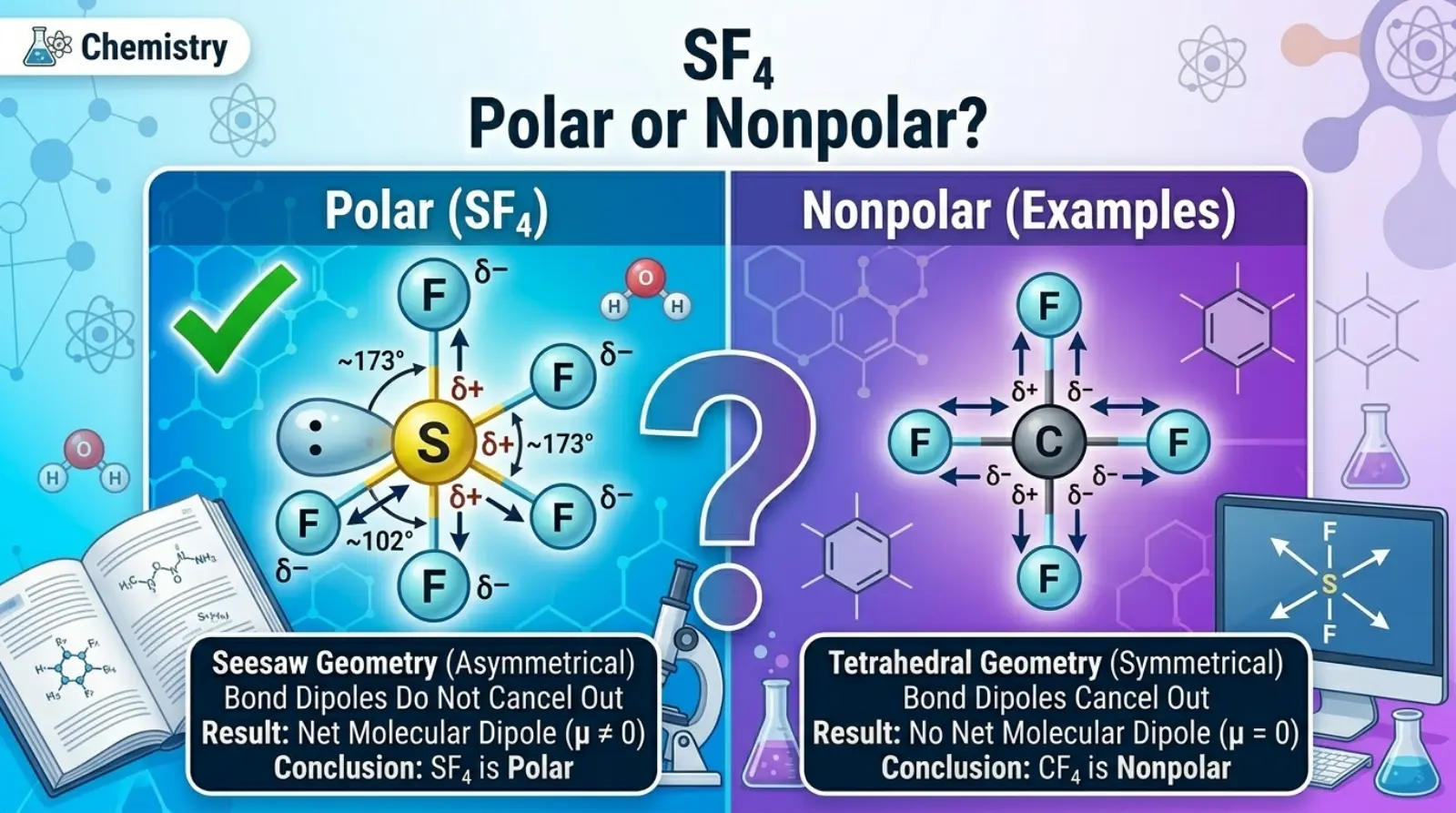
SF4 polar or nonpolar is a common chemistry question asked by students and science enthusiasts. Understanding molecular polarity helps explain how molecules behave in different situations.
SF4 stands for sulfur tetrafluoride. It contains one sulfur atom and four fluorine atoms. At first glance, many people think the molecule is nonpolar because fluorine atoms surround sulfur. However, the actual answer is different.
To determine polarity, we must examine the molecule’s shape and electron arrangement. These factors affect how electrical charges spread across the molecule.
In this guide, you will learn whether SF4 is polar or nonpolar, why it has its unique shape, and how polarity influences its properties. The explanations use simple language and real-life examples to make learning easy.
Quick Summary Box
- SF4 stands for Sulfur Tetrafluoride.
- SF4 is a polar molecule.
- Sulfur is the central atom.
- SF4 contains four sulfur-fluorine bonds.
- One lone pair exists on the sulfur atom.
- The molecule has a seesaw shape.
- The bond dipoles do not cancel completely.
- Uneven charge distribution makes SF4 polar.
- Polarity affects boiling point and intermolecular forces.
What Is SF4?
SF4 is the chemical formula for sulfur tetrafluoride.
The molecule contains:
- 1 sulfur atom (S)
- 4 fluorine atoms (F)
Sulfur serves as the central atom because it can form multiple bonds. Fluorine atoms surround the sulfur atom.
Scientists commonly use SF4 in chemical synthesis and fluorination reactions.
Basic Information About SF4
| Property | Value |
| Chemical Formula | SF4 |
| Molecular Weight | 108.06 g/mol |
| Central Atom | Sulfur |
| Bond Type | Covalent |
| Molecular Shape | Seesaw |
| Polarity | Polar |
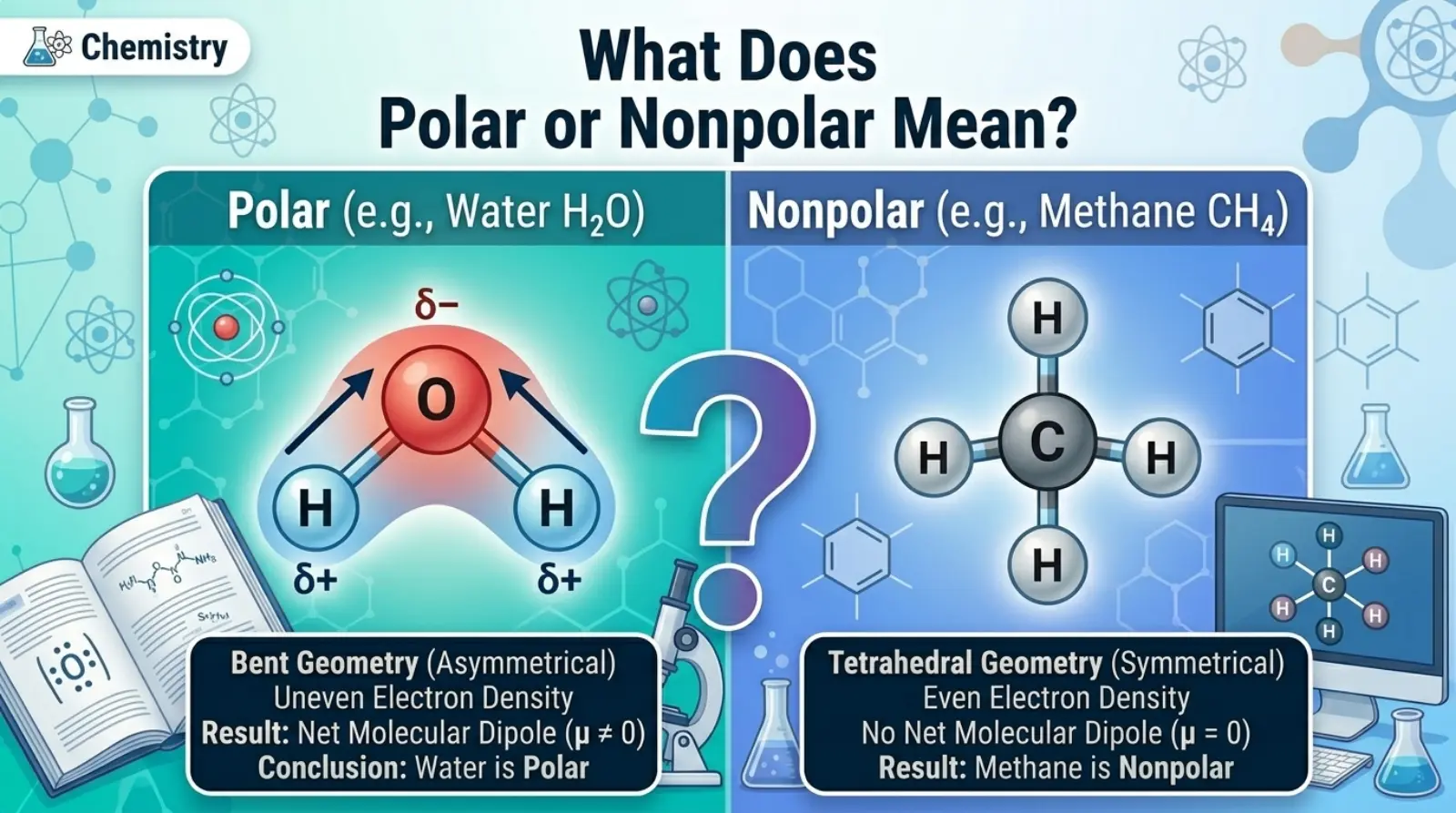
What Does Polar or Nonpolar Mean?
Before analyzing SF4, let’s understand polarity.
Polar Molecules
A polar molecule has an uneven distribution of electrons.
Characteristics:
- Positive and negative ends exist.
- Dipole moment is present.
- Charges do not balance equally.
Examples:
- Water (H2O)
- Ammonia (NH3)
- Sulfur tetrafluoride (SF4)
Nonpolar Molecules
A nonpolar molecule has an even distribution of electrons.
Characteristics:
- Charges balance perfectly.
- No permanent dipole moment exists.
Examples:
- Carbon dioxide (CO2)
- Methane (CH4)
- Carbon tetrachloride (CCl4)
Is SF4 Polar or Nonpolar?
The Simple Answer
SF4 is a polar molecule.
The molecule contains polar S-F bonds and an asymmetric molecular shape. These factors create an overall dipole moment.
As a result, the positive and negative charges do not cancel completely.
Therefore, SF4 is classified as polar.
Why Is SF4 Polar?
Several factors explain SF4 polarity.
1. Polar Sulfur-Fluorine Bonds
Fluorine is highly electronegative.
It attracts bonding electrons more strongly than sulfur.
This difference creates polar covalent bonds.
Each S-F bond develops:
- Partial positive charge on sulfur
- Partial negative charge on fluorine
Thus, every S-F bond has a dipole.
2. Presence of a Lone Pair
Sulfur contains one lone pair of electrons.
Lone pairs occupy space and repel bonding pairs.
This repulsion changes the molecular geometry.
The result is an uneven structure.
3. Asymmetrical Molecular Shape
SF4 does not have a symmetrical arrangement.
Because of the lone pair, the molecule adopts a seesaw shape.
The bond dipoles point in different directions.
They fail to cancel each other completely.
Therefore, a net dipole moment remains.
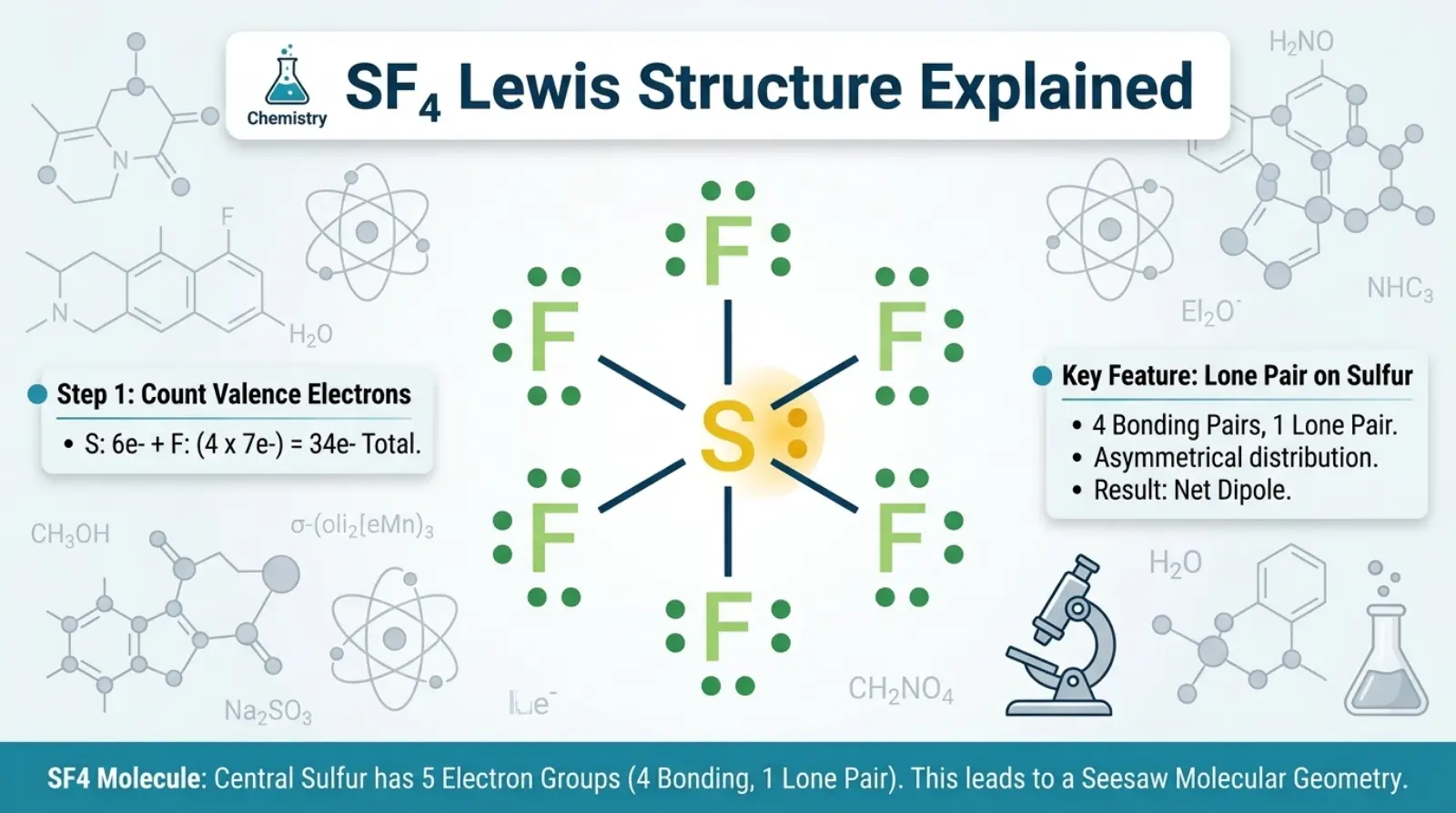
SF4 Lewis Structure Explained
The Lewis structure helps visualize electron distribution.
Steps to Draw SF4
- Place sulfur in the center.
- Add four fluorine atoms around sulfur.
- Form four single bonds.
- Complete fluorine octets.
- Place remaining electrons on sulfur.
Electron Count
- Sulfur contributes 6 valence electrons.
- Four fluorines contribute 28 electrons.
Total:
34 valence electrons
The final structure shows:
- Four S-F bonds
- One lone pair on sulfur
This lone pair plays a major role in polarity.
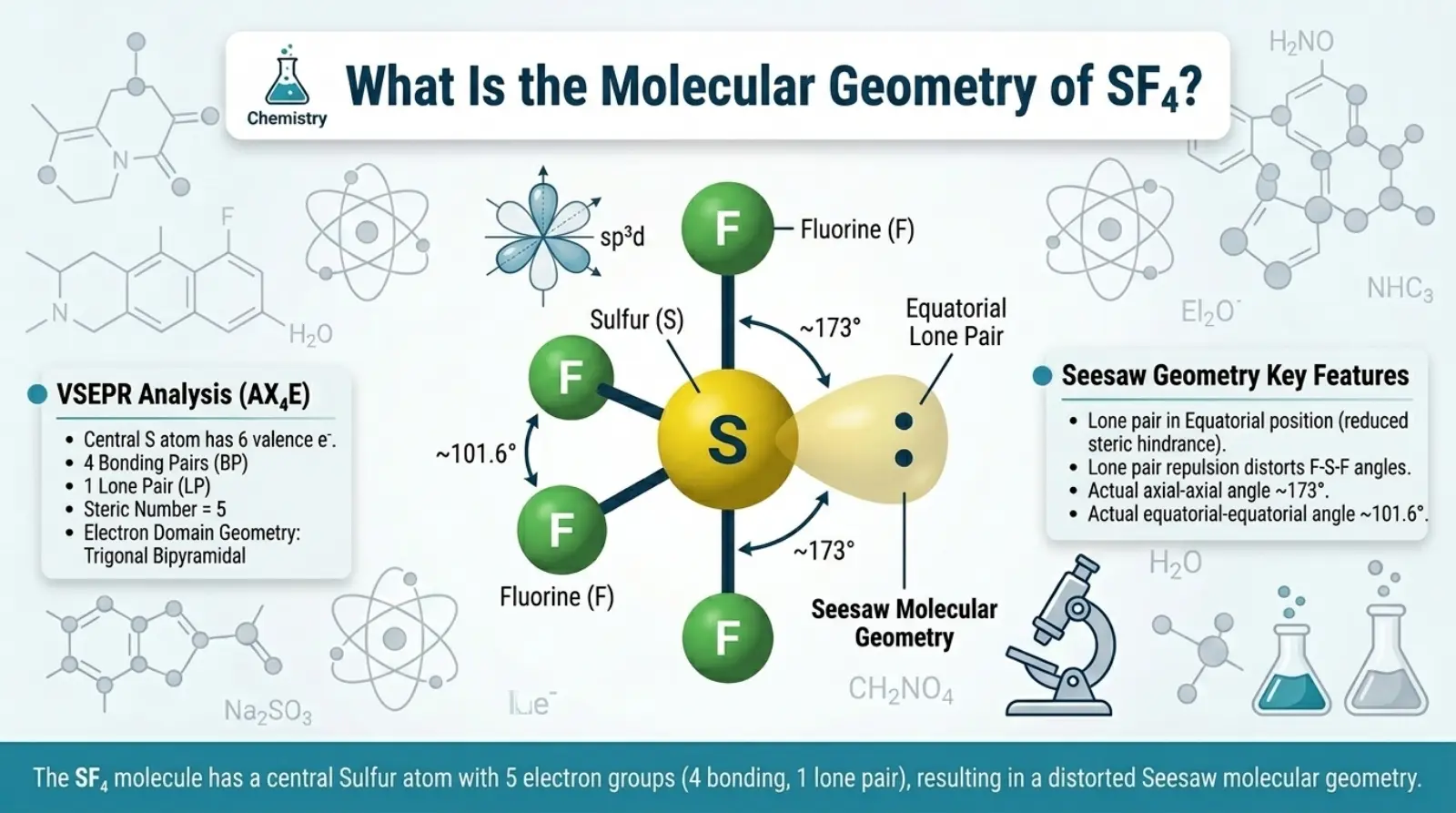
What Is the Molecular Geometry of SF4?
According to VSEPR theory, SF4 has five electron domains:
- Four bonding pairs
- One lone pair
Electron Geometry
The electron geometry is:
Trigonal Bipyramidal
Molecular Geometry
Because one position contains a lone pair, the molecular shape becomes:
Seesaw Shape
Why Seesaw?
The lone pair occupies an equatorial position.
This arrangement reduces electron repulsion.
The remaining atoms form a seesaw-like structure.
SF4 Seesaw Shape and Polarity
The seesaw shape directly causes polarity.
How Shape Affects Polarity
In symmetrical molecules:
- Bond dipoles cancel.
In SF4:
- Bond dipoles point unevenly.
- Lone pair distorts geometry.
- Charge distribution becomes unequal.
As a result, the molecule develops a net dipole moment.
This makes SF4 polar.
Comparison Table: SF4 Polar vs Nonpolar Molecules
| Feature | SF4 (Polar) | CO2 (Nonpolar) |
| Shape | Seesaw | Linear |
| Symmetry | Asymmetrical | Symmetrical |
| Lone Pair on Central Atom | Yes | No |
| Bond Dipoles Cancel? | No | Yes |
| Net Dipole Moment | Present | Zero |
| Polarity | Polar | Nonpolar |
This comparison clearly shows why SF4 behaves differently.
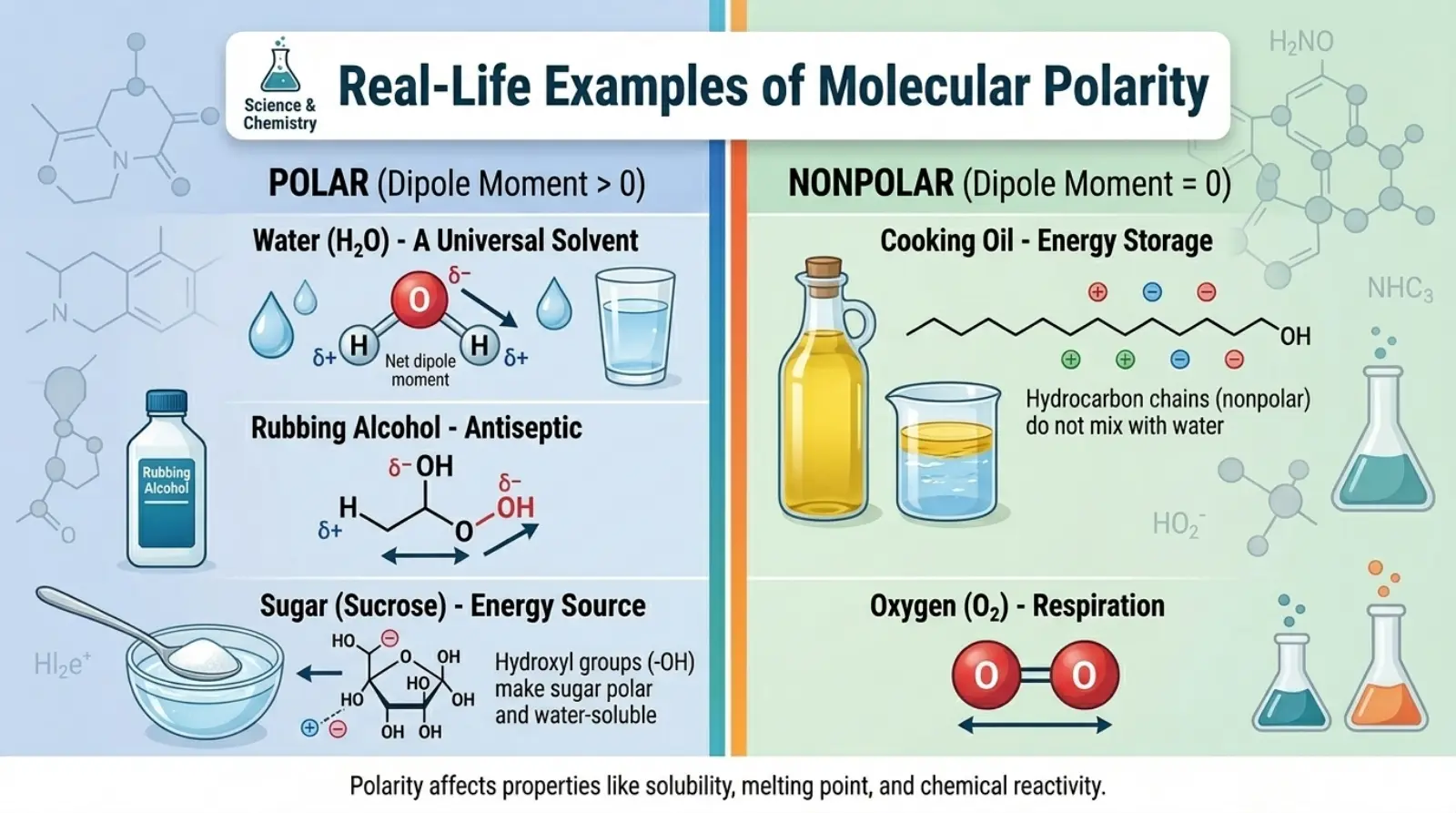
Real-Life Examples of Molecular Polarity
Understanding polarity becomes easier with examples.
Water (H2O)
Water is polar because:
- Oxygen attracts electrons strongly.
- Bent shape prevents cancellation.
Ammonia (NH3)
Ammonia is polar because:
- Lone pair distorts geometry.
- Dipoles remain unbalanced.
SF4
SF4 follows the same principle.
Its lone pair and seesaw shape create polarity.
How Does SF4 Polarity Affect Its Properties?
Polarity influences many physical properties.
Solubility
Polar molecules generally dissolve better in polar solvents.
Intermolecular Forces
SF4 experiences dipole-dipole attractions.
These forces are stronger than those in nonpolar molecules.
Boiling Point
Polar molecules often have higher boiling points than similar nonpolar molecules.
This occurs because stronger attractions require more energy to break.
Common Mistakes When Determining SF4 Polarity
Students often make these errors.
Mistake 1: Looking Only at Bonds
Some people focus only on bond polarity.
However, molecular shape also matters.
Mistake 2: Ignoring Lone Pairs
Lone pairs strongly affect geometry.
Ignoring them leads to incorrect answers.
Mistake 3: Assuming All Fluorine Compounds Are Symmetrical
Not every fluorine-containing molecule is nonpolar.
Geometry determines the final result.
Mistake 4: Forgetting Net Dipole Moment
The overall dipole moment decides polarity.
Individual bond dipoles alone do not.
Easy Trick to Remember SF4 Polarity
Use this simple rule:
“Lone Pair + Asymmetry = Usually Polar”
For SF4:
- Lone pair exists ✔
- Seesaw shape exists ✔
- Dipoles do not cancel ✔
Therefore:
SF4 is polar.
This shortcut helps during exams.
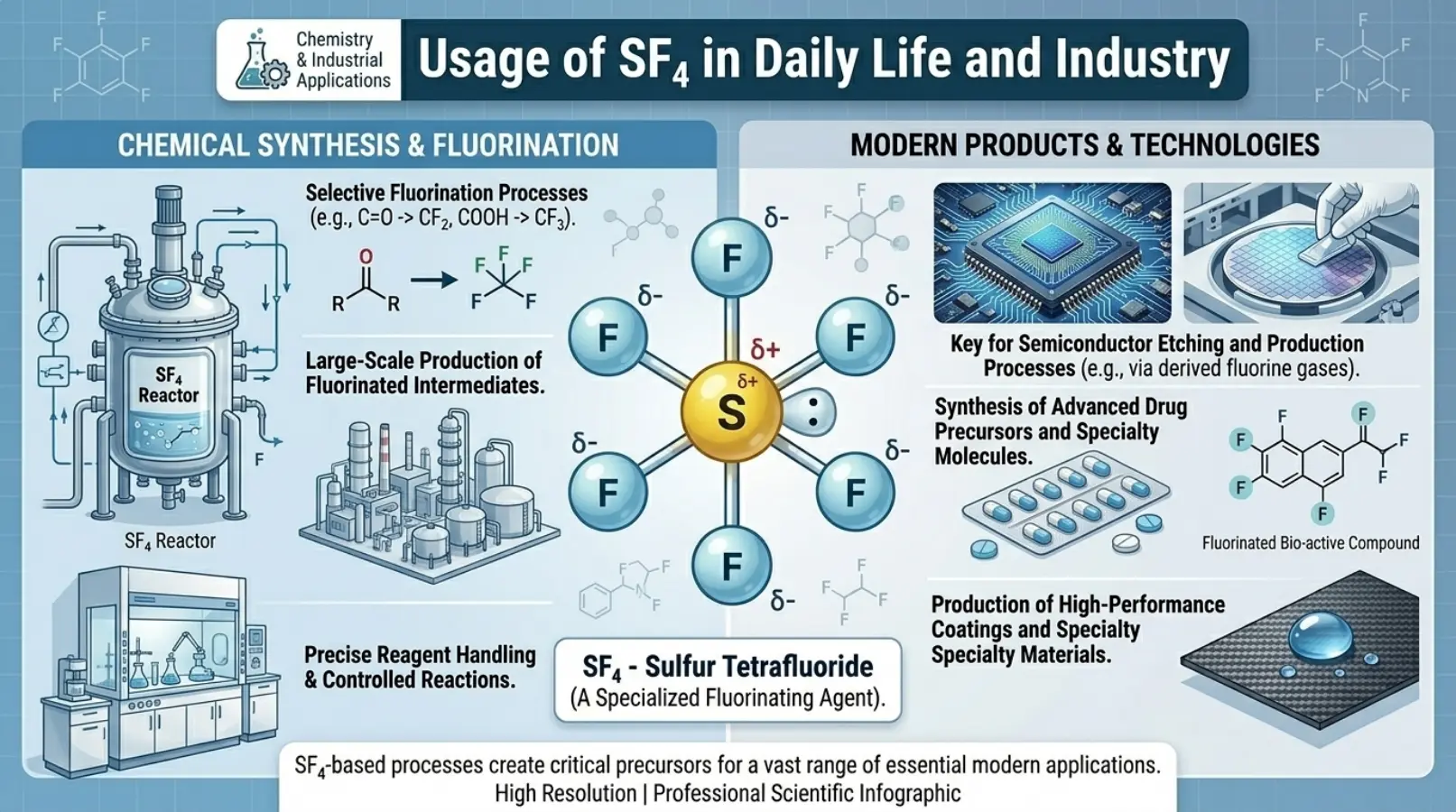
Usage of SF4 in Daily Life and Industry
Although SF4 is not common in homes, industries use it frequently.
Chemical Manufacturing
Scientists use SF4 to introduce fluorine into compounds.
Pharmaceutical Production
Some fluorinated medicines require fluorination reactions involving SF4.
Research Laboratories
Researchers study SF4 because of its unique chemical behavior.
Its polarity influences reaction mechanisms and molecular interactions.
Expert Insights: Why SF4 Polarity Matters
Chemistry experts emphasize molecular polarity because it predicts behavior.
Key Insights
- Polarity determines intermolecular forces.
- Molecular shape is as important as bond polarity.
- VSEPR theory helps predict geometry accurately.
- Lone pairs often create polarity.
- Understanding polarity improves chemistry problem-solving skills.
Students who master polarity concepts perform better in molecular chemistry topics.
Frequently Asked Questions (FAQs)
1. Is SF4 polar or nonpolar?
SF4 is a polar molecule because its seesaw shape creates an uneven charge distribution.
2. Why is SF4 not nonpolar?
The molecule contains a lone pair that causes asymmetry, preventing dipole cancellation.
3. What is the shape of SF4?
SF4 has a seesaw molecular geometry.
4. Does SF4 have a dipole moment?
Yes. SF4 possesses a net dipole moment.
5. How many lone pairs are present in SF4?
SF4 contains one lone pair on the sulfur atom.
6. What theory predicts SF4 geometry?
VSEPR theory predicts the seesaw shape of SF4.
7. Are all S-F bonds polar?
Yes. Sulfur-fluorine bonds are polar because fluorine is highly electronegative.
8. What makes SF4 polar?
Its polar bonds and asymmetrical seesaw geometry together create polarity.
Conclusion
The answer to SF4 polar or nonpolar is clear: SF4 is a polar molecule. Although sulfur forms four bonds with fluorine, the molecule does not have a symmetrical structure. One lone pair on the sulfur atom creates a seesaw shape, which prevents the bond dipoles from canceling completely.
As a result, SF4 develops a net dipole moment and shows polar behavior. Understanding both bond polarity and molecular geometry is essential when determining whether a molecule is polar or nonpolar. Remember the simple rule: when a lone pair causes asymmetry, polarity often follows. By applying this concept, identifying SF4 as a polar molecule becomes much easier.