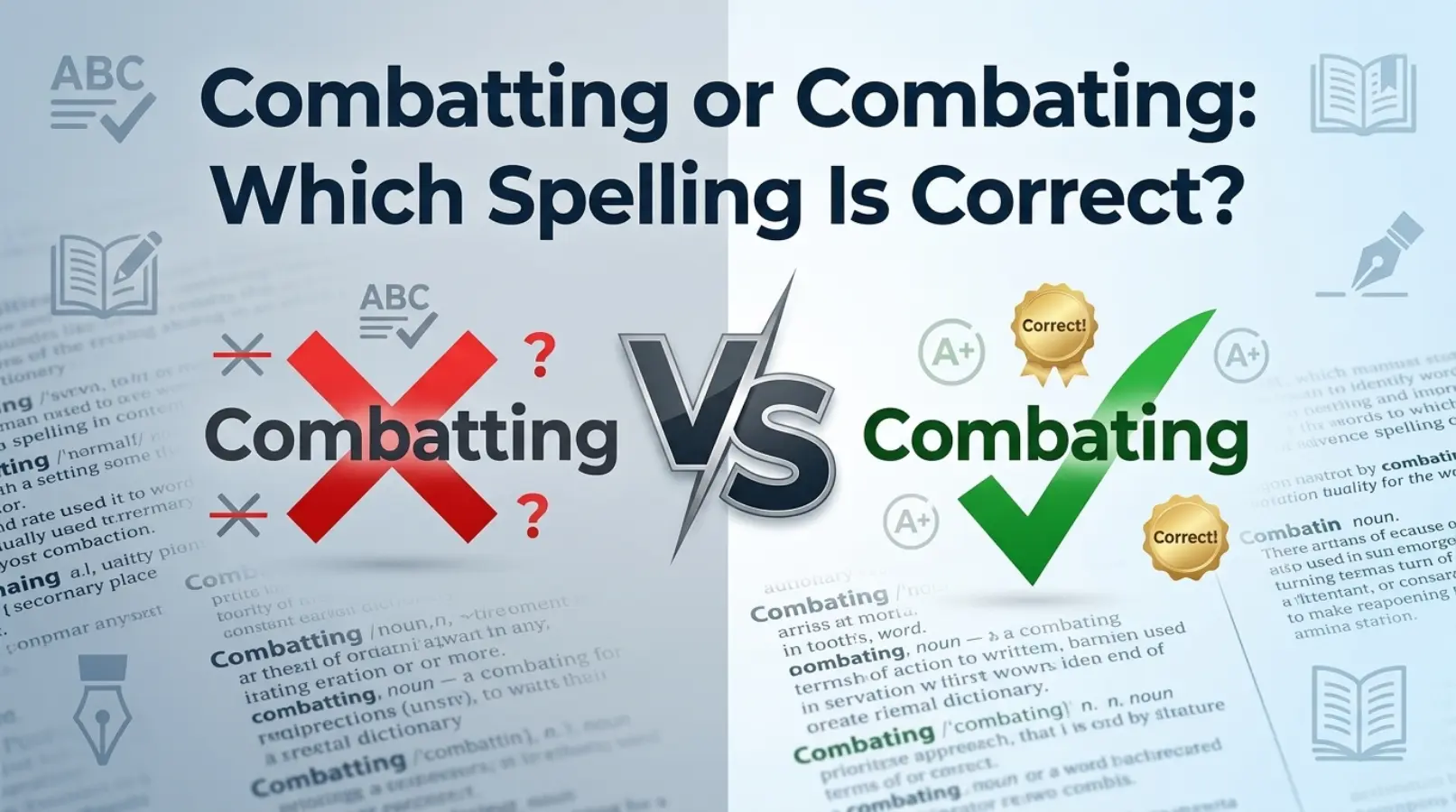
Combatting or combating is a common spelling question that confuses many English writers. Both words come from the verb “combat,” but only one spelling is usually preferred in modern English.
Many people see both versions online and wonder which one is correct. The answer depends on the English style guide and regional spelling rules you follow.
Understanding the difference helps you write more clearly. It also improves your professional communication. Whether you write emails, articles, essays, or business documents, using the right spelling matters.
In this guide, you will learn the meaning of both words, the correct spelling, common mistakes, examples, grammar rules, and expert tips. By the end, you will know exactly when to use “combatting” and when to use “combating.”
Quick Summary Box
- Combatting and combating both come from the verb “combat.”
- Both spellings are technically correct.
- Combating is the preferred modern spelling.
- Most dictionaries favor combating.
- American English strongly prefers combating.
- British English may occasionally use combatting.
- Use combating in formal writing for wider acceptance.
- Example: “The organization is combating climate change.”
What Does Combat Mean?
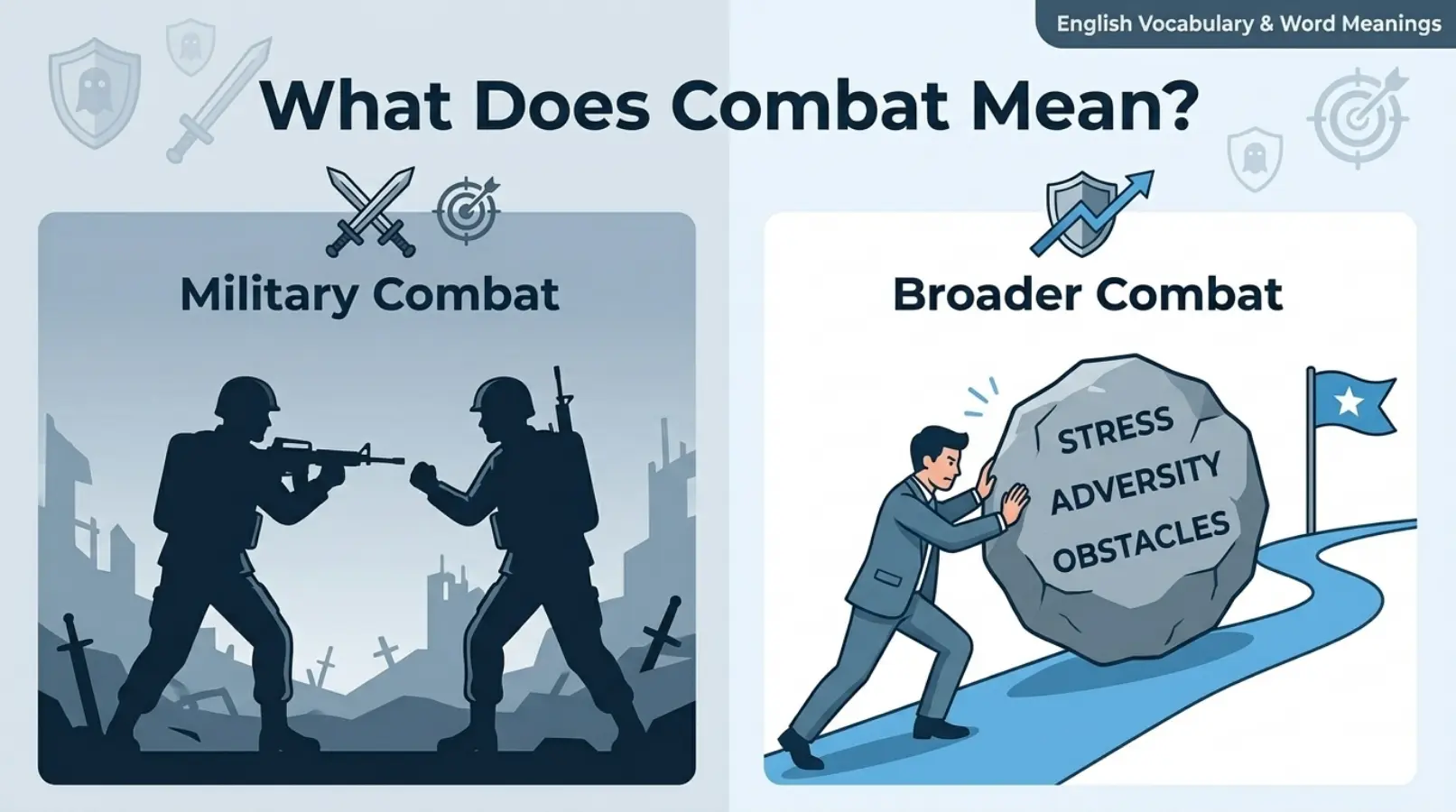
The word combat means to fight against something.
It can refer to physical battles or efforts to stop a problem.
Examples
- The army worked to combat enemy forces.
- Doctors combat diseases every day.
- Schools combat bullying through education.
- Governments combat crime with new laws.
The word can function as both a noun and a verb.
| Word Type | Example |
| Noun | The soldiers entered combat. |
| Verb | We must combat pollution. |
Combatting or Combating: Which Is Correct?
The preferred spelling today is combating.
Most modern dictionaries and style guides recommend this version.
Correct Example
The city is combating air pollution.
Less Common Example
The city is combatting air pollution.
While both forms exist, combating appears much more often in published writing.
Most editors choose “combating” because it follows common English spelling patterns.
Why Do Two Spellings Exist?
The confusion comes from English spelling rules.
When some verbs end in a consonant, writers often double the final letter before adding “-ing.”
Examples
- Run → Running
- Sit → Sitting
- Stop → Stopping
However, the word combat has evolved differently.
Over time, dictionaries accepted combating as the standard form.
As a result, modern publications use “combating” far more frequently.
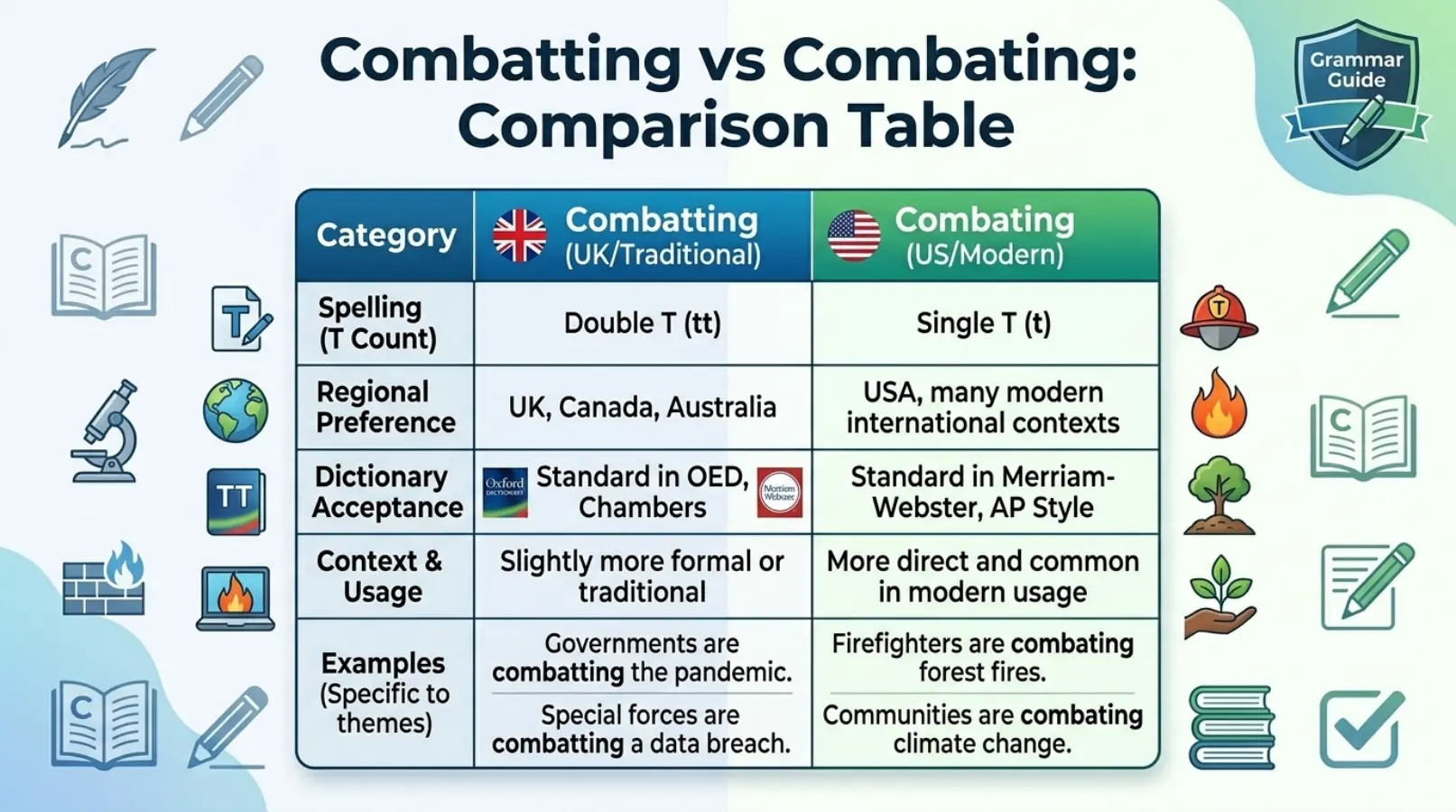
Combatting vs Combating Comparison Table
| Feature | Combatting | Combating |
| Technically Correct | Yes | Yes |
| Common Usage | Less common | Very common |
| Preferred by Dictionaries | Rarely | Yes |
| American English | Uncommon | Preferred |
| Business Writing | Less preferred | Recommended |
| Academic Writing | Less preferred | Recommended |
| SEO Content | Less common | Best choice |
| Professional Documents | Rare | Common |
Winner
Combating is the safer and more widely accepted spelling.
When Should You Use Combating?
Use combating in most situations.
It works well in professional, academic, and everyday writing.
Examples
- Scientists are combating global warming.
- Teachers are combating misinformation.
- Hospitals are combating infectious diseases.
- Companies are combating cyber threats.
- Communities are combating poverty.
This spelling looks natural to most readers.
When Might You See Combatting?
You may encounter combatting in older texts or certain regional publications.
Some writers double the “t” because they apply traditional spelling rules.
Examples
- The agency is combatting corruption.
- Officials are combatting illegal activities.
Although correct, this version appears less often.
Most editors would change it to combating.
Real-Life Examples of Combating
Understanding real examples makes the rule easier to remember.
Healthcare
Doctors are combating new viruses.
Education
Teachers combat cheating through better policies.
Technology
Companies combat cyberattacks with stronger security systems.
Environment
Organizations combat pollution through recycling programs.
Business
Brands combat negative reviews with better customer service.
These examples show how often the word appears in everyday communication.

Common Mistakes People Make
Many writers make simple errors when using these words.
Mistake 1: Thinking Combatting Is Wrong
Combatting is not wrong.
It is simply less common.
Mistake 2: Switching Spellings
Choose one style and stay consistent.
Mistake 3: Following Unreliable Sources
Some websites use outdated spelling rules.
Always check trusted dictionaries.
Mistake 4: Overthinking the Rule
If unsure, use combating.
It is the safest option.
Easy Trick to Remember the Correct Spelling
A simple memory trick can help.
Think about these common words:
- Debate → Debating
- Create → Creating
- Combat → Combating
Notice that these words usually do not double the final consonant before adding “-ing.”
Memory Rule
When in doubt, use combating.
Most professional writers do.
How Combating Is Used in Daily Life
You may hear or read this word often.
News Headlines
- Governments combating inflation.
- Police combating crime.
- Health agencies combating disease outbreaks.
Workplace
- Teams combating productivity issues.
- Managers combating employee burnout.
Social Media
- Users combating fake news.
- Creators combating online harassment.
The word appears in many everyday situations.

Synonyms of Combating
Using related words improves writing variety.
Common Synonyms
- Fighting
- Opposing
- Resisting
- Countering
- Challenging
- Preventing
- Defending against
- Tackling
- Confronting
- Battling
Example
Instead of:
- The company is combating fraud.
You can write:
- The company is fighting fraud.
- The company is tackling fraud.
- The company is countering fraud.
Expert Insights: Why Correct Spelling Matters
Correct spelling affects credibility.
Readers trust content that follows accepted language standards.
Professional writers usually choose combating because it aligns with modern dictionary recommendations.
Search engines also favor clear and consistent content.
Using standard spelling helps readers understand your message faster.
Expert Tips
- Follow major dictionary guidance.
- Stay consistent throughout your document.
- Use combating in professional writing.
- Proofread before publishing.
- Check spelling with trusted grammar tools.
These habits improve both readability and authority.
Frequently Asked Questions (FAQs)
Is combatting a real word?
Yes. Combatting is a real word and is considered correct by some sources.
Which spelling is more common, combatting or combating?
Combating is much more common in modern English.
Is combating correct in American English?
Yes. Combating is the preferred American English spelling.
Can I use combatting in formal writing?
You can, but most editors recommend combating.
Why does combatting have two Ts?
Some spelling rules double the final consonant before adding “-ing.”
Do dictionaries accept both spellings?
Many dictionaries recognize both forms, but they usually favor combating.
Which spelling should students use?
Students should generally use combating.
Which spelling is better for SEO content?
Combating is usually the better choice because it is searched more often.
Conclusion
The debate over combatting or combating is simpler than it first appears. Both spellings are technically correct, but combating is the preferred and widely accepted form in modern English. It appears more often in dictionaries, professional publications, academic writing, and online content.
If you want the safest choice, use combating. Your readers will recognize it immediately, and most editors will expect it. While “combatting” still appears occasionally, it is far less common today.
The easiest rule to remember is this: when you need the “-ing” form of combat, choose combating unless a specific style guide tells you otherwise. Doing so will keep your writing clear, professional, and consistent.