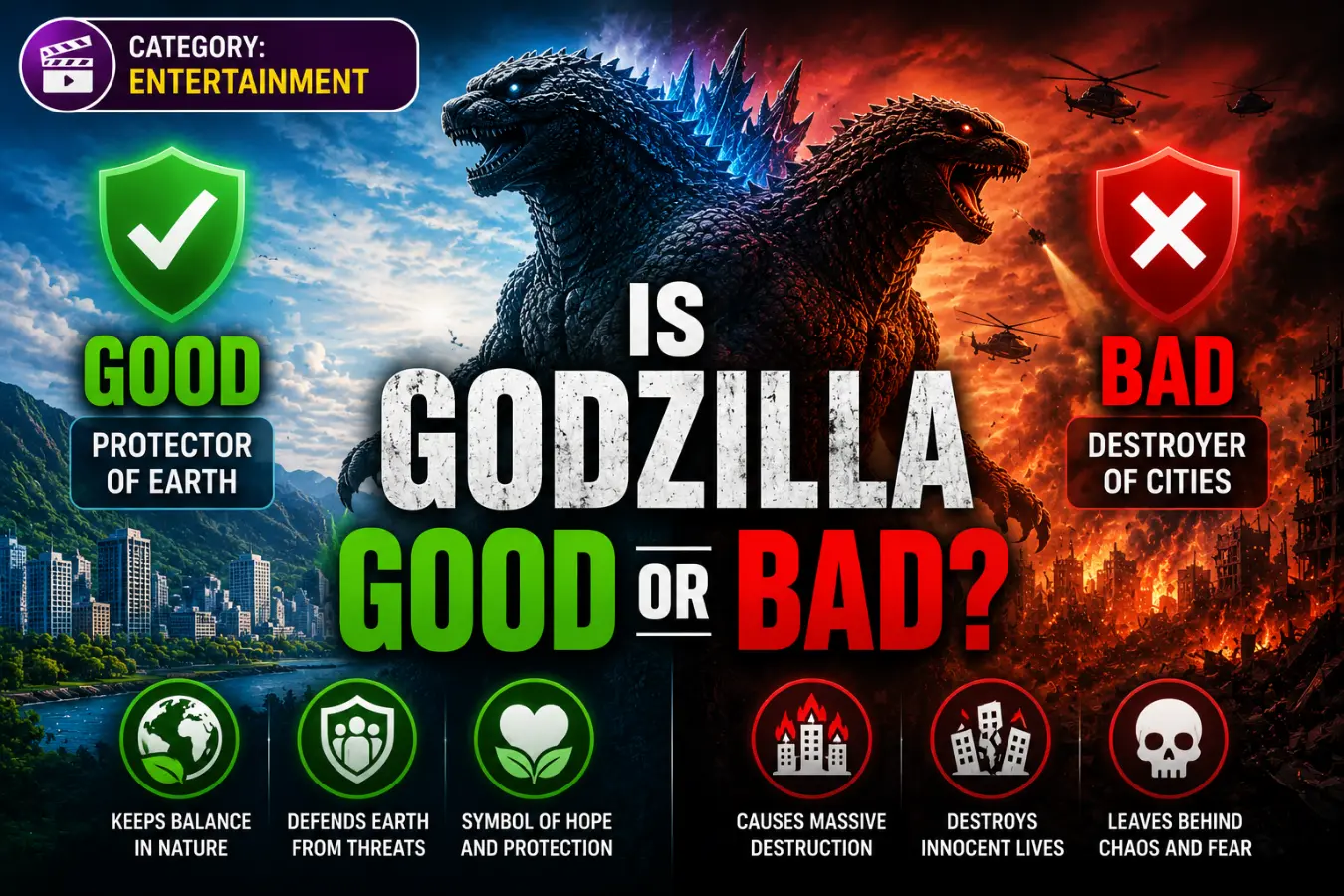
Is Godzilla good or bad? This question has puzzled movie fans for decades. He is one of the most famous movie monsters ever created. Yet, his role changes from one film to another.
Sometimes he destroys cities and causes fear. Other times, he saves the world from bigger threats. Because of this, many people find it hard to decide if he is a hero or a villain.
The answer is not simple. He is often shown as a force of nature. He does not always act like a good guy or a bad guy. Instead, he follows his own instincts and goals.
In this guide, you’ll learn what Godzilla represents, why his role changes, and whether he should be seen as good, bad, or something in between.
Quick Summary Box
- He is not purely good or bad.
- Early movies often show him as a villain.
- Modern films sometimes portray him as a hero.
- He often acts like a force of nature.
- He protects Earth from larger threats.
- He can destroy cities while saving humanity.
- His role depends on the movie’s story.
- Most experts describe him as an anti-hero.
What Is Godzilla?
He is a giant fictional monster, also called a kaiju. He first appeared in the movie Godzilla (1954).
The character was created in Japan. The original story reflected fears about nuclear weapons and destruction after World War II.
He became a worldwide icon. Today, he appears in movies, comics, television shows, and video games.
Key Facts About Godzilla
| Feature | Details |
| First Appearance | Godzilla (1954) |
| Origin | Japan |
| Type | Giant Monster (Kaiju) |
| Powers | Atomic breath, strength, durability |
| Role | Villain, hero, or anti-hero |
| Symbolism | Nature, nuclear power, destruction |
Is Godzilla Good or Bad? The Short Answer
The short answer is that He is neither completely good nor completely bad.
He is often an anti-hero.
An anti-hero is a character who does good things but does not behave like a traditional hero.
He may save the planet from dangerous monsters. However, he can also destroy buildings and cities during battles.
His actions depend on what threatens the natural balance of the world.
Why Was Godzilla Originally Seen as Bad?
The first Godzilla movie presented him as a terrifying threat.
He attacked cities and caused massive destruction. People feared him because he represented the dangers of nuclear weapons.
Reasons Godzilla Was Viewed as a Villain
- Destroyed Tokyo
- Caused loss of life
- Created fear and chaos
- Symbolized nuclear disaster
- Acted as a destructive force
In these early films, He served as a warning about humanity’s mistakes.
When Did Godzilla Become a Hero?
As the franchise grew, filmmakers changed Godzilla’s role.
Instead of fighting humans, Godzilla started fighting other monsters.
He protected Earth from creatures that posed greater threats.
Heroic Godzilla Moments
- Defeating King Ghidorah
- Fighting Mechagodzilla
- Protecting Earth from alien invaders
- Stopping dangerous kaiju attacks
- Maintaining natural balance
These actions made many fans see him as a hero.
Why Many Fans Call Godzilla an Anti-Hero
The term anti-hero fits Godzilla well.
A traditional hero tries to save people. He does not always care about human safety.
Instead, he focuses on survival and balance.
Anti-Hero Traits
- Uses violence when necessary
- Causes collateral damage
- Follows instinct instead of morality
- Protects Earth rather than individual people
- Fights larger threats
This combination makes him more complex than a simple hero or villain.
Godzilla as a Force of Nature
Many experts believe he represents nature itself.
Nature can help people. It can also cause destruction.
For example:
- Earthquakes destroy cities.
- Storms damage homes.
- Forests provide oxygen.
- Oceans support life.
He behaves in a similar way.
He is powerful, unpredictable, and impossible to control.
This perspective explains why he appears both good and bad.
Godzilla’s Role in Different Movie Eras
Godzilla’s character changes across different movie periods.
Showa Era (1954–1975)
- Started as a villain
- Later became a protector
- More family-friendly stories
Heisei Era (1984–1995)
- More serious tone
- Often portrayed as dangerous
- Complex moral character
Millennium Era (1999–2004)
- Different versions of Godzilla
- Roles varied by movie
MonsterVerse Era (2014–Present)
- Protector of natural balance
- Fights dangerous Titans
- Often viewed as a heroic anti-hero
Godzilla vs Traditional Heroes
| Feature | Godzilla | Traditional Hero |
| Saves people directly | Sometimes | Usually |
| Causes destruction | Often | Rarely |
| Follows moral rules | Not always | Yes |
| Protects Earth | Yes | Often |
| Motivated by justice | Sometimes | Usually |
| Acts independently | Always | Often |
This comparison shows why he does not fit the typical hero mold.
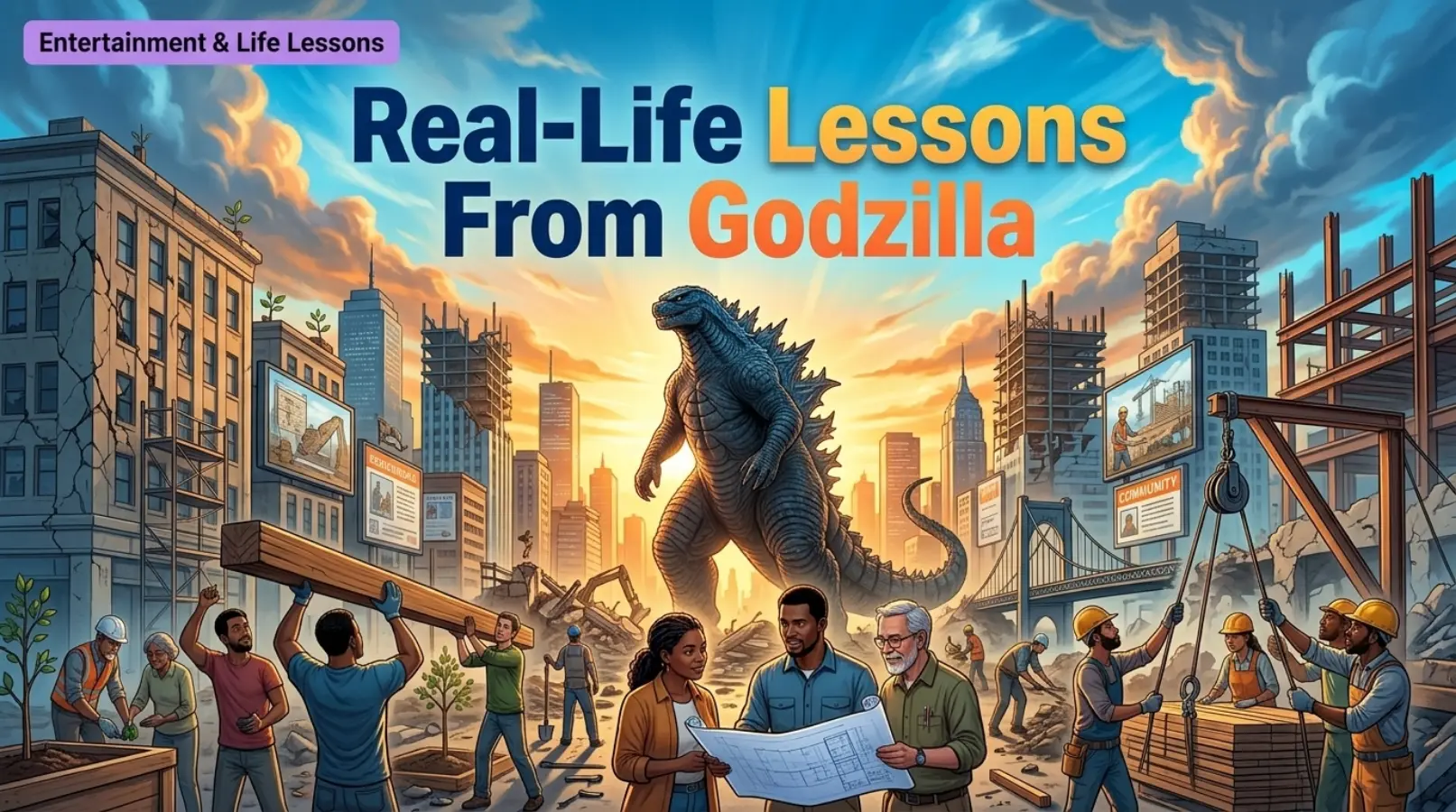
Real-Life Lessons From Godzilla
Godzilla stories teach several important lessons.
Respect Nature
Humans cannot control every natural force.
Technology Has Risks
Many Godzilla films warn about dangerous technology.
Balance Matters
The world works best when balance exists.
Actions Have Consequences
Human mistakes often trigger the events in Godzilla movies.
These lessons help explain the character’s lasting popularity.
Common Mistakes People Make About Godzilla
Mistake 1: Thinking Godzilla Is Always Evil
Some movies show him as a protector.
Mistake 2: Thinking Godzilla Is Always a Hero
He still causes destruction and fear.
Mistake 3: Ignoring His Symbolic Meaning
Godzilla often represents larger social issues.
Mistake 4: Comparing Every Version Together
Different movies present different interpretations.
Mistake 5: Assuming He Loves Humans
Godzilla usually protects Earth first, not people.
Tips for Understanding Godzilla’s Character
Watch Different Eras
Each era shows a different side of Godzilla.
Look Beyond the Battles
Many stories include deeper themes.
Understand the Historical Context
The original film reflected post-war fears.
Focus on Motivation
Ask why Godzilla acts the way he does.
Notice the Symbolism
His actions often represent larger ideas.
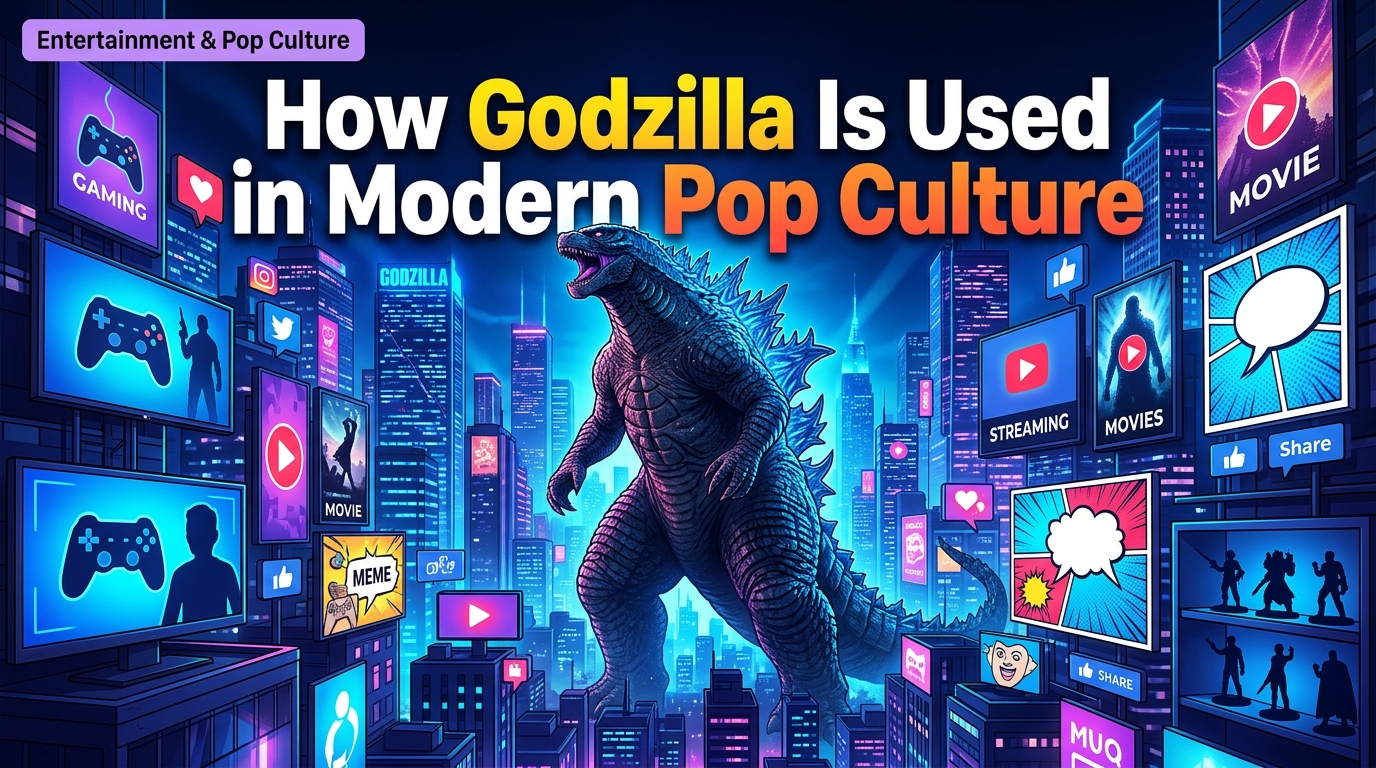
How Godzilla Is Used in Modern Pop Culture
Godzilla remains one of the most recognized fictional characters worldwide.
His image appears in:
- Movies
- Television shows
- Video games
- Toys
- Comics
- Merchandise
Modern audiences often see him as a guardian who keeps stronger threats under control.
This version appeals to viewers who enjoy complex characters.
Expert Insight: Why Godzilla’s Morality Matters
Film experts often describe Godzilla as a mirror of human fears.
His role changes because society changes.
In the 1950s, people feared nuclear destruction.
Today, stories often focus on environmental balance and global threats.
Godzilla adapts to these concerns.
That flexibility helps the character remain relevant after more than 70 years.
From an EEAT perspective, understanding Godzilla requires looking at the entire franchise rather than a single film.
Frequently Asked Questions (FAQs)
Is Godzilla a hero or a villain?
Godzilla is usually considered an anti-hero because he displays both heroic and destructive traits.
Why does Godzilla destroy cities?
He often causes destruction while fighting enemies or reacting to threats.
Does Godzilla protect humans?
Sometimes. However, he usually protects Earth and natural balance first.
Was Godzilla evil in the original movie?
Yes. The original 1954 film portrayed him primarily as a destructive force.
Why do people cheer for Godzilla?
Fans enjoy watching him defeat larger threats and maintain balance.
Is MonsterVerse Godzilla good?
MonsterVerse Godzilla is generally portrayed as a protector of Earth’s ecosystem.
What does Godzilla symbolize?
He often symbolizes nuclear power, nature, and humanity’s relationship with technology.
Can Godzilla be both good and bad?
Yes. Different movies present different versions of the character.
Conclusion
So, is Godzilla good or bad? The most accurate answer is that he is neither completely good nor completely bad. Godzilla exists in a gray area between hero and villain. In some movies, he destroys cities and spreads fear. In others, he protects Earth from dangerous monsters and restores balance.
This complexity is one reason Godzilla remains popular around the world. He reflects humanity’s fears, challenges, and relationship with nature. Rather than fitting into a simple category, Godzilla acts according to his own instincts and purpose.
For most modern audiences, Godzilla is best described as an anti-hero. He may not always save humanity directly, but he often protects the world from threats that are far worse. That balance between destruction and protection makes Godzilla one of cinema’s most fascinating characters.