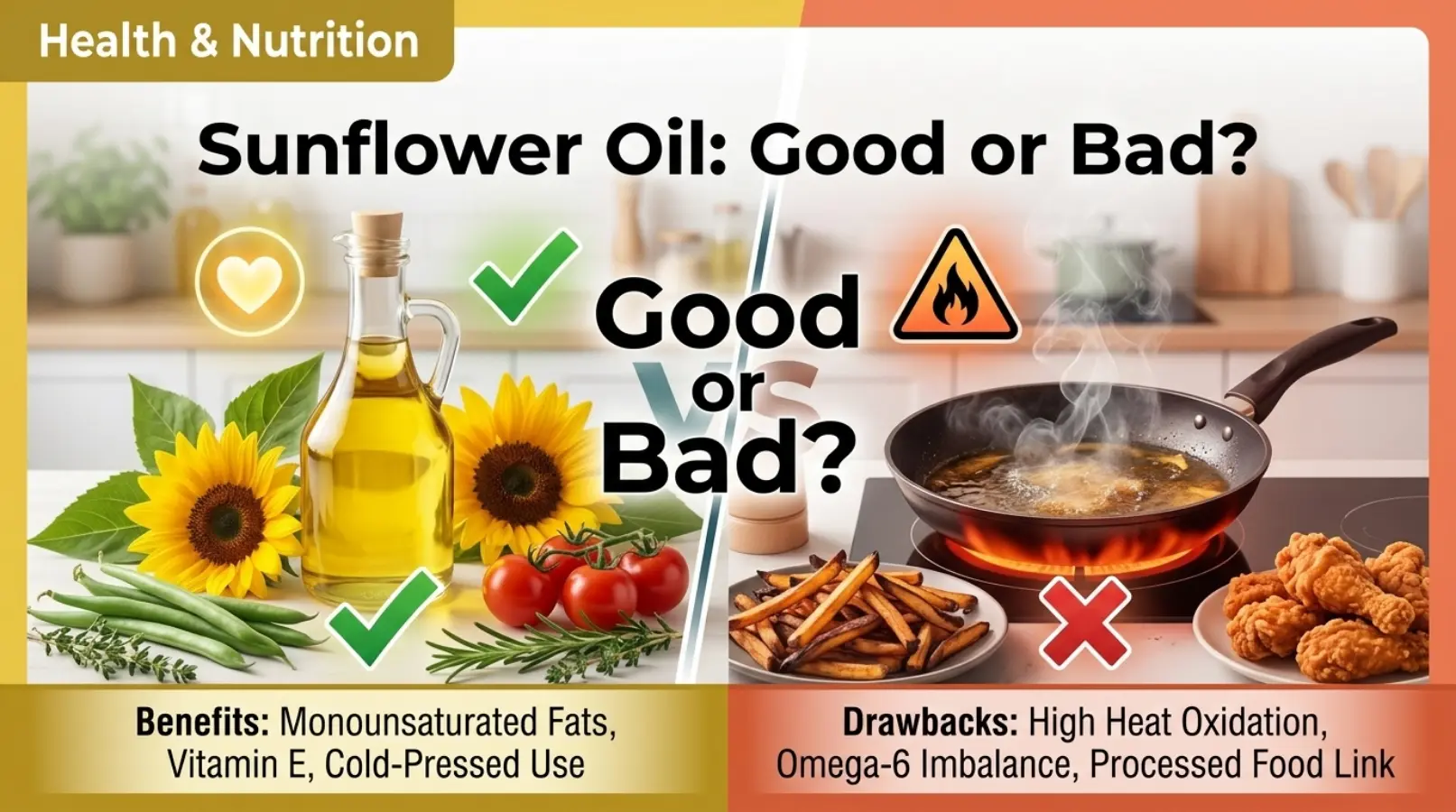
Sunflower oil good or bad is a common question for anyone who wants to eat healthier. The answer is not as simple as yes or no. Sunflower oil can be a healthy choice when you use the right type. It also depends on how you cook with it. Some sunflower oils contain healthy fats that support your heart. Others have more omega-6 fats, which may cause problems if you eat too much. Many people use it every day without knowing the difference. This guide explains everything in simple words. You will learn about its health benefits, possible risks, cooking uses, and expert tips. By the end, you will know if sunflower oil deserves a place in your kitchen.
Quick Summary Box
- It can be healthy when used correctly.
- High-oleic sunflower oil is the healthiest type.
- It contains vitamin E and healthy unsaturated fats.
- Regular sunflower oil has more omega-6 fatty acids.
- Too much omega-6 without enough omega-3 may affect health.
- Avoid overheating or reusing it many times.
- Use it as part of a balanced diet.
What Does “Sunflower Oil Good or Bad” Mean?
Many people ask if sunflower oil helps or harms health.
The truth is simple.
It is not naturally good or bad. Its effects depend on:
- The type of sunflower oil
- How much you use
- How you cook with it
- Your overall diet
When used wisely, it can be part of a healthy eating plan.
What Is Sunflower Oil?
It comes from sunflower seeds.
Manufacturers press the seeds to extract the oil.
It has:
- A light color
- Mild flavor
- High smoke point
- Smooth texture
Many restaurants and home cooks prefer it because it works well for many recipes.
Types of Sunflower Oil
Not all sunflower oils are the same.
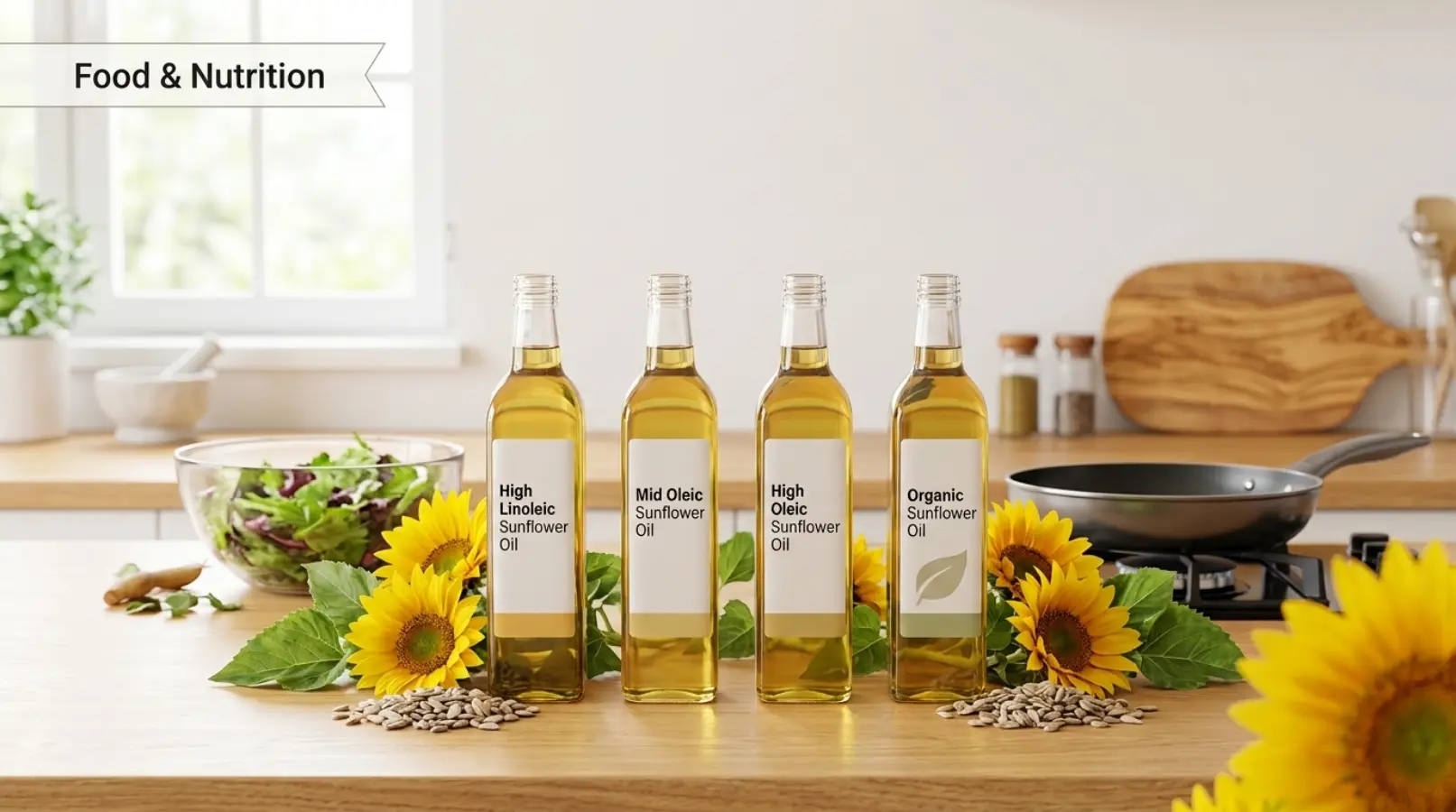
| Type | Main Fat | Best For | Health Rating |
| High Oleic | Monounsaturated fat | Frying, roasting | ⭐⭐⭐⭐⭐ |
| Mid Oleic | Mixed fats | Everyday cooking | ⭐⭐⭐⭐ |
| Linoleic | Omega-6 polyunsaturated fat | Light cooking | ⭐⭐⭐ |
| High Stearic High Oleic | Stable fat blend | Commercial cooking | ⭐⭐⭐⭐ |
High-oleic sunflower oil is usually the healthiest option.
Is it Healthy?
Yes, it can be healthy.
It offers several important nutrients.
Benefits include:
- Rich in Vitamin E
- Contains healthy unsaturated fats
- Supports heart health
- Helps protect body cells
- Naturally cholesterol-free
- May improve skin health
These benefits are strongest when you choose high-quality sunflower oil.
Nutrition Facts
One tablespoon contains approximately:
| Nutrient | Amount |
| Calories | 120 |
| Total Fat | 14 g |
| Saturated Fat | 1–2 g |
| Monounsaturated Fat | 9–11 g (High Oleic) |
| Polyunsaturated Fat | 2–9 g |
| Vitamin E | About 37% Daily Value |
| Protein | 0 g |
| Carbohydrates | 0 g |
It provides energy but no protein or fiber.
Health Benefits of Sunflower Oil
1. Rich in Vitamin E
Vitamin E works as a powerful antioxidant.
It helps protect your body’s cells from damage.
2. Supports Heart Health
High-oleic sunflower oil contains healthy fats.
These fats may help improve cholesterol levels.
3. Good Cooking Stability
High-oleic sunflower oil stays stable under higher heat.
This reduces harmful compounds during cooking.
4. May Help Skin Health
Vitamin E supports healthy skin.
Some skincare products also contain it.
5. Naturally Plant-Based
It fits many diets.
It works well for:
- Vegan diets
- Vegetarian diets
- Dairy-free meals
Possible Risks
It also has some drawbacks.
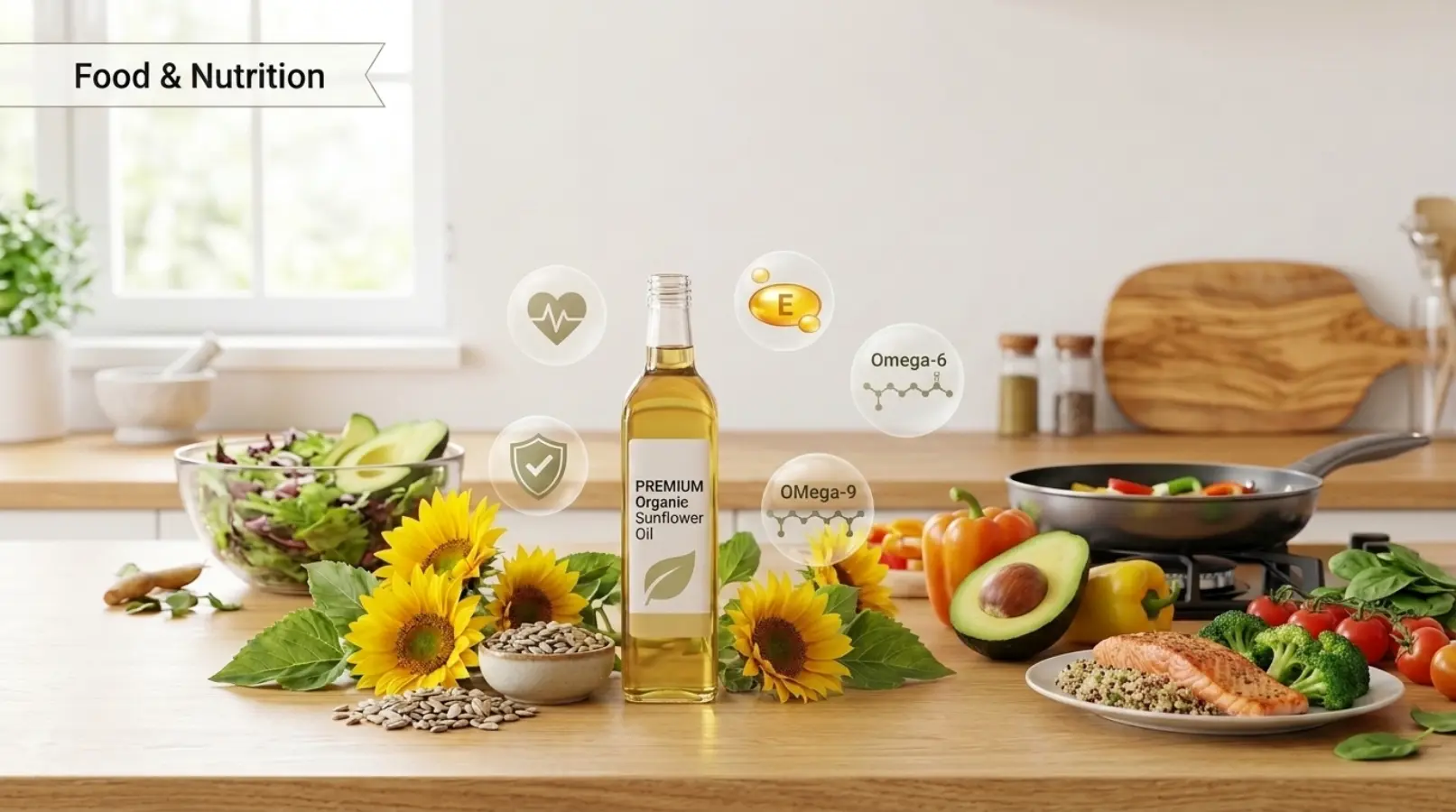
Too Much Omega-6
Regular sunflower oil contains high omega-6 fats.
Your body needs omega-6.
However, too much without enough omega-3 may increase inflammation in some people.
Balance matters.
Highly Processed Versions
Some oils undergo heavy refining.
Less processed oils may keep more natural nutrients.
Deep Frying Frequently
Repeated heating breaks down cooking oils.
Never reuse frying oil many times.
High Calories
Like all oils, it contains many calories.
Use moderate portions.
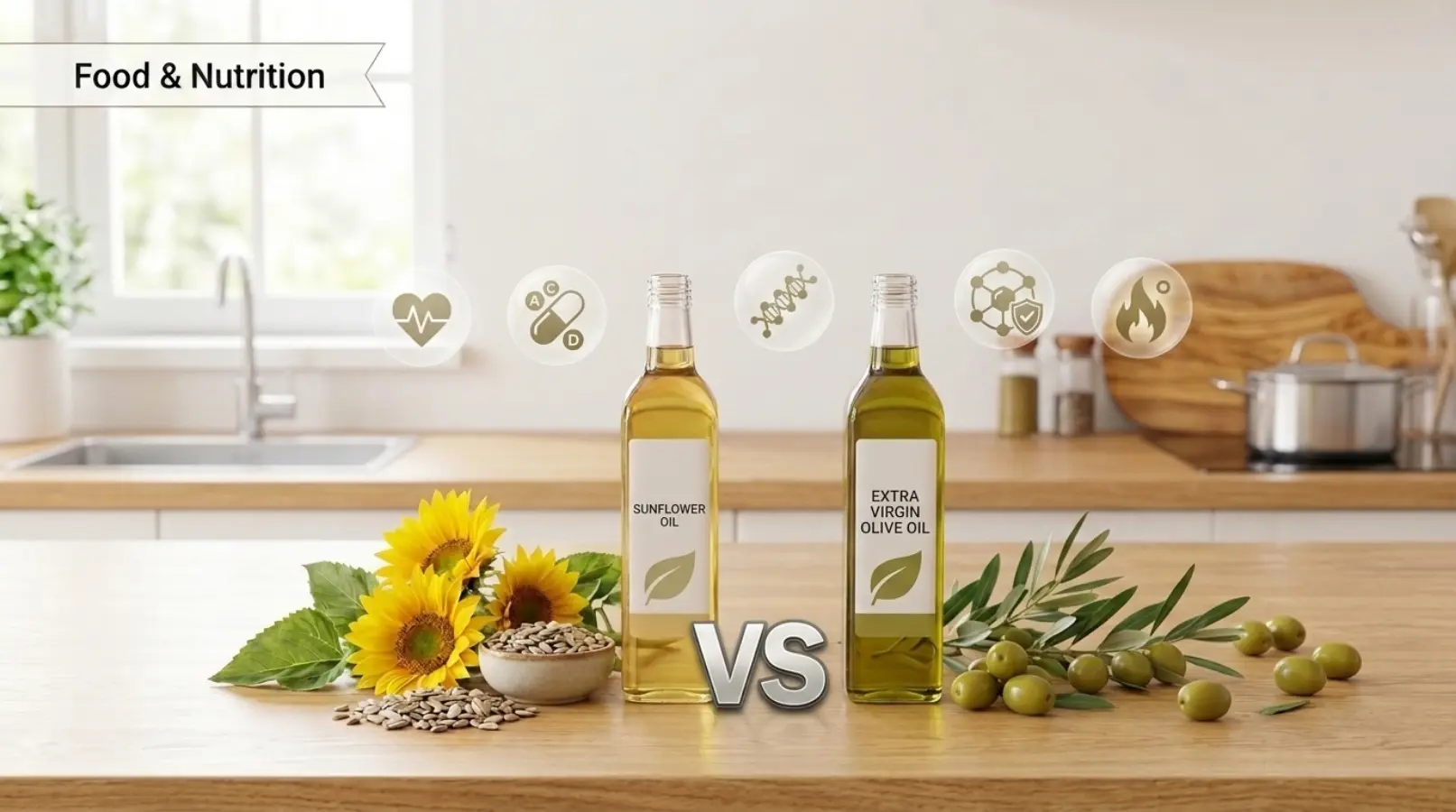
Sunflower Oil vs Olive Oil
| Feature | Sunflower Oil | Olive Oil |
| Taste | Mild | Rich |
| Vitamin E | High | Moderate |
| Healthy Fats | High | Very High |
| Smoke Point | Higher | Moderate |
| Best For | Frying, baking | Salads, sautéing |
| Heart Health | Good | Excellent |
Both oils can be healthy.
Extra virgin olive oil usually wins for overall nutrition.
High-oleic sunflower oil comes very close.
Real-Life Examples
Example 1
Maria uses high-oleic sunflower oil for roasting vegetables.
She enjoys the mild taste.
Example 2
Ahmed uses sunflower oil only for deep frying every day.
He also eats little fish.
His diet contains too much omega-6.
Adding omega-3 foods helps balance his meals.
Example 3
Sarah mixes olive oil and sunflower oil.
She gets different nutrients from both.
Best Ways to Use
It works well for:
- Stir-frying
- Baking
- Roasting
- Air fryer recipes
- Homemade mayonnaise
- Salad dressings (light flavor)
Avoid overheating the oil.
Common Mistakes People Make
Many people misuse.
Common mistakes include:
- Buying the cheapest oil without checking the type
- Using too much oil
- Reusing frying oil
- Eating too many fried foods
- Ignoring omega-3 intake
- Thinking every sunflower oil is identical
Sunflower Oil in Daily Life
It is one of the most commonly used cooking oils in homes and restaurants around the world. It is valued for its light taste, versatility, and ability to work well in many recipes.
Everyday Uses
- Cooking: Ideal for frying, sautéing, roasting, and baking because of its mild flavor.
- Salad Dressings: Adds a light texture to homemade vinaigrettes and dressings without overpowering other ingredients.
- Baking: Used in cakes, muffins, cookies, and breads to keep them moist and soft.
- Deep Frying: Its high smoke point makes it suitable for frying foods like fries, chicken, and snacks.
- Food Processing: Commonly found in packaged foods such as chips, crackers, mayonnaise, and margarine.
Uses Beyond Cooking
- Skin Care: It is an ingredient in many moisturizers, lotions, and massage oils because it helps keep the skin hydrated.
- Hair Care: It is used in some hair oils and conditioners to add shine and reduce dryness.
- Homemade Beauty Products: Many people use it in DIY soaps, lip balms, and body scrubs.
Health Benefits in Daily Use
When consumed in moderation as part of a balanced diet, sunflower oil can offer several benefits:
- Provides vitamin E, an antioxidant that helps protect cells.
- Contains mostly unsaturated fats, which are generally considered healthier than saturated fats.
- Supports normal body functions when used to replace less healthy fats.
- Has a neutral taste that works well in a variety of dishes.
Tips for Everyday Use
- Use refined sunflower oil for high-heat cooking and frying.
- Use cold-pressed sunflower oil for salads and low-heat recipes to preserve its natural flavor.
- Store the oil in a cool, dark place with the lid tightly closed.
- Use it in moderation, as all cooking oils are calorie-dense.
Quick Example
A family might use sunflower oil to:
- Fry eggs for breakfast.
- Roast vegetables for lunch.
- Bake a cake in the evening.
- Prepare a fresh salad dressing with cold-pressed sunflower oil.
This versatility makes sunflower oil a practical choice for everyday cooking and household use.
Tips for Choosing the Healthiest Sunflower Oil
Follow these simple tips.
- Choose High Oleic sunflower oil.
- Look for cold-pressed versions when possible.
- Store away from sunlight.
- Keep the bottle tightly closed.
- Do not reuse oil after deep frying.
- Eat plenty of fish, walnuts, or flaxseed for omega-3 balance.
Checking ingredient labels helps control your intake.
Expert Insights
Nutrition experts agree on one important point.
No cooking oil is perfect.
The healthiest diet uses different healthy oils.
High-oleic sunflower oil is usually a better choice than standard sunflower oil.
It contains more monounsaturated fat.
Experts also recommend:
- Eat more omega-3 foods.
- Avoid too many fried meals.
- Control portion sizes.
- Use fresh cooking oil.
- Follow a balanced eating plan.
Healthy eating depends on your whole diet, not one ingredient.
Frequently Asked Questions
Is sunflower oil good or bad for your heart?
High-oleic sunflower oil may support heart health because it contains healthy monounsaturated fats.
Is sunflower oil healthier than vegetable oil?
It depends.
Many vegetable oils are blends.
High-oleic sunflower oil is often one of the healthier options.
Can I use it every day?
Yes.
Moderate daily use is fine as part of a balanced diet.
Which sunflower oil is healthiest?
High-oleic sunflower oil is considered the healthiest variety.
Is it inflammatory?
Regular sunflower oil is high in omega-6 fats.
Too much omega-6 without enough omega-3 may contribute to inflammation in some diets.
Is it safe for frying?
Yes.
High-oleic sunflower oil performs well because of its high smoke point.
Is it better than canola oil?
Both have benefits.
Canola oil contains more omega-3 fats.
High-oleic sunflower oil offers excellent heat stability.
Should I avoid it completely?
No.
Most healthy people do not need to avoid it.
Choosing the right type and using it in moderation is the key.
Conclusion
So, sunflower oil good or bad depends on the type you choose and how you use it. High-oleic sunflower oil is generally a healthy option because it provides vitamin E and heart-friendly monounsaturated fats. Regular sunflower oil can still fit into a balanced diet, but it is important to pair it with omega-3-rich foods and avoid excessive frying. Like any cooking oil, moderation matters. Eating a variety of nutritious foods, using fresh oil, and choosing healthy cooking methods will have a much bigger impact on your health than relying on one ingredient alone. Make informed choices, read product labels, and enjoy it as part of a well-balanced lifestyle.
Discover More Post:
Wellbeing or Well-Being: Which Is Correct? Grammar Guide
Swimming or Floating: What’s the Difference and Which Is Better?