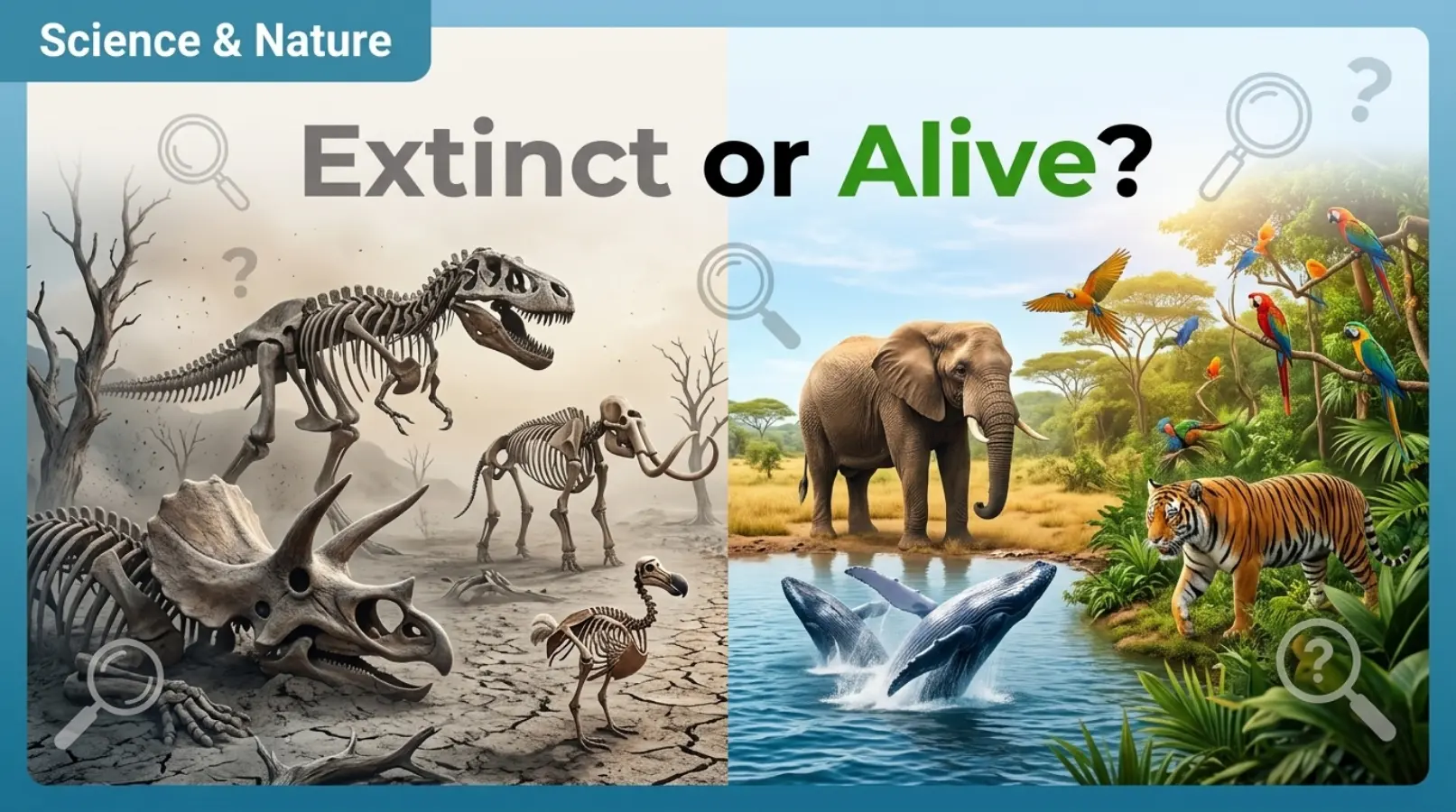
Extinct or alive is a common question people ask about animals, plants, and even species from history. It helps us learn if a species still exists today or has disappeared forever. Many people wonder if famous animals like the dodo, Tasmanian tiger, or dinosaurs are extinct or alive. Understanding this topic is simple when you know the basic facts. It also helps us protect wildlife that still lives on Earth. In this guide, you will learn the meaning of extinct and alive, how scientists decide if a species is extinct, and why conservation matters. You will also see real-life examples, a comparison table, common mistakes, and expert tips. By the end, you will clearly understand the difference between extinct or alive.
Quick Summary Box
- Extinct means a species no longer exists anywhere on Earth.
- Alive means members of a species still live today.
- Scientists confirm extinction only after careful research.
- Habitat loss is a major cause of extinction.
- Conservation helps keep endangered species alive.
- Some species once thought extinct have been rediscovered.
- Knowing the difference supports wildlife protection.
What Does Extinct or Alive Mean?
The phrase extinct or alive compares two opposite conditions of a species.
- Extinct means every individual of a species has died.
- Alive means the species still has living members.
Scientists use these terms to study biodiversity and wildlife.
Simple Definitions
| Term | Meaning |
| Extinct | No living members remain anywhere on Earth. |
| Alive | Living members of the species still exist. |
What Does Extinct Mean?
A species becomes extinct when its last living member dies.
Once extinction happens, the species cannot reproduce naturally.
Common Causes of Extinction
- Habitat destruction
- Climate change
- Pollution
- Hunting
- Disease
- Invasive species
- Natural disasters
Famous Extinct Species
- Dodo
- Woolly Mammoth
- Passenger Pigeon
- Tasmanian Tiger (officially extinct)
- Saber-Toothed Cat
What Does Alive Mean?
A species is alive when individuals continue living and reproducing.
Some species have very small populations but are still alive.
Examples
- Tigers
- Elephants
- Giant Pandas
- Blue Whales
- Bald Eagles
Although many are endangered, they are not extinct.
Extinct vs Alive: Comparison Table
| Feature | Extinct | Alive |
| Living Individuals | None | One or more |
| Can Reproduce | No | Yes |
| Exists in Nature | No | Yes |
| Conservation Possible | No | Yes |
| Population | Zero | Above zero |
| Future Survival | Impossible naturally | Possible with protection |
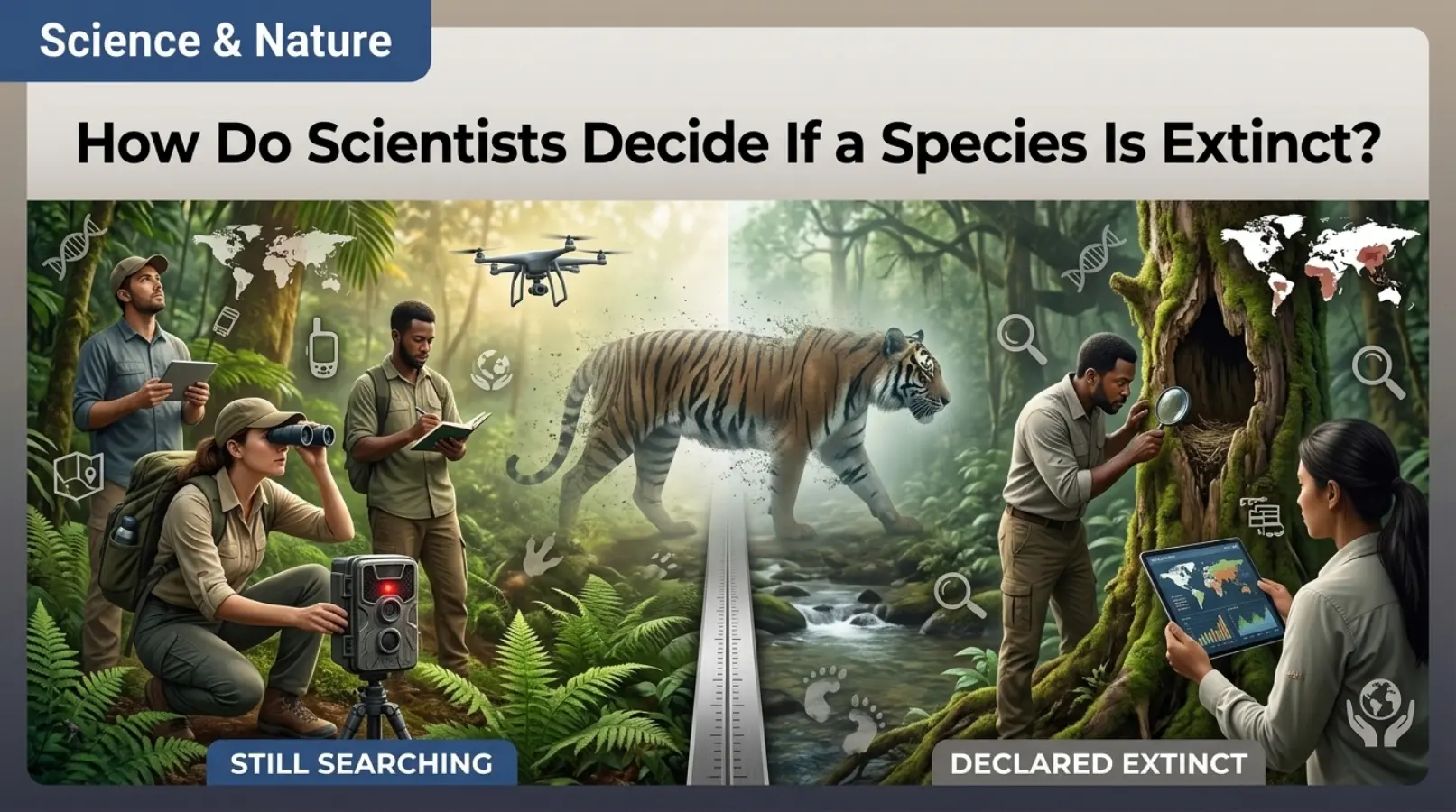
How Do Scientists Decide If a Species Is Extinct?
Scientists never guess.
They collect strong evidence before declaring extinction.
They Look For
- Recent sightings
- Scientific surveys
- Camera trap images
- DNA evidence
- Habitat studies
- Historical records
A species may remain “possibly extinct” until enough evidence exists.
Can an Extinct Species Come Back?
Usually, no.
Natural extinction is permanent.
However, scientists study de-extinction using modern technology.
Examples include research involving:
- Woolly Mammoth DNA
- Passenger Pigeon genetics
These projects are experimental.
No fully extinct animal has naturally returned.
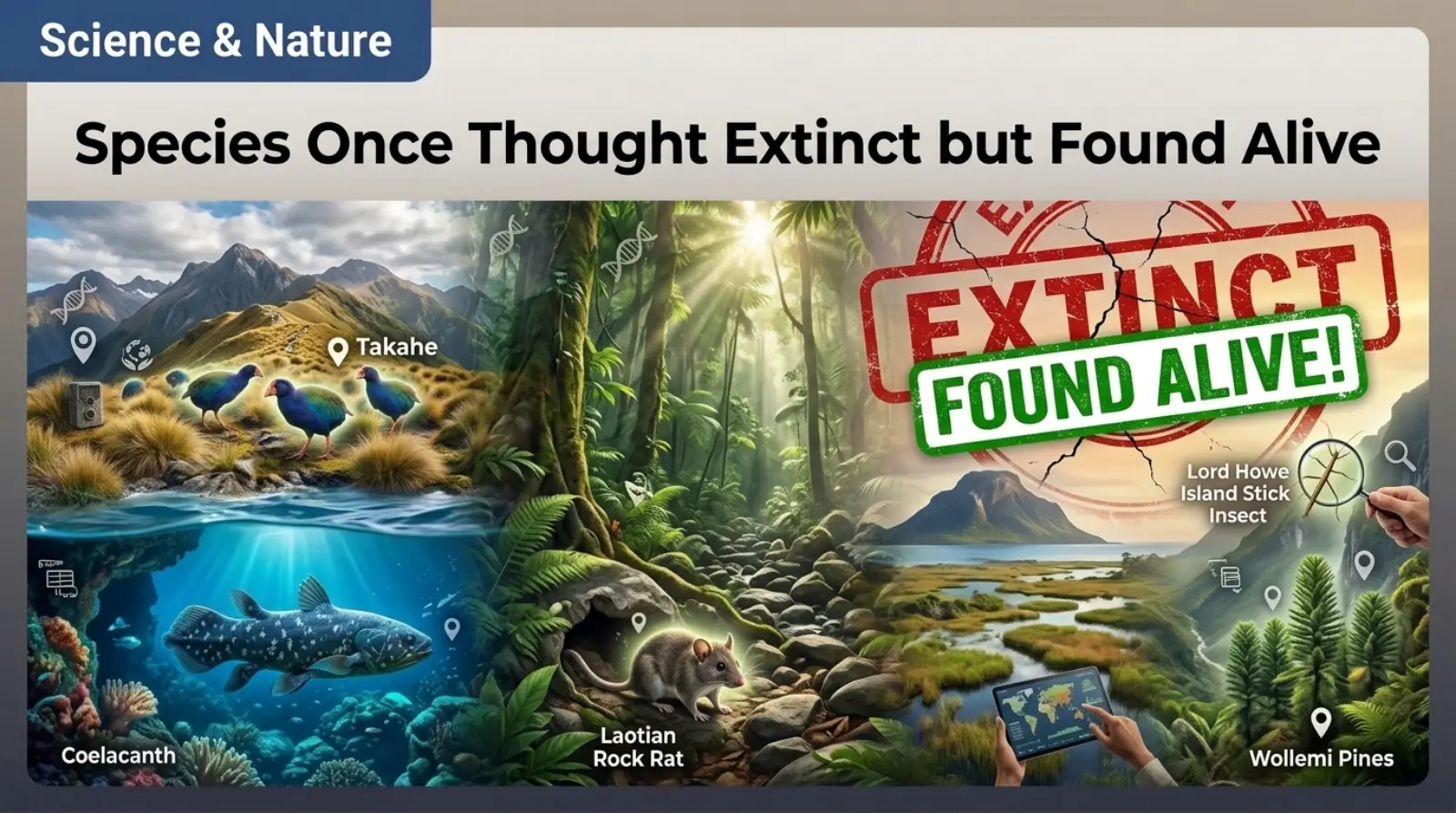
Species Once Thought Extinct but Found Alive
Nature still surprises scientists.
Some species disappear for years before being rediscovered.
Examples
| Species | Rediscovered |
| Coelacanth | 1938 |
| Laotian Rock Rat | 1996 |
| Lord Howe Stick Insect | 2001 |
| Bermuda Petrel | 1951 |
These discoveries remind scientists to continue searching.
Why Do Species Become Extinct?
Many extinctions happen because of human activity.
Main Reasons
Habitat Loss
Forests disappear because of farming and cities.
Climate Change
Changing temperatures affect survival.
Pollution
Water and air pollution harm wildlife.
Overhunting
Too much hunting reduces populations quickly.
Invasive Species
New predators or diseases threaten native animals.
Why Keeping Species Alive Matters
Every species plays an important role.
Benefits include:
- Healthy ecosystems
- Cleaner water
- Better food chains
- Medical discoveries
- Economic value through tourism
- Stable climate
Losing one species can affect many others.
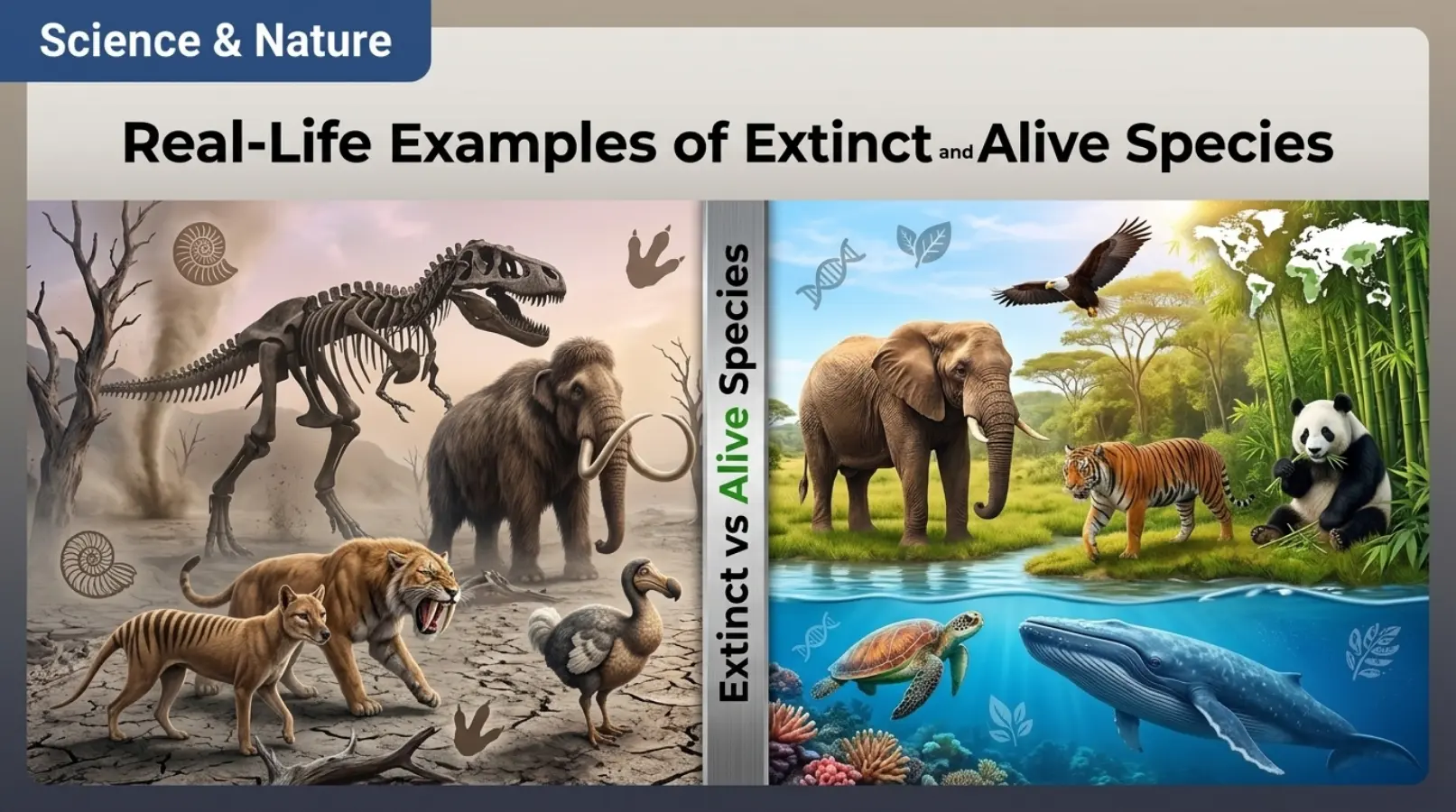
Real-Life Examples of Extinct and Alive Species
Extinct
- Dodo
- Great Auk
- Woolly Mammoth
- Passenger Pigeon
Alive
- African Elephant
- Bengal Tiger
- Red Panda
- Polar Bear
- Sea Turtle
These examples help explain the difference clearly.
Common Mistakes About Extinct or Alive
Many people misunderstand these terms.
Mistake 1
Endangered means extinct.
Wrong.
Endangered species are still alive.
Mistake 2
No sightings for years means extinction.
Wrong.
Scientists need strong proof.
Mistake 3
Dinosaurs still exist exactly as before.
Wrong.
Modern birds evolved from certain dinosaur groups, but famous dinosaurs like T. rex are extinct.
Mistake 4
All rare animals are extinct.
Wrong.
Rare animals can still survive.
Tips to Help Protect Species
Everyone can help.
Easy Ways
- Reduce plastic waste.
- Support wildlife organizations.
- Plant native trees.
- Avoid illegal wildlife products.
- Save water.
- Learn about endangered species.
- Share conservation awareness.
Small actions create big change.
Synonyms
- Living species
- Extinct species
- Surviving animals
- Lost species
- Wildlife conservation
Real-Life Scenarios
Scenario 1
A child asks whether dinosaurs are alive.
Answer:
Most well-known dinosaurs are extinct.
Modern birds evolved from certain dinosaur ancestors.
Scenario 2
Someone hears about giant pandas.
Answer:
They are alive but remain vulnerable and protected.
Scenario 3
A rare frog disappears for decades.
Scientists continue searching before declaring extinction.
Expert Insights
Wildlife experts recommend protecting habitats before species become endangered.
Conservation is always easier than reversing population decline.
Scientists also encourage biodiversity monitoring because early action saves species.
Governments, communities, and individuals all share responsibility.
The best conservation programs combine education, habitat restoration, and strong wildlife laws.
Frequently Asked Questions (FAQs)
What does extinct mean?
It means no living members of a species remain anywhere on Earth.
What does alive mean?
It means the species still has living individuals.
Are endangered animals extinct?
No.
Endangered species are alive but face a high risk of extinction.
Can extinct animals come back?
Not naturally.
Scientists study de-extinction, but it remains experimental.
What animal became extinct most recently?
Many species have gone extinct in recent decades. The exact answer depends on scientific confirmation and region.
Why do animals become extinct?
Habitat loss, climate change, pollution, hunting, and invasive species are common causes.
Can scientists always prove extinction?
No.
Scientists need strong evidence before declaring a species extinct.
How can I help prevent extinction?
Support conservation, reduce pollution, protect habitats, and spread awareness.
Conclusion
Understanding extinct or alive helps us appreciate the value of every species on Earth. An extinct species has disappeared forever, while an alive species continues to survive and reproduce. Many animals face threats from habitat loss, pollution, and climate change, making conservation more important than ever. Learning the difference between extinct, endangered, and alive helps us make informed choices and support wildlife protection. Every effort, from reducing waste to supporting conservation programs, can make a difference. The more we understand nature, the better we can protect it for future generations. Remember, preventing extinction is far easier than trying to restore what has already been lost.
Discover More Post:
A Hour or An Hour: Which One Is Correct? Simple Grammar Guide
Wellbeing or Well-Being: Which Is Correct? Grammar Guide