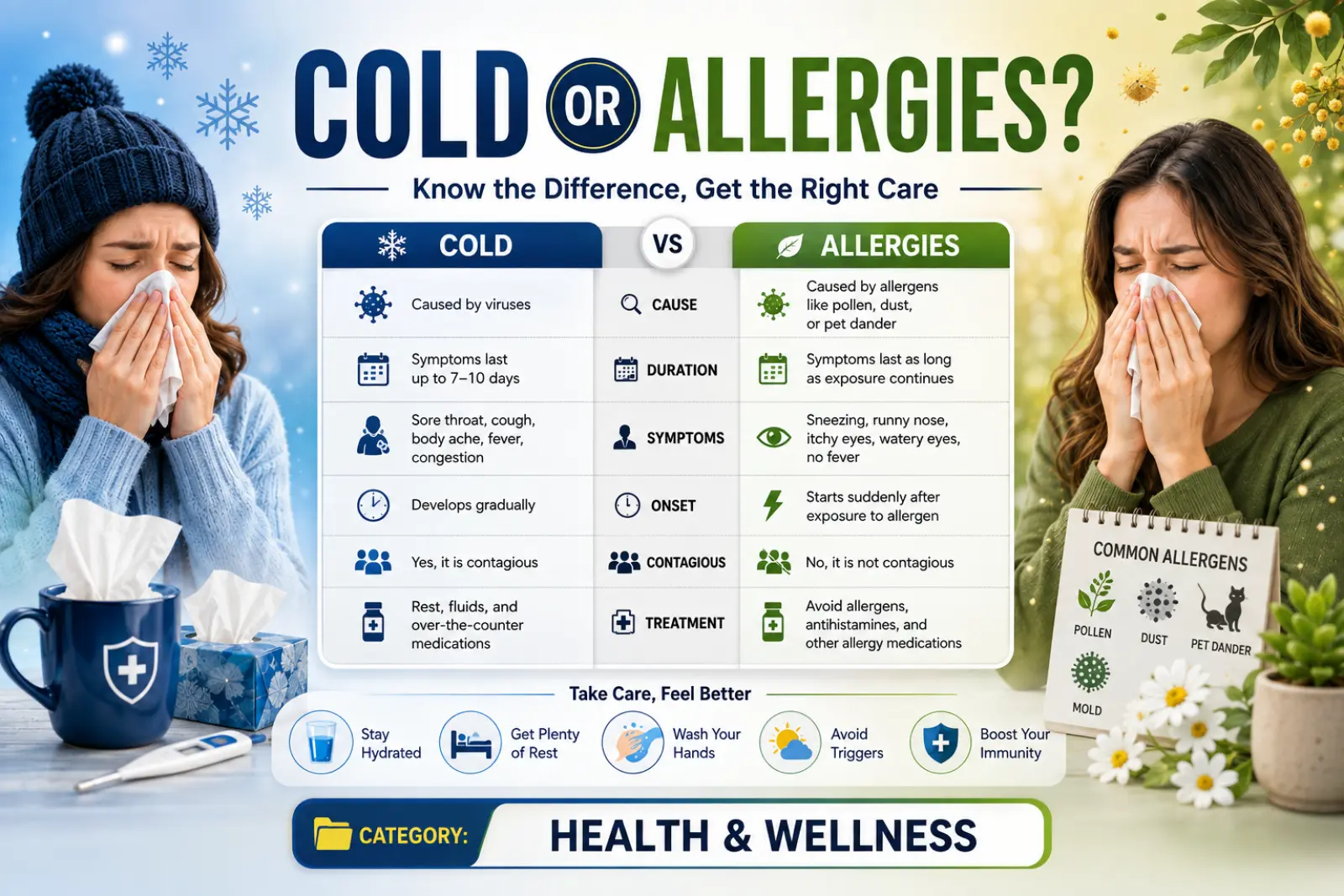
Cold or allergies can feel very similar at first. Both can cause a runny nose, sneezing, and a stuffy nose. That is why many people confuse them. However, they have different causes and need different care.
A common cold comes from a virus. Allergies happen when your immune system reacts to things like pollen, dust, or pet dander. Knowing the difference helps you choose the right treatment. It can also help you recover faster and avoid unnecessary medicine.
This guide explains the signs of a cold and allergies in simple words. You will also learn about symptoms, causes, treatments, prevention, and when to see a doctor. By the end, you will know how to tell if you have a cold or allergies.
Quick Summary Box
- Cold is a viral infection.
- Allergies happen because of an immune system reaction.
- Colds usually last 7–10 days.
- Allergies may last for weeks or months.
- Fever is common with colds but rare with allergies.
- Itchy eyes are common with allergies.
- Rest and fluids help with colds.
- Avoiding triggers and taking allergy medicine helps allergies.
What Does Cold or Allergies Mean?
A cold is a mild viral infection. It affects your nose, throat, and upper airways.
An allergy is your body’s reaction to something harmless. These things are called allergens. Common allergens include:
- Pollen
- Dust mites
- Pet hair
- Mold
- Certain foods
Although both conditions affect the nose and throat, their causes are very different.
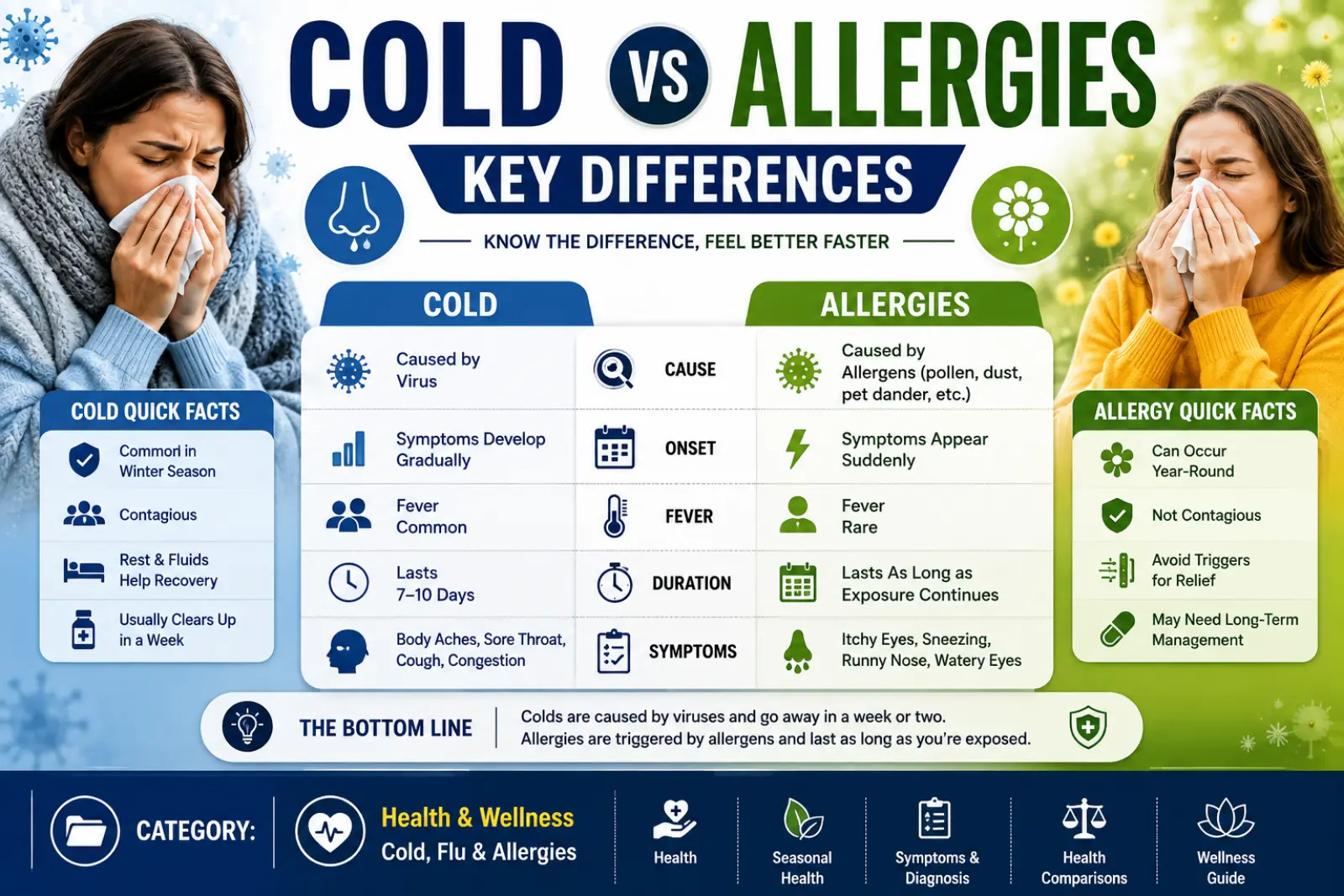
Cold vs Allergies: Key Differences
| Feature | Cold | Allergies |
| Cause | Virus | Allergens |
| Fever | Sometimes | Rare |
| Sneezing | Yes | Very common |
| Runny nose | Yes | Yes |
| Itchy eyes | Rare | Common |
| Body aches | Common | Rare |
| Duration | 7–10 days | Until exposure ends |
| Contagious | Yes | No |
| Sore throat | Common | Sometimes |
| Seasonal | Any time | Often seasonal |
What Causes a Cold?
A cold spreads from viruses. The most common one is the rhinovirus.
You may catch a cold by:
- Touching infected surfaces
- Shaking hands
- Breathing virus droplets
- Sharing personal items
Colds spread easily in schools, offices, and homes.
What Causes Allergies?
Allergies happen when your immune system mistakes harmless substances as dangerous.
Common allergy triggers include:
- Tree pollen
- Grass pollen
- Dust mites
- Pet dander
- Mold spores
- Smoke
- Strong perfumes
Some people have allergies all year. Others only have them during certain seasons.
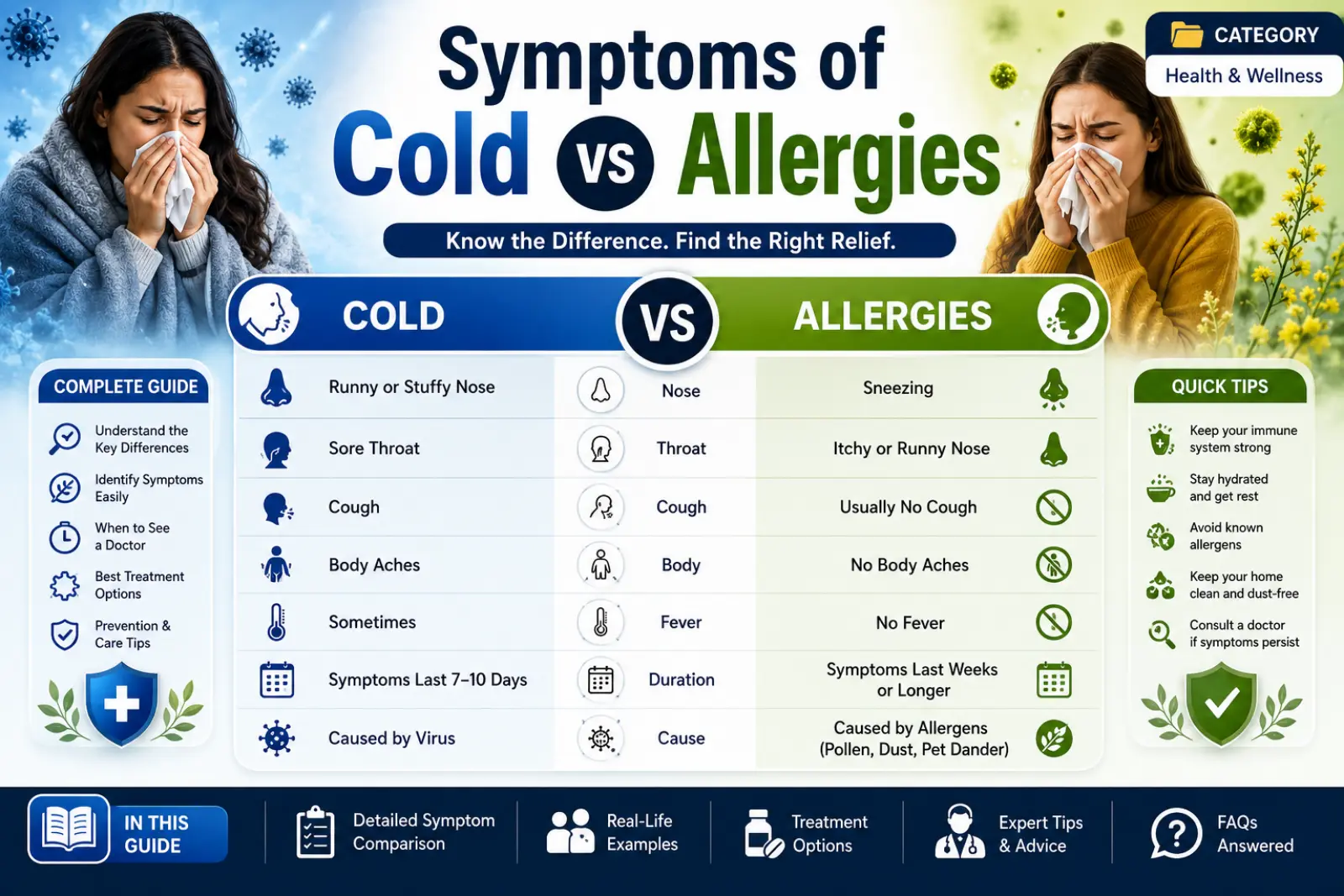
Symptoms of Cold vs Allergies
Understanding symptoms makes diagnosis easier.
Cold Symptoms
- Stuffy nose
- Runny nose
- Sneezing
- Sore throat
- Mild cough
- Fever
- Headache
- Body aches
- Tiredness
Allergy Symptoms
- Frequent sneezing
- Clear runny nose
- Itchy eyes
- Watery eyes
- Itchy nose
- Itchy throat
- Nasal congestion
- No fever
A fever usually points to a cold rather than allergies.
How to Tell If You Have a Cold or Allergies
Ask yourself these questions.
Did symptoms appear suddenly?
Allergies often begin quickly after exposure.
Colds usually develop over one or two days.
Do your eyes itch?
Itchy eyes strongly suggest allergies.
Do you have a fever?
A fever usually means a cold.
How long have symptoms lasted?
A cold often improves within ten days.
Allergies continue as long as you stay around the trigger.
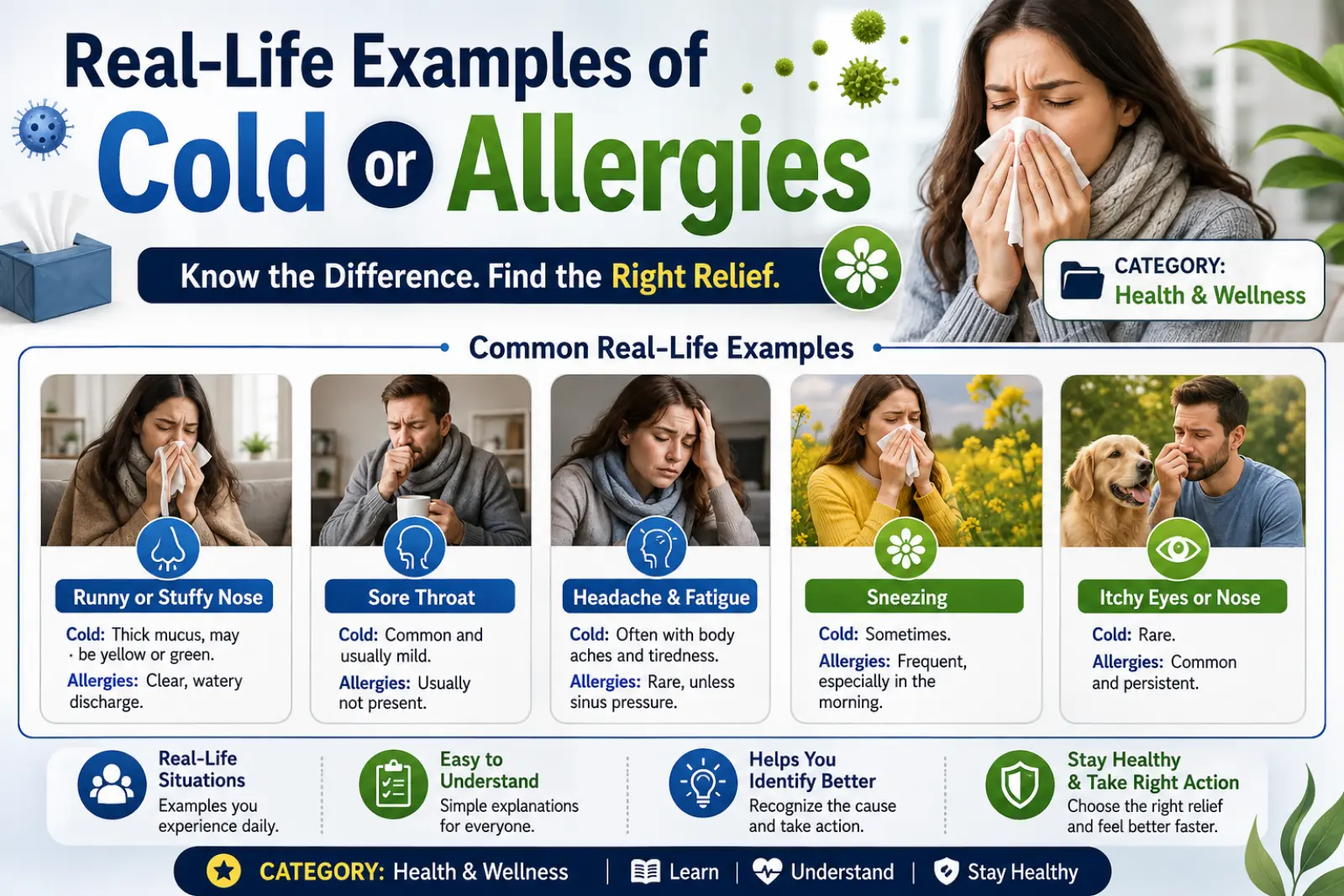
Real-Life Examples of Cold or Allergies
Example 1
Sarah develops sneezing every spring. Her eyes itch all day. She has no fever.
She most likely has seasonal allergies.
Example 2
Ali wakes up with a sore throat. He develops a cough and mild fever.
He probably has a common cold.
Example 3
John feels fine indoors. Outside, he sneezes constantly during pollen season.
His symptoms suggest pollen allergies.
Example 4
Emma has body aches, congestion, and fatigue.
These signs fit a viral cold.
Best Treatments for Cold and Allergies
Cold Treatment
There is no cure for the common cold.
You can feel better by:
- Drinking plenty of water
- Getting enough rest
- Taking acetaminophen or ibuprofen for pain
- Using saline nasal spray
- Drinking warm tea
- Using throat lozenges
Antibiotics do not treat viral colds.
Allergy Treatment
Managing allergies focuses on reducing symptoms.
Common treatments include:
- Antihistamines
- Nasal steroid sprays
- Allergy eye drops
- Decongestants for short-term use
- Avoiding allergy triggers
Some people also benefit from allergy shots.
Common Mistakes People Make
Many people confuse these conditions.
Avoid these mistakes:
- Taking antibiotics for a cold
- Ignoring allergy symptoms for months
- Using decongestant sprays too long
- Assuming every runny nose is a cold
- Skipping allergy medicine during pollen season
Correct treatment depends on the right diagnosis.
Tips to Prevent Colds and Allergies
Preventing Colds
- Wash hands often
- Avoid touching your face
- Stay away from sick people
- Get enough sleep
- Eat healthy foods
Preventing Allergies
- Keep windows closed during high pollen days
- Use air filters
- Wash bedding weekly
- Vacuum regularly
- Shower after outdoor activities
Cold or Allergies in Daily Life
Many daily situations can help identify the problem.
At work, a coworker with a fever and cough may have a cold.
During spring gardening, constant sneezing often points to allergies.
Children may miss school because of either condition. Parents should watch symptoms closely.
Travelers may develop allergies after visiting places with different plants or climates.
Knowing the difference helps people return to normal activities sooner.
Expert Insights
Doctors often recommend watching symptoms before choosing medicine.
Remember these important points:
- Fever usually suggests a cold.
- Itchy eyes usually suggest allergies.
- Antibiotics do not treat viral colds.
- Long-lasting symptoms deserve medical evaluation.
- Allergy testing helps identify triggers.
A proper diagnosis leads to better treatment and faster relief.
Frequently Asked Questions (FAQs)
Is it a cold or allergies if I keep sneezing?
Sneezing happens in both conditions. Itchy eyes usually point to allergies.
Can allergies cause a sore throat?
Yes. Postnasal drip from allergies can irritate the throat.
Do allergies cause fever?
No. Fever is uncommon with allergies.
How long does a cold last?
Most colds improve within seven to ten days.
Can allergies make you tired?
Yes. Constant allergy symptoms can reduce sleep quality and cause fatigue.
Should I take antibiotics for a cold?
No. Antibiotics do not work against viruses.
Can allergies become worse over time?
Yes. Some people develop stronger reactions after repeated exposure.
When should I see a doctor?
See a doctor if you have:
- Trouble breathing
- High fever
- Symptoms lasting more than two weeks
- Severe facial pain
- Chest pain
- Persistent wheezing
Final Comparison Table
| Question | Cold | Allergies |
| Is it contagious? | Yes | No |
| Caused by virus? | Yes | No |
| Caused by allergens? | No | Yes |
| Fever? | Sometimes | Rare |
| Itchy eyes? | Rare | Very common |
| Duration | 7–10 days | Weeks or months |
| Best treatment | Rest and fluids | Antihistamines and trigger avoidance |
Conclusion
Understanding cold or allergies helps you choose the right treatment and recover more comfortably. A cold is a viral infection that usually lasts about a week and may include fever, body aches, and a sore throat. Allergies result from your immune system reacting to triggers like pollen, dust, or pet dander. They often cause itchy eyes, sneezing, and symptoms that continue while you are exposed to the allergen. Paying attention to your symptoms, how long they last, and if you have a fever can help you tell the difference. If symptoms become severe, last longer than expected, or affect your breathing, seek medical advice. Knowing you have a cold or allergies makes it easier to manage symptoms and protect your overall health.
Discover More Post:
Introvert or Extrovert Quiz: Discover Your True Personality
Concealer or Foundation First? Makeup Order for a Flawless Finish