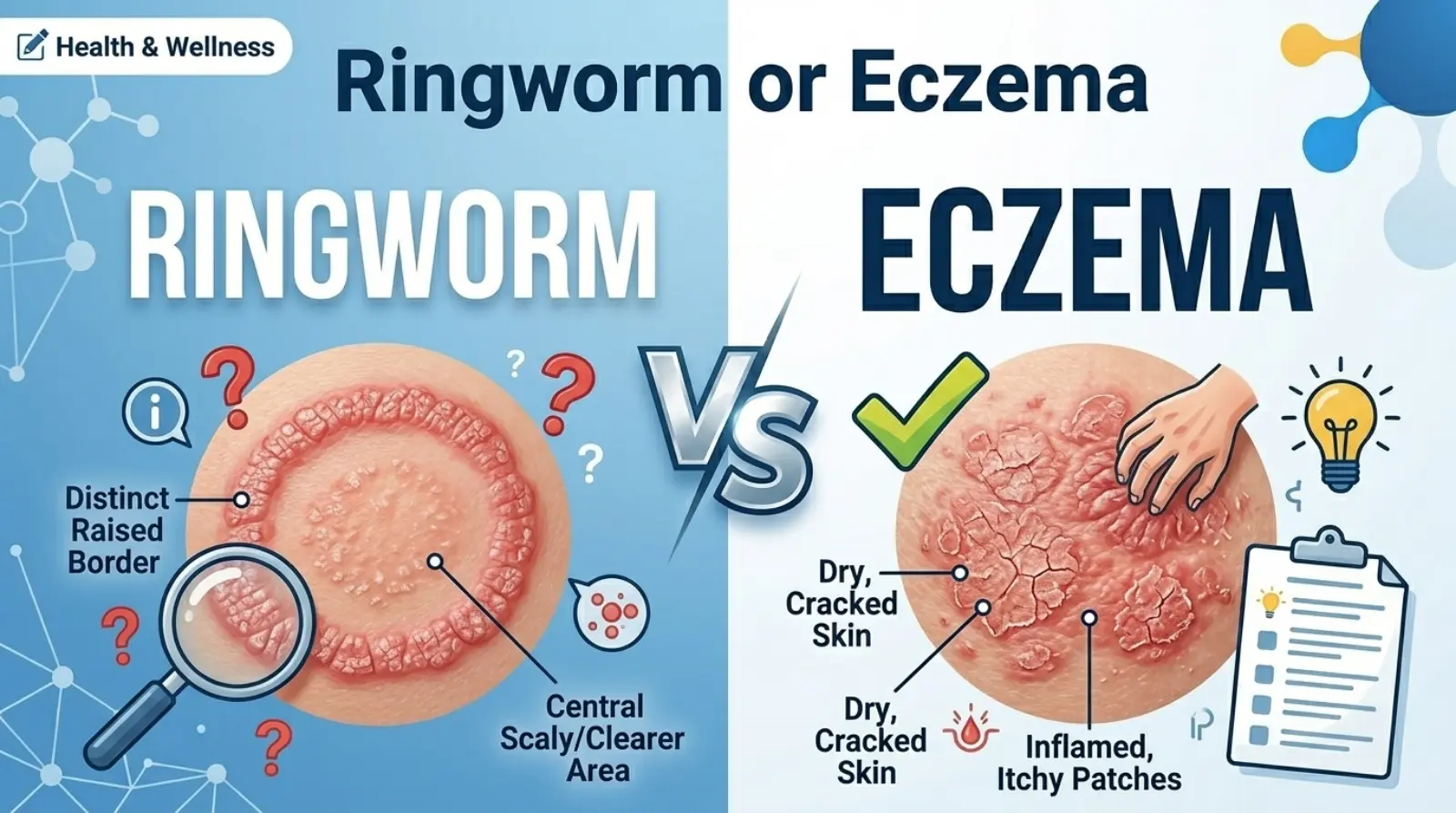
Ringworm or eczema can look very similar at first. Both can cause red, itchy, and uncomfortable skin. Because of this, many people confuse one condition for the other.
However, ringworm and eczema have different causes. Ringworm comes from a fungal infection. Eczema is a skin condition linked to inflammation and irritation.
Knowing the difference matters. The wrong treatment can make symptoms worse. For example, antifungal medicine helps ringworm but does not treat eczema. On the other hand, some eczema creams may worsen a fungal infection.
This guide explains ringworm and eczema in simple terms. You will learn the key symptoms, causes, treatments, and warning signs. By the end, you will know how to identify each condition and when to seek medical advice.
Quick Summary Box
- Ringworm is a fungal skin infection.
- Eczema is an inflammatory skin condition.
- Ringworm often forms a circular rash with a clear center.
- Eczema usually causes dry, itchy, and inflamed skin.
- Ringworm can spread from person to person.
- Eczema is not contagious.
- Antifungal medications treat ringworm.
- Moisturizers and anti-inflammatory treatments help eczema.
- A doctor can confirm the diagnosis if symptoms are unclear.
What Is Ringworm?
Ringworm is a common fungal infection of the skin. Despite its name, it does not involve worms.
The infection develops when fungi grow on the skin’s surface. It can appear on many body parts, including:
- Arms
- Legs
- Face
- Scalp
- Groin
- Feet
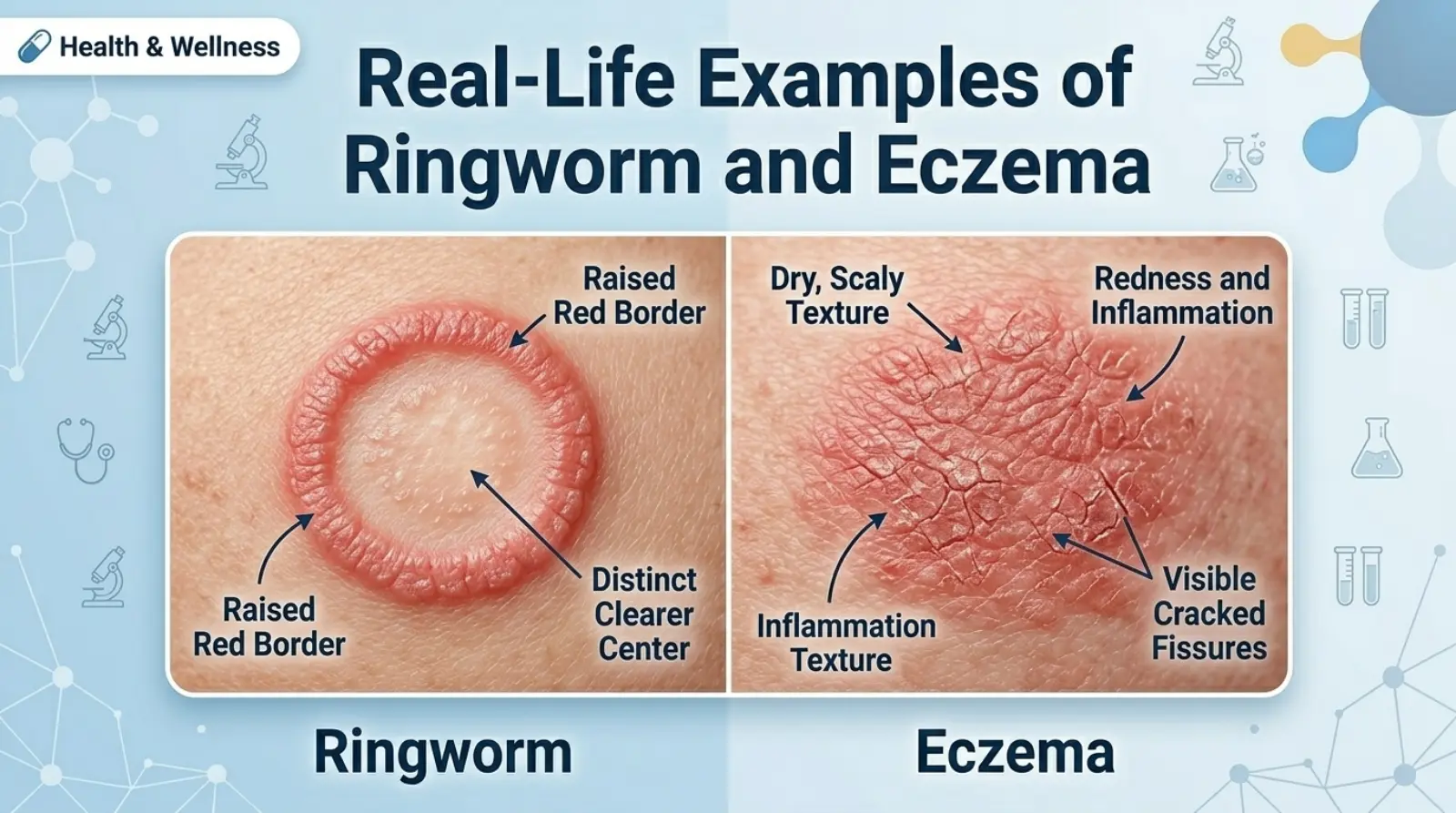
Ringworm often creates a round, ring-shaped rash. The outer edge usually looks red and raised.
Common Symptoms of Ringworm
- Circular rash
- Red or scaly skin
- Itching
- Raised borders
- Cracked skin
- Hair loss on the scalp
What Is Eczema?
Eczema is a condition that causes skin inflammation. The most common type is atopic dermatitis.
People with eczema often have sensitive skin. Their skin barrier does not work properly. As a result, moisture escapes easily.
Common Symptoms of Eczema
- Dry skin
- Intense itching
- Red patches
- Thickened skin
- Skin cracking
- Small bumps
Eczema often appears on:
- Hands
- Elbows
- Knees
- Neck
- Face
Ringworm or Eczema: Key Differences
Many people ask whether they have ringworm or eczema. The table below highlights the major differences.
| Feature | Ringworm | Eczema |
| Cause | Fungal infection | Inflammatory skin condition |
| Contagious | Yes | No |
| Shape | Circular ring | Irregular patches |
| Border | Raised and defined | Less defined |
| Skin Texture | Scaly | Dry and rough |
| Itching | Common | Very common |
| Treatment | Antifungal medicine | Moisturizers and anti-inflammatory creams |
| Spread | Can spread to others | Cannot spread to others |
How to Identify Ringworm
Ringworm usually has a unique appearance.
Look for these signs:
- Ring-shaped rash
- Clear skin in the center
- Red outer border
- Expanding circular pattern
- Mild to moderate itching
The rash may start small. Then it slowly grows outward.
Many cases occur after contact with infected people, animals, or contaminated surfaces.
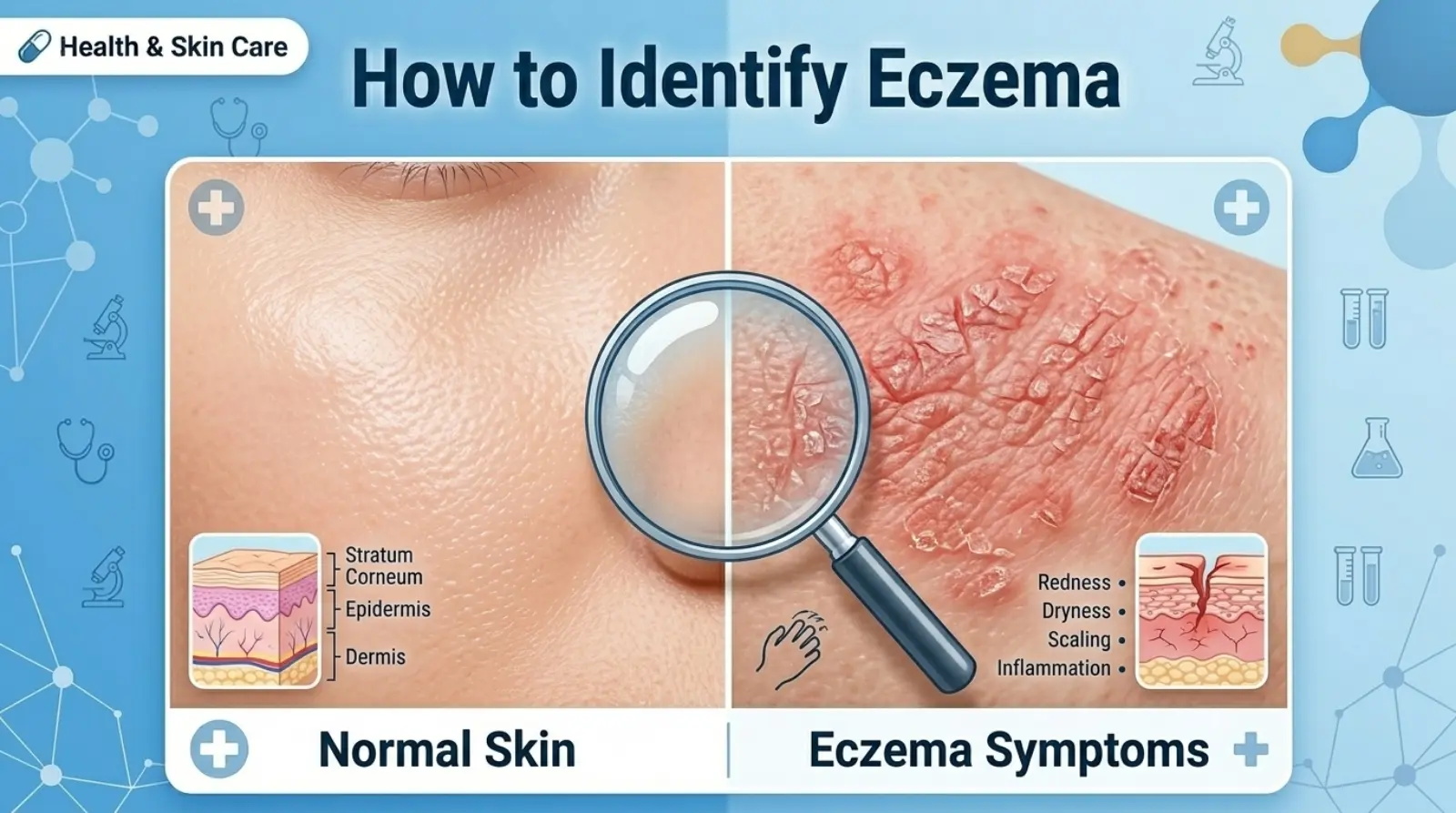
How to Identify Eczema
Eczema often looks different from ringworm.
Watch for:
- Dry patches
- Rough skin
- Severe itching
- Flare-ups that come and go
- Multiple affected areas
Eczema may worsen due to:
- Stress
- Cold weather
- Allergies
- Harsh soaps
- Certain fabrics
Unlike ringworm, eczema rarely forms a perfect circle.
Real-Life Examples of Ringworm and Eczema
Example 1: Ringworm
A child plays with a kitten carrying a fungal infection.
A week later, a round itchy rash develops on the arm. The rash expands outward and forms a ring.
This is a classic ringworm case.
Example 2: Eczema
An adult experiences dry skin every winter.
Red itchy patches appear on the elbows and hands. The symptoms improve with moisturizer.
This pattern often points to eczema.
Example 3: Confusing Case
Someone notices a red itchy patch on the leg.
At first, it looks like eczema. However, the patch becomes circular with a raised border.
The diagnosis later confirms ringworm.
What Causes Ringworm?
Ringworm develops from fungi called dermatophytes.
Common causes include:
- Skin-to-skin contact
- Shared towels
- Shared clothing
- Public locker rooms
- Infected pets
- Warm, moist environments
Athletes and people who sweat heavily may face a higher risk.
What Causes Eczema?
Experts do not fully understand eczema. However, several factors increase the risk.
Common Triggers
- Family history
- Allergies
- Asthma
- Dry weather
- Stress
- Irritants
- Fragrances
- Certain detergents
Many people experience flare-ups after exposure to triggers.
Common Mistakes When Comparing Ringworm or Eczema
People often make these mistakes:
Assuming All Circular Rashes Are Ringworm
Not every circular rash is fungal. Some eczema patches can appear round.
Using Steroid Cream Without a Diagnosis
Steroid creams may help eczema. However, they can worsen some fungal infections.
Ignoring Persistent Symptoms
A rash that lasts several weeks needs medical attention.
Sharing Personal Items
Sharing towels can spread ringworm.
Stopping Treatment Too Soon
Ringworm treatment often requires several weeks.
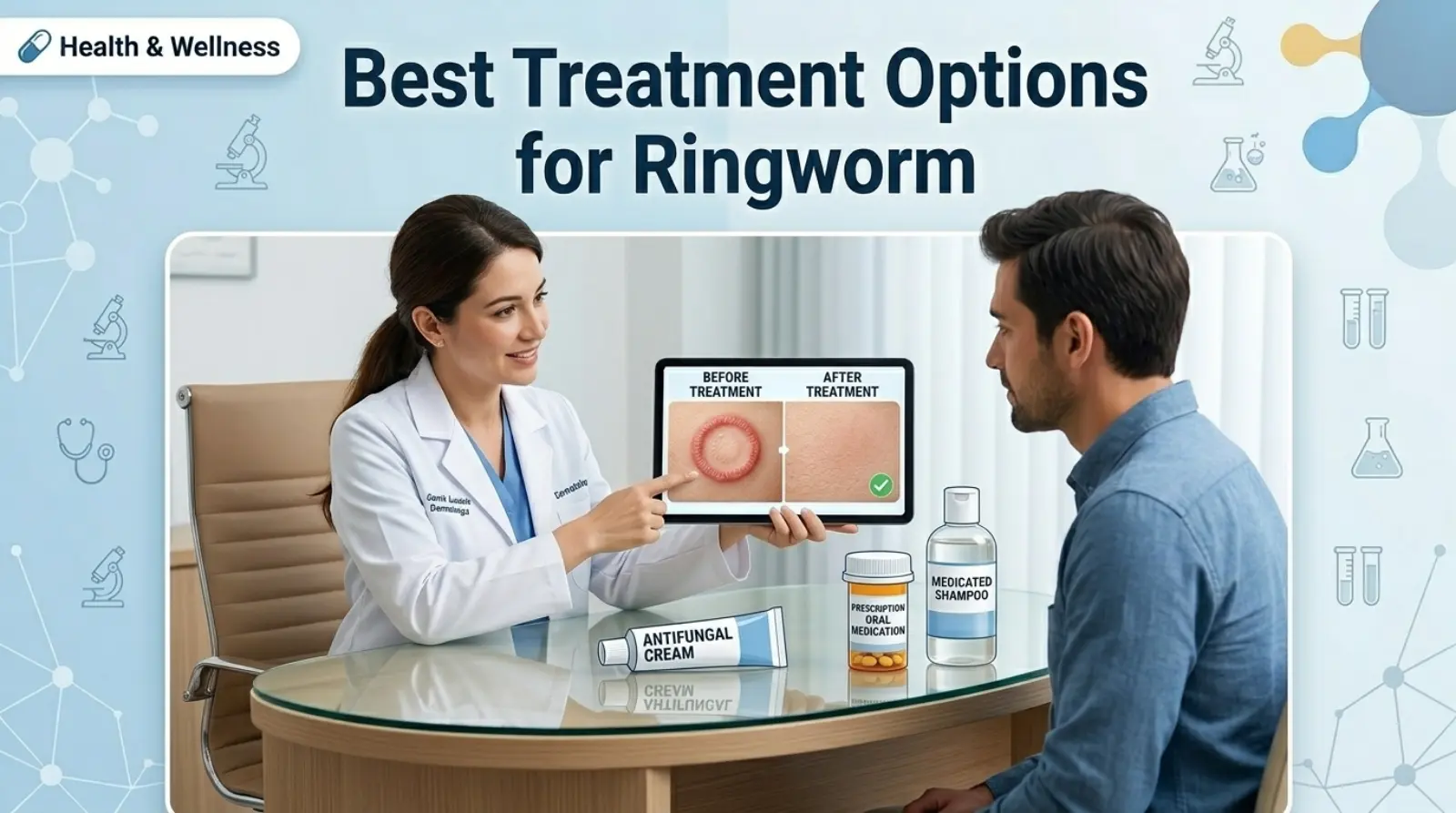
Best Treatment Options for Ringworm
Treatment depends on the infection’s location and severity.
Common Treatments
- Antifungal creams
- Antifungal powders
- Prescription medications
- Keeping skin dry
Helpful Tips
- Wash hands often.
- Avoid scratching.
- Change socks regularly.
- Do not share personal items.
Most mild cases improve within a few weeks.
Best Treatment Options for Eczema
Eczema treatment focuses on reducing inflammation and restoring moisture.
Common Treatments
- Daily moisturizers
- Prescription creams
- Trigger avoidance
- Gentle skincare products
Helpful Tips
- Use fragrance-free products.
- Take short lukewarm showers.
- Apply moisturizer after bathing.
- Wear soft cotton clothing.
Consistent skincare often reduces flare-ups.
Tips for Preventing Ringworm and Eczema
Preventing Ringworm
- Keep skin clean.
- Dry skin thoroughly.
- Avoid sharing towels.
- Wear sandals in public showers.
- Check pets for skin infections.
Preventing Eczema
- Moisturize daily.
- Avoid harsh soaps.
- Manage stress.
- Identify personal triggers.
- Use gentle detergents.
Expert Insights: Why Correct Diagnosis Matters
Skin conditions often look alike. Even experienced people can confuse ringworm and eczema.
A correct diagnosis helps you:
- Choose the right treatment
- Avoid worsening symptoms
- Prevent infection spread
- Reduce long-term discomfort
Dermatologists often examine the rash pattern first. In uncertain cases, they may perform skin testing.
Early diagnosis usually leads to faster recovery.
Frequently Asked Questions
Is ringworm the same as eczema?
No. Ringworm is a fungal infection, while eczema is an inflammatory skin condition.
Can eczema look like ringworm?
Yes. Some eczema patches can resemble ringworm, especially in the early stages.
Does ringworm always form a ring?
Not always. However, ring-shaped lesions are very common.
Can ringworm spread to other people?
Yes. Ringworm is contagious and can spread through direct contact.
Is eczema contagious?
No. Eczema cannot spread from person to person.
What happens if I use eczema cream on ringworm?
Some steroid creams may worsen fungal infections. Consult a healthcare professional if unsure.
Can stress cause ringworm?
No. Stress does not cause ringworm, but it may weaken the immune system.
When should I see a doctor?
See a doctor if symptoms worsen, spread, or fail to improve after treatment.
Conclusion
Understanding ringworm or eczema is important because the two conditions require different treatments. Ringworm results from a fungal infection and often creates a circular rash with a raised border. Eczema develops from inflammation and usually causes dry, itchy patches that come and go.
Although both conditions can look similar, key signs help distinguish them. Ringworm tends to spread and is contagious, while eczema is not. Proper identification can prevent unnecessary discomfort and ineffective treatment.
If your symptoms are unclear or continue despite treatment, seek medical advice. A professional diagnosis can help you choose the correct treatment plan. In most cases, early action leads to better results and healthier skin.