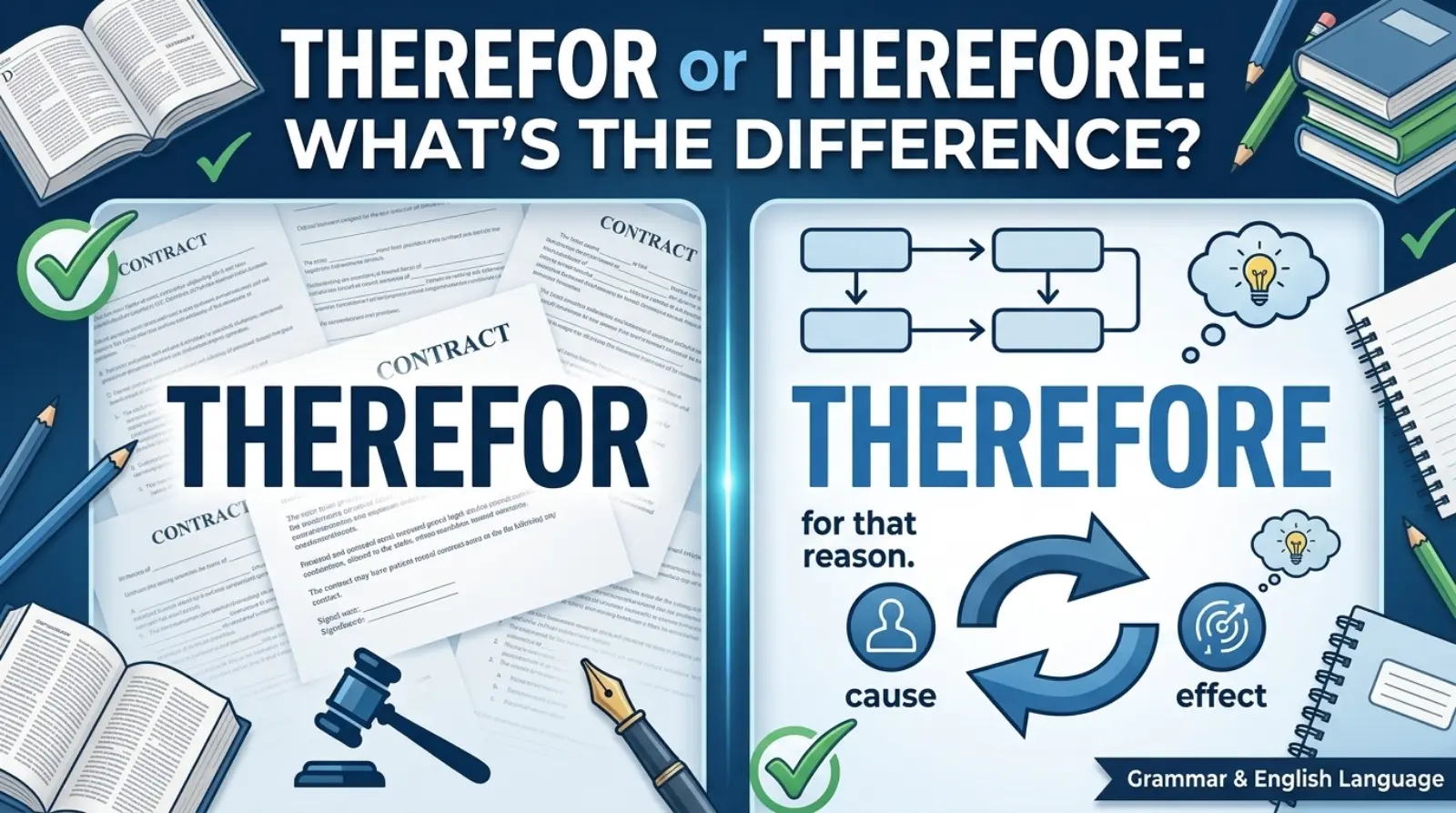
Therefor or therefore is a common question for writers, students, and English learners. These two words look almost the same. However, they have different meanings and uses.
Many people use them incorrectly because only one letter separates them. Yet that small difference changes the meaning completely.
Understanding the difference can improve your writing and help you avoid grammar mistakes. It also makes your communication clearer and more professional.
In this guide, you will learn the meaning of each word, how to use them correctly, common mistakes to avoid, and easy tricks to remember the difference. By the end, you will feel confident using both words in everyday writing.
Quick Summary Box
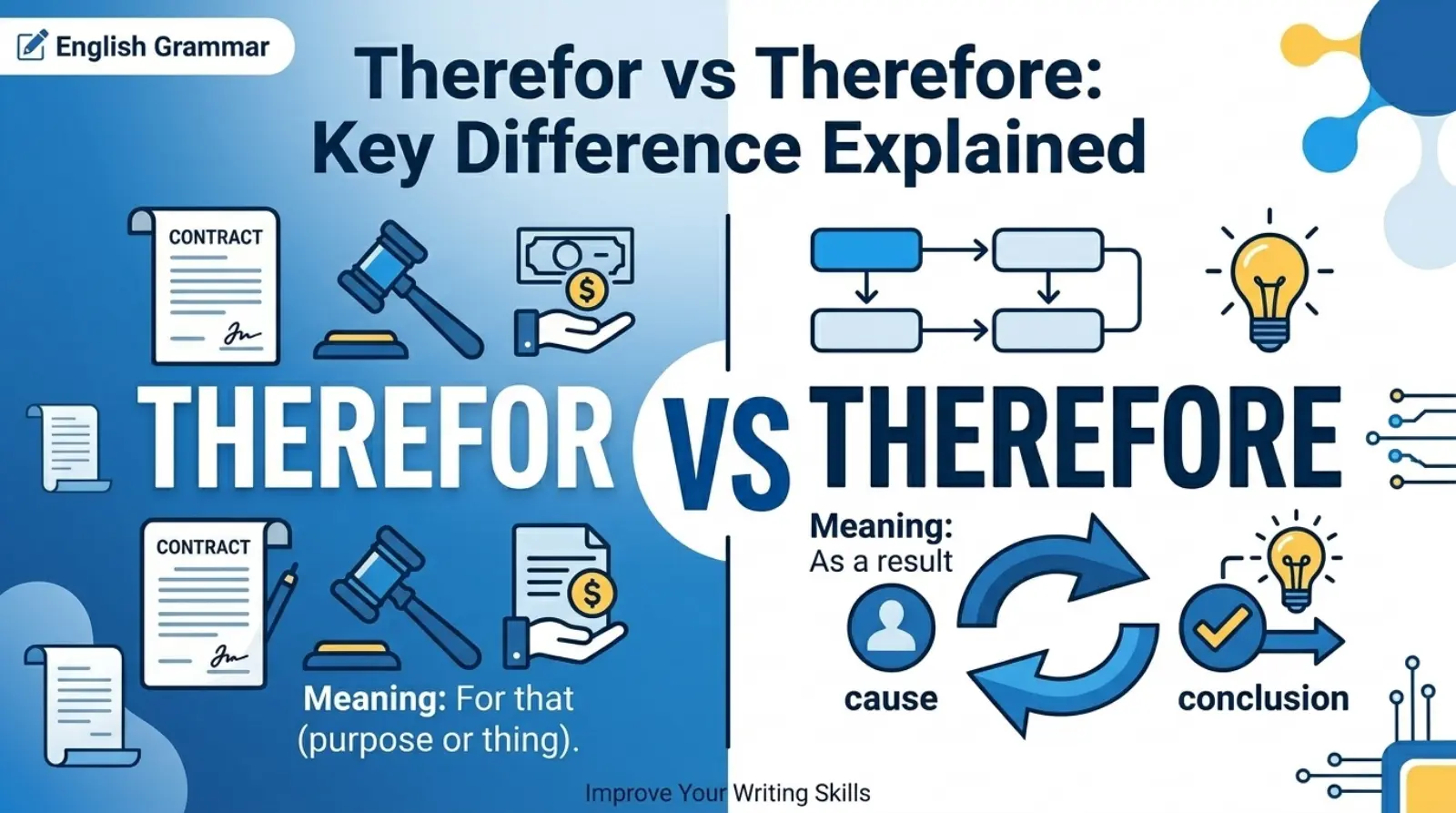
- Therefore means for that reason or as a result.
- Therefor means for that thing or for that purpose.
- Therefore is very common in modern English.
- Therefor is rare and mostly appears in legal or formal writing.
- Many people mistakenly write therefor when they mean therefore.
- Remember: therefore = result, therefor = for it.
What Does “Therefore” Mean?
Therefore is an adverb that means:
- For that reason
- As a result
- Consequently
- Because of that
It connects one idea to another and shows a result.
Examples
- It was raining heavily. Therefore, we stayed indoors.
- She studied hard. Therefore, she passed the exam.
- The store was closed. Therefore, we returned home.
In each sentence, therefore introduces the outcome.
What Does “Therefor” Mean?
Therefor is an adverb that means:
- For that
- For it
- For that purpose
This word is uncommon in modern English.
You will mostly see it in legal documents, contracts, or old texts.
Examples
- The company paid the fee and received a receipt therefor.
- Payment was made, and compensation therefor was provided.
In these examples, therefor means “for that.”
Therefor or Therefore: Key Difference
Many writers confuse these words because they look similar.
The main difference is simple:
| Word | Meaning | Usage |
| Therefore | As a result, for that reason | Common everyday English |
| Therefor | For that thing, for it | Rare, legal, or formal English |
Quick Memory Trick
- Therefore = Result
- Therefor = For it
If you can replace the word with “as a result,” use therefore.
If you can replace it with “for that,” use therefor.
Comparison Table: Therefor vs Therefore
| Feature | Therefore | Therefor |
| Part of Speech | Adverb | Adverb |
| Meaning | As a result | For that |
| Common Usage | Very common | Rare |
| Used in Daily Writing | Yes | Almost never |
| Used in Legal Writing | Sometimes | Often |
| Easy Replacement | Consequently | For it |
| Example | Therefore, we left. | Payment therefor was issued. |
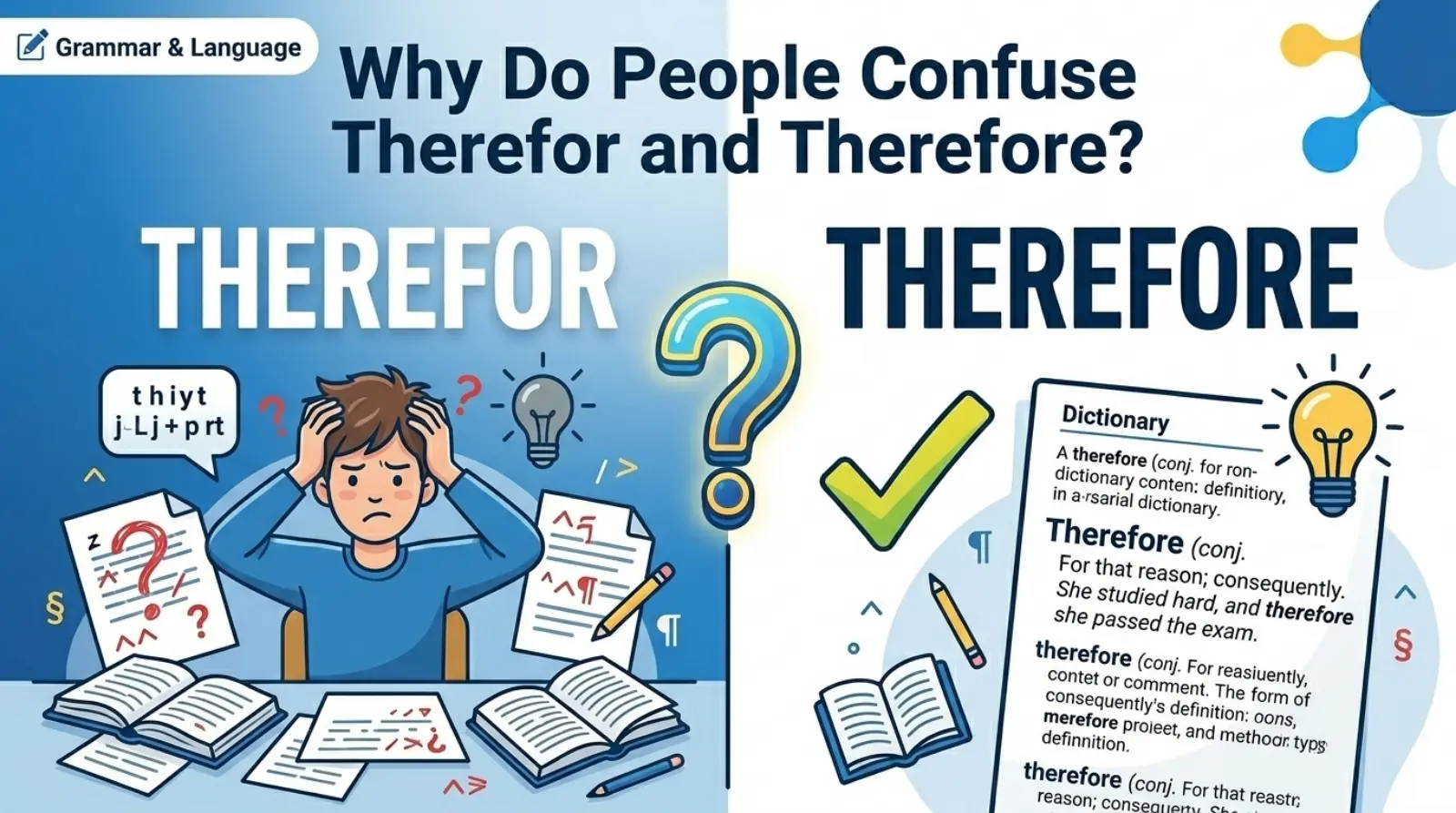
Why Do People Confuse Therefor and Therefore?
Several reasons cause confusion.
Similar Spelling
The words differ by only one letter.
Similar Pronunciation
Many speakers pronounce them almost the same.
Rare Usage of Therefor
Most people rarely see therefor, so they assume it is a misspelling.
Auto-Correct Issues
Some writing tools fail to catch the mistake because both words are valid.
Real-Life Examples of Therefore
Here are examples from everyday situations.
At School
- He completed all assignments. Therefore, he earned a high grade.
At Work
- The project met all requirements. Therefore, it was approved.
At Home
- The power went out. Therefore, we used candles.
In Business
- Sales increased significantly. Therefore, profits grew.
These examples show how therefore connects cause and effect.
Real-Life Examples of Therefor
Although rare, you may see therefor in legal and formal writing.
Legal Example
- The buyer accepted the goods and paid therefor.
Contract Example
- Compensation therefor shall be paid within thirty days.
Formal Example
- The request and supporting documents therefor were submitted.
In modern writing, many people replace therefor with clearer wording.
Common Mistakes When Using Therefor or Therefore
Mistake #1: Using Therefor Instead of Therefore
❌ She worked hard, therefor she succeeded.
✅ She worked hard, therefore she succeeded.
Mistake #2: Assuming They Mean the Same Thing
These words have different meanings.
Mistake #3: Using Therefor in Casual Writing
❌ I was tired. Therefor, I went to bed.
✅ I was tired. Therefore, I went to bed.
Mistake #4: Ignoring Context
Always check whether you mean:
- “as a result” → therefore
- “for that” → therefor
Easy Tips to Remember the Difference
Tip 1: Look for Cause and Effect
If one event causes another, use therefore.
Example:
- It snowed overnight. Therefore, roads became slippery.
Tip 2: Replace the Word
Try replacing it.
- As a result = therefore
- For that = therefor
Tip 3: Think About Frequency
You will use therefore far more often.
Tip 4: Read the Sentence Aloud
The correct meaning often becomes obvious when spoken.
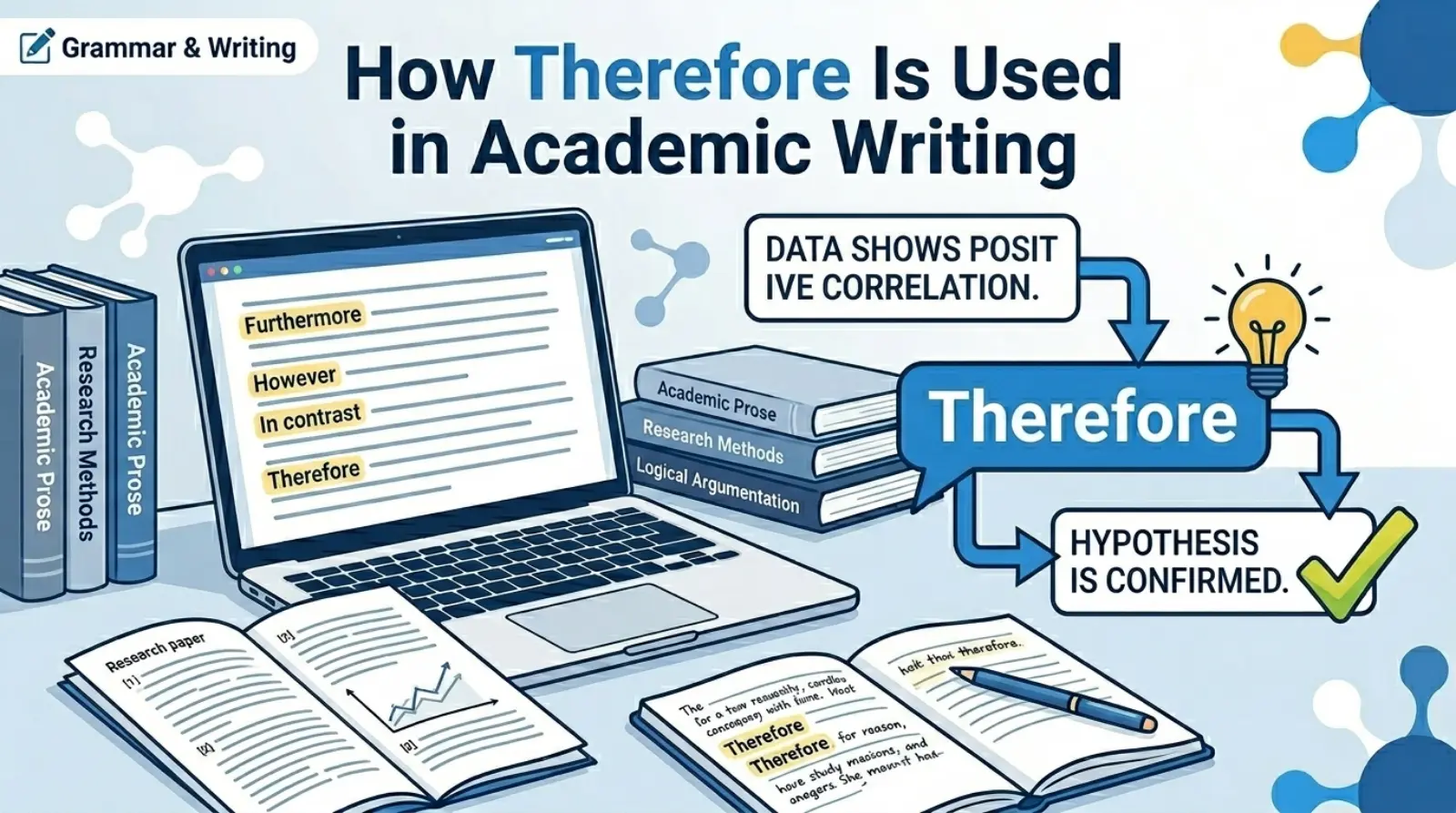
How Therefore Is Used in Academic Writing
Academic writing often uses therefore to connect ideas logically.
Examples
- The data supports the hypothesis. Therefore, the theory remains valid.
- The experiment failed repeatedly. Therefore, researchers revised the method.
Benefits
- Improves clarity
- Shows logical relationships
- Makes arguments stronger
Students frequently use therefore in essays and research papers.
How Therefor Appears in Legal Documents
Legal writing often contains older language.
Therefor remains useful because it refers directly to a previously mentioned item.
Example
- The contractor completed the work and received payment therefor.
Modern legal writers sometimes replace it with:
- for that work
- for those services
- for the item
This approach improves readability.

Synonyms and Related Words
Synonyms for Therefore
- Consequently
- Thus
- Hence
- Accordingly
- As a result
- For this reason
- Because of that
Similar Expressions
- Due to this
- That is why
- As a consequence
Usage in Daily Life
Most people use therefore regularly.
Conversation
- I missed the bus. Therefore, I arrived late.
- The report is complete. Therefore, we can proceed.
School Work
- The answer is correct. Therefore, full marks were awarded.
You will rarely need therefor unless you work with legal or formal documents.
Expert Insights: Why Correct Usage Matters
Correct word choice improves communication.
Using therefore correctly helps readers follow your reasoning. It also makes your writing appear more professional.
Understanding therefor is useful because you may encounter it in contracts, legal papers, or historical documents.
Grammar mistakes can reduce credibility. Even small errors may confuse readers or change meaning.
Writers who understand these distinctions create clearer and more effective content.
Frequently Asked Questions (FAQs)
Is therefor a real word?
Yes. It is a valid English word that means “for that” or “for it.”
Which is more common, therefor or therefore?
Therefore is much more common in modern English.
Can I use therefor instead of therefore?
No. They have different meanings and cannot usually replace each other.
What does therefore mean in simple words?
It means “for that reason” or “as a result.”
Where is therefor commonly used?
Mostly in legal, contractual, and formal documents.
How do I remember the difference?
Think of therefore as showing a result and therefor as meaning “for that.”
Is therefore formal or informal?
It works in both formal and academic writing, though it appears more often in formal contexts.
Should students learn therefor?
Yes. While rare, understanding it helps with reading legal and historical texts.
Conclusion
The difference between therefor or therefore is small in spelling but significant in meaning. Therefore means “for that reason” and appears frequently in everyday, academic, and professional writing. Therefor, on the other hand, means “for that” and is mostly found in legal or formal documents.
When deciding which word to use, focus on the meaning. If you want to show a result or consequence, choose therefore. If you mean “for that thing,” use therefor.
Learning this distinction helps you write more accurately and confidently. The next time you see therefor or therefore, you will know exactly which word belongs in your sentence.