Punctuation inside or outside quotes is one of the most common grammar questions in English writing. Many writers struggle to know where commas, periods, question marks, and other punctuation marks belong.
The answer depends on the type of punctuation and whether you follow American or British English rules. A small punctuation mistake can change the appearance of your writing and make it look less professional.
Fortunately, the rules are easy to learn. Once you understand them, you can write with confidence in emails, essays, blog posts, reports, and everyday conversations.
This guide explains everything in simple terms. You will learn the rules, see real examples, avoid common mistakes, and discover expert tips for using punctuation correctly with quotation marks.
Quick Summary Box
What Is Punctuation Inside or Outside Quotes?
- Punctuation placement depends on the type of punctuation mark.
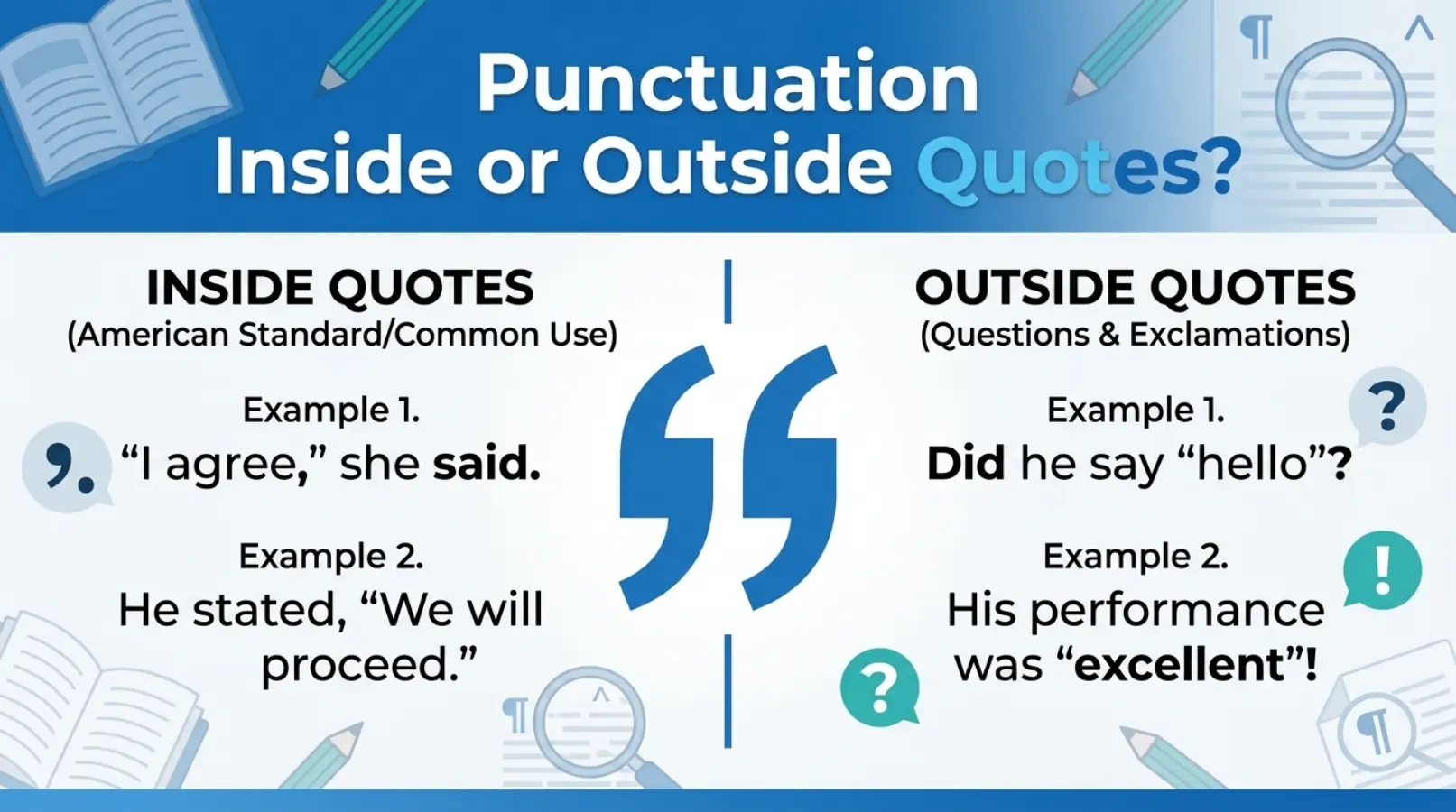
- In American English, periods and commas usually go inside quotation marks.
- In British English, periods and commas often go outside quotation marks.
- Question marks and exclamation points depend on the meaning of the sentence.
- Colons and semicolons usually stay outside quotation marks.
- Correct punctuation improves clarity and professionalism.
- Following style guidelines keeps writing consistent.
What Does Punctuation Inside or Outside Quotes Mean?
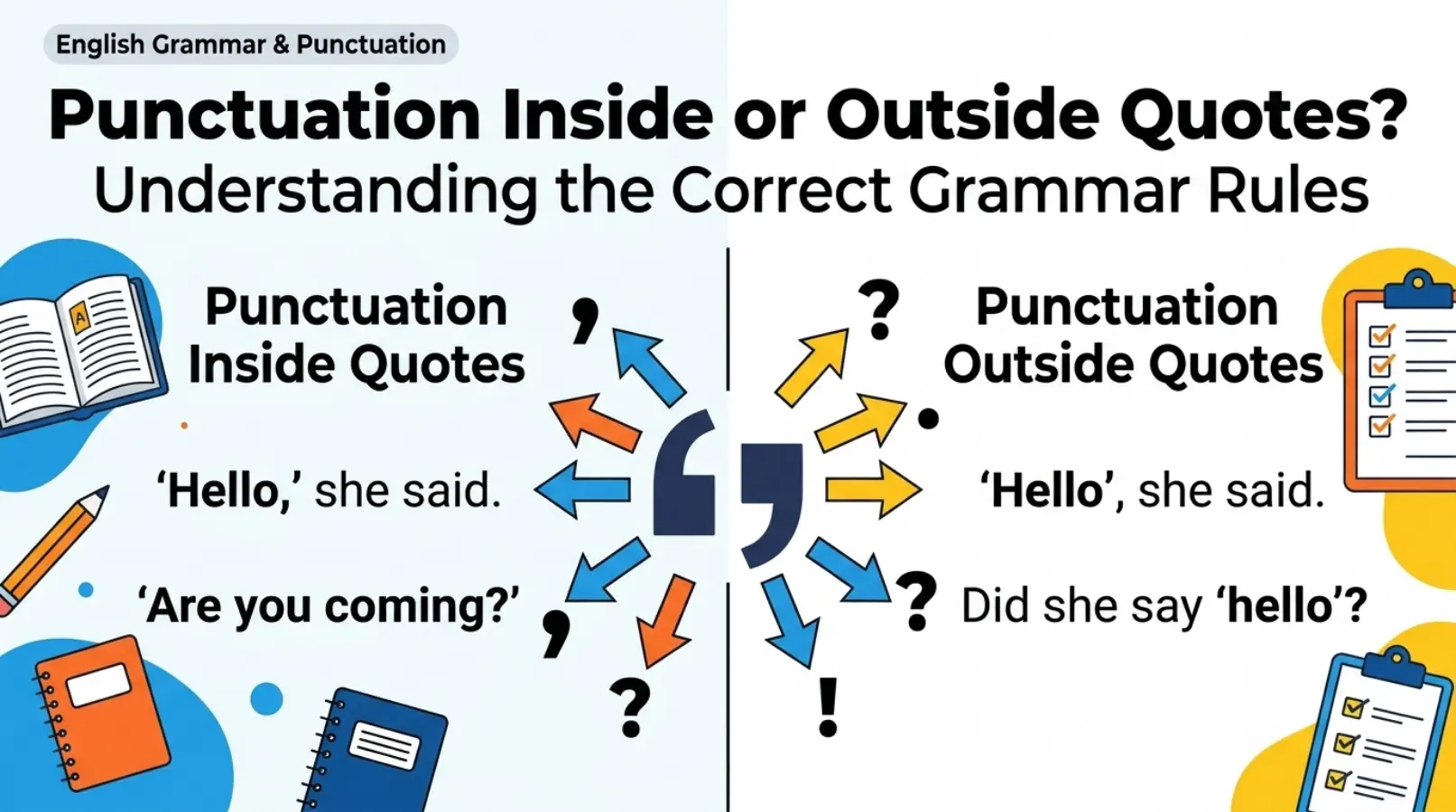
Punctuation inside or outside quotes refers to where punctuation marks appear in relation to quotation marks.
For example:
Correct (American English):
She said, “I am ready.”
Incorrect:
She said, “I am ready”.
The period belongs inside the quotation marks in American English.
Understanding these rules helps readers understand your writing more easily.
Why Punctuation Placement Matters
Proper punctuation does more than follow grammar rules.
It helps:
- Improve readability
- Avoid confusion
- Maintain professional writing
- Follow academic standards
- Create polished content
Whether you write emails or articles, correct punctuation makes a strong impression.
American vs British English Rules
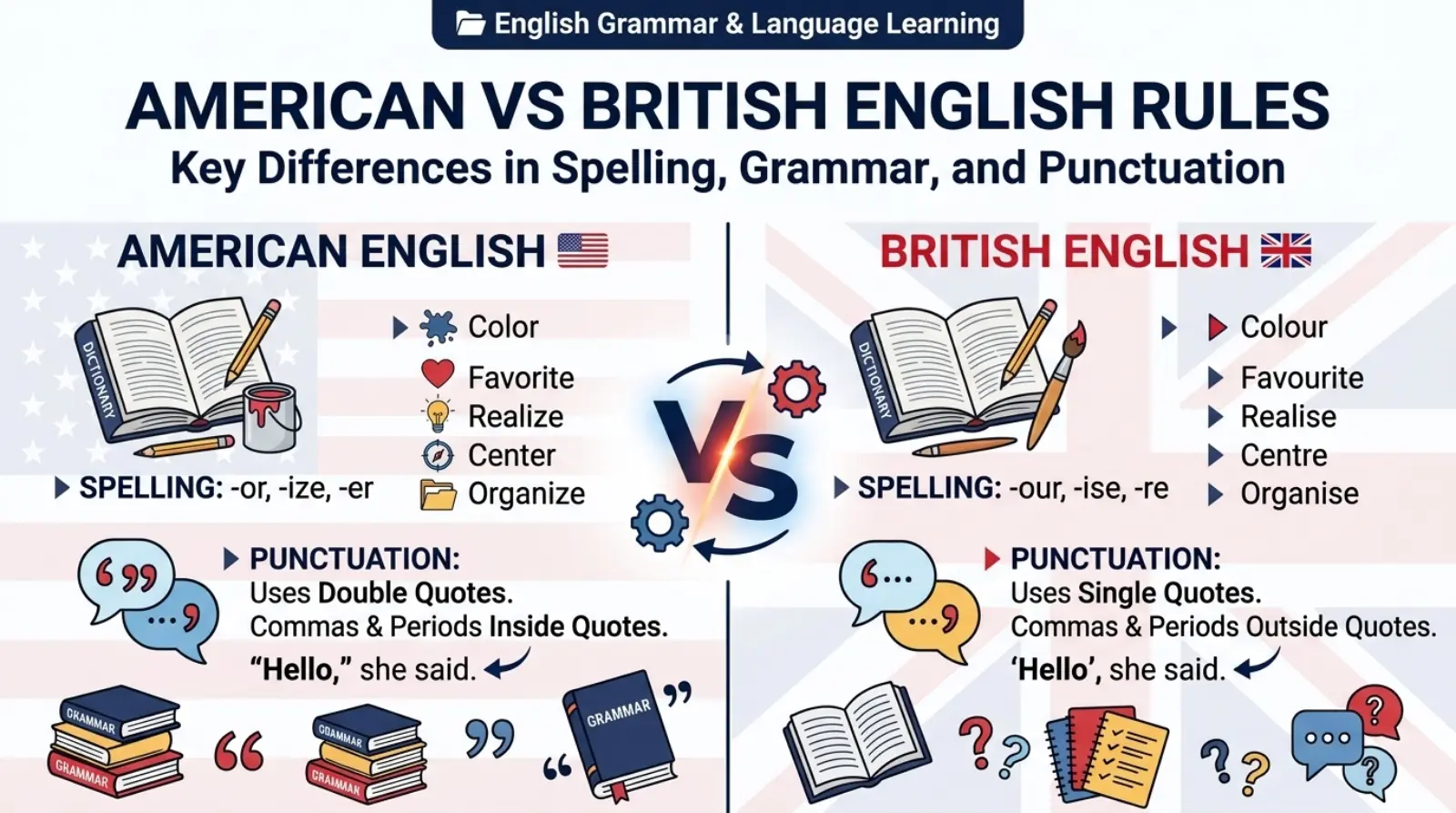
One major reason people get confused is that American and British English follow different punctuation styles.
| Punctuation | American English | British English |
| Period (.) | Inside quotes | Often outside quotes |
| Comma (,) | Inside quotes | Often outside quotes |
| Question Mark (?) | Depends on meaning | Depends on meaning |
| Exclamation Mark (!) | Depends on meaning | Depends on meaning |
| Colon (:) | Outside quotes | Outside quotes |
| Semicolon (;) | Outside quotes | Outside quotes |
Example
American English:
“I love reading,” she said.
British English:
‘I love reading’, she said.
When Periods Go Inside Quotes
In American English, periods almost always go inside quotation marks.
Examples
✅ She said, “The meeting starts at noon.”
✅ My favorite book is “The Great Gatsby.”
❌ She said, “The meeting starts at noon”.
This rule applies even when the period is not part of the original quote.
Easy Tip
Remember:
Periods stay inside quotes in American English.
When Commas Go Inside Quotes
Commas follow the same rule as periods in American English.
Examples
✅ “Let’s leave now,” he suggested.
✅ “Yes,” she replied.
❌ “Let’s leave now”, he suggested.
The comma should remain inside the closing quotation mark.
When Question Marks Go Inside or Outside Quotes
Question marks depend on what is being questioned.
Question Is Part of the Quote
She asked, “Are you coming?”
The question belongs to the quoted sentence.
Entire Sentence Is a Question
Did she say, “I am coming”?
The quote itself is not a question.
The entire sentence asks the question.
Quick Rule
- Question inside quote → question mark inside
- Question outside quote → question mark outside
When Exclamation Marks Go Inside or Outside Quotes
Exclamation marks follow the same logic as question marks.
Examples
He shouted, “Watch out!”
The exclamation belongs to the quote.
Did she really say, “I hate chocolate”!
In some special cases, the excitement belongs to the whole sentence.
Most of the time, place the exclamation mark where the emphasis belongs.
Colons and Semicolons with Quotation Marks
Colons and semicolons usually stay outside quotation marks.
Examples
She described the book as “life-changing”; many readers agreed.
The article mentioned one phrase: “time is money.”
Remember
- Colon → outside
- Semicolon → outside
These marks rarely appear inside quotation marks.
Real-Life Examples of Punctuation with Quotes
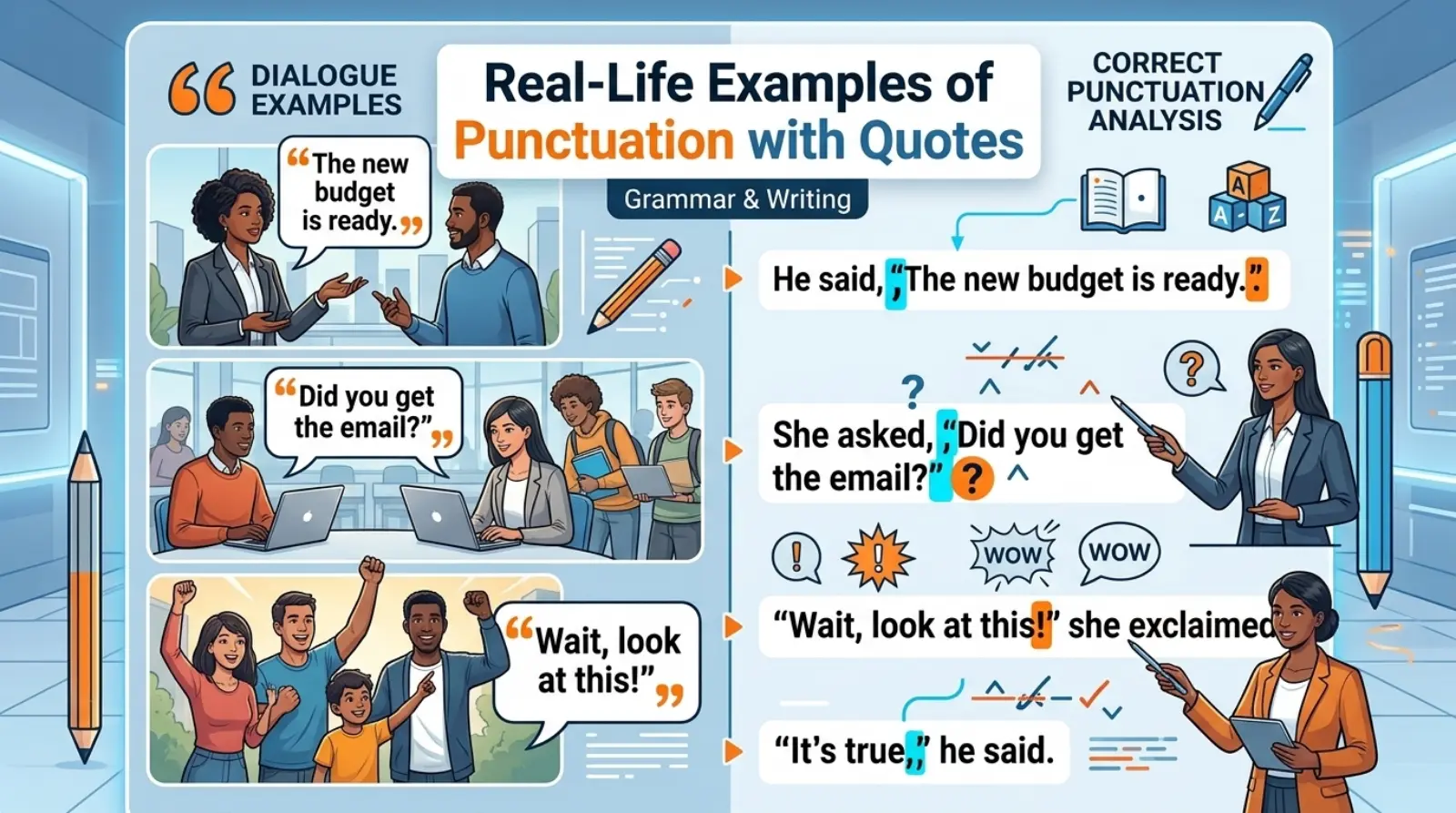
Here are examples you may see every day.
Sarah wrote, “I’ll send the report tomorrow.”
Text Message
He replied, “See you soon!”
Blog Post
Many experts call it “the future of technology.”
Academic Writing
The study described the results as “highly significant.”
These examples show how punctuation appears naturally in different writing situations.
Comparison Table: Correct vs Incorrect Usage
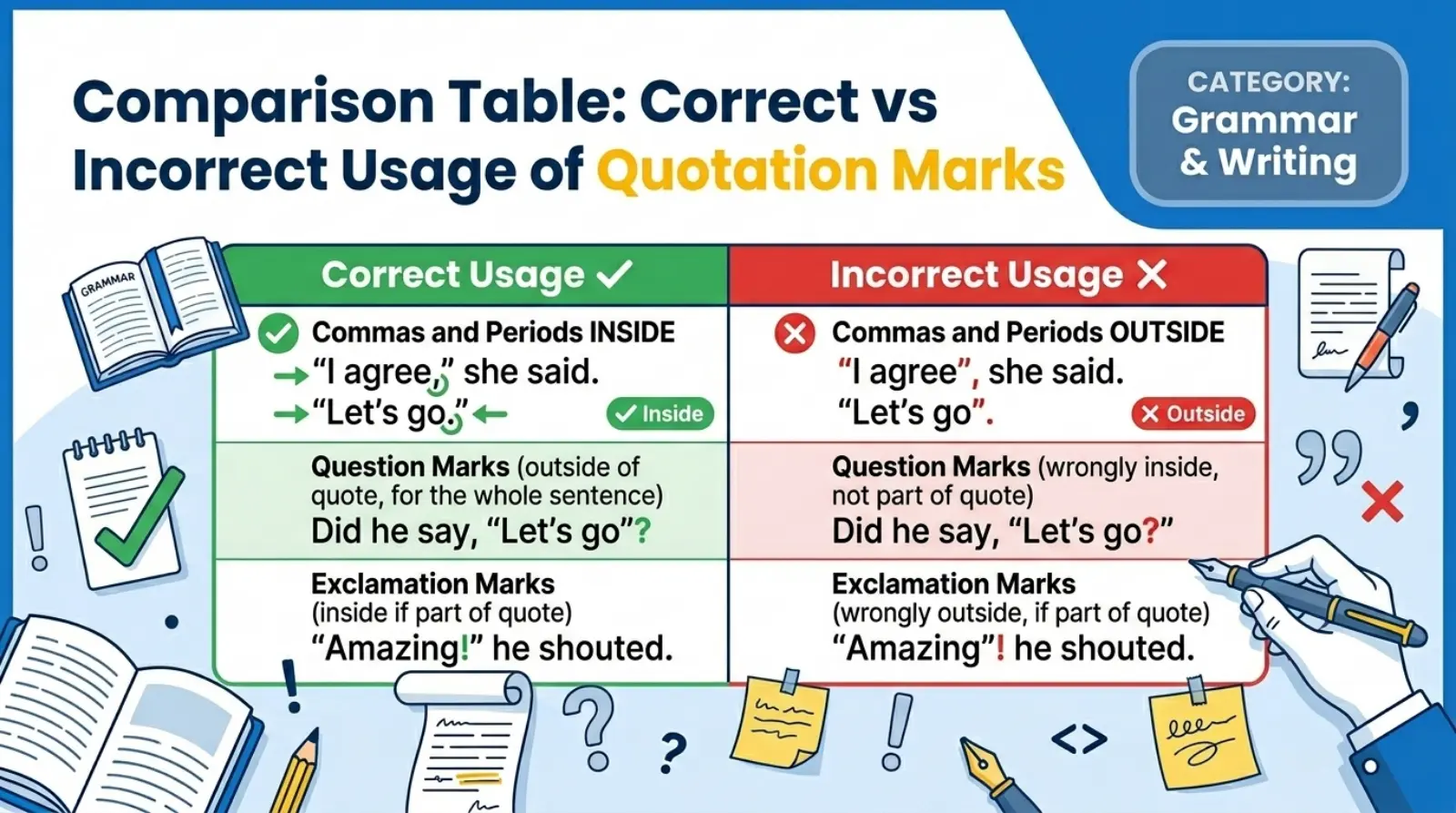
| Correct Usage | Incorrect Usage |
| “I agree,” she said. | “I agree”, she said. |
| “Let’s go.” | “Let’s go”. |
| She asked, “Are you ready?” | She asked, “Are you ready”? |
| Did he say, “I’m leaving”? | Did he say, “I’m leaving?” |
| “Amazing!” he shouted. | “Amazing”! he shouted. |
This table highlights common punctuation placement mistakes.
Common Mistakes People Make
1. Putting Periods Outside Quotes
❌ “The meeting starts now”.
✅ “The meeting starts now.”
2. Misplacing Question Marks
❌ Did she ask, “Where are you going?”
✅ Did she ask, “Where are you going?”
(Only use outside placement when the entire sentence asks the question.)
3. Confusing British and American Rules
Writers often mix both styles in the same document.
Choose one style and stay consistent.
4. Incorrect Comma Placement
❌ “Thank you”, she said.
✅ “Thank you,” she said.
Tips and Tricks to Remember the Rules
Tip 1: Think About Meaning
Ask yourself:
Does the punctuation belong to the quote or the whole sentence?
Tip 2: Remember the American Rule
Periods and commas almost always stay inside quotation marks.
Tip 3: Check Your Style Guide
Academic writing may require APA, MLA, Chicago, or another style.
Tip 4: Stay Consistent
Switching between British and American punctuation can confuse readers.
Synonyms
People searching for punctuation inside or outside quotes may also look for:
- Quotation mark punctuation rules
- Grammar quotation marks
- Punctuation with quotations
- Comma inside quotation marks
- Period inside quotation marks
- American punctuation rules
- British punctuation rules
- Quotation punctuation guide
- Grammar with quotes
- Correct use of quotation marks
Usage in Daily Life
Correct punctuation appears everywhere.
School Assignments
Students use quotation marks when citing sources.
Professional Emails
Business communication requires accurate punctuation.
Social Media Posts
Even casual writing benefits from clear punctuation.
Blog Writing
Proper punctuation improves readability and trust.
The more often you practice, the more natural these rules become.
Expert Insights: Why Correct Punctuation Matters
Grammar experts agree that punctuation affects readability and credibility.
Correct punctuation:
- Builds trust with readers
- Improves content quality
- Enhances professional writing
- Supports academic success
- Strengthens communication skills
Search engines also favor content that is clear, organized, and easy to read.
Writers who master punctuation create a better experience for readers.
Frequently Asked Questions (FAQs)
Should periods go inside quotation marks?
In American English, yes. Periods almost always go inside quotation marks.
Do commas go inside or outside quotes?
In American English, commas go inside quotation marks.
Where does a question mark go with quotation marks?
It depends on whether the question is part of the quote or the entire sentence.
Do exclamation marks always go inside quotes?
No. They go where the emphasis belongs.
Do colons go inside quotation marks?
Usually no. Colons generally stay outside quotation marks.
Do semicolons go inside quotation marks?
No. Semicolons usually appear outside quotation marks.
Is punctuation different in British English?
Yes. British English often places periods and commas outside quotation marks.
Which style is most common online?
American English punctuation rules dominate many online publications.
Conclusion
Understanding punctuation inside or outside quotes becomes simple once you learn the core rules. In American English, periods and commas usually stay inside quotation marks. Question marks and exclamation points depend on meaning, while colons and semicolons generally remain outside.
The key is consistency. Choose a style guide and follow it throughout your writing. Whether you are writing emails, essays, blog posts, or business documents, correct punctuation improves clarity and professionalism.
By practicing these rules and reviewing examples, you can avoid common mistakes and write with confidence. Remember, punctuation may seem small, but it plays a big role in effective communication.